Figuring out how to tell if you have lawn grubs is the difference between saving your turf and watching whole sections die right in front of you. That brown patch spreading across your yard might be a watering problem, but it might also be hundreds of larvae chewing through your root system underground.
The tricky part is that grub damage looks almost identical to about five other common lawn problems. The good news: you can get a definitive answer with a simple 60-second test that requires nothing more than a shovel and some basic know-how. Let's walk through it step by step so you know exactly what you're dealing with before you spend money on the wrong solution.
Quick Answer
Check your lawn for irregular brown patches that don't respond to watering. Perform the tug test. If the turf lifts easily like loose carpet, you likely have root damage.
Dig a one-square-foot sample two to three inches deep. Count the C-shaped white larvae in the soil. More than five to ten grubs per square foot means it's time to treat.
Ruling out drought, disease, and other pests confirms the diagnosis.
The Problem: Your Lawn Is Dying and You Don't Know Why
You water, you mow, you fertilize. Then one morning there's a brown patch that wasn't there last week. A few days later it's twice the size.
Your first guess is probably drought or maybe a sprinkler head went bad, so you turn up the water. Nothing helps. That's because grubs are a below-ground problem with above-ground symptoms, and they don't announce themselves.
White grubs are the larval stage of scarab beetles. Japanese beetles, European chafers, June bugs, and billbugs all produce larvae that feed on turfgrass roots. They live in the soil, and by the time you see the damage, they've been feeding for weeks.
Some homeowners don't catch it until skunks or raccoons start tearing up the lawn at night looking for an easy meal.
The worst part? Grub damage gets misdiagnosed constantly. We've looked at the typical diagnostic patterns, and most people who think they have a watering problem or a fungal issue actually have a grub problem.
Knowing how to check, and check correctly, saves you time, money, and a whole lot of frustration.
What Lawn Grubs Actually Are (And Which Species You're Dealing With)
Lawn grubs isn't one single pest. It's a whole group of beetle larvae that share a similar appearance and lifestyle. All of them are C-shaped, white or cream-colored, with a brown head capsule and three pairs of legs near the head.
All of them feed on grass roots. But the specific species matters for timing your treatment and understanding when you'll see damage.
Japanese beetle (Popillia japonica) is the most notorious. The adults are that metallic green-and-copper beetle you see eating your roses in midsummer. The larvae hatch in late July and start feeding immediately.
They're active through fall, go deep for winter, come back up in spring to feed briefly, then pupate.
European chafer (Amphimallon majale) is a major problem in the Northeast and Midwest. These are tan-brown beetle adults, and their larvae are particularly aggressive. They can destroy a lawn faster than Japanese beetles in the right conditions.
June bugs (Phyllophaga species) are the big brown beetles that slam into your porch light. Their grubs have a longer life cycle, sometimes taking two to three years to mature, which means they're feeding underground for multiple seasons before you ever see the adult.
Billbugs deserve special mention because their larvae look like grubs but have NO legs. That's a completely different pest requiring different treatment timing. If you see a legless white larva in your turf, you're dealing with billbugs, not white grubs.
It's worth confirming before you buy any product.
Identifying which species you have usually requires examining the raster pattern on the underside of the larva's tip. That's a detail most homeowners don't need, but if you send a sample to your local university extension, they can tell you exactly what you're dealing with.
The 5 Signs That Point to Grubs (And How to Read Each One)
Grub damage doesn't look the same as every other lawn problem once you know what to watch for. Here are the five most reliable indicators, ranked from easiest to most definitive.
Irregular Brown Patches That Don't Respond to Water
The earliest grub symptom is patches of turf that start yellowing, then turning brown. These patches are usually irregular circles or amoeba-shaped areas, not neat geometric patterns. What makes them different from simple dry spots is that extra water doesn't fix them.
If you've been irrigating consistently and the brown areas keep growing, that's your first red flag.
Start with the tug test. Go to the edge of a brown patch and grab a handful of grass. Pull gently.
If it lifts right up with almost no resistance, the roots have been chewed through. Healthy turf anchors firmly. Grub-damaged turf feels like a loose doily sitting on top of the soil, because it basically is.
The larvae have severed the root system that holds everything together. This single test eliminates most other causes immediately.
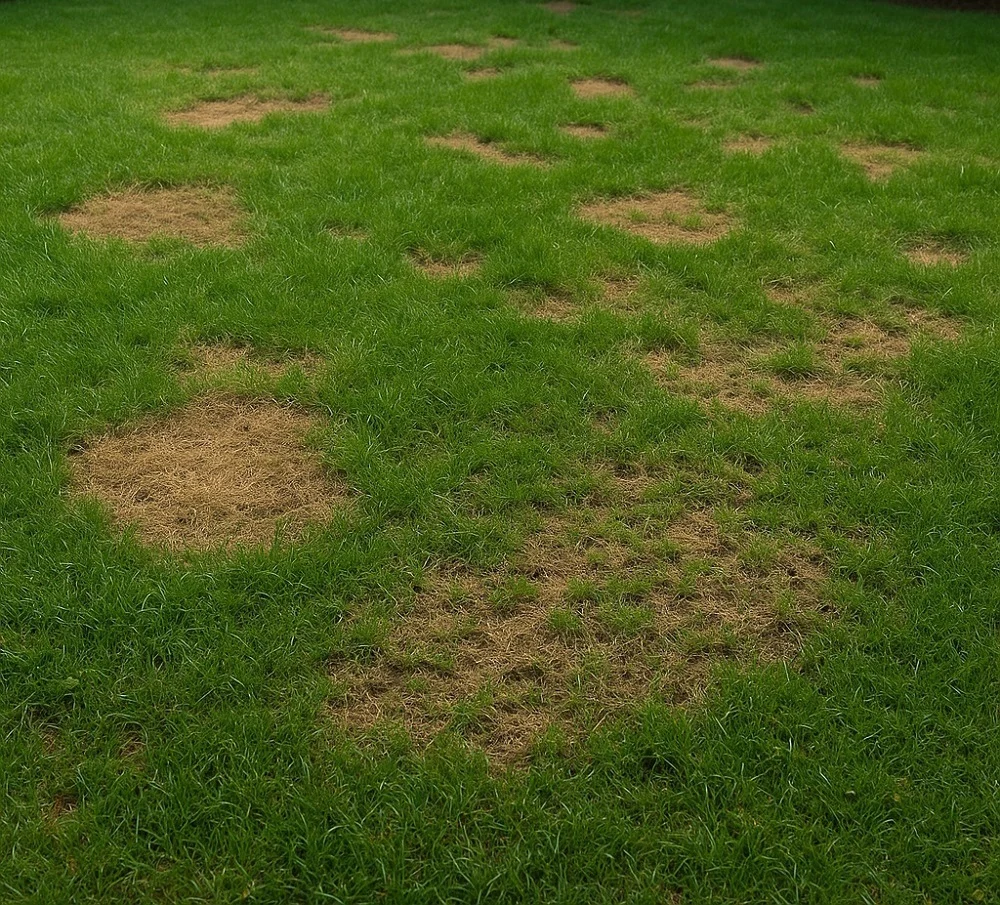
Image source: Bing (Web (fair-use with source credit))
Turf That Pulls Up Like Loose Carpet (The Tug Test)
The tug test is the fastest, most reliable field diagnostic for Active grub damage. Healthy turf holds tight because the roots anchor it into the soil. Grub-damaged turf lifts easily because the root system has been destroyed.
Walk through damp areas near the brown patches and tug. Easy lift means active feeding below.
Unusual Animal Activity: Skunks, Raccoons, and Birds
If you notice small cone-shaped holes, patches of peeled-back sod, or general overnight digging, animals are likely feeding on grubs in your lawn. Skunks and raccoons are the most common culprits. They'll roll back sections of turf like a carpet to get at the larvae underneath.
Increased bird activity at dawn, especially starlings or grackles, also signals a grub population worth investigating.
Spongy, Soft Ground Underfoot
Walk across the suspect areas. If the ground feels spongy or soft, that's a sign of tunneling and root destruction beneath the surface. The turf is no longer anchored to the soil, and the larvae have created air pockets as they move and feed.
This is a strong indicator that the infestation is well established.
The Definitive Test: Dig and Count
The only way to be 100% certain is to dig. Cut a square-foot section of turf at the edge of a damaged area, about two to three inches deep. Peel it back and examine the soil and root zone.
Count the C-shaped larvae you find. This is the gold standard for diagnosis, and it's what university extension services recommend as the primary scouting method.
How to Sample Your Lawn for Grubs (Step-by-Step)
Checking for grubs is straightforward, but doing it wrong leads to false negatives. Here's the method that turf professionals and university extension programs use.
What You Need
- A sharp spade or lawn knife
- A flat piece of cardboard or a tray to place the sample on
- A bucket of water (optional, for sifting soil)
- A ruler or tape measure
- A notepad to record counts from different areas
Where to Dig
Don't dig in the middle of a dead patch. The grubs may have already moved on or the damage may be from something else. Instead, sample at the edge of the damaged area, where brown turf meets green turf.
That's where active feeding is happening right now. If you have multiple damaged patches, sample at least three to four different locations across the lawn.
How Deep to Go
Most grubs feed in the top two to three inches of soil, right in the root zone. Cut your sample about three inches deep. If you're checking in late fall or early spring, grubs may be deeper, going down four to six inches or more to follow soil temperatures.
In those cases, dig deeper or wait for them to move back up.
How Many Samples to Take
One sample isn't enough. Grub populations are patchy. You might find fifteen grubs in one square foot and zero in the next.
Take at least three to four samples from different areas of the lawn. If most samples come back with zero grubs but you still suspect a problem, sample again in a week or two.
Counting and Thresholds
Count every C-shaped larva you find in your square-foot sample. Here's how to interpret the results:
| Grubs Per Square Foot | What It Means | Action Needed |
|---|---|---|
| 0-4 | Low population | Monitor, no treatment |
| 5-9 | Moderate population | Consider treatment if lawn is stressed |
| 10+ | High population | Treat now |
Healthy, well-maintained lawns can tolerate up to ten grubs per square foot without showing damage. But if your lawn is already stressed by drought, heat, or foot traffic, even five grubs per square foot can cause visible browning. Adjust your threshold based on your lawn's overall condition.
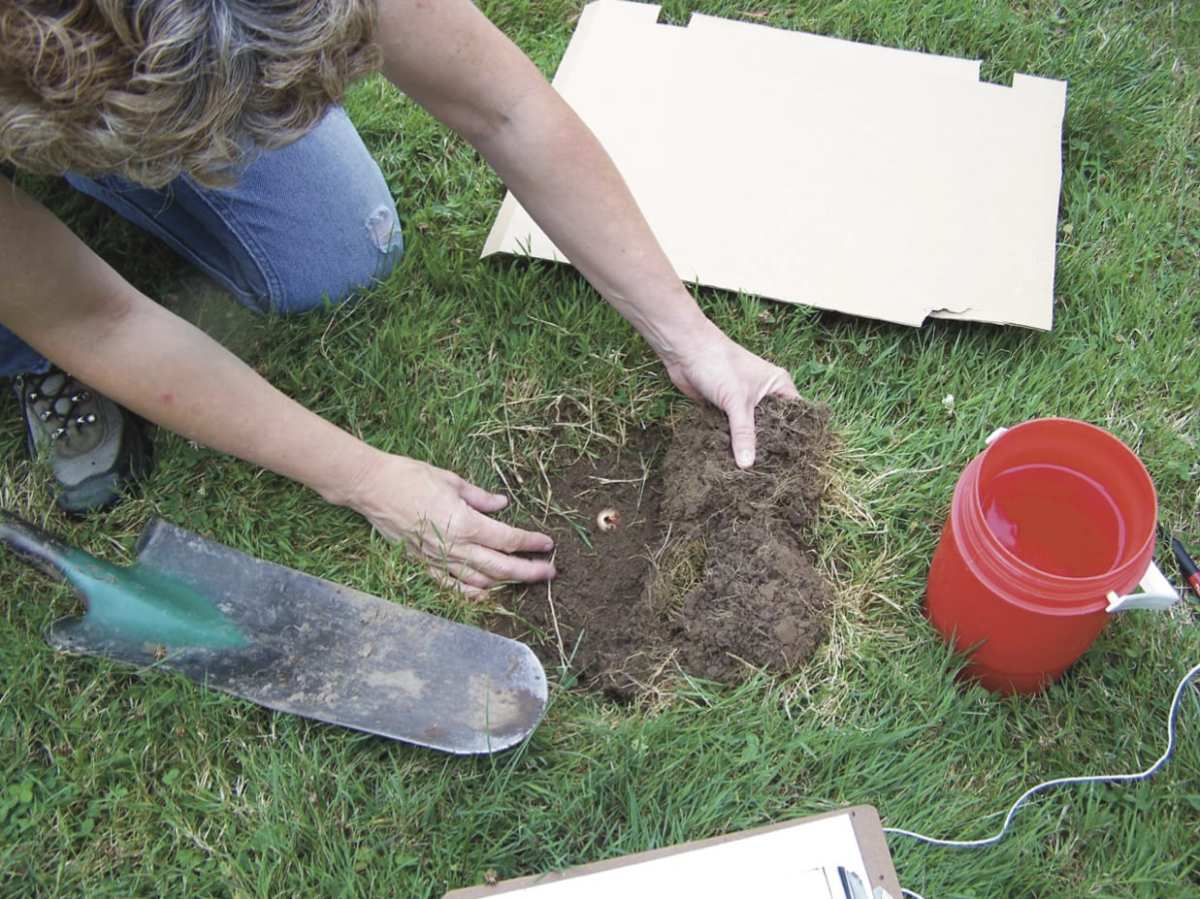
Image source: Bing (Web (fair-use with source credit))
Grub or Not? Ruling Out the Usual Suspects
This is where most people go wrong. Grub damage has a lookalike problem. Several common lawn issues produce brown patches that mimic grub symptoms almost perfectly.
Before you buy any treatment, rule these out.
Grub Damage vs. Drought Stress
Drought stress causes brown patches too, but the pattern is usually more uniform across the lawn, especially in sunny or exposed areas. The key difference: drought-stressed turf doesn't lift easily. Do the tug test.
If the turf holds firm, it's probably not grubs. Also, drought symptoms improve after a good rain or deep watering. Grub damage doesn't.
Grub Damage vs. Fungal Disease
Fungal diseases like brown patch, dollar spot, and summer patch all cause circular brown areas. But fungal diseases often show distinct patterns in the individual grass blades. Look closely at the leaf blades within the brown patch.
If you see lesions, spots, or discoloration on the blades themselves, you're likely dealing with disease. Grubs destroy roots, so the grass blades usually look healthy right up until they die from lack of water uptake.
Grub Damage vs. Chinch Bugs
Chinch bugs are tiny black insects with white wings that suck the sap out of grass blades. They cause irregular yellow and brown patches, mostly in sunny areas. The damage looks similar to grub damage at first glance, but chinch bugs live in the thatch layer, not the soil.
Part the grass at the soil line and look for tiny black insects about one-fifth of an inch long. If you see them, it's chinch bugs, not grubs.
Grub Damage vs. Sod Webworms
Sod webworms are the larvae of small tan moths. They chew grass blades at the base, causing irregular brown patches. The key difference: webworms leave behind silk-lined tunnels in the thatch and soil, and you'll often see the moths flying in a zigzag pattern over the lawn at dusk.
If you see moths at sunset and find green fecal pellets in the thatch, it's webworms.
Grub Damage vs. Billbugs
Billbug larvae look like white grubs but are legless. They also damage turf by boring into grass stems and crowns rather than feeding on roots. The damage pattern can be similar, but the presence of legless larvae and hollowed-out stems points to billbugs.
Treatment timing differs from white grubs, so accurate identification matters.
Grub Damage vs. Dog Urine or Fertilizer Burn
Dog urine damage shows a dead center surrounded by a dark green ring. The concentrated nitrogen burn creates a distinct pattern that's easy to recognize once you've seen it. Fertilizer burn follows spreader lines and appears as streaks or bands of dead grass.
Neither involves insects, and neither causes the spongy, loose turf that grubs produce.
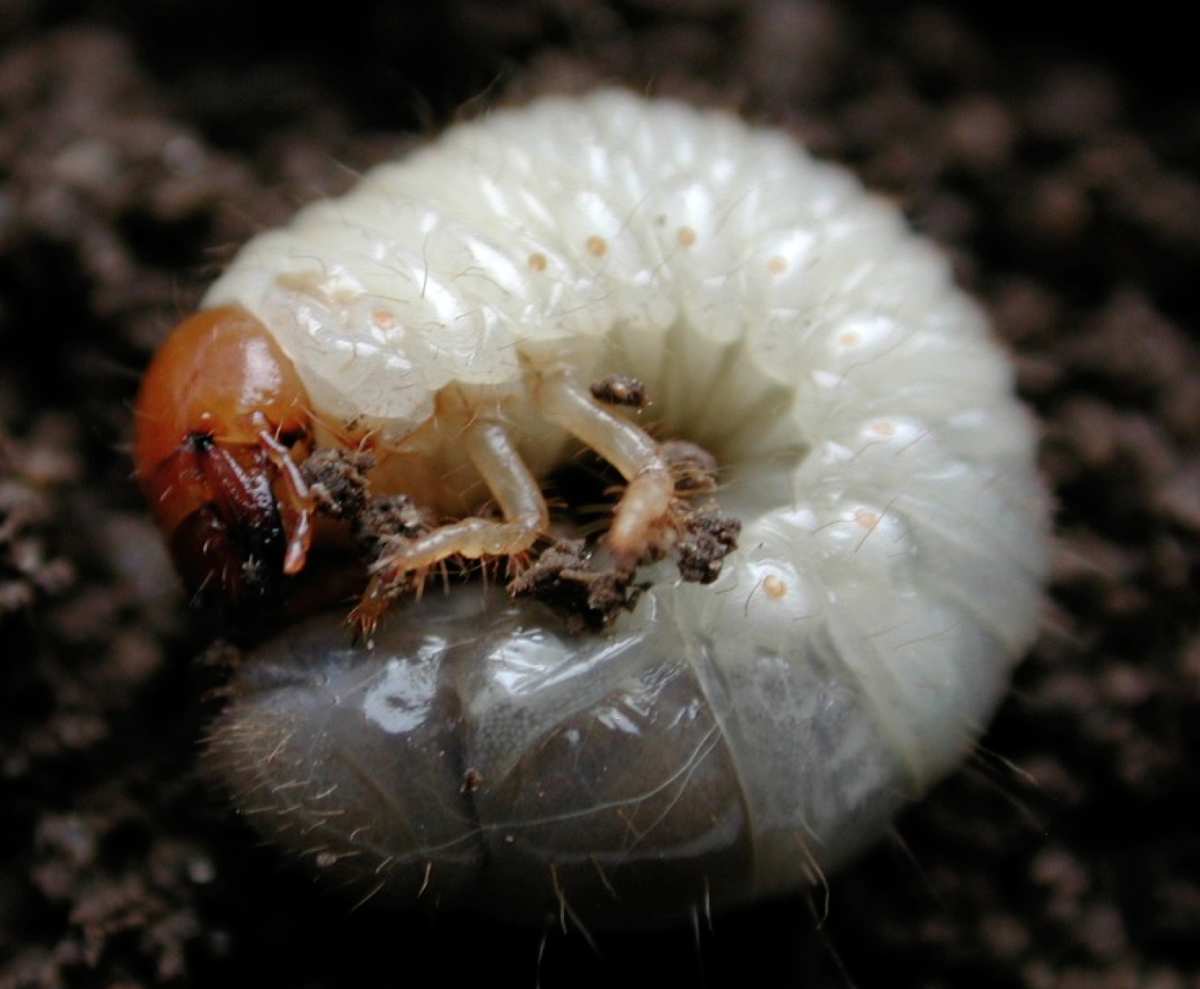
Image source: Bing (Web (fair-use with source credit))
Quick Comparison Table: Grub Damage vs. Common Lookalikes
| Symptom | Grubs | Drought | Fungal Disease | Chinch Bugs | Webworms |
|---|---|---|---|---|---|
| Pattern | Irregular patches | Uniform, sunny areas | Circular with blade spots | Sunny areas, edges first | Irregular, moth activity |
| Tug test | Lifts easily | Holds firm | Holds firm | Holds firm | Holds firm |
| Insects in soil | C-shaped larvae | None | None | None | None |
| Insects in thatch | None | None | None | Tiny black insects | Green fecal pellets, tunnels |
| Response to water | No improvement | Improves | No improvement | No improvement | No improvement |
| Animal digging | Common | Rare | Rare | Rare | Rare |
What to Do Based on Your Findings
Once you've sampled and counted, your next steps depend on what you found.
If You Find 0-4 Grubs Per Square Foot
You're in the clear for now. This is a low population that your lawn can tolerate without damage. Keep monitoring through late summer and early fall.
Maintain good lawn practices: proper watering, adequate fertilization, and mowing at the right height. A healthy lawn withstands low grub pressure without any treatment.
If You Find 5-9 Grubs Per Square Foot
This is the gray zone. If your lawn is healthy and well-maintained, you can probably wait and watch. But if your lawn is already stressed by drought, heat, or heavy use, consider treating.
This is also the range where preventive treatment makes sense if you want to protect your lawn going into fall.
If You Find 10+ Grubs Per Square Foot
Treat now. At this population level, visible damage is either already present or coming soon. Use a curative insecticide containing trichlorfon (Dylox) or carbaryl (Sevin) for immediate control.
These products work on contact and kill existing larvae within days. Apply in the evening and water lightly to move the product into the root zone where grubs are feeding.
If You're Not Sure What You're Looking At
Collect a few larvae in a sealed bag and take them to your local university extension office. Most extension services will identify lawn pests for free or a small fee. You can also photograph the larvae next to a ruler and submit the image through your state's diagnostic lab.
Accurate identification prevents wasted money on the wrong treatment.
When to Check: Timing Your Inspection for Accurate Results
Timing matters more than most people realize. Grubs are easiest to find when they're small and active near the surface. The best window for scouting is late July through October in most regions.
That's when the current year's eggs have hatched and the larvae are feeding aggressively in the root zone.
Spring sampling is less reliable. Overwintered grubs are deeper in the soil and often too large to be effectively treated with curative products. By the time you see damage in spring, the feeding has already happened.
The larvae are preparing to pupate, and treatment at that point is mostly about protecting next year's lawn.
Adult beetle flights give you an early warning system. Japanese beetles typically peak in late June through July in most of the eastern US. European chafers fly in late June.
If you see heavy adult beetle activity on your property, expect eggs to be laid in your lawn within two to three weeks. That's when preventive treatment timing is critical.
Common Mistakes People Make When Checking for Grubs
Even when people know to check, they often make errors that lead to false conclusions.
Sampling only one spot. Grub populations are patchy. One clean sample doesn't mean your lawn is grub-free. Always check at least three to four locations.
Digging in the center of dead patches. By the time turf is completely brown, the grubs may have moved to adjacent areas. Sample at the margin between damaged and healthy turf for the most accurate count.
Confusing earthworms with grubs. Earthworms are segmented, darker, and much larger. They're beneficial. Don't kill them thinking they're pests.
Waiting too long to check. If you're seeing brown patches in August, check immediately. Every day you wait, more roots are being destroyed. Early detection means easier treatment and faster recovery.
Treating without confirming. Applying insecticide without verifying grubs are present wastes money and kills beneficial organisms. Always sample first.
When to Call a Professional vs. DIY
Most homeowners can handle grub diagnosis and treatment themselves. The sampling process is simple, and curative products are available at any garden center without a license. But there are situations where calling a professional makes sense.
Call a professional if:
- Your lawn is larger than a quarter acre and you can't sample thoroughly
- You've treated twice and damage continues
- You're seeing damage in high-value turf like a golf green or sports field
- You need precise species identification for targeted treatment
- You're dealing with recurring annual problems that suggest a larger underlying issue
DIY is fine if:
- You have a standard residential lawn
- You're willing to sample properly
- You can follow label instructions carefully
- You're treating at the right time of year
Professional lawn care services typically charge $50 to $150 per application depending on your region and lawn size. DIY curative products run $15 to $30 per bag, which covers about 5,000 to 10,000 square feet. The math favors DIY for most homeowners, but the expertise and equipment of a professional can be worth it for severe or persistent infestations.
Frequently Asked Questions
What time of year should I check for grubs?
Late July through October is the best window. That's when larvae are small, active near the surface, and causing the most visible damage. Spring checks are less reliable because grubs are deeper and preparing to pupate.
How many grubs is too many?
The general treatment threshold is five to ten grubs per square foot. Healthy lawns can tolerate more. Stressed lawns may show damage at lower counts.
Always factor in your lawn's overall condition.
Can I check for grubs without digging?
You can look for secondary signs like animal digging, bird activity, and the tug test. But the only definitive method is digging a square-foot sample and counting larvae in the soil.
Do I need to treat if I find just a few grubs?
No. Low populations are normal in most lawns and don't require treatment. Monitor the situation and recheck in a few weeks if you're concerned.
Will grub damage heal on its own?
Minor damage often recovers with proper watering and fertilization. But severe root destruction won't heal. The turf needs intact roots to absorb water and nutrients.
If the root system is gone, you'll need to reseed or resod.
What's the difference between white grubs and billbug larvae?
White grubs have three pairs of legs near their head. Billbug larvae are legless. Both damage turf, but treatment timing and products differ.
Accurate identification matters for effective control.
Final Verdict: Your Decision Guide at a Glance
Here's your quick-reference decision tree for the entire diagnostic process.
Step 1: Observe. Are there irregular brown patches that don't improve with watering? If no, monitor. If yes, proceed.
Step 2: Tug test. Does the turf lift easily at the edge of the brown area? If no, it's likely drought, disease, or another pest. If yes, proceed.
Step 3: Sample. Dig a one-square-foot sample two to three inches deep at the margin of the damage. Count the C-shaped larvae.
Step 4: Decide.
- 0-4 grubs: Monitor, no treatment needed
- 5-9 grubs: Treat if lawn is stressed; otherwise monitor
- 10+ grubs: Treat now with a curative insecticide
Step 5: Follow up. Recheck in two to three weeks after treatment. If damage continues, reassess for other causes or call a professional.
The whole process takes about 15 minutes and costs nothing but your time. That's a small investment compared to the cost of replacing a lawn or treating a problem that doesn't exist. Check your lawn this week, get a definitive answer, and take action based on what you actually find.