Okra leaves turning yellow is one of the most common things gardeners notice mid-season, and it's almost always fixable if you catch it early. The cause could be as simple as a watering issue or as specific as a nutrient lockout in your soil. Either way, the fix depends on reading the plant correctly.
Okra (Abelmoschus esculentus) is a warm-season crop that thrives in soil pH between 6.5 and 7.0, full sun of at least six hours, and consistent but not excessive moisture. When any of those conditions drift, the leaves are usually the first place the stress shows up. Let's walk through what's actually going on and how to figure out which problem you're dealing with.
Image source: Wikimedia Commons / F.W. Bolgiano & Co.; Henry G. Gilbert Nursery and Seed Catalog Collection.
Quick Answer
Okra leaves turn yellow most often from overwatering, nitrogen deficiency, or poor drainage. Less commonly, pests, disease, or soil pH imbalance are the cause. Check which leaves are yellowing first, test your soil moisture, and inspect the undersides of leaves for pests before treating.
The right fix depends entirely on the underlying issue.
The Most Common Causes (and How to Tell Them Apart)
Not all yellowing looks the same, and the pattern tells you a lot about what's wrong. Here's a breakdown of the usual suspects and how each one presents on an okra plant.
| Cause | Where Yellowing Starts | Key Visual Clues |
|---|---|---|
| Nitrogen deficiency | Lower, older leaves | Uniform pale yellow, stunted growth |
| Iron deficiency | Upper, newest leaves | Yellow between veins, veins stay green |
| Overwatering / poor drainage | Lower leaves, overall droop | Soggy soil, wilting despite wet conditions |
| Spider mites | Any leaf, often upper | Fine webbing, tiny dots on leaf undersides |
| Aphids | New growth and leaf undersides | Clusters of small insects, sticky honeydew |
| Root rot (Pythium/Fusarium) | Whole plant, rapid decline | Brown mushy roots, plant pulls out easily |
| Heat or cold stress | Outer/upper leaves | Scorched edges (heat) or dark water-soaked patches (cold) |
| Natural senescence | Lowest leaves only | A few yellow leaves at base, rest of plant healthy |
The single most useful thing you can do is note which leaves turned yellow first. Lower-leaf yellowing points to nitrogen or overwatering. Upper-leaf yellowing points to iron deficiency or pest damage.
Whole-plant yellowing that comes on fast usually means root rot or a vascular disease.
Nutrient Deficiencies: Nitrogen, Iron, and Magnesium
Nutrient problems are behind a huge percentage of yellowing okra leaves, and each deficiency has a distinct fingerprint.
Nitrogen deficiency is the most common. Nitrogen is mobile in the plant, so when supply runs low, the plant pulls it from older leaves and redirects it to new growth. You'll see the lowest leaves turn a uniform pale yellow while the top of the plant still looks green.
Growth slows down, and the plant may look generally weak. A side-dressing of blood meal, fish emulsion, or a balanced fertilizer with a higher first number (like 10-5-5) usually corrects this within a week or two.
Iron deficiency shows up on the newest leaves first. The tissue between the veins turns yellow while the veins themselves stay green, a pattern called interveinal chlorosis. This is often caused by soil pH being too high (above 7.0), which locks out iron even when it's present in the soil.
A soil pH test is the best first step here. If pH is high, chelated iron foliar spray gives a fast fix while you adjust the soil.
Magnesium deficiency is less common but looks similar to iron deficiency. The difference is that magnesium deficiency usually shows on middle-aged leaves, not the newest ones. An Epsom salt drench (one tablespoon per gallon of water, applied to the soil) can correct a mild deficiency quickly.
If you're not sure which nutrient is the problem, a soil test from your local cooperative extension office is worth the small fee. It'll tell you exactly what's available and what's not, so you're not guessing.
Image source: Pixabay / PavKorukonda (Pixabay Content License)
Water Problems: Too Much, Too Little, and Poor Drainage
Watering issues are the number one cause of yellowing okra leaves in home gardens, and overwatering is far more common than underwatering.
Okra likes consistent moisture but absolutely hates sitting in waterlogged soil. When the roots can't get oxygen, they start to suffocate and rot. The plant responds by yellowing from the bottom up, and the leaves may wilt even though the soil is wet.
If you're watering on a fixed schedule without checking the soil first, this is likely your problem.
The finger test is your best tool. Stick your finger two inches into the soil near the base of the plant. If it feels wet or muddy, hold off on watering. If it's dry at that depth, it's time to water.
Okra in containers dries out faster than in-ground plants, so check container-grown plants more often.
Poor drainage compounds everything. Heavy clay soils hold water long after sandy soils have drained. If your okra is planted in clay that hasn't been amended, root rot becomes a real risk, especially during hot weather when Pythium and Fusarium fungi are most active.
Raised beds or adding compost and coarse sand to heavy soil makes a significant difference.
Underwatering causes yellowing too, but the leaves will usually look dry and crispy rather than soft and droopy. The plant will perk up within hours of a deep watering if this is the issue.
Pests That Cause Yellowing: Aphids, Spider Mites, and Whiteflies
Pests are easy to overlook because the damage they do can look like a nutrient problem at first glance. Always flip a few leaves over and look closely before you reach for fertilizer.
Aphids cluster on new growth and the undersides of leaves. They're small, soft-bodied, and come in green, black, or yellow. They suck sap from the plant, which causes yellowing, curling, and stunted growth.
You'll often notice a sticky residue called honeydew on the leaves, which can develop into black sooty mold. A strong spray of water knocks them off, and neem oil or insecticidal soap takes care of heavier infestations.
Spider mites are tiny, almost invisible to the naked eye, and they thrive in hot, dry conditions. Look for fine webbing on the undersides of leaves and a stippled or speckled pattern on the leaf surface. As the damage progresses, leaves turn yellow and drop.
Increasing humidity around the plant and applying neem oil to the undersides of leaves are effective controls.
Whiteflies are small, white, moth-like insects that fly up in a cloud when you disturb the plant. Like aphids, they feed on sap and excrete honeydew. Yellowing and leaf drop follow heavy infestations.
Yellow sticky traps help monitor and reduce populations, and insecticidal soap works for direct control.
The key with any pest is early detection. A quick daily walk through the garden, flipping a few leaves as you go, catches problems before they get out of hand.
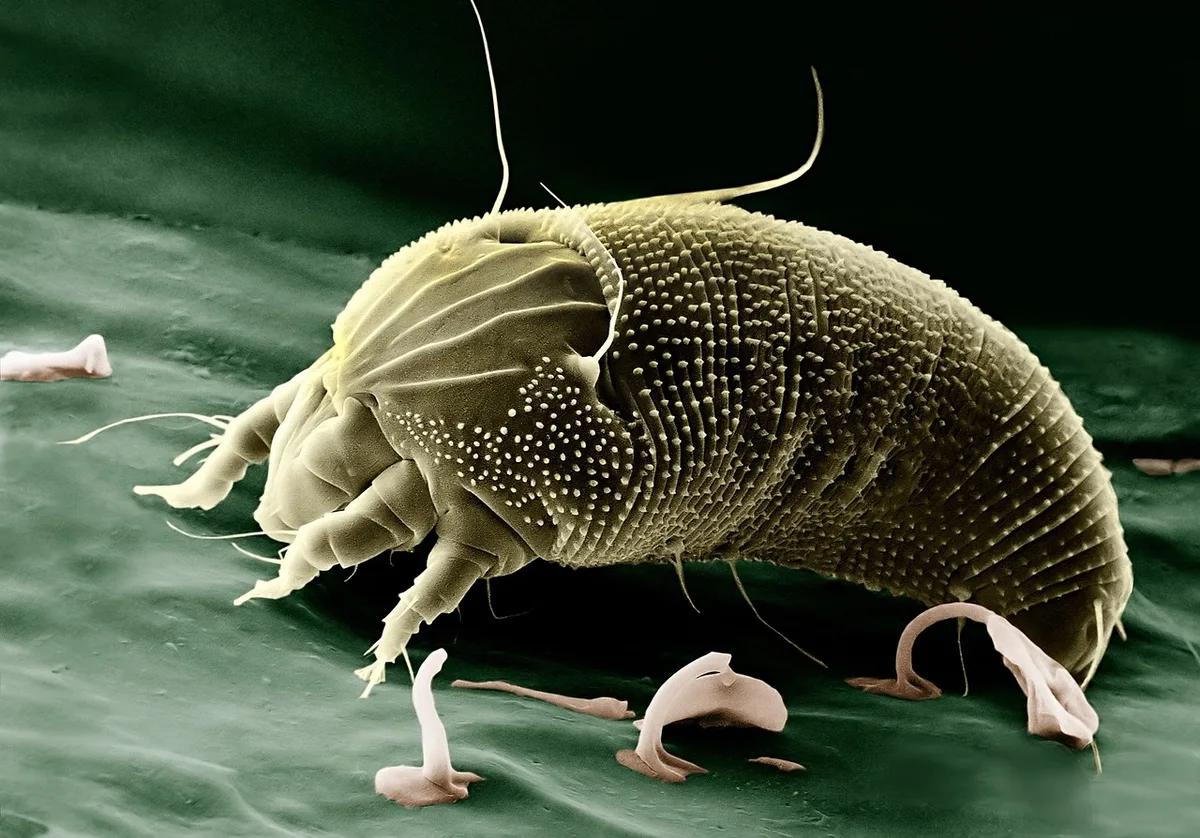
Image source: Pixabay / WikiImages (Pixabay Content License)
Diseases Behind Yellow Okra Leaves
Fungal and bacterial diseases can cause yellowing, and they're harder to reverse than nutrient or watering issues. Knowing what to look for helps you act fast.
Fusarium wilt and Verticillium wilt are soil-borne fungal diseases that invade the plant's vascular system. They block water movement, causing one side of the plant to yellow and wilt while the other side still looks healthy. Cutting a stem near the base and looking for brown discoloration inside the vascular tissue is a telltale sign.
There's no cure once a plant is infected. Remove it, don't compost it, and rotate your okra to a different spot next season.
Pythium root rot thrives in warm, waterlogged soil. The roots turn brown and mushy, the plant yellows rapidly, and it may collapse even though the soil is wet. Improving drainage and reducing watering are the primary controls.
As of 2026, several university extension programs recommend using biological fungicides containing Trichoderma species as a preventive measure in soils with a history of Pythium problems.
Bacterial blight, caused by Xanthomonas species, shows up as yellow spots on leaves that may have a water-soaked appearance. The spots can merge and cause large sections of the leaf to yellow and die. This disease spreads through splashing water and contaminated seed.
Avoid overhead watering, and use certified disease-free seed to reduce risk.
Fungal leaf spot diseases cause circular yellow or brown spots on leaves. They're mostly cosmetic in mild cases but can cause significant leaf drop in wet, humid conditions. Removing affected leaves and improving air circulation around plants helps keep it in check.
If you suspect a soil-borne disease, your local cooperative extension service can help with diagnosis. Many offer plant disease clinics where you can submit samples for identification.
Environmental Stress: Heat, Cold, and Sunlight Issues
Okra loves heat, but even this warm-season crop has its limits. When temperatures push past 95°F for extended periods, the upper leaves can yellow and develop scorched edges. The plant is essentially shutting down non-essential functions to survive.
Mulching around the base helps keep root zones cooler and reduces moisture loss during heat waves.
Cold stress is more common than most gardeners expect. Okra planted too early, before soil temperatures reach at least 65°F, often shows yellowing and stunted growth within days. Nighttime temperatures below 55°F can cause similar symptoms even in established plants.
If a late cold snap hits, floating row cover overnight makes a real difference.
Insufficient sunlight is another overlooked cause. Okra needs a minimum of six hours of direct sun, and it really performs best with eight or more. Plants tucked into a partially shaded corner will yellow from the bottom up as the plant sacrifices lower leaves that aren't photosynthesizing enough to justify keeping.
If your okra is shaded by taller neighbors, consider relocating it next season or pruning nearby plants to open up the canopy.
What to Check First: A Step-by-Step Diagnostic Walkthrough
When you see yellow leaves, resist the urge to grab fertilizer right away. Work through this sequence instead. It'll save you time and prevent you from treating the wrong problem.
Step 1: Look at which leaves are yellow. Lower leaves point to nitrogen deficiency or overwatering. Upper leaves suggest iron deficiency or pests. Whole-plant yellowing fast usually means root rot or a vascular disease.
Step 2: Check soil moisture. Stick your finger two inches into the soil. Wet and muddy means you're overwatering or drainage is poor. Bone dry means the plant needs water.
This single check eliminates the most common cause immediately.
Step 3: Flip the leaves over. Look for aphids, spider mite webbing, or whiteflies on the undersides. Pest damage is easy to miss if you only look at the top of the plant.
Step 4: Examine the roots if the plant is declining fast. Gently dig near the base. Healthy roots are white or light tan. Brown, mushy roots mean root rot, and there's no saving the plant at that point.
Step 5: Test your soil pH. A basic home test kit costs a few dollars and tells you whether nutrient lockout is the issue. Okra performs best between 6.5 and 7.0.
Step 6: Consider recent weather. A heat wave, cold snap, or heavy rain event in the past week often explains sudden yellowing without any other intervention needed.
Image source: Pixabay / analogicus (Pixabay Content License)
How to Fix Yellow Okra Leaves Based on What's Actually Wrong
Once you've identified the cause, the fix is usually straightforward. Here's what to do for each scenario.
For nitrogen deficiency: Apply a nitrogen-rich fertilizer like blood meal or fish emulsion according to package rates. Side-dress around the base of the plant and water it in. You should see improvement within seven to ten days.
For iron deficiency: Apply chelated iron as a foliar spray for a quick response. Adjust soil pH downward if it's above 7.0 by incorporating elemental sulfur or acidic compost. This is a longer-term fix but prevents the problem from recurring.
For overwatering: Cut back immediately. Let the top two inches of soil dry out before watering again. If drainage is the underlying issue, work compost into the soil or consider transplanting to a raised bed.
For pests: Spray aphids and whiteflies off with a strong stream of water. Follow up with neem oil or insecticidal soap applied to leaf undersides. For spider mites, increase humidity and apply neem oil every five to seven days until the population drops.
For fungal diseases: Remove and dispose of infected plants. Do not compost material infected with Fusarium or Verticillium. Rotate okra to a different bed next season and consider soil solarization if the problem is persistent.
For environmental stress: Mulch to regulate soil temperature. Use row cover during cold snaps. Provide temporary shade cloth during extreme heat events above 100°F.
Common Mistakes That Make Yellowing Worse
A few well-intentioned habits actually push yellowing further along. Here's what to watch for.
Over-fertilizing nitrogen when the real problem is root rot. Adding more nitrogen to a plant with damaged roots doesn't help. It can actually stress the plant further because the roots can't take up the extra nutrients. Always check root health before fertilizing.
Watering on a fixed schedule. Soil moisture changes with temperature, humidity, and rainfall. Watering every two days regardless of conditions is a fast track to waterlogged soil. Check the soil first, every time.
Ignoring soil pH. You can add all the fertilizer you want, but if the pH is off, the nutrients stay locked in the soil and unavailable to the plant. A pH test should be part of your routine at the start of each growing season.
Spraying pesticides without identifying the pest first. Broad-spectrum insecticides kill beneficial insects along with the pests. Ladybugs, lacewings, and parasitic wasps all help control aphid and whitefly populations naturally. Targeted treatments are always better than a blanket approach.
Removing every yellow leaf you see. A few yellow lower leaves are normal, especially late in the season. Aggressive pruning stresses the plant and reduces its ability to photosynthesize. Only remove leaves that are more than 50 percent yellow or show signs of disease.
When Yellow Leaves Are Normal (and Not a Problem)
Not every yellow leaf is a crisis. Okra naturally sheds its oldest leaves as the plant matures and puts energy into flower and pod production. If you see one or two yellow leaves at the very bottom of an otherwise healthy, productive plant, that's just senescence.
The plant is reallocating resources, and there's nothing to fix.
Late-season yellowing is also normal. As okra approaches the end of its productive cycle, especially after heavy pod production, the lower leaves yellow and drop. This is the plant winding down, not a sign of disease.
The key distinction is whether the yellowing is isolated and slow, or spreading and fast. A few bottom leaves turning yellow over a couple of weeks is fine. Rapid yellowing moving up the plant, especially with wilting or leaf drop, needs attention.
Expert Tips to Keep Okra Leaves Green and Healthy All Season
Start with a soil test before you plant. It's the single best investment you can make. Knowing your pH and baseline nutrient levels lets you amend properly from day one instead of troubleshooting problems mid-season.
Use two to three inches of organic mulch around the base of each plant. Mulch regulates soil temperature, retains moisture, and reduces the splash that spreads fungal spores from soil to lower leaves. Straw, shredded leaves, or aged wood chips all work well.
Water deeply but less frequently. A long, slow soaking encourages roots to grow down rather than staying shallow. Shallow-rooted plants are far more vulnerable to heat stress and moisture fluctuations.
Aim for one to one and a half inches of water per week, adjusted for rainfall.
Inspect your plants every few days during peak growing season. Flip a few leaves, check the soil, and look for early pest activity. Catching a small aphid colony or the first sign of spider mites takes five minutes.
Waiting two weeks can mean the difference between a quick spray and losing half your crop.
Rotate your okra to a different bed each year if possible. Soil-borne pathogens like Fusarium and Verticillium build up in the ground over time. A three-year rotation cycle significantly reduces disease pressure.
Prevention: Soil, Water, and Variety Choices That Reduce Yellowing
Building the right foundation makes most yellowing problems avoidable altogether.
Soil preparation matters more than anything. Okra needs well-drained soil with plenty of organic matter. If you're working with heavy clay, blend in compost and coarse sand before planting. In raised beds, use a mix of topsoil, compost, and perlite or vermiculite for good drainage.
Choose disease-resistant varieties when you can. Clemson Spineless is the most widely grown and performs well across a range of conditions. Cajun Jewel and Burgundy also show good tolerance to common fungal issues. Your local cooperative extension office can recommend varieties suited to your specific region.
Avoid overhead watering. Soaker hoses or drip irrigation keep foliage dry and dramatically reduce the spread of fungal leaf diseases. If you must water from above, do it early in the morning so leaves dry quickly in the sun.
Space plants properly. Crowded okra has poor air circulation, which creates a humid microclimate that fungi love. Eighteen to twenty-four inches between plants is the standard recommendation for most varieties.
Frequently Asked Questions
Should I cut off yellow okra leaves?
Only if they're more than half yellow or show signs of disease. A few yellow lower leaves are normal and removing them doesn't help the plant. Pruning healthy green leaves actually reduces the plant's ability to produce energy.
Can yellow okra leaves turn green again?
Usually not on the leaf itself. Once a leaf has turned fully yellow, it won't recover. But correcting the underlying issue, whether it's a nutrient deficiency or watering problem, will stop the spread and new growth will come in green.
Is Epsom salt good for yellowing okra leaves?
It can help if the issue is magnesium deficiency, which shows as interveinal yellowing on middle-aged leaves. Dissolve one tablespoon per gallon of water and apply as a soil drench. If the problem is nitrogen or iron related, Epsom salt won't make a difference.
How often should I fertilize okra?
A light side-dressing of balanced fertilizer at planting and again when the first pods set is usually enough. Over-fertilizing, especially with high-nitrogen products, can cause lush foliage at the expense of pod production and may worsen root problems.
Can too much rain cause yellow okra leaves?
Absolutely. Prolonged heavy rain saturates the soil, deprives roots of oxygen, and can trigger root rot. If your area gets extended rainy periods, planting in raised beds or mounded rows helps excess water drain away from the root zone.
Final Decision Guide: What to Do Right Now
If you're looking at yellow okra leaves today, here's your action plan. Check which leaves are yellowing first. Test your soil moisture with the finger method.
Flip the leaves and look for pests. If nothing obvious shows up, get a soil pH test. Most yellowing issues come down to one of three things: water, nitrogen, or pH.
Fix those and your okra will usually bounce back within a week or two. If the plant is declining fast with wilting and mushy roots, remove it and focus on preventing the problem in your remaining plants.