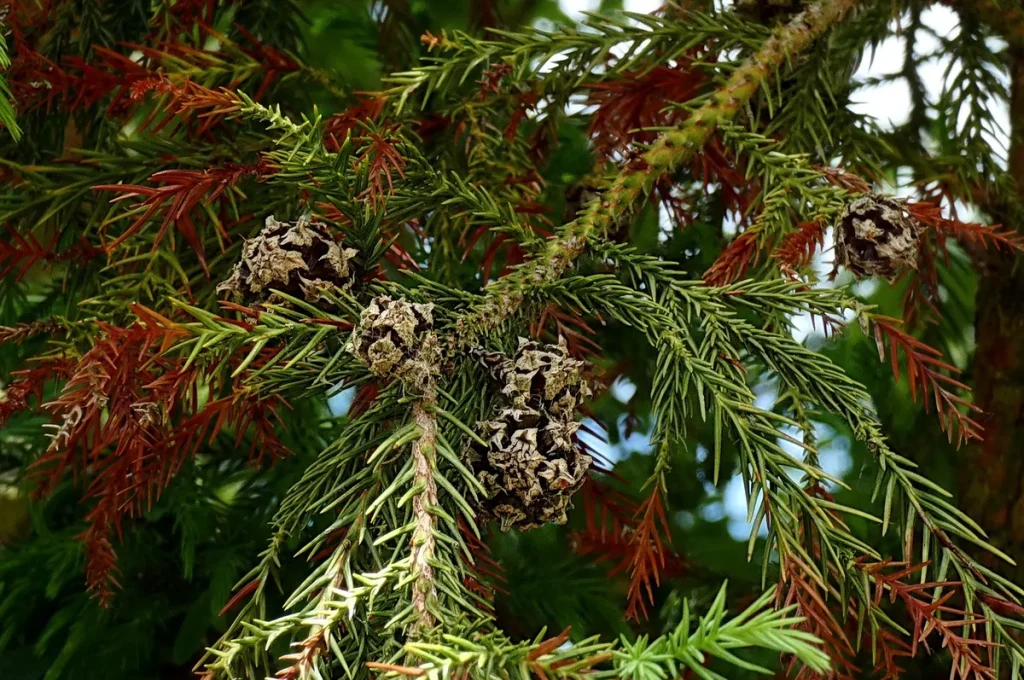
If your Cryptomeria japonica 'Black Dragon' is looking rough, you're not alone. Black dragon cryptomeria problems are one of the most common conifer complaints homeowners bring up, and the tricky part is that the symptoms often overlap. Browning needles, branch dieback, and general decline can point to a handful of very different causes, and treating the wrong one makes things worse.
The good news is that most issues are fixable if you catch them early and match the right solution to the right problem. In our research, we've found that the majority of cases trace back to just a few root causes: drainage, fungal disease, environmental stress, or pests. Let's walk through each one so you can figure out exactly what's happening with your tree and what to do about it.
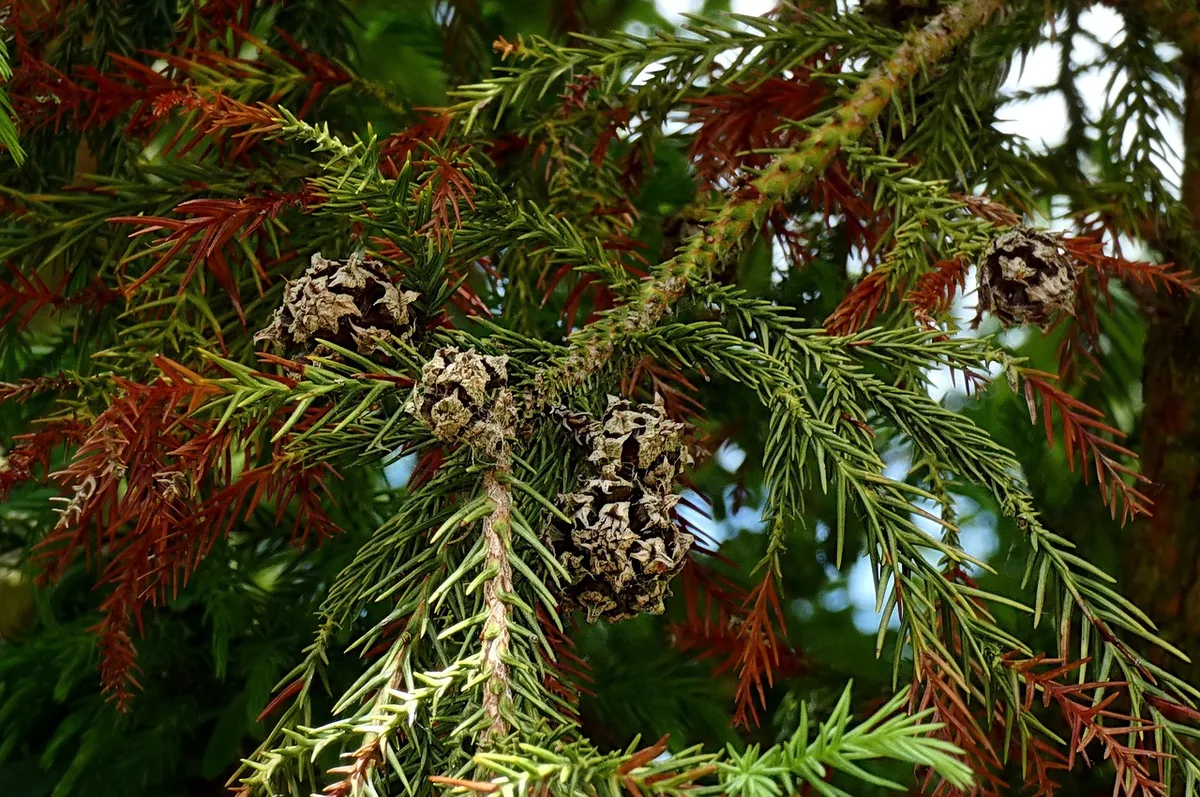
Image source: Pixabay / DEZALB (Pixabay Content License)
Quick Answer
Black dragon cryptomeria problems most commonly stem from Phytophthora root rot, Cercospora needle blight, winter desiccation, or spider mite infestations. Start by checking soil drainage and needle color patterns. Wet soil and dark lower-branch lesions point to root rot.
Scattered browning with black spots suggests fungal needle blight. Uniform bronzing on the wind-facing side is usually winter burn. Fine webbing on needles means spider mites.
Each cause requires a different treatment, so accurate diagnosis matters before you act.
What's Actually Happening to Your Tree — A Symptom-by-Symptom Breakdown
Before you grab a fungicide or start watering more, you need to slow down and actually read what the tree is telling you. Cryptomeria japonica 'Black Dragon' is a slow-growing, compact cultivar, which means it doesn't bounce back from damage the way a fast-growing evergreen might. That slow recovery rate is exactly why early and accurate diagnosis matters so much.
Here's the framework that works. Start at the top of the tree and work your way down, then move from the outer branches inward. Look at the pattern.
Is the damage uniform or patchy? Is it on one side or all the way around? Is it the old growth, the new growth, or both?
These patterns are your diagnostic clues. A tree losing interior needles evenly is often just doing normal seasonal shed. A tree with browning concentrated on the lower branches moving upward is telling you something very different.
A tree with random scattered dead tips is yet another story.
The key symptoms to look for:
- Browning or bronzing of needles, especially if it's worse on one side
- Progressive dieback starting from branch tips or lower limbs
- Yellowing or graying of new growth while older needles still look green
- Black or dark lesions on branch tips or along stems
- Fine webbing on needle clusters, especially in hot dry weather
- Sticky residue or black sooty mold on the foliage
- Sudden wilting of an entire branch or section
Each of these points to a different problem category. In the next few sections, we'll break them down one by one so you can match what you're seeing to the right cause and the right fix.
Browning Needles: Disease, Winter Burn, or Something Else?
Browning needles are the number one reason people panic about their Black Dragon cryptomeria. But here's the thing: not all browning is a crisis. Some of it is completely normal.
Cryptomeria japonica naturally sheds its oldest interior needles in late summer and early fall. If you're seeing brown needles deep inside the canopy while the outer and upper growth still looks healthy and dark green, that's likely just seasonal needle drop. It's the conifer equivalent of losing leaves.
Nothing to worry about.
But if the browning is on the outer growth, concentrated on one side, or spreading, you've got a real problem. The cause depends on the pattern.
Winter desiccation is one of the most common culprits, especially in Zones 5 and 6. It happens when warm winter sun or wind pulls moisture out of the needles faster than the frozen roots can replace it. The result is uniform bronzing or browning on the side facing prevailing wind or afternoon sun.
The damage shows up in late winter or early spring and doesn't spread once temperatures stabilize.
Cercospora needle blight (caused by the fungus Cercospora sequoiae) looks different. It typically starts on the lower branches and works upward. Individual needles turn brown or reddish-brown, often starting at the base of the needle cluster.
You might see tiny black fruiting bodies on the affected needles if you look closely with a hand lens. This disease thrives in warm, humid conditions and is especially common in the Southeast.
Kabatina tip blight attacks the new growth first. Branch tips turn brown to gray-green, and you'll often see small black pycnidia (fungal structures) on the affected tissue. It's most active in spring and is frequently confused with winter damage.
So how do you tell them apart? Check the timing, the pattern, and which needles are affected. Winter burn is one-sided and shows up after cold snaps.
Cercospora starts low and moves up in humid weather. Kabatina hits the tips of new growth in spring. Once you know which pattern you're looking at, the treatment path becomes clear.
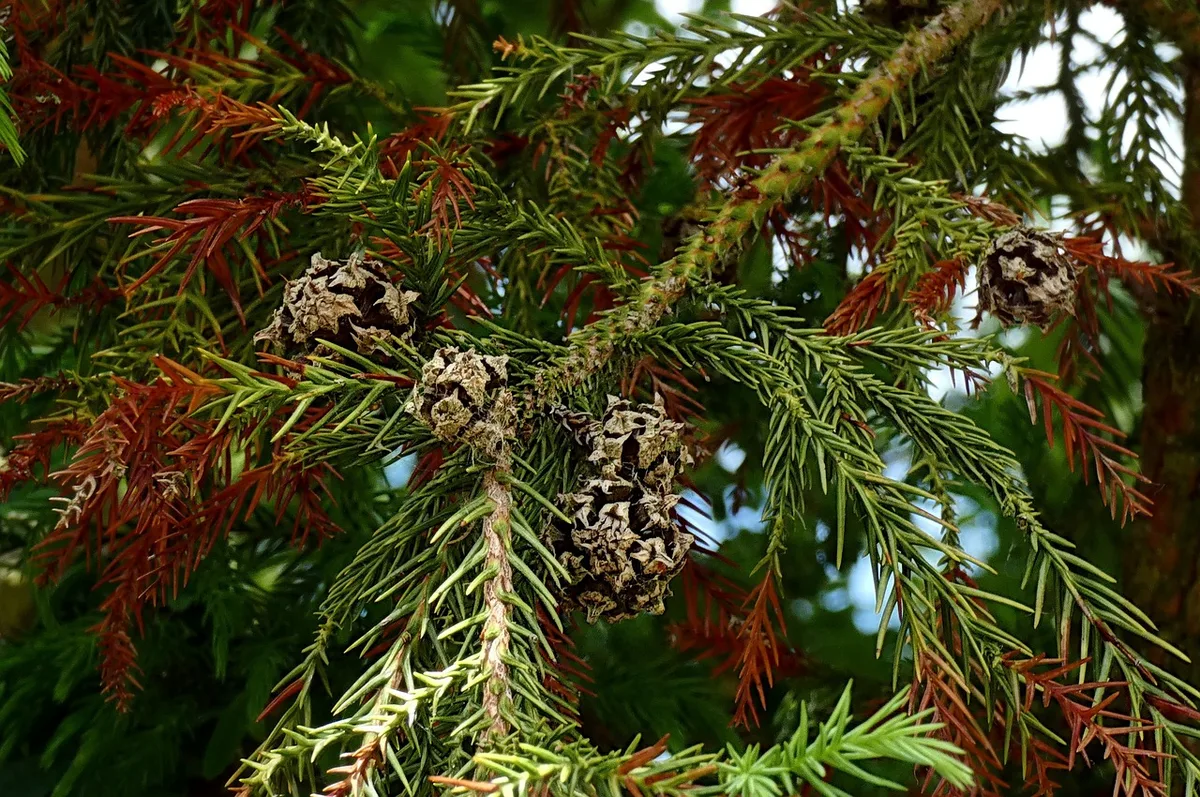
Image source: Pixabay / DEZALB (Pixabay Content License)
Dieback and Wilting: The Root Rot and Canker Connection
When entire branches start dying back or sections of the tree wilt suddenly, you're dealing with something more serious than surface-level needle issues. This is where the problem is either in the vascular system of the tree or in the roots themselves.
Phytophthora root rot is the big one for cryptomeria. It's caused by soil-borne pathogens (Phytophthora spp.) that attack the root system, especially in poorly drained or heavily clay soils. The first sign is often a general decline: the tree looks dull, new growth is reduced, and needles start yellowing or browning from the inside out.
As the root system deteriorates, entire branches wilt and die. If you dig gently around the base and find dark, mushy roots instead of firm white ones, that's your confirmation.
The critical threshold is soil saturation. If the root zone stays waterlogged for more than 48 hours, Phytophthora spores can infect. This is why drainage is everything with Black Dragon cryptomeria.
The tree's shallow, fibrous root system is especially vulnerable.
Seiridium canker is another serious issue. It causes sunken, oozing cankers on branches and stems. The foliage above the canker wilts and turns brown because the fungus is cutting off the flow of water and nutrients.
You'll often see a distinct line between healthy and dead tissue. Seiridium tends to attack trees that are already stressed, from drought, poor soil, or mechanical damage.
Phytophthora root rot vs. Seiridium canker: how to tell the difference
| Feature | Phytophthora Root Rot | Seiridium Canker |
|---|---|---|
| Where it starts | Roots, then whole canopy declines | Individual branches, often mid-canopy |
| Key symptom | General yellowing, reduced growth, wilting | Localized wilting above a visible canker |
| Root condition | Dark, mushy, decaying | Roots may look normal |
| Soil clue | Poor drainage, standing water | No specific soil pattern |
| Progression | Slow, over months to years | Can kill a branch in weeks |
If you suspect either of these, act fast. Phytophthora can sometimes be managed by improving drainage and applying a phosphonate fungicide, but advanced cases usually mean the tree can't be saved. Seiridium cankers can sometimes be pruned out if you catch them early, cutting well below the visible canker into healthy wood and sterilizing your tools between every cut with a 10% bleach solution.
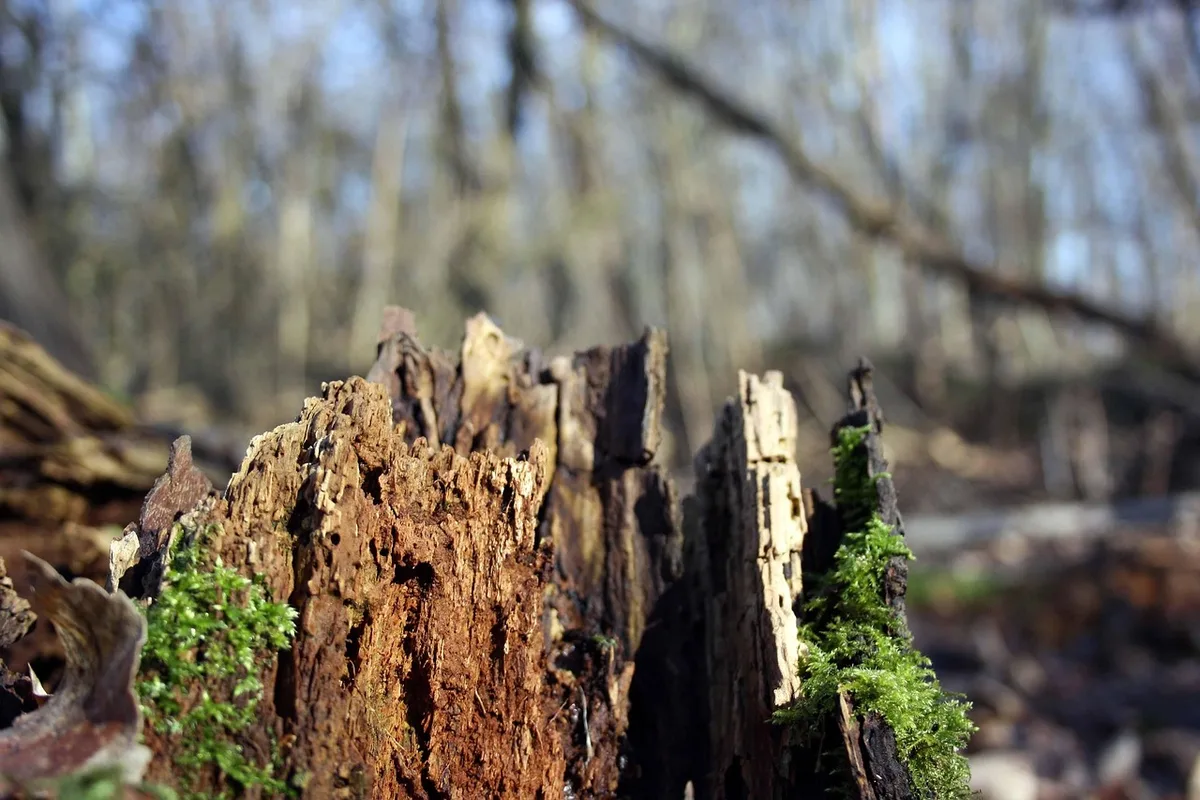
Image source: Pixabay / Alchemilla (Pixabay Content License)
Bugs on Your Cryptomeria: Spider Mites, Scale, and How to Confirm
Not all black dragon cryptomeria problems are fungal. Pests can cause significant damage, and because they're small, they often go unnoticed until the tree is already struggling.
Spider mites (Tetranychidae) are the most common pest on cryptomeria, especially during hot, dry spells. They're tiny, barely visible to the naked eye, and they feed by piercing individual needles and sucking out the contents. The result is a stippled or bronzed appearance that can look a lot like nutrient deficiency or drought stress.
The telltale sign is fine webbing on the needle clusters. If you hold a white sheet of paper under a branch and tap it, you might see tiny moving dots. Those are your mites.
Spider mites thrive in dusty, dry conditions. Trees near south-facing walls or paved areas are especially vulnerable. A strong blast of water from the hose can knock populations back significantly.
For heavier infestations, horticultural oil or insecticidal soap applied thoroughly to all foliage is effective. Avoid broad-spectrum insecticides, which kill the predatory mites that keep spider mite populations in check naturally.
Scale insects (Coccoidea) are less common but still worth knowing about. They attach themselves to needles and stems, covering themselves with a waxy protective coating. Heavy infestations cause yellowing, reduced growth, and a sticky residue called honeydew.
That honeydew often leads to sooty mold, a black fungal growth on the foliage that blocks sunlight. Scale is harder to treat because the waxy coating protects it from many sprays. Horticultural oil applied during the crawler stage (the mobile juvenile phase) is the most effective approach.
Systemic insecticides can work but should be a last resort.
How to confirm you have pests:
- Look for fine webbing on needle clusters (spider mites)
- Check for tiny brown or white bumps on needles that don't brush off (scale)
- Tap a branch over white paper and watch for moving specks
- Look for sticky residue or black sooty mold on foliage
- Use a hand lens (10x) to inspect needle surfaces closely
If you're not sure what you're seeing, your local university extension office can often help with identification. Many offer free or low-cost diagnostic services, and getting a correct ID saves you from wasting time and money on the wrong treatment.
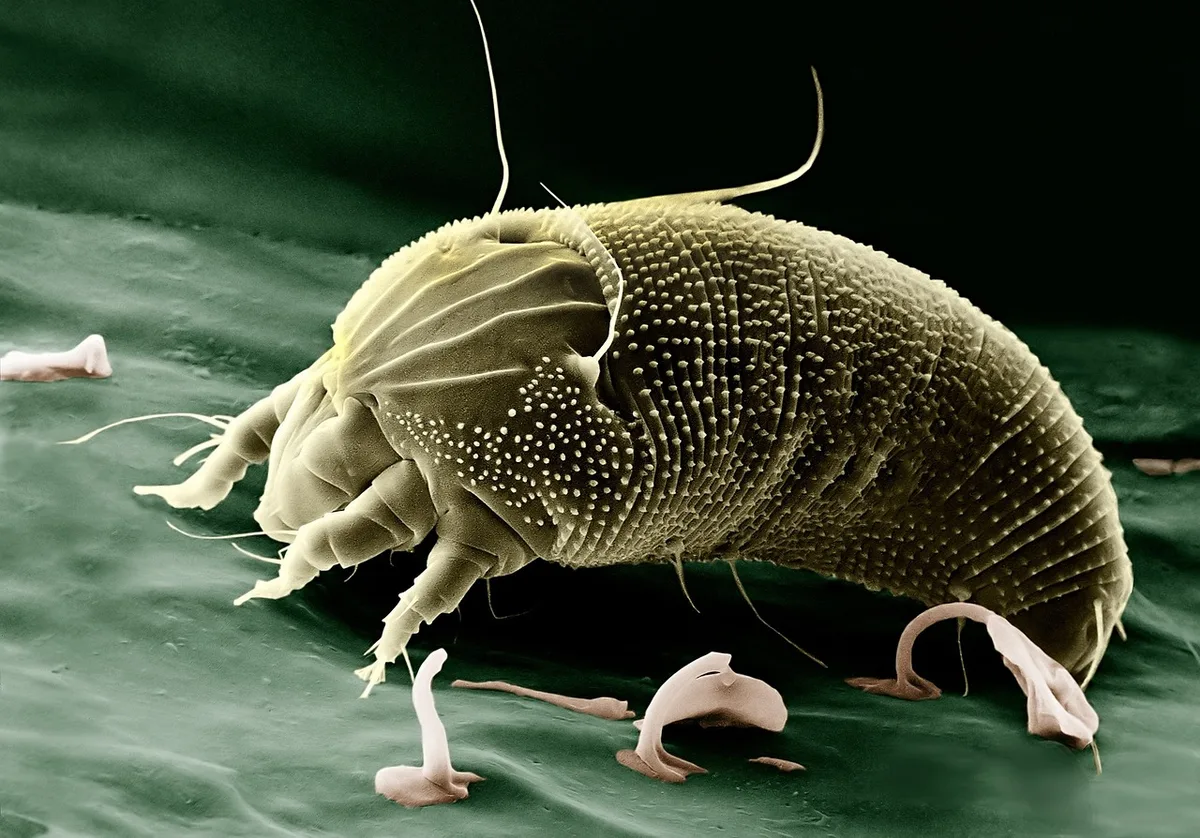
Image source: Pixabay / WikiImages (Pixabay Content License)
When It Looks Sick but Isn't — Normal Behaviors Easy to Misread
This is the section that saves you a lot of unnecessary worry. Cryptomeria japonica 'Black Dragon' does a few things that look alarming but are completely normal.
Interior needle browning in late summer and fall is the big one. Every year, the oldest needles on the inside of the canopy turn brown and drop. This is natural senescence.
The tree is shedding foliage that's no longer efficient at photosynthesis. If the brown needles are concentrated deep inside the canopy and the outer shell of growth still looks full and green, your tree is fine.
Seasonal color shift in winter is another one that causes panic. Cryptomeria foliage often takes on a slight bronze or brownish tint during cold weather. This is a normal physiological response and doesn't indicate disease.
The green color returns in spring as temperatures warm and new growth emerges.
Slow growth is just what this cultivar does. Black Dragon is bred to be compact and slow-growing, typically putting on only 6 to 12 inches per year. If your tree isn't shooting up like a 'Yoshino' cryptomeria, that's by design.
It's not a sign of poor health.
Sparse interior foliage is also normal for a dense, slow-growing conifer. As the tree matures, the interior naturally thins out because light can't penetrate the outer canopy. Don't confuse this with disease-related dieback.
Dieback affects branch tips and outer growth first. Normal interior thinning is gradual and limited to the oldest needles.
The rule of thumb: if the newest growth at the branch tips looks healthy and green, and the browning is limited to old interior needles, your tree is doing exactly what it's supposed to do. Step back, stop worrying, and save your energy for the problems that actually need attention.
Testing Your Soil and Drainage: The Two Things That Cause Most Problems
If you've ruled out pests and the browning pattern doesn't match a specific disease, it's time to get your hands dirty. Soil conditions are behind a surprising number of black dragon cryptomeria problems, and they're the easiest to test.
Start with a simple drainage test. Dig a hole about 12 inches deep near the root zone and fill it with water. Let it drain completely, then fill it again.
Time how long it takes to drain the second time. If it sits for more than 4 hours, you've got a drainage problem. If it's still there after 12 hours, that's a serious issue and likely the root cause of your tree's decline.
Next, check your soil pH. Cryptomeria japonica 'Black Dragon' prefers slightly acidic soil in the 5.5 to 6.5 range. Most garden centers sell inexpensive pH test kits, or you can send a sample to your local extension office for a full analysis.
If your soil is too alkaline above 7.0, the tree can't absorb iron and other micronutrients efficiently, which shows up as yellowing new growth.
Also check the planting depth. A tree planted too deep is a tree with suffocating roots. The root flare, where the trunk widens at the base, should be visible at or just above soil level.
If you don't see it, the tree was likely buried too deep at planting. This is a common nursery mistake that causes slow decline over several years.
Step-by-Step: What to Do Based on What You're Seeing
Here's a practical decision flow. Match your symptoms to the right action.
If needles are browning on one side only:
Check for winter desiccation. No treatment is needed for the current damage. Apply 2 to 3 inches of mulch around the base to moderate soil temperature and moisture.
Consider a windbreak or anti-desiccant spray before next winter if the pattern repeats.
If browning starts on lower branches and moves upward:
Suspect Cercospora needle blight. Remove and dispose of affected branches. Do not compost them.
Apply a copper-based fungicide in spring just as new growth emerges, repeating every 10 to 14 days during wet periods. Improve air circulation by pruning nearby plants if possible.
If the whole tree looks dull and branches are wilting:
Check soil moisture and drainage immediately. If the soil is saturated, stop watering and improve drainage. Gently excavate a small section of root to check for rot.
If roots are dark and mushy, Phytophthora is likely. Apply a phosphonate fungicide per label directions and correct the drainage issue. If more than 50% of the root system is affected, the tree may not recover.
If you see webbing or stippled needles:
Confirm spider mites with the white paper test. Blast the foliage with a strong hose spray to dislodge mites. Apply horticultural oil or insecticidal soap to all needle surfaces.
Repeat in 7 to 10 days. Avoid broad-spectrum insecticides that kill beneficial predators.
If branch tips are dying back with visible cankers:
Prune affected branches at least 6 inches below the canker into healthy wood. Sterilize pruning tools with a 10% bleach solution between every cut. Remove all pruned material from the site.
There is no effective chemical treatment for Seiridium canker, so sanitation and stress reduction are your only tools.
Treatments That Actually Work (and Ones That Waste Your Time)
Not every treatment is worth your money. Here's what the research and field experience support.
What works:
- Improving drainage is the single most effective intervention for root rot issues
- Copper-based fungicides applied preventively in spring reduce Cercospora infection rates significantly
- Horticultural oil is effective against both spider mites and scale crawlers when timed correctly
- Phosphonate fungicides can slow Phytophthora progression if applied early
- Proper mulching (2 to 3 inches, kept away from the trunk) reduces winter desiccation and moisture stress
What usually doesn't help:
- Overwatering a tree that already has root rot accelerates the problem
- Applying fungicide to drought-stressed trees does nothing for the underlying issue
- Broad-spectrum insecticides for spider mites often make infestations worse by killing natural predators
- Fertilizing a stressed or diseased tree forces new growth it can't support, adding more stress
- Spraying adult scale insects with contact insecticides is largely ineffective due to their waxy coating
The pattern here is clear. Fix the growing conditions first. Chemical treatments work best as a supplement to good cultural practices, not a replacement for them.
Worst Mistakes People Make Trying to Save Their Cryptomeria
The most common mistake is watering more when the tree looks sick. If the problem is root rot from poor drainage, adding water is literally feeding the pathogen. Always check soil moisture before reaching for the hose.
Another big one is pruning at the wrong time or with dirty tools. Pruning during wet weather spreads fungal spores. Using unsterilized tools between cuts can transfer canker pathogens from one branch to the next.
Clean your tools. Time your pruning for dry weather in late winter or early spring.
Ignoring the planting depth issue is a slow killer. A tree planted 4 to 6 inches too deep may look fine for two or three years, then gradually decline as the root system suffocates. If you suspect this, carefully excavate soil from around the root flare to expose it.
It's a simple fix that can turn a declining tree around.
Finally, don't fertilize your way out of a disease problem. A sick tree needs less stress, not more. Hold off on fertilizer until the tree is actively growing and showing recovery.
When to Call an Arborist vs. Handling It Yourself
Most of the issues we've covered can be diagnosed and treated by a motivated homeowner. But there are situations where professional help is worth the cost.
Call a certified arborist if the tree is large and you can't safely inspect the upper canopy, if you suspect Phytophthora and need a lab-confirmed diagnosis, or if multiple large branches have cankers and you're not confident in your pruning technique. An arborist can also assess whether a declining tree poses a safety risk to structures or people.
For most pest issues, minor fungal problems, and environmental stress, you can handle it yourself with the right information and a little patience. Your local university extension service is also a free resource for diagnosis and treatment recommendations specific to your region.
Long-Term Care: Keeping Your Black Dragon Healthy Going Forward
Once you've addressed the immediate problem, the goal is to keep it from coming back. Cryptomeria japonica 'Black Dragon' is a low-maintenance cultivar by nature, but a few consistent habits make a real difference.
Mulch annually with 2 to 3 inches of organic material, keeping it pulled back from the trunk by a few inches. This regulates soil temperature, retains moisture, and reduces winter desiccation. Water deeply but infrequently during dry spells, aiming for the soil to dry out slightly between sessions.
Shallow, frequent watering encourages the kind of surface root growth that's vulnerable to both drought and disease.
Prune only in dry weather and always sterilize your tools. Remove any dead or diseased branches promptly. Avoid heavy fertilization.
A single application of a balanced slow-release fertilizer in early spring is usually sufficient. Overfeeding pushes soft new growth that's more susceptible to both pests and fungal infection.
Monitor your tree regularly. A quick walk-around once a week during the growing season lets you catch problems while they're still small. Look at the new growth first.
If the tips are green and elongating, the tree is fundamentally healthy regardless of what the older interior needles are doing.
The Bottom Line: Your Decision Guide at a Glance
Here's the quick-reference version. Match your symptom, confirm the cause, take the right action.
| Symptom | Likely Cause | First Action |
|---|---|---|
| One-sided browning | Winter desiccation | Mulch, consider windbreak for next season |
| Lower branches browning upward | Cercospora needle blight | Prune affected branches, apply copper fungicide in spring |
| Whole-tree decline, wilting branches | Phytophthora root rot | Check drainage, test roots, apply phosphonate fungicide |
| Fine webbing on needles | Spider mites | Hose blast, apply horticultural oil |
| Sticky residue, sooty mold | Scale insects | Apply horticultural oil during crawler stage |
| Branch tips dying, visible cankers | Seiridium canker | Prune well below canker, sterilize tools, remove debris |
| Interior needle browning in fall | Normal seasonal shed | No action needed |
The through-line across almost every issue is this: get the growing conditions right first, then address the specific pathogen or pest. Drainage, proper planting depth, appropriate watering, and good air circulation prevent more problems than any spray ever will.
Frequently Asked Questions
How do I know if my cryptomeria is dying or just shedding old needles?
If the browning is limited to the oldest needles deep inside the canopy and the outer growth and branch tips are still green and producing new growth, it's normal seasonal shed. If browning is on the outer foliage, branch tips, or spreading progressively, that's a real problem that needs investigation.
Can a cryptomeria recover from root rot?
Early-stage Phytophthora root rot can sometimes be slowed or stopped by improving drainage and applying phosphonate fungicides. If more than half the root system is damaged, recovery is unlikely. The tree's slow growth habit means it can't regenerate roots quickly enough to compensate.
What is the best fungicide for cryptomeria needle blight?
Copper-based fungicides applied preventively in early spring, just as new growth emerges, are the most effective option for Cercospora needle blight. Reapply every 10 to 14 days during wet spring weather. Always follow the product label for rates and application timing.
How often should I water my Black Dragon cryptomeria?
Water deeply once a week during the first two growing seasons to establish the root system. After that, supplemental watering is only needed during extended dry spells. The soil should dry out slightly between waterings.
Overwatering is far more dangerous than underwatering for this species.
Should I fertilize my cryptomeria if it looks unhealthy?
No. Fertilizing a stressed or diseased tree forces new growth it can't support, which adds more stress. Hold off on fertilizer until the tree is actively recovering and showing healthy new growth.
When you do fertilize, a single light application of balanced slow-release fertilizer in early spring is sufficient.
Is Black Dragon cryptomeria more disease-prone than other cultivars?
The compact, dense growth habit of 'Black Dragon' can reduce air circulation inside the canopy compared to more open cultivars like 'Yoshino'. This makes it slightly more susceptible to fungal issues in humid climates. Good siting, proper spacing, and avoiding overhead irrigation go a long way toward offsetting this.