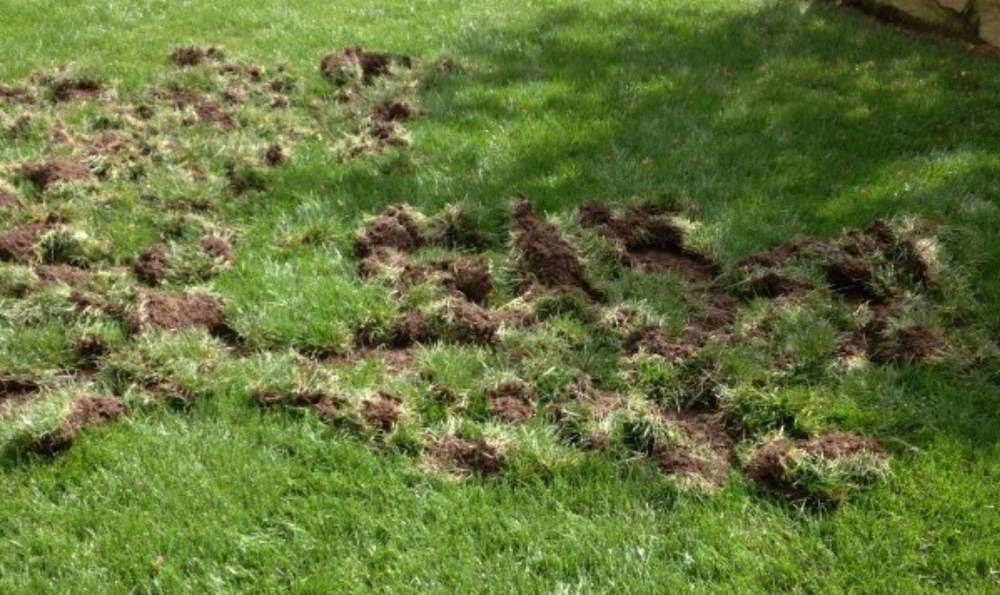
Brown patches that peel up like old carpet. Spongy turf underfoot. Raccoons tearing up your lawn at 2 a.m.
If you've dealt with any of these, you've probably asked yourself "when to kill grubs", and for good reason.
Here's the thing. When you kill those grubs matters more than what product you use. Treat at the right moment and you're wiping out tiny, vulnerable larvae before they devour the root system of every blade.
Miss the window and you'll be paying to repair a lawn that's already been destroyed.
Let's walk through the full timing framework so you can get this right the first time. Seasonal patterns vary slightly by region as of 2024, but the core principles stay the same whether you're in the Midwest, the Northeast, or anywhere grubs are having a summer party in your soil.
Quick Answer
The best time to kill grubs is late July through September, when larvae are small, near the surface, and actively feeding. This is the curative window. Preventive treatments work best from May through early July before eggs hatch.
Fall timing beats spring every single time. Spring treatment is possible but much less effective, especially once grubs are mature.
The Grub Life Cycle and Why Timing Not Season Is Everything
Understanding the life cycle is what separates a successful treatment from expensive guesswork. Let's break it down.
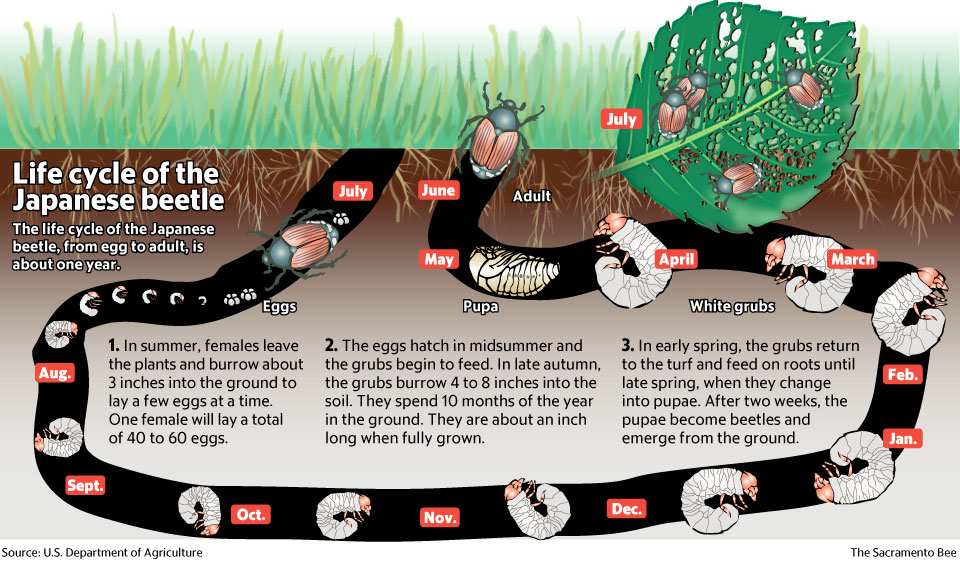
Adult beetles like Japanese beetles and June bugs spend early summer mating and producing eggs. Females go into the soil, usually in late July and August, to drop their eggs in the top few inches. Each female can produce 40 to 60 eggs across her lifespan.
How long those eggs take to hatch depends on soil temperature. When soil temperatures hover around 65 to 75°F, which is common during late summer across much of the United States, eggs can hatch in roughly two to three weeks. You end up with tiny, hungry larvae starting to feed on grass roots almost immediately.
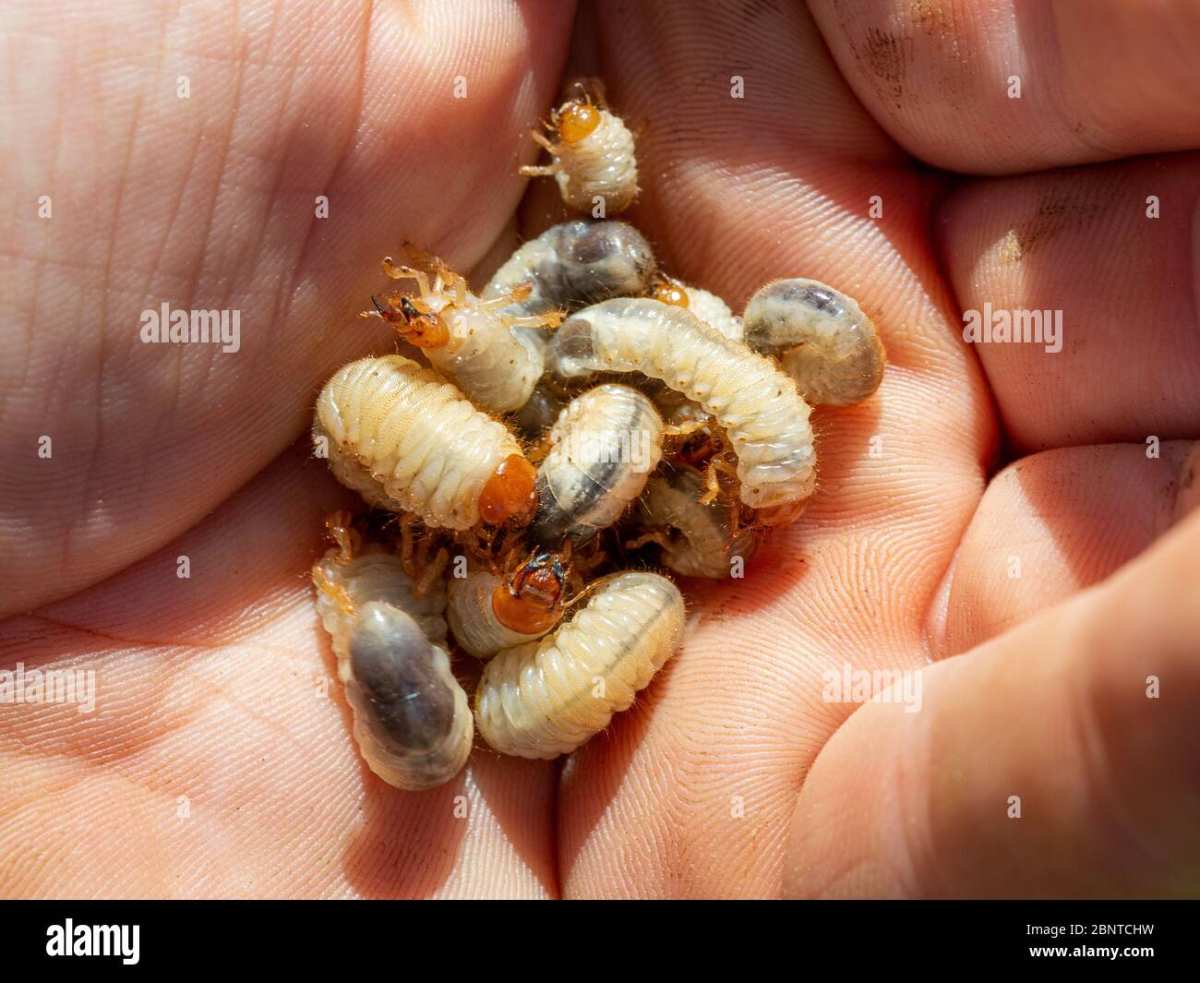
This is your danger zone. Small grubs are right near the surface, barely protected by soil, and they're consuming root tissue at a rapid rate. They're also the most vulnerable to insecticides at this stage because their bodies haven't built up tolerance and they're physically close to any product applied to the soil surface.
As fall progresses and soil temperatures drop, grubs burrow deeper into the ground where they'll spend the winter in a semi-dormant state. They emerge again in spring, usually around March, to do one final feeding before pupating into adults.
The cycle repeats. Every year. Unless you break it.
Why Fall Treatment Beats Spring Almost Every Time
Two reasons. First, grubs are smaller and more chemically vulnerable in the fall. Second, they're causing the most damage during this window because growth requires feeding.
By spring, grubs are large. They've been building up size for months. They've survived the winter.
And all they need to do through April is eat for a few more weeks before they pupate into beetles. They're going to stop feeding whether you treat them or not.
If you treat in spring using a product containing carbaryl, often sold under the brand name Sevin, or trichlorfon, you can kill existing grubs fast. But these products have no residual effect in soil. They break down within days, so they don't protect against the next generation.
Spring treatment is always a rescue operation, never a prevention.
Fall treatment, on the other hand, stops the current generation before they can cause serious winter damage and burrow deep. That's the fundamental difference. Prevention in spring leads to fewer problems in August.
Treatment in fall leads to fewer problems right now and fewer beetles returning next summer.
The Best Time to Treat Based on Your Current Situation
"How do I know which approach I need?" Great question. Let's go through the three most common scenarios.
Scenario A: You're planning ahead and your lawn looks fine. This is the ideal position to be in. You know you had a problem last year or you're in a high-pressure area. Plan to apply a preventive insecticide between May and mid-July.
Products containing imidacloprid or chlorantraniliprole work best as preventive treatments because they have moderate to long soil residual.
Scenario B: You're already seeing brown patches or spongy turf in late summer or early fall. Your curative window is right now. This is August, September, stop reading and go test your lawn. If grub counts exceed the threshold (more on that shortly), apply a curative product containing carbaryl or trichlorfon immediately.
These act fast but have short residual life, so timing has to be tight.
Scenario C: It's spring, your lawn looked destroyed over winter, and you're wondering if you missed your chance. You kind of did for preventing last year's damage. But you can still apply a rescue treatment now to reduce this generation's population just before they pupate. Just understand that you're still late for the cycle that caused the damage.
Next year, lock in a preventive if beetle numbers were high.
How to Confirm You Actually Have a Grub Problem
Here's where people waste money. They see brown grass and immediately buy insecticide. But brown lawns have a lot of causes.
Drought is the biggest mimic. Fungal diseases like brown patch and dollar spot can create irregular dead zones. Dog urine burns cause small circular dead spots that can look like grub damage at a distance.
Even compacted soil or irrigation failures create patches that suggest root problems.
Before you spend anything, dig. Literally. Here's how.
The Tug Test
Grab a handful of turf at the edge of a suspicious patch. Try to pull it up gently. If the grass peels away like wallpaper coming off a wall, that's because the roots are no longer attached.
Something severed the connection between grass and soil.
"That's pretty obvious," you might say. It is. But here's the part most people overlook.
When grass is dead from drought or disease, the roots stay intact. If you tug and nothing comes up, go find another patch. Real grub damage is easy to pull back.
It's almost too easy.
When Do Grub Numbers Become a Real Problem?
Once you've lifted the turf, count the grubs you see in the top two to three inches of exposed soil. A field survey approach is the most reliable: dig several one-foot-square holes at the margins of affected areas, count what you find, and average the results.
Here's the threshold framework:
| Grubs per square foot | Action |
|---|---|
| 0–5 | Don't treat. Your lawn can typically handle this load. |
| 6–10 | Monitor. You don't need to treat yet, but keep an eye on things. |
| 10 or more | Treat now. You're seeing real root damage risk at this level. |
But grubs alone aren't the full picture. Check for secondary signs. Are raccoons, skunks, or birds tearing up your lawn at night?
That's a classic indicator because those animals are digging specifically to eat the grubs. Are you seeing adult beetles flying around in June and July? That's also a clue.
If beetle populations were high during the early summer, expect eggs in the soil by late July.
Timing Your Inspection
Most homeowners don't think about grubs until the damage is already visible. That puts you behind the curve.
The golden rule is to scout for grubs about 10 days to two weeks after peak adult flight in your area. In many states, Japanese beetle flight peaks in July. That puts your ideal inspection date around late July to early August.
If you can identify grubs at this stage, you've got time to treat before they grow large enough to cause major visible damage.
Don't wait until the lawn looks terrible. At that point, you're already behind.
Which Product Matches Your Season: Curative vs Preventive
Not all grub products work the same way. Buying the right one for your timing is critical.
Curative Insecticides (Kill Active Grubs Now)
These are your rescue products. They work on contact and through ingestion, meaning the grub comes into contact with the insecticide or eats treated soil particles and dies.
Common active ingredients:
- Carbaryl (found in Sevin and some generic formulations)
- Trichlorfon (found in Dylox and similar products)
Key traits:
- Fast acting, usually killing grubs within 24 to 72 hours
- Short soil residual, lasting only days to a few weeks
- Apply during active feeding: late summer through early fall (August, September)
- Work best on young, small grubs close to the surface
- Carbaryl and trichlorfon both have labels for lawn grub control, always verify the specific pest and site on the package before purchase
Spring use is possible with these products if you're dealing with a heavy infestation. Because they break down quickly, they don't offer long-term protection for the next generation. They're a stop sign, not a fortress.
Preventive Insecticides (Stop Next Generation Before It Starts)
Preventive products work by building a chemical barrier in the soil that kills young grubs as soon as they begin feeding. They need to be in the soil before eggs hatch.
Common active ingredients:
- Imidacloprid (found in Merit and various combination products)
- Chlorantraniliprole (found in GrubEx and similar formulations)
Key traits:
- Long soil residual, lasting weeks to months depending on concentration and soil conditions
- Apply in late spring to midsummer (May, July) before beetles lay eggs
- Do not work well on large, established grubs, they're preventers, not killers of big populations
- Work best when applied just before peak egg-laying activity
- Imidacloprid soil half-life ranges from roughly 40 to 900 days depending on conditions
Here's a critical mistake people make. They apply imidacloprid in September expecting it to kill the large grubs already in the grass. That's not how it works.
Imidacloprid needs plant uptake and works when small larvae ingest root tissue. Large grubs have enough body mass to tolerate low doses. Use curative products for active infestations and preventive ones for the next generation, always.
Biological Options
Long-term biological controls exist too. Milky spore disease, caused by the bacterium Paenibacillus popilliae, targets Japanese beetle grubs specifically. It takes 2 to 4 years to fully establish in your soil, but once in place, it can persist for 10 to 15 years or more.
Apply it in late summer, the same timing as chemical curative treatments, although results are slower.
Beneficial nematodes (specifically Heterorhabditis bacteriophora) can also be applied to soil as a living control agent. They carry bacteria that kill grubs from the inside. Application timing matters, typically late summer or early fall when soil temperatures are between 60 and 85°F.
Nematodes need moist soil to move effectively and can die rapidly in dry or hot conditions.
Biologicals generally make sense for people managing organic lawns or who want to reduce chemical inputs over time. They're less predictable than synthetic insecticides but can provide meaningful control when usage follows label directions carefully.
The bottom line on product choice. If you're reading this and seeing brown patches right now, you need a curative product. If you're reading this in May with a healthy lawn and you had a problem last year, go with a preventive. Match the tool to the problem and you'll use fewer chemicals and get better results.
Step-by-Step: How to Apply Grub Control the Right Way
You've picked the right product for your timing. Now let's make sure the application actually works.
Preparation Before Application
Check soil moisture first. Grubs move toward moist soil. If your lawn is bone dry, water it lightly a day before treating. This brings grubs closer to the surface and makes contact more likely.
Don't mow right before applying. Longer grass helps granules reach the soil instead of getting trapped in the canopy. Skip the mower for two to three days pre-application.
Read the label for spreader settings. Granular products usually include specific settings for common spreader models. If yours isn't listed, start with a medium setting and test on a small area before doing the whole lawn.
Measure your lawn. Know the square footage. Applying too little wastes time. Applying too much risks environmental damage and violates federal pesticide labels, which is a legal issue, not just a bad practice.
Application Best Practices
Apply granular products using a rotary or drop spreader in overlapping passes. This prevents stripes of untreated soil. Walk at a steady pace and maintain consistent overlap between passes.
For liquid formulations, use a hose-end sprayer calibrated according to the label. Spray in the early morning or evening when wind is minimal. Wind drift wastes product and can carry it onto neighboring properties or into garden beds where pollinators are active.
Timing matters greatly for liquid applications. Apply when rain isn't expected for at least 12 hours. Heavy rain shortly after application can wash the active ingredient below the target zone or off the lawn entirely into storm drains. Light rain or irrigation is fine.
Cover evenly and don't skip areas. Grubs don't stay in one spot. If you treat half the lawn, the untreated half becomes a refuge. The surviving grubs reproduce and next year you're back to square one, except slightly more frustrated.
Post-Application: What to Expect and When to Check
For curative products like carbaryl or trichlorfon, you should see reduced grub activity within 24 to 72 hours. Some products claim control within hours. Wait seven to ten days before doing a follow-up inspection.
Dig small test holes in treated areas and look for live grubs.
Live grubs that are sluggish and discolored (brown, shriveled, or C-shaped but not moving) are dying. Fresh, active, white grubs after ten days suggest the treatment didn't work, possibly due to poor coverage, heavy rain, or product age.
For preventive products like imidacloprid or chlorantraniliprole, you won't see immediate results because these work when young grubs ingest treated roots. Efficacy shows up weeks later. The real test comes the following summer when adult beetle counts drop.
Water-in requirements vary by product. Most granular insecticides need roughly a quarter-inch to half-inch of irrigation within 24 to 48 hours to move the active ingredient into the root zone. Check the label. Some products are not effective until watered.
Common Mistakes That Make Grub Treatments Fail
Here are the errors we see most often.
Using preventive products on large, established grubs. Imidacloprid and chlorantraniliprole will not reliably kill third-instar larvae already several months old. These are prevention tools. If you have active damage and big grubs, curative or bust.
Applying when soil is bone dry and not watering after. The active ingredient can't move through dry soil. Without moisture to carry it down into the root zone, granules just sit on the surface degrading in sunlight and doing nothing useful.
Skipping the water-in step because rain is in the forecast. If heavy rain is coming within hours, you may get runoff rather than penetration if the soil is already saturated. Monitor actual rainfall and supplement with irrigation if the storm doesn't deliver as predicted.
Saving leftover product from last year without checking viability. Most insecticides have a shelf life of two to three years when stored properly. If the product is clumped, discolored, or has been exposed to freezing temperatures, efficacy drops.
Treatments applied unevenly. Striped lawns result from overlapping too much or missing strips entirely. Calibrate your spreader before each use.
Timing applications based on calendar date alone. Late September in Minnesota is very different from late September in Georgia. Egg hatch dates shift by region. Local extension service reports provide beetle flight and egg-laying updates specific to your area.
When to Call a Professional Instead of DIY
If your lawn exceeds two acres, or if you've been treating for three or more consecutive years with no improvement, it's time to consider professional help.
Licensed lawn care companies have access to commercial-grade formulations not available to homeowners. They also perform systematic monitoring across multiple visits, catching infestations early. Many use integrated pest management (IPM) strategies that combine biologicals, cultural practices, and targeted chemicals.
A professional application typically costs between $100 and $300 depending on lawn size and location. Compare that to the $2,000 to $4,000 cost of full lawn renovation.
Some companies offer seasonal programs that time applications based on local beetle flight data rather than guesswork. One treatment in the right year matters less than consistent monitoring.
Quick-Grub Control Calendar: What to Do and When
Pull out your phone reminder app.
Late May through June (prevention window): Apply imidacloprid or chlorantraniliprate if you had a confirmed problem the previous year. This is for future protection, not immediate results.
Mid-July through August (scout window): Walk the lawn looking for early brown spots. Check near sidewalks, driveways, and south-facing slopes first. These areas warm faster and attract egg-laying females. Pull back turf in suspect areas and count grubs.
Late August through September (curative window): If counts exceed 10 per square foot, apply carbaryl or trichlorfon immediately. This is your primary treatment window. Act quickly and follow up with irrigation.
March through early April (spring rescue, optional): Only if you missed fall treatment and your lawn suffered heavy damage. Apply curative insecticide. Monitor for improvement but don't expect miracles.
Set calendar reminders for these dates each year. Consistent monitoring plus well-timed treatment gets populations under control within one to two seasons.
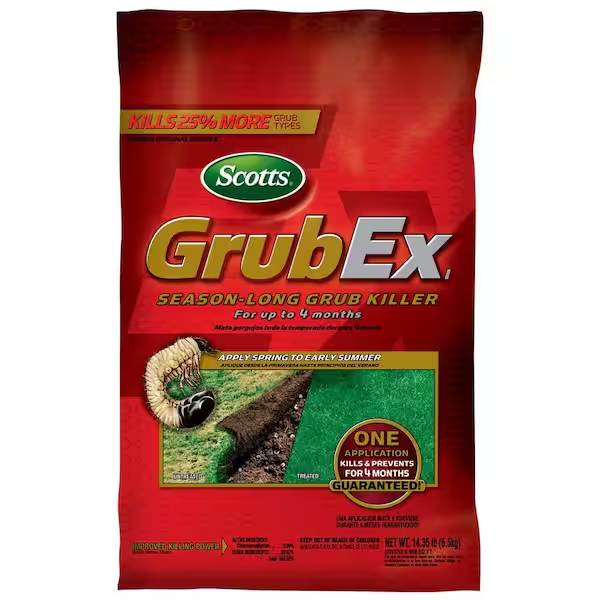
Image source: Bing (Web (fair-use with source credit))