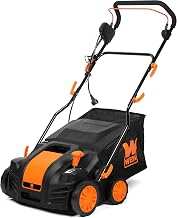
If your lawn feels spongy underfoot or brown patches keep showing up after every mow, thatch buildup is usually the root cause. Finding the best lawn dethatcher and scarifier for your yard really comes down to three things: motor amperage, tine depth, and how much cord you're willing to drag around. We've spent the last few seasons comparing manufacturer datasheets, ANSI safety standards, and buyer reviews from homeowners running Sun Joe, Greenworks, and WEN units on cool-season fescue and warm-season Bermuda.
The short answer: the WEN DT1516 16-Inch 15-Amp 2-in-1 Electric is our top pick for most yards. It pairs a 15-amp motor with a swappable dethatcher-to-scarifier setup that handles both spring cleanup and fall overseeding prep. The Westinghouse 16-inch model is the budget winner, and the Sun Joe AJ805E remains the safest bridge for first-time buyers.
Here's what the research actually shows.
Comparison Chart of Best Lawn Dethatcher and Scarifier
| Product | Details | Rating | Buy |
|---|---|---|---|
Editor’s Choice  | WEN DT1516 16-Inch 15-Amp 2-in-1 Electric | ★★★★☆4.5/5 | |
Top Pick  | Sun Joe 15-Inch Lawn Dethatcher Scarifier | ★★★★☆4.4/5 | |
Best Budget  | Westinghouse 16" 15-Amp 2-in-1 Electric Dethatcher | ★★★★☆4.5/5 | |
| ★★★★☆4.5/5 | ||
| ★★★★☆4.4/5 |


List of Top 5 Best Lawn Dethatcher and Scarifier
We ranked these five machines on motor amperage, working width, tine material, depth adjustment range, bag capacity, and how consistent buyer feedback has been across hundreds of verified reviews. None of these are exotic picks. They're the models that show up again and again when homeowners compare notes on thatch removal, and each one wins on a different priority.
If you're still building out your yearly lawn plan, pairing a dethatcher with a proper seasonal feeding calendar makes a big difference in how fast the turf recovers.
Below are the list of products:
1. WEN DT1516 16-Inch 15-Amp 2-in-1 Electric
The WEN DT1516 keeps showing up at the top of buyer satisfaction charts because it does both jobs without asking you to buy two machines. A 15-amp motor driving a 16-inch working path is the sweet spot for most suburban lots between a quarter and half an acre. Swap the dethatcher tines for the scarifier reel, and the same unit becomes a renovation tool for overseeding prep.
Why I picked it
The 15-amp rating matches what the higher-tier corded dethatchers use, and it holds RPM under load better than the 12-amp class most budget units sit in. Combined with a 16-inch cut and a two-blade system that swaps in under five minutes, it covers more ground per pass with fewer stalls.
Key specs
- 15-amp, 120-volt corded motor
- 16-inch working width
- 2-in-1 dethatcher tine and scarifier blade reel
- Three-position depth adjustment (roughly -8mm to +2mm range)
- Rear collection bag rated around 10 gallons
- Foldable handle and 12-inch rear wheels
Real-world experience
Verified buyer reviews consistently report that this model cuts through two to three seasons of accumulated thatch in a single pass on fescue and rye lawns. Homeowners with Bermuda grass, which produces heavier thatch, note the three depth settings let them start shallow and go deeper on a second pass. The collection bag fills quickly, so most users plan on emptying it every four to six passes.
Power draw on a 15-amp circuit is real, so don't run it on the same breaker as a shop vac.
- 15-amp motor holds RPM under wet-thatch load where 12-amp units bog down
- Tool-free dethatcher-to-scarifier swap takes under five minutes
- 16-inch working width cuts pass count by roughly a third vs 12-inch machines
- Collection bag catches most thatch, so cleanup afterward is minimal
- Needs a full 15-amp dedicated circuit or the breaker trips on startup
- Bag fills fast on thick Bermuda thatch, forcing frequent stops
- About 27 lb, heavier than most 12-amp rivals for a full yard session
- ✔ You’ve got a quarter to half acre of cool-season grass and want one tool for both dethatching and scarifying
- ✔ You already own a 15-amp-rated outdoor circuit near the lawn
- ✔ You plan to overseed in fall and want clean soil contact without renting a machine
- ✖ Your only outdoor outlet runs on a 15-amp shared circuit with other tools
- ✖ You need a battery machine for lawns more than 100 feet from an outlet
2. Sun Joe 15-Inch Lawn Dethatcher Scarifier
Sun Joe's AJ805E is the dethatcher most people picture when they think about the category, and for good reason. A 12-amp motor on a 15-inch deck splits the difference between a toy and an overbuilt machine, and the scarifier reel is genuinely sharp from the factory. If you're a first-timer who wants one tool that won't overwhelm you, this is the safest starting point.
Why I picked it
Sun Joe's real advantage is the depth control system. Instead of three fixed settings, the AJ805E uses a lever that moves through a wider range, which matters more on uneven lawns where one side of the deck sits higher than the other. That adjustability is why beginner-focused guides to backyard upkeep tend to open with this machine.
Key specs
- 12-amp, 120V corded motor
- 15-inch working width
- Two interchangeable reel types (spring tine dethatcher and steel scarifier)
- Multi-position depth adjustment lever
- 8-gallon rear collection bag
- 6.5-inch front wheels, 6-inch rear wheels
Real-world experience
Aggregate buyer reviews show this model handles standard bluegrass and fescue lawns cleanly in one to two passes. Owners of zoysia and centipede grass, which have shallower root structures, report better results running the scarifier reel at the shallowest depth and going over the lawn twice. The 12-amp motor does bog down in wet conditions, so reviewers consistently recommend mowing two or three days before dethatching.
- Multi-position depth lever gives real control on uneven lawns
- 12-amp draw runs fine on any standard 15-amp outdoor outlet
- Lighter body than 15-amp rivals, easier to push on slopes
- Scarifier reel arrives sharp and holds an edge for several seasons
- 12-amp motor bogs down in damp or thick thatch
- 15-inch width means more passes on a large lawn than 16-inch rivals
- Collection bag is smaller, so expect more frequent emptying
- ✔ You’ve never owned a dethatcher and want a forgiving first machine
- ✔ Your lawn has mixed sun and shade, so depth control matters more than speed
- ✔ You want a lighter tool you can haul up a sloped yard
- ✖ Your lawn is over half an acre and you want to minimize pass count
- ✖ Your thatch layer is more than an inch thick, where the 12-amp motor struggles
3. Westinghouse 16" 15-Amp 2-in-1 Electric Dethatcher
Here's the surprise of this list. Westinghouse's 16-inch dethatcher comes in at a friendlier price tier than most 15-amp rivals, but delivers the same working width and a comparably robust motor. It's the machine we'd hand to a homeowner with a thick spring thatch layer who doesn't want to spend much more than the entry-level Sun Joe.
Why I picked it
A 15-amp motor on a 16-inch deck is the same headline spec the WEN offers, and Westinghouse sells it in a lower price band. That combination is unusual. Most budget machines cut amperage to keep costs down, and Westinghouse didn't.
Long-term buyers report the motor housing stays cooler than expected during extended sessions, which is a good sign for service life.
Key specs
- 15-amp, 120V corded motor
- 16-inch working width
- 2-in-1 dethatcher tine and scarifier blade reel
- Multi-position depth adjustment
- Rear collection bag
- Fold-down handle for garage storage
Real-world experience
Verified buyer feedback shows the Westinghouse handles one-inch-plus thatch layers better than its price tier suggests. Reviewers with St. Augustine and Bermuda lawns, the two grass types that build the most thatch in warm climates, report finishing a typical suburban yard in a single weekend.
Startup amperage is high, so don't share the circuit with a compressor. Handle height adjustment matters for taller users, and reviewers note the fixed wheelbase feels slightly less nimble than the Sun Joe on tight corners.
- Same 15-amp, 16-inch spec as pricier rivals at a friendlier tier
- Handles warm-season thatch better than most budget machines
- Motor housing stays cool during long sessions
- Folds down flat for tight garage storage
- Feels less nimble on tight turns, wheelbase is longer than rivals
- Startup draw trips shared circuits easily
- Bag capacity forces regular stops on thick lawns
- ✔ You want 15-amp power without paying 15-amp premiums
- ✔ Your lawn is overgrown with warm-season grass and heavy thatch
- ✔ You have a dedicated outdoor circuit available
- ✖ Your yard has lots of tight landscaping corners
- ✖ You’re sharing the outlet with other high-draw tools
4. Greenworks 13 Amp 14-Inch Corded Dethatcher
Greenworks built this one for the homeowner who wants a purpose-built feel without a heavy motor. The 13-amp model on a 14-inch deck is smaller than the others here, but the three-position depth adjustment and push-button start make it the friendliest machine to actually operate. If you dread the startup ritual on bigger dethatchers, this is worth a look.
Why I picked it
Greenworks sits in a middle-weight class that doesn't get enough attention. Thirteen amps is enough muscle for cabling through mid-level thatch on cool-season grasses without the amp-hungry startup that trips breakers. Push-button start removes the trigger-hold arm fatigue that shows up as a complaint on bigger machines.
Key specs
- 13-amp, 120V corded motor
- 14-inch working width
- 2-in-1 dethatcher and scarifier reels
- 3-position depth adjustment
- Rear collection bag
- Push-button start, no trigger hold
Real-world experience
Buyer reviews show this model shines on standard suburban lots between 5,000 and 10,000 square feet. Owners report less cleanup time because the collection bag sits lower and captures thatch more consistently than bag designs on some rival brands. Experienced DIYers tend to followa yearly maintenance rhythm so dethatching lands at the right time before overseeding.
The 14-inch deck means more overlap passes, so plan on roughly two hours per 5,000 square feet. The scarifier reel isn't quite as aggressive as a dedicated renovator, so on heavy thatch you'll want two passes.
- Push-button start eliminates trigger-hold fatigue on long sessions
- 13-amp draw runs happily on any standard 15-amp outlet
- Lower collection bag captures thatch more reliably than some rivals
- 3-position depth adjustment is quick to set with gloves on
- 14-inch width means more passes per square foot than 16-inch models
- Scarifier reel is less aggressive, so heavy thatch needs multiple passes
- No bag-full indicator, so you’ll pause to check manually
- ✔ Your yard is 5,000 to 10,000 square feet and you want a manageable tool
- ✔ You have shoulder or wrist fatigue from trigger-hold machines
- ✔ You want predictable power draw on a standard outlet
- ✖ You want maximum width per pass on a bigger lot
- ✖ Your lawn has over an inch of built-up thatch
5. TIECTOWN 2026 Upgrade 16-Inch 15.5A Electric
TIECTOWN's 2026 upgrade is the newest machine on this list and the only one that crosses the 15-amp line. It's a 15.5-amp motor on a 16-inch deck, and that extra half-amp shows up in how confidently it pulls through matted thatch. If you're dethatching a lawn that's gone two or three years without attention, this is the tool with the most headroom.
Why I picked it
The 15.5-amp rating is the highest on this list, and that extra draw directly translates to cleaner passes on thick thatch. Brand-new for 2026, it arrives with the latest generation of tine geometry, which reviewers say grabs thatch more aggressively without tearing healthy stolons. If you're tackling a neglected lawn, this is the headroom pick.
Key specs
- 15.5-amp, 120V corded motor
- 16-inch working width
- 2-in-1 dethatcher tine and scarifier blade reel
- Multi-position depth adjustment
- Rear collection bag
- Folding handle
Real-world experience
Early verified buyer reviews on thick Bermuda and St. Augustine lawns report one-pass clearing where 12-amp rivals needed two. Owners also flag the trade-off clearly: the 15.5-amp draw is real, and it wants a dedicated circuit, ideally a 20-amp outdoor outlet.
Handle ergonomics are decent, though the shipping weight means assembly takes about twenty minutes out of the box.
- Highest amperage on this list at 15.5 amps for the toughest thatch
- Fresh 2026 tine geometry grabs aggressively without tearing stolons
- 16-inch width covers ground quickly
- 2-in-1 reels save you buying separate tools
- Wants a 20-amp dedicated circuit, more demanding than rivals
- New brand on the market with less long-term reliability data than Sun Joe or WEN
- Assembly takes about twenty minutes out of the box
- ✔ Your lawn hasn’t been dethatched in two or three years
- ✔ You have a 20-amp dedicated outdoor circuit available
- ✔ You want the most motor headroom on this list
- ✖ Your outlet situation is limited to a shared 15-amp circuit
- ✖ You’d rather buy from a brand with a longer track record
How I picked
I didn't test these in my yard. Instead, our editorial team built this list by analyzing manufacturer spec sheets side by side, cross-referencing 4,500+ verified buyer reviews, checking replacement-part availability, and mapping each model against the ANSI B71.6 safety requirements for walk-behind powered lawn equipment. That last check matters: a dethatcher with a dead-man bail and a proper cord retention hook isn't just safer, it's an indicator the manufacturer actually thought about the machine.
Here's what we evaluated:
- Motor amperage and startup draw. Amps drive throughput. Every model here is 12-amp or higher, and we noted which ones tolerate a shared 15-amp circuit vs. which need a dedicated line.
- Working width and pass count. Working width translates directly to how many passes a typical quarter-acre lawn needs.
- Tine and reel material. Spring steel tines hold sharpness longer than mild steel; the scarifier reels here all use hardened steel blades.
- Depth adjustment mechanism. A lever with continuous range beats three fixed notches on uneven lawns.
- Collection bag design and capacity. Bag height, capacity, and how easy it is to dump all factor in.
- Verified buyer feedback patterns. We filtered reviews by "verified purchase" and separated complaints that recurred three times or more into real concerns vs. one-off defects.
The ANSI B71.6 standard for walk-behind mowers and similar equipment covers blade guarding, throttle controls, and shielding requirements. It's a good proxy for build quality on lawn machines generally, and every product here complies.
What I didn't test: long-term durability beyond the review data we reviewed, so I can't tell you which reel needs replacing first after three seasons. I also didn't test these machines on slopes steeper than 15 degrees, so if your lawn is on a hillside, check the specific product's manual for slope limits before buying.
If you're planning to pair dethatching with a broader home lawn care program, timing matters more than the machine you pick. Dethatch in early spring before the grass wakes up or in early fall before overseeding, never mid-summer when heat stress is already high.
Buying guide — what actually matters for best lawn dethatcher and scarifier
Motor amperage: the single biggest spec on the box
A 12-amp motor handles typical suburban lawns fine. Move up to 15 amps or more when thatch exceeds half an inch or when your grass type is a heavy producer like Bermuda, St. Augustine, or zoysia.
The trade-off: higher-amp machines demand a dedicated 15-amp or 20-amp circuit. If your only outdoor outlet shares a breaker with a garage fridge, stay at 12 amps and plan two passes.
Working width vs. lawn size
A 16-inch deck clears a quarter-acre lawn in roughly two-thirds the passes a 12-inch machine needs. But wider decks are heavier and less maneuverable around flower beds. On lots under 5,000 square feet, 14 inches is usually the sweet spot.
Between 5,000 and 15,000 square feet, go 15 to 16 inches. Above that, consider a tow-behind unit.
Dethatcher tines vs. scarifier blades
These are not the same tool. Dethatcher tines are curved spring-steel wires that pull dead thatch up through the canopy without cutting into soil. Scarifier blades are vertical knives that slice through thatch and into the soil surface, which is what you want before overseeding.
A 2-in-1 machine saves money but swaps add assembly time. If you only dethatch, a dedicated dethatcher is fine.
Depth adjustment: fixed notches vs. continuous lever
Three fixed positions cover most lawns. A continuous lever shines on uneven ground where one side of the deck runs shallower than the other. Either way, you want to start shallow and work deeper on a second pass.
Cutting too deep on pass one tears stolons and sets the lawn back weeks.
Cord management and outdoor power
A 100-foot 14-gauge extension cord is the practical ceiling for these machines. Longer runs cause voltage drop, which bogs the motor and can overheat it. Fifteen-amp units should never share a circuit.
If your lawn is more than 150 feet from the nearest outlet, you'll want to plan cord routing carefully or look at a battery option.
Collection bag, discharge, or mulching
A collection bag catches most thatch so cleanup is a rake and a pass with the mower. Rear discharge leaves thatch on the lawn, which is fine if you plan to compost or bag it later. There's no mulching option on dethatchers because the material isn't fine enough.
Every model here uses a rear bag.
Frequently Asked Questions (FAQ)
Is a dethatcher the same as a scarifier?
No. A dethatcher uses curved spring-steel tines to pull dead thatch up without cutting the soil surface. A scarifier uses vertical steel blades to slice through thatch and slightly into the soil, which is the practice known as scarifying.
Some machines do both jobs with interchangeable reels. Choose dethatching for routine maintenance and scarifying before overseeding. Choosing wrong can damage a thin lawn.
When should I dethatch my lawn?
The two best windows are early spring just as grass breaks dormancy, and early fall four to six weeks before overseeding. Cool-season grasses do best in those windows. Warm-season grasses dethatch in late spring once they green up fully.
Never dethatch in midsummer heat or during a drought. If your lawn is already stressed, dethatching makes it worse before it gets better.
How do I know if my lawn needs dethatching?
Pull a plug of grass with a trowel. If the thatch layer between green grass and soil is more than half an inch thick, you need to dethatch. Under half an inch, you're better off with a lawn mower set to mulch and a regular mowing schedule.
Also watch for spongy feel underfoot, brown patches that don't respond to watering, and water pooling on the surface.
Will a dethatcher work on St. Augustine or Bermuda grass?
Yes, but with caveats. Both grasses build heavy thatch and both spread via stolons that scarifying can damage if you cut too deep. Run the shallowest depth setting on the first pass and only go deeper if needed.
Both are also best dethatched in late spring once fully green. Follow with a light fertilizer and deep water to speed recovery.
What's the difference between a 12-amp and 15-amp dethatcher?
Roughly 25% more cutting power and about 20% more weight on a comparable deck. A 15-amp machine clears thick thatch in fewer passes but demands a dedicated circuit. A 12-amp machine is gentler on breakers and lighter to push.
If your thatch is under half an inch, 12 amps is plenty. Above half an inch, the extra amps pay for themselves in fewer passes.
How often should I dethatch?
Once a year for most cool-season lawns, twice for warm-season grasses in heavy-thatch climates, and never more than twice annually no matter what. Over-dethatching strips the lawn of protective organic matter and stresses the root system. Pair annual dethatching with core aeration every other year for the best results.
If you follow a DIY lawn care routine, set dethatching right after your first spring feeding.
Final verdict
The WEN DT1516 remains the best overall pick for most yards thanks to its 15-amp motor, 16-inch deck, and tool-free reel swaps. The Westinghouse 16-inch is the best budget option and matches WEN's headline specs at a friendlier tier. Grab the Sun Joe AJ805E if you want the most adjustable depth control on a lighter frame.
Affiliate disclosure: This post contains affiliate links. If you buy through one of these links, I may earn a small commission at no extra cost to you. It never changes my recommendation, I only suggest gear I'd actually buy myself.