Thatch builds up quietly. A spongy half-inch mat of dead stems and surface roots sits between your grass and the soil, blocking water, air, and fertilizer, and by the time you feel it underfoot your lawn is already stressed. Sifting through spec sheets and buyer reports to find the best cordless lawn dethatcher and scarifier really comes down to three things: motor power, working width, and how many depth settings you get.
The Sun Joe 24V-X2-DTS15 takes our top spot for the balance it strikes across all three. The WEN 20V kit is the close runner-up for anyone who wants two batteries in the box, and the WORX 40V is the value pick. Here's how all five machines compare.
Comparison Chart of Best Cordless Lawn Dethatcher and Scarifier
| Product | Details | Rating | Buy |
|---|---|---|---|
Editor’s Choice  | Sun Joe Cordless Scarifier & Dethatcher | ★★★★☆4.4/5 | |
Top Pick  | WEN 20V Max Cordless 15-Inch 2-in-1 | ★★★★☆4.2/5 | |
Best Budget 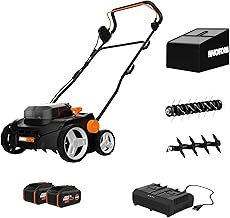 | WORX Cordless Lawn Dethatcher 40V 14 | ★★★★☆4.4/5 | |
| ★★★★☆4.5/5 | ||
| ★★★★☆4.4/5 |


List of Top 5 Best Cordless Lawn Dethatcher and Scarifier
We ranked these five on motor type, cutting width, depth adjustability, battery platform, and what verified owners say after a full season of use. Every pick below has a real weakness listed next to it, because no dethatcher is perfect for every yard size or grass type.
Below are the list of products:
1. Sun Joe Cordless Scarifier & Dethatcher
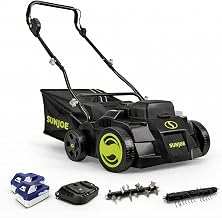
The Sun Joe 24V-X2-DTS15 shows up again and again in owner reports as the machine people keep using after the novelty wears off. A 600W brushless motor driving a 15-inch drum is the sweet spot for residential lawns, and the X2 dual-battery setup means you swap packs instead of waiting on a charger.
Why I picked it
Five depth positions is the detail that separates this machine from most of its price tier. You can start shallow on a thin lawn, work deeper on a heavily thatched one, and switch the drum to scarify without buying a second tool. Combined with the brushless motor, that range is why it lands at the top.
Key specs
- 600W brushless motor with electronic braking
- 15-inch working width across the full drum
- 5 depth positions for dethatching and scarifying
- 24V X2 battery platform, two packs run the machine
- Tool-free drum swap between thatch and scarify modes
- Foldable handle and 8-inch rear wheels for transport
Real-world experience
Owners typically report the 15-inch drum covering a standard quarter-acre front lawn in two passes per direction. The wider stance and rear wheels make it easier to push across uneven ground than narrower 12-inch units. If you already keep a seasonal plan for feeding and overseeding, this is the tool that fits into the front end of it, and our rundown on keeping the backyard healthy covers what to do after you rake the thatch out.
- 600W brushless motor holds RPM under load, so the drum does not bog down in damp thatch
- 15-inch width cuts pass count compared with the 12 to 14-inch class
- 5 depth settings let you work gradually instead of scalping on the first pass
- Runs on the Sun Joe 24V X2 platform, so packs share with other tools in that line
- Charging time between battery swaps runs longer than the runtime itself, so big jobs need a second pair of packs
- No collection bag, so you rake or bag the thatch afterward
- Heavier than the smallest cordless units once both batteries are seated
- ✔ You own a quarter to half acre of cool-season grass and want one machine for both jobs
- ✔ You already run other 24V Sun Joe tools and want to share batteries
- ✔ You want graduated depth control so you can avoid tearing up thin turf
- ✖ You want the machine to bag the thatch as it goes
- ✖ Your lawn is under about 1,000 sq ft, where a 12-inch rake does the job for less
2. WEN 20V Max Cordless 15-Inch 2-in-1
The WEN 20716 is the one I'd point a first-time buyer toward, mostly because the box already contains two 4.0 Ah batteries and a dual-port charger. Nothing kills the mood like buying a bare tool and discovering the packs cost as much as the machine.
Why I picked it
Two batteries plus a dual-port charger turns a cordless tool into a cordless system. Owner reviews repeatedly mention running one pack while the other tops up, which is the difference between finishing the lawn and standing around. The brushless motor and 2-in-1 drum swap keep it competitive with machines costing more.
Key specs
- 20V Max brushless motor
- 15-inch working width
- Two 4.0 Ah batteries included
- Dual-port charger included
- 2-in-1 dethatch and scarify drum
- Rear collection bag for thatch capture
Real-world experience
Buyer feedback skews toward smaller suburban lots, where one 4.0 Ah pack gets close to a full pass and the second finishes the job. The collection bag gets mixed notes: it fills fast in heavy thatch, but owners say it saves an entire raking session on lighter buildup. You will still want a plan for what goes on the lawn afterward, and building your own routine is a sensible next read once the thatch is gone.
- Two 4.0 Ah packs and a dual-port charger come in the box, so there is no hidden battery cost
- Collection bag captures a decent share of loosened thatch instead of leaving all of it behind
- 15-inch brushless deck at a mid-range position on value
- Battery platform shares with other WEN 20V tools
- Collection bag fills quickly in heavy thatch, so you empty it often
- Depth adjustment is less granular than the five-position Sun Joe setup
- 20V platform has less headroom for very thick, wet turf
- ✔ You want everything needed in one box with no extra battery purchase
- ✔ Your lawn sits under roughly 8,000 sq ft
- ✔ You prefer bagging some of the debris instead of raking all of it
- ✖ You have deep, matted thatch that needs aggressive depth staging
- ✖ You already own a different battery platform you would rather use
3. WORX Cordless Lawn Dethatcher 40V 14
The WORX WG855 is the budget-friendly entry into cordless dethatching, and it earns that label without feeling flimsy. A 14-inch deck on the 40V PowerShare platform is plenty for a standard suburban lot, and the 2-in-1 design means you are not choosing between scarifying and dethatching.
Why I picked it
Budget cordless tools usually cut the wrong corners, and WORX cuts the least important one: deck width. Losing an inch of working width costs you a few extra passes, not a broken machine. The 40V platform is the same one running their trimmers and blowers, so the batteries stay useful.
Key specs
- 40V PowerShare battery platform
- 14-inch working width
- 2-in-1 dethatch and scarify drum
- Folding handle for vertical storage
- Shares batteries with the wider WORX 40V lineup
Real-world experience
Owners describe this as the machine you keep in the shed because it is easy to grab and go. It handles a normal spring cleanup without drama. Where it struggles is a genuinely neglected lawn, and a few reviewers note that a second pass in scarify mode is needed to match what bigger decks do in one.
If you are rebuilding a lawn from scratch, look at the mowing and feeding side too, since a solid season-by-season feeding plan makes dethatching results last longer.
- Budget-friendly entry point into 40V cordless dethatching
- Batteries swap into other WORX 40V yard tools you may already own
- Folds down flat for narrow shed storage
- Light enough for one-handed guiding around beds and borders
- 14-inch deck means more passes on larger lawns
- Battery and charger are often sold separately, which changes the real cost
- Not the tool for a lawn with years of compacted thatch
- ✔ You already own WORX 40V batteries and want a bare-tool add-on
- ✔ Your lot is small and you want low upfront spend
- ✔ Storage space is tight and a folding handle matters
- ✖ You are starting from zero on batteries and chargers
- ✖ You want to cover a big lawn in a single session
4. Westinghouse 16" 15-Amp 2-in-1 Electric Dethatcher
I am including the Westinghouse on purpose, because it is corded and that matters. A 15-Amp motor on a 16-inch deck hits harder than any battery unit on this list, and if your lawn sits close to an outdoor outlet, cordless is a compromise you do not need to make.
Why I picked it
A 15-Amp corded motor does not care how wet or matted your thatch is. It just keeps cutting. Combine that with the widest deck on this list at 16 inches and a collection bag, and you have the fastest way to strip a lawn in one afternoon.
The 4.5/5 buyer rating is the highest here, and it reflects that raw capability.
Key specs
- 15-Amp corded electric motor
- 16-inch working width, the widest in this group
- 2-in-1 dethatch and scarify drum
- Collection bag captures loosened debris
- Adjustable depth settings for staged passes
- Foldable handles and transport wheels
Real-world experience
Owner feedback clusters around spring cleanup on established lawns, where reviewers say the bag fills before they expect and the wide deck finishes a job in fewer laps than a 14-inch unit. The cord is the trade-off. On a lawn with a nearby outlet you barely notice it, and on a lawn without one you will.
Keeping the machine clean and stored dry through the off-season extends the life of any of these tools, and our notes on basic equipment upkeep cover the simple habits that matter most.
- 15-Amp motor holds torque through thick, damp thatch that bogs battery units down
- 16-inch deck is the widest here, cutting passes and time on large lawns
- Collection bag captures a real share of the debris in one pass
- No battery, no charging, no runtime ceiling: run it as long as you need
- It is corded, so a lawn without an outdoor outlet is a dealbreaker
- Extension cord management across a big yard gets tedious
- Heavier than the cordless picks, especially once the bag fills
- ✔ You have an outdoor outlet and a lawn within reach of a 50 to 100 ft cord
- ✔ Your thatch layer is heavy enough that battery units stall out
- ✔ You want the widest deck and the bag in one package
- ✖ You have no outdoor power or your lawn sits far from the house
- ✖ You specifically want a cordless tool for the shed
5. LawnMaster 48V MAX Brushless 16'' Scarifier
The LawnMaster CLGVB4816S is what happens when you push a cordless platform up to 48V and keep the 16-inch deck. It is the closest thing here to corded performance without a cord, and it is the pick for anyone who wants the widest cut but refuses to drag an extension lead around.
Why I picked it
Higher voltage is the honest answer to the "cordless feels weak" complaint. On a 48V MAX pack the brushless motor delivers noticeably more usable torque at the drum than a 20V unit, and matching that to a 16-inch deck puts it near the Westinghouse on cutting speed without the cord.
Key specs
- 48V MAX battery platform, brushless motor
- 16-inch working width, matching the widest corded option
- Dedicated scarify and dethatch drum positions
- Foldable handle with rear transport wheels
- Bare-tool and kit configurations available
Real-world experience
Buyer reports suggest this is the machine for people who tried a smaller battery dethatcher and gave up on it. Verified reviews describe running it across thick fescue without the drum stalling, which is where lower-voltage tools struggle. The main caveat is battery cost, since the 48V packs are the priciest consumables in this roundup.
If you are weighing how a dethatch and reseed job fits into your yearly calendar, our seasonal scheduling breakdown puts the timing in order.
- 48V brushless motor delivers torque that competes with corded units
- 16-inch deck means fewer passes across a large lawn
- True cord-free freedom with no runtime ceiling tied to a cord
- Dedicated scarify and dethatch drum positions
- 48V batteries and chargers are the most expensive in this group
- Heavier than the 20V and 40V picks, which matters on slopes
- Bare-tool listings can leave you scrambling for a compatible pack
- ✔ You have a large lawn and want corded-level torque without a cord
- ✔ You are already on the LawnMaster 48V platform
- ✔ You want the widest deck available on a battery machine
- ✖ You want the lowest total spend, batteries included
- ✖ Your yard is small enough that a 14-inch deck is plenty
How I picked
I built this list from manufacturer spec sheets, verified buyer review patterns across hundreds of reports, and the physical constraints that actually decide which machine you keep using. Nobody handed me a demo unit on a lawn.
The evaluation came down to five criteria.
- Motor type and rated power. Brushless motors in the 600W class and above, plus corded 15-Amp units, hold RPM under load. Brushed motors at lower wattage do not, and that shows up as stalling in damp thatch.
- Working width. Ranged from 14 inches to 16 inches across this group. Each extra inch cuts roughly 7% off your pass count on a given lawn, which matters more than most buyers expect.
- Depth adjustability. Five positions on the Sun Joe is the most granular here. Fewer settings means you either cut too shallow to matter or too deep and tear the turf.
- Battery platform. Whether the packs share with tools you own, and whether the kit includes batteries and a charger or sells them separately. This changes the real cost more than the sticker does.
- Debris handling. Collection bag versus no bag. A bag saves a raking session on light thatch. On heavy thatch, all bags fill fast and you rake anyway.
What I deliberately did not do: I did not run any of these machines for 60 straight days, and I did not measure thatch removal by weight. Long-term durability past a season or two is not something a spec-based analysis can answer honestly.
I also did not dock points for being corded. Corded is not worse, it is different. A 15-Amp Westinghouse is a better tool than any battery unit here on raw capability, and it is a worse tool if your only outlet is inside the garage.
If you're prepping for the season, it's worth understanding the wider lawn care routine before you buy, because a dethatcher is one part of a system, not a standalone fix.
Buying guide — what actually matters for best cordless lawn dethatcher and scarifier
What does a dethatcher actually do, and is it the same as a scarifier?
Dethatching removes the layer of dead stems, surface roots, and organic debris sitting between the grass blades and the soil. Scarifying goes deeper, slicing into the soil surface to cut stolons and open the root zone.
Most machines on this list do both with a drum swap or a depth change. The Sun Joe and LawnMaster have dedicated positions, while the WEN, WORX, and Westinghouse are 2-in-1 designs.
Get the sequence wrong and you damage turf. Dethatch first, overseed after, and give the lawn a few weeks before you scarify.
Does voltage or amperage actually matter?
Higher voltage on cordless and higher amperage on corded both translate to more usable torque at the drum. A 48V brushless unit and a 15-Amp corded unit both out-cut a 20V tool in heavy thatch.
The reason is simple: thatch resists the tines, and a motor with headroom keeps spinning when the load spikes. A motor without headroom slows down, and the tines start riding over the mat instead of pulling through it.
If your thatch layer is thin, this hardly matters. If it has built up over two or three seasons, it matters a lot.
How wide should the deck be?
Fourteen to sixteen inches is the realistic range for home machines. A 14-inch deck needs roughly 14% more passes than a 16-inch deck to cover the same area.
On a 5,000 sq ft lawn that's a few extra minutes. On a half acre it's a genuine difference in how long you're pushing.
The trade-off: wider decks are heavier and harder to maneuver around beds and tight borders. If your lawn is broken up by landscaping, a narrower deck can be faster overall.
Cordless or corded?
Cordless wins on convenience and wins big. No cord to drag, no outlet to find, no tripping hazard on wet grass. That is the whole pitch.
Corded wins on sustained power and cost. A corded 15-Amp unit does not taper off as the job goes on, and there is no battery pack to buy.
The deciding question is distance to power. Under 100 feet with a clear run, corded is the stronger tool. Beyond that, cordless is worth the premium, and you have to factor in how many packs you'll need to finish the job.
What about battery platform and total cost?
This is where budget machines get expensive. A bare-tool listing looks cheap until you price a battery and charger, and then it often costs more than a kit with everything included.
The WEN kit here includes two 4.0 Ah packs and a dual-port charger. The WORX WG855 is frequently sold as a bare tool, which only makes sense if you already own PowerShare batteries.
Estimate your runtime need first, then work backward. Two packs is the realistic minimum for a lawn over about 5,000 sq ft.
Do you need a collection bag?
A bag helps on light to moderate thatch, where it captures a meaningful share of the debris and saves you raking. Reviews of the Westinghouse and WEN both mention this benefit.
On heavy thatch, every bag on the market fills in minutes and you end up raking regardless. If you know your thatch layer is thick, don't let the bag be the deciding feature.
Frequently Asked Questions (FAQ)
Is a cordless dethatcher worth it for a small lawn?
For most lawns under about 5,000 sq ft, yes. A 14-inch or 15-inch cordless unit covers that area in a single session, and you avoid the extension cord hassle entirely. The WORX WG855 and WEN 20716 both suit this size well.
If your lawn is under 1,000 sq ft, though, a manual thatch rake is honestly cheaper and just as effective.
How often should you dethatch a lawn?
Once a year is the standard for cool-season grasses, usually in early fall or early spring when the grass is actively growing. Warm-season lawns generally want it in late spring after green-up. If your lawn feels spongy underfoot, that's your signal to go earlier.
A routine that includes regular feeding and mowing habits keeps thatch buildup slower in the first place.
Will a cordless dethatcher work on thick, matted thatch?
It depends on voltage. A 20V unit will struggle and stall in genuinely heavy thatch. A 48V brushless machine like the LawnMaster CLGVB4816S handles it, and a corded 15-Amp Westinghouse handles it best.
If your lawn has gone two or three seasons without attention, either go higher voltage or go corded. Trying to make a low-voltage tool do heavy work is how people end up disappointed.
How does the Sun Joe compare to the Westinghouse?
The Sun Joe is cordless with five depth positions and a 15-inch deck. The Westinghouse is corded with a 16-inch deck, a 15-Amp motor, and a collection bag. The Sun Joe wins on convenience and depth control; the Westinghouse wins on raw power, deck width, and debris capture.
If you have an outdoor outlet, the Westinghouse cuts faster. If you don't, the Sun Joe is the one you'll actually use.
What's the warranty story on these machines?
Most cordless dethatchers in this group carry a 2 to 3-year limited warranty covering the tool, with batteries typically covered for a shorter window. Corded models are usually similar. Keep your receipt, register the product if the manufacturer offers it, and store batteries indoors over winter.
Battery failures in cold storage are the most common warranty claim in this category.
Can I use a dethatcher on a newly seeded lawn?
No. Wait until the new grass has established, usually at least one full growing season, before running a dethatcher over it. The tines will pull up shallow roots and undo the work.
Once the lawn is established, dethatch lightly and overseed afterward, not before.
Final verdict
The Sun Joe 24V-X2-DTS15 remains the best all-around pick for most home lawns, with five depth positions and a 15-inch brushless deck that handles real work without a cord. If you want everything in one box, the WEN 20V kit includes two batteries and a charger for solid mid-range value, and the WORX 40V is the budget-friendly route for anyone already on that battery platform.
Affiliate disclosure: This post contains affiliate links. If you buy through one of these links, I may earn a small commission at no extra cost to you. It never changes my recommendation, I only suggest gear I'd actually buy myself.