You're staring at a patchy, half-dead lawn, and you've already tried the bag of fertilizer from the big-box store. Maybe it greened up for a couple of weeks, then went right back to looking sad. Sound familiar?
The truth is, the best lawn care program isn't a product you buy. It's a sequence of decisions based on your specific grass, your soil, and your climate.
Get those variables right, and a beautiful lawn is almost inevitable. Get them wrong, and you'll waste money on products that do nothing, or worse, damage your turf. In our research, the single biggest factor separating thriving lawns from struggling ones isn't the brand of fertilizer.
It's whether the homeowner followed a logical, season-by-season workflow. As of 2026, the data from university turf programs confirms this: soil health and timing beat product choice every single time. Let's walk through the system.
Image source: Web (Bing) / backyardboss.net (Web image (fair-use with source credit))
Quick Answer
The best lawn care program is a seasonal workflow built on three pillars: soil health, correct grass type, and proper timing. Test your soil first. Feed cool-season grass in the fall.
Feed warm-season grass in late spring. Mow high, water deep, and never skip the pre-emergent. That's the whole game.
Start Here: Why Your Lawn Care Program Keeps Failing
Most lawn care plans fail for one simple reason: they're built on assumptions. You assume your grass needs more nitrogen. You assume weeds are just bad luck.
You assume watering every day is the right move. None of that is true, and the assumptions pile up until the lawn looks worse than when you started.
The real culprit is almost always a lack of diagnosis. A lawn that's thin and weedy might need more sunlight, not more fertilizer. A lawn that's yellowing might have a pH problem, not a nitrogen problem.
A lawn that's crispy in August might be a cool-season grass trying to survive a climate it was never meant for.
Here's the thing: your neighbor's lawn care program doesn't matter. Their soil, grass type, sun exposure, and watering habits are different from yours. What works on their Kentucky bluegrass lawn in Ohio will actively harm your Bermuda grass in Texas.
The first step to a better lawn is accepting that your yard is its own unique system.
The good news? You don't need to be a soil scientist to figure it out. You just need to follow a logical order of operations.
Test, then adjust, then maintain. Skip the test and you're guessing, and guessing is exactly what got you here.
Quick Answer: What's the Best Lawn Care Program for You?
The best program depends on three questions. Answer these honestly, and the rest of this guide writes itself.
Where do you live? This determines your grass type and your seasonal calendar.
What grass do you actually have? Cool-season grasses like tall fescue and Kentucky bluegrass thrive in the Northeast, Midwest, and Pacific Northwest. Warm-season grasses like Bermuda, Zoysia, and St. Augustine dominate the Southeast, Gulf Coast, and Southern California.
How much time and money can you realistically spend? An intensive program with monthly fertilizing, aeration, and overseeding costs more and takes more hours. A low-maintenance program focuses on mowing height, watering, and one or two key feedings per year.
Here's a quick decision table to find your starting point:
| Your Situation | Your Starting Program |
|---|---|
| Cool-season grass, North/Midwest | Fertilize heavily in fall, light spring feeding, seed in early fall |
| Warm-season grass, South/Southeast | Fertilize late spring through summer, stop before fall |
| Transition zone (Mid-Atlantic, Tennessee) | Blend: fescue for shade, Bermuda for sun, feed in spring and fall |
| Shady lawn, mossy patches | Skip heavy fertilizer, focus on shade-tolerant fescue, raise mower height |
| New construction, compacted clay | Soil test first, core aerate, organic matter topdressing |
| Rentals, low budget | Mow high, water deep, one fall feeding, no chemicals |
How to Identify Your Grass Type (And Why It Matters More Than Anything)
Before you buy a single bag of fertilizer, you need to know what you're working with. Grass type determines everything: when to feed, how short to mow, how much water to give, and which weeds are likely to invade.
Cool-season grasses grow actively in spring and fall. They go dormant or struggle through the summer heat. Common varieties include tall fescue, Kentucky bluegrass, and perennial ryegrass.
These grasses need their biggest feeding in the fall, when they're storing energy for winter. Mow them tall, around 3 to 4 inches. Water deeply but infrequently, about 1 to 1.5 inches per week.
Warm-season grasses grow actively in late spring and summer. They go dormant and turn brown in winter. Common varieties include Bermuda, Zoysia, St.
Augustine, and Centipede. These grasses need their biggest feeding in late spring, when they're coming out of dormancy. Mow them shorter, around 1 to 2 inches.
Bermuda lawns, in particular, thrive with a reel mower for that tight, manicured look.
The Transition Zone is where things get complicated. This band runs through the Mid-Atlantic, Tennessee, North Carolina, and Oklahoma. Neither cool-season nor warm-season grasses thrive perfectly here.
That's why many transition-zone lawns are actually a mix: fescue in shaded areas, Bermuda in sunny spots. If that's you, you'll need to treat different parts of your yard differently.
Here's how to tell what you have:
- Tall fescue: Coarse blades, shoots up in clumps, stays green in winter in the South
- Kentucky bluegrass: Fine texture, deep green, spreads via rhizomes, grows in a dense carpet
- Bermuda: Fine blades, aggressive spreader, turns brown at first frost, loves full sun
- Zoysia: Thick, stiff blades, slow to establish, feels like a carpet, tolerates some shade
- St. Augustine: Broad, coarse blades, forms a dense mat, common in Florida and Gulf Coast
Not sure? Take a photo and compare against your local university extension's turf identification guide. Or call your county extension office.
They'll identify a sample for free or for a small fee.
Step 1: Test Your Soil Before You Do Anything Else
This is the step everyone skips, and it's the step that separates lawn care success from lawn care failure. Soil testing tells you your pH, your nutrient levels, and your organic matter. Without that, you're fertilizing blind.
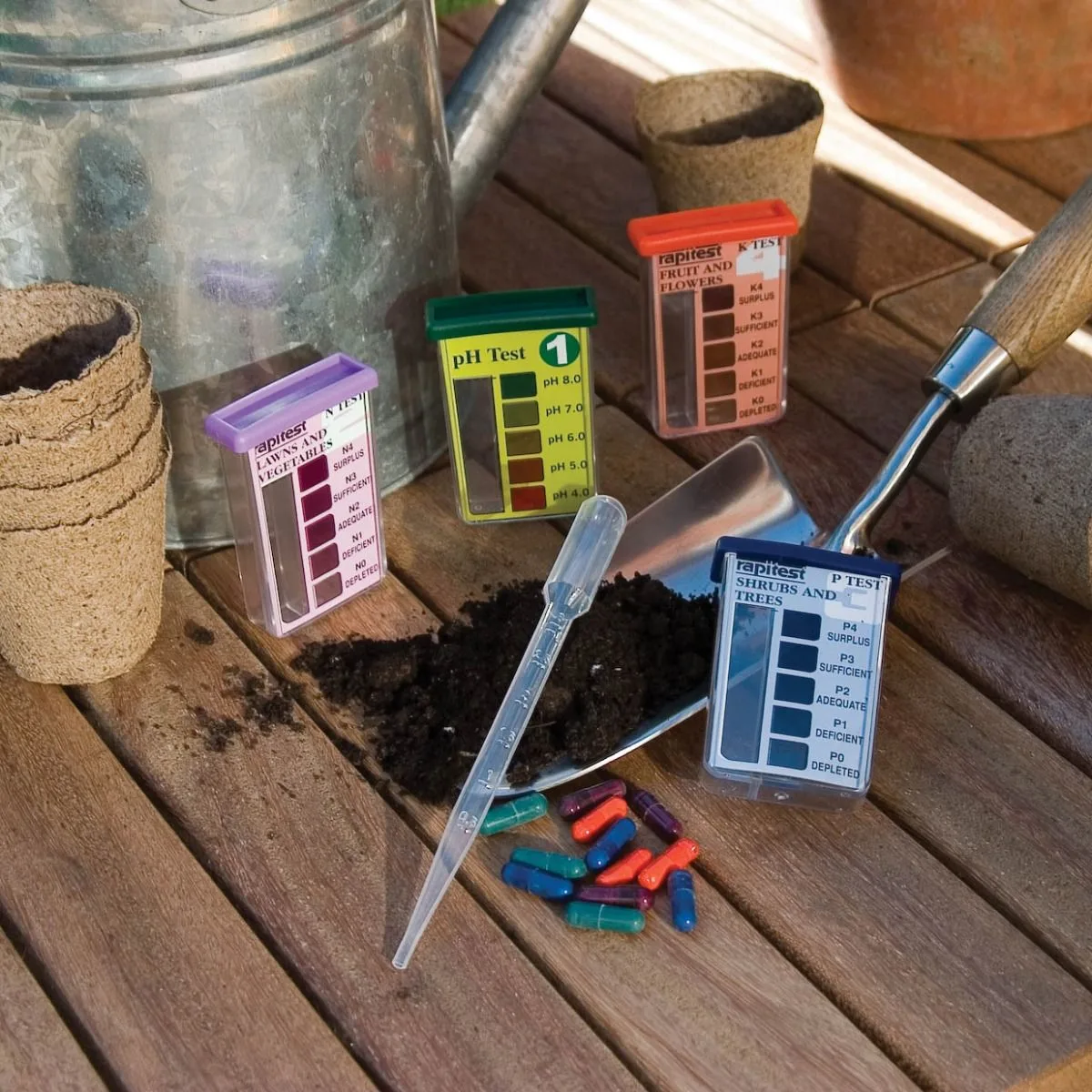
Image source: Web (Bing) / niaarch.com (Web image (fair-use with source credit))
Your soil's pH determines whether nutrients are actually available to your grass. Most turfgrasses prefer a pH between 6.0 and 7.0. Below 6.0, phosphorus and potassium get locked up.
Above 7.0, iron and other micronutrients become unavailable. If your pH is off, fertilizer won't help no matter how much you apply.
You have two options for testing:
- Home test kits: These run $15 to $30 and give you a basic pH reading plus rough nitrogen, phosphorus, and potassium levels. They're better than nothing, but they're less accurate than lab tests.
- University extension lab tests: These run $30 to $50 and give you precise results plus specific amendment recommendations. Many extension offices also include a detailed fertilizer plan based on your grass type.
The lab test is worth the money. It removes all the guesswork. You'll get a report that says something like "pH 5.8, apply 40 lbs of lime per 1,000 sq ft" or "phosphorus is high, skip the starter fertilizer." That level of specificity is impossible to get from a home kit.
How to take a soil sample correctly:
- Use a clean trowel or soil probe
- Take 8 to 10 samples from different spots around your lawn
- Sample from the top 4 inches of soil, where grass roots live
- Remove grass and debris from the samples
- Mix them in a clean bucket
- Send in about 1 cup of the combined sample
Once you get your results, address the pH first. If your soil is acidic, apply lime. If it's alkaline, apply elemental sulfur.
Both take several months to break down, so plan ahead. Test in early spring for fall adjustments, or test in fall for spring adjustments.
Skip the soil test and you risk these problems:
- Wasting money on fertilizer your lawn doesn't need
- Over-fertilizing and causing rapid, weak growth
- Raising pH too high with unnecessary lime
- Never fixing the actual nutrient deficiency causing your thin turf
Building Your Lawn Care Calendar by Season
Once your soil is dialed in, the calendar becomes your roadmap. Here's how the year breaks down for each grass type.
Spring (Cool-Season Grasses)
Your cool-season lawn is waking up from winter. It's growing actively, and it wants to be fed, but lightly. A spring feeding with a slow-release nitrogen fertilizer at about 0.5 lbs of nitrogen per 1,000 sq ft is plenty.
Too much spring nitrogen causes fast, weak growth that struggles through summer heat.
The bigger spring job is pre-emergent. Apply crabgrass preventer when soil temperatures hit 55°F for several days running. That happens when forsythia blooms or when soil temps stay above that threshold.
Miss this window and you'll be fighting crabgrass all summer.
Spring (Warm-Season Grasses)
This is the big season for warm-season lawns. Your grass is coming out of dormancy, and it's hungry. Apply a balanced fertilizer with nitrogen, and consider a weed-and-feed product if broadleaf weeds are present.
Mowing height matters in early spring. Bermuda grass should be mowed at 1 to 2 inches. Zoysia at 1 to 1.5 inches.
Don't let it get too tall before the first cut.
Summer (Cool-Season Grasses)
Cool-season grasses struggle in summer. If you don't have irrigation, expect some dormancy and browning. That's normal.
Do not push growth with fertilizer during heat stress. It can burn the grass or trigger fungal disease like brown patch.
Water deeply and infrequently. One long soak per week, about 1.5 inches, is better than daily sprinkling. Watch for grubs, especially in late summer, and treat only if you see actual damage.
If skunks or raccoons start digging up your yard, they're after grubs, which is a good indicator you need to check for them.
Summer (Warm-Season Grasses)
This is prime growing season. Warm-season grasses love the heat. Feed them every 4 to 6 weeks with a nitrogen-rich fertilizer.
Water deeply during dry spells, and watch for chinch bugs and sod webworms.
Mow frequently, but follow the one-third rule. Never remove more than one-third of the leaf blade in a single cut. Removing more stresses the grass and weakens the root system.
Fall (Cool-Season Grasses)
Fall is the most important season for cool-season lawns. This is when your grass builds energy reserves for spring green-up. Apply a fall fertilizer high in nitrogen and potassium.
This is also the ideal time for core aeration and overseeding.
Aeration relieves soil compaction and allows water, air, and nutrients to reach roots. Overseeding fills in thin spots and introduces newer, more disease-resistant grass varieties.
Fall (Warm-Season Grasses)
Warm-season grasses are slowing down. Stop feeding them about 6 to 8 weeks before your first frost. This prevents lush, tender growth that won't harden off before cold weather.
If you have grub damage, late fall is the time to apply a grub control product. The young grubs are close to the surface and feeding on roots.
Winter
For most lawns, winter is a rest period. Cool-season grasses go dormant under snow. Warm-season grasses go brown.
The best thing you can do is stay off the lawn when it's frozen or waterlogged, and skip the fertilizer entirely.
One exception: if you live in a mild-winter transition zone or deep South, you can overseed warm-season lawns with annual rye for winter color. It's cosmetic, but many homeowners love the look.