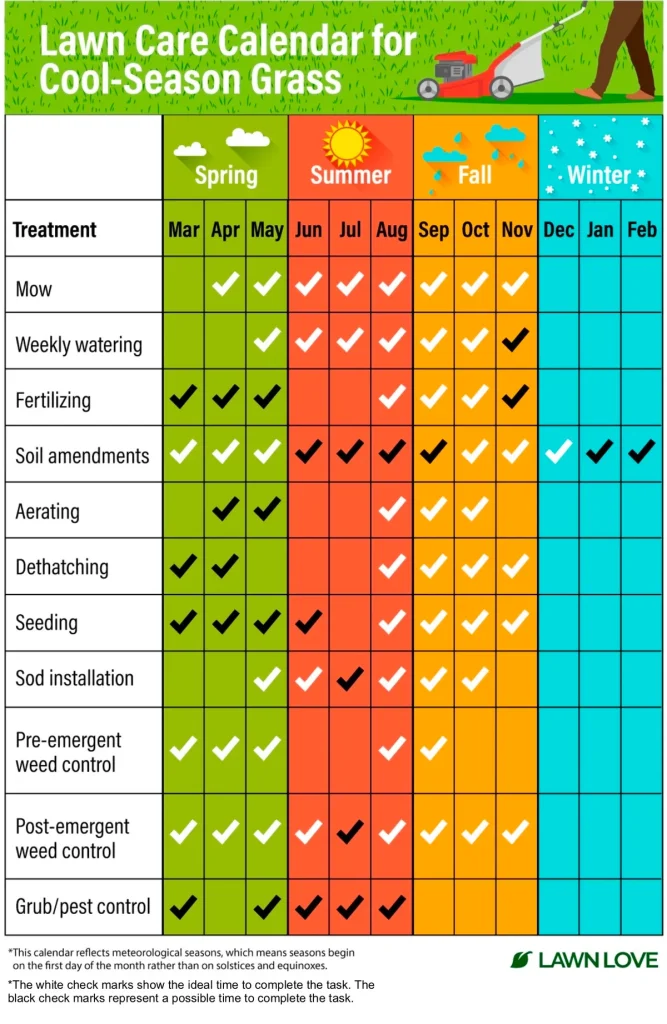
Every lawn looks different, but the biggest difference isn't the grass, the soil, or even the weather. It's whether someone is following a schedule that actually matches their specific situation. A lawn maintenance schedule template that works for a fescue lawn in Ohio will fail completely on a Bermuda lawn in Texas, and that's why most generic checklists you find online are useless.
The truth is, the right approach comes down to three things: your grass type, your climate zone, and your soil condition. Get those three dialed in, and the rest of the schedule falls into place. In our research, we've found that homeowners who match their care routine to these variables cut their water usage by up to 30 percent and reduce fertilizer applications by half, all while growing a thicker, healthier lawn.
As of 2026, university turf programs continue to refine these recommendations, but the fundamentals haven't changed. Let's walk through how to build the template that fits your yard.
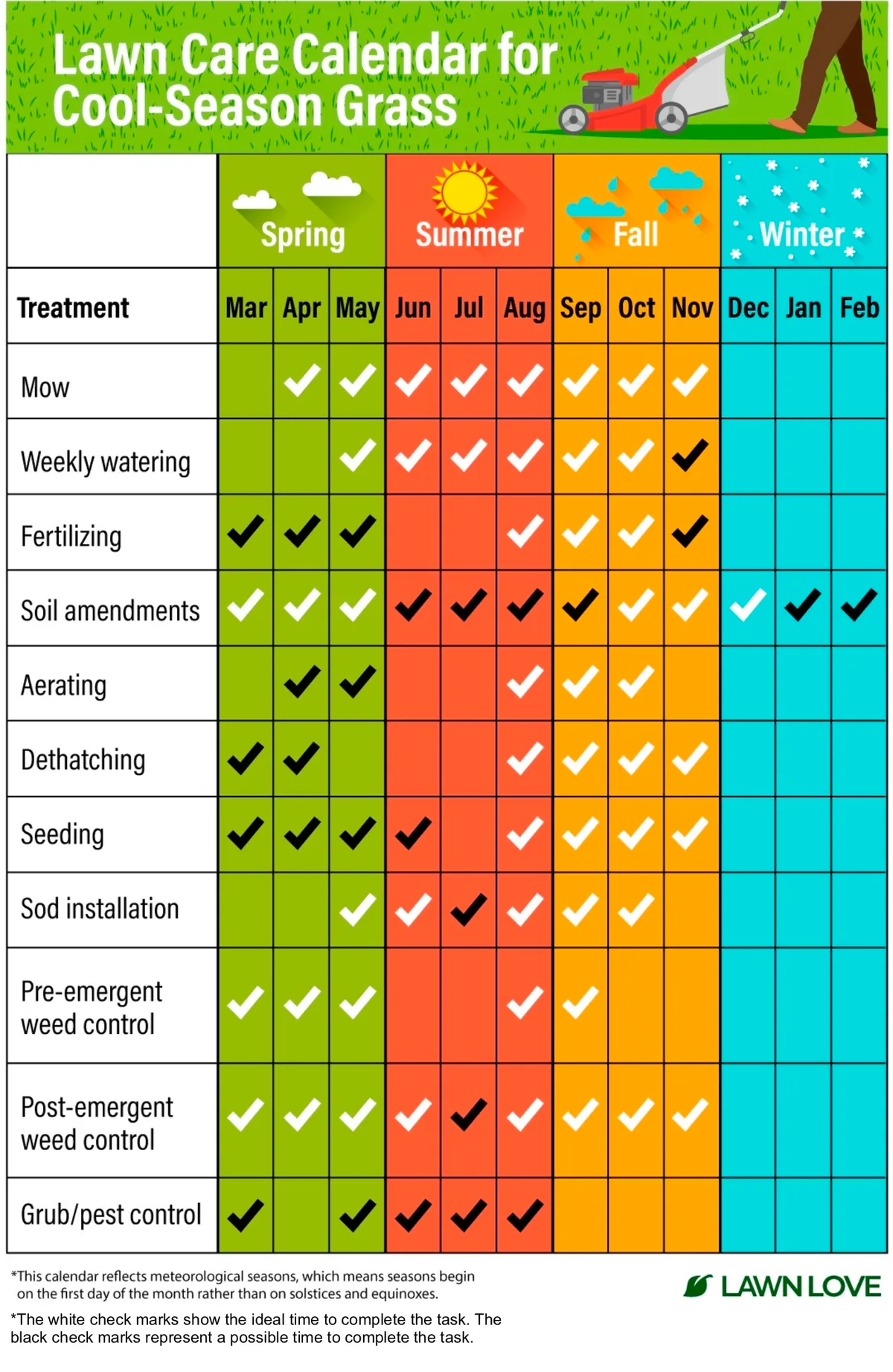
Image source: Web (Bing) / innovation.sgbutterfly.org (Web image (fair-use with source credit))
Quick Answer
A lawn maintenance schedule template is a seasonal calendar that tells you when to mow, water, fertilize, aerate, and overseed. It depends on your grass type and climate zone. Cool-season grass needs heavy care in spring and fall.
Warm-season grass peaks in summer. Soil tests should guide every fertilizer decision. Start with a soil test, then map tasks to your growing season.
What Most Lawn Schedules Get Wrong (And Why They Fail)
The biggest mistake people make is following a neighbor's routine or a generic calendar they found online. Those schedules assume everyone has the same grass, the same soil, and the same weather. They don't.
Let's break this down. A cool-season lawn like tall fescue does most of its growing in spring and fall. It goes semi-dormant during the summer heat.
If you fertilize it heavily in July, you're pushing growth at the worst possible time, which stresses the plant and invites disease. A warm-season lawn like Bermuda does the opposite. It loves summer, thrives in the heat, and goes dormant and brown in winter.
A schedule that works for one will actively harm the other.
Then there's the soil layer. Some yards sit on heavy clay that holds water and compacts easily. Others have sandy soil that drains fast and needs more frequent feeding.
A schedule that ignores soil texture and pH is guessing, not planning.
The other common failure is treating the calendar as rigid. A good template is a framework, not a prison. If spring arrives three weeks late in your region, you adjust.
If a drought hits in July, you change your watering plan. The schedule is there to keep you from forgetting tasks, not to override what your lawn is telling you.
Here's what a real schedule accounts for that generic ones don't:
- Grass type identification
- Regional climate patterns
- Soil test results
- Sun exposure and shade patterns
- Foot traffic and lawn usage
- Local water restrictions
Know Your Grass: The First Branch in Your Decision Tree
Before anything else, you need to know what kind of grass you're growing. This is the first branch in your decision tree, and getting it wrong sends everything downstream off course. Lucky for you, identifying grass is easier than most people think.
Cool-Season Grasses
Cool-season grasses thrive in the northern half of the United States, roughly USDA Hardiness Zones 3 through 6. They grow most actively when soil temperatures sit between 50 and 65 degrees Fahrenheit, which typically means spring and fall. Common varieties include tall fescue, Kentucky bluegrass, perennial ryegrass, and fine fescue.
If you have cool-season grass, your heavy care window is spring and fall. Summer is about survival, not growth. Mowing height should stay higher, around 3 to 4 inches, to shade the soil and retain moisture during hot months.
Fertilizer goes down mainly in spring and fall, not during summer stress.
Warm-Season Grasses
Warm-season grasses dominate the southern United States, roughly Zones 7 through 10. They grow best when soil temperatures hit 70 to 80 degrees Fahrenheit. Common varieties include Bermuda, Zoysia, St.
Augustine, and centipede grass.
These lawns do their heavy lifting in summer. They green up late in spring, explode with growth in June and July, and start slowing down as temperatures drop in fall. Their mowing heights run lower, typically 1 to 2.5 inches depending on variety.
Fertilizer applications happen primarily during the active growing season, from late spring through late summer.
The Transition Zone
Here's where things get tricky. The transition zone, roughly Zones 6 and 7, sits between cool and warm-season territory. States like Missouri, Tennessee, and Virginia fall here.
In this zone, you'll find both types of grass, sometimes even mixed together in one yard. This is where the template truly becomes a decision tree rather than a checklist.
If you're in the transition zone, your best bet is to pick one type of grass and manage for it. Trying to keep both cool-season and warm-season grasses happy at the same time is a losing battle. They want opposite care at opposite times of year.
If your lawn is mostly fescue, manage it as cool-season. If it's mostly Bermuda or Zoysia, treat it as warm-season. If it's a true mix, you have a renovation project on your hands, not a maintenance schedule.
Quick Identification Tips
You don't need a botany degree to tell what you're growing. Here are a few quick checks:
- Bermuda: fine texture, aggressive spreading, turns brown in winter
- Zoysia: thicker blade, slow to green up in spring, very dense
- Tall fescue: coarse blade, bunching growth habit, stays green longer in fall
- Kentucky bluegrass: boat-shaped leaf tip, dark green color, spreads via rhizomes
- St. Augustine: wide, coarse blade, needs warmth, common in coastal South
Soil Health: The Foundation Nobody Tests
Here's the reality. You can follow every task on your calendar perfectly, but if your soil pH is off, your fertilizer won't do what it should. Soil health is the silent factor that makes or breaks a lawn maintenance schedule, and it's the step most homeowners skip.
Why Soil pH Dictates Everything
Soil pH measures how acidic or alkaline your soil is. The scale runs from 0 to 14, with 7 being neutral. Most turfgrasses prefer a slightly acidic range between 6.0 and 7.0.
Outside that window, nutrients become locked up in the soil.
What does that mean for you? If your soil is too acidic, below 6.0, phosphorus and potassium become less available to the grass. If it's too alkaline, above 7.0, iron and manganese get locked out, which shows up as yellowing grass.
You can throw money at fertilizer all season and see weak results because the roots can't access the nutrients.
How Often to Test
Most experts recommend testing your soil every 2 to 3 years. That's the standard from cooperative extension programs affiliated with land-grant universities across the country. Lawns under heavy stress, like constant foot traffic or drought, may benefit from annual testing.
The good news is testing is cheap and easy. A basic DIY test kit runs about $10 to $20 and gives you a rough pH reading. For a more accurate picture, you can send a sample to a university extension lab for $15 to $30.
These labs provide detailed recommendations specific to your soil, including exactly how much lime or sulfur to add to correct pH issues.
The Home Test vs. The Lab Test
A home test kit is fine for a quick check. It uses a color chart and gives you a ballpark reading. It won't tell you about nutrient levels or organic matter, but it will tell you if your pH is wildly off.
The lab test is the gold standard. You mail in a soil sample, and you get back a full report with pH, nutrient levels, organic matter percentage, and recommendations for fertilizer and amendments. For a lawn you're trying to grow properly, this is worth the extra money and the 2-week wait.
Here's what you should do with the results:
| Soil Test Result | What It Means | What To Do |
|---|---|---|
| pH below 5.5 | Strongly acidic | Apply lime in fall or spring |
| pH 5.5–6.0 | Acidic | Monitor, apply lime if needed |
| pH 6.0–7.0 | Ideal range | No adjustment needed |
| pH 7.0–7.5 | Slightly alkaline | Apply sulfur or iron amendments |
| pH above 7.5 | Strongly alkaline | Avoid lime, use acidifying fertilizer |
Fixing pH Issues
If your soil is too acidic, you'll add lime. The standard recommendation is pelletized dolomitic lime, which also supplies magnesium. Application rates depend on your soil texture and current pH, but a typical rate is 20 to 50 pounds per 1,000 square feet for a lawn that's significantly off.
If your soil is too alkaline, you'll add elemental sulfur. This is less common but matters in arid western states where rainfall doesn't naturally leach the soil. Organic matter, like compost, can also help buffer pH issues over time.
The key here is patience. Lime and sulfur take months to fully react with the soil. Apply them in fall so they have time to work before spring growth.
Testing again the following year tells you if you need another application.
The Seasonal Framework: Spring, Summer, Fall, Winter
Now we get to the meat of the template. The seasonal framework divides your year into four care periods, each with its own set of priorities. This is where the decision tree branches based on grass type and climate.
Spring (March–May): Wake-Up Tasks
Spring is the transition from dormancy to active growth. For cool-season lawns, this is the start of the major growing season. For warm-season lawns, it's the green-up period.
The First Mow of the Year
Timing matters here. You want to wait until the grass is actively growing before your first mow. That's typically when soil temperatures reach about 50 degrees Fahrenheit for cool-season grass and 65 degrees for warm-season.
Mowing too early stresses the plants while they're still waking up.
For your first mow, don't cut too short. Take off only about one-third of the blade length. If the grass is 3 inches tall, set the mower to 2 inches for that first pass.
This avoids shocking the grass and leaves enough blade to capture sunlight for photosynthesis.
Pre-Emergent Timing Based on Soil Temperature
This is one of the most critical windows in the entire calendar. Pre-emergent herbicides create a barrier at the soil surface that prevents weed seeds from germinating. But timing matters more than product choice.
Crabgrass seeds germinate when soil temperatures hit about 55 degrees Fahrenheit for 3 to 4 consecutive days. That's your trigger point. Apply pre-emergent right before that threshold, not after.
Once crabgrass has germinated, pre-emergents do nothing.
Many gardeners use the flowering of forsythia or redbud trees as a natural indicator. When those bloom in your area, soil temperatures are likely hitting that 55-degree mark. It's a rough proxy, and it works well, but a soil thermometer is more precise.
When to Fertilize and When to Skip
Cool-season lawns get their first fertilizer application in early spring. Use a slow-release nitrogen formula at a rate of about 0.5 to 1 pound of nitrogen per 1,000 square feet. This supports the spring growth flush without pushing excessive leaf growth.
Warm-season lawns should wait longer. The grass needs to fully green up before it can use fertilizer effectively, which typically happens in May. Fertilizing too early on warm-season grass encourages weed competition and can stress the grass.
One important note for spring: if you applied a pre-emergent, you need to read the label before spreading any fertilizer. Some pre-emergents are combined with fertilizer, and double-applying nitrogen is a common mistake that causes excessive top growth and weak roots.
Spot-Treating Winter Damage
Winter can leave a few scars, especially on cool-season lawns. Look for areas where the grass thinned out, where snow mold damaged patches, or where salt from roads killed sections along driveways. Late spring is the best time to overseed these bare spots.
Lightly rake the damaged area to remove dead material. Spread grass seed matched to your lawn type, then keep the area consistently moist until germination. This is a quick fix, not a full renovation, and it keeps small problems from turning into weed invasions.
Summer (June–August): Stress Management
Summer is when lawns get tested. Heat, drought, and foot traffic all pile on at once. The goal here isn't growth.
It's survival.
Mowing Height Adjustment
This is the single most important adjustment you'll make all year. Cool-season grass should be mowed at 3.5 to 4 inches during summer. That extra height shades the soil, keeps roots cooler, and reduces water evaporation.
It also helps the grass out-compete weeds like crabgrass that thrive in thin, stressed turf.
Warm-season grass handles summer differently. Bermuda and Zoysia should be mowed at 1 to 2 inches, but you can let them creep up slightly during heat waves. St.
Augustine is the exception, it likes 2.5 to 3.5 inches year-round. The one rule that never changes is never removing more than one-third of the blade at a time.
Watering Deep and Infrequent
Most people water too often and too shallow. Daily sprinkling encourages shallow roots that dry out fast. The right approach is deep, infrequent watering that forces roots to grow down.
Cool-season lawns need about 1 to 1.5 inches of water per week during summer. Warm-season lawns similar. The trick is delivering that in one or two watering sessions rather than every day.
A typical run time is 20 to 30 minutes per zone with an oscillating or rotary sprinkler, but you need to check actual output with a tuna can or rain gauge.
Early morning watering is best. The grass has time to dry before evening, which reduces fungal disease risk. Watering at night leaves the turf wet for hours, and that's an open invitation for fungus.
Fertilizer Rules for Each Grass Type
Here's the short version: cool-season grass gets no fertilizer in summer. None. The heat stress is already high, and pushing growth with nitrogen makes it worse.
You'll see burning, disease, and weak roots.
Warm-season grass is the opposite. Summer is its peak growing season, and it responds well to feeding. Apply 0.5 to 1 pound of nitrogen per 1,000 square feet in early June and again in late July.
Use a blend with some slow-release nitrogen to avoid a growth spike.
Fungus Pressure in Humid Climates
Humid regions like the Southeast face constant fungal pressure in summer. Brown patch and dollar spot are the usual culprits on fescue and Bermuda. The best prevention is proper mowing height and watering early in the day so the grass dries out.
If you see circular patches of brown or straw-colored grass, that's often fungus. Spot-treat with a fungicide labeled for your grass type. Follow the label rates exactly, more is not better, and over-application can damage the lawn.
Fall (September–November): Recovery and Renovation
Fall is the most important season for cool-season lawns. It's also when warm-season lawns start winding down. Getting this transition right sets up next spring.
Aeration Timing
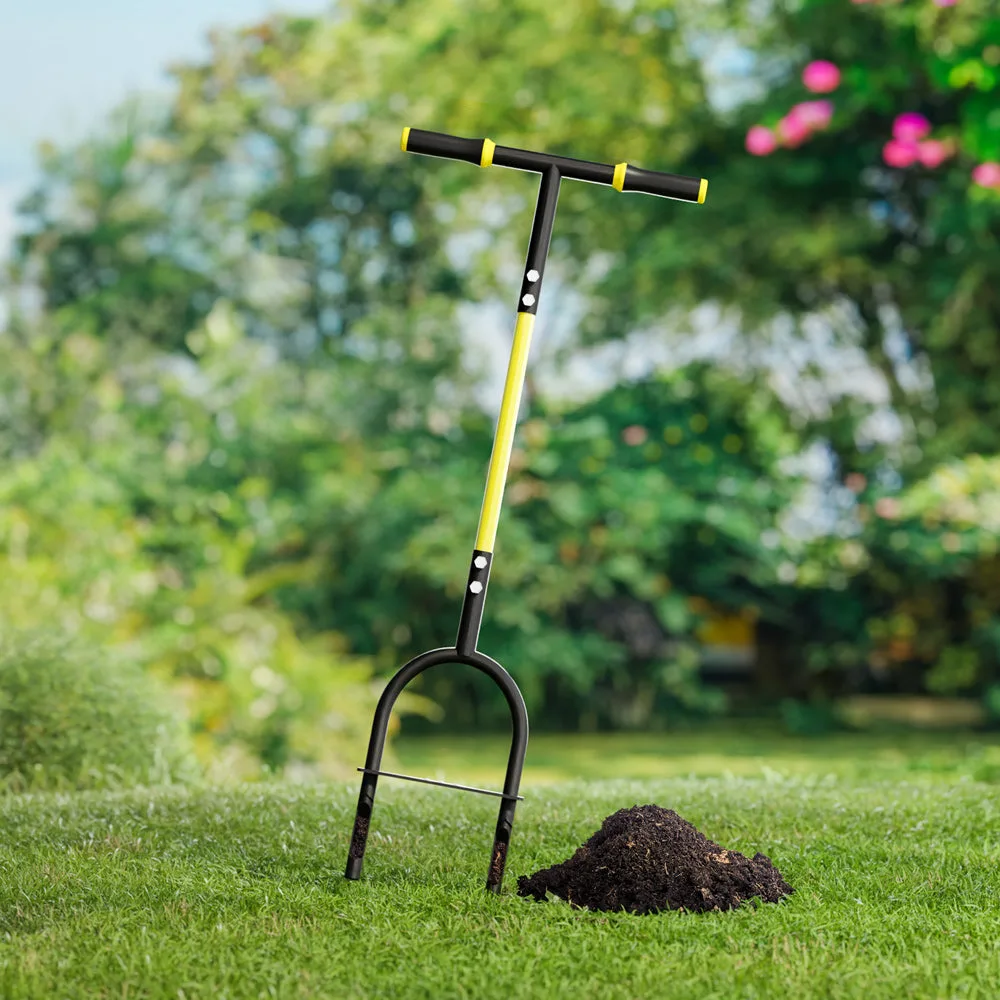
Core aeration is the single best thing you can do for compacted soil. It pulls small plugs of soil out of the ground, which relieves compaction, improves oxygen flow to roots, and helps water and nutrients reach deeper.
Cool-season lawns should be aerated in early fall, typically September. Warm-season lawns should be aerated in late spring or early summer when they're actively growing. Aeration during dormancy does more harm than good.
How do you know if you need it? Walk across your lawn after a rain. If water pools or the ground feels spongy, soil compaction is likely.
Heavy clay soils need aeration every year. Sandy soils can go every other year.
Overseeding Done Right
Overseeding thickens up a thin lawn and fills bare patches. It works best when paired with aeration because the holes give seed direct soil contact, which dramatically improves germination.
For cool-season lawns, overseed in September or early October. Use 5 to 10 pounds of fescue seed per 1,000 square feet for a typical overseeding job. Spread the seed right after aeration, then walk over the lawn to press seed into the holes.
Keep the soil surface moist for the next 2 to 3 weeks until germination. That often means light watering twice a day. Once the new grass reaches about 3 inches, you can mow it with a sharp blade.
The Most Important Fertilizer Application
This is the one you don't want to miss. Late fall fertilizer application, sometimes called the winterizer, is the most important feeding of the year for cool-season grass.
Apply it in late October or November, after the grass has slowed its top growth but before the ground freezes. The roots stay active and store nutrients for spring. That means your lawn greening up earlier and stronger next year, with less spring feeding required.
Use a high-nitrogen, slow-release formula at the label rate. The exact timing matters less than making sure it happens. Even if you skip every other fertilizer application, don't skip this one.
Leaf Management Without Smothering
A thick layer of leaves blocks sunlight and traps moisture, which invites disease. But you don't need to rake every single leaf. A good pass with a mulching mower chops leaves into tiny pieces that break down and feed the soil.
If the leaf layer is heavy, give it a final mow at a lower height to shred them. Or rake them into the flower beds for compost. Leaving piles of whole leaves on the lawn for weeks is the only real mistake here.
Grass needs sunlight to photosynthesize and store energy for winter.
Winter (December–February): Minimal Dormancy Care
Winter is the quiet season. Your lawn rests, and so should you. The less traffic and stress you put on dormant grass, the better it recovers in spring.
Mowing Stops (or Slows) by Region
Cool-season grass goes dormant once soil temperatures drop below 40 degrees Fahrenheit. That typically means mowing stops entirely from late November through February in northern zones. In milder southern climates, you might need just a few cuts during warm spells.
Warm-season grass turns brown and stops growing entirely in winter. Set your mower blade to its highest setting for the last cut of the year. Leaving the grass slightly taller helps insulate the crown against cold damage.
Weed Control During Dormancy
Winter weeds like henbit and chickweed still germinate and grow during cool months. If they're already established, spot-treat them with a broadleaf herbicide labeled for your grass type. Apply on days when temperatures stay above freezing for a full 24 hours.
Keep in mind that winter weeds are a sign of thin turf. When spring arrives, overseeding and proper fertilization will out-compete them naturally.
Equipment Maintenance Tasks
This is a perfect time to service your equipment. Sharpen the mower blade. Replace the air filter.
Change the oil. Drain old fuel from the tank or add a stabilizer to prevent gumming.
A few minutes of winter maintenance saves you a lot of frustration in March. A sharp blade makes a huge difference in mowing quality, clean cuts heal faster and stress the grass less than torn, ragged cuts.
Month-by-Month Decision Table
Here's a scan-friendly grid showing the core tasks by season. Use it as a quick reference when you're planning your month.
| Month | Cool-Season Lawn | Warm-Season Lawn |
|---|---|---|
| January | Dormant, no mowing | Dormant, no mowing |
| February | Plan spring tasks | Dormant, plan green-up |
| March | First mow, pre-emergent | Watch for green-up, no fertilizer yet |
| April | Fertilize, overseed bare spots | First mow of season |
| May | Light feeding, spot-treat weeds | Fertilizer #1, raise mow height |
| June | No fertilizer, deep watering | Fertilizer #2, keep mowing |
| July | Stress management, high mowing | No fertilizer, water deeply |
| August | Stress management, prepare fall | Light feeding if needed |
| September | Aeration, overseed, fertilizer | Reduce mowing, stop fertilizer |
| October | Winterizer fertilizer, keep mowing | Mow less, prep dormancy |
| November | Leaf cleanup, last mow | Dormant, stop mowing |
| December | Dormant, equipment upkeep | Dormant, equipment upkeep |
7 Mistakes That Ruin Lawns Despite a Good Schedule
Even with a solid plan, small errors can undo your work. Here's what to watch for.
1. Scalping in the Heat
Cutting cool-season grass below 2.5 inches in summer is scalping. It exposes the soil, lets in weed seeds, and stresses the roots. Keep the mower high in summer.
Period.
2. Watering Daily in Small Doses
Short, frequent watering creates shallow roots. A lawn with shallow roots can't handle heat or drought. Water deep and less often instead.
3. Fertilizing at the Wrong Time of Year
Feeding cool-season grass in July wastes money and stresses turf. Feeding warm-season grass in November does the same. Match your fertilizer to your grass type's growing season.
4. Ignoring Soil Compaction
If you can't push a screwdriver into your soil easily, it's compacted. Aeration is the fix. Skipping it makes every other task less effective.
5. Aeration at the Wrong Time
Aerating dormant grass damages it. Cool-season grass gets aerated in fall. Warm-season gets aerated in spring or early summer.
Stick to the right window.
6. Overseeding Without Seed-to-Soil Contact
Tossing seed on top of dead grass or bare dirt is a waste of money. Seed needs contact with soil to germinate. Rake, aerate, or topdress first.
7. Mowing With a Dull Blade
A dull blade tears the grass instead of cutting it. The result is ragged tips that look brown and stressed. Sharpen your blade every 4 to 6 weeks during the growing season.
Building Your Own Template: A Practical Worksheet
Now it's time to put it all together. Here's how to build a template that's specific to your yard.
Step 1: Identify Your Grass Type
Use the identification tips from earlier. If you're still unsure, take a sample to your local cooperative extension office. They can identify it for free.
Step 2: Map Your Climate Zone
Check the USDA Hardiness Zone for your area. That tells you your frost dates and growing season length. Most seed packets and fertilizer labels reference zones.
Step 3: Test Your Soil
Order a soil test now if you haven't. The results tell you your pH, nutrient levels, and what amendments you need. This is the foundation of your entire schedule.
Step 4: Create Your Seasonal Grid
Use the month-by-month table as a starting point. Write in the specific months, not just seasons. Your spring starts earlier in Georgia than it does in Minnesota, so adjust accordingly.
Step 5: Write It Down
Keep your schedule somewhere you'll see it. A simple spreadsheet, a printed calendar, or a note on the fridge all work. The goal is to have it visible when you're planning your weekend.
Step 6: Track and Adjust
At the end of each month, make a few notes. Did the grass need more water? Did weeds appear in a new spot?
Did the pre-emergent hold back crabgrass? This feedback loop makes next year's schedule even better.
When to Hire a Pro vs. When to DIY
Most lawn tasks are DIY-friendly. Mowing, watering, and spot-treating weeds are straightforward. But some jobs are worth outsourcing.
Tasks to DIY
- Mowing and edging
- Watering according to your schedule
- Fertilizer application (if you can follow label rates)
- Spot-treating weeds
- Leaf cleanup
Tasks Worth Hiring Out
- Aeration if you don't want to rent a machine
- Large-scale weed control for infestations
- Soil amendment if you need heavy lime or sulfur applications
- Fungicide or insecticide applications if you're unsure about diagnosis
The Cost Factor
DIY aeration costs about $50 to $100 for a rental. Professional aeration runs $75 to $200 depending on lawn size. Overseeding adds another $100 to $250.
Compared to the cost of replacing a dead lawn, both options are affordable. The real cost is doing nothing.
Frequently Asked Questions
How often should I mow my lawn?
Most lawns need mowing once a week during the growing season. In spring and fall, cool-season grass may need twice-weekly cuts. During summer stress or winter dormancy, you can stretch to every 10 to 14 days.
Never remove more than one-third of the blade at a time.
When should I stop watering my lawn in fall?
Keep watering until the ground freezes, typically late October or November for most regions. Grass roots stay active in fall, and moisture helps them store energy for winter. Once the ground freezes, you can stop until spring.
Warm-season lawns can stop once they go fully dormant.
Should I leave grass clippings on the lawn?
Yes. Grass cycling returns nitrogen back to the soil and reduces fertilizer needs by about 25 percent. Clippings break down quickly and don't cause thatch.
Just mow regularly so clippings are short enough to fall between the grass blades.
How long after overseeding can I mow?
Wait until the new grass reaches about 3 inches tall before the first mow. This typically takes 2 to 4 weeks depending on grass type and growing conditions. Use a sharp blade and set the mower high for that first pass.
What is the best time of day to water?
Early morning, between 4 a.m. and 9 a.m., is best. The grass has time to dry before evening, which reduces fungal disease risk. Watering in the heat of the day wastes water to evaporation.
Watering at night leaves the lawn wet for hours.
Can I use one schedule for any lawn?
No. Grass type, climate, and soil conditions all change the schedule. A cool-season lawn in Minnesota needs a different routine than a warm-season lawn in Florida.
Start with the seasonal framework, then adjust for your region using soil tests and local conditions.