The Scotts lawn care schedule looks simple on the bag, but it gets complicated the moment you're standing in your yard staring at bare patches or a carpet of dandelions. You've probably wondered, "Okay, but when exactly do I do this?" The honest answer depends on where you live, what grass you're growing, and what your lawn actually needs right now.
Manufacturer specifications indicate that Scotts designed its 4-Step Program around a 6-8 week feeding cycle, with each product timed to hit a specific growth stage of your turf. As of 2026, the core schedule remains the same, but regional variations, soil temperatures, and local restrictions all shift when each step should actually go down.
Quick Answer
The Scotts lawn care schedule has four steps. Step 1 is crabgrass preventer in early spring. Step 2 is weed control in late spring.
Step 3 is summer lawn food. Step 4 is winterizer in fall. Timing depends on your grass type and region.
Soil temperature matters more than calendar dates.
The Problem: Why Most Scotts Schedules Fail
Here's the uncomfortable truth about the Scotts 4-Step Program. It works great for a lot of people, but it fails for plenty of others. And usually, it's not the product's fault.
It's the timing.
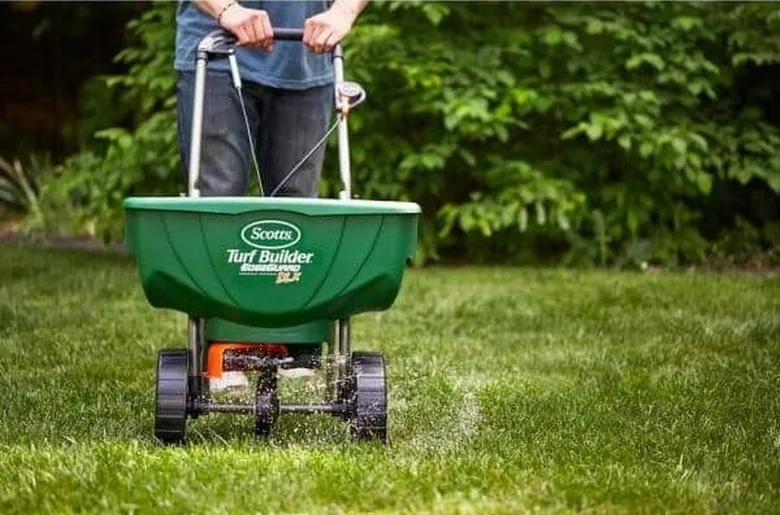
Image source: Bing (Web (fair-use with source credit))
The most common mistake in our research is following the calendar dates printed on the bag like they're universal. Those dates are averages. They assume your soil temperatures line up with the month on the calendar.
Real yards don't work that way.
Apply Step 1 pre-emergent too early, and the product breaks down before crabgrass seeds germinate. Apply it too late, and the crabgrass is already growing. Either way, you wasted money and your lawn looks patchy by July.
The fix isn't complicated. You just need to pay attention to three things: your grass type, your local climate, and the actual condition of your lawn.
Does the Scotts 4-Step Program Actually Work?
Yes, but with some honest caveats. The program works when you apply it correctly, at the right time, to the right grass.
Each step serves a specific purpose, and the system is designed so the products complement each other. Step 1 uses a pre-emergent herbicide that stops crabgrass seeds from germinating. Step 2 targets existing broadleaf weeds like dandelions and clover while feeding the turf.
Step 3 is a straight fertilizer with slow-release nitrogen to carry your lawn through summer heat. Step 4 is a winterizer formula that boosts potassium to strengthen roots before dormancy.
Here's what the N-P-K numbers on each bag actually mean:
| Step | Typical N-P-K | Primary Purpose |
|---|---|---|
| Step 1 (Early Spring) | 26-0-3 | Pre-emergent crabgrass control + light feeding |
| Step 2 (Late Spring) | 30-0-4 | Post-emergent weed control + nitrogen boost |
| Step 3 (Summer) | 32-0-6 | Deep root feeding with slow-release nitrogen |
| Step 4 (Fall) | 32-0-10 | Potassium-heavy winterizer for root growth |
Nitrogen (N) promotes leafy green growth. Phosphorus (P) supports root development, but it's often low because many states restrict it. Potassium (K) strengthens the plant against stress, disease, and cold.
Where the program falls short is flexibility. It's a one-size-fits-all system, and lawns aren't one-size-fits-all. If you have heavy shade, poor soil, or a serious grub problem, you'll need to add steps beyond the standard four.
Decision Branch #1: What Grass Type Do You Have?
This is the single biggest factor in your schedule. The program does work for both cool-season and warm-season grasses, but the timing shifts significantly by region.
Cool-Season Grasses (Northern States)
Cool-season grasses like Kentucky bluegrass, tall fescue, and perennial ryegrass grow most actively in spring and fall. They go semi-dormant during summer heat.
For these lawns, the Scotts schedule lines up fairly well with the printed calendar. Step 1 goes down in early spring, typically March through April. Step 2 follows in May.
Step 3 lands in July, and Step 4 goes down in September or October.
The critical moment is Step 1. Wait until soil temperatures reach about 55°F at a depth of 2 inches. That's usually when forsythia bushes bloom or when lilacs start leafing out.
The Scotts MyLawn app can track local soil temperatures for you.
Warm-Season Grasses (Southern States)
Warm-season grasses like Bermuda, St. Augustine, and Zoysia wake up later and do most of their growing in summer heat. The standard Scotts schedule doesn't fit these lawns well without adjustments.
For warm-season lawns, push Step 1 back to late March or April. Skip Step 3 entirely if your lawn is established, or use a lighter application. The big feeding should happen in late spring and again in late summer.
Your winterizer goes down in November, not September.
Transition Zone
The transition zone is a strip across the middle of the country where both types of grass struggle. If you live in Virginia, Missouri, or northern Texas, watch your lawn rather than follow a strict schedule. The fall feeding becomes the most important one because it builds root depth for the stressful summer ahead.
If you don't know your grass type, grab a small sample and check with your local county extension office. They'll identify it for free and give you a tailored seasonal calendar.
Decision Branch #2: What's Your Lawn's Current Condition?
Your yard doesn't care about the printed schedule. It cares about its current state. Before you lay down a single granule, take an honest look at what you're working with.
New or Patchy Lawns
If you're establishing a new lawn from seed or overseeding a thin one, the standard 4-Step schedule won't work. The problem is Step 1. Pre-emergent herbicides stop crabgrass seeds from germinating, but they also stop grass seeds from germinating.
You can't apply Step 1 in the same season you're overseeding.
The fix: overseed in the fall after the pre-emergent has broken down. Scotts recommends waiting at least 8 to 12 weeks after applying Step 1 before dropping new seed. For spring overseeding, skip Step 1 entirely and rely on a fast-starting grass seed and a starter fertilizer instead.
Weed-Heavy Lawns
If your lawn looks like a meadow of dandelions and clover, Step 2 alone probably won't cut it. The Weed & Feed formula works, but it's most effective when weeds are actively growing in early spring. If you've missed that window, you might need a separate liquid post-emergent herbicide applied directly to the weeds.
Lawns with Grub Damage
Grub control is the blank spot in the 4-Step Program. None of the four steps address grubs. If you've had brown patches that peel back like carpet, or if you're seeing skunks and raccoons digging at night, you'll want to add Scotts GrubEx to your schedule.
Apply GrubEx in late spring to early summer, around the same time as Step 2. It targets grubs that will hatch in late summer, so timing is less critical than consistent coverage.
The Step-by-Step Scotts Schedule: A Month-by-Month Workflow
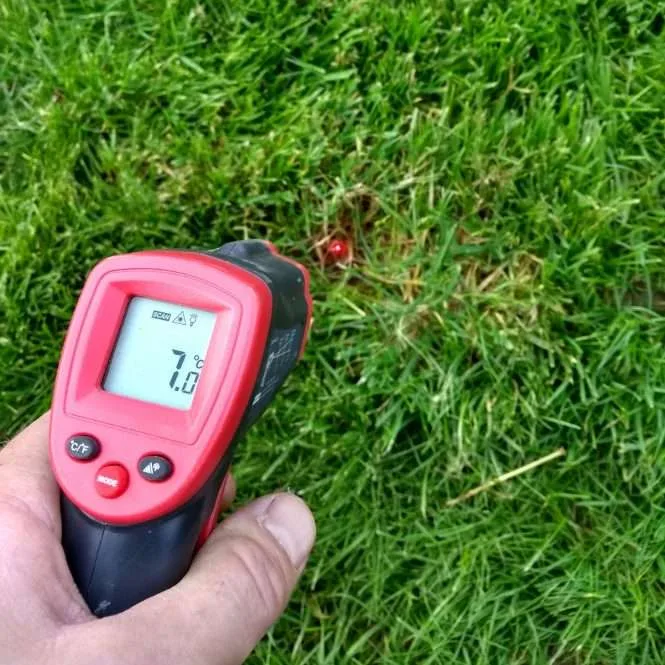
Image source: Web (Bing) / thelawnman.co.uk (Web image (fair-use with source credit))
Let's walk through the full year, step by step. The exact dates will shift based on your region, so treat these as general guidance rather than hard rules.
Step 1: Early Spring — Crabgrass Prevention
The first application of the season is all about prevention. You're stopping crabgrass seeds from germinating, not killing plants that are already up. This changes the timing completely.
Wait until soil temperature holds at 55°F for three to four consecutive days. In the South, that might be mid-February. In the North, it's often late April.
Check your local extension office for real-time soil temperature data, or use the Scotts MyLawn app.
Apply Step 1 with a broadcast spreader set to the setting printed on the bag. Water it in lightly if rain isn't forecast within 24 hours. Don't overseed for at least 8 to 12 weeks.
Step 2: Late Spring — Weed Control
About 6 to 8 weeks after Step 1, usually in May, it's time for Step 2. This product combines fertilizer and post-emergent herbicide. It kills existing broadleaf weeds while feeding the lawn.
Apply Step 2 when weeds are actively growing and the lawn is dry. The granular fertilizer needs to hit the soil, so don't water it in immediately the way you would with Step 1. Wait 24 to 48 hours, then water lightly if the ground is dry.
Important: don't apply Step 2 to a wet lawn. The granules stick to the grass blades and burn them instead of reaching the soil. If it rains within 24 hours, you may lose some of the weed control benefit.
Step 3: Summer — Heat-Stress Feeding
Step 3 is a straight fertilizer with a higher nitrogen percentage. It's designed to carry your lawn through summer heat without promoting a growth spurt that requires constant mowing.
Apply Step 3 in early summer, about 6 to 8 weeks after Step 2. For cool-season lawns, this is the lightest feeding of the year. For warm-season lawns, it's the heaviest.
The product varies by region, so check the bag.
One word of caution: don't fertilize during a drought. If your lawn is brown and dormant, the fertilizer won't help and may actually damage the roots. Wait until the lawn is actively growing again.
Step 4: Fall — Winterizer
The final step is the most important one. Step 4 is a winterizer formula with a higher potassium content. That potassium strengthens the root system and helps the lawn survive winter stress and bounce back faster in spring.
For cool-season lawns, apply Step 4 in September or October. For warm-season lawns, push it to November, right before the first expected frost. Water it in thoroughly to push the nutrients down to the root zone.
Spreader Calibration
Whatever step you're applying, the spreader setting matters. Each Scotts product prints a recommended setting on its bag. That setting assumes you're using a Scotts spreader.
If you're using a different brand, you'll need to calibrate.
The process is simple. Measure out 10 feet on your driveway. Apply the product at your chosen setting.
Check if you've distributed the right amount. Adjust as needed. Under-applying wastes money.
Over-applying burns the lawn.
When to Skip or Modify the Schedule
The 4-Step Program is a solid baseline, but there are times when you should deviate from it.
Overseeding in the Fall
If you're planning to overseed, you can't apply Step 1 in the same season. The pre-emergent will block your new seed. Instead, overseed in early fall, then apply Step 4 winterizer about 4 to 6 weeks later.
Fertilizer Restrictions
Several states, including Florida, Minnesota, and Maryland, restrict phosphorus-containing fertilizers during certain months. Check your state's regulations before buying. Scotts offers phosphorus-free versions of most products.
Drought Conditions
Skip Step 3 during a drought. Fertilizer needs water to activate. Applying it to dry, dormant grass risks burning the roots and wasting money.
Common Mistakes and How to Avoid Them
Most Scotts schedule failures come down to a handful of repeatable errors.
- Applying to wet grass. Weed & Feed granules stick to wet blades and cause burns. Wait for dry conditions.
- Wrong spreader setting. The bag's setting assumes a Scotts spreader. Calibrate your own.
- Missing the pre-emergent window. Soil temperature, not the calendar, dictates timing.
- Skipping a soil test. You can't fix what you don't measure. Your extension office offers cheap tests.
- Fertilizing during drought. It wastes product and stresses the lawn.
- Applying Step 2 before mowing. Mow first, then apply. Tall grass blocks the granules from reaching the soil.
Cost, Coverage, and Product Variations
The Scotts 4-Step Program runs roughly $40 to $80 per season for a typical 5,000 square foot lawn. Each bag covers between 5,000 and 15,000 square feet depending on the product line.
The main cost driver is whether you buy the standard granular formula or the premium line with additional ingredients like humic acid or seaweed extract. The premium versions cost about 20% more and offer marginal benefits for most lawns.
You'll also choose between bagged product and Scotts Snap Pac cartridges. Snap Pacs click directly into a compatible spreader, eliminating guesswork about settings. They cost more per pound but save time and reduce waste.
Tools, Apps, and Resources to Keep You on Track
You don't need a lot of gear to run a Scotts schedule, but the right tools make it easier.
- Scotts MyLawn App. Tracks local weather, soil temperature, and product timing. Free on iOS and Android.
- Soil thermometer. A cheap probe costs under $10 and removes guesswork from Step 1 timing.
- Broadcast spreader. Any brand works, but you'll need to calibrate it if it's not a Scotts.
- Rain gauge. Helps you track weekly water totals so you're not overwatering.
- Your county extension office. Free or low-cost soil tests and localized advice.
Frequently Asked Questions
Can I use Scotts 4-Step on a new lawn?
Yes, but not immediately. Wait until the new grass has been mowed at least three times before applying Step 1 or Step 2. Use a starter fertilizer at seeding time instead, then switch to the 4-Step program the following season.
How long do I wait to overseed after applying pre-emergent?
Wait at least 8 to 12 weeks after applying Step 1 before overseeding. The pre-emergent's active ingredient breaks down over that window. If you overseed too early, the chemical blocks your new seed from germinating.
Is Scotts safe for pets and kids?
Most Scotts granular products are safe once the lawn is dry and the granules are watered in. Keep pets and children off the treated area until the product is no longer visible. Always follow the label instructions for your specific product.
Should I mow before or after applying fertilizer?
Mow before applying, not after. Cutting after fertilization removes granules and reduces effectiveness. Mowing also creates clippings that can block the product from reaching the soil.
Leave the clippings in place, then apply fertilizer immediately after mowing.
Can I use the same schedule in Arizona as in Ohio?
No. The same Scotts products work in both regions, but the timing differs dramatically. Arizona lawns need their heavy feedings in winter and early spring.
Ohio lawns follow the standard northern schedule. Always base your timing on your specific grass type and local soil temperatures.
The Bottom Line: A Decision Guide for Your Yard
The Scotts lawn care schedule works, but only if you adjust it for your specific situation.
Start with your grass type. That determines the entire seasonal framework. Then check your lawn's condition for additional needs like grub control or overseeding.
Finally, watch soil temperatures rather than calendar dates to time each application.
The system is designed for convenience. The bags are color-coded, the spreader settings are printed, and the app does most of the thinking for you. But no bag of fertilizer can replace basic observation of what your lawn actually tells you.
Check your local extension office's recommendations first. Match them against the Scotts schedule, and you'll get the best of both worlds. The right timing, the right products, and the right results.