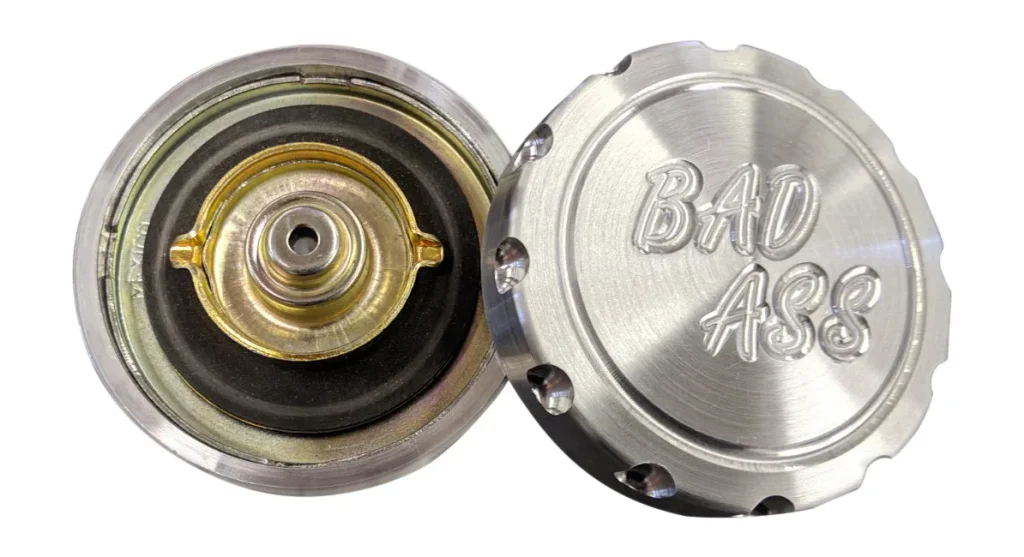
What does a vented gas cap look like? Almost always, it looks exactly like every other fuel cap, and that's the problem. The giveaway is one small detail: a pinhole, a slot, or a notch that lets air slip into the tank as fuel leaves it.
Miss that detail, and you can wind up with an engine that starves itself halfway through a job.
The confusion makes sense. Before the EPA's evaporative emission (EVAP) standards rolled out in the early 1970s, nearly every gas cap vented straight to open air. As of 2026, almost none do, so the cap in your hand could be one of three very different designs.
Here's how to tell them apart, starting with the quick version.
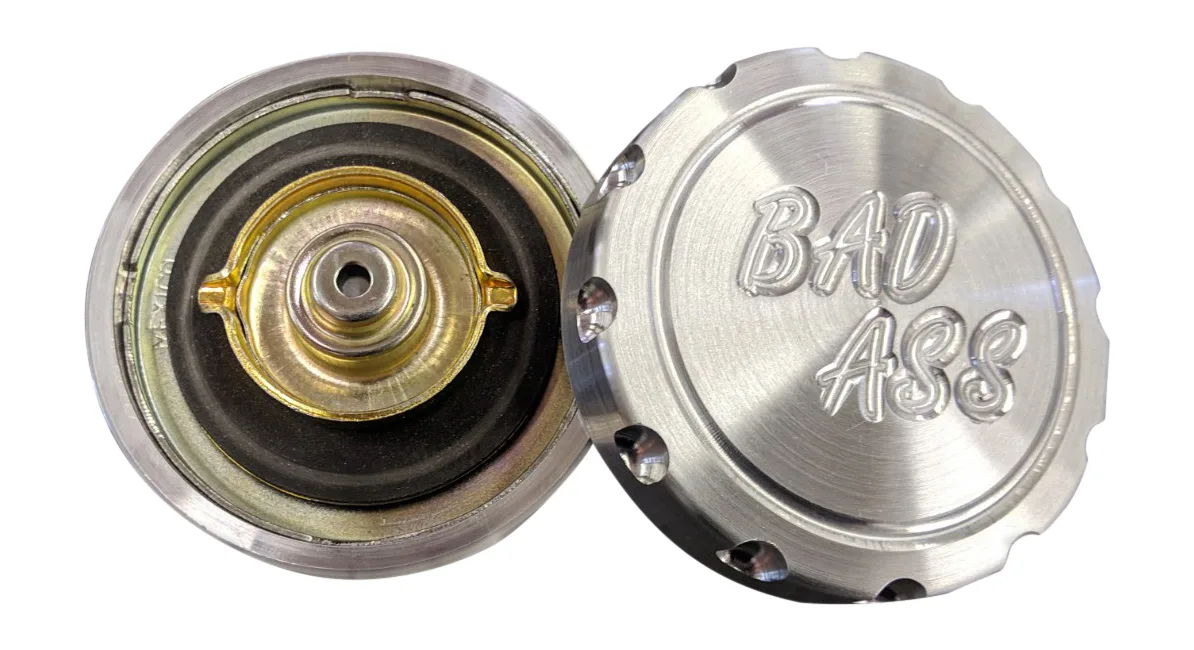
Image source: Bing (Web (fair-use with source credit))
Quick Answer: What a Vented Gas Cap Actually Looks Like
What does a vented gas cap look like? It looks like a normal fuel cap with one small opening. Most have a pinhole on top and a notch in the gasket.
Older styles vent straight to the air. Modern car caps vent through the EVAP system instead.
Why Vented Gas Caps Are So Hard to Identify by Sight Alone
Almost every fuel cap shares the same basic silhouette. Round body, knurled grip, rubber seal underneath. Manufacturers rarely print the word "vented" anywhere on the cap itself.
Three things trip people up:
- The vent often sits on the bottom, where a quick glance misses it.
- Modern pressure-vacuum caps mimic the old look almost perfectly.
- Different equipment uses the word "vented" to mean different plumbing.
History explains the mess. Before emission rules changed, tanks vented straight through the cap. When the EPA phased in EVAP standards, vapor control moved to the charcoal canister and the cap sealed up.
That's why a 1968 cap and a 2018 cap can look like twins while doing completely different jobs.
It's also why a stalling mower keeps getting blamed on the carburetor while the real culprit hides in plain sight.
The Three Telltale Visual Cues on Any Vented Cap
In our research across manufacturer parts diagrams and service manuals, the same three cues show up again and again. Work through them in order: top face, gasket, underside. Any single one confirms a vent.
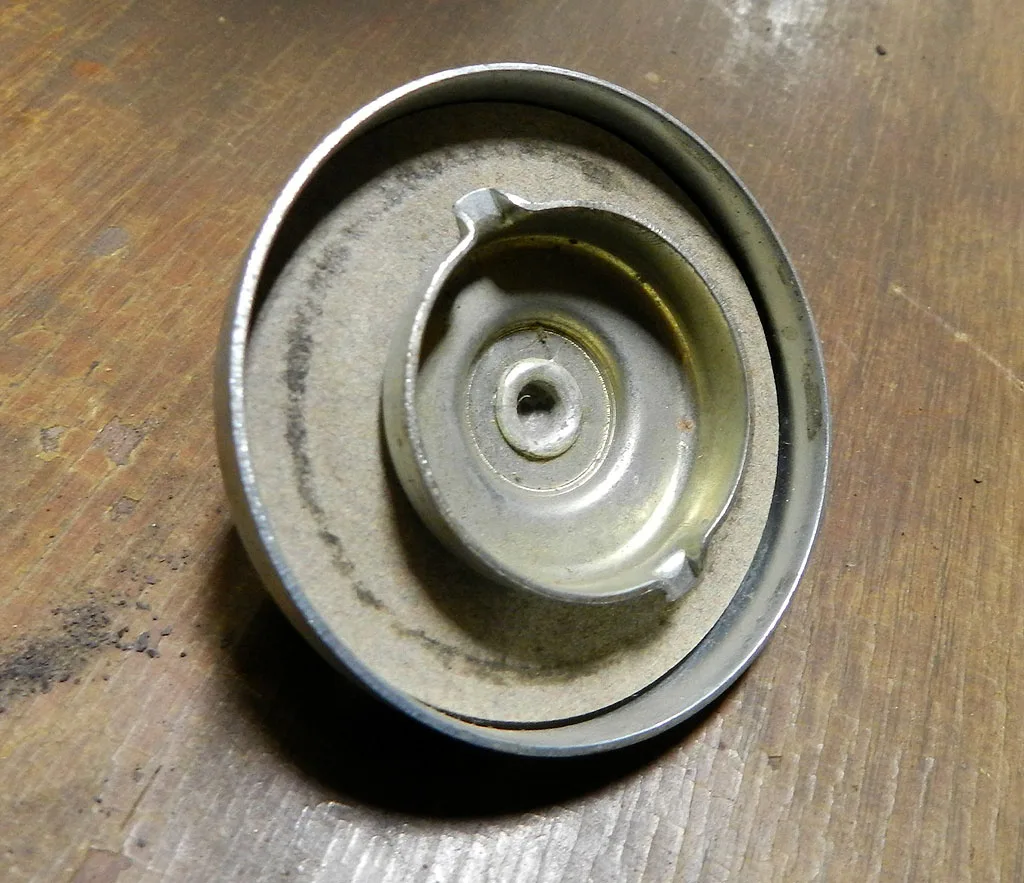
Image source: Bing (Web (fair-use with source credit))
Cue 1: The Pinhole or Cross-Slot on the Cap's Top Face
Start with the top. A true vent almost always shows a small opening, usually 1 to 3 millimeters across. On steel caps it's a drilled pinhole.
On plastic small-engine caps it's often a tiny hole near the center or a cross-shaped slot. Some designs hide the opening under a rubber flap or a rotating dial, so tilt the cap under good light before ruling anything out.
Cue 2: The Vent Groove or Notch Cut Through the Gasket
Flip the cap over and study the seal. A sealed cap has one continuous, unbroken ring of rubber. A vented cap has a gap or molded channel cut into that ring, giving air a path past the seal.
On some designs the groove runs through the plastic sealing face instead. Either way, an unbroken ring means no vent.
Cue 3: What the Underside Shows (Baffles, Channels, or a Check Valve)
The underside reveals how the vent actually works. You might see a perforated baffle disc, molded air channels, or an open passage running down to the tank. Plenty of caps tuck a spring-loaded ball or diaphragm check valve inside, which explains the faint click some caps make when shaken.
Solid parts with no openings at all point to a sealed design.
Vented vs Sealed vs Pressure-Vacuum Relief: Telling All Three Apart at a Glance
Most identification mistakes happen between these three designs. Here's the side-by-side.
| Cap type | What you see | Where it's used |
|---|---|---|
| Vented (atmospheric) | Open pinhole or slot on top, notch in the gasket, air passes straight through | Pre-EVAP cars, lawn mowers, generators, tractors, older motorcycles |
| Sealed (non-venting) | Unbroken gasket, no hole anywhere, no moving parts | Race tanks and a few specialty applications |
| Pressure-vacuum relief | Looks sealed outside, internal valves crack open at set pressure and vacuum levels | Virtually every modern car and truck |
The pressure-vacuum cap fools everyone. From the outside it looks completely sealed, with no hole and no notch. Inside, spring-loaded valves hold a small amount of pressure and vacuum in the tank, then bleed off anything beyond safe limits.
Manufacturer specs list those thresholds, and they vary by vehicle.
So which one does your machine need? If it predates EVAP rules, it wants the open vent. If it has a charcoal canister, it needs the relief design.
Match the system, not the look.
How Vented Caps Differ Visually by Equipment Type
"Vented" means slightly different plumbing on different machines. Each setup carries its own visual signature.
Lawn Mowers, Generators, and Small Engine Caps
Small-engine caps are usually molded plastic with the vent built into the body. Briggs & Stratton, Honda, Kohler, and Kawasaki all use variations on this design, and their parts diagrams trace the air path straight through the center of the cap. Some versions show a visible pinhole.
Others route air through internal channels you only spot from underneath. When a mower quits partway through a cut yet runs fine shortly after, this hidden vent path is the usual suspect. Once it's clear, the machine slides right back into a normal service routine.
Motorcycle, Dirt Bike, and ATV Caps With Hose-Barb Vent Nipples
Bike caps are the easiest to recognize. Most carry a small barbed nipple on the top or side, sized for a 3 to 5 millimeter vent tube. That tube routes down and away from the tank so fuel can't siphon out in a tip-over.
Billet race caps go further, adding a flip lever you can open for extra venting on hot days. If the nipple is there, the cap vents. No guesswork needed.
Classic Car and Tractor Caps (Pre-EVAP Threaded Styles)
Anything built before the early 1970s most likely runs a true vented cap. These are usually steel or brass, threaded, and noticeably heavy. The vent hole sits right on the top face, sometimes behind a small shield that keeps rain out.
Tractor caps follow the same pattern and remain available as exact reproductions today. Locking versions add a key without giving up the open vent.
Marine Tanks: Why the Vent Lives Somewhere Else Entirely
Boats break the pattern completely. On a portable marine tank, the vent is a separate screw fitting mounted on the tank itself, not part of the cap. Permanent built-in tanks vent through a hull-side fitting, as US Coast Guard fuel system rules in 33 CFR Part 183 require.
So if you're staring at a boat's fuel fill wondering where the hole went, stop looking. It was never supposed to be there.
Hands-On Tests When Your Eyes Can't Confirm It
Some caps hide their vent so well that even a long look settles nothing. Three quick checks fix that, and none require tools. Each takes under a minute.
The Loose-Cap Test (Does It Run Fine With the Cap Cracked Open?)
Yes, and that result points straight at the tank. Run the engine until it normally quits, often 10 to 20 minutes into a hot job. Loosen the cap a turn or two and restart.
If it keeps running now, tank vacuum was starving the carburetor. Repair shops see this pattern constantly, and plenty of "bad carburetors" only ever needed a $10 cap.
The Shake Test for One-Way Valves
Hold the cap next to your ear and give it a firm shake. A faint click or rattle means a spring-loaded ball or diaphragm check valve lives inside. That valve lets air in while keeping fuel from splashing out.
Lots of modern bike and small-engine caps work this way, so a click signals smart design, not damage.
The Blow-Through Test
Take the cap off the tank first. Blow gently through the vent hole, then suck on it. Airflow in either direction confirms an open path.
Solid resistance both ways points to a sealed or relief-style design. On dirt bike caps with a hose barb, attach a short tube, dip the free end in water, and blow softly through the cap. Steady bubbles mean the path is clear.
Common Visual Mistakes That Send People Home With the Wrong Cap
Even careful buyers trip up here. Five errors show up again and again in verified buyer feedback:
- Assuming every black plastic cap is interchangeable. Shape matches, function doesn't.
- Reading "universal fit" as universal function. Threads can mate perfectly while the venting stays wrong.
- Confusing a splash shield's hole with the true vent. Some openings exist only to block fuel spray.
- Buying a locking cap for a pre-EVAP tractor and assuming the key mechanism guarantees airflow. Many lock tight and seal tighter.
- Matching thread size but skipping the gasket check. Two caps can share a pitch and behave completely differently.
Aftermarket brands compound the confusion. Stens, Oregon, Stant, Motorad, and Gates each sell vented and non-vented versions of similar-looking fittings. Always match the full part number, not just the brand name.
First-time mower owners working through small parts like these can lean on a plain-English starter guide while the bigger picture comes together.
Signs Your Vent Is Blocked Even When the Cap Looks Perfectly Normal
Vents fail silently. Dirt, fuel varnish, spider webs, and swollen gaskets clog the path without leaving a mark. Watch for this cluster:
- Engine starts cold, then dies 10 to 20 minutes later once everything heats up.
- A sharp hiss or inward whoosh when you first crack the cap.
- Plastic tank walls dimpled or pulled inward.
- Surging under load, then a stall that repeats after every rest.
- Immediate recovery once the cap sits loose.
That hiss deserves attention. Light pressure release is normal on modern vehicles. A strong sucking sound on a small engine means vacuum built up because air couldn't get in.
Clear the path and the engine repays you with steady power instead of weekend stalls.
Matching a Replacement: Thread Pitch, Bayonet Lugs, and Tank Depth
Bring your old cap to the parts counter whenever possible. Visual comparison beats any listing description. Four points decide the fit:
| What to match | How to check it | Why it matters |
|---|---|---|
| Thread pitch | Measure diameter (older cars run roughly 1¾″ or 2¼″) or test-thread the old cap | Mismatched pitch cross-threads the filler neck |
| Bayonet lugs | Count the tabs inside the filler neck | Quarter-turn caps only seat with matching lugs |
| Vent style | Confirm an open pinhole, gasket notch, or hose barb | A sealed cap on a vent-needing tank brings the stalls right back |
| Gasket material | Look for nitrile or Viton markings | Cheap rubber swells and cracks around ethanol-blended fuel |
Tank depth matters on small engines too. Recessed fillers need shorter caps, or the cap bottoms out before the seal ever contacts the tank. Checking all four points takes about ten minutes, and it prevents the most common return trips.
Safety Rules Before You Swap, Clean, or Modify Any Fuel Cap
Gasoline vapor ignites, not the liquid. That single fact shapes every rule below:
- Never drill your own vent hole into a sealed cap. Drilling drops shavings into the tank, and one spark near those vapors turns dangerous fast. The correct replacement part costs less than any repair.
- Work outdoors or in a well-ventilated space with a completely cold engine.
- Keep flames, sparks, and cigarettes far away. Vapor pools low and drifts farther than people expect.
- Clear blocked vents from the outside only, using compressed air or a soft bristle. Pushing debris inward contaminates the fuel supply.
- Check local rules before ordering online. California and states following CARB restrict open-vent caps at retail, so confirm compliance before a part ships.
Per OSHA, gasoline vapors are heavier than air and can ignite from a source located well away from the spill point. Treat every open filler neck accordingly. Once the new cap goes on, log the date on a printable maintenance checklist so the next inspection happens on schedule instead of after a breakdown.
Keeping the Vent Path Clear: Long-Term Maintenance
Vents clog gradually, not suddenly. Two minutes of attention each season prevents nearly every stall on this list. Here's the routine worth adopting:
- Wipe the filler neck before removing the cap, so loose grit never drops into the tank.
- Inspect the pinhole, gasket notch, or hose barb at every oil change.
- Blow the vent clear with compressed air once per season, always from the outside.
- Replace hardened or swollen gaskets promptly, since ethanol-blended fuel chews through cheap rubber within a couple of years.
- Store winter equipment with a nearly full tank, which limits the moist air that condenses inside.
Cold storage deserves extra attention. Moisture slips through an open vent all winter, rusting steel tanks and leaving varnish deposits that block the path by spring. Checking the vent before the first mow of the season takes less time than diagnosing a mystery stall later.
Slotting it beside other spring tasks on a printable seasonal schedule keeps the habit honest.
Pairing engine checks with the full-year fertilization plan keeps the mower healthy alongside the lawn it cuts. Anyone building a broader routine can fold gear inspections into a structured DIY approach instead of reacting to breakdowns. Get comfortable with backyard care fundamentals and the equipment side stops feeling like a separate chore entirely.
Vented Gas Cap FAQs
Do All Gas Caps Have Vents?
No. Modern car caps seal completely and vent through the EVAP system instead. True atmospheric vents remain on pre-EVAP vehicles, small engines, motorcycles, and boats.
Look for the three cues: a top pinhole, a gasket notch, or a hose barb. When eyes fail, the blow-through test settles it in under a minute.
What Happens If You Use a Non-Vented Cap Where a Vented One Belongs?
Fuel starvation follows. Burned fuel leaves without replacement air, so vacuum builds inside the tank. Engines start fine, then surge and die 10 to 20 minutes into a hot run.
Repeat that cycle long enough and fuel lines collapse or plastic tanks dimple. Always match the vent style your system was designed around.
How Do You Unclog a Gas Cap Vent Without Damaging It?
Work from the outside only. Flush the pinhole with compressed air or probe it gently with a soft bristle. Skip drills and wire hooks, which enlarge the opening and push debris inward.
If fuel varnish won't budge, replacements run $6 to $25 for most small-engine caps.
Are Locking Gas Caps Vented?
Some are, plenty aren't. Locking versions exist for both sealed modern applications and older vented tanks, so the key tells you nothing about airflow. Run the standard checks anyway: top opening, gasket notch, or that faint click when shaken.
Catalogs list vented and sealed locking caps side by side.
Why Did Cars Stop Using Vented Gas Caps?
Emission rules changed the design. Beginning in the early 1970s, EPA evaporative standards required capturing fuel vapors rather than releasing them. The charcoal canister took over venting duty, and the cap's job became sealing the system.
Modern pressure-vacuum caps only open at preset pressure and vacuum thresholds.
Does a Vented Gas Cap Let Fuel Evaporate?
Yes, slowly, and that's precisely why regulators phased them out on road vehicles. The open path releases vapor constantly, wasting fuel and adding emissions. Older equipment accepted the trade-off because engines needed the incoming air.
Today's systems preserve the vent function but route those vapors through EVAP hardware instead.