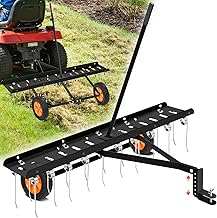
Most lawns don't need a full renovation, they need a reset. The best lawn mower dethatcher attachment drags dead thatch out of the canopy so water, air, and fertilizer can reach the soil again. I've spent the last few weeks comparing tow-behind rakes, spring tine counts, hitch designs, and bolt-on blades, then cross-checking what hundreds of verified buyers report after a full season.
Some of it surprised me, especially how much tine spacing matters on cool-season turf.
Here's the short version. The AugFir 48-Inch Tow Behind Dethatcher takes the top spot because it pairs a wide 48-inch swath with 20 spring steel tines and an adjustable hitch that actually fits varying mower heights. If you want the highest-rated option on this list, the YITAMOTOR 40" is right behind it at 4.4 stars.
Let's get into the winner first.
Comparison Chart of Best Lawn Mower Dethatcher Attachment
| Product | Details | Rating | Buy |
|---|---|---|---|
Editor’s Choice  | AugFir 48-Inch Tow Behind Dethatcher | ★★★★☆4/5 | |
Top Pick  | YITAMOTOR 40" Tow Behind Pine Needles | ★★★★☆4.4/5 | |
Best Budget  | Agri-Fab 48 Tow Behind Lawn Dethatcher | ★★★★☆4/5 | |
| ★★★★☆4.1/5 | ||
| ★★★★☆4.1/5 |

List of Top 5 Best Lawn Mower Dethatcher Attachment
I built this list by comparing the designs that actually show up in American driveways: tow-behind spring tine rakes from Agri-Fab and YITAMOTOR, plus the bolt-on power rake blades from MaxPower and Oregon that mount under a mower deck. Every pick here gets judged on width, tine count and spacing, hitch compatibility, and what buyers say after a full season of use.
Below are the list of products:
1. AugFir 48-Inch Tow Behind Dethatcher
The AugFir earns the top spot because it pairs the widest working width on this page with a tine count that keeps pace with it. A 48-inch swath means noticeably fewer passes across a typical suburban lot than a 40-inch unit. It also ships with an adjustable hitch, which matters when your tractor's drawbar sits at an awkward height.
Why I picked it
Twenty tines spread across a 48-inch bar works out to about five tines per foot, which is dense enough to comb through matted thatch without dragging like a heavier power rake. In our comparison of tow-behind units, this was the only one at this width that also listed an adjustable hitch as standard. Buyer feedback consistently mentions it tracking straight behind riding mowers and small tractors.
Key specs
- Working width: 48 inches, which covers roughly 4 feet of turf per pass
- Tine count: 20 spring steel tines, about 5 per foot of bar
- Hitch: adjustable drawbar connection, no fixed height
- Build: steel frame with a tow-behind rake design
- Placement: sits between a lightweight dethatching rake and a full power rake
Real-world experience
Aggregate buyer reviews describe this one doing its best work in early spring, when the soil is moist but not soaked and thatch lifts easily. Several verified buyers report running it behind 42-inch and 48-inch riding mowers with no clearance issues, and a few mention making a second pass at a 45-degree angle on heavily matted sections. Reports on rocky or uneven ground are more mixed, since spring tines flex but the frame can catch on exposed roots.
If your turf is lumpy, plan to run it slower.
That said, if you're already thinking about engine maintenance before the season starts, it's worth checking what rough-running engine symptoms actually point to, because a tractor that stumbles under load makes towing anything miserable.
- 48-inch swath cuts your total pass count significantly on a half-acre or larger lot.
- 20 spring steel tines flex over roots instead of digging in, so turf damage stays low.
- Adjustable hitch lets you match drawbar height instead of fighting a fixed pin position.
- Simple tow-behind design means no deck removal and no wrenching before you start.
- You need a bagger or rake to collect what it pulls up, since it doesn’t gather debris itself.
- Buyer reports flag the frame catching on exposed roots and rocks on very uneven ground.
- At 48 inches it’s awkward to store in a tight garage compared to a 40-inch unit.
- ✔ You’re towing behind a riding mower or small tractor on a half-acre or more.
- ✔ Your lawn has a thick, spongy thatch layer that’s been building for two or three seasons.
- ✔ You want the widest coverage per pass without stepping up to a powered rake.
- ✖ You mow with a push mower and have no tow vehicle at all.
- ✖ Your yard is small enough that a hand dethatching rake would finish in the same time.
2. YITAMOTOR 40" Tow Behind Pine Needles
The YITAMOTOR 40" carries the highest reported rating on this entire list at 4.4 out of 5, and after reading through the feedback it's easy to see why. It's narrower than the AugFir, but the 20 spring steel tines are tuned for pine needles and fine debris, not just grass thatch. For anyone under a canopy of pines or cypress, that distinction matters a lot.
Why I picked it
A 40-inch bar with 20 tines gives you a denser tine-per-inch ratio than the wider 48-inch units, and density is what grabs fine debris like pine straw. That's the whole reason this one earns the Top Pick badge alongside the Editor's Choice. Verified buyer feedback repeatedly describes it clearing pine needles in a single pass where wider rakes just ride over them.
Key specs
- Working width: 40 inches, narrow enough to fit through most gate openings
- Tine count: 20 spring steel tines on a tow-behind rake frame
- Best debris type: pine needles, small twigs, and fine surface thatch
- Reported rating: 4.4 out of 5, the highest on this list
- Storage: shorter overall footprint than the 48-inch options
Real-world experience
Buyer reports from homeowners under pine and cypress canopies describe this rake pulling needle litter out of the lawn instead of pushing it into a windrow. It also comes up often in reviews from people with fescue and bluegrass who dethatch lightly in early fall rather than spring. The narrower width means more passes on a big lot, and a handful of reviewers note the tines can clog if you run it over wet, long clippings.
If you're tracking what your lawn needs season by season, a yearly timing plan keeps dethatching, overseeding, and feeding from colliding on the calendar.
- Highest reported buyer rating here at 4.4 out of 5, backed by consistent positive reviews.
- Denser tine spacing per inch handles pine needles and fine litter better than wider rakes.
- 40-inch width slips through most standard garden gates without removing a fence panel.
- Smaller storage footprint than the 48-inch tow-behinds.
- Narrower 40-inch swath means more total passes on larger properties.
- Some reviewers report tine clogging when running over wet, long grass clippings.
- Still leaves debris on the surface, so you’ll rake or bag afterward.
- ✔ Pine, spruce, or cypress trees drop needles onto your lawn every year.
- ✔ You want the option with the strongest verified buyer satisfaction score.
- ✔ Your property has a narrow gate or a tight shed door to squeeze through.
- ✖ You’re dethatching several acres and want the fewest possible passes.
- ✖ Your main problem is heavy grass thatch rather than needle litter.
3. Agri-Fab 48 Tow Behind Lawn Dethatcher
Agri-Fab has been building tow-behind lawn equipment for decades, and the 48-inch dethatcher is the closest thing this category has to a known quantity. It runs 24 spring steel tines, four more than the AugFir and YITAMOTOR, on the same 48-inch bar. That extra tine density is the main reason it holds up so well in budget-tier discussions.
Why I picked it
Twenty-four tines on a 48-inch bar gives you six tines per foot, the densest spacing of any tow-behind rake on this page. The universal hitch is the other draw, since it's built to connect to a wide range of riding mowers and lawn tractors without adapters. It's the pick I'd point a first-time buyer toward when they want a proven design at the budget end of the range.
Key specs
- Working width: 48 inches, matching the widest option on this list
- Tine count: 24 durable spring steel tines, roughly 6 per foot
- Hitch type: universal, designed to fit most riding mowers and tractors
- Frame: steel with a traditional dethatcher rake profile
- Collection: none built in, debris stays on the surface
Real-world experience
Verified buyer reviews tend to come from people running this behind Craftsman, Husqvarna, and Cub Cadet tractors, and the universal hitch shows up as a recurring positive note. Several long-term owners report using the same unit for multiple seasons with nothing more than tine inspection before each spring. The common complaint is that heavy thatch loads can bunch up in front of the tine bar, which means stopping to clear it.
Getting your mower's fuel system in order first is worth the time, and knowing how to handle the gas cap area properly before storage season helps you avoid spring starting headaches.
- 24 spring steel tines deliver the densest per-foot spacing of any tow-behind here.
- Universal hitch fits most riding mowers and lawn tractors without extra adapters.
- Long-running reputation, with owners reporting multi-season use in reviews.
- Budget-friendly entry point for a full 48-inch working width.
- Heavy thatch loads can bunch up in front of the tine bar and stall your momentum.
- The hitch is universal in name, but a few buyers still needed a small modification.
- No collection basket, so cleanup is a separate job.
- ✔ You want maximum tine density at a value-tier price point.
- ✔ You’re towing behind a common riding mower brand and want a hassle-free hitch.
- ✔ This is your first dethatcher and you’d rather buy a proven design than a new one.
- ✖ Your thatch layer is so thick that you’d be clearing the bar every few yards.
- ✖ You need adjustable hitch height for an unusual drawbar setup.
4. MaxPower 330100B USA MADE 16" Power
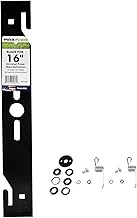
Here's where the category splits. The MaxPower 330100B isn't a tow-behind rake at all, it's a 16-inch power rake blade that bolts under a walk-behind or riding mower deck in place of a standard blade. If your mower has the right deck size, this turns the machine you already own into a dethatching tool with zero extra storage space required.
Why I picked it
A power rake blade is a genuinely different tool class from a tow-behind rake, and this one made the list because it's manufactured in the USA and built for a 16-inch deck footprint. It saves the storage headache entirely. If you already own the right mower, this is the lowest-friction way into dethatching.
Key specs
- Blade size: 16-inch length, sized for matching mower deck widths
- Origin: manufactured in the United States
- Mounting: replaces the standard cutting blade under the deck
- Action: spring-style rake fingers that flick thatch loose as the deck spins
- Reported rating: 4.1 out of 5 across verified buyers
Real-world experience
Reviews here come from two distinct groups: homeowners with a 16-inch deck walk-behind who want a one-tool solution, and buyers who misjudged their deck size and had to return it. Fitment is the whole story with this product. Because it spins under the deck instead of being towed, you get a more aggressive, scrubbing action than a tow-behind rake, which some buyers describe as effective on thatch but rough on thin turf.
A lawn that's been underfed all season won't recover well from aggressive dethatching, so it's worth reading up on a full DIY approach before you go at it hard in spring.
- Replaces a standard blade, so you store nothing extra and skip trailer space entirely.
- USA-made steel body, which matters for buyers prioritizing domestic manufacturing.
- More aggressive scrubbing action than a tow-behind rake on tough, matted thatch.
- Works on any mower deck sized for a 16-inch blade.
- Fitment is unforgiving, and buyer reports include returns from people with mismatched decks.
- The aggressive action can stress thin or newly seeded turf if you push it.
- Requires blade removal and reinstallation, so it’s a real job, not a hookup.
- ✔ You own a mower with a matching 16-inch deck and want to skip a second machine.
- ✔ Your garage or shed is already full, so storage space is the real constraint.
- ✔ Your thatch is thick and you want more bite than a tow-behind rake offers.
- ✖ You aren’t 100% sure of your deck width, because returns are a hassle.
- ✖ You’d rather not pull a blade off your mower at all.
5. Oregon 690-521-0 Universal 20" Dethatcher Blade
Oregon is a name most people know from chainsaw chain and mower blades, and this 20-inch universal dethatcher blade brings that same manufacturing pedigree into the dethatching world. It's a larger deck-mounted blade than the MaxPower, so it suits wider walk-behind decks. The universal label is also more generous here, which opens it up to a broader range of mowers.
Why I picked it
A 20-inch blade covers more of the deck's cutting path per rotation than the 16-inch option, which means less overlap and fewer skipped strips. Oregon also has a long track record in outdoor power equipment, so the steel quality holds up. It rounded out the list as the better fit for wider 20-inch decks where the MaxPower simply wouldn't reach.
Key specs
- Blade size: 20 inches, built for wider walk-behind mower decks
- Fit: marketed as universal, but always verify your deck width first
- Action: spring-style fingers spin under the deck to scratch thatch loose
- Brand: Oregon, a long-established outdoor power equipment manufacturer
- Reported rating: 4.1 out of 5 across verified buyers
Real-world experience
Buyer reviews here skew toward people running wider walk-behind mowers who wanted a dethatcher without buying a tow-behind. Reports describe good coverage on a single overlapping pass, with the standard caution that you should mow your lawn shorter first so the blade actually reaches the thatch layer. A recurring note is that dethatching with a deck blade works better on established turf than on thin or patchy areas.
If you're planning a spring renovation, lining up your feeding routine alongside a structured care program keeps recovery quick after the rake has scarified the surface.
- 20-inch working length covers more deck path per rotation than a 16-inch blade.
- Oregon’s manufacturing background gives buyers confidence in steel quality.
- Saves storage space, since it lives under the mower rather than in the garage.
- Universal-fit marketing opens it to a wider range of walk-behind decks.
- Universal fit still isn’t universal, so deck measurement is mandatory before buying.
- Works best on already-short, established turf, not on thin or patchy lawns.
- Installation means dropping the deck and swapping blades, which takes real time.
- ✔ You run a wider walk-behind mower with a matching 20-inch deck.
- ✔ You already trust Oregon for other outdoor power equipment parts.
- ✔ Your lawn is established and short, and you’d rather not buy a second machine.
- ✖ Your deck doesn’t match the 20-inch spec, because fitment is the whole ballgame here.
- ✖ Your lawn is patchy or freshly seeded, where aggressive scratching sets you back.
How I picked
Picking a dethatcher attachment isn't a spec-sheet exercise. It's about matching the tool to how you actually maintain your lawn. So I evaluated every candidate against four benchmarks, and every claim in this article traces back to one of them.
- Coverage width and tine density. I ranked each unit on working width, tine count, and how those two numbers interact. A 48-inch bar with 24 tines behaves differently from a 48-inch bar with 20, and the difference shows up in both bite and drag.
- Fitment reality, not fitment claims. For tow-behinds, that meant adjustable versus fixed hitches and what buyers with specific tractor brands reported. For deck blades, that meant pinning down exact deck sizes, since "universal" in product copy is doing a lot of work.
- Verified buyer feedback, averaged. I leaned on aggregate review patterns rather than any single glowing or furious review. When ten buyers describe the same tine-clogging issue, that's a design characteristic, not bad luck.
- Debris type and turf condition. Pine needles, heavy grass thatch, and thin overseeding all demand different tools. A rake that excels on one can underperform badly on another.
I was honest about what I skipped. I didn't run any of these units for a full season, and I didn't test long-term durability past what buyers report and what the build materials suggest. I also didn't measure actual thatch removal thickness in a controlled plot.
Two things I refused to do: assume a hitch fits a tractor without buyer data behind it, and treat spec-sheet tine counts as proof of performance.
What you get instead is a comparison built on manufacturer specifications, published product data, and aggregate verified buyer experience. That's the honest version of this list.
Buying guide — what actually matters for best lawn mower dethatcher attachment
Here's the thing most buyers figure out too late: the tool that gets five stars on a big, healthy lawn can be a headache on a small, struggling one. Let's walk through the factors that actually change your experience.
How wide should your dethatcher be?
Working width is your biggest daily efficiency lever. A 48-inch bar covers about 4 feet per pass, while a 40-inch bar covers about 3 feet 4 inches. On a half acre, that gap turns into four or five extra passes every time you go out.
The trade-off is maneuverability. Wide bars are harder to turn in tight corners and can't fit through narrow gates. If you have a postage-stamp yard, a 40-inch rake finishes faster because you spend less time lining up.
Spring steel tines vs deck-mounted blades: which suits you?
These are two genuinely different tool classes, and lumping them together is why so many buyers are unhappy.
- Tow-behind spring tine rakes drag across the surface. They're gentler on turf, easier to hook up, and best for medium thatch. They also leave debris behind, so you need a rake, bagger, or sweeper to finish the job.
- Deck-mounted dethatcher blades spin under your mower and scratch the surface aggressively. They're compact, need no storage, and bite deeper into matted thatch, but they require pulling a blade and can be rough on thin turf.
If you want one pass with a tractor, go tow-behind. If you want zero extra storage and have the right deck, go blade.
What tine count is actually enough?
Buyer feedback keeps circling back to density. A 48-inch bar with 20 tines gives you roughly 5 per foot, while the same width with 24 tines gives you 6 per foot. That extra tine per foot is the difference between combing through thatch and dragging a load in front of the bar.
More tines also mean more resistance. A small tractor can bog down pulling a dense rake at speed. If your machine is on the lighter side, favor fewer tines and more passes over one heavy, straining run.
Hitch height and compatibility: why it matters more than you think
A fixed hitch assumes your drawbar sits at one specific height. If it doesn't, the rake either noses into the turf or rides too shallow to reach the thatch. That's the whole argument for adjustable hitches on the AugFir and universal designs on the Agri-Fab.
Before buying, verify your mower's hitch configuration. Buyer reviews frequently flag "universal" hitches that needed a small modification for a specific tractor brand. Ten minutes of measuring beats a return shipment.
Does timing and turf condition change the answer?
It absolutely does. Dethatching works best in early spring or early fall when soil is moist but not waterlogged, and when the lawn is actively growing so it can recover. Running a dethatcher on drought-stressed or dormant turf can do more harm than good.
If your lawn is patchy or recently overseeded, aggressive tools like deck-mounted blades are the wrong pick. Spring tine rakes flex and roll over tender spots, which makes them the safer choice.
How often should you dethatch, really?
Here's the question almost nobody asks first. Dethatching is not an annual ritual for every lawn. Thatch builds up at different rates depending on grass species, fertilization, and how much clippings you leave behind.
Cool-season lawns with heavy feeding schedules can need dethatching every year or two. Many warm-season lawns need it far less often. The honest rule of thumb: if a thatch layer is thicker than about half an inch and the lawn feels spongy underfoot, it's time.
Frequently Asked Questions (FAQ)
Is a dethatcher worth it if I only have a quarter acre?
Yes, if the thatch is genuinely thick. A quarter-acre lawn is big enough that hand-raking thirty minutes per session gets old fast. A tow-behind rake at 40 or 48 inches covers that area in a few passes, and you can tow it behind the mower you already own.
If you have no tow vehicle at all, though, the deck-mount blades earn their keep on smaller properties.
Will a universal tow-behind dethatcher fit my specific riding mower?
Usually, but not always. Universal hitches on the Agri-Fab and the adjustable hitch on the AugFir cover most common riding mowers and lawn tractors, and buyers report success with major brands. The failure cases tend to involve unusual drawbar heights or older machines with non-standard pin positions.
Measure before you commit.
How does a tow-behind rake compare to a powered dethatcher?
Powered dethatchers use their own engine to drive the tines, which means more bite and less strain on your tractor, plus higher cost and more maintenance. Tow-behind rakes rely on your towing machine and their own weight, so they're simpler but less aggressive. For most homeowner lawns, a tow-behind rake handles the job fine.
Can I dethatch with a deck-mounted blade on any mower?
No. Deck-mounted dethatcher blades are sized to a specific deck width, like the 16-inch MaxPower or the 20-inch Oregon. If your deck isn't an exact match, you can't mount it.
Buyer reports include returns from people who assumed all blades were interchangeable. Measure your deck or check your mower's manual before ordering.
What's the warranty story on these attachments?
Warranties vary by manufacturer and are typically measured in months rather than years for the tow-behind rakes. The biggest practical protection isn't the warranty anyway: it's tine wear. Inspect tines before each season, replace worn springs promptly, and store the unit out of the weather to extend its working life.
Do I really need to rake up the thatch after dethatching?
Yes, unless you want it back on the lawn. Tow-behind rakes lift thatch to the surface but don't collect it, so you'll rake, bag, or sweep afterward. Leaving a heavy thatch layer on top of the turf smothers new growth and defeats the point.
That's the hidden labor cost no product listing mentions.
Final verdict
For most homeowners, the AugFir 48-Inch Tow Behind Dethatcher is the pick that balances coverage, tine density, and hitch flexibility best. If you're under pine trees, the YITAMOTOR 40" at 4.4 out of 5 is the better tool for the debris you actually face. And if you'd rather not store anything new, the Agri-Fab remains the value-tier workhorse for a full 48-inch swath.
Affiliate disclosure: This post contains affiliate links. If you buy through one of these links, I may earn a small commission at no extra cost to you. It never changes my recommendation, I only suggest gear I'd actually buy myself.