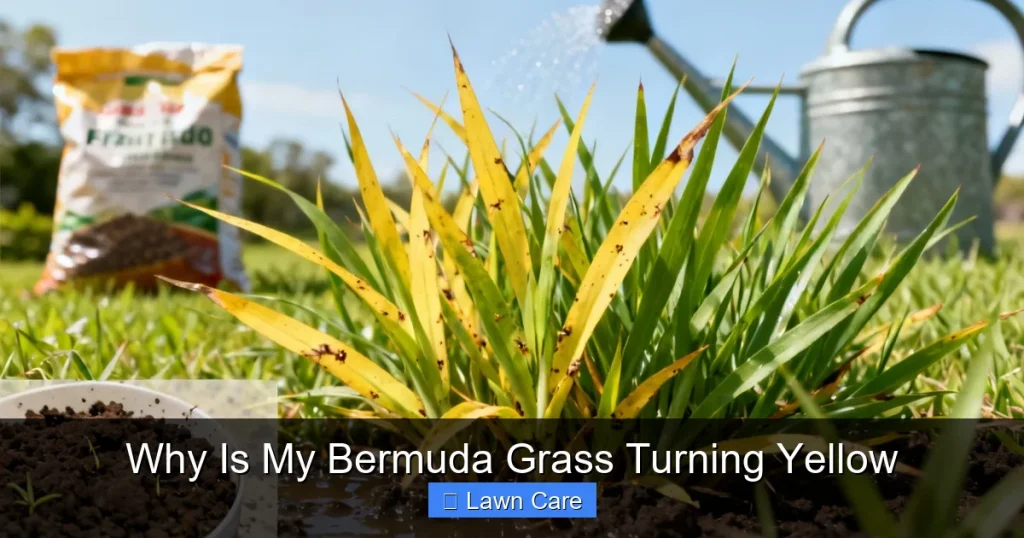
Seeing yellow patches in your Bermuda grass can be concerning, but it’s usually a sign of an underlying issue that can be fixed. Common culprits include improper watering, nutrient deficiencies, disease, pests, and even thatch buildup. By understanding these causes, you can take targeted action to revive your lawn and keep it lush and green.
Is your beautiful Bermuda grass suddenly looking less than vibrant? Seeing those tell-tale yellow patches can be a real heartbreaker for any homeowner who takes pride in their lawn. Bermuda grass is known for its lush, green carpet-like appearance, especially during the warmer months when it thrives. So, when it starts to turn yellow, it’s a clear signal that something isn’t quite right. But don’t panic just yet! Most of the time, yellowing Bermuda grass is a fixable problem.
The good news is that Bermuda grass is a resilient turfgrass. Its tendency to turn yellow is often a response to stress, and by identifying the cause of that stress, you can bring your lawn back to its glorious green state. We’re going to dive deep into the most common reasons why your Bermuda grass might be turning yellow, and more importantly, what you can do about it. Think of this as your ultimate guide to diagnosing and fixing those frustrating yellow spots.
Let’s break down the usual suspects and explore how to tackle them, so you can get back to enjoying a picture-perfect lawn.
Key Takeaways
- Watering Issues: Both overwatering and underwatering can lead to yellowing Bermuda grass. Ensure a consistent watering schedule that allows the soil to dry slightly between waterings.
- Nutrient Deficiencies: Lack of essential nutrients, especially nitrogen, is a common cause. Proper fertilization tailored to Bermuda grass needs is crucial.
- Diseases: Fungal diseases like dollar spot or pythium blight can manifest as yellow spots or streaks. Proper lawn care practices and potentially fungicides can help.
- Pest Infestations: Grubs, chinch bugs, and other pests can damage grass roots and blades, causing them to turn yellow and die. Identification and targeted pest control are key.
- Thatch Buildup: Excessive thatch can prevent water and nutrients from reaching the roots, leading to yellowing. Dethatching can resolve this issue.
- Compacted Soil: Poor soil aeration restricts root growth and nutrient uptake. Aeration can improve soil structure and grass health.
- Mowing Practices: Mowing too short or with dull blades can stress the grass, making it susceptible to yellowing. Maintain proper mowing heights and keep blades sharp.
Quick Answers to Common Questions
Why is my Bermuda grass turning yellow in patches?
Yellow patches can indicate localized issues like insect infestations (chinch bugs, grubs), fungal diseases (dollar spot), or uneven watering where some areas are drying out more than others.
Can too much fertilizer make my Bermuda grass turn yellow?
Yes, over-fertilizing, especially with high nitrogen fertilizers, can “burn” the grass, causing it to turn yellow or brown.
Is yellowing Bermuda grass always a sign of a serious problem?
Not necessarily. While it indicates stress, many causes are easily fixable with proper watering, fertilization, or basic lawn maintenance. It’s important to identify the specific cause.
When is the best time to fertilize Bermuda grass?
The best time to fertilize Bermuda grass is during its active growing season, which is typically from late spring through late summer. Avoid fertilizing dormant grass.
What should I do if I suspect a disease in my Bermuda grass?
First, try to identify the specific disease. Improve cultural practices like watering and air circulation. If it’s severe or spreading, consider applying an appropriate fungicide, always following product instructions.
📑 Table of Contents
Understanding the Causes of Yellow Bermuda Grass
Before you start reaching for fertilizers or pesticides, it’s important to understand that yellowing is a symptom, not a disease itself. It’s your lawn’s way of telling you it needs something – or perhaps, it’s getting too much of something. We’ll explore the various factors that contribute to this common lawn woe.
1. Watering Woes: Too Much or Too Little
Water is essential for life, and that includes your Bermuda grass. However, both extremes – overwatering and underwatering – can lead to your lawn turning yellow.
Underwatering: The Thirsty Lawn
Bermuda grass is relatively drought-tolerant once established, but it still needs adequate water to stay healthy and green. When the soil becomes too dry, the grass blades will start to lose moisture and turn yellow. You might notice the yellowing starting in specific areas that tend to dry out faster, like on slopes or in sandy soil.
Signs of underwatering:
- Grass blades that appear dull and grayish-green before turning yellow.
- Footprints that remain visible on the lawn long after you’ve walked on it, indicating the grass blades lack the resilience to spring back.
- The yellowing starts in patches and might spread if the dry conditions persist.
What to do: If you suspect underwatering, it’s time to adjust your watering schedule. Water deeply and less frequently. Aim to provide about 1 inch of water per week, including rainfall. Water early in the morning to allow the grass to absorb the moisture before the heat of the day causes excessive evaporation. Deep watering encourages the grass roots to grow deeper, making the lawn more resilient to future dry spells.
Overwatering: The Soggy Situation
While it might seem counterintuitive, overwatering can be just as damaging as not watering enough. When the soil is constantly saturated, the grass roots can’t get enough oxygen. This lack of oxygen can lead to root rot and prevent the grass from absorbing essential nutrients. The result? Yellowing grass. Overwatering also creates a prime environment for fungal diseases, which we’ll discuss later.
Signs of overwatering:
- The yellowing might be accompanied by a mushy or spongy feel to the lawn.
- Areas that stay wet for extended periods.
- Increased susceptibility to fungal diseases and moss growth.
What to do: If you’re overwatering, it’s time to scale back. Ensure your soil has good drainage. If you have heavy clay soil, consider adding organic matter to improve its structure. Adjust your watering to allow the soil surface to dry out slightly between waterings. Again, watering deeply and less often is key. If you’re unsure about your soil’s drainage, you might want to investigate why your grass is always wet and muddy, as this is a direct indicator of drainage issues.
2. Nutrient Deficiencies: Feeding Your Lawn Properly
Just like any living organism, your Bermuda grass needs a balanced diet of nutrients to thrive. The most common nutrient deficiency that causes yellowing is a lack of nitrogen. Nitrogen is crucial for chlorophyll production, which is what gives grass its green color.
Nitrogen Deficiency
When your Bermuda grass doesn’t have enough nitrogen, the chlorophyll production slows down, leading to a faded green color that progresses to yellow. The older, lower leaves are often affected first.
Signs of nitrogen deficiency:
- A general pale green to yellow appearance across the lawn, especially noticeable in older growth.
- Slow growth rate.
What to do: Fertilize! But not just any fertilizer. You need a fertilizer that is specifically formulated for Bermuda grass, or one with a higher nitrogen content. Look for a balanced fertilizer, often with an N-P-K ratio (Nitrogen-Phosphorus-Potassium) that favors nitrogen. A common recommendation for Bermuda grass is a fertilizer with a ratio like 3-1-2 or 4-1-2. For example, a fertilizer labeled 12-4-8 would fit this profile. If you’re unsure, research what is the best fertilizer for Bermuda grass to ensure you’re providing the right nutrients. Applying the fertilizer according to the product’s instructions is vital. Over-fertilizing can cause other problems, including burning the grass.
Other Nutrient Deficiencies
While nitrogen is the most common culprit, deficiencies in other nutrients like iron can also cause yellowing. Iron deficiency often shows up as yellowing between the green veins of the grass blades, a condition known as chlorosis. This is more common in certain soil types or when the soil pH is too high, making iron unavailable for uptake.
What to do: If you suspect a micronutrient deficiency, especially iron, you can use a chelated iron supplement. These are readily available as liquid sprays or granular forms. Again, follow application rates carefully. Soil testing can also help identify specific nutrient deficiencies and pH imbalances, guiding your fertilization and amendment strategy.
3. Diseases: The Fungal Culprits
Bermuda grass can be susceptible to various fungal diseases, especially when conditions are favorable – think excessive moisture, humidity, or improper mowing.
Dollar Spot
This is one of the most common fungal diseases affecting Bermuda grass. It appears as small, straw-colored or bleached spots, roughly the size of a silver dollar, hence the name. In severe cases, these spots can merge, creating larger patches of yellow or brown turf.
Signs of dollar spot:
- Distinct, circular patches of yellowing or dead grass.
- You might see a fine, cobweb-like mycelium on the grass blades in the early morning dew.
What to do: Proper lawn care practices are your best defense against dollar spot. Ensure adequate nitrogen fertilization, maintain proper soil moisture (avoiding both extremes), and mow at the correct height. Improving air circulation around the grass can also help. If the disease is severe, you may need to apply a fungicide. Look for fungicides specifically labeled for dollar spot and Bermuda grass. Always follow label instructions.
Pythium Blight
Also known as “grease spot” or “damping-off,” Pythium blight is a more aggressive fungal disease that thrives in hot, humid, and wet conditions. It can cause rapid yellowing and wilting, often starting as small, greasy-looking patches that quickly enlarge.
Signs of Pythium blight:
- Dark, water-soaked areas that quickly turn yellow and then brown.
- The grass may appear matted and slimy, especially in the early morning.
- It often starts in low-lying areas or where water collects.
What to do: Prevention is key for Pythium blight. Improve drainage, avoid overwatering, and reduce thatch buildup. If you suspect Pythium blight, act quickly. Applying a fungicide labeled for Pythium is often necessary. Ensure good air movement and avoid walking on the lawn when it’s wet.
4. Pests: The Tiny Invaders
Sometimes, the yellowing isn’t due to water or nutrients, but because of tiny creatures munching away at your grass.
Chinch Bugs
These small insects are notorious for damaging lawns. They feed on the grass blades, injecting a toxin that causes the grass to turn yellow and eventually die. Chinch bugs are most active during hot, dry weather and tend to congregate in sunny areas, especially near sidewalks or patios.
Signs of chinch bugs:
- Irregular yellow or brown patches that enlarge over time.
- The affected areas might look like drought stress, but they won’t improve with watering.
- You might see them if you get down close to the turf – they are small, black insects with white markings.
What to do: To confirm chinch bug infestation, try the “float test”: cut the bottom out of a coffee can, push it into the affected area of the lawn, and fill it with water. Chinch bugs will float to the surface. If you find them, a pesticide labeled for chinch bugs will be necessary. You can also try beneficial nematodes, which are a natural predator of chinch bugs.
Grubs
White grubs are the larval stage of several types of beetles. They live in the soil and feed on grass roots. When enough roots are destroyed, the grass can no longer absorb water and nutrients, leading to wilting, yellowing, and eventually, death. Large patches of brown or yellow grass that can be easily lifted like a carpet are a strong indicator of grub infestation.
Signs of grubs:
- Large, irregular patches of yellow or brown grass that don’t respond to watering.
- The turf feels spongy and can be rolled back like a carpet, revealing the grubs underneath.
- Increased activity of animals like raccoons, birds, or moles digging in the lawn, as they feed on grubs.
What to do: If you suspect grubs, dig up a few sections of turf to check for them. You can find them a few inches below the surface. If you find more than 5-10 grubs per square foot, it’s time to treat. There are both chemical and biological grub control products available. Timing is important for grub treatments; they are most effective when grubs are young and actively feeding near the surface.
5. Thatch Buildup: A Blanket of Trouble
Thatch is the layer of dead and living stems, roots, and leaves that accumulates between the green grass blades and the soil surface. A small amount of thatch is normal and can be beneficial, but when it gets too thick (more than half an inch), it can cause problems.
A thick thatch layer acts like a sponge, holding water and nutrients on the surface but preventing them from reaching the soil and the grass roots. This can suffocate the roots, leading to yellowing and a weakened lawn. It also creates a perfect environment for pests and diseases.
Signs of thatch buildup:
- A spongy feel to the lawn.
- Difficulty penetrating the soil with a screwdriver.
- Increased susceptibility to drought stress, even when watering.
What to do: If you have a significant thatch problem, you’ll need to dethatch your lawn. Dethatching involves raking out the accumulated thatch. For severe thatch, a power dethatcher or verticutter is recommended. Dethatching is best done during the active growing season for Bermuda grass, typically late spring or early summer. After dethatching, it’s a good time to aerate the lawn to improve soil structure and overseed if necessary.
6. Soil Compaction and Aeration
Over time, especially with heavy foot traffic or the use of heavy equipment, the soil beneath your lawn can become compacted. Compacted soil has very little air space, which makes it difficult for grass roots to grow, absorb water, and take up nutrients. This stress can manifest as yellowing grass.
Signs of soil compaction:
- Water puddles on the surface after rain or watering.
- Reduced vigor and increased yellowing in high-traffic areas.
- Difficulty driving a screwdriver or core aerator into the soil.
What to do: The solution for compacted soil is aeration. Core aeration involves using a machine to pull small plugs of soil out of the lawn. This creates air pockets, allowing water, air, and nutrients to reach the root zone more effectively. Aeration is typically done during the active growing season for Bermuda grass, similar to dethatching.
7. Mowing Practices: Height and Blade Sharpness
How you mow your lawn can have a significant impact on its health.
Mowing Too Short (Scalping)
Bermuda grass can tolerate low mowing heights, but if you scalp it too often or too severely, you can stress the plant. Scalping removes too much of the green leaf tissue, forcing the grass to expend a lot of energy to recover. This can lead to a temporary yellowing or browning as the grass tries to regrow.
What to do: Understand the optimal mowing height for your specific Bermuda grass variety. For most, this is between 1/2 inch and 1.5 inches. Avoid removing more than one-third of the grass blade height at any one time. If you need to lower the height, do it gradually over several mowings. Consider when to scalp your Bermuda grass if you choose to do so, typically in the spring to remove dead winter growth.
Dull Mower Blades
Using dull mower blades doesn’t cut the grass cleanly; it tears the blades. This tearing action damages the grass and makes it more susceptible to disease, pests, and environmental stress, all of which can contribute to yellowing. Torn grass blades also tend to dry out faster.
What to do: Sharpen your mower blades regularly! A good rule of thumb is to sharpen them at least once a year, or more often if you have a large lawn or mow frequently. Clean, sharp cuts heal quickly, keeping your Bermuda grass healthy and green.
Putting It All Together: Troubleshooting Your Yellow Bermuda Grass
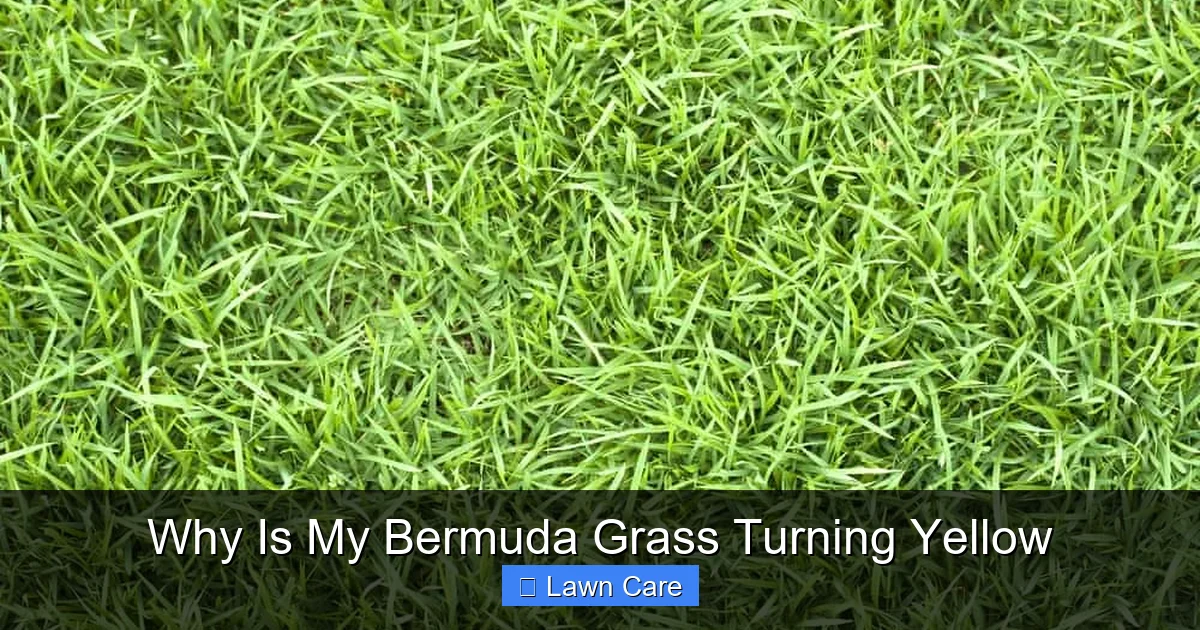
Visual guide about Why Is My Bermuda Grass Turning Yellow
Image source: obsessedlawn.com
So, you’ve got yellow Bermuda grass. Where do you start?
- Observe carefully: Look at the pattern of yellowing. Is it widespread, or in specific spots? Are the older or newer leaves affected? What are the conditions like (wet, dry, hot, humid)?
- Check your watering: Are you watering too much or too little? Feel the soil an inch or two down.
- Consider recent fertilization: When was the last time you fertilized, and what did you use? Could it be nutrient deficiency or a burn from over-fertilizing?
- Inspect for pests: Get down close to the grass. Look for signs of insects like chinch bugs or evidence of grub activity.
- Examine thatch and soil: Does the lawn feel spongy? Is it hard to push a screwdriver into the ground?
- Think about mowing: When was the last time your mower blades were sharpened?
By systematically going through these possibilities, you can often pinpoint the cause of your Bermuda grass’s yellowing and implement the correct solution. Remember, consistency in your lawn care routine is key to preventing many of these issues in the first place. If you’ve tried various solutions and are still struggling, it might be worth considering if your Bermuda grass is actually dying. Examining resources on is my Bermuda grass dead could be your next step, but often, yellowing is a reversible problem.
Conclusion
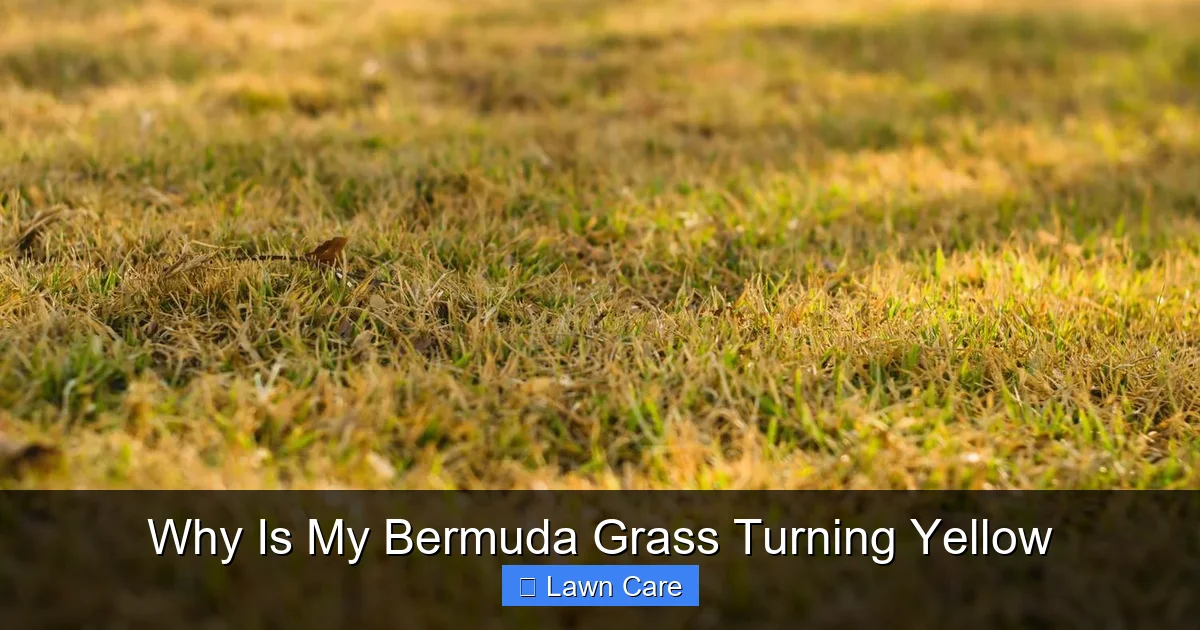
Visual guide about Why Is My Bermuda Grass Turning Yellow
Image source: thespruce.com
Seeing your Bermuda grass turn yellow can be disheartening, but it’s usually a manageable issue. By understanding the common causes – from watering and nutrient imbalances to diseases, pests, and improper maintenance – you are well-equipped to diagnose and treat the problem. Regular observation of your lawn, consistent and appropriate watering, proper fertilization, timely mowing with sharp blades, and addressing issues like thatch and compaction will go a long way in keeping your Bermuda grass a vibrant, healthy green. Don’t give up on your lawn; with a little detective work and consistent care, you can restore its beautiful color and enjoy a lush, inviting outdoor space.
Frequently Asked Questions
What is the ideal watering schedule for Bermuda grass?
Bermuda grass prefers deep, infrequent watering. Aim for about 1 inch of water per week, applied in one or two sessions, allowing the soil to dry slightly between waterings. This encourages deep root growth.
How often should I mow my Bermuda grass?
Mow your Bermuda grass frequently enough so that you are never removing more than one-third of the blade length at a time. The exact frequency will depend on growth rate but often means mowing 2-3 times per week during peak season.
Can I use a weed killer if my Bermuda grass is yellow?
It depends on the weed killer and the cause of the yellowing. If the yellowing is due to a disease or pest that the weed killer might worsen, it’s best to wait until the grass recovers or consult a professional.
What are the signs that my Bermuda grass is dead, not just yellow?
Yellow grass can recover, but dead grass will be brittle, brown, and will not green up with proper watering. You won’t see any signs of new growth even under ideal conditions.
Is iron deficiency the same as nitrogen deficiency in Bermuda grass?
No, they are different. Nitrogen deficiency causes a uniform yellowing of the entire blade, often starting with older growth. Iron deficiency typically causes yellowing between the green veins of the grass blades (chlorosis).
How can I improve drainage in my Bermuda grass lawn?
Improving drainage can involve amending heavy clay soil with organic matter, aerating the lawn regularly, or installing a drainage system if the problem is severe and persistent.