Deciding how much to pay someone to cut your grass involves understanding various factors. This guide breaks down the typical costs, what influences them, and how to get a fair price. You’ll learn about lawn size, terrain, extra services, and how to find the right professional for your needs, ensuring you get value for your money.
How Much Do You Pay Someone to Cut Your Grass
Having a beautifully manicured lawn can be a source of pride, but keeping it that way takes time and effort. For many homeowners, hiring a professional to handle the mowing is a convenient solution. But when it comes to paying for this service, a common question arises: “How much do you pay someone to cut your grass?” This comprehensive guide will walk you through everything you need to know to determine a fair price for lawn mowing services. We’ll explore the factors that influence cost, typical pricing structures, and how to ensure you’re getting the best value for your money.
Key Takeaways
- Lawn Size is King: The most significant factor determining the cost is the square footage of your lawn. Larger lawns naturally require more time and effort.
- Complexity Matters: Steep slopes, intricate landscaping, or numerous obstacles can increase the price due to the added difficulty and time involved.
- Frequency Impacts Price: More frequent mowing often comes with a slightly lower per-visit cost than infrequent servicing, as it helps maintain grass health consistently.
- Additional Services Add Up: Services like trimming, edging, blowing leaves, or weed control will increase the overall price beyond basic mowing.
- Location Affects Costs: Prices vary by region due to differences in labor costs, cost of living, and local market demand for lawn care services.
- Professionalism and Equipment: Experienced professionals with high-quality equipment may charge more, but often provide superior results and reliability.
Understanding the Factors That Influence Lawn Mowing Costs
The price you pay for lawn mowing isn’t a one-size-fits-all number. Several variables come into play, and understanding them will help you gauge what’s reasonable.
Lawn Size: The Biggest Driver
This is the most crucial factor. A small city lot will cost significantly less to mow than a sprawling suburban backyard or a large rural property. Lawn care professionals typically measure or estimate the square footage of your lawn to determine the time and resources needed.
* Small Lawns (Under 5,000 sq ft): These are usually the least expensive to maintain.
* Medium Lawns (5,000 – 10,000 sq ft): Expect moderate pricing.
* Large Lawns (10,000 – 20,000 sq ft): Costs will increase proportionally.
* Extra-Large Lawns (Over 20,000 sq ft or acres): These can involve significantly higher prices, sometimes quoted per acre, like how much does it cost to cut 1 acre of grass.
Lawn Complexity and Terrain
It’s not just about the size; how easy or difficult your lawn is to navigate also plays a role.
* Obstacles: Flower beds, trees, ponds, play structures, and garden gnomes can slow down the mowing process as the operator needs to maneuver around them carefully.
* Slopes and Hills: Mowing on steep inclines is more physically demanding and can be more dangerous, often leading to higher charges. Flat, level lawns are the easiest and cheapest to mow.
* Irregular Shapes: Lawns with many corners, curves, or narrow strips might take longer to cut precisely than a simple rectangular or square yard.
Grass Type and Condition
While less impactful on price than size, the type and condition of your grass can influence the time needed.
* Thick, Dense Grass: Can be harder to cut and may require more passes or a more powerful mower.
* Overgrown Grass: If your grass has grown excessively long, it will take more time and effort to cut it down to the desired height. This relates to how often do you need to mow your lawn.
* Weeds and Debris: A lawn heavily infested with weeds or covered in leaves and twigs will require extra attention and time to clear and mow effectively.
Frequency of Service
How often you need your lawn mowed also affects the per-visit price.
* Weekly Mowing: This is the most common and often provides the best value. The grass is kept at a manageable height, making each mowing session quicker.
* Bi-weekly Mowing: You might pay slightly more per visit than weekly service because the grass will be longer and take more time to cut.
* As-Needed Mowing: If you only call for mowing when it’s significantly overgrown, expect the highest per-visit charges due to the extensive work involved. This ties into how often do you have to mow your lawn.
Additional Services
Basic lawn mowing usually just means cutting the grass. If you want more, you’ll pay more.
* Trimming and Edging: Cleaning up the edges along sidewalks, driveways, and garden beds adds a professional finish and incurs extra cost.
* Blowing: Clearing grass clippings from hard surfaces like patios and walkways is a standard add-on that professionals include or charge for.
* Weed Whacking: Trimming areas the mower can’t reach.
* Fertilizing and Weed Control: These are separate services that can often be bundled with mowing.
* Leaf Removal: Especially in the fall, this can be a significant additional service.
Location and Market Rates
The cost of living and the demand for lawn care services vary greatly by geographic location.
* Urban vs. Rural: Services tend to be more expensive in major metropolitan areas due to higher operating costs and labor wages.
* Regional Differences: Prices in states with high demand for lawn care (like Florida or California) might differ from those in regions with less extreme weather.
The Mower and the Professional
The quality and professionalism of the service provider also influence pricing.
* Solo Operator vs. Company: A teenager mowing lawns might charge less than an established landscaping company with employees, insurance, and professional equipment. However, the company may offer more reliability and a wider range of services. Consider how much should I pay neighbor to mow lawn for a simpler comparison.
* Equipment Quality: Professionals with commercial-grade mowers, trimmers, and blowers can often complete jobs faster and more efficiently, but they may charge more to cover their investment.
Typical Pricing Structures for Lawn Mowing
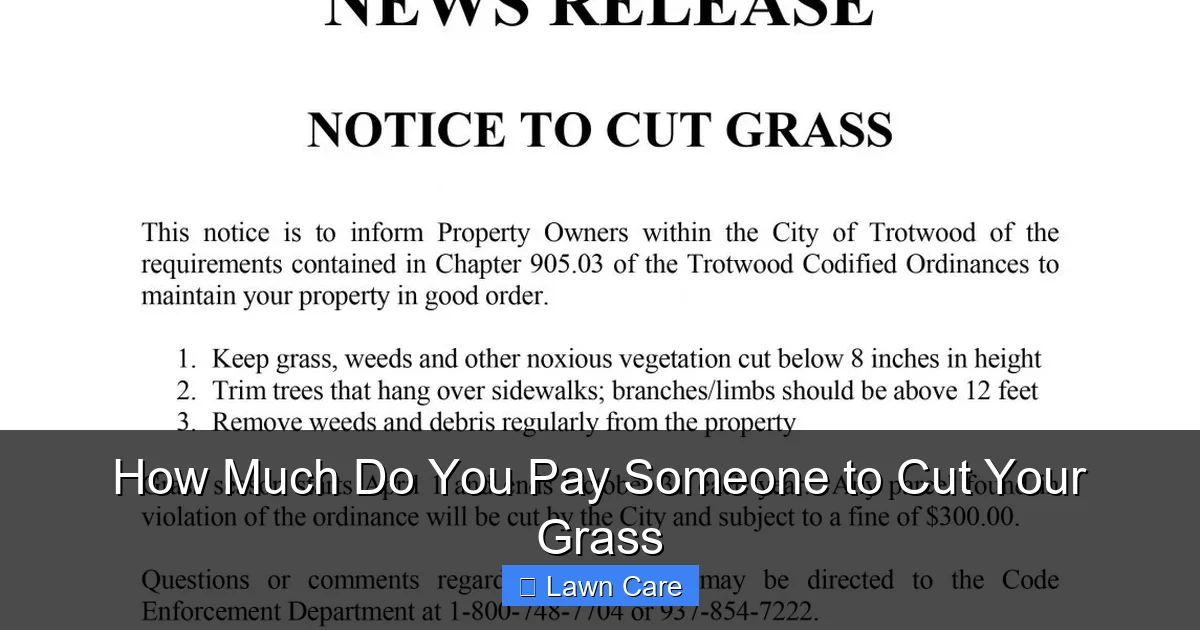
Visual guide about How Much Do You Pay Someone to Cut Your Grass
Image source: trotwood.org
When you get quotes, you’ll likely encounter a few common ways lawn care companies charge.
Per-Visit Pricing
This is the most straightforward method. You pay a set fee each time the service is performed. The price is based on the factors mentioned above and is often quoted after an initial assessment of your property.
* Example: A small, simple lawn might cost $30-$50 per mow. A medium-sized, slightly complex lawn could be $50-$75. Larger or more challenging yards could easily exceed $100 per mow.
Monthly or Seasonal Packages
Many companies offer recurring service plans. You’ll pay a fixed amount each month or for the entire mowing season (typically spring through fall). This provides predictable budgeting for you and consistent work for the provider.
* Pros: Often offers a slight discount compared to per-visit pricing, ensures your lawn is consistently maintained, and locks in your service provider.
* Cons: You pay even during months when mowing might be less frequent (like early spring or late fall) or if you’re away on vacation.
Hourly Rates
Less common for standard mowing, but some may quote an hourly rate, especially for very large or unusually challenging properties. This is more typical for specialized landscaping or cleanup jobs.
* Example: A company might charge $50-$100 per hour for labor, plus equipment fees.
How to Get an Accurate Price for Your Lawn
Visual guide about How Much Do You Pay Someone to Cut Your Grass
Image source: i.ytimg.com
To get the most accurate estimate, you need to be prepared and ask the right questions.
Step 1: Assess Your Lawn’s Needs
Before contacting anyone, take a good look at your lawn.
* Measure or Estimate Size: Use online tools or simply pace it out to get a general idea of your lawn’s square footage.
* Note Obstacles: Make a list of trees, gardens, steep slopes, or any other features that might make mowing difficult.
* Consider Desired Services: Do you just want mowing, or do you also need trimming, edging, or leaf blowing?
* Determine Frequency: How often do you realistically want your lawn mowed?
Step 2: Research Local Providers
Look for reputable lawn care services in your area.
* **Online Search:** Use terms like “lawn mowing services near me” or “lawn care [your city].”
* **Ask Neighbors:** Word-of-mouth recommendations can be invaluable.
* Check Reviews: Look at online reviews and ratings to gauge customer satisfaction.
* **Verify Credentials:** For larger companies, check if they are licensed and insured. This is crucial for protection in case of accidents or damage.
Step 3: Request Quotes (Get Multiple!)
Don’t settle for the first price you hear. Contact at least 2-3 different providers to compare.
* **Be Specific:** When you call, provide all the details you gathered in Step 1. The more information you give, the more accurate their quote will be.
* **On-Site Estimate:** The best quotes come from an on-site visit. This allows the provider to see your lawn firsthand, measure it accurately, and discuss your specific needs.
* **Ask What’s Included:** Clarify exactly what services are covered in the quoted price. Does it include trimming, edging, and blowing? What about clippings removal?
Step 4: Compare Quotes Fairly
When comparing estimates, don’t just look at the bottom line.
* **Scope of Work:** Ensure each quote is for the same services. A cheaper quote might be for less work.
* **Frequency:** If one quote is for weekly and another for bi-weekly, adjust accordingly.
* **Reputation and Reliability:** A slightly higher price might be worth it if the provider has excellent reviews and a proven track record.
* **Insurance and Licensing:** Ensure all providers are properly insured.
Average Costs to Cut Your Grass
Visual guide about How Much Do You Pay Someone to Cut Your Grass
Image source: i.ytimg.com
While prices vary widely, here are some general ranges you might expect for a typical suburban lawn (around 1/4 to 1/2 acre):
* Basic Mowing (once a week): $40 – $75 per mow.
* Mowing with Trimming and Edging: $50 – $100 per mow.
* Monthly Packages: Can range from $150 – $300+ per month, depending on frequency and services.
* Larger Properties (1 acre+): Prices can jump significantly, sometimes to $100-$200+ per mow for basic service, or be quoted on a per-acre basis. For instance, how much does it cost to cut 1/2 acre of grass can give you a benchmark.
Tips for a Good Lawn Mowing Experience
* Communicate Clearly: Let your provider know about any changes, concerns, or preferences you have.
* Prepare Your Lawn: Pick up toys, pet waste, and any other debris before the crew arrives. This makes their job easier and safer.
* Be Home (or Available): If possible, be home during the service to answer any questions or provide feedback.
* **Pay Promptly:** Settle invoices on time to maintain a good relationship with your service provider.
* **Consider the Grass Cutting Height:** Mowing at the correct height is crucial for grass health. Always check grass cutting height chart how high to cut your grass to understand ideal lengths.
Troubleshooting Common Issues
* Price Seems Too High: If a quote seems unreasonable, ask for a detailed breakdown of costs. If it’s still too high, get more quotes. You might also consider if less frequent service or basic mowing only would suffice.
* **Inconsistent Service Quality:** If the quality drops, talk to the provider. If there’s no improvement, it might be time to find someone else.
* **Missed Appointments:** This can be frustrating. Discuss scheduling expectations and contingency plans with your provider. Most reputable companies will reschedule promptly.
* **Damage to Property:** If your lawn care service accidentally damages your sprinkler system, fences, or other property, ensure they have insurance and follow their claims process.
Conclusion
Determining how much to pay someone to cut your grass involves a careful consideration of your lawn’s unique characteristics and the services you require. By understanding the key factors like size, complexity, frequency, and additional services, and by diligently comparing quotes from reputable providers, you can ensure you’re getting a fair price for a job well done. A well-maintained lawn enhances your home’s curb appeal and provides a pleasant outdoor space, making the investment in professional mowing a worthwhile decision for many homeowners. Remember, transparency and clear communication with your chosen lawn care professional are the cornerstones of a successful and satisfying relationship.