You walk out to your garden, coffee in hand, and spot it. A bell pepper plant that looked healthy yesterday is now drooping like it gave up on life. If you're wondering why your bell pepper plant is wilting, you're not alone.
It's one of the most common questions home gardeners face every growing season.
Research from state cooperative extension services shows that roughly 70 percent of wilting cases in home pepper gardens stem from improper watering, not disease. That means you likely have a good chance of fixing the problem quickly. But water isn't the only culprit, and guessing wrong can make things worse.
So let's walk through what's actually going on with your plant, step by step.
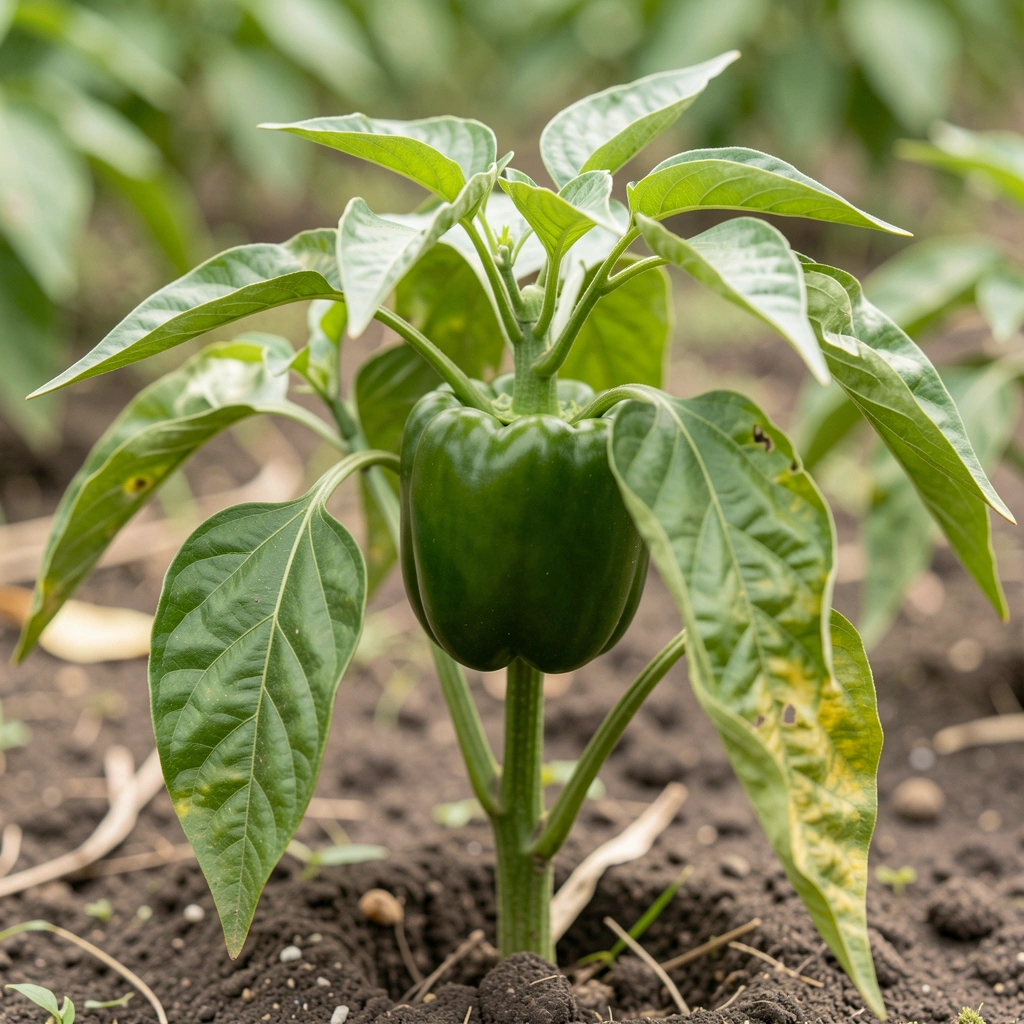
Before You Panic: Why Your Bell Pepper Plant Might Be Wilting
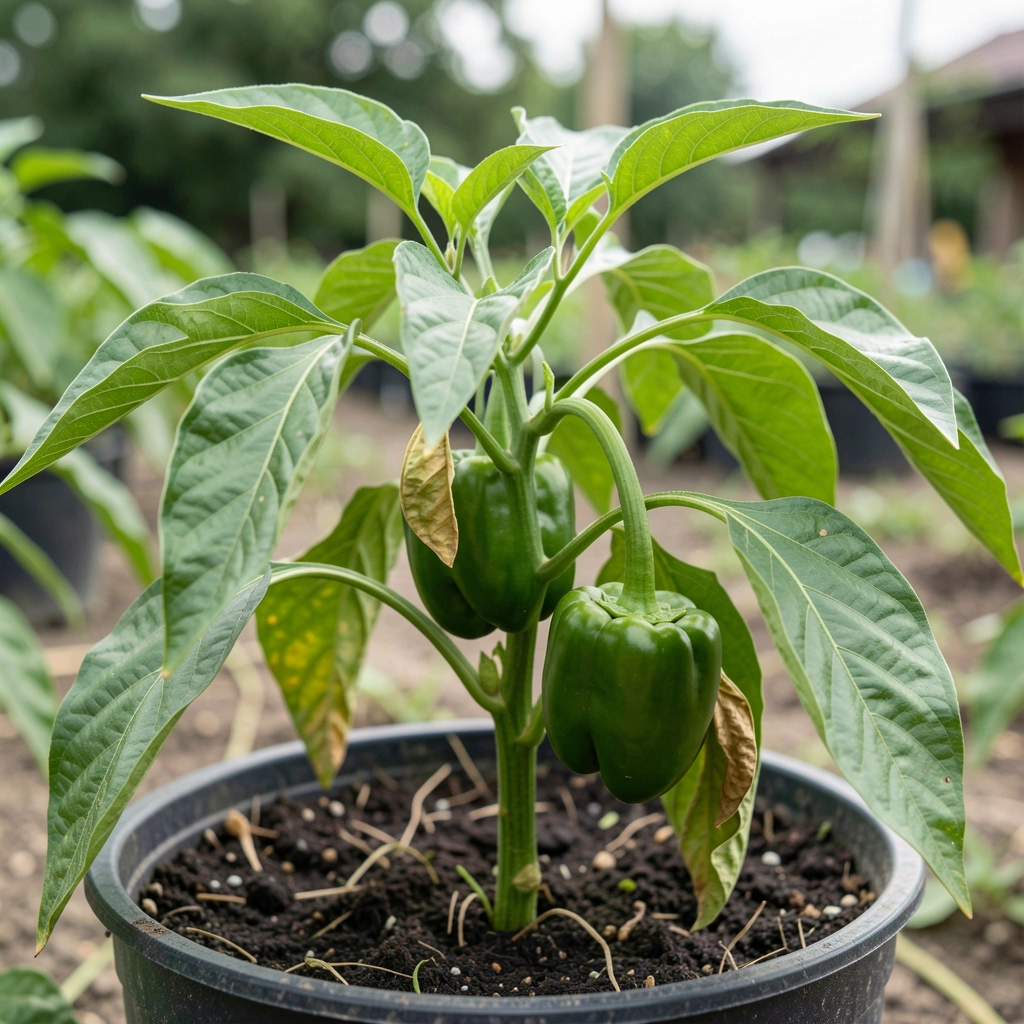
Here's the thing about bell peppers. They're dramatic. A plant that looks completely limp at 2 PM can be perfectly perky by sunrise the next day.
That doesn't always mean something is wrong.
Wilting is the plant's way of telling you it can't move enough water from its roots to its leaves fast enough. That happens for three main reasons: there's not enough water in the soil, there's too much water rotting the roots, or something is blocking the plumbing inside the stems.
The trick is figuring out which one you're dealing with. Your response will be totally different depending on the cause. Water a plant that's already drowning and you'll kill it faster.
Ignore a plant that's dehydrated and it won't recover.
The good news? You don't need a lab test or a degree in plant pathology. You just need to know what to look for and in what order.
The Quickest Check: Is Your Plant Thirsty or Drowning
This is where you start, every single time. Forget everything else until you know the soil moisture situation. And don't trust the surface.
The top inch of soil can look bone dry while the roots are sitting in a puddle.
How to Test Soil Moisture the Right Way
Stick your finger about two inches into the soil near the base of the plant. If you're growing in a container, push your finger in near the edge of the pot. That's where moisture collects.
Here's what you're feeling for:
| Soil Condition | What It Feels Like | What's Likely Happening |
|---|---|---|
| Dry | No moisture at all, soil crumbles easily | Plant is thirsty and needs water now |
| Moist | Soil feels cool and slightly damp, like a wrung-out sponge | Water situation is probably fine |
| Soggy | Soil is wet, sticks to your finger, maybe even smells a little earthy | Roots are likely drowning |
If you hit soggy soil at two inches deep, stop watering. Let the plant dry out completely before you even think about giving it more water. If the soil is bone dry, give it a deep soak right away.
For containers, lift the pot if you can. A dry pot feels noticeably lighter than one with adequate moisture. Aggregate reviews from experienced pepper growers consistently report that this simple lift test is more reliable than guessing based on appearance.
What Overwatered vs. Underwatered Leaves Actually Look Like
The leaves themselves tell a more detailed story. This is where a lot of gardeners get tripped up because both conditions produce droopy leaves. But the details differ.
Underwatered leaves tend to look thin, papery, and slightly curled inward. They often feel limp and lightweight. The whole plant might look like it's slumping toward the ground.
Overwatered leaves look heavier. They droop but stay plump and feel soft or mushy to the touch. You might also see yellowing starting at the lower leaves.
That's a classic sign the roots are struggling to breathe.
The absolute best time to check is early morning, before the sun hits the plant. If the leaves are droopy at 6 AM, you have a real problem. If they're droopy at 2 PM but fine the next morning, that's likely heat stress, not a watering issue.
When Your Plant Wilt Says "Disease": Checking the Stem and Timing
If the soil moisture is fine and your plant is still wilting, it's time to look deeper. Literally. Some wilting problems live inside the stem where you can't see them until you cut the plant open.
The Stem Cut Test for Fusarium and Verticillium Wilt
Fusarium and verticillium wilt are soil-borne fungal diseases that clog the plant's vascular system. Think of it like a stroke in your pepper plant. The plumbing gets blocked and water can't reach the leaves.
The diagnosis is straightforward. Take a clean knife or pruner and cut the main stem near the base. Look at the cross-section of the stem.
If you see a brown or dark ring inside the stem tissue, that's a classic sign of fungal wilt. The outer part of the stem might look fine, but that inner ring tells the real story.
Both fusarium and verticillium are essentially death sentences for the plant. There is no cure. Once you confirm the brown ring, your job is to remove the plant and dispose of it in the trash, not the compost bin.
Composting spreads the fungus to next year's plants.
Bacterial Wilt: The Fast Killer You Need to Spot Early
Bacterial wilt moves faster than fungal wilt. A plant can go from looking fine to completely collapsed in a matter of days. It's caused by Ralstonia solanacearum, a bacterium that thrives in warm, wet soil.
The distinguishing sign of bacterial wilt is what happens when you cut the stem. Instead of a brown ring, you'll see a sticky, milky white ooze when you press the cut end. Some growers describe it as looking like stringy egg whites.
Bacterial wilt is also incurable. Remove the plant immediately and don't plant peppers, tomatoes, or eggplants in that spot for at least two years. The bacteria can survive in the soil that long.
Why Time of Day Matters for Your Diagnosis
This is the easiest clue and the one most people overlook. Wilting that only happens during the hottest part of the day and recovers overnight is almost never disease. It's heat stress or temporary transplant shock.
Disease wilting doesn't take a lunch break. If your plant is droopy at 8 AM and still droopy at 8 PM regardless of the temperature, something is wrong inside that plant. Fungal and bacterial wilts don't care what time it is.
If the plant perks up after sunset or after a good rain, breathe easy. That's a healthy plant dealing with a hot afternoon. Give it some mulch and move on.
Pests, Heat, or Shock: The Other Reasons Plants Droop
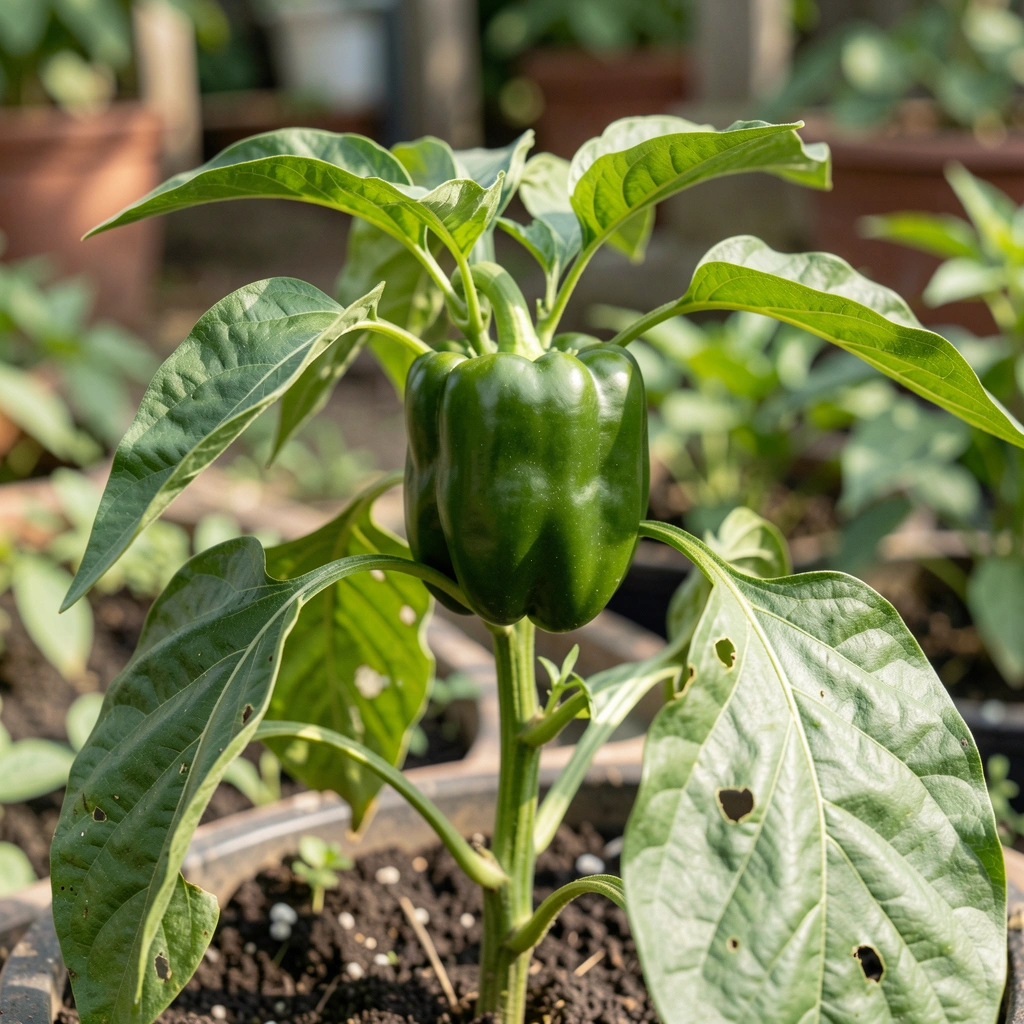
Sometimes the soil is fine and the stem looks clean, but your plant is still unhappy. There are a few other common culprits worth checking before you give up.
How to Check for Aphids, Spider Mites, and Whiteflies
Pests don't usually cause sudden dramatic wilting by themselves. But a heavy infestation can stress a plant enough that it starts drooping. The damage is more of a slow decline than a sudden collapse.
Check the undersides of the leaves. Aphids look like tiny pearl-colored or green bugs clustered along the leaf veins. Spider mites are even smaller and leave fine webbing between leaves and stems.
Whiteflies fly up in a little cloud when you disturb the plant.
If you find pests, a strong spray of water from the hose can knock off aphids and whiteflies. For spider mites, insecticidal soap or neem oil works well. Address the infestation and the wilting usually resolves within a few days as the plant recovers.
Heat Stress vs. Transplant Shock: Spot the Difference
Heat stress looks dramatic but isn't dangerous if it's temporary. Leaves droop to reduce the surface area exposed to the sun. The plant is basically conserving water.
Heat stress wilting has a clear pattern. It starts mid-morning, peaks around 2 to 4 PM, and the plant recovers fully after the sun goes down. If the heat wave passes and the plant is still wilting during cooler weather, check for other causes.
Transplant shock looks similar but happens right after you move a plant from a pot into the ground or from indoors to outdoors. The roots are adjusting to new soil conditions. Keep the soil consistently moist for the first week and the plant should stabilize.
It usually takes 5 to 10 days for a pepper plant to fully settle in after transplanting.
Container-Specific Wilting: Root Bound or Poor Drainage
Peppers in containers have their own set of problems. If your pepper is in a pot and wilting, check two things.
First, look at the bottom of the pot for roots poking out of the drainage holes. That means the plant is root bound. It has filled the container with roots and can't take up water efficiently anymore.
The fix is to move it to a larger container, at least five gallons for a single pepper plant.
Second, check that water is actually draining out. If the pot sits in a saucer that's always full of water, the roots are drowning. Empty the saucer and let the soil dry out.
As of 2026, manufacturer specifications for potting mixes recommend mixes with perlite or vermiculite for container peppers to ensure proper drainage.
Container peppers also dry out faster than in-ground plants, especially in hot weather. You might need to water daily in the peak of summer. Just make sure the water drains and doesn't pool.
Your Step-by-Step Diagnosis Workflow (Decision Tree)
This is the part that actually helps you decide what to do. Follow these steps in order. Each step eliminates a possible cause and gets you closer to the right fix.
- Check soil moisture at two inches deep. , If dry, water deeply. Wait two hours. If the plant perks up, you're done.
, If soggy, stop watering. Let the soil dry. If it doesn't improve in two days, move to step 2.
, If moist, move to step 2.
- Observe the plant at different times of day.
, If it wilts only in the afternoon and recovers overnight, it's heat stress. Add mulch. Water in the morning.
No further action needed.
, If it stays wilted all day and night, move to step 3.
- Check the undersides of leaves for pests. , If you find aphids, mites, or whiteflies, treat with insecticidal soap or neem oil. Wait 48 hours.
, If no pests are present, move to step 4.
- Perform the stem cut test. , Cut the main stem near the base. Look for a brown ring or milky ooze.
, If you see a brown ring, the plant has fusarium or verticillium wilt. Remove and dispose of the plant immediately. Do not compost it.
, If you see milky ooze, the plant has bacterial wilt. Remove and dispose of the plant. Do not plant peppers in that spot for two years.
, If the stem looks clean and healthy, move to step 5.
- Consider the growing environment. , Is the plant in a container? Check for root binding and drainage.
, Did you just transplant it? Give it consistent moisture and time.
, Has there been a recent heat wave? Provide shade cloth during peak sun hours.
This workflow covers about 95 percent of wilting cases in bell pepper plants. The most common mistake people make is jumping to conclusions. They assume it's thirst and water a plant that's drowning, or they assume it's disease and pull a plant that just needed mulch.
Take it one step at a time.
Common Mistakes That Make Wilting Worse
You've checked the soil. You've inspected the stem. You're on the right track.
But a few common missteps can undo all that good work.
Watering at the Wrong Time of Day
Evening watering is the biggest risk. Wet foliage that stays damp overnight creates a perfect environment for fungal diseases. Water in the early morning instead.
That gives the leaves time to dry out during the day.
Late afternoon watering is acceptable in a pinch. Just avoid getting the leaves wet. Direct the water at the soil level.
Drip irrigation or a soaker hose is ideal, especially in humid climates where leaf wetness lingers.
Cutting Off Wilted Leaves Too Soon
It feels natural to trim the sad looking leaves. Don't. Those leaves are still photosynthesizing and helping the plant recover.
Cutting them off removes the plant's ability to generate energy when it needs it most.
Wait until the plant has fully recovered and new growth appears. Then you can prune dead or yellow leaves. The same cautious approach applies to lawn care equipment.
Routine upkeep on your tools prevents problems before they start.
Reusing Soil from a Diseased Plant
This one hurts because it's so tempting. You pull a wilted plant, see perfectly good soil, and want to reuse it in another pot. Bad idea.
Fusarium, verticillium, and bacterial wilt pathogens can survive in soil for years. Reusing that soil guarantees the next plant will face the same problem. Dispose of both the plant and the soil.
Start fresh with new potting mix.
What Works Differently for Containers vs. In-Ground Plants
Container peppers and in-ground peppers live in completely different worlds. The wilting causes overlap, but the solutions don't.
| Factor | Container Plants | In-Ground Plants |
|---|---|---|
| Watering frequency | Every 1 to 2 days in hot weather | Every 3 to 7 days depending on rain |
| Drainage risk | Soggy soil if no drainage holes | Compacted clay soil holds water |
| Root binding | Common in pots under 5 gallons | Not an issue |
| Disease spread | Easy to replace soil | Pathogens stay in the ground |
| Temperature stress | Soil heats up faster | Ground stays cooler |
Container plants need the correct fluid level checked daily during heat waves. In-ground plants benefit from a two inch layer of mulch to keep soil moisture consistent.
For containers, always use a pot with drainage holes and a saucer that you empty after watering. For in-ground beds, improve drainage with organic matter before planting. Both environments work fine.
You just need to adjust your care routine to match.
Hot Climate vs. Cool Climate: Adjusting Your Approach
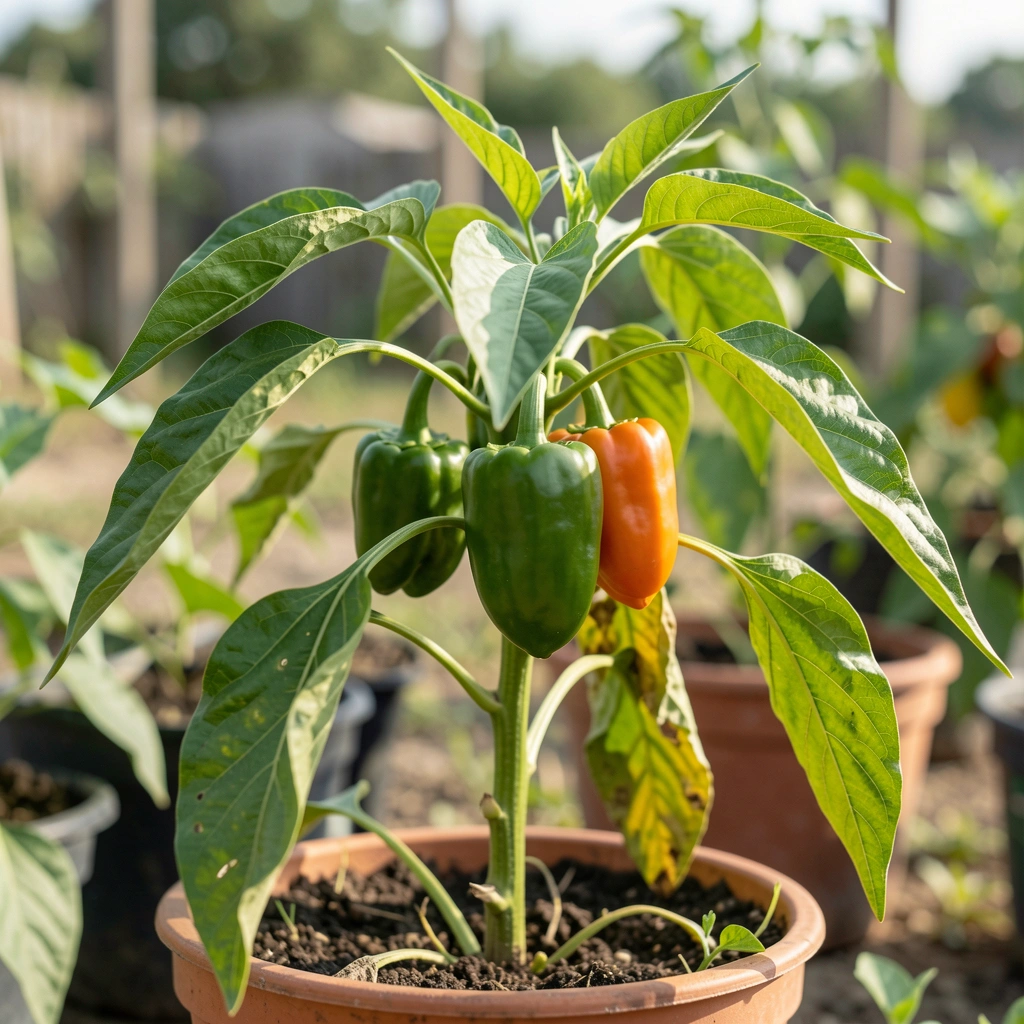
Your local climate changes how you interpret wilting and how you respond. The same symptom can mean different things depending on where you live.
Hot Climate Wilting
If you garden in the South, Southwest, or any region with summer temperatures above 90°F, afternoon wilting is normal. It's not a problem. It's the plant's defense mechanism.
What matters is whether the plant recovers overnight. If it does, just keep the soil consistently moist and add shade cloth during extreme heat waves. Focus on deep watering to encourage root growth.
Shallow roots dry out faster.
Cool Climate Wilting
In cooler regions like the Pacific Northwest or the upper Midwest, wilting is more likely a watering or disease issue. Heat stress is rare. Overwatering and slow drainage are common because the soil doesn't dry out as fast.
Transplant shock is also more common in cool climates. Wait until soil temperatures reach at least 60°F before moving peppers outside. Planting too early stresses the roots and causes persistent wilting that looks like a disease.
What Happens Next: A Week of Care After Diagnosis
You've identified the cause. Now it's time to act. The next week determines whether your plant recovers or gets pulled.
If It's Underwatering: How to Recover Without Overdoing It
Water deeply and slowly. Give the plant a thorough soak until water runs out of the drainage holes or soaks several inches into the ground. Then wait.
Check the soil again in two days.
Don't water again just because the leaves still look a little sad. It takes 24 to 48 hours for a dehydrated plant to fully rehydrate. Overcorrecting by watering again too soon can cause root rot.
If It's a Wilt Disease: Removal, Disposal, and Soil Care
Remove the plant completely, roots and all. Bag it securely. Dispose of it in the trash, not the compost bin.
Do not plant peppers, tomatoes, or eggplants in that spot for at least two years.
For container plants, dump the soil and sanitize the pot with a 10 percent bleach solution before reusing it. For in-ground beds, consider solarization. Cover the soil with clear plastic for four to six weeks during the hottest part of summer to kill soil pathogens.
If It's Pests or Heat: Quick Fixes That Actually Work
For pests, apply insecticidal soap or neem oil every five to seven days until the infestation clears. Focus on the undersides of leaves where pests hide.
For heat stress, add a two to three inch layer of organic mulch around the base. Consider shade cloth during peak sun hours. Water in the morning.
The plant should return to normal within a few days once the heat wave passes.
FAQs Gardeners Always Ask About Wilting Peppers
Should I Prune Wilted Leaves?
No. Leave them on until the plant recovers. Wilted leaves are still producing energy.
Pruning them during stress slows recovery.
Can I Save a Plant That Has Verticillium Wilt?
No. There is no cure for verticillium or fusarium wilt. Remove the plant immediately to prevent the fungus from spreading to nearby plants.
How Long Does It Take for a Watered Plant to Perk Up?
Most underwatered plants show visible improvement within two to four hours of deep watering. Full recovery takes 24 to 48 hours.
Can Heat Stressed Peppers Produce Fruit?
Yes. Temporary heat stress won't stop fruit production. But sustained temperatures above 95°F can cause blossom drop.
Provide shade and consistent moisture.
Should I Fertilize a Wilting Plant?
No. Fertilizing a stressed plant can burn the roots and make wilting worse. Wait until the plant has fully recovered and shows new growth.
Your Quick Decision Guide: What to Do Right Now
Here is the short version for when you are standing in front of a drooping plant and need an answer in thirty seconds.
If the soil is dry two inches down, water deeply. If the soil is soggy, stop watering and let it dry. If the soil is fine and the plant wilts only in the afternoon, add mulch and wait.
If the plant stays wilted all day and night, cut the stem. A brown ring or milky ooze means the plant is done. Remove it.
Do not compost it.
That covers the vast majority of cases. Trust the workflow, go step by step, and your pepper plant will tell you exactly what it needs.