So you've noticed brown patches in your lawn, maybe some unexplained digging from animals, and you're wondering what's actually going on below the surface. What are grubs, exactly? Grubs are the larval stage of various scarab beetles, and they live underground feeding on grass roots, which is what causes those frustrating dead spots many homeowners deal with each year.
If you've peeled back a section of turf and found pale, C-shaped insects curled in the soil, that's your answer right there.
Here's something worth knowing. A healthy lawn can typically tolerate around five to six grubs per square foot without showing visible damage. The trouble starts climbing once populations push past that threshold.
The key is figuring out what you're actually dealing with down there, because not all grubs are equal, and the treatment approach depends heavily on the species, timing, and severity of your specific situation.
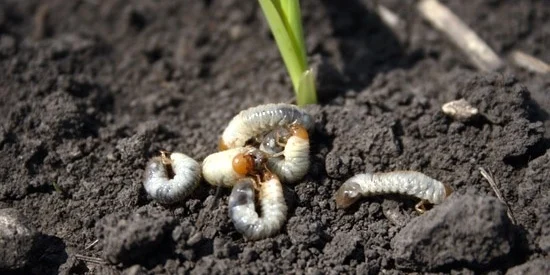
Image source: Bing (Web (fair-use with source credit))
Quick Answer
Grubs are the larval stage of scarab beetles, including Japanese beetles, European chafers, and June bugs. They are white or cream-colored, C-shaped, and live underground where they feed on grass roots. They range from about one-quarter inch to over one inch long depending on species and age.
The damage they cause shows up as brown, dying patches of lawn that peel back easily from the soil.
What Are Grubs Exactly?
Grubs are beetle larvae. That's the simplest way to put them. They're the immature stage in the life cycle of beetles from the family Scarabaeidae, which includes dozens of species common across North America and Europe.
When people ask "what are grubs," they're almost always talking about the white, worm-like creatures found just below the soil surface in lawns, gardens, and compost areas.
These larvae have soft, fleshy bodies that are typically white to cream-colored with a distinct brown or tan head capsule. They have three pairs of legs clustered right behind the head. Their most recognizable trait is the curled C-shape they hold their body in.
Flip one over and you'll notice the rear end often looks darker, that's the digested plant material visible through the semi-transparent body wall.
The size varies quite a bit. A newly hatched grub might be barely one-quarter inch long. A fully mature Japanese beetle grub reaches about one inch.
Some species like the European chafer or the larger June bug larvae can grow well past an inch. The growth happens across several developmental phases called instars, where the larva sheds its outer skin and gets progressively larger.
The Grub Life Cycle: What's Happening Underground
Understanding the grub life cycle matters because it directly tells you when to act and when treatment won't do a thing. Grubs follow a complete metamorphosis: egg, larva, pupa, and adult beetle. The grub stage itself can last from several months to over a year depending on the species.
Adult beetles emerge from the soil in late spring or early summer. Japanese beetles in the US Midwest tend to peak around late June through July. European chafers come out a bit earlier, often in June.
After mating, the female adult beetle flies to suitable turf, burrows a few inches underground, and deposits her eggs. A single female can lay between 40 and 60 eggs over her lifespan.
Those eggs hatch within about two weeks, and the newly emerged larvae start feeding on fine grass roots immediately. This early larval stage is actually the most vulnerable for the grub and the most effective window for treatment. Through late summer into fall, the grubs feed voraciously and grow rapidly.
As soil temperatures drop in late autumn, they burrow deeper into the soil profile, sometimes six inches or more, to overwinter below the frost line come spring, they move back up and feed briefly before pupating into adult beetles.
This is why timing is everything. A curative treatment applied when the grubs are small and actively feeding near the surface in mid-to-late August will knock out a population far better than the same product applied in October when they've already dug deep, or in spring when they're stopping feeding and preparing to pupate.
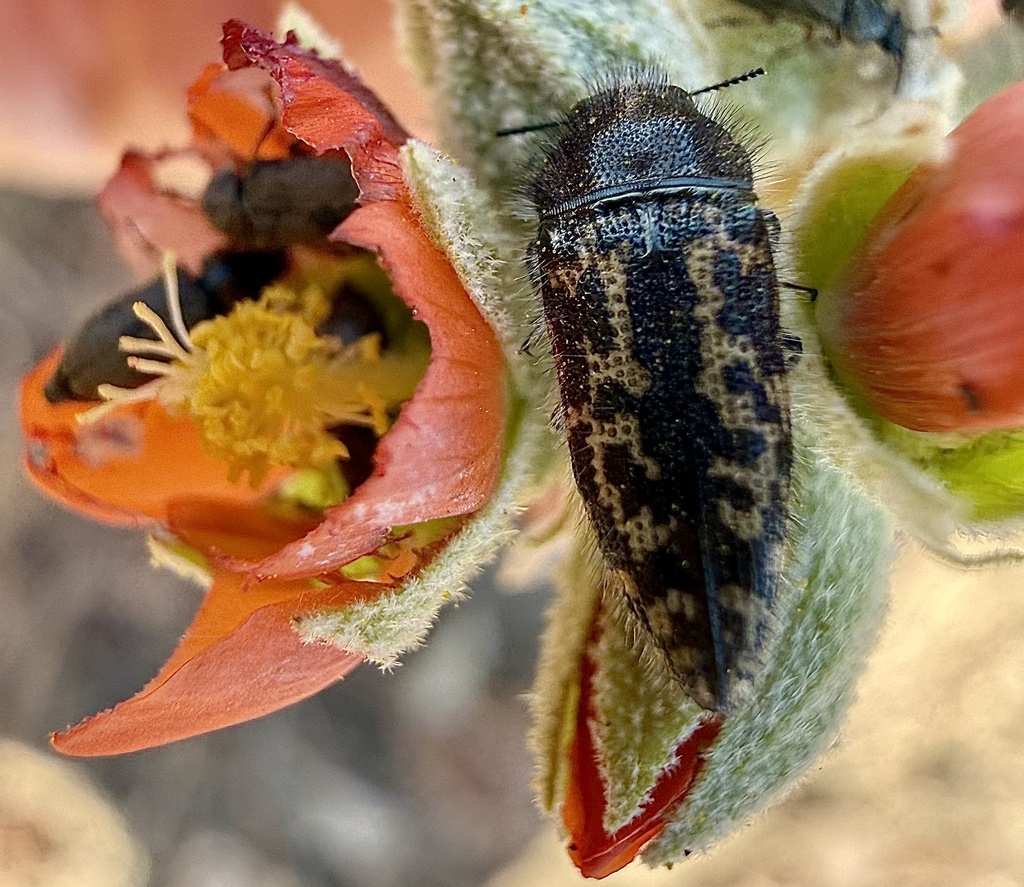
Image source: iNaturalist / Irene
The Most Common Grub Species and How to Tell Them Apart
Here's where visual identification really earns its keep. Not all grubs look identical, and knowing which species you're dealing with helps predict the damage pattern and choose the right control strategy. The species commonly found in residential lawns include the Japanese beetle, European chafer, Northern masked chafer, May/June beetle, green June beetle, Asiatic garden beetle, and black turfgrass ataenius.
The most reliable way to distinguish between species isn't by body color. They all look white to cream-colored. The real tell lies in the rump pattern, specifically the arrangement of hairs, spines, and puncture marks on the underside of the last abdominal segment, called the raster.
University extension entomology labs use a raster pattern key to identify species under magnification.
Here's a practical breakdown of the major species:
Japanese beetle (Popillia japonica): This is the most widespread and destructive grub species across the eastern and midwestern United States. The raster pattern forms a distinctive V-shape or chevron of spines. Adults are metallic green and copper-colored.
European chafer (Amphimallon majale): Increasingly common in the Northeast and upper Midwest. Has a Y-shaped raster pattern with two rows of spines that converge. The adult beetle is a tan or light brown color. This species hatches slightly later than Japanese beetle, which shifts treatment timing.
Northern masked chafer (Cyclocephala borealis): Found across much of the eastern US. Its raster pattern shows spines scattered more randomly without a distinct V or Y shape. The adult is a dull brown beetle, smaller than the Japanese beetle.
Green June beetle (Cotinis nitida): This one stands out because it's significantly larger, reaching up to two inches, and it actually moves on its back using stiff bristles along its body rather than crawling with its legs. Unlike other grubs that stay below ground, green June beetle larvae come to the surface at night and can leave visible soil castings similar to earthworm mounds.
Black turfgrass ataenius (Ataenius spretulus): This is a smaller grub species, often found on golf course fairways and high-maintenance turf. Adults are tiny black beetles, and the larvae are correspondingly smaller, usually less than half an inch.

Image source: Bing (Web (fair-use with source credit))
What Grub Damage Looks Like (And How to Rule Out Other Problems)
Grub damage has a signature look once you know what to watch for. It typically appears in mid-to-late summer or early fall as irregular brown patches of dead or dying grass. The turf feels spongy and loose underfoot because the roots have been chewed away and the sod no longer anchors tightly to the soil.
You can often roll a damaged section back like a carpet with very little effort.
Here's a point that surprises a lot of homeowners. The visible damage often lags behind the actual root feeding by several weeks. A grub population can be quite advanced before you notice anything above ground.
Animal activity is another strong indicator. Skunks, raccoons, armadillos in the southern US, and some bird species will tear up turf at night or early morning to feed on grubs. If you're finding patches of lawn dug up overnight, that's a very reliable sign of a significant grub population below.
But brown patches don't automatically mean grubs. Several other common lawn problems mimic grub damage, and misdiagnosis leads people to apply treatments they don't need. Here's how to tell the difference:
- Drought stress: Affected grass will show browning but the roots are intact and the turf won't peel back easily
- Fungal diseases like brown patch or dollar spot: Look for irregular patterns in the leaf blades themselves, lesions, or cobweb-like mycelium on the grass
- Nutrient deficiency: Typically shows as uniform yellowing rather than distinct dead patches
- Dog urine damage: Creates a brown spot with a ring of dark green grass around it from the nitrogen concentration
- Soil compaction: Causes thin, weak turf in high-traffic areas rather than irregular dead patches
Cut a one-foot square of turf at the edge of a damaged area, peel it back, and inspect the top two to three inches of soil. Count the grubs you find. Flip the turf back into place and water it, it should re-root within a week regardless.
This simple test gives you a definitive answer.
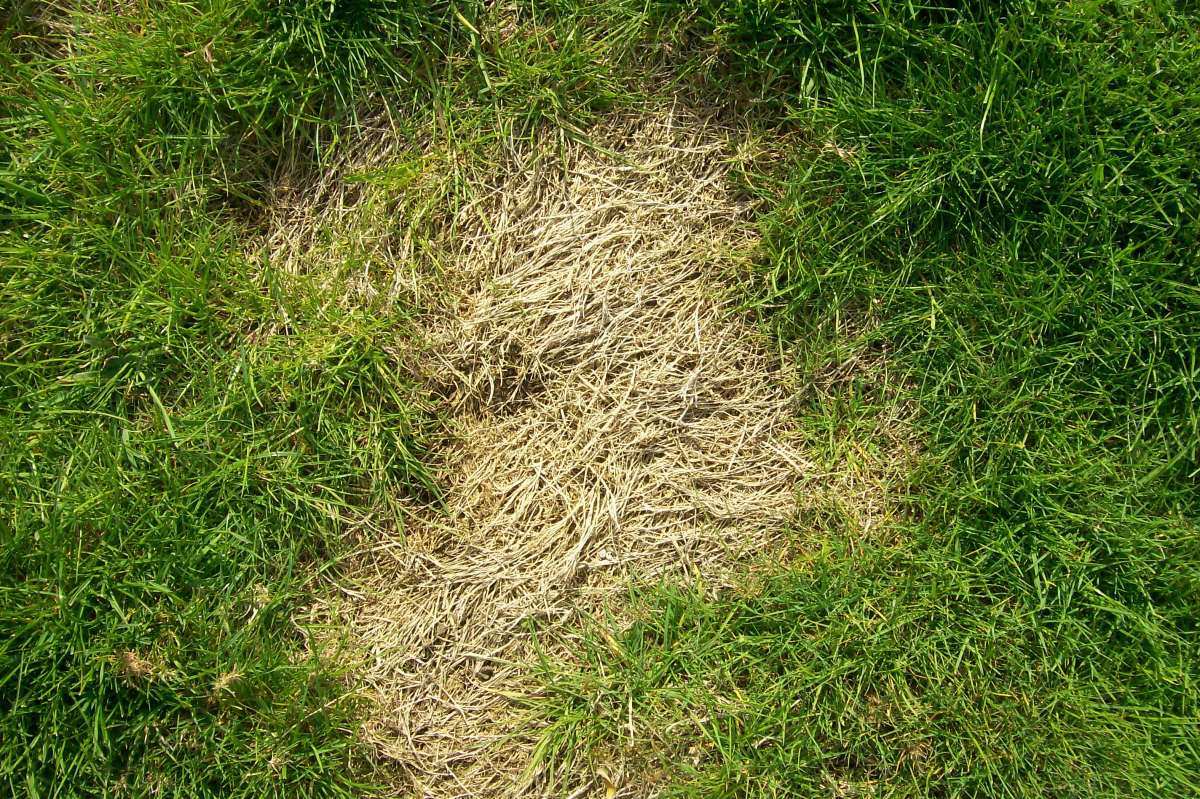
Image source: Bing (Web (fair-use with source credit))
How to Test Your Lawn for Grubs: The Square-Foot Method
Testing for grubs isn't complicated, but doing it correctly makes all the difference between an informed decision and an expensive guess. The standard method used by turf management professionals and university extension services is the square-foot sampling technique.
Start by choosing several sampling spots across your lawn, focusing on areas near the boundary between damaged and healthy grass. Cut three sides of a one-foot square using a spade or lawn edging tool, then fold the turf back like a flipping a page. Examine the soil and root zone carefully.
Count every grub you see in that square foot. Check down to about two inches deep because that's where younger grubs tend to be feeding.
Repeat this process in at least five to six spots across your property, particularly in areas showing stress or near where animals have been digging. Average the counts together. This gives you a reliable estimate of your lawn's grub population density rather than relying on a single sample that might be unusually high or low.
Don't forget to press the folded turf back into place firmly and water thoroughly afterward. The grass will re-root and recover its connection to the soil.
Sampling in late July through mid-September gives the most actionable data. The grubs are present, they're actively feeding near the surface, and you still have time to apply a curative treatment if numbers warrant it. Sampling too early means you might miss newly hatched larvae.
Sampling in late fall means the grubs have already moved deep underground and most products won't reach them effectively.
This same count data also tells you whether you even need to act. Not every lawn with grubs is a lawn that needs treatment. That threshold depends on multiple factors including grass species, moisture availability, and overall turf health.
When Grub Numbers Actually Warrant Treatment
Finding a few grubs during your lawn inspection doesn't automatically mean you need to reach for a product. Healthy turf can tolerate a moderate grub population without showing visible stress. The economic threshold that turf management researchers use for common lawn species sits around 6 to 10 grubs per square foot for cool-season grasses like Kentucky bluegrass and fescue.
Warm-season grasses such as Bermuda and zoysia can sometimes handle slightly higher counts due to their aggressive root regeneration.
But raw numbers aren't the whole picture. Several factors shift that threshold up or down:
- Irrigation: A lawn with supplemental watering can tolerate more grubs because damaged roots get recovery support from adequate moisture
- Grass species: Deep-rooted tall fescue tolerates root feeding better than shallow-rooted perennial ryegrass
- Time of year: High counts in early fall give the lawn less recovery time before winter dormancy compared to June findings
- Overall turf health: Thick, well-nourished turf bounces back faster than nutrient-starved grass
If your sampling averages fewer than five grubs per square foot and your lawn looks healthy, skip the treatment. Monitor next year. Populations fluctuate naturally from season to season, and beneficial organisms like parasitic wasps, ground beetles, and certain soil bacteria provide ongoing grub suppression without any intervention on your part.
Once counts push past 10 per square foot, especially on cool-season grass without irrigation, curative treatment is the right call.
Curative vs. Preventive Grub Control: Timing Is Everything
This is where most people either waste money or miss their window entirely. Grub treatments fall into two distinct categories with completely different active ingredients, application timing, and goals. Mixing them up means spending time and money for zero results.
Curative treatments target grubs that are currently present and actively feeding. These products need to go down when the larvae are small and near the soil surface, typically mid-July through late August in most northern climates. At this stage, the grubs are in their first or second instar, making them vulnerable to lower product rates.
Active ingredients with curative action include trichlorfon (sold under various brand labels) and carbaryl. These have a short residual window of just days to a couple of weeks, so timing targets the live population right now.
Preventive treatments aren't designed to kill existing grubs. They build a protective zone in the root zone that will kill next season's newly hatched larvae as they begin feeding. These are applied in late June through July, timed to coincide with adult beetle egg-laying.
The active ingredient chlorantraniliprole (found in some professional and consumer-grade granular products) has become the standard preventive option. It offers a long soil residual, stays active through the entire larval hatching period, and has a favorable environmental profile because it targets insect feeding systems at extremely low concentrations.
Imidacloprid, a neonicotinoid, has also been used as a preventive. However, regulatory restrictions in several states and municipalities now limit or ban neonicotinoid applications due to pollinator concerns. Always check your state's current regulations before selecting any product containing this active ingredient.
Here's a simple way to decide which path makes sense:
- Actively seeing damage or counted high grub numbers this year: Go curative now, consider preventive next June
- No current damage but last year's problem was severe: Apply preventive this summer to break the cycle first
- No history of grubs and grass looks healthy: No treatment needed at all
Chemical and Organic Treatment Options Compared
There's no single best grub control product. The right choice balances effectiveness, environmental concerns, timing flexibility, and how much hassle you're willing to deal with. Here's how the major options stack up.
Chlorantraniliprole-based products
These are the gold standard for preventive grub control as of 2024. Applied in early to midsummer before eggs hatch, a single application protects the lawn through the entire fall feeding period. University field trials consistently show 90 to 99 percent control when applied correctly.
The product binds well to thatch and soil organic matter, staying available in the root zone where young grubs feed. Drawback: zero effect on grubs already present if applied too late.
Trichlorfon-based curative products
This remains the fastest-acting curative option. It knocks down an active grub population within 24 to 72 hours after application and watering in. The soil residual is short, which reduces environmental persistence but also means a second application may be heavy pressure situations.
Best used when you've sampled and confirmed a damaging population.
Carbaryl-based products
Another curative option that works well against larger grub species including the green June beetle. Slightly slower knockdown than trichlorfon but still effective when applied in late summer while grubs are small.
Beneficial nematodes (Heterorhabditis bacteriophora)
These microscopic roundworms actively hunt and enter grubs, releasing symbiotic bacteria that kill the larvae within 24 to 48 hours. They're an organic option that requires specific handling and application conditions. The nematodes need moist soil, soil temperatures above 60 degrees Fahrenheit, and protection from UV light during application.
Water both before and after application. Success rates vary widely in field conditions, so this works best as part of an integrated approach rather than a standalone solution.
Bacillus thuringiensis galleriae (Bt galleriae)
This bacterial product targets beetle larvae and has received increasing attention as an organic control option. It needs to be ingested by the grub, so it applies most effectively against small larvae. Multiple applications spaced a few weeks apart often produce better results than a single dose.
It spares beneficial insects like bees and parasitic wasps, which is a significant advantage in pollinator-conscious landscapes.
Milky spore (Paenibacillus popilliae)
Despite its long popularity in garden centers, milky spore has a narrow effective range. It works almost exclusively on Japanese beetle grubs and takes two to five years to build up effective soil concentrations. In northern climates with cold winters, the bacterial spores struggle to establish.
Research from multiple university turf programs has shown inconsistent results, and it's generally not recommended as a standalone control method.
Quick Comparison Table
| Option | Type | Residual | Best Timing | Notes |
|---|---|---|---|---|
| Chlorantraniliprole | Preventive | Long | June-July | Best for high-risk lawns with history |
| Trichlorfon | Curative | Short | Aug-Sept | Fast knockdown of active infestation |
| Carbaryl | Curative | Short-moderate | Aug-Sept | Effective on larger grub species |
| Beneficial nematodes | Biological | Variable | Late Aug-Sept | Requires specific moisture and temperature conditions |
| Bt galleriae | Biological | Short | Aug-Sept | Organic option, repeat applications needed |
| Milky spore | Biological | Years | Spring-Fall | Narrow species range, slow establishment |
Natural Predators and Biological Controls That Actually Work
Before spending money on any product, it's worth understanding what's already working in your soil. Grubs have natural enemies, some of them quite effective, and practices that support these organisms provide ongoing control that no single chemical application can match.
Ground beetles (family Carabidae) are voracious grub predators. These dark, fast-moving beetles patrol the soil surface at night and will consume significant numbers of shallow-feeding larvae. They thrive in lawns with minimal broad-spectrum insecticide use, which is worth considering if you've been applying preventative grub treatments every year.
Each application kills beneficial predators alongside the target pest.
Tiphia vernalis and Tiphia parasitoid wasps parasitize Japanese beetle grubs. The adult wasp lays eggs on the grub's body, and the developing wasp larvae consume the host. These wasps are established in parts of the Northeast and Mid-Atlantic and provide measurable population suppression.
Plants like tulip tree, fetterbush, and certain species of epimedium support adult wasps by providing nectar.
Bird activity in your lawn is another indicator of a functioning predator system. European starlings, grackles, and robins all feed on grubs near the soil surface. If you notice increased bird foraging in a specific area, there's likely a grub population drawing them in.
Soil health itself matters more than most people realize. Well-aerated, organically rich soil supports a diverse community of microarthropods and predatory fungi that contribute to grub mortality. Research from several university extension programs has documented that lawns with heavy thatch buildup and compacted soil tend to have worse grub problems because the compressed soil limits the movement of predatory organisms.
The takeaway is that maintaining a healthy, undisturbed soil ecosystem is one of the most cost-effective long-term grub management strategies you have available.
Mistakes People Make When Dealing with Grubs
Grub management mistakes cost homeowners both money and time. The errors cluster around timing, product selection, and misdiagnosis.
Applying preventive products to an active infestation is probably the most expensive mistake. These products need to be present before the eggs hatch. If you're seeing dead grass in August and reaching for a chlorantraniliprole-based preventive, you're simply too late.
The active grubs will keep feeding through fall. Switch to a curative product instead.
Over-watering after a granular application can be as problematic as under-watering. These products need about one-quarter to one-half inch of water to move the active ingredient into the root zone. Flooding the lawn washes the chemical below the feeding zone where young grubs live, reducing effectiveness dramatically.
Treating without confirming grubs is another expensive error. We've seen homeowners spend money on grub control when the actual cause of their lawn damage was fungal disease, poor drainage, or drought stress. The square-foot sampling method takes 15 minutes and gives you a definitive answer.
There's no reason to skip it.
Assuming one treatment solves everything long-term is optimistic at best. Grub populations recolonize from surrounding areas. Adjacent untreated properties, unmanaged public spaces, and native beetle habitats all provide a constant source of new adults arriving to lay eggs.
If your neighborhood has a persistent grub history, a combination approach of preventive treatment plus cultural practices delivers better results than any single annual application, a combination approach of preventive treatment plus cultural practices delivers better results than any single annual application.
Ignoring local pesticide regulations creates legal risk. Several states have restricted neonicotinoid use since late 2023. New York, Maryland, Connecticut, Vermont, and Massachusetts all have specific limitations or bans on certain landscape applications.
Your state department of agriculture website lists the current restricted products and their approved uses. Applying a restricted product can result in fines regardless of whether your intentions were good.
Grub problems aren't uniform across the country, and your region dictates everything from which species you're likely dealing with to when you need to act on treatment.
Northeast and Mid-Atlantic
The European chafer has expanded aggressively through New York, Pennsylvania, Connecticut, and New Jersey over the past two decades. It's now the dominant grub species in many areas where the Japanese beetle once ruled. European chafers tend to produce more severe turf damage because the adults are highly attracted to oviposition in lawns, and the grubs feed later into the fall and earlier in the spring compared to Japanese beetles.
Treatment timing here shifts slightly earlier, with curative applications performing best in mid-to-late August.
Midwest
The Japanese beetle grub remains the primary concern, particularly in Ohio, Indiana, Illinois, Michigan, and western Pennsylvania. Egg-laying typically peaks in mid-July, meaning preventive applications should go down by early July and curative treatments follow in August. Northern parts of the Midwest, like Minnesota and Wisconsin, experience a compressed growing season, which tightens the effective treatment windows.
Southeast
Humid warm-season turf like Bermuda, St. Augustine, and zoysia host a wider variety of grub species. The green June beetle is more prevalent here than in northern states and produces uniquely destructive larvae due to their size and surface-feeding habits.
The black turfgrass ataenius, a smaller species common on golf courses, also surfaces more frequently in the region. Warmer soil temperatures mean biological controls like beneficial nematodes maintain activity longer into the fall.
West Coast
California and Pacific Northwest lawns have fewer grub issues overall, though the European chafer has been detected in parts of western Oregon and Washington. Irrigation-heavy landscapes occasionally support Asiatic garden beetle populations, particularly in sandy soils near the coast. Arid interior regions rarely see significant grub pressure.
Soil type also matters. Sandy soils drain quickly and warm faster in spring, which can accelerate egg hatch. Clay soils hold moisture longer, supporting better nematode activity but also creating conditions where grub damage shows up faster because root systems are more shallow.
Your local extension service can provide region-specific soil temperature data that helps pinpoint hatch timing within a given year.
When to Call in a Professional
DIY grub management works for most residential situations, but certain scenarios warrant bringing in a licensed turf management professional. If your lawn exceeds a quarter acre and you're seeing widespread damage across multiple zones, the cost analysis often favors professional application. They have access to commercial-grade products at higher concentrations and commercial spreaders that deliver more uniform coverage than most homeowner equipment.
Professional intervention also makes sense if you're dealing with recurring annual damage despite treatment. A licensed applicator can identify environmental factors you might be missing, such as excessive thatch buildup, soil compaction issues, or irrigation patterns that are inadvertently promoting beetle egg-laying. They can adapt product selection and timing based on actual soil temperature monitoring rather than calendar estimates.
Finally, if your property includes vegetable gardens, fruit trees, or pollinator habitat where chemical sensitivity is a concern, a professional can navigate product selection to balance grub control with environmental safety. Some commercial products with longer residual activity and lower turf require professional licensing for purchase and application.
Frequently Asked Questions
Can grubs kill my entire lawn?
They can under the right conditions or wrong ones. Populations exceeding 15 to 20 grubs per square foot on cool-season grass without irrigation can cause widespread turf death by early fall. Well-maintained lawns with supplemental watering can recover from surprisingly high populations through the root regrowth.
Do grubs come back every year?
They absolutely can if adult beetles find your lawn suitable for egg-laying. Female beetles seek out moist, well-maintained turf with thatch layers suitable for burrowing. Lawns surrounded by open fields or parks with established beetle populations face repeated pressure.
Preventive treatments break this cycle.
What is the best month to treat for grubs?
For curative control, August is prime time across most northern and midwestern states. For preventive control, early July through mid-July works best. Timing shifts later in southern states with longer warm seasons.
Will killing grubs stop the animal digging?
Usually within one to two weeks of an effective curative treatment. Once the grub population drops, the food source that attracts skunks and raccoons disappears. You may see some lingering animal activity for several days as they excavate the remaining larvae.
Does mowing height affect grub damage?
It can. Lawns mowed at three to four inches maintain deeper root systems that tolerate more root feeding before showing stress. Short-mowed grass has less root mass to lose, which makes it reach the visible damage threshold faster at lower grub counts.
How long do grub control treatments last after application?
Preventive products like chlorantraniliprole maintain active soil levels for four to six months. Curative products like trichlorfon break down within days to a couple of weeks. Biological options have variable persistence, with beneficial nematodes typically remaining viable for four to six weeks if soil conditions stay favorable.