When should I put grub killer on my lawn? It is the single most common lawn care question every summer, and almost every blanket answer you have seen online is wrong for your situation. The right timing depends on what product you are using and exactly where the grubs are in their life cycle right now.
Get it wrong and you've wasted money for zero results.
Here is the reality most guides skip. A preventative product applied too late will not work. A curative product applied too early will dry up before the grubs hatch.
In our research across university extension resources, the number one reason for grub control failure is not the product. It is the timing.
Quick Answer
Put preventative grub killer on your lawn in late spring to early summer, typically April through June depending on your region. Put curative grub control on when you find active grubs feeding near the surface, usually mid-July through September. Do not treat unless you confirm grubs are actually present.
Let us walk through exactly how that decision breaks down for your lawn.
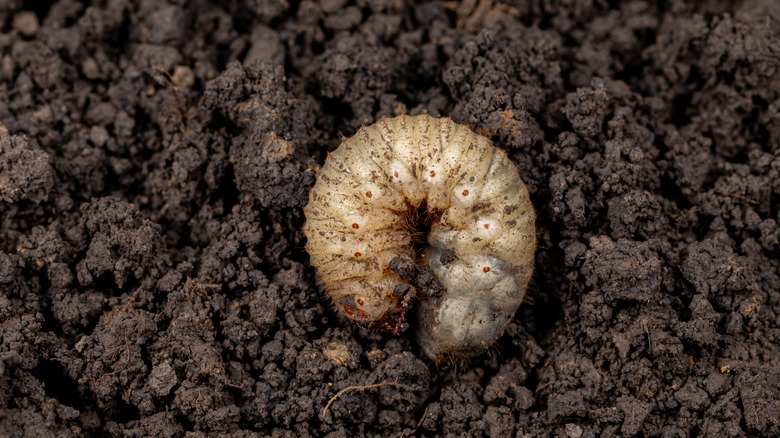
Image source: Bing (Web (fair-use with source credit))
The Problem: Everyone Gets Grub Timing Wrong
Most homeowners treat grubs based on a date on the calendar. They see a recommendation to "apply in June" and they spray in June regardless of what is happening in their actual soil. That approach fails constantly for one simple reason.
Grub populations, species mixes, and climate conditions vary enormously by region, yard, and year.
Here is what goes wrong most often.
People apply preventative products in late summer, thinking they are protecting their lawn. But preventatives target tiny newly hatched grubs. If you are applying in August, the grubs from that spring's egg hatch are already large and feeding aggressively.
A preventative will not kill them. You needed a curative product, and you have already missed your best window of effectiveness.
The flip side happens too. People panic in early spring when they remember last year's damage, and they apply curative insecticide to frozen or cold soil. Curative products target actively feeding larvae.
The grubs are not active yet, the product breaks down in UV light and rainfall, and by the time larvae are actually feeding, the chemical barrier is gone.
Then there is the overreaction scenario. A homeowner sees raccoons tearing up the lawn at night and assumes grubs. They treat immediately without confirming what is actually down there.
Sometimes the raccoons are after earthworms. Sometimes the damage is from a fungal disease that looks like grub kill. Treatment without diagnosis wastes money and introduces insecticide into soil that never needed it.
The evidence is clear from aggregated extension studies. Accurate identification and timing consistently outperform product choice in real-world results. You need a simple decision workflow that walks you through the conditions step by step.
Let us build that now.
Core Explanation: How Grub Products Actually Work
Before you can time anything correctly, you need to understand what is actually happening underground and how each type of product interacts with the grub life cycle.
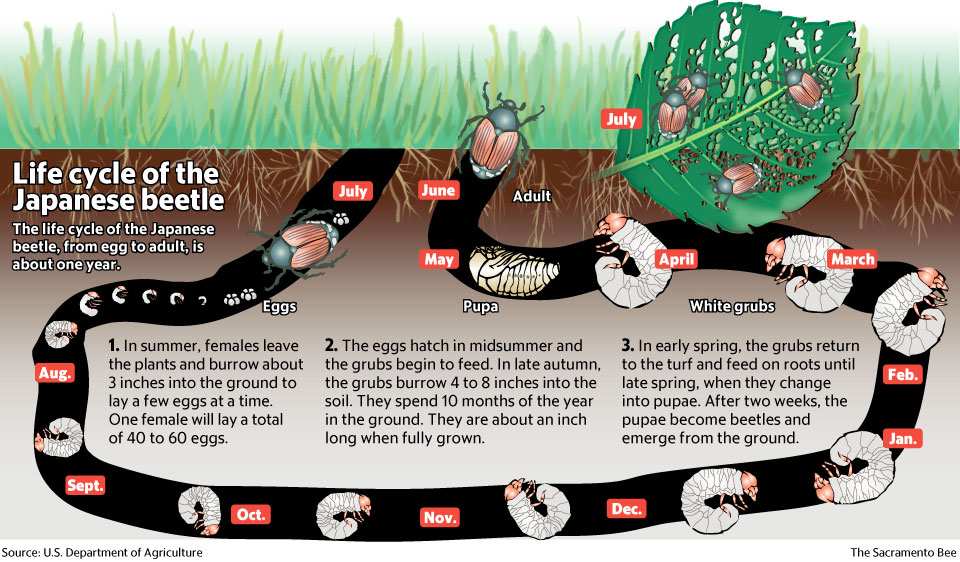
Image source: Bing (Web (fair-use with source credit))
Preventative Products Are a Shield, Not a Sword
Preventative grub control products use active ingredients like chlorantraniliprole. They do not work the way most people assume. They are not creating a toxic zone that kills everything on contact.
Instead, they target the vulnerable early stages of the grub life cycle.
When adult beetles like Japanese beetles or European chafers fly and lay eggs in your soil in early to midsummer, those eggs hatch into tiny first-instar larvae. These larvae are maybe a quarter-inch long and barely grazing the fine root hairs near the surface. That is your window.
The preventative product is sitting in the root zone at that exact depth, and when these microscopic larvae start feeding on treated roots, they ingest the active ingredient and stop developing.
Applied too early and the chemical starts degrading before the eggs even hatch. Applied too late, say in early September, and those larvae have already grown to a half-inch or more and have moved deeper into the soil profile. They are past the zone of effectiveness.
Curative Products Are for Active Infestations
Curative grub control products use active ingredients like trichlorfon, carbaryl, or imidacloprid. These work differently. They are designed to kill grubs that are already present, already feeding, and already causing visible damage to your turf.
Here is the critical detail most people miss. Curatives work best when the grubs are still small. A first- or second-instar larva a quarter-inch long is exponentially more vulnerable to these chemicals than a mature third-instar grub over an inch long.
That larger grub has a thicker cuticle, a more developed metabolic system to break down toxins, and it is often feeding deeper in the soil where product concentration is lower.
So "curative" does not mean "cure it no matter when." You get a narrow window in mid to late summer when the new generation is hatched large enough to be causing real feeding damage but still small enough and still shallow enough for the chemical to reach them effectively.
How the Grub Life Cycle Dictates Your Window
Understanding the annual cycle makes everything click into place. Adult beetles fly in late spring and early summer, often June in northern climates and as early as April in the south. They lay eggs in moist soil.
Those eggs hatch within two to three weeks. The larvae feed on turf roots through late summer and into fall, growing as they go. As soil temperatures drop in late fall, the mature larvae crawl deep below the frost line and go dormant.
They return briefly near the surface in spring, feed lightly, then pupate into adults to restart the cycle.
Your two treatment windows map directly onto this cycle. Preventative goes down in late spring to early summer, timed to protect against the upcoming egg hatch. Curative goes down in mid to late summer, timed to hit the active young larvae from that year's hatch.
Simple once you see the rhythm.
When to Apply: The Decision Workflow

Image source: Bing (Web (fair-use with source credit))
Now let us put this into a practical decision tree you can use right now, regardless of what month it is or what your lawn looks like.
Image source: Bing (Web (fair-use with source credit))
Step 1: Confirm You Actually Have Grubs
Do not skip this. Do not treat on assumption. Do not treat because your neighbor treated.
Confirm first.
Take a flat shovel or a sturdy knife and cut three sides of a one-square-foot section of turf in a damaged area. Peel it back like a flap and examine the soil down to about three inches. Count what you see.
Use these thresholds as your guide:
| Grubs per sq ft | Action |
|---|---|
| 0 to 4 | No treatment needed. Your turf can handle this naturally. |
| 5 to 9 | Depends on grass health and irrigation. Monitor and decide. |
| 10 or more | Treat. You are at risk of significant root damage. |
Also do the tug test. Grab a handful of grass in a damaged area and pull gently. If it lifts away from the soil like a loose carpet with little to no root anchoring, grubs have already eaten through the root system.
That is a confirmed active problem requiring immediate curative treatment.
If the turf holds firm and you pull up intact roots, the damage may be from something else entirely. Could be fungal disease, drought stress, or even dog urine spots. diagnosing correctly before you treat is the most important step in this whole process.
Step 2: Identify What Season It Is Right Now
Your season determines which branch of the decision tree you follow. Here is where your calendar and your climate zone both matter.
Late spring to early summer, roughly April through June. This is preventative territory. You are aiming to have the chemical in place before those adult beetles lay eggs. In the northern half of the United States, late May to mid-June is the sweet spot.
In the southern states, adult beetles emerge earlier and you may need to apply in April or May.
Midsummer, July through mid-August. This is curative territory in most regions. Grubs from that year's hatch are now small, actively feeding near the surface, and vulnerable to curative insecticide. This is your most effective treatment window if you are dealing with an active infestation you confirmed in Step 1.
Late August through September. Curative treatment still works here, especially early in this range. But effectiveness is starting to decline as grubs grow larger and begin moving deeper into the soil profile. Treat now if you confirmed grubs.
Do not wait.
October and beyond. Too late for any product to reach the larvae effectively. Grubs are now deep and heading into dormancy. Treat next spring instead if grub pressure has been a recurring issue in your yard.
Step 3: Match the Product to Your Timing
Now combine what you know. Read the product label carefully.
If your window is preventative late spring to early summer, choose a preventative product. Active ingredient chlorantraniliprole is the most common. Apply per label rates.
Water it in with a quarter inch of irrigation right after application.
If your curative window is mid to late summer and you confirmed grubs, choose a curative product with active ingredients like trichlorfon or carbaryl. These act faster than older neonicotinoid products. You should see a noticeable reduction in grub activity within a few days to a week if product and timing are correct.
Never apply a preventative product in mid-summer expecting it to kill existing grubs. It will not. Never apply a curative in late spring expecting it to prevent future hatch.
It will have degraded before then.
Regional Timing by US Climate Zone
One of the biggest mistakes in generic lawn advice is pretending every yard lives on the same calendar. Your actual treatment window depends heavily on where you live in the country because beetle emergence and egg hatch shift by latitude and elevation.
Here is how the timing breaks down by region.
Northern US
If you are in the upper Midwest, Northeast, or mid-Atlantic states with cool-season grass lawns, your adult beetle flight peaks in June. Preventative application should typically happen in late May through late June. Curative window runs from late July through early September.
The northern masked chafer and European chafer are common culprits in this region. Their flight timing can drift by two to three weeks depending on that particular year's spring temperature, so do not rely on a fixed date. Watch for beetle activity on your own trees and shrubs as a reliable real-world indicator that egg-laying is about to begin.
Transition Zone
If you live in that tricky middle band from southern Pennsylvania through Kentucky, Tennessee, Missouri, and into the mid-South, you deal with both warm-season and cool-season turf species and you often face multiple pest cycles. European chafer, Japanese beetle, and Asiatic garden beetle may all be active in overlapping windows.
Preventative timing here is typically late May through June. Curative timing extends through August. Your lawn stress from summer heat is often more intense too, which means grub damage hits harder because the grass has less vigor to recover.
Aggressive monitoring matters here more than in the North because a moderate grub population that a healthy cool-season lawn would shrug off can cause real thinning in a heat-stressed lawn.
Southern US
If you are in the Deep South with warm-season grass, everything shifts earlier. Adult beetle activity starts as early as April. Preventative treatment may be needed in April through May.
Curative window opens by July.
But here is the additional complication. The South often deals with tropical sod webworm alongside grubs, and the damage patterns can look similar from a distance. Getting a correct species ID before you treat is essential down here.
A turf-damaged yard in your neighborhood might be webworm and not grubs, and entirely different timing and chemistry might apply.
Also, warm-season grasses like zoysia and bermudagrass tend to spread laterally and recover more aggressively than cool-season stand-alone varieties. This means your threshold for treatment can be slightly higher, especially in irrigated, high-maintenance lawns with strong## What Happens at Each Treatment Stage
Let us walk through what success and failure look like at each stage so you know what to expect and when to follow up.
Preventative application is done correctly. The product is in the root zone, timed with the egg hatch period. The new larvae feed on treated root hairs and die off before they can grow large enough to cause damage. You barely notice anything happened.
That is the point. The visible indicators you are looking for are an absence of late-summer thinning, an absence of wildlife digging, and turf that stays rooted through August heat. You are not trying to see dead grubs on the surface.
You are trying to not see any damage at all.
Curative treatment triggers a different expectation. After application and watering, you should see a reduction in active grub presence within several days to a week if conditions are good. You may notice less fresh surface disruption where raccoins or skunks were feeding. The turf damage that existed will not repair itself overnight, but the spread stops.
The grass can then recover through fall growth if you gave it time and follow-up care.
Late-season treatment in September or October. Realistically, if you are treating in September because you just discovered the problem, you are not getting full control. The grubs may already be mature and moving deep. You are catching whatever is still shallow, which is better than nothing, but expect incomplete results.
Plan a preventative application the following spring to get ahead of the population in the next cycle.
Now let us cover the most common missteps so you can avoid joining the group of frustrated homeowners who applied a good product at the wrong time and saw no results.
Common Mistakes That Waste Money and Fail
Treating too early in spring is the top offender. The grubs down there are from last year and already mature. They are heading deep.
A curative at that point barely touches them. You burned product for nothing.
Applying preventatives in late summer is the runner-up. By August the eggs have already hatched and the larvae are growing. A preventative will not kill them.
You needed a curative, and you already missed its best window too.
Skipping the watering step kills results fast. Granular products need that quarter-inch irrigation to dissolve and move into the root zone. Without it, the granules sit on the surface and UV breaks them down.
The active ingredient never reaches the target depth.
Over-applying does not double your effectiveness. It increases runoff risk. It harms beneficial organisms like ground beetles.
Follow the label rate and calibrate your spreader. More product is not better chemistry.
Curative vs Preventative: Side-by-Side Comparison
| Feature | Preventative | Curative |
|---|---|---|
| Active ingredient | Chlorantraniliprole | Trichlorfon, carbaryl, imidacloprid |
| Best timing | Late spring to early summer | Mid to late summer |
| Targets | Eggs and newly hatched larvae | Actively feeding existing grubs |
| Kill speed | Stops development | Faster visual results |
| Best for | Preventing damage before it starts | Stopping active, confirmed damage |
Preventative is your best bet if you had damage last year and want to get ahead. Curative is the move when you are staring at turf pulling up loose and wildlife tearing through your yard at night. If you already have confirmed damage, fall is too late and you are waiting until next spring anyway.
Use curative now, then switch to preventative next year to break the cycle.
If you are choosing between the two late in the season, skip the preventative entirely and go straight to curative. It targets the problem in front of you right now.
Biological and Alternative Options (If You Want to Skip Synthetic)
Beneficial nematodes, specifically Heterorhabdaphitis bacteriophora, are microscopic worms you mix with water and spray onto soil. They carry symbiotic bacteria that kill grubs from the inside out. They work best in late summer when soil temperatures are still warm and grubs are near the surface.
You need to water before and after application and keep the soil moist for a week. Results take several days. You will not see instant knockdown.
Bacillus thuringiensis galleriae, sold as grubGONE G, is another biological option effective on smaller grubs. It works in a similar temperature-sensitive window and needs UV protection. Apply in the evening and water lightly.
Milky spore targets only Japanese beetle grubs, not the full grub complex. It is a longer-term population management tool. It works best when applied regionally across multiple properties, confining the spread.
Biological controls are softer on soil ecosystems but require tighter timing. They also demand more soil moisture management. In our extension aggregate, they perform well in targeted scenarios.
They are not a blanket replacement for synthetic products in heavy infestations.
Equipment, Calibration, and Application Steps
Image source: Bing (Web (fair-use with source credit))
You need a broadcast spreader for granular products. Drop spreaders work too but and give less uniform coverage. Hose-end sprayers are an option for liquid formulations.
Calibrate your spreader before every seasonal application. An old calibration method that still works: measure out a small known area like 100 square feet. Put a measured amount of product in the spreader rated for that area.
Spread it walking your normal pace at your normal speed. If you finish with product left, you are applying too slowly. If you run out too fast, you are going too fast or the gate is too open.
Make adjustments and repeat.
After spreading, water immediately. Aim for a quarter inch of irrigation. That moves the active ingredient off the granules and into the top few inches of soil where grubs are feeding.
A rain gauge or a shallow tuna can placed in the yard works fine for measurement.
Most modern products allow both spring and fall applications if needed for management. Fall curative treatment can catch the second spring feeding window if you missed the summer one.
Frequently Asked Questions
Can I apply grub killer and fertilizer at the same time?
Yes, if the product label allows it. Many granular grub controls can be combined with granular fertilizer in the same spreader pass if both are compatible. Do not mix products of different formulations without checking compatible label instructions first.
Will grub killer hurt earthworms?
It might. Broad-spectrum curative insecticides like trichlorfon and carbaryl are non-selective and can reduce earthworm populations temporarily. Chlorantraniliprole has lower toxicity to earthworms when used according to label guidelines.
Biological options like nematodes are neutral to earthworms.
How long does grub killer take to work?
Curative products like Trichlorfon can reduce grub populations within several days to a week with proper watering. Soil drenches take longer as the active ingredient moves through the soil profile. Preventatives work silently and you see the results in the absence of late-season damage.
Should I treat my whole lawn or just damaged areas?
If you confirm grubs in multiple spots, treat the whole lawn. Grub populations cluster but they are rarely confined to one small patch. Spot-treating a single damaged area leaves the surrounding yard unprotected.
Is killer safe for pets after application?
Once the product is watered in and the grass dries, most labeled grub products are considered safe for pets. Always read the specific label. Some products specify a re-entry period for people and pets before they contact the treated area.
Do reapplication intervals vary by product?
Yes. Most preventative products are formulated for one application providing seasonal coverage. Curative applications are typically performed on an as-needed basis when damage reaches certain thresholds.
Always refer to the product label as the source of truth.
Thresholds: How Many Grubs Before You Actually Need to Treat
Soil health and turf species change the picture quite a bit. Cool-season stand-alone lawns like Kentucky bluegrass generally tolerate several grubs per square foot if the soil is moist and fertile. Zoysia and bermudagrass lawns spread laterally and recover faster, so their tolerance can be slightly higher.
Dry, compacted, or heat-stressed lawns suffer damage at much lower grub counts. If your lawn is already struggling with irrigation issues, even a moderate grub feeding at several per square foot can push it over the edge into real thinning.
The universal threshold: once you hit ten confirmed grubs per square foot, treatment is warranted regardless of species. Below that, let grass health, irrigation, and regional pressure guide your decision.
Safety and Compliance Notes
Most product labels carry an environmental hazard statement advising against application directly to water, areas where surface water is present, or intertidal areas below the mean high water mark. Follow buffer zone guidance if you are near storm drains or wetlands.
Some states and municipalities regulate neonicotinoids more strictly. Chlorantraniliprole products face fewer restrictions but always check with your state department of agriculture before buying. Proper PPE, gloves and long sleeves at minimum, is standard practice.
Never pour leftover product down any drain. Triple-rinse containers and add the rinse water to your spray batch. Recycle containers where state collection programs exist.
Your Decision Guide: What to Do Right Now
The easiest way to lock in your timing is to map your own observations each season. If adult beetles are active on trees and shrubs around your property, the egg-laying clock has started. Your preventative application should go down within a few weeks of peak flight sightings.
If you missed that window and find white grubs shortly after grub hatch, note the date for a curative treatment and remember the date for a preventative application next year. This becomes your personal annual schedule.
Either approach works when matched with the right product and the right watering. Note the results year over year, and you will dial in your timing far more accurately than any generic calendar recommendation out there.