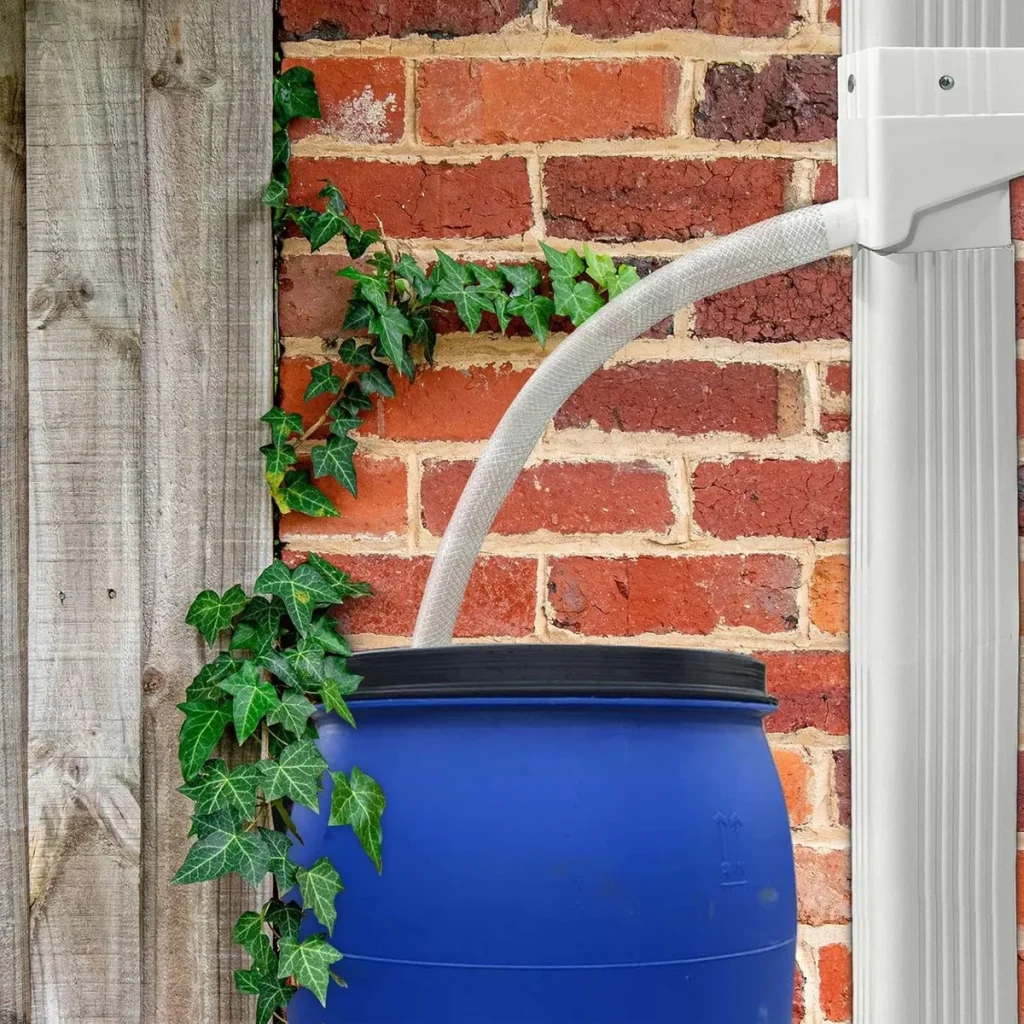
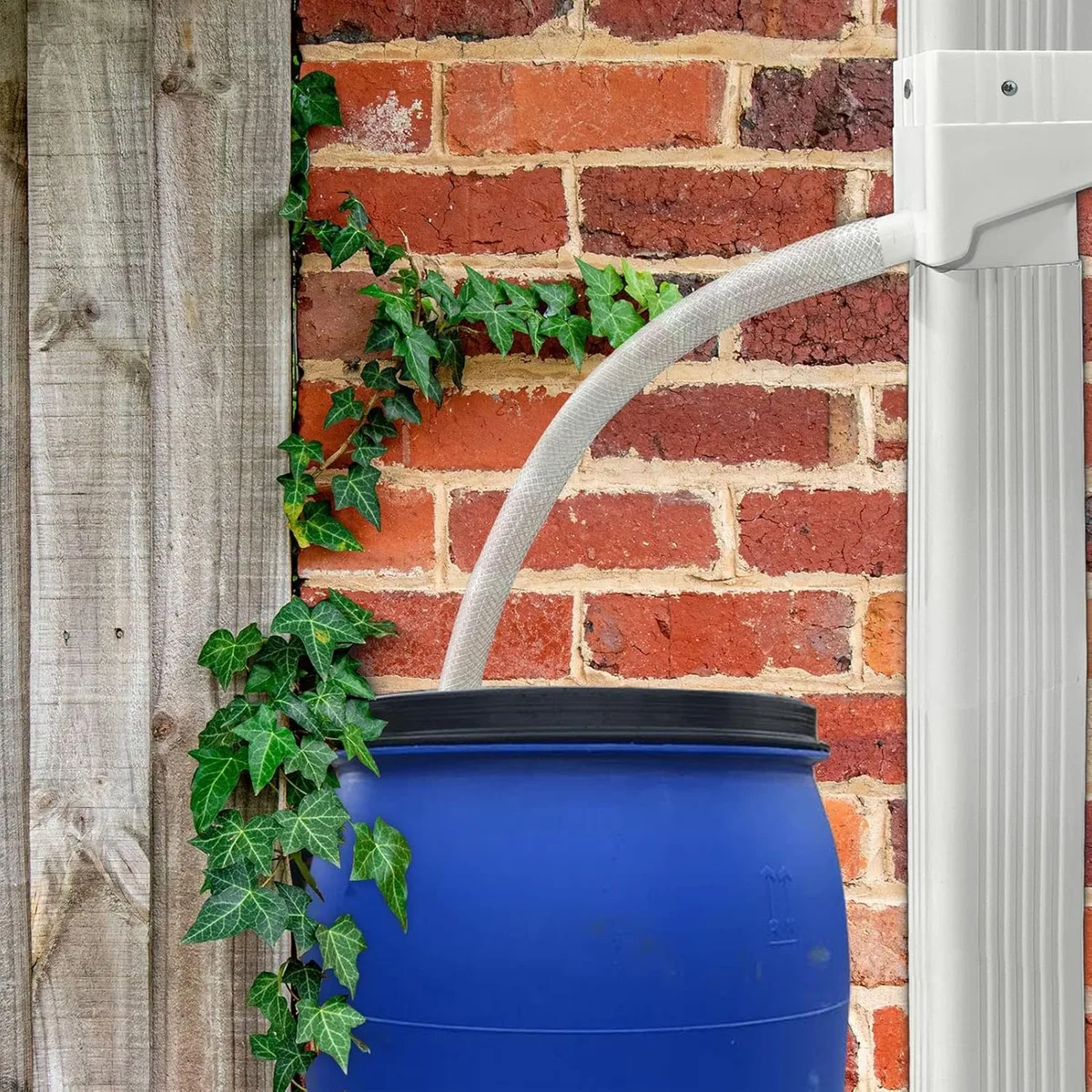
Image source: Web (Bing) / amazon.com (Web image (fair-use with source credit))
Why It’s Worth Knowing the Downsides Before You Harvest Rain
Dozens of municipal websites and green-living blogs will walk you through the joys of collecting rain. Very few will tell you when the whole idea turns into a money pit. That gap is exactly what this guide fills.
Not to scare you off, but to give you the full picture before you start digging.
The issue isn't whether rainwater harvesting can work. It absolutely can, especially for irrigation or livestock. The real question is whether it works for your specific home, budget, and climate.
Every system involves tradeoffs, and those tradeoffs usually stay hidden until the first big repair bill arrives.
Most of the disadvantages fall into two broad camps: money and maintenance. Some are minor. A clogged leaf screen or a dented downspout won't sink your budget.
Others, like a cracked underground tank or a contaminated water source, are serious enough to make you regret the entire project.
Before you spend on a rainwater setup, it pays to check whether your landscape is already doomed. A lawn that's full of root-damaging grub infestations won't bounce back no matter how much rain you collect.
The Quick Answer: All 10 Disadvantages at a Glance
If you want the short version, here it is. Rainwater harvesting has ten main drawbacks. High costs and slow payback top the list.
Unreliable rainfall, contamination risks, and constant maintenance follow close behind. Cold weather, space limits, and legal restrictions add more friction. Some are manageable, but for many homes, they outweigh the benefits.
Here's the breakdown of all ten and who feels them most:
| # | Disadvantage | Who It Hits Hardest | Severity |
|---|---|---|---|
| 1 | High upfront cost | Homeowners on a tight budget | High |
| 2 | Slow payback period | Households with cheap municipal water | Medium |
| 3 | Unpredictable rainfall | Semi-arid and drought-prone regions | High |
| 4 | Roof contamination | Anyone planning to drink the water | High |
| 5 | Pathogen and heavy metal risk | Families with children or weak immunity | High |
| 6 | Mosquitoes and algae | Warm, humid climates | Medium |
| 7 | Ongoing maintenance | Renters or low-maintenance homeowners | Medium |
| 8 | Freeze damage | Cold climate regions | High |
| 9 | Space and structural constraints | Townhouse and small-city yards | Medium |
| 10 | Permits and legal restrictions | Rural, western, and regulated states | Medium |
Keep that table handy. Some disadvantages are deal-breakers, while others are merely annoying depending on where you live and how you plan to use the water.
High Cost, Slow Payback: The Financial Reality
Let's start with the number that makes most people cough. A serious rainwater harvesting system is not just a barrel under a downspout. It's a pump, a pressure tank, filters, and often an underground cistern.
The costs stack up fast.
- Rain barrel with spigot and screen: $50 to $200
- Aboveground tank, 500 to 1,500 gallons: $400 to $1,500
- Pump and pressure tank: $300 to $1,500
- Complete potable system with filtration and UV: $3,000 to $10,000+
- Underground cistern with excavation: $10,000 to $30,000+
Now run the payback math. If your water bill is $500 per year and a system reasonably replaces half of your usage, you save $250 annually. On a $6,000 system, that's a 24-year payback.
Most tanks last 20 to 30 years, which means you barely break even before it's time to replace something.
Hidden costs pile on top. Permits, engineering inspections, replacement filters, water quality tests, and winterization supplies all add up. Our research shows that first-time buyers routinely underestimate these extras by 20 to 40 percent.
If your lawn already has patchy, dying sections, the issue might not be water at all. It might be whether you've timed pest control correctly for your region. A new irrigation source won't fix a turf problem that goes deeper than moisture.
Unreliable Supply: When the Rain Won’t Cooperate
Rainwater harvesting is entirely dependent on something you can't control: the weather. A 1,000 square foot roof captures about 620 gallons per inch of rain. That sounds great in April.
By August, in many parts of the country, the tank is empty.
If you're in a semi-arid climate, a 500-gallon barrel will drain after one good garden watering session. Even a 2,500-gallon cistern can dry up after a six-week dry spell. The bigger the tank, the longer the buffer, but the bigger the upfront cost too.
If your plan is to go off-grid, you need to calculate worst-case drought, not average rainfall. The difference can be enormous. A region with 30 inches of average rain might get only 18 inches in a dry year.
That's a 40 percent drop in your supply.
If you live somewhere with long dry seasons, treat rain as a supplement rather than your main supply. You'll still need the municipal hookup or a well for the months when the clouds don't cooperate. And if you're relying on stored rain to keep your lawn alive, the grass needs a healthy root system first.
A lawn that has grub damage won't thrive even with irrigation.
What’s Really Riding Off Your Roof: Contaminants and Pathogens
Here's the part nobody loves to talk about. Your roof is not a clean surface. It's a collection plate for bird droppings, decaying leaves, dust, and microscopic pathogens.
Asphalt shingles shed granules and trace chemicals with every rain. Older roofs with lead flashing can leach lead directly into the runoff. Copper gutters and downspouts add copper to the water.
If you're using collected rain on a vegetable garden, those contaminants end up in the soil and potentially in your food.
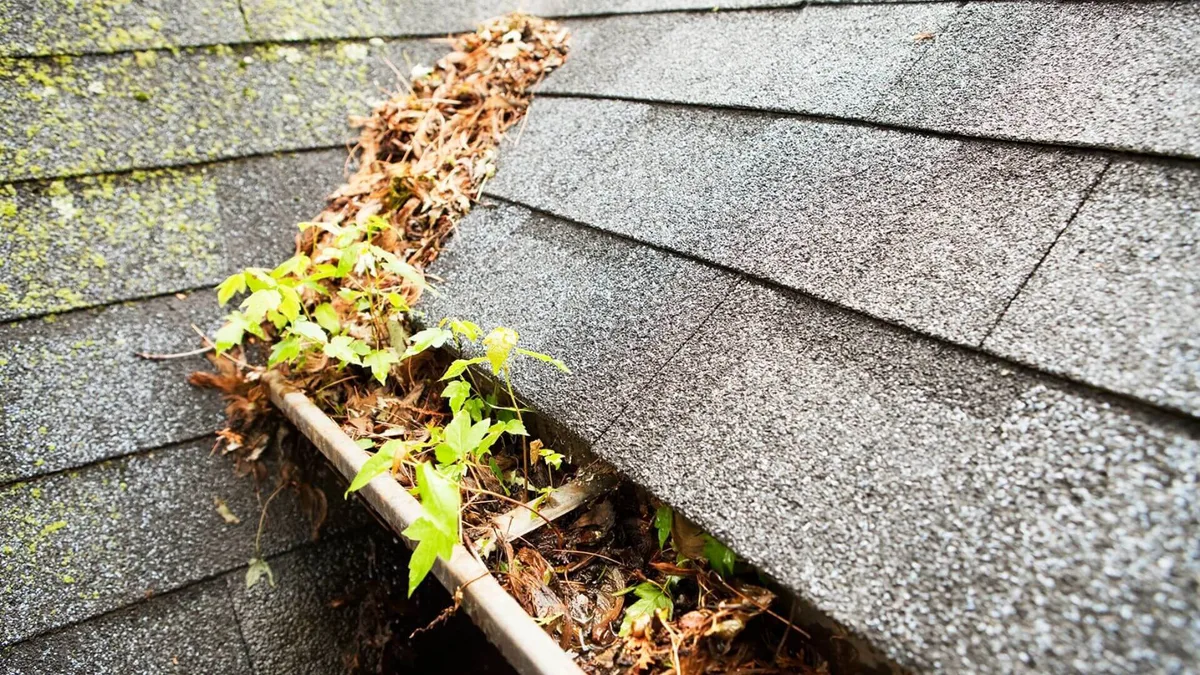
Image source: Web (Bing) / gutteringandroofing.com.au (Web image (fair-use with source credit))
The pathogen list is real. Legionella, Giardia, Cryptosporidium, and E. coli have all been documented in roof runoff. The [U.S.
Environmental Protection Agency](https://www.epa.gov) does not recommend untreated rainwater for drinking. The CDC takes the same position. Any potable use requires a serious treatment train: sediment filtration, carbon filtration, UV or chemical disinfection, and regular water testing.
A first-flush diverter, which routes the first 10 to 20 gallons of dirty runoff away from the tank, helps cut down the worst debris. But it's not a sterilizer. For non-potable use like irrigation or toilet flushing, the risk is lower but not zero.
Leafy greens can still pick up pathogens from contaminated soil, which is why many health agencies recommend an inline filter even for garden watering.
A similar principle applies to your lawn. The health of the soil and root system matters more than any single input. If you're trying to figure out what's damaging your grass, look beyond moisture levels before you invest in collection infrastructure.
Mosquitoes, Algae, and Sludge: The Maintenance Nobody Sells You
Every rainwater system collects more than water. It collects organic material, sediment, and airborne dust. When that mix sits in a warm tank, it becomes a miniature ecosystem.
Mosquitoes can breed in standing water in as little as seven to ten days. Algae starts to bloom when sunlight hits the tank interior.
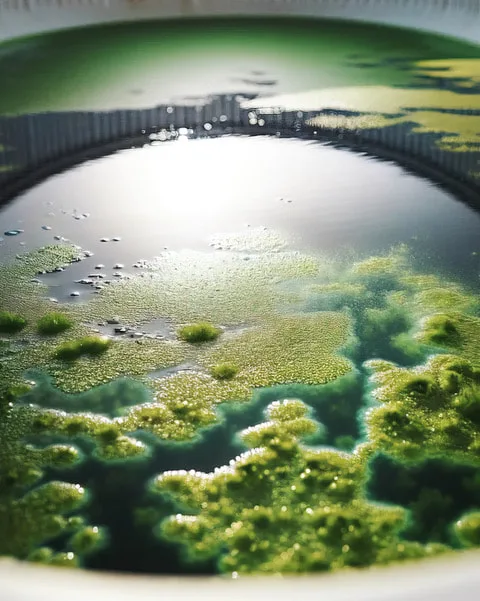
Image source: Bing (Web (fair-use with source credit))
The fix sounds simple: screen every inlet, seal every lid, and paint the tank dark so light can't penetrate. Aggregated maintenance guides also recommend cleaning gutters twice a year, inspecting the first-flush diverter monthly, and draining sludge from the tank bottom every six months. Miss that schedule and you're dealing with foul-smelling water, clogged pumps, and a mosquito nursery.
The real pain point is that this is forever. Unlike municipal water, which shows up treated and ready, stored rainwater degrades the moment it hits the tank. Biofilm coats the walls, sediment settles on the bottom, and pumps start pulling gritty water that shortens their life.
If you're not willing to commit to an ongoing maintenance routine, the system becomes a headache rather than a blessing.
Cold Climate Damage: Freezing Tanks and Broken Pipes
Rainwater systems and freezing temperatures are a bad combination. When water freezes, it expands roughly nine percent by volume. That's enough to crack a plastic tank, burst a copper pipe, or destroy a pump's internal seals.
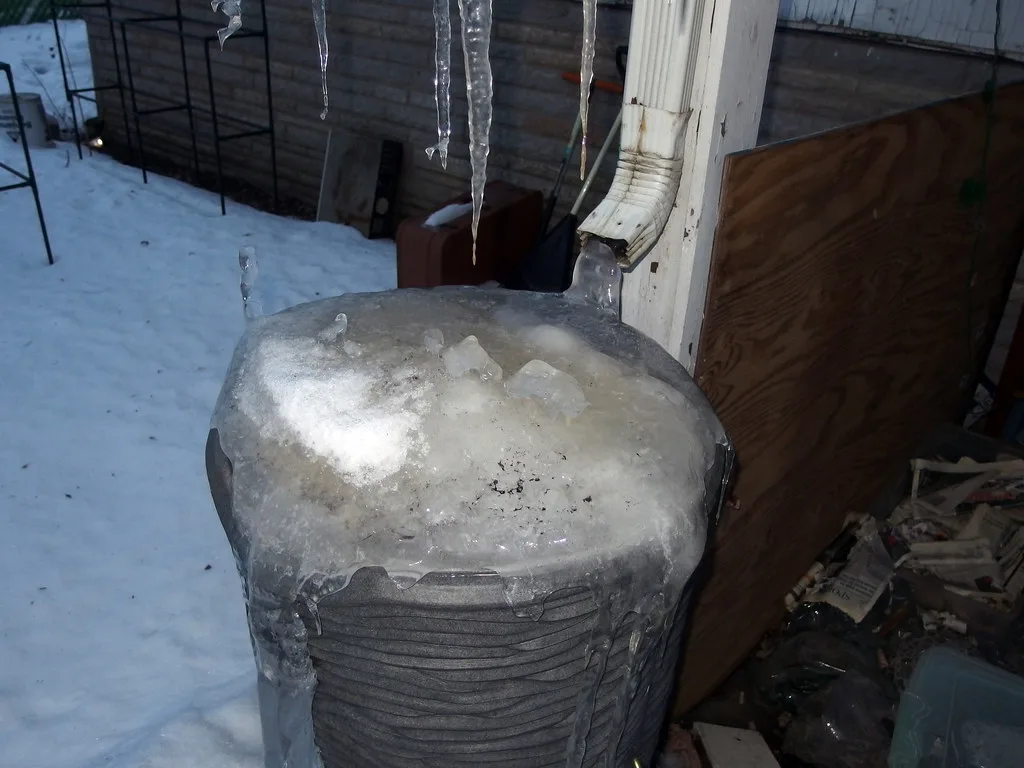
Image source: Bing (Web (fair-use with source credit))
Aboveground tanks in cold climates need full winterization. That means draining the tank, disconnecting the pump, blowing out the pipes, and storing any above-ground valves indoors. Some homeowners skip this step and pay for it in January when they find a cracked tank and a dead pump.
Underground cisterns fare better because the earth insulates them. But their above-ground components still need protection. Heat tape, insulated pump houses, and frost-proof spigots add more cost to an already expensive setup.
Space, Weight, and Aesthetics: Where Does That Tank Actually Go?
A 500-gallon rain barrel setup is charming. A 2,500-gallon cistern is a piece of infrastructure. These tanks are tall, round, and often ugly in a backyard landscape.
Weight matters more than most people think. Water weighs 8.34 pounds per gallon. A 2,000-gallon tank holds roughly 16,680 pounds of water.
Place that on an un-reinforced slab or near a foundation and you could be risking structural damage. Most manufacturers require a concrete or compacted gravel base rated for the fully loaded weight.
Space is the other constraint. A 2,500-gallon tank typically needs a footprint of about 12 feet by 6 feet. In a small urban yard, that might eliminate your entire side yard.
HOAs and neighbors can complicate things further, since many have rules about visible tanks.
The Legal Maze: Permits, Water Rights, and Cross-Connection Rules
Rainwater isn't free in every jurisdiction. In western states like Colorado and Utah, water rights laws historically restricted small-scale collection. Colorado only legalized it in 2016 with strict limits.
Some municipalities require permits for cisterns over a certain capacity.
The plumbing codes are where the real complexity hides. If you plan to pipe rainwater through the house for toilet flushing or laundry, most jurisdictions require cross-connection control. A backflow prevention assembly, often an RPZ valve, prevents stored rainwater from mixing with municipal water in a plumbing fixture.
Permits, professional installation, and inspection are usually mandatory.
Your region's building department is worth calling before you buy a single tank. The penalty for skipping permits doesn't just hurt your wallet. A faulty cross-connection can contaminate a neighborhood's water supply.
Is It Still Worth It? The Honest Counterbalance
After reading all of this, you might be wondering who rainwater harvesting is actually for. The honest answer is that it makes the most sense for a narrow but real set of situations.
You're a good candidate if you have a large roof, live in a high-rainfall area, and use water for irrigation or livestock. The economics click when you have high municipal water rates or no municipal service at all. If you're trying to be more self-sufficient or prepare for emergencies, a simple aboveground system still delivers value without needing to be perfect.
You're probably better off skipping it if your roof needs replacement soon, you live in a drought-prone region with long dry spells, or you're planning the system just to save $200 a year on water bills. The payback math doesn't work, and the maintenance will irritate you.
Smarter Alternatives to Rooftop Harvesting
If the maintenance list above feels overwhelming, you have options. Rooftop harvesting is one tool among many, and sometimes it's not the right one for your property.
Greywater recycling captures water from your washing machine, bathroom sinks, and showers. It reroutes that water to your landscape, keeping it out of the sewer entirely. Most simple greywater systems cost $1,000 to $3,000, which is significantly less than a full rainwater cistern installation.
Rain gardens and stormwater infiltration basins take a different approach. Instead of storing water, they let it soak into the ground where it falls. Native plants with deep roots handle the absorption, recharging groundwater and reducing flooding without any tanks or pumps.
If your main goal is simply having cheap water year-round, a well remains the most reliable option. Drilling costs $5,000 to $15,000, but the water supply is consistent and the maintenance is modest compared to a cistern.
A hybrid system also works for the right situation. Use rainwater for outdoor irrigation and keep municipal water for indoor use. That reduces the upfront cost, eliminates most contamination concerns, and still delivers meaningful savings.
How to Reduce (or Avoid) the Worst Disadvantages
Smart design solves most rainwater problems before they start. A first-flush diverter is the single most important component you can buy. It captures the first 10 to 20 gallons of roof runoff, which contains the bulk of the bird droppings, leaves, and sediment.
The water that fills your tank is already substantially cleaner.
Choose your roof material with care. Metal roofs and clay tile shed far fewer contaminants than asphalt shingles. If you're replacing a roof within the next few years, swapping to metal makes the entire system work better.
On the other hand, if your roof is old and failing, installing a cistern underneath it is a recipe for expensive rework.
Right-sizing is critical. Use a simple formula: your roof area in square feet times average annual rainfall times 0.62 gallons equals your yearly potential. Then divide by your dry season months to get the storage capacity you actually need.
If you treat your lawn as the primary target for collected rain, pay attention to what's happening below the surface first. A patchy yard full of yellowing sections is often suffering from something other than lack of water. If you're seeing the telltale signs of turf pests, you'll be better off fixing that issue before investing in irrigation infrastructure.
Understanding what those white, C-shaped pests look like and how they damage roots can change your whole irrigation strategy.
Keep a realistic maintenance calendar. Clean gutters twice a year, inspect the first-flush diverter monthly, and test water quality annually if you're using it for gardens. Manufacturer specifications for UV bulbs and filter replacements are not a suggestion, especially if you plan to use the water for anything beyond irrigation.
Final Decision Guide: Questions to Ask a Professional Before You Start
Before you commit to a tank and a digger, talk to someone who installs systems in your area. They know the local rainfall patterns, frost depth, and water rights restrictions. Ask these exact questions and don't let the answers slide:
- What permits are required for a tank of this size in my jurisdiction?
- How do I calculate the dry season buffer for my specific rainfall history?
- What roof and gutter modifications are needed before installation?
- What is the total annual maintenance cost, including replacement parts?
- Is my property a good candidate for cross-connection control if I want indoor use?
If the installer hesitates on any of these questions, that's a red flag. Professional systems are engineered to handle these issues, not discover them after installation. If your main goal is keeping a thin lawn alive during July, you might be better off investing in a sprinkler timer and a more drought-tolerant grass blend.
That kind of basic turf planning often solves more problems than a rain tank ever will.
Frequently Asked Questions
Is rainwater harvesting safe to drink after filtration?
Yes, but only with a complete treatment system. The standard chain is sediment filtration, carbon filtration, UV disinfection, and a chemical disinfection step. You also need regular water quality testing.
Without that full system, treated rainwater is not reliably safe for consumption.
Can one rain barrel make a real difference?
A single 55-gallon rain barrel covers about one or two sessions of garden watering. It will not significantly offset your municipal water bill. It can still earn its place by keeping stormwater runoff out of your local sewer system and giving you an easy supply for container plants.
Do rain barrels actually attract mosquitoes?
Yes, if they're open or poorly screened. Standing water reaches mosquito breeding conditions within a week. A tight-fitting lid, a quarter-inch mesh screen over the inlet, and regular inspection are the minimum defenses.
If you already have a mosquito problem, a sealed underground cistern is the better choice.
Is rainwater harvesting banned anywhere in the U.S.?
No state bans it outright today, but some places restrict it. Colorado legalized small-scale collection in 2016 with strict limits on tank size and roof area. Utah, Washington, and several other states have specific permitting or registration requirements.
Check with your local building department before buying equipment.
How long does a cistern last before it needs replacing?
A plastic cistern typically lasts 20 to 30 years with proper UV protection. Concrete tanks can last 50 years but require occasional cracking repairs. Fiberglass and steel tanks have variable lifespans depending on their protective lining.
The attached pump and filters need replacement far more often, roughly every 7 to 15 years.