Image source: Bing (Web (fair-use with source credit))
If you've ever rolled back a patch of dead sod and found pale, squirming larvae underneath, you've probably asked yourself: what do grubs look like, exactly, and how do I know what I'm dealing with? The answer matters more than most people realize. Correctly identifying the grubs in your lawn determines whether you treat, when you treat, and what product will actually work.
White grubs, the larval stage of scarab beetles, share a general look but differ in key details that separate one species from another. In our research across university extension resources, we've found that most homeowners miss these distinctions and either treat for the wrong pest or apply something at the wrong time. The treatment threshold for most turfgrass species is 5 to 10 grubs per square foot, so knowing what you're looking at before you act saves money, time, and unnecessary chemical use.
Quick Answer
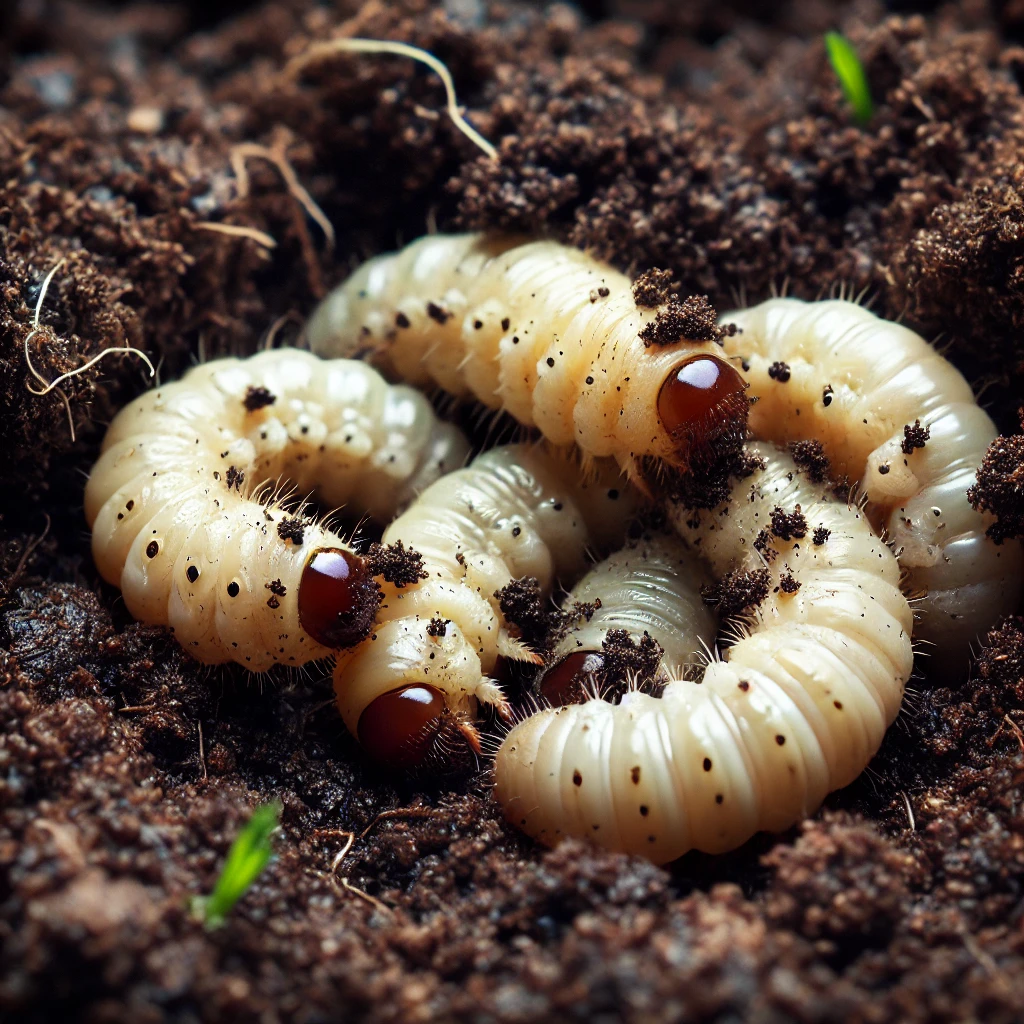
Grubs are C-shaped larvae with creamy white bodies, brown heads, and three pairs of legs near the head. Most lawn grubs range from ¼ inch to 1½ inches long depending on the species and age. Their bodies are slightly translucent, and you can often see dark gut contents through the skin near the rear end.
The key to telling species apart lies in the raster pattern, a cluster of tiny hairs on the underside near the tail.
Why Grub Identification Is Harder Than You Think
Here's the thing most articles skip. You rarely see grubs just sitting on the surface waiting to be identified. They live in the top 1 to 4 inches of soil, and by the time you notice lawn damage, they've been feeding for weeks.
That means your first look at one usually involves peeling back dead turf and scooping through root zones with a trowel.
Even then, several species can coexist in the same yard. A single square foot of lawn might contain Japanese beetle grubs alongside June bug grubs, and they look similar enough to confuse anyone without a hand lens. Size overlaps between species, and a young larva of one species can look nearly identical to a mature larva of another.
The other problem is timing. Grub appearance changes as larvae grow through their developmental stages, called instars. A freshly hatched grub in July looks different from the same individual in September.
If you're comparing what you found online to what's in your soil, you need to account for that growth.
What Grubs Actually Look Like: The Key Features
Let's break down what you're actually looking at when you hold a grub in your hand. Every scarab beetle larva shares a basic body plan, and once you know the landmarks, identification gets much easier.
Body shape and posture. Grubs curl into a C-shape when disturbed. This is the single most reliable first clue. If the larva is straight or only slightly curved, you might be looking at a wireworm or cutworm instead.
Color. The body is typically creamy white to grayish white. The head capsule is brown or tan, which stands out against the pale body. The rear end often appears darker because you're seeing digested plant material through the translucent skin.
Legs. Three pairs of legs sit close to the head. They're small but visible without magnification in most species. If you count more than three pairs, you're not looking at a scarab grub.
Size. This varies a lot. Japanese beetle grubs reach about 1 inch. European chafer grubs top out around ¾ inch.
June bug grubs can hit 1½ inches or more. Green June beetle grubs grow up to 2 inches, making them one of the largest species you'll encounter.
Skin texture. The body is smooth and slightly firm. It's not slimy like an earthworm, and it's not hard like a wireworm. When you pick one up, it should feel pliable but structured.
Here's a quick reference for the features that matter most:
| Feature | What to Look For | Why It Matters |
|---|---|---|
| Body shape | Tight C-shape | Confirms scarab beetle larva |
| Head color | Brown or tan capsule | Distinguishes from legless larvae |
| Leg count | Three pairs near head | Rules out caterpillars and worms |
| Body length | ¼ to 2 inches | Narrows down species |
| Rear end appearance | Darkened, slightly translucent | Normal, not a sign of disease |
How to Tell Grubs Apart From Other Lawn Pests
This is where most people go wrong. Several common lawn and garden pests get misidentified as grubs, and treating for the wrong organism wastes your time and money.
Sod webworms are moth larvae, not beetle larvae. They're caterpillars with six true legs plus additional prolegs along the body. They live above ground in silk tunnels at the thatch level, not in the soil.
If you're finding larvae on the surface or in the thatch layer, you're probably not dealing with grubs.
Cutworms are also caterpillars. They're thicker, more cylindrical, and they don't hold the tight C-shape that scarab grubs do. They tend to curl into a looser spiral when disturbed.
Wireworms are click beetle larvae. They're hard, smooth, and more cylindrical than grubs. Their body is orangish brown rather than creamy white, and they don't have the distinct head capsule that grubs show.
Millipedes have many legs, a rounded body, and they're often found in mulch beds rather than turf. They're easy to rule out once you count legs.
Earthworms are segmented and legless. No head capsule, no legs, no C-shape. If it looks like a classic garden earthworm, that's exactly what it is, and it's beneficial.
The simplest rule: if it's C-shaped, white or cream-colored, has a brown head, and three pairs of legs, you've got a scarab grub. Everything else needs a closer look.
The Most Common Grub Species and How to Identify Them
Not all grubs are the same, and the species in your lawn determines your treatment approach. Here are the ones you're most likely to encounter in North American lawns.
Japanese beetle grubs are probably the most widespread lawn grub in the eastern and midwestern United States. They reach about 1 inch in length and have a distinctive V-shaped raster pattern on the underside near the rear. Adults are metallic green and copper, and they lay eggs in mid to late June.
The grubs feed heavily from August through October.
European chafer grubs are common in the Northeast and parts of the Midwest. They're slightly smaller than Japanese beetle grubs, around ¾ inch, and their raster pattern forms more of a Y-shaped or open arrangement. They tend to damage lawns earlier in the season because adults lay eggs sooner, sometimes in early June.
June bug grubs, from the genus Phyllophaga, are among the largest lawn grubs. They can reach 1½ inches and have a two-row raster pattern with parallel lines of hairs. Their life cycle is longer, sometimes two to three years, which means you'll find multiple size classes in the same lawn at the same time.
Black turfgrass ataenius grubs are small, only about ½ inch, and they produce two generations per year. That means you can find damaging populations in both early summer and early fall. They're common on golf course fairways and home lawns in the northern United States.
Green June beetle grubs stand out because they're large, up to 2 inches, and they're more active on the surface than other species. You'll actually see them crawling across sidewalks and driveways in the evening. Unlike other grubs, they feed on decaying organic matter as well as roots, and they're more common in the Southeast.
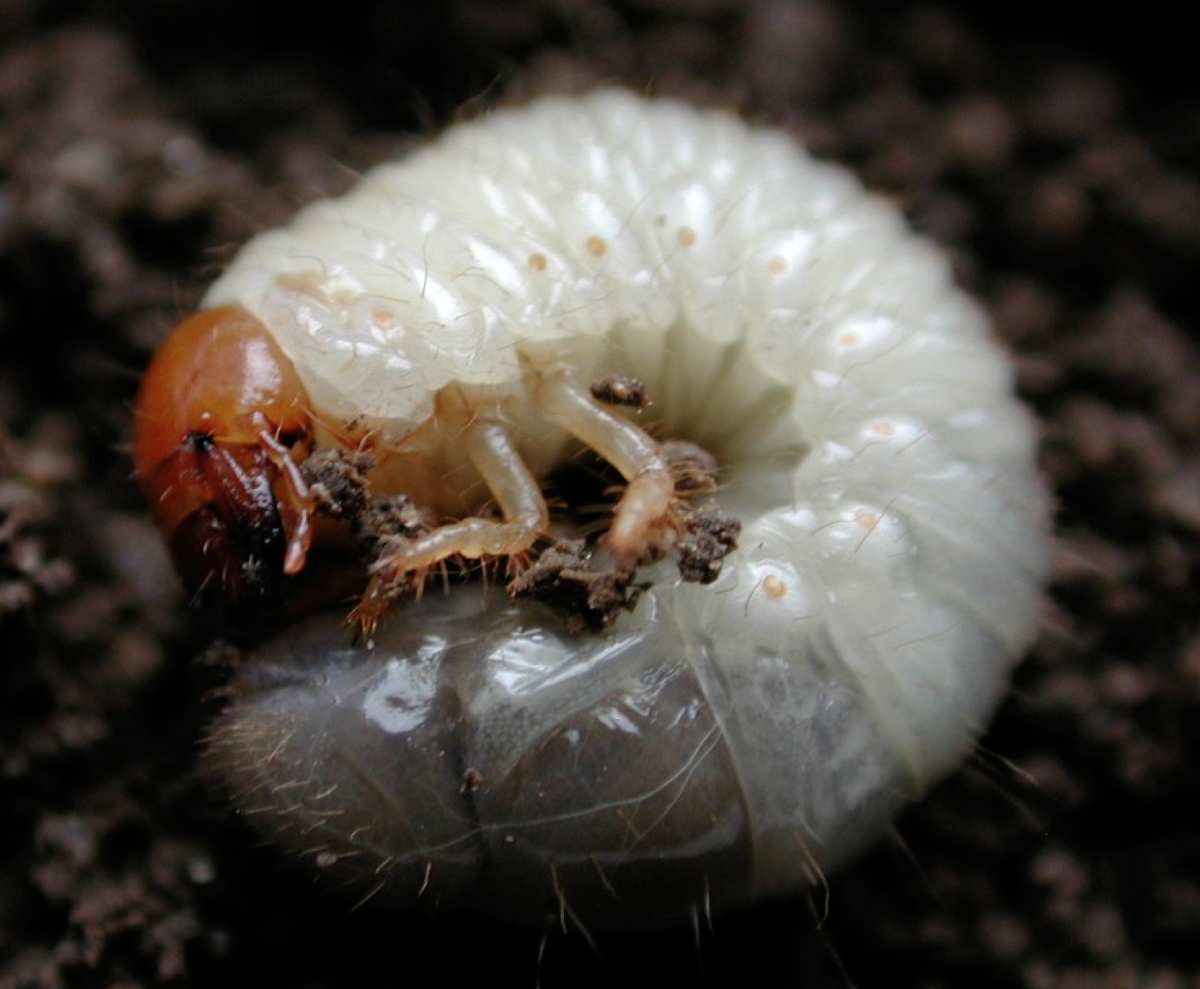
Image source: Bing (Web (fair-use with source credit))
The image above shows a Japanese beetle grub with the classic C-shape and brown head capsule. Notice how the body is plump and slightly translucent near the rear. This is what most people picture when they think of a lawn grub, but remember that other species can look very similar at a glance.
What the Raster Pattern Tells You (And Why It Matters)
If you want to identify grubs to the species level, the raster pattern is your best tool. This is the arrangement of tiny hairs, called setae, on the underside of the larva near the rear end. It's not visible to the naked eye in most cases.
You'll need at least a 10x hand lens to see it clearly.
The raster pattern is species-specific, which makes it the gold standard for grub identification. University extension offices and diagnostic labs use this feature routinely because body size and color alone aren't reliable enough.
Here's what to look for in the most common species:
| Species | Raster Pattern Shape | Key Detail |
|---|---|---|
| Japanese beetle | V-shaped or narrowly open | Two roughly parallel rows converging at the tip |
| European chafer | Y-shaped with open angle | Two rows that diverge more widely |
| June bug (Phyllophaga) | Two parallel rows | No convergence, rows run side by side |
| Black turfgrass ataenius | Random or scattered | No clear pattern, hairs distributed loosely |
| Green June beetle | Scattered with no defined pattern | Similar to ataenius but much larger specimen |
To examine the raster pattern, place the grub belly-up on a white surface. Use a hand lens or the macro mode on your phone camera. The hairs are small and light-colored, so good lighting makes a real difference.
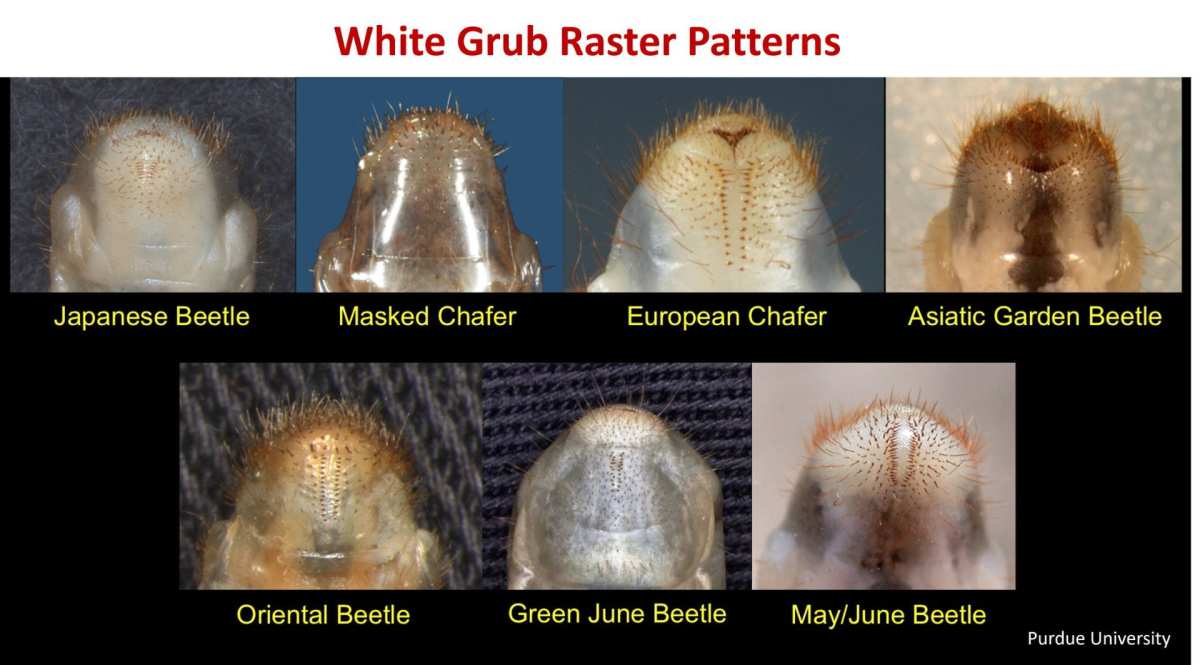
Image source: Bing (Web (fair-use with source credit))
This comparison image from Ohio State University's turfgrass program shows how the raster patterns differ between species. Once you've seen the side-by-side comparison, the differences become much easier to spot in the field.
If you can't get a clear view of the raster pattern, don't guess. Cut a small section of sod from a damaged area, bag it, and send it to your local cooperative extension office. Most will identify the species for free or a small fee, and you'll get a definitive answer before you spend money on treatment.
How Grub Appearance Changes as They Grow
A grub you find in July looks noticeably different from the same individual in September. Understanding these growth stages, called instars, prevents misidentification when size is the only reference you have.
First instar grubs are tiny, often less than ¼ inch long. They're translucent enough that you can almost see through them. At this stage they're feeding on fine root hairs and organic matter near the soil surface.
Most homeowners never notice them because the damage is minimal.
Second instar grubs reach about ½ inch. They're more opaque and the head capsule becomes easier to distinguish. Feeding damage starts to show on stressed turf, but it's still subtle enough to confuse with dry spots.
Third instar is where things get serious. Grubs reach their full species-specific length, and root feeding intensifies dramatically. This is the stage when brown patches appear and the sod starts to lift easily.
In most species, third instars dominate from late August through October before they burrow deeper to overwinter.
If you dig up a lawn and find grubs of multiple sizes in the same square foot, you're likely looking at either different species or a species with a multi-year life cycle like June bugs. That's useful information because treatment timing differs for each group.
Where to Look and When to Check
Grubs aren't evenly distributed across your lawn. They cluster in areas with the right soil conditions, and knowing where to dig saves you from sampling the wrong spots.
Hot spots for grub activity include slopes that get full sun, areas near outdoor lights (adult beetles are drawn to light and lay eggs nearby), and sections with a history of damage. Irrigated lawns tend to attract more egg-laying females because moist soil is better for egg survival.
Soil depth matters through the season. In late summer and early fall, most grubs are feeding in the top 2 to 3 inches of soil, right in the root zone. As soil temperatures drop below 50°F, they burrow deeper, sometimes 6 inches or more, to overwinter. If you're digging in late October and coming up empty, try going deeper.
The best time for inspection is August through early September for most of the eastern and midwestern United States. Grubs are large enough to find easily but haven't yet burrowed deep for winter. In southern states, the window may extend into October.
To sample properly, cut a 1-foot by 1-foot square of sod at the edge of a damaged area. Peel it back and examine the root zone. Replace the sod afterward and water it down.
It should re-root within a week or two.
Grub Damage vs. Other Lawn Problems: Telling the Difference
Brown patches in a lawn don't automatically mean grubs. Several common problems produce symptoms that look almost identical at first glance, and treating for grubs when the real culprit is something else just wastes money.
Grub damage has a telltale feature: the sod lifts like a loose carpet. That's because the roots have been chewed away and the turf no longer anchors to the soil. If you can grab a handful of grass and peel it straight back with minimal resistance, grubs are a strong possibility.
You might also notice increased bird activity, skunks, or raccoons tearing up the lawn at night. They're feeding on the grubs.
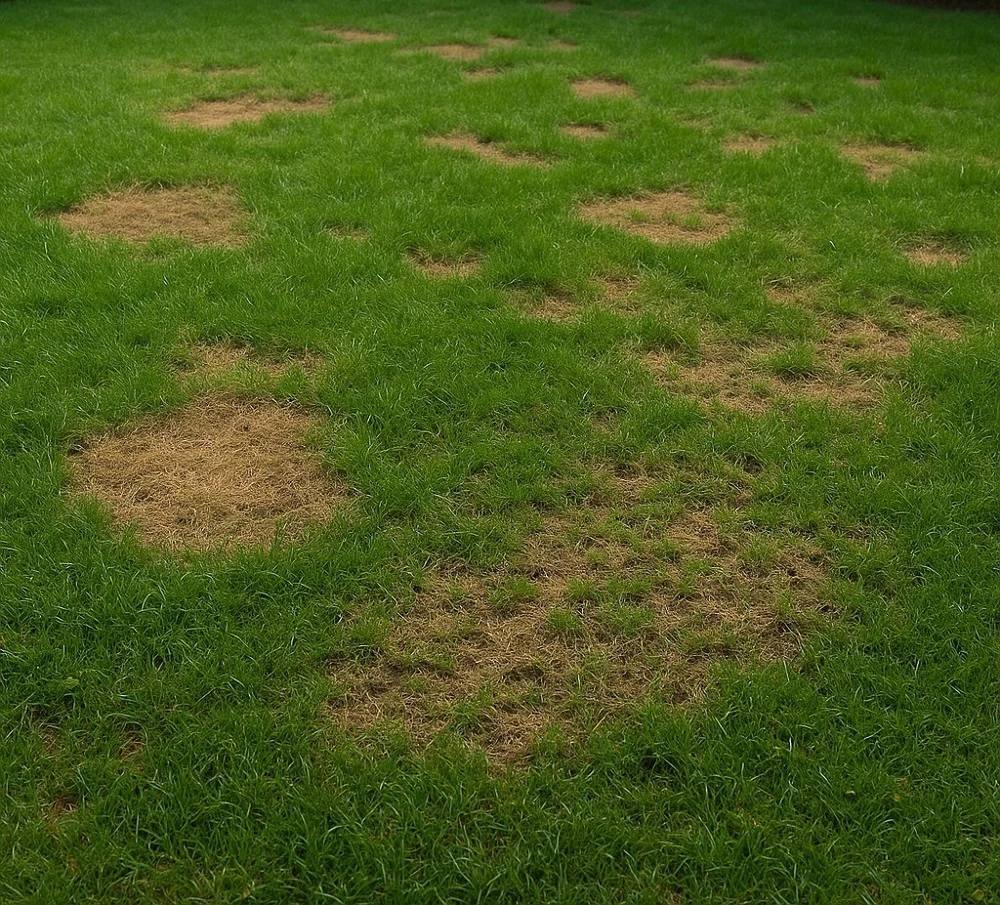
Image source: Bing (Web (fair-use with source credit))
Drought stress also produces brown patches, but the turf will be firm and rooted when you tug on it. Water a suspect area deeply and see if it greens up within a week. If it does, grubs weren't the issue.
Fungal diseases like brown patch or dollar spot create circular patterns with distinct margins and often show leaf lesions visible up close. Grub damage tends to be more irregular in shape and lacks the leaf spotting that fungi produce.
Dog urine damage creates a central dead spot surrounded by a ring of dark green grass. The concentrated nitrogen fertilizer effect produces a characteristic pattern you won't see with grubs.
Here's a quick diagnostic table to help you sort it out:
| Symptom | Grubs | Drought | Fungal Disease |
|---|---|---|---|
| Sod lifts easily | Yes | No | No |
| Responds to watering | No | Yes | No |
| Visible larvae in soil | Yes | No | No |
| Circular pattern | Irregular | Diffuse | Often circular |
| Leaf spotting present | No | No | Often yes |
When in doubt, dig. The presence of grubs in the root zone combined with root damage gives you a definitive answer.
When You've Found Grubs: What to Do Next
Finding grubs doesn't automatically mean you need to treat. The decision depends on how many you have, what species they are, and the overall health of your lawn.
Count what you found. The standard treatment threshold for most cool-season turfgrasses is 5 to 10 grubs per square foot. If you're finding fewer than that, your lawn can probably tolerate the population without lasting damage. Healthy, well-watered turf can support a low grub population and recover on its own.
Identify the species. This determines your treatment window. Japanese beetle and European chafer grubs are most vulnerable to chemical controls in late July and August when they're small first instars. Larger, later-stage grubs require different products and timing.
Consider biological controls. Beneficial nematodes, specifically Heterorhabditis bacteriophora, are effective against Japanese beetle grubs when applied correctly. They work best in moist soil with temperatures between 60°F and 85°F. Milky spore disease targets Japanese beetle grubs specifically but takes several years to build up in the soil and doesn't work well on other species.
Chemical options like chlorantraniloprid work best as preventative treatments applied before eggs hatch. Products containing imidacloprid or trichlorfon are curative and target grubs that are already feeding. Always follow state and local regulations, as some ingredients are restricted in certain municipalities.
Cultural practices matter too. Deep, infrequent watering encourages deeper root growth that helps turf recover from moderate grub feeding. Overseeding in early fall fills in thin areas before they become problems the following year.
Mistakes People Make When Identifying Grubs
Even experienced gardeners get tripped up on grub identification. These are the most common errors we've seen in extension office consultations and diagnostic lab reports.
Mistake one: treating based on damage alone. Brown patches can come from dozens of causes. Never apply a grub product without confirming larvae in the soil. The wrong application wastes money and can harm beneficial soil organisms.
Mistake two: ignoring species differences. Japanese beetle grubs and June bug grubs may look similar, but their life cycles differ by months. A treatment timed for one species may completely miss the other.
Mistake three: using the wrong magnification. Trying to identify a raster pattern with your naked eye or a weak magnifier leads to wrong answers. A quality 10x to 15x hand lens is the minimum tool for reliable identification.
Mistake four: treating at the wrong time. Preventative products applied in September are useless. Curative products applied in May miss the feeding window for most species. Timing depends on knowing your species first.
Mistake five: assuming all grubs are harmful. A low population of grubs in an otherwise healthy lawn provides food for birds and other wildlife and contributes to natural soil aeration. Zero tolerance isn't necessary or practical.
Quick Reference: Grub Identification Cheat Sheet
Here's a condensed field guide you can keep on your phone when you're out in the lawn.
Step one: Confirm it's a grub. C-shaped body, creamy white, brown head, three pairs of legs. If it doesn't match all four, stop and reassess.
Step two: Note the size. Measure or estimate against a ruler. Under ½ inch suggests black turfgrass ataenius or a young larva. Over 1 inch points toward June bug or green June beetle.
Step three: Check the raster pattern. Flip the grub belly-up and use a hand lens. V-shaped means Japanese beetle. Y-shaped with a wide angle means European chafer.
Parallel rows with no convergence means June bug.
Step four: Record the date and location. Species vary by region and season. A grub found in New England in August is far more likely to be a European chafer than a green June beetle.
Step five: Count per square foot. Below 5, monitor and wait. Above 10, plan treatment based on the species you identified.
Frequently Asked Questions
Are all white grubs bad for my lawn?
No. A small population is normal and even beneficial. Treatment becomes necessary only when counts exceed 5 to 10 grubs per square foot and visible damage appears.
Can I identify grubs without a hand lens?
You can confirm it's a scarab grub without magnification, but species-level identification requires seeing the raster pattern. A phone camera in macro mode sometimes works as a substitute.
What time of year are grubs easiest to find?
August through early September across most of the United States. They're large enough to spot and still feeding near the surface before winter burrowing begins.
Do grubs come back in the same spot every year?
Often yes. Areas with a history of damage tend to attract more adult beetles for egg-laying. Sunny, irrigated slopes near outdoor lights are repeat hotspots.
How do I tell grub damage from fungus?
Grub damage lifts away from the soil easily because roots are gone. Fungal damage stays anchored and often shows leaf spots or distinct circular patterns with visible mycelium in humid conditions.