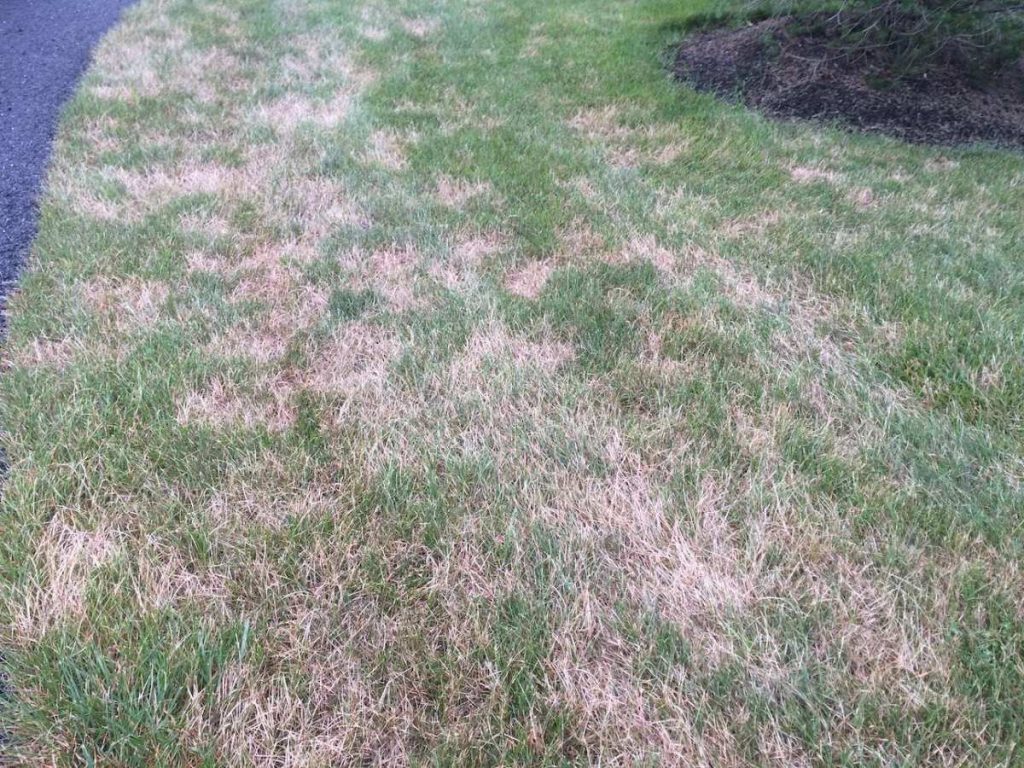
You've got brown patches in your lawn that don't make sense. You've been watering, maybe even fertilizing, but the dead spots keep spreading. Figuring out how to know if you have grubs in lawn situations like this comes down to a few specific checks you can do yourself, no guesswork required.
The tricky part is that grub damage looks almost identical to a handful of other common lawn problems, so most people either panic and treat for something they don't have, or they miss the signs entirely until the damage is severe.
White grubs are the larval stage of several beetle species, including the Japanese beetle, European chafer, and May beetle. They feed on grass roots just below the surface, and by the time you see brown patches above ground, they've already been at work for weeks. The good news is that a simple physical test, cutting back a section of turf and counting what's underneath, gives you a definitive answer in about five minutes.
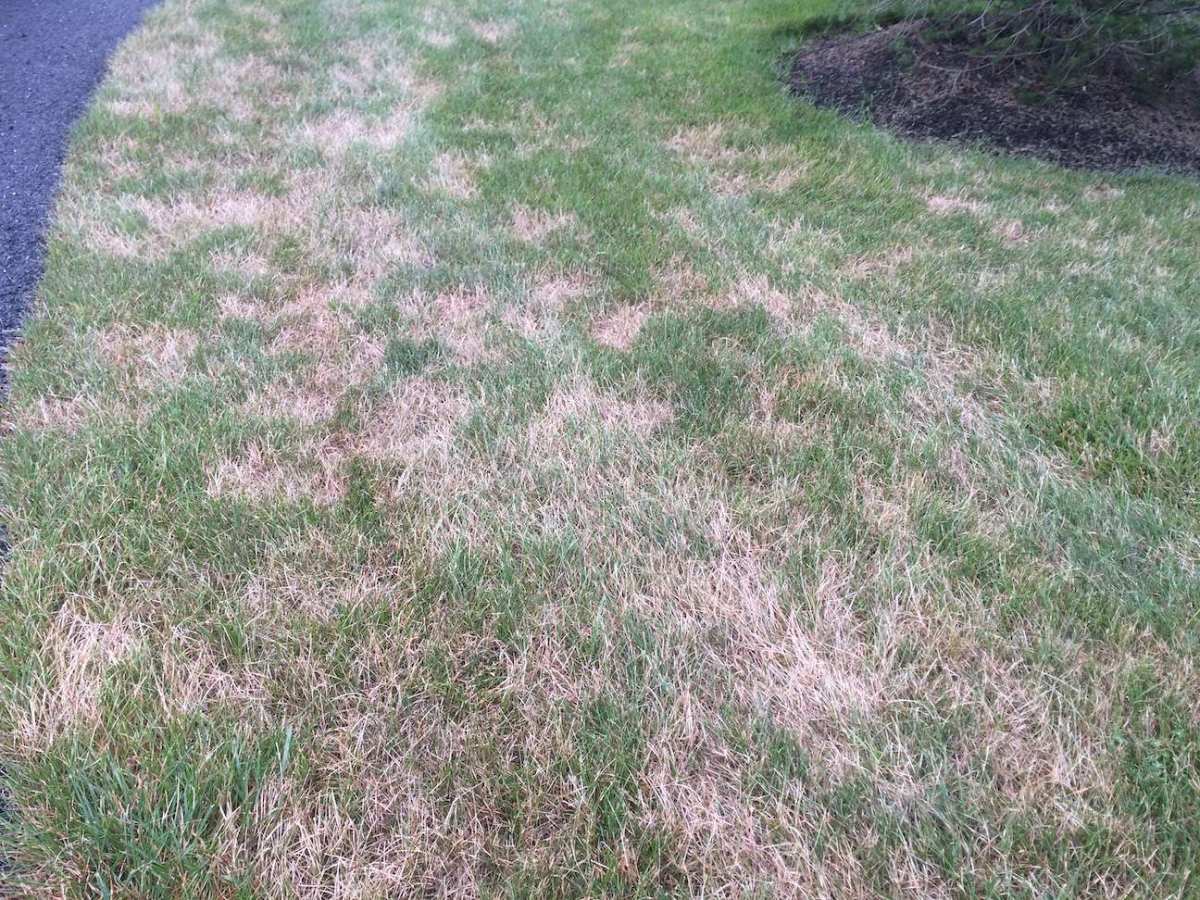
Image source: Bing (Web (fair-use with source credit))
Quick Answer
Check for grubs by cutting a one-foot square of sod in a damaged area and peeling it back. Count the grubs you find in the top two to three inches of soil. If you find more than five to ten grubs per square foot in cool-season grass, you've got a problem that needs treatment.
You can also do a quick tug test. If the grass lifts up easily like loose carpet, the roots have likely been eaten. Confirm your findings in at least three spots across the damaged area before deciding on treatment.
What Grub Damage Actually Looks Like (And What Gets Mistaken for It)
Grub damage doesn't show up the way most people expect. You won't see chewed leaves or holes in the blades. The destruction happens underground, where grubs feed on grass roots, and the visible symptoms appear weeks after the feeding starts.
The most common sign is irregular brown patches that start small and expand over late summer and early fall. These patches often feel spongy or bouncy underfoot because the root system has been severed and the turf is barely anchored. If you grab a handful of grass in a damaged area and it lifts away from the soil with almost no resistance, that's a strong indicator of grub activity.
Another telltale clue is increased animal activity. Raccoons, skunks, and birds will tear up sections of lawn overnight to feed on grubs. If you're finding peeled-back sod or small cone-shaped holes in the morning, something is digging for a food source below the surface.
That food source is almost always grubs.
Here's where it gets complicated. Drought stress, fungal disease, chinch bug damage, and even dog urine spots can produce nearly identical brown patches. The difference is in the details.
Drought-affected grass typically shows a uniform color change across a large area and responds within days of watering. Grub-damaged turf stays brown no matter how much you water because the roots are gone. Fungal diseases often produce distinct patterns like rings or lesions on individual blades, which grub damage does not.
The key distinction is this: if the grass pulls up easily and you can roll it back like a carpet, you're dealing with a root problem. If the grass stays firmly rooted but looks dead or discolored, the issue is more likely above-ground.
The Quick Test: How to Confirm You Have Grubs Right Now
Before you dig up your lawn, start with the simplest diagnostic check available. The tug test takes ten seconds and requires zero tools.
Grab a handful of grass at the edge of a brown patch and pull upward with moderate pressure. Healthy grass resists. Grass with a compromised root system lifts away from the soil cleanly, almost like peeling back a rug.
If the turf comes up easily and you can see the soil underneath with very few roots holding on, grubs are the likely culprit.
This test works because grubs sever the root system from the crown of the plant. Without roots anchoring it, the sod has nothing holding it to the ground. It's the single fastest way to distinguish grub damage from drought, disease, or nutrient deficiency.
The tug test isn't foolproof on its own. Severely drought-stressed turf can also pull up more easily than healthy grass, especially in sandy soil. That's why you always follow up with a physical count.
But if the tug test is positive across multiple spots in your lawn, you've got strong reason to investigate further.
One more quick indicator to watch for. If you notice birds, especially starlings or grackles, repeatedly pecking at a specific area of your lawn, they're often feeding on insects below the surface. Combined with loose turf and brown patches, that's three independent signals pointing toward grubs.
Step-by-Step: How to Check Your Lawn for Grubs
Once the tug test suggests a problem, it's time to confirm with a physical inspection. You don't need special equipment. A flat shovel, a knife, or even a sturdy trowel will do the job.
The Tug Test
Start at the boundary between healthy green grass and the damaged area. This transition zone is where grubs are most active because they feed outward from a central point. Grab a fistful of grass and pull.
If it lifts cleanly, mark that spot and move to the next one. Test at least three to four locations across the damaged area. If multiple spots show loose turf, proceed to a dig.
The Square-Foot Dig
This is the gold standard for grub detection. Use a flat spade to cut a square roughly one foot by one foot, going about three inches deep. Peel the section back like opening a trapdoor.
What you're looking for is in the soil and thatch layer directly beneath the turf.
Flip the sod over and examine the root zone. White grubs are C-shaped, cream-colored or grayish-white, with a distinct brown or tan head capsule and three pairs of legs just behind the head. They range from about a quarter inch to over an inch long depending on the species and how mature they are.
Count every grub you find in that square foot. Then press the sod back into place and water it. It will re-root within a week or two if the surrounding turf is healthy.
Repeat this process in at least three spots across the damaged area. Grubs aren't evenly distributed, so a single dig might miss them entirely. Multiple samples give you an accurate picture of the infestation level.
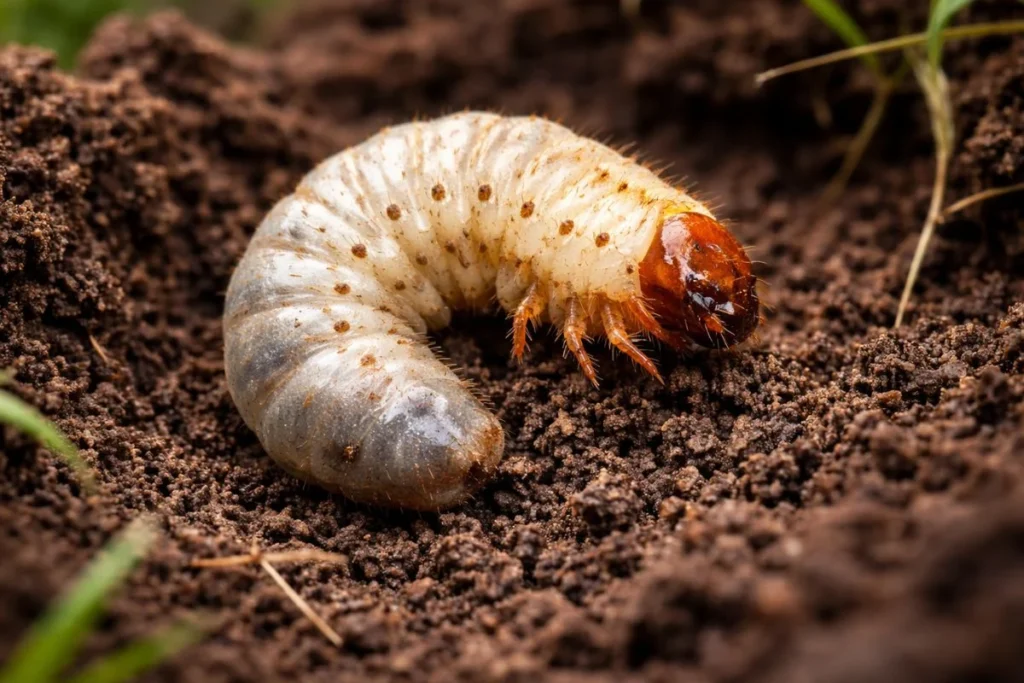
Image source: Bing (Web (fair-use with source credit))
The Soap Flush Method
If you want to confirm grub presence without digging, the soap flush is a reliable alternative. Mix one to two ounces of liquid dish soap into a gallon of water. Pour the solution evenly over one square foot of turf in a damaged area.
Wait five to ten minutes.
The soap irritates the grubs and drives them to the surface. You'll see them wriggling up through the thatch and soil. This method works best when the soil is moist and temperatures are above 60°F.
It's less effective in dry, compacted soil where the solution can't penetrate.
The soap flush is particularly useful for identifying species. Japanese beetle grubs have a distinctive V-shaped raster pattern, a specific arrangement of hairs on the underside of the abdomen near the tip. European chafer grubs have a Y-shaped pattern.
If you have a hand lens or magnifying glass, you can confirm the species, which matters for choosing the right treatment timing.
How Many Grubs Is Too Many? Understanding Treatment Thresholds
Finding a few grubs doesn't automatically mean you need to treat. Lawns can tolerate a low level of grub feeding without visible damage, especially if the grass is otherwise healthy and well-maintained.
The generally accepted treatment threshold for cool-season grasses like Kentucky bluegrass, fescue, and perennial ryegrass is five to ten grubs per square foot. Below that number, the grass can typically outgrow the root damage with proper watering and fertilization. Warm-season grasses like Bermuda and Zoysia have a lower threshold, around three to five grubs per square foot, because their root systems are less tolerant of disruption.
High-value turf, such as a showcase front lawn or a golf green, might warrant treatment at even lower counts. The threshold is partly aesthetic. If you're not willing to tolerate any visible damage, you'll treat at lower numbers.
Here's a practical breakdown of what your grub count means:
| Grubs per Square Foot | Cool-Season Grass | Warm-Season Grass | Recommended Action |
|---|---|---|---|
| 0–4 | Tolerable | Monitor closely | No treatment needed |
| 5–9 | Threshold range | Treat | Consider curative treatment |
| 10+ | Active damage likely | Significant damage | Treat immediately |
If your counts are right at the threshold, consider the overall health of your lawn. A thick, well-watered lawn with deep roots can handle more grub pressure than a thin, stressed one. Also factor in animal activity.
Even a moderate grub population can attract raccoons and skunks that cause more destruction than the grubs themselves.
One important note. Grub counts are highest in late summer and early fall when the larvae are mature and feeding aggressively. If you test in spring, you may find fewer grubs because some have already pupated and emerged as adult beetles.
Fall testing gives you the most accurate picture of the population.
Grub Damage vs. Everything Else: Ruling Out Lookalikes
This is where most people go wrong. They see brown patches, assume grubs, and spend money on insecticide for a problem that has nothing to do with insects. Before you treat, rule out these common lookalikes.
Drought Stress
Drought-affected grass turns a uniform straw-brown across large areas, not irregular patches. The individual blades may curl or fold. The critical difference is that drought-stressed grass stays firmly rooted.
It won't pull up like carpet. Water deeply and wait five to seven days. If the grass greens up, you had a watering problem, not a grub problem.
Fungal Disease
Brown patch, dollar spot, and other fungal diseases produce distinct visual clues. Look for lesions on individual grass blades, circular patterns, or a "smoke ring" of darker grass at the edge of a patch. Fungal damage often appears during periods of high humidity and moderate temperatures, while grub damage peaks in late summer heat.
The tug test is your best differentiator. Fungal disease doesn't sever roots, so the turf stays anchored.
Chinch Bugs and Sod Webworms
Chinch bugs are tiny insects that suck sap from grass blades, causing irregular yellow-to-brown patches that appear in hot, dry areas, often near sidewalks or driveways. Unlike grubs, chinch bugs feed above ground. You can detect them by pushing a coffee can with both ends cut out into the turf, filling it with water, and watching for bugs that float to the surface within ten minutes.
Sod webworms are caterpillars that chew grass blades at the base, causing closely cropped brown patches. You might see small holes in the thatch or silken tunnels near the soil surface. The damage is superficial compared to grub feeding, and the turf remains firmly rooted.
Dog Urine and Fertilizer Burn
Dog urine creates small, circular dead spots with a dark green ring around the outer edge. The concentrated nitrogen burns the center while fertilizing the perimeter. These spots are typically three to ten inches in diameter and scattered randomly, not clustered in expanding patches.
Fertilizer burn from uneven spreading produces streaks or irregular patterns that correspond to the application path. The grass may look scorched or have a bleached appearance. Neither condition affects the root system, so the tug test will be negative.
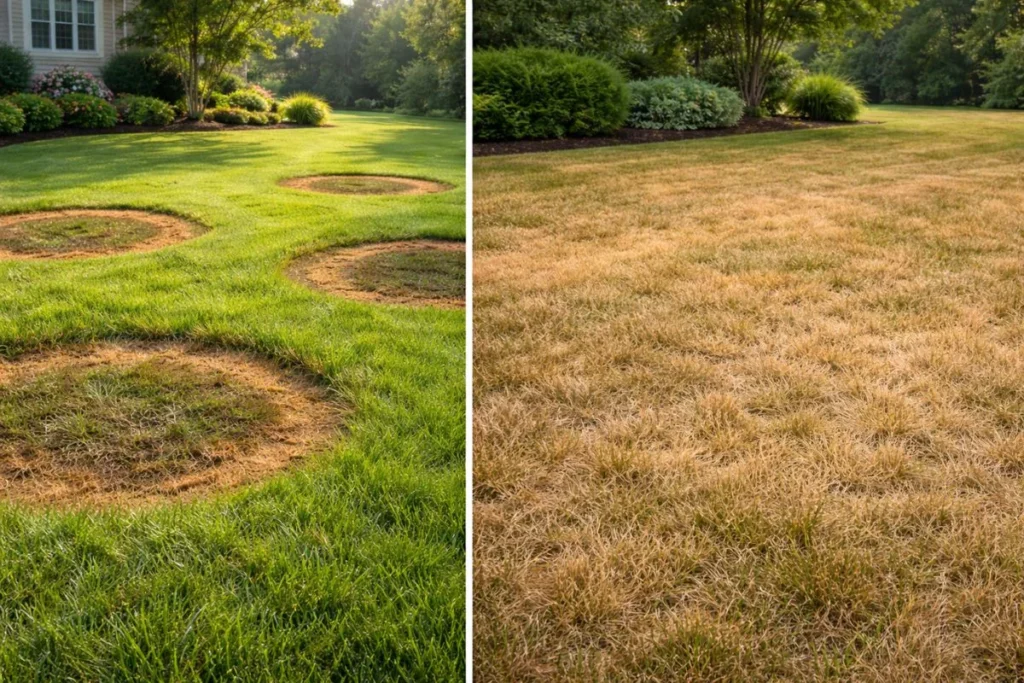
Image source: Bing (Web (fair-use with source credit))
The bottom line is this. If the grass pulls up easily, think grubs. If it stays rooted, look elsewhere.
That single distinction will save you from misdiagnosing the problem and applying the wrong solution.
What Species Do You Have? Why It Matters for Treatment
Not all grubs are the same, and the species in your lawn determines when and how you should treat. The most common culprits, Japanese beetle, European chafer, and May beetle, all follow slightly different life cycles and respond to different control methods at different times.
Identifying the species comes down to the raster pattern, the arrangement of hairs on the underside of the grub's abdomen near the tip. Under a magnifying glass, Japanese beetle grubs show a V-shaped pattern. European chafer grubs display a Y-shaped pattern with two distinct rows that converge.
May beetle grubs have a less organized pattern without a clear geometric shape.
Here's why this matters. Japanese beetles are the primary target of milky spore disease, a biological control that's been used since the 1940s. Milky spore won't touch European chafer or May beetle grubs.
If you misidentify the species and apply milky spore to a chafer problem, you've spent money on a treatment that does nothing.
Timing also shifts by species. Japanese beetle adults typically fly and lay eggs from late June through early July in most regions. European chafers emerge earlier, often in June.
May beetles are active from late May into June. Knowing which one you're dealing with helps you set the calendar for both preventive and curative treatments.
When to Treat: Timing Based on Grub Life Cycle
Treatment timing is everything. Apply too early and the product breaks down before grubs are active. Apply too late and you're dealing with large, mature larvae that are much harder to kill.
The grub life cycle follows a predictable annual pattern. Adult beetles emerge in early to midsummer, mate, and lay eggs in the soil. Those eggs hatch within two weeks, and the tiny larvae begin feeding on grass roots almost immediately.
This is the most vulnerable stage, and it's when curative treatments work best.
For preventive control, you want to target the period just before eggs hatch. That means applying preventive products, those containing imidacloprid or chlorantraniliprole, from late May through mid-July depending on your region. The product creates a treated zone in the soil that kills newly hatched grubs as they begin feeding.
For curative control, you're targeting grubs that are already present and feeding. Products with trichlorfon or carbaryl are applied in late July through September when grubs are small and actively feeding near the surface. Once fall temperatures drop and grubs burrow deeper into the soil, curative options become much less effective.
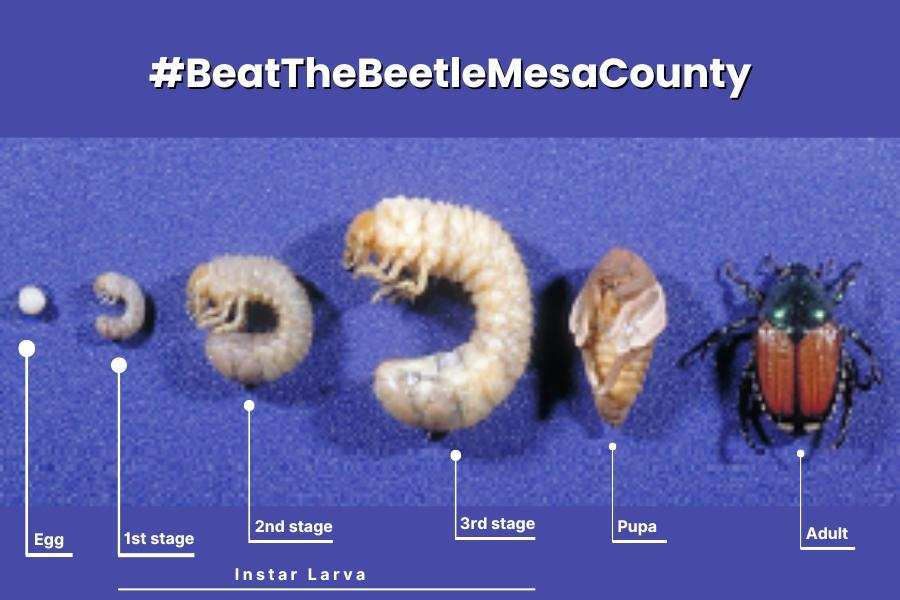
Image source: Bing (Web (fair-use with source credit))
Spring treatments are generally not recommended for grub control. By the time soil warms up in spring, grubs have already done their damage and are preparing to pupate. You'd be targeting grubs that are about to leave the larval stage anyway.
Focus your efforts on the summer feeding window for the best results.
Curative vs. Preventive: Choosing the Right Approach
If you've confirmed an active infestation with counts above the treatment threshold, you need curative action. If you're planning ahead to prevent future problems, preventive treatment is the way to go. The two approaches use different products, different timing, and different logic.
Curative products work fast. They're designed to kill grubs that are already present in the soil, typically within one to three days of application. The tradeoff is a short application window.
You need to apply during peak feeding activity in late summer, and the product breaks down quickly in the soil, so it won't prevent reinfestation next year.
Preventive products are applied earlier in the season and remain active in the soil for several months. They create a residual barrier that kills grubs as they hatch and begin feeding. The advantage is longer protection and a wider application window.
The disadvantage is that you're treating before you know whether grubs will actually be a problem.
A practical rule of thumb: if your lawn has had grub damage in the past two years, preventive treatment is a reasonable bet. Beetle females often return to the same areas to lay eggs, so previous infestation is a decent predictor of future problems. If this is your first time dealing with unexplained brown patches, confirm the diagnosis first, then use a curative product if counts warrant it.
Beneficial nematodes, specifically Heterorhabditis bacteriophora, offer a biological curative option. These microscopic roundworms enter grubs and release bacteria that kill them within 24 to 48 hours. They require soil temperatures above 60°F and moist conditions to work, making late August through September the ideal application window.
They're safe for humans, pets, and beneficial insects.
Common Mistakes People Make When Dealing with Grubs
The most frequent mistake is treating for grubs without confirming they're there. Brown patches have many causes, and insecticide won't fix drought stress, fungal disease, or compacted soil. Always do a physical count before spending money on any product.
Another common error is treating at the wrong time. Spring applications for grub control are largely wasted because mature grubs are about to pupate and stop feeding. If you missed the summer window, your best option is often to wait and treat the following June rather than applying a product that won't reach grubs buried deep in cold soil.
Over-treating is also a real problem. Finding one or two grubs in a square foot doesn't justify a lawn-wide application. Healthy turf can handle light grub feeding.
Reserve treatment for areas that exceed the threshold, and spot-treating damaged zones is often sufficient.
People also underestimate the role of lawn health in grub tolerance. A well-fertilized, properly watered lawn with deep roots can tolerate twice the grub count of a stressed lawn. Sometimes the best grub control is simply better overall lawn care, deeper watering less frequently, adequate nitrogen, and core aeration to improve root depth.
Finally, don't ignore the animal damage factor. If raccoons are tearing up your lawn nightly, even a moderate grub population becomes urgent. The secondary destruction from foraging animals can exceed the damage the grubs themselves cause.
In these cases, treating the grub population solves two problems at once.
When to Call in a Professional
Most grub situations are manageable with DIY methods. There are cases where calling a lawn care professional makes sense.
If your grub counts exceed 20 per square foot across a large area, you're dealing with a severe infestation that may require commercial-grade products or application equipment you don't have access to. Professionals also have access to restricted-use products that aren't available to homeowners.
If you've applied a product correctly and still see worsening damage three weeks later, something else might be going on. A professional can diagnose whether you're dealing with a resistant grub species, a secondary pathogen like a root rot fungus, or an entirely different pest altogether.
If you cannot identify the grub species and want to use a biological control like milky spore that targets only Japanese beetles, a professional can confirm the species under magnification and save you from applying the wrong treatment.
Consider professional help if your lawn is high value to you and you cannot afford to lose large sections of turf. The cost of a professional assessment and targeted treatment is often less than a full lawn renovation.
Frequently Asked Questions
Can I have grubs even if my lawn looks healthy?
Yes. Light infestations with fewer than five grubs per square foot often produce no visible symptoms. The grass outgrows the minor root damage, especially if the lawn is well watered and fertilized.
Problems become visible only when the population exceeds what the grass can tolerate.
When is the best time to check for grubs?
Late August through October is ideal. Grubs are actively feeding near the surface and are large enough to spot easily. Spring counts can be misleading because many grubs have already pupated and left the larval stage.
If you're actively seeing animal digging, check immediately regardless of season.
Do grub treatments kill earthworms and beneficial insects?
Most chemical insecticides, particularly broad-spectrum products with carbaryl, do not discriminate between pests and beneficial organisms. Beneficial nematodes and milky spore are species-specific alternatives that target grubs without harming earthworms, lady beetles, or other helpful soil life.
Can I prevent grubs from coming back next year?
Preventive products applied in May through June can stop newly hatched grubs from surviving. Milky spore, once established over two to three years, provides long-term suppression of Japanese beetle grubs specifically. Good cultural practices, proper watering, mowing height, and fall aeration, also improve your lawn's resilience to any pest pressure.
How long does it take for grub damage to repair itself?
If the infestation is stopped early, damaged but not dead turf can recover within four to six weeks with adequate watering and a light nitrogen application. Severely damaged areas where the root system is completely destroyed will need reseeding or sodding in early fall or the following spring.