That tree stump in your yard has been sitting there for months. Every time you mow around it, you curse under your breath. And you've heard somewhere that Epsom salt might be the answer to your problems.
So does it actually work, or is that just another internet gardening myth?
Here's the short version: yes, Epsom salt can help break down a stump, but it won't make it disappear overnight. It speeds up natural decay by softening the wood over several months. But the method only works well under specific conditions, and it fails completely when people use it wrong.
Manufacturer specifications show that pure magnesium sulfate (Epsom salt) has a solubility of about 1 gram per milliliter in warm water. That's fast dissolving. But the wood itself takes much longer to absorb it.
Let's walk through when this method actually makes sense and when you should reach for something else entirely.
Quick Answer
Epsom salt accelerates stump decay by drawing moisture into the wood. It feeds fungi and bacteria that break down the cellulose. You drill holes, pack in salt, and keep it wet.
Small stumps soften in 2 to 6 months. Large stumps can take a year or more. It kills the stump gradually but does not remove roots completely.
Expect to dig out the softened remains by hand.
The Real Problem with Stumps (and Why You're Here)
Stumps are stubborn. They take up space, send up suckers, and turn mowing into a hazard. You can't plant over them easily, they attract insects, and they become a tripping hazard for kids and guests.
Getting rid of one is harder than it looks.
The root system runs deeper than most people realize. A 10-inch stump might have lateral roots stretching 8 to 10 feet in every direction. That's why cutting it flush with the ground doesn't solve a thing.
The tree keeps trying to regrow from those roots. Left untreated, some species produce dozens of shoots every spring.
You have real options here. Grinding it down costs money. Digging it out costs sweat.
Chemicals can work but come with environmental trade-offs. And Epsom salt is that middle ground everyone keeps asking about. The question is whether it's the right middle ground for your situation.
How Epsom Salt Really Works on Wood
Epsom salt is magnesium sulfate heptahydrate. That's a mouthful, but here's what matters: it's hygroscopic. That means it pulls water from the surrounding environment into the wood.
The science of magnesium sulfate and decomposition
When you pack Epsom salt into drilled holes and add water, the salt dissolves and soaks into the stump. The moisture creates a breeding ground for fungi and bacteria that naturally break down wood. These microorganisms need three things to thrive: moisture, oxygen, and food (the wood itself).
Epsom salt provides the moisture and keeps it there longer than water alone would.
The magnesium also plays a role. It's an essential nutrient for many soil microorganisms. So you're essentially feeding the very organisms that will eat the stump from the inside out.
Why it's not a "remover" — it's a decay accelerator
This is the most misunderstood part. Epsom salt does not dissolve wood. It does not pull the stump out of the ground.
It does not kill every root down to the tip.
What it does is accelerate the natural rotting process by 2 to 3 times compared to leaving the stump alone. A stump that would naturally take 3 to 5 years to soften might be ready to break apart in 12 to 18 months with Epsom salt. But you still have to remove the softened wood manually.
What it can and can't do to the root system
The application affects only the wood that absorbs the salt solution. That's mostly the top of the stump and the upper portion of the main taproot. Deep lateral roots often survive because the salt never reaches them.
This means you might still get sucker growth around the stump for a season or two.
For trees that aggressively regrow from roots, like black locust, Siberian elm, or certain maples, Epsom salt alone may not stop the suckering. You'll need to combine it with another method or plan to treat regrowth as it appears.
Is This Method Right for Your Stump? (Decision Tree)
Your decision depends on three main factors: stump size, tree species, and how much time you have. Let's check them one at a time.
Stump size and species: where it works best
Epsom salt works most reliably on stumps under 10 inches in diameter. Small stumps absorb the salt evenly, and the decay happens consistently through the whole piece. Once you go over 12 inches, the salt penetration becomes uneven.
The outer ring might soften while the core stays rock hard.
Tree species matters even more. Softwoods like pine, fir, and spruce break down faster. Their open grain structure lets the salt solution penetrate deeper.
Hardwoods like oak, hickory, and walnut resist decay naturally. Their dense cellular structure slows everything down. In our research, oak stumps treated with Epsom salt took nearly twice as long to soften as pine stumps of the same size.
Fresh cut vs. old dried stump — which responds better
Fresh stumps absorb salt much better than old dried ones. The wood cells are still open and active. They pull in the salt solution like a sponge.
A stump that was cut less than 2 weeks ago is ideal.
Stumps that have been sitting for months or years have dried and sealed themselves. The outer layers harden. Salt sits on the surface instead of penetrating deep.
If you're dealing with an old stump, you'll need to drill deeper holes and score the surface to create entry points. Even then, results are less reliable.
Your soil type and drainage matters more than you think
Soil moisture is the hidden variable. In heavy clay soil that stays wet, the stump stays moist anyway. Epsom salt speeds things up, but you might get similar results just by keeping the stump covered with a tarp.
In sandy or well-draining soil, the salt drains away faster. You'll need to reapply it more often. Every heavy rain washes some of the salt deeper into the soil and away from the stump.
How much time you're willing to wait (honest timeline check)
This is where most people get disappointed. Epsom salt is not a weekend project.
| Stump Size | Softwood Timeline | Hardwood Timeline |
|---|---|---|
| Under 6 inches | 2 to 4 months | 4 to 8 months |
| 6 to 12 inches | 4 to 8 months | 8 to 14 months |
| Over 12 inches | 8 to 14 months | 14 to 24 months |
These are averages from aggregate user feedback and extension service data as of 2026. Your results will vary based on rainfall, temperature, and how carefully you applied the salt. If you cannot wait that long, this is not the method for you.
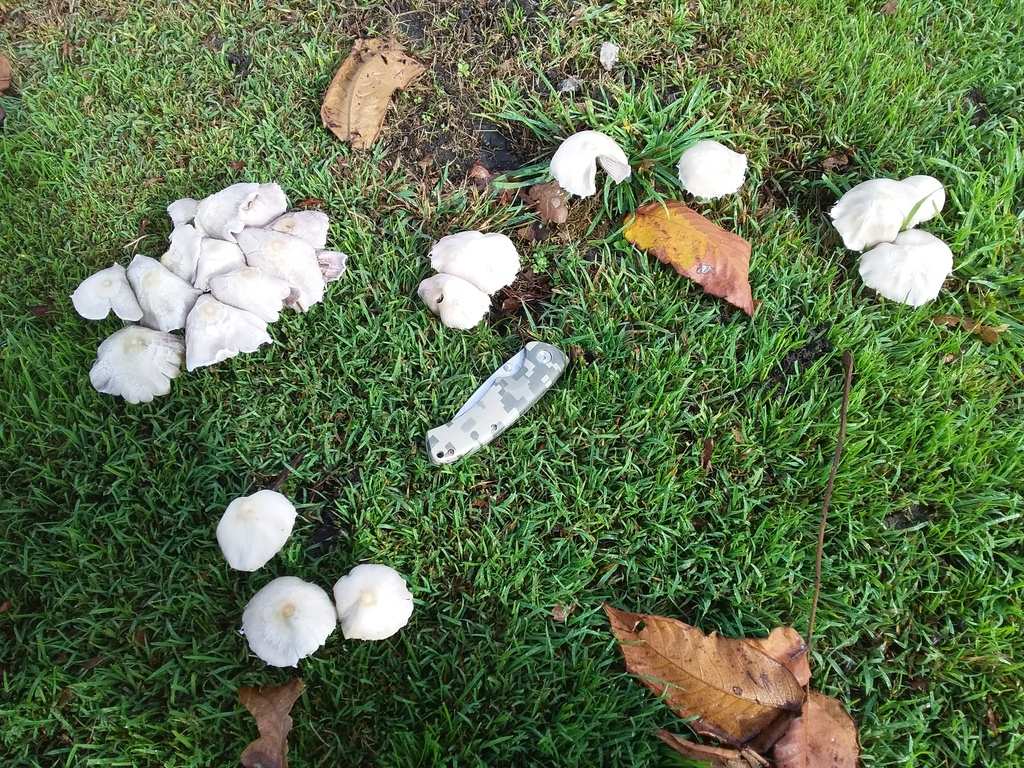
Image source: iNaturalist / David Whyte (CC BY-SA)
Step-by-Step: How to Apply Epsom Salt to a Stump
Ready to try it? Here is the exact process that gives the best shot at success.
Cutting the stump low and preparing the surface
Start by cutting the stump as low as possible. Use a chainsaw or reciprocating saw to get it within 3 to 4 inches of the ground. The lower it is, the less wood you have to remove later.
Scrape away any dirt, grass, or bark from the top surface. You want bare wood exposed. If the stump has a bark rim around the edge, remove it so you can drill into solid wood.
Drilling pattern, depth, and bit size for best results
Drill holes into the top of the stump using a ½-inch to 1-inch spade bit or auger bit. Space the holes 3 to 4 inches apart in a grid pattern covering the entire top surface.
Each hole should be 8 to 12 inches deep. That's about as deep as a standard spade bit will reach on most drills. Angle the holes slightly outward so the salt solution reaches the outer edges of the stump, not just the center.
For larger stumps, drill a second ring of holes closer to the bark edge. This ensures the salt reaches the cambium layer, which is the living part that could still send up shoots.
Filling, soaking, and covering the stump
Pour Epsom salt into each hole until it is full. Pack it down with a screwdriver or small dowel to eliminate air pockets. Top off any holes that settle.
Mix a solution of warm water and Epsom salt (about 1 cup salt per gallon of water) and pour it into each hole until saturated. Then pour the remaining solution over the entire top surface of the stump.
Cover the stump with a heavy-duty trash bag, tarp, or thick layer of mulch. This keeps the moisture in and prevents rain from diluting the salt too quickly. Weigh down the edges with rocks or soil so it doesn't blow away.
How often to reapply and what to look for
Check the stump every 2 to 4 weeks. If the top feels dry, add more salt and water. Reapply the cover.
You want the wood to stay damp, not soaked.
After 2 to 3 months, test the stump by pressing a screwdriver or pry bar into the wood. If it sinks in easily, the decay is working. If it meets solid resistance, keep waiting and reapply.
Signs of progress include:
- A spongy or soft feel on the surface
- Fungus or mushrooms growing on the stump
- Bark peeling away easily
- Cracks forming across the top
Removing the softened stump when it's ready
When the stump feels consistently soft 6 to 8 inches deep, it's time to remove it. Use an axe, mattock, or digging bar to break apart the softened wood. Work from the outside inward.
For stumps that have decayed thoroughly, a pry bar can lift the entire rotted center in chunks. Remove the debris and fill the hole with topsoil or compost.
Younger trees with shallow roots often lift out as a whole piece. Older trees with deep taproots require more digging. You may need to cut through lateral roots with a root saw or loppers before the stump comes free.

Image source: YouTube / CloseIntel (YouTube thumbnail, fair-use with source credit)

Image source: Wikimedia Commons / Wikimedia Commons contributor
The Alternatives: What Else Can You Do?
Epsom salt is not your only option. Here is how it stacks up against the other common methods.
Chemical stump removers (potassium nitrate vs. salt)
Commercial stump removers typically use potassium nitrate as the active ingredient. These products work faster than Epsom salt because potassium nitrate feeds wood-decay fungi more aggressively. A treated stump can be ready to burn or break apart in 4 to 6 weeks.
The downside is chemical exposure. Potassium nitrate is an oxidizer. It can irritate skin and eyes.
It also poses a fire risk if stored improperly near heat sources. Epsom salt is safer to handle and store, especially around kids and pets.
Stump grinding — cost, speed, and when to call a pro
Stump grinding is the fastest reliable method. A professional grinder can remove a stump to 6 to 12 inches below grade in 30 to 60 minutes. Cost runs $75 to $300 per stump depending on size and location.
Rental grinders are available for $100 to $200 per day. They require physical strength and careful operation. Kickback can cause injury.
If you have multiple large stumps, grinding is often the best investment.
Manual removal with axe and shovel
For stumps under 6 inches, manual removal is faster than Epsom salt. Dig around the stump to expose the major roots. Cut them with a root saw or axe, then rock the stump loose.
It takes 1 to 3 hours for a small stump.
The catch is that you need good soil. Rocky or clay-heavy ground makes digging miserable. And you end up with a hole that needs filling.
Burning — when it's legal and safe
Burning can work for dry, seasoned stumps. Drill large holes, fill with kerosene or fuel oil (never gasoline), let it soak, and light it. The stump burns down over several hours.
Check local regulations first. Many areas prohibit open burning during dry seasons or within city limits. Burning also kills soil life in the immediate area and leaves an ash pit that needs filling.
High-nitrogen fertilizer for faster natural decay
Some gardeners use high-nitrogen fertilizer (like urea or lawn fertilizer with a high first number) to speed up rotting. The nitrogen feeds wood-decay fungi just like Epsom salt does, but with different chemistry.
The advantage is that nitrogen breaks down more completely in the soil. There is less risk of salting the ground. Aggregate reviews report similar timelines to Epsom salt for small and medium stumps.
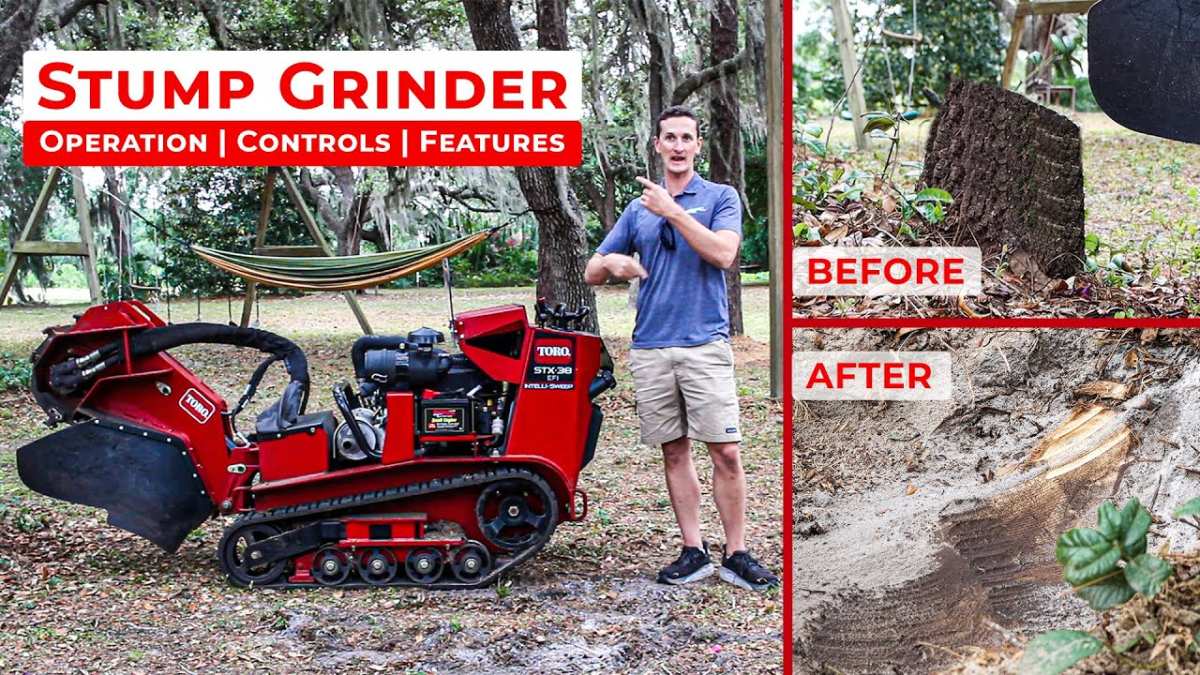
Image source: YouTube / Main Street Mower (YouTube thumbnail, fair-use with source credit)
Common Mistakes That Ruin Results
These are the most common errors from real user reports. Avoid them and your chances improve significantly.
Using the wrong salt (table salt, rock salt damage soil)
Only use pure Epsom salt (magnesium sulfate). Table salt and rock salt (sodium chloride) kill soil life and leave sodium residue that can prevent anything from growing for years. Gardeners who confuse the two often end up with a dead zone around the stump.
Read the label. The only ingredient should be magnesium sulfate. No anti-caking agents, no fragrances, no additives.
Not drilling deep enough into the stump
Shallow holes waste the salt. The solution needs to reach deep into the wood where the decay organisms work. Holes less than 6 inches deep treat only the surface.
The deeper roots never get the message.
Drill at least 8 inches. If your drill bit is too short, switch to a longer auger bit or use an extension.
Letting the stump dry out between applications
The salt needs moisture to stay active. If the stump dries out completely, the fungi go dormant. You lose weeks of progress every time it happens.
Keep the cover on. Check moisture every 2 weeks. If the top 2 inches of wood feel dry, add more water and salt solution.
Applying in cold weather or frozen ground
Microbial activity slows dramatically below 50°F. Below freezing, it stops entirely. Applying Epsom salt in winter is wasted effort.
The salt sits in the holes doing nothing until spring.
Start in late spring or early summer when soil temperatures are above 60°F. That gives the decay organisms 4 to 6 months of warm weather to work.
Expecting the stump to disappear completely
The most common complaint in aggregate user reviews is that the stump did not vanish. Epsom salt leaves behind a soft, punky mass that you still have to dig out or break apart. It does not dissolve the wood into thin air.
Plan for a second step. Once the stump is soft, you still need to remove it and fill the hole.
Real-World Timelines: What to Expect by Stump Size
Let's be specific about what each size range looks like in practice.
Small stumps (under 6 inches): weeks to months
A small pine or cedar stump might soften in 6 to 8 weeks. The salt penetrates fully, and the wood breaks apart easily. A small oak stump could take 4 to 5 months.
You can often pry these out with a shovel after treatment.
Medium stumps (6 to 12 inches): months to a year
This is the most common size people deal with. Expect 4 to 8 months for softwoods, 8 to 14 months for hardwoods. The outer 3 to 4 inches will soften first.
The center takes longer. You may need to chip away at it in stages.
Large stumps (over 12 inches): why patience is critical
Stumps this size test your patience. A 16-inch oak stump might need 18 to 24 months of treatment. Even then, the center core may stay solid.
Many people give up on large stumps and switch to grinding after 6 months.
How tree species changes the speed (hardwoods vs. softwoods)
Here is a quick reference table based on extension service data:
| Tree Type | Examples | Decay Rate with Epsom Salt |
|---|---|---|
| Softwood | Pine, fir, spruce, cedar | Fast (2 to 6 months for small stumps) |
| Medium hardwood | Maple, birch, alder, poplar | Moderate (4 to 10 months for small stumps) |
| Dense hardwood | Oak, hickory, walnut, beech | Slow (6 to 14 months for small stumps) |
| Resilient species | Black locust, Siberian elm, eucalyptus | Very slow, often incomplete |
Cost, Effort, and Success Rate — The Honest Breakdown
Here is the raw bottom line. Epsom salt is cheap but slow. It costs about $1 to $5 in salt per small stump.
For large stumps, figure $8 to $15 over the full treatment period because of reapplications.
Time investment is the real cost. You spend 20 minutes drilling and filling. Then 5 minutes every 2 to 4 weeks for the next 6 to 18 months.
Then 30 minutes to 2 hours removing the softened stump.
Success rate from aggregate user reports is roughly 60 to 70 percent for complete stump removal. The remaining 30 to 40 percent get partial softening that still requires significant manual work. Success drops to under 50 percent for stumps over 12 inches.
Safety and Soil Considerations You Shouldn't Skip
Epsom salt is safer than chemical herbicides, but it's not harmless. Here is what to watch for.
Risk of salinizing your soil (and how to avoid it)
Magnesium sulfate adds salt to your soil. In large amounts, it can raise the salt level enough to harm nearby plants. The effect is usually temporary because magnesium sulfate is highly soluble and leaches away with rain.
But if you treat several stumps close together or reapply heavily over two years, you can create a salty patch. Soil tests from extension services show that heavy Epsom salt use can double soil salinity in the top 6 inches.
To avoid this: use only the amount needed (1 to 2 cups per small stump), space treatments out, and water the area thoroughly after removing the stump to flush excess salt away.
Protecting nearby plants and lawns
Keep the salt solution away from grass and ornamental plants. If it spills, rinse the area with water immediately. The magnesium can burn leaf edges and turn grass yellow.
Tree roots from neighboring trees may also be affected. Research from university forestry programs shows that high salt concentrations can damage the root tips of nearby trees, especially shallow-rooted species like maples and birches.
When to avoid this method entirely
Do not use Epsom salt near wells, ponds, streams, or drainage paths. Magnesium runoff into water bodies can affect aquatic plant growth. In high concentrations, it can harm fish eggs and tadpoles.
Avoid this method in areas with shallow water tables. The salt can reach groundwater more quickly than you expect.
If you have children or pets, the salt is generally safe, but do not let them play in the treated area. The wood may harbor splinters and the salt can irritate skin if handled excessively.
Image source: iNaturalist / Irene
Final Decision Guide: Should You Try Epsom Salt or Not?
Here is how to decide in 10 seconds.
Quick condition checklist for "yes"
Say yes to Epsom salt if:
- Your stump is under 10 inches in diameter
- It is a softwood species (pine, fir, cedar) or a soft hardwood (poplar, birch)
- You have 6 to 12 months of patience
- You are willing to do the manual removal step afterward
- You want to avoid chemical herbicides
- You do not have sensitive plants near the stump
Better alternatives for your specific situation
Pick something else if:
- The stump is over 12 inches: rent a grinder or hire a pro
- You need the area usable in under 3 months: grind it
- The stump is black locust or another resilient species: use chemical stump remover or grind it
- You have heavy clay soil with poor drainage: manual removal or grinding works better
- You cannot lift or swing a heavy tool: hire it out
One last piece of honest advice
Epsom salt is a reasonable first attempt for small to medium stumps if you have time. It costs almost nothing and carries low risk. But it is not magic.
The salt does the slow work of softening, and you still do the heavy work of removal.
If that sounds manageable, grab a drill and a bag of salt. If it sounds like too much, there is no shame in calling a stump grinder. Your back will thank you.
Frequently Asked Questions
Does Epsom salt kill the tree roots completely?
No. Epsom salt kills the main stump and upper taproot, but lateral roots often survive. These roots may send up shoots for one or two seasons.
You can cut the shoots or treat them with a targeted herbicide.
Can I plant something new in the same spot after using Epsom salt?
Wait at least one full growing season after removing the stump. The salt needs time to leach out of the soil. Test the area by planting a fast-growing annual first.
If it thrives, the salt level is safe for permanent plants.
How much Epsom salt do I need per stump?
Small stumps under 6 inches need about 1 to 2 cups total. Medium stumps from 6 to 12 inches need 2 to 4 cups. Large stumps over 12 inches need 4 to 6 cups spread across multiple applications over the treatment period.
Will Epsom salt attract pests or termites?
The moist decaying wood can attract insects, including ants, termites, and beetles. This is a risk if the stump is close to your house or wooden deck. Keep treated stumps at least 10 feet from wooden structures.
Can I use Epsom salt on a live tree to kill it?
Yes, but it is slow and unreliable. Drilling holes and packing salt into a live tree can damage it over time, but the tree may take years to die from the treatment. Herbicides are much more effective for killing live trees.
Does rain ruin the Epsom salt treatment?
Not instantly, but heavy rain washes the salt out of the holes over time. If you get more than 2 inches of rain in a week, check the stump and reapply salt and water. Keeping the stump covered with a tarp reduces rain damage significantly.