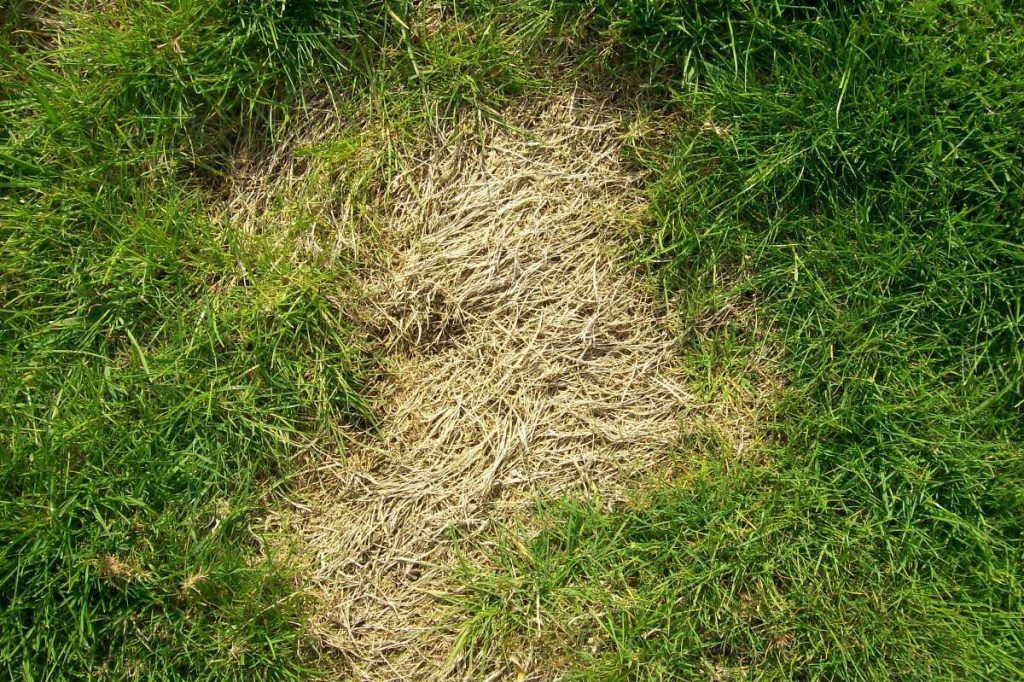
Are grub worms bad for your garden? The honest answer is: it depends on how many you have, what species they are, and what you're growing. A few grubs in healthy, well-watered soil are completely normal and even beneficial.
But when populations spike, those same larvae can chew through grass roots and leave you with dead, peeling patches of turf overnight.
The trick is knowing when grubs cross the line from harmless soil dwellers to genuine pests. Most extension services use a threshold of about 5 to 10 Japanese beetle grubs per square foot in a well-maintained lawn before treatment makes sense. Below that number, your turf can usually outgrow the damage.
Let's walk through how to figure out which side of that line you're on.

Image source: Wikimedia Commons / Сарапулов (CC BY)
Quick Answer
Grub worms are not automatically bad for your garden. A small number of grubs is normal and indicates healthy soil biology. Problems start when populations exceed roughly 5 to 10 grubs per square foot.
At that density, root feeding causes visible turf damage. The species matters too. Japanese beetle grubs are the most destructive common species.
Proper identification and counting should always come before any treatment.
What Grub Worms Actually Are (And Why It Matters)
"Grub worm" is a catch-all term for the larval stage of scarab beetles. The most common culprits in North American lawns and gardens are Japanese beetle grubs (Popillia japonica), June bug grubs (Phyllophaga species), and European chafer grubs (Rhizotrogus majalis). All of them share the same basic body plan: a cream or white C-shaped body, a distinct brown head capsule, and three pairs of legs near the front.
These larvae live in the top few inches of soil and feed on organic matter, including plant roots. That root-feeding behavior is what gets them labeled as pests. But here's the thing most articles skip: a low-level grub population is part of a functioning soil food web.
They break down organic material, their tunneling creates minor aeration channels, and they serve as a food source for birds, ground beetles, and other beneficial predators.
The lifecycle matters for timing any intervention. Japanese beetles follow a one-year cycle. Adults lay eggs in mid to late summer, those eggs hatch into small larvae that feed on roots through fall, then burrow deep to overwinter.
They return to the root zone the following spring before pupating and emerging as adults in early summer. June bugs take longer, with a two to three year lifecycle, which means larvae of different sizes can coexist in the same patch of soil.
How to Tell If You Have a Grub Problem
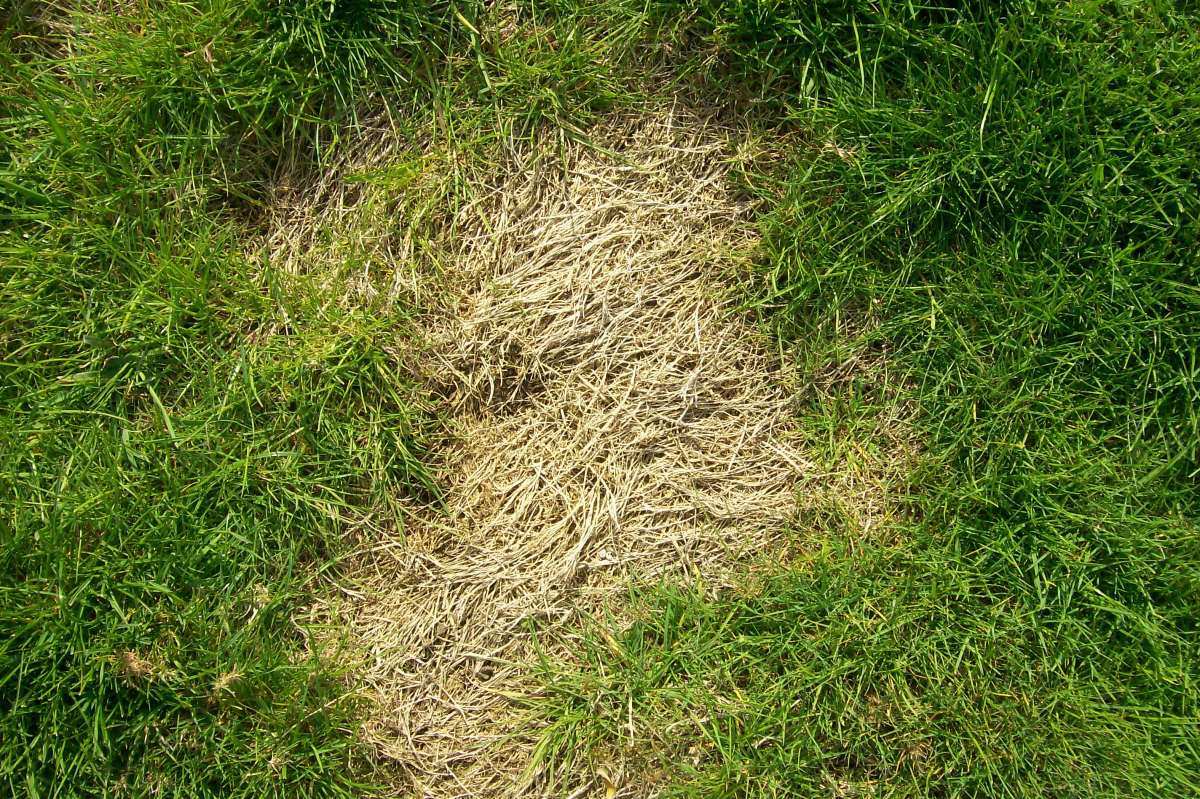
Grub damage has a signature look, but it's easy to mistake for other issues. The classic symptom is irregular brown patches of turf that feel spongy underfoot. Unlike drought stress, which tends to show up in the hottest, driest areas first, grub damage can appear anywhere the larvae are feeding.
The real tell is that the dead turf peels back easily from the soil surface because the roots have been severed.
But brown patches alone don't confirm grubs. You might be dealing with fungal disease, compacted soil, dog urine damage, or chinch bugs. The only way to know for sure is to dig.
Cut a one-square-foot section of turf at the edge of a damaged area, about two inches deep, and peel it back. Count the grubs you find in the soil and root zone. Then replace the sod and water it down so it can re-establish.
Secondary signs can point you in the problem's direction before you start digging. Skunks and raccoons tearing up your lawn at night are often after grubs, not your turf. Increased bird activity on your lawn, especially starlings or grackles probing the soil, can also signal a grub population worth investigating.
The Damage Threshold: When Grubs Go From Normal to Nasty
Not every grub you find means you need to take action. The concept of a damage threshold is central to integrated pest management, and it's the piece most homeowners skip. For Japanese beetle grubs in a well-watered cool-season lawn, the general threshold sits around 5 to 10 grubs per square foot.
European chafers can cause damage at slightly lower counts because they tend to feed more aggressively in spring.
Your specific threshold shifts based on conditions. Sandy soils drain fast and hold less moisture, so turf is less able to recover from root damage. In sandy conditions, even 3 to 5 grubs per square foot can cause visible problems.
Drought-stressed lawns, newly sodded turf, and shallow-rooted grass species all lower the threshold too. A deep-rooted, well-irrigated tall fescue lawn can tolerate a higher grub count than a thin Kentucky bluegrass lawn during a dry August.
Here's a practical breakdown:
| Condition | Grub Count Per Sq Ft | Action Needed |
|---|---|---|
| Healthy, well-watered lawn | Under 5 | Monitor only |
| Healthy, well-watered lawn | 5 to 10 | Watch closely, consider treatment if damage appears |
| Healthy, well-watered lawn | Over 10 | Treatment recommended |
| Sandy soil or drought stress | Under 5 | Monitor closely |
| Sandy soil or drought stress | 5 to 10 | Treatment likely warranted |
| New sod or shallow-rooted grass | Over 5 | Treatment recommended |
The key takeaway: don't treat based on a neighbor's panic or a product label's suggestion. Treat based on what you actually find in your own soil.
Grub Species Breakdown: Not All of Them Are Pests
Identifying which grub species you're dealing with changes everything about how you respond. Japanese beetle grubs are the most destructive and the most commonly treated. They're small, usually under an inch long at peak feeding, and they have a distinctive V-shaped raster pattern on the underside of the abdomen near the rear end.
That pattern is the reliable field ID feature extension agents use.
June bug grubs are larger, sometimes reaching an inch and a half, and they follow a longer lifecycle. Because they take two to three years to mature, you'll often find multiple size classes in the same lawn. They cause similar root damage but tend to be less concentrated in population than Japanese beetles.
European chafer grubs have become a major problem in the Northeast and Midwest over the past two decades. They look very similar to Japanese beetle grubs but have a Y-shaped raster pattern with more widely spaced spines. They're particularly damaging in spring because they feed heavily right before pupating, which catches homeowners off guard after a quiet fall.
Not every white larva in your soil is a pest. Ground beetle larvae, for instance, are beneficial predators that feed on other insects. Rove beetles and soldier beetles also have soil-dwelling larvae that do more good than harm.
If you're unsure about what you've found, your local cooperative extension office can usually identify a specimen from a clear photo or a physical sample.

What Causes Grub Populations to Explode
Grub outbreaks don't happen randomly. Adult scarab beetles are selective about where they lay eggs, and certain lawn conditions roll out the welcome mat. Understanding those conditions helps you prevent problems before they start.
Moisture is the biggest driver. Female Japanese beetles prefer to lay eggs in soil that's consistently moist because desiccation kills eggs and newly hatched larvae. Overwatered lawns, low-lying areas that hold moisture, and properties with automatic irrigation running through July and August create ideal egg-laying habitat.
If your lawn stays green and damp through summer while your neighbor's goes dormant, you're more likely to attract egg-laying adults.
Thatch buildup plays a role too. A thick thatch layer, anything over half an inch, insulates soil and holds moisture near the surface. It also protects grubs from predators and makes it harder for biological controls to reach them.
Compacted soil compounds the problem by limiting drainage and creating the kind of moist, warm conditions beetles look for.
Over-fertilization with quick-release nitrogen can indirectly boost grub survival. Lush, fast-growing turf has a dense root zone that provides abundant food for larvae. That doesn't mean you should stop fertilizing.
It means timing matters. Heavy late-spring nitrogen applications that push vigorous growth into early summer coincide with peak egg-laying season.
Light at night is an underrated factor. Adult beetles are more active around illuminated areas, and porch lights or landscape lighting can concentrate beetle activity near your home's foundation, which is often where the most heavily irrigated turf sits.
How to Check Your Lawn and Garden for Grubs
The cut-and-peel method is the standard, and it's straightforward. Use a spade or a sturdy knife to cut three sides of a one-square-foot section, about two inches deep. Fold the sod back like a flap and examine the root zone and the top inch of soil.
Count every grub you see. Fold the sod back into place and water it thoroughly so the roots re-establish.
Sample in multiple spots, especially where damaged areas meet healthy turf. Grub populations are rarely uniform across a lawn. Focus on sunny, south-facing slopes and irrigated areas first, since those are where beetles prefer to lay eggs.
Late August through early October is the ideal window for sampling because grubs are present and small enough that high counts clearly indicate a problem population.
If you find grubs but no visible damage, note the count and species, then recheck in spring. Sometimes a fall population that looks concerning gets knocked back by winter mortality or bird feeding. Spring sampling catches any survivors before they feed heavily and pupate.
For garden beds, the approach is similar but less standardized. Grubs in vegetable gardens or flower beds are less common than in lawns because regular soil disturbance disrupts their lifecycle. If you're seeing damage in a garden bed, dig around affected plants and look for the same C-shaped larvae.
Root crops like potatoes and carrots can show feeding damage that looks like other soil pests, so confirm what you're dealing with before acting.
Biological Controls That Actually Work
If your grub count crosses the damage threshold, biological controls should be your first line of defense. They target grubs specifically, they don't harm beneficial insects or soil organisms, and they don't leave chemical residues in your soil.
Beneficial nematodes, specifically Heterorhabditis bacteriophora, are the most effective biological option for grub control. These microscopic roundworms actively seek out grubs in the soil, enter their bodies, and release bacteria that kill the host within 24 to 48 hours. They're living organisms, so handling and timing matter.
Apply them when soil temperatures are above 60°F, water the lawn before and after application, and apply in the evening since UV light kills them. Most products need to be used within a few hours of mixing.
Milky spore, caused by the bacterium Paenibacillus popilliae, is a longer-term solution that specifically targets Japanese beetle grubs. It doesn't work on June bugs or European chafers. The bacteria multiply inside infected grubs and return to the soil, creating a self-sustaining population over two to three years.
It's a slow build, but once established, it can suppress Japanese beetle grubs for a decade or more in warmer climates. It's less reliable in regions with harsh winters because the bacteria need consistent soil temperatures to persist.
Here's how the two compare:
| Factor | Beneficial Nematodes | Milky Spore |
|---|---|---|
| Target species | Broad, multiple grub types | Japanese beetle grubs only |
| Time to results | Days to weeks | 2 to 3 years for full establishment |
| Application frequency | Annual or as needed | One-time application |
| Climate sensitivity | Needs soil above 60°F | Less effective in cold climates |
| Cost per application | Moderate | Higher upfront, lower long-term |

Chemical Treatments: When They Make Sense and When They Don't
Chemical grub insecticides have their place, but that place is narrower than product marketing suggests. There are two categories: preventive products containing imidacloprid, chlorantraniliprole, or thiamethoxam, and curative products containing trichlorfon or carbaryl.
Preventive products are applied before grubs cause damage, typically in late June to early July, so they're active when adult beetles lay eggs. They work well when you have a known, recurring grub problem. The downside is they're broad-spectrum and can harm non-target organisms, including pollinators if applied when flowering weeds are present in the lawn.
Chlorantraniliprole-based products tend to have a better environmental profile than neonicotinoid options.
Curative products are applied when you've already found damaging grub populations, usually in late August through October. They act fast but have a narrow application window. If you miss the window when grubs are small and actively feeding, curative products lose effectiveness.
The honest assessment: if your grub count is below the damage threshold, chemical treatment is doing more harm than good. You're killing soil organisms that contribute to lawn health, you're spending money unnecessarily, and you're selecting for resistance over time. Reserve chemical treatments for confirmed, damaging populations that biological controls can't address quickly enough.
Common Mistakes People Make With Grub Control
The biggest mistake is treating without checking. Plenty of homeowners see a brown patch in August, assume grubs, and apply insecticide. If the real cause is fungal disease, compacted soil, or heat stress, that application does nothing except kill beneficial soil organisms and waste money.
Wrong timing is the second most common error. Applying preventive products in September is too late. Applying curative products in May is too early because the grubs present are large, nearly ready to pupate, and far less susceptible.
Match your product to the grub's lifecycle stage, not the calendar date on the bag.
Overwatering after applying biological controls kills the treatment. Nematodes need moist soil, but saturating the lawn washes them below the root zone where grubs are feeding. A thorough but gentle watering is what you're after.
Ignoring the bigger picture is another trap. If you've had grub problems three years in a row, treating the grubs every fall is a bandage. Look at your irrigation schedule, your thatch layer, your fertilization timing, and your lighting.
Fix the conditions that attract egg-laying adults, and the grub problem often resolves itself.
Finally, don't expect instant results from biological controls. Nematodes take days to work. Milky spore takes years.
If you need immediate knockdown of a severe infestation, a curative insecticide might be warranted, but follow up with cultural changes so you're not in the same spot next season.
When to Call in a Professional
Most grub problems are manageable on your own, but there are situations where a licensed pesticide applicator or turf management professional is worth the cost. If your grub count is consistently above 15 per square foot across large areas, a professional can apply commercial-grade products with better coverage and timing than most homeowners can achieve.
Multi-year infestations that haven't responded to your own treatments also warrant a pro. They can identify whether you're dealing with a species you missed, whether your timing is off, or whether a secondary issue like fungal disease is compounding the damage. Professionals also have access to chlorantraniliprole formulations and application equipment that deliver more consistent results than over-the-counter granular products spread with a home spreader.
If you're in a Japanese beetle quarantine zone, your state department of agriculture may have specific reporting requirements or treatment recommendations that a local professional will already know. This matters most if you're near agricultural operations or nurseries where beetle spread has regulatory implications.
Seasonal Grub Management Calendar
Timing is everything with grub control. Here's a practical month-by-month breakdown for most temperate regions of the US:
| Month | What's Happening | What to Do |
|---|---|---|
| May to June | Overwintered grubs feeding lightly, then pupating | Monitor, don't treat yet |
| Late June to July | Adult beetles emerging, mating, laying eggs | Apply preventive products if you have a history of problems |
| August | Eggs hatch, small grubs begin feeding | Sample your lawn, identify species |
| September to October | Grub feeding peaks, damage becomes visible | Apply nematodes or curative products if counts exceed threshold |
| November to March | Grubs burrow deep, go dormant | Plan for next season, address cultural issues |
Adjust this calendar by a few weeks depending on your USDA hardiness zone. Southern regions run earlier, northern regions run later.
FAQs About Grub Worms in Gardens and Lawns
Can grubs kill an entire lawn?
Yes, if the population is high enough and the lawn is already stressed. Counts above 20 grubs per square foot in a drought-stressed or shallow-rooted lawn can cause widespread dieback in a single fall season. Healthy, deep-rooted turf can usually survive moderate grub feeding without permanent damage.
Do grub treatments harm earthworms?
Biological controls like beneficial nematodes and milky spore do not harm earthworms. Broad-spectrum chemical insecticides, particularly carbaryl and trichlorfon, can reduce earthworm populations along with grubs. If earthworm activity is important to your soil health, stick with biological options.
How long does it take for beneficial nematodes to work?
Most extension research shows nematodes reduce grub populations by 50 to 75 percent within two to three weeks under good conditions. Soil moisture and temperature are critical. If the soil dries out or temperatures drop below 60°F, nematode activity slows dramatically.
Are natural grub remedies like dish soap effective?
No. Pouring dish soap or garlic solution on your lawn does not control grubs. These methods are widely shared online but lack any research support.
They can harm soil organisms and plant roots without meaningfully reducing grub populations.
Will grubs come back after treatment?
They can, especially if the conditions that attracted egg-laying adults haven't changed. Preventive products protect for one season. Nematodes may persist if conditions are favorable but usually need reapplication.
Milky spore is the only option that builds long-term, self-sustaining control, and even that is species-specific.
The Bottom Line: Your Grub Decision Guide
Here's the decision framework in plain terms. If you find fewer than 5 grubs per square foot in a healthy lawn, leave them alone. They're part of your soil ecosystem and not causing meaningful damage.
If you find 5 to 10 grubs per square foot, assess your lawn's condition. If it's well-watered, deep-rooted, and showing no damage, monitor and resample in spring. If it's stressed, sandy, or already showing brown patches, apply beneficial nematodes in late summer.
If you find more than 10 grubs per square foot, treatment is warranted. Start with nematodes if you have a few weeks before hard frost. If damage is severe and immediate, a curative insecticide applied in early fall gives faster results.
Follow up the next season with milky spore if Japanese beetles are your primary species, and address the cultural conditions that attracted beetles in the first place.
The goal isn't a grub-free lawn. That's neither realistic nor desirable. The goal is keeping grub populations below the damage threshold so your turf stays healthy and your soil biology stays intact.
Check your counts, match your response to what you actually find, and resist the urge to treat based on fear rather than evidence.