Image source: Bing (Web (fair-use with source credit))
Are Grub Worms Dangerous? What You Actually Need to Know
Are grub worms dangerous? That's the question most homeowners ask when they spot those pale, squirming larvae in their soil or notice mysterious brown patches spreading across their lawn. The honest answer isn't a simple yes or no.
It depends on how many you have, what species they are, and what you're trying to protect.
Here's what most people miss. A few grubs in your yard are completely normal and won't cause any harm. The trouble starts when populations climb past the damage threshold, which turfgrass researchers generally place at 6 to 10 grubs per square foot for cool-season grasses.
Once you understand what you're actually dealing with, you can skip the panic and make a smart call about whether treatment is even necessary.
The Quick Answer: It Depends on What You're Protecting
Grub worms are not dangerous to humans. They don't bite, sting, or carry diseases that affect people. Your lawn is a different story.
Large populations destroy grass roots and kill turf from below. Pets that eat too many grubs can get an upset stomach. The biggest real-world damage usually comes from skunks and raccoons tearing up your yard to reach them.
What Grub Worms Actually Are (And What They're Not)
"Grub worm" isn't a scientific term. It's a catch-all nickname homeowners use for the larval stage of scarab beetles living in their soil. The most common culprits in North American lawns are Japanese beetle grubs, European chafer grubs, and masked chafer grubs.
Each has slightly different timing and behavior, but they all share the same basic body plan.
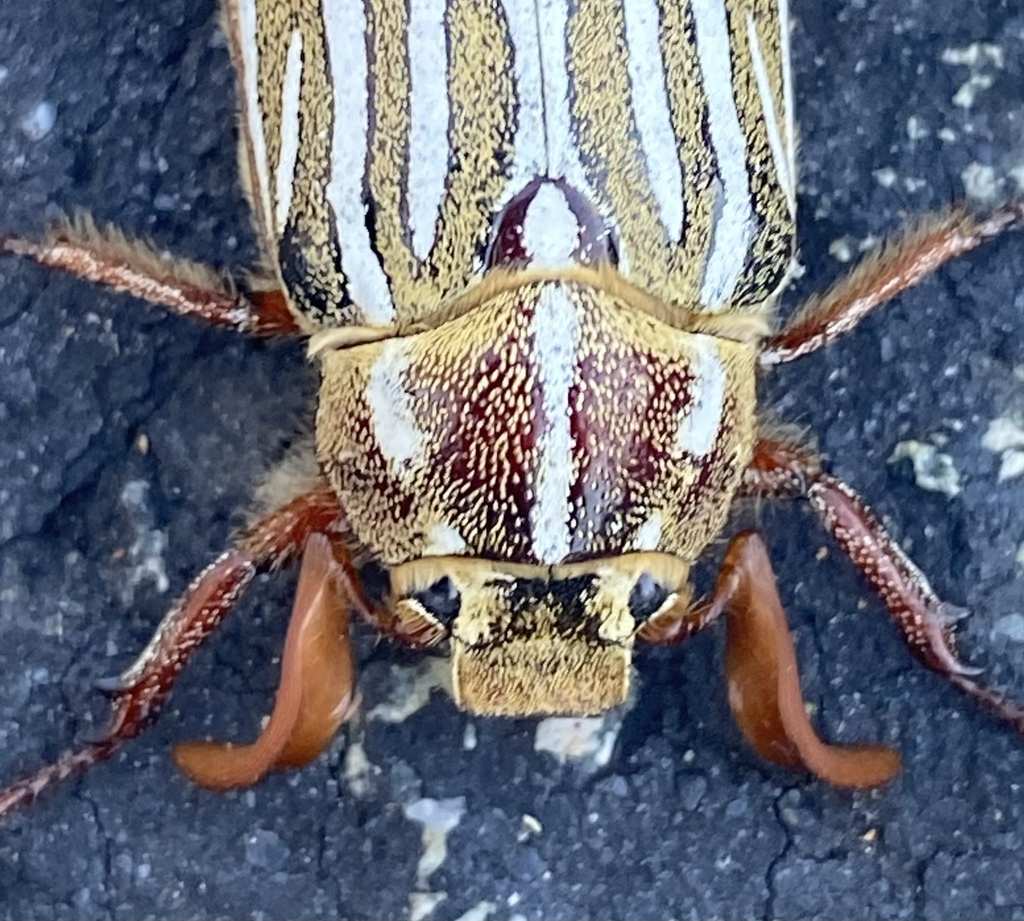
Image source: iNaturalist / Irene
If you dig one up, you'll notice a few telltale features. The body is C-shaped, soft, and creamy white with a distinct brown head capsule. You'll see three pairs of legs clustered near the head end.
Size varies by species and age, ranging from about a quarter inch for young larvae up to nearly two inches for mature green June beetle grubs.
Here's where people get confused. Not every white larva in your soil is a lawn-destroying pest. Green June beetle larvae are large and alarming, but they mostly feed on decaying organic matter and rarely damage healthy turf.
Ground beetle larvae are actually beneficial predators. Even white grubs themselves aren't automatically a problem at low numbers.
The key distinction is species and population density. A lawn with three or four grubs per square foot is functioning within normal ecological limits. That same lawn with fifteen grubs per square foot is heading for visible damage by late summer.
When Grub Worms Become a Real Problem for Your Lawn
Grubs feed on turfgrass roots, and that's where the damage comes from. Young larvae start small, nibbling fine root hairs. As they grow through late summer and into fall, their appetite increases dramatically.
By September in most regions, mature grubs are consuming significant root mass.
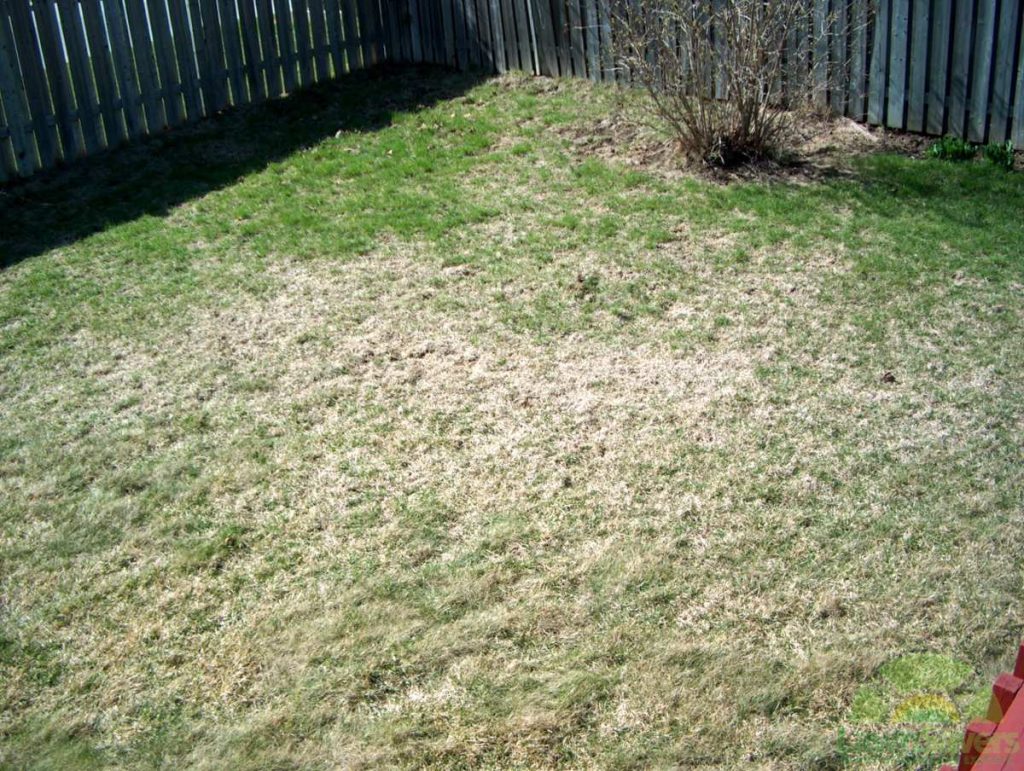
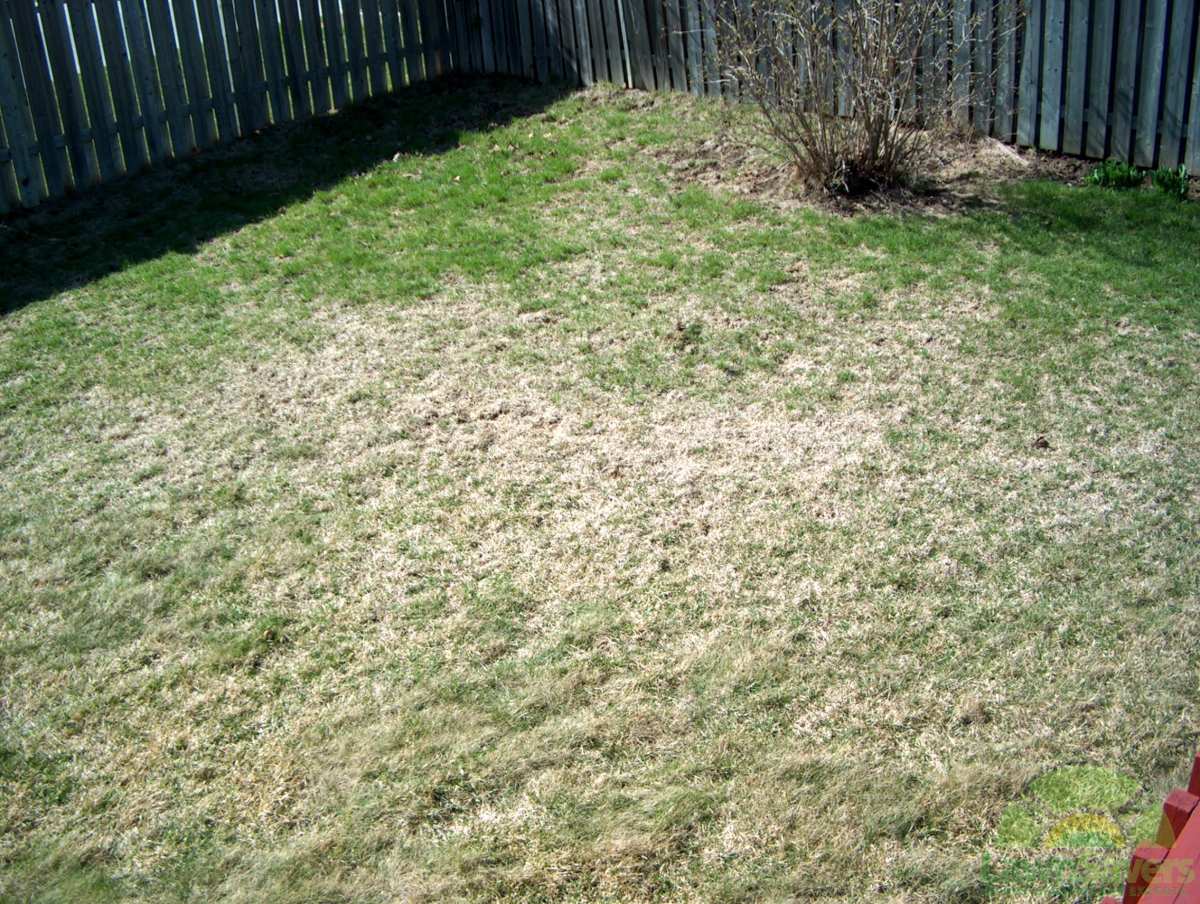
The visible symptom is irregular brown patches that don't respond to watering. Here's the test that confirms grub damage. Grab a corner of the affected turf and pull.
If it lifts away from the soil like a loose carpet, grubs have severed the root system underneath. Peel it back and you'll see the larvae curled in the top few inches of soil.
Timing matters for identifying the threat. Grub damage often gets misdiagnosed as drought stress, fungal disease, or dog urine spots. The difference is that grub-killed turf detaches easily because the roots are gone.
Drought-stressed grass stays anchored even when it looks dead.
Cool-season grasses like Kentucky bluegrass and tall fescue are most vulnerable during hot, dry summers. The grass is already stressed, and root loss pushes it over the edge. Warm-season grasses like Bermuda and zoysia tend to tolerate moderate grub feeding better because they spread aggressively and recover faster.
The Real Danger: Animals Digging Up Your Yard
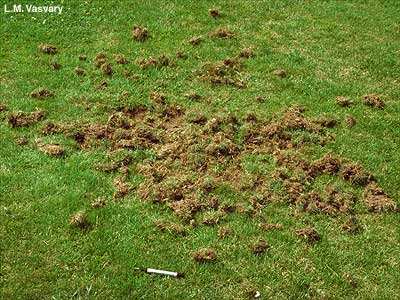
Image source: Bing (Web (fair-use with source credit))
For most homeowners, the grubs themselves aren't the main problem. It's what the grubs attract. Skunks, raccoons, opossums, and armadillos can smell grubs in the soil and will tear up lawn sections overnight to get at them.
A single skunk can do more cosmetic damage in one evening than a moderate grub population causes in an entire month.
Image source: Bing (Web (fair-use with source credit))
Skunk damage looks like rolled-back patches of sod, almost like someone took a shovel to small sections. Raccoons peel turf back in strips. Armadillos dig conical holes several inches deep.
If you're seeing this kind of destruction, grubs are almost certainly the underlying cause.
Birds like starlings and grackles also feed on grubs, but their pecking causes minimal surface disruption compared to mammals. The real concern is the nocturnal diggers that turn a grub problem into a full-blown lawn restoration project.
This is the scenario where grubs go from "minor soil inhabitant" to "genuine property threat." You're not just losing grass to root feeding. You're losing entire sections of turf to animals hunting for an easy meal.
Are Grub Worms Harmful to Pets, Kids, or People?
Let's clear this up directly. White grubs are not toxic, venomous, or parasitic to humans. Your kids aren't at risk playing in a yard with grubs.
You won't get sick from handling them. They don't transmit diseases to people.
Pets are a slightly different conversation. Dogs that eat a few grubs while digging around the yard will be fine. The grubs themselves aren't poisonous.
Problems arise when a dog consumes a large quantity, which can cause vomiting, diarrhea, or gastrointestinal blockage in extreme cases. This is uncommon but worth knowing if your dog is an aggressive digger.
There's one indirect parasite risk worth mentioning. Grubs can carry tapeworm eggs, and if a dog eats an infected grub and then grooms, there's a theoretical transmission pathway. In practice, this is rare and requires a specific chain of events.
Most veterinarians consider it a low-probability concern compared to flea-based tapeworm transmission.
Chickens and other poultry love grubs and can eat them safely in large numbers. For backyard flock owners, a grub-infested lawn is basically a free protein buffet.
The bottom line on human and pet safety. Grubs themselves pose minimal direct risk. The real hazards are secondary: pesticide exposure from improper treatment, or the physical damage animals cause while hunting them.
How to Tell If You Actually Have a Grub Problem
Before you spend money on treatment, confirm you actually need it. Grub damage gets misdiagnosed constantly. Here's how to check properly.
The Tug Test
Grab a handful of brown or thinning grass and pull upward. If it lifts easily like a rug, the roots have been severed. That's a strong indicator of grub activity.
The Dig Test
Cut a one-foot-square section of turf at the edge of a damaged area. Peel it back and examine the top three inches of soil. Count the grubs you find.
Repeat this in several spots across the lawn for an accurate picture.
The Threshold Rule
For cool-season grasses, treatment is generally recommended at 6 to 10 grubs per square foot. For warm-season grasses, the threshold drops to 3 to 5 per square foot because these grasses have less root mass to spare. Below these numbers, your turf can usually outgrow the damage.
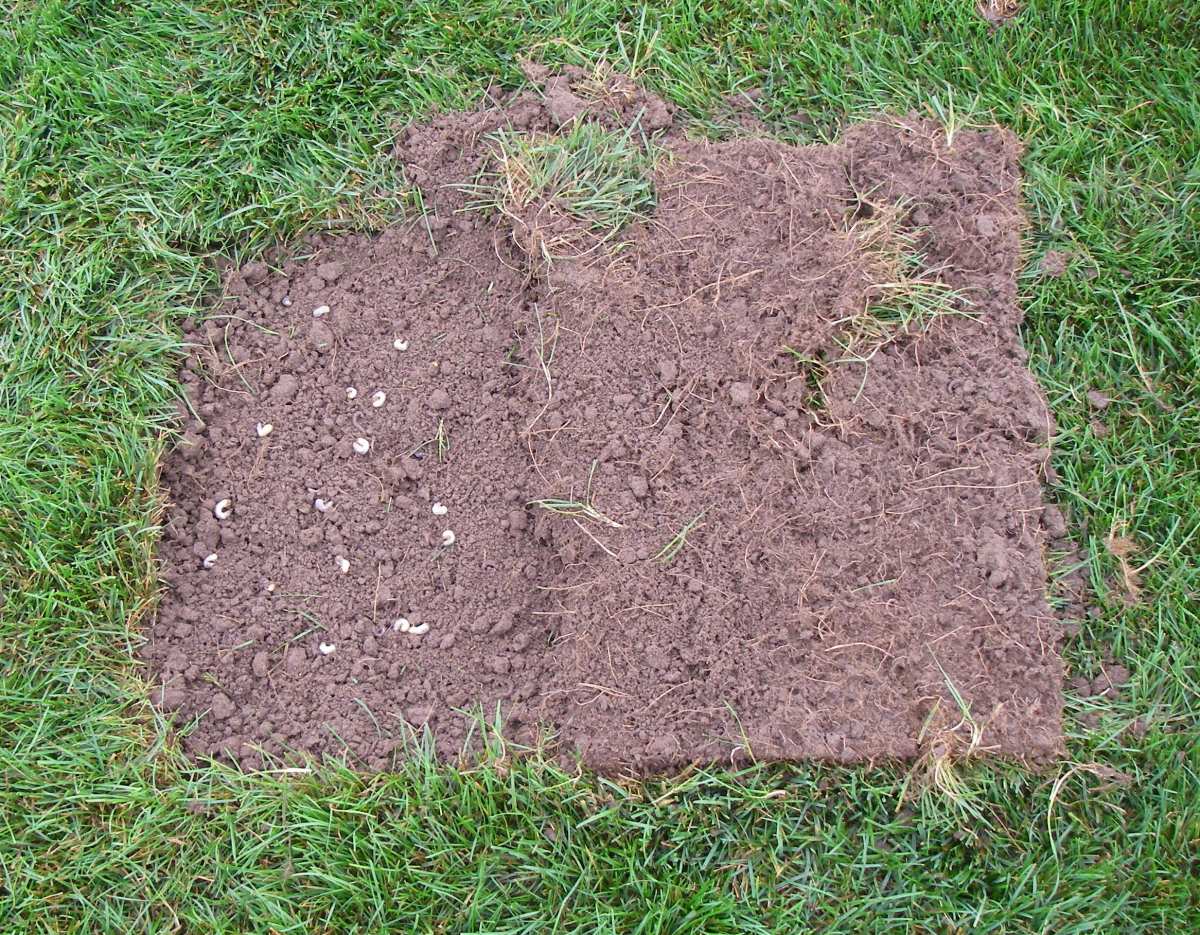
Image source: Bing (Web (fair-use with source credit))
Look for Secondary Signs
Increased bird activity on your lawn, especially starlings probing the soil, can signal grub presence. Mammal digging at night is another red flag. If you're seeing either of these alongside thinning turf, grubs are likely involved.
Check the Timing
Grubs are closest to the surface and easiest to find from August through October in most regions. In spring, they're deeper in the soil and harder to locate. If you're inspecting in May and finding nothing, that doesn't rule out a fall problem.
One common mistake is treating based on last year's damage. Grub populations fluctuate. Just because you had a problem in 2024 doesn't mean 2025 requires the same response.
Always verify current numbers before applying anything.
When to Treat and When to Leave Them Alone
This is where most homeowners either overreact or underreact. The smart move is to match your response to what the numbers actually show.
When You Can Skip Treatment
If your dig test comes back with fewer grubs than the threshold for your grass type, leave them alone. Your lawn will tolerate the feeding. Grubs also serve as a food source for beneficial birds and other wildlife.
A low population is part of a healthy soil ecosystem.
When Curative Treatment Makes Sense
If you're finding above-threshold numbers in late summer or early fall, a curative insecticide can knock back the population before they cause serious root damage. Products containing trichlorfon (Dylox) work fast on active larvae. The window is narrow.
You need to apply while grubs are small and feeding near the surface.
When Preventive Treatment Is the Better Play
If you've had recurring grub problems year after year, a preventive approach saves you the guesswork. Products with chlorantraniliprole (found in GrubEx and similar formulations) are applied in late spring to early summer, targeting newly hatched larvae before they grow large enough to cause damage. This is the strategy most lawn care professionals recommend for chronic grub areas.
Biological Options Worth Considering
Beneficial nematodes, specifically Heterorhabdacter bacteriophora, are microscopic worms that parasitize grubs in the soil. They're safe for pets, kids, and beneficial insects. Milky spore (Paenibacillus popilliae) targets Japanese beetle grubs specifically and can provide control for years once established.
Both require proper soil temperature and moisture to work effectively.
The worst thing you can do is apply preventive insecticides on a fixed calendar schedule without checking whether grubs are actually present. You'll waste money, harm beneficial soil organisms, and potentially contribute to pesticide resistance in local grub populations.
Safe and Effective Ways to Control Grubs
If treatment is warranted, you have several options ranging from biological to chemical. The right choice depends on your grub pressure, your comfort with pesticides, and your timeline.
Biological Controls
| Product | Target | How It Works | Best Applied |
|---|---|---|---|
| Beneficial nematodes (H. bacteriophora) | All common white grubs | Parasitic worms enter grubs and kill from within | Late summer, soil above 60°F |
| Milky spore (Paenibacillus popilliae) | Japanese beetle grubs only | Bacterial disease specific to Japanese beetle larvae | Spring or fall, multi-year establishment |
| Bacillus thuringiensis galleriae (GrubGone) | Multiple grub species | Bacterial toxin ingested by feeding larvae | Late summer to early fall |
Biological controls are the safest route for households with pets and children. They won't harm earthworms, bees, or other beneficial organisms. The trade-off is they require more precise timing and favorable soil conditions to work.
Chemical Controls
Curative products like trichlorfon (Dylox) kill grugs within one to three days. They're your best bet when damage is already visible and you need fast results. The downside is short residual activity, so timing has to be precise.
Preventive products like chlorantraniliprole last months in the soil and stop young grubs before they cause damage. They're less toxic to mammals and birds than older chemistries like carbaryl (Sevin). However, they must be applied before eggs hatch, which means getting the timing right based on adult beetle activity in your area.
Application Tips That Actually Matter
- Water the lawn lightly before applying granular products. This helps granules reach the soil surface.
- Water again after application to move the active ingredient into the root zone where grubs feed.
- Don't apply to saturated or frozen soil. The product won't penetrate properly.
- Follow label rates exactly. More product doesn't mean better control. It means more chemical in your soil.
Common Mistakes That Make Grub Problems Worse
Even well-intentioned lawn care can backfire. Here are the errors we see most often.
Treating Without Confirming
Applying insecticide because your neighbor did, or because you had grubs last year, is a waste. Populations vary. Always verify with a dig test first.
Wrong Timing
Applying preventive products in September is too late. The grubs are already large and the damage is done. Applying curative products in May means the grubs are too deep and too large for effective control.
Overwatering After Treatment
Flooding the lawn immediately after granular application washes the product away from the root zone. A light watering is all you need.
Ignoring the Real Problem
If skunks are tearing up your lawn, killing the grubs stops the digging. But if the underlying issue is overwatering, poor soil, or grass species mismatch, you'll keep having problems even without grubs.
Using Broad-Spectrum Insecticides Indiscriminately
Products like carbaryl kill grubs, but they also kill ground beetles, rove beetles, and other beneficial predators that naturally keep grub populations in check. You can actually make future grub problems worse by eliminating their natural enemies.
Expert Tips for Keeping Your Lawn Grub-Resistant
Long-term grub management is about making your lawn less attractive to egg-laying beetles and more resilient to whatever feeding does occur.
Mow Higher
Taller grass develops deeper root systems. Set your mower to three inches or higher for cool-season lawns. Deeper roots mean more tolerance for grub feeding before visible damage appears.
Water Deeply but Infrequently
Light, frequent watering keeps the top inch of soil moist, which is exactly where beetles prefer to lay eggs. Deep, infrequent soakings encourage deeper root growth and make the surface less appealing for egg-laying.
Choose Resistant Grass Varieties
Tall fescue with endophytes shows better tolerance to grub feeding than Kentucky bluegrass. If you're overseeding or renovating, consider endophyte-enhanced varieties for naturally improved pest resistance.
Encourage Natural Predators
Ground beetles, parasitic wasps, and birds all feed on grubs or adult beetles. Avoid blanket insecticide applications that wipe out these beneficial species. A diverse lawn ecosystem regulates itself better than a chemically dependent one.
Monitor Adult Beetle Activity
Japanese beetles typically emerge in late June through July in most of the eastern US. Heavy adult activity signals that egg-laying is happening. That's your cue to plan preventive treatment for the following spring if you've had recurring issues.
Frequently Asked Questions
Can grub worms bite you?
No. White grubs don't have mouthparts capable of biting humans. They feed on roots underground and pose no direct physical threat to people.
Are grubs harmful to dogs?
Eating a few grubs won't hurt your dog. Consuming large quantities can cause vomiting or diarrhea. The bigger concern is tapeworm transmission if your dog regularly eats grubs, though this is uncommon.
What's the difference between grubs and Japanese beetle adults?
Grubs are the larval stage. They live underground and feed on roots. Japanese beetle adults are the metallic green and copper beetles you see on plants in summer.
They feed on leaves and flowers above ground. Both stages cause damage, but in completely different ways.
How long do grubs stay in the lawn?
The full life cycle takes about one year for most common species. Eggs hatch in late summer, larvae feed through fall, overwinter deep in the soil, feed again in spring, then pupate and emerge as adult beetles by early summer.
Will grubs go away on their own?
Grub populations naturally fluctuate due to weather, predators, and disease. A moderate problem one year may disappear the next. If you're below the damage threshold, patience is often the best strategy.
Is it safe to use grub killer around pets?
Most modern grub control products are safe for pets once they've been watered in and the soil has dried. Always read the specific product label for pet safety intervals. Biological options like nematodes and milky spore are safe immediately.
The Bottom Line: Should You Worry About Grub Worms?
Grub worms aren't dangerous to you, your kids, or your pets in any direct sense. They're a normal part of soil life. The real question is whether their population in your specific lawn has crossed the line from background noise to active threat.
If you're seeing brown patches that peel back easily, or if animals are digging up your turf at night, grubs are likely the cause and treatment is warranted. If your lawn looks healthy and your dig test comes back below threshold, you can skip the products and let nature handle it.
The smartest approach is to verify before you act. Dig a few holes, count what you find, and match your response to the actual numbers. That's how you avoid wasting money on unnecessary treatments while still protecting your lawn when the threat is real.
Frequently Asked Questions
Can grub worms bite you?
No. White grubs don't have mouthparts capable of biting humans. They feed on roots underground and pose no direct physical threat to people.
Are grubs harmful to dogs?
Eating a few grubs won't hurt your dog. Consuming large quantities can cause vomiting or diarrhea. The bigger concern is tapeworm transmission if your dog regularly eats grubs, though this is uncommon.
What's the difference between grubs and Japanese beetle adults?
Grubs are the larval stage. They live underground and feed on roots. Japanese beetle adults are the metallic green and copper beetles you see on plants in summer.
Both stages cause damage, but in completely different ways.
How long do grubs stay in the lawn?
The full life cycle takes about one year for most common species. Eggs hatch in late summer, larvae feed through fall, overwinter deep in the soil, feed again in spring, then pupate and emerge as adult beetles by early summer.
Will grubs go away on their own?
Grub populations naturally fluctuate due to weather, predators, and disease. A moderate problem one year may disappear the next. If you're below the damage threshold, patience is often the best strategy.
Is it safe to use grub killer around pets?
Most modern grub control products are safe for pets once they've been watered in and the soil has dried. Always read the specific product label for pet safety intervals. Biological options like nematodes and milky spore are safe immediately.
The Bottom Line: Should You Worry About Grub Worms?
Grub worms aren't dangerous to you, your kids, or your pets in any direct sense. They're a normal part of soil life. The real question is whether their population in your specific lawn has crossed the line from background noise to active threat.
If you're seeing brown patches that peel back easily, or if animals are digging up your turf at night, grubs are likely the cause and treatment is warranted. If your lawn looks healthy and your dig test comes back below threshold, you can skip the products and let nature handle it.
The smartest approach is to verify before you act. Dig a few holes, count what you find, and match your response to the actual numbers. That's how you avoid wasting money on unnecessary treatments while still protecting your lawn when the threat is real.
Frequently Asked Questions
Can grub worms bite you?
No. White grubs don't have mouthparts capable of biting humans. They feed on roots underground and pose no direct physical threat to people.
Are grubs harmful to dogs?
Eating a few grubs won't hurt your dog. Consuming large quantities can cause vomiting or diarrhea. The bigger concern is tapeworm transmission if your dog regularly eats grubs, though this is uncommon.
What's the difference between grubs and Japanese beetle adults?
Grubs are the larval stage. They live underground and feed on roots. Japanese beetle adults are the metallic green and copper beetles you see on plants in summer.
Both stages cause damage, but in completely different ways.
How long do grubs stay in the lawn?
The full life cycle takes about one year for most common species. Eggs hatch in late summer, larvae feed through fall, overwinter deep in the soil, feed again in spring, then pupate and emerge as adult beetles by early summer.
Will grubs go away on their own?
Grub populations naturally fluctuate due to weather, predators, and disease. A moderate problem one year may disappear the next. If you're below the damage threshold, patience is often the best strategy.
Is it safe to use grub killer around pets?
Most modern grub control products are safe for pets once they've been watered in and the soil has dried. Always read the specific product label for pet safety intervals. Biological options like nematodes and milky spore are safe immediately.
The Bottom Line: Should You Worry About Grub Worms?
Grub worms aren't dangerous to you, your kids, or your pets in any direct sense. They're a normal part of soil life. The real question is whether their population in your specific lawn has crossed the line from background noise to active threat.
If you're seeing brown patches that peel back easily, or if animals are digging up your turf at night, grubs are likely the cause and treatment is warranted. If your lawn looks healthy and your dig test comes back below threshold, you can skip the products and let nature handle it.
The smartest approach is to verify before you act. Dig a few holes, count what you find, and match your response to the actual numbers. That's how you avoid wasting money on unnecessary treatments while still protecting your lawn when the threat is real.