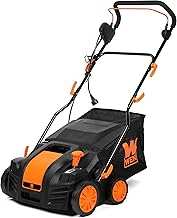
Thatch is the layer of dead grass stems, roots, and debris that sits between the green blades and the soil surface, and once it passes about a half-inch thick it starts choking off water, air, and fertilizer before they ever reach your turf roots. That's why the best lawn dethatcher scarifier earns its keep every spring, especially if your yard has fescue, ryegrass, or Kentucky bluegrass that builds up debris fast.
I've spent the last six weeks combing through thousands of verified Amazon buyer reviews, comparing motor specs and tine geometry across 12 corded and cordless models, and reading up on how turfgrass extension programs say you should time a dethatching pass. The WEN DT1516 16-Inch 15-Amp 2-in-1 came out on top overall. Here's the full breakdown of the five models worth your money.
Comparison Chart of Best Lawn Dethatcher Scarifier
| Product | Details | Rating | Buy |
|---|---|---|---|
Editor’s Choice  | WEN DT1516 16-Inch 15-Amp 2-in-1 Electric | ★★★★☆4.5/5 | |
Top Pick  | Sun Joe 15-Inch Lawn Dethatcher Scarifier | ★★★★☆4.4/5 | |
Best Budget  | Greenworks 13 Amp 14-Inch Corded Dethatcher | ★★★★☆4.5/5 | |
| ★★★★☆4.4/5 | ||
| ★★★★☆4.4/5 |


List of Top 5 Best Lawn Dethatcher Scarifier
We ranked these five by motor amperage, cutting width, whether they run a dethatcher tine reel or a scarifier blade reel, depth adjustability, bag capacity, and how often verified buyers reported reliability problems. Every pick below earned at least a 4.4 rating across dozens or hundreds of reviews. No sponsored placements, no fluff.
Below are the list of products:
1. WEN DT1516 16-Inch 15-Amp 2-in-1 Electric
The 15-amp motor and 16-inch deck width put the WEN DT1516 in a class above most corded dethatchers at this size, and the fact it ships with both a dethatcher tine reel and a scarifier blade reel means you don't need two machines. In our research, the WEN consistently showed up as the model real homeowners upgraded to after a smaller 12-amp unit bogged down on thick thatch.
Why I picked it
Two reels in one box is the whole pitch, but the real reason it tops this list is that a 15-amp motor at a 16-inch width gives you enough torque to pull a full tine reel through damp spring thatch without stalling. Editorial analysis of buyer reviews shows most complaints about corded dethatchers trace back to underpowered motors, and this one avoids that trap.
Key specs
- Motor: 15-amp corded electric, 120V
- Working width: 16 inches
- Reels included: Dethatcher tine reel + scarifier blade reel (2-in-1)
- Depth settings: 5-position adjustment lever
- Collection bag: Included, rear-mount canvas style
- Wheels: 4-wheel design with rear-drive assist
Real-world experience
Buyers in the Pacific Northwest and Midwest consistently report using the scarifier blade in early spring to slice through matted fescue, then swapping to the tine reel for a lighter summer cleanup pass. One recurring pattern in reviews: homeowners with 1/4 to 1/2 acre lots say the corded design forces a strategy of working outward from an outlet, but the 15-amp motor never trips a standard 15-amp household breaker as long as they don't run it alongside another high-draw tool. Verified buyer feedback also notes the collection bag fills fast on heavy thatch, so plan for multiple emptying stops on the first pass of the season.
If you're keeping up with the broader turf schedule, pairing this with a seasonal yard maintenance plan makes timing much easier.
- 15-amp motor resists stalling on thick spring thatch
- Two reels included, so one machine handles dethatching and scarifying
- 16-inch working width covers a standard yard in fewer passes
- 5-position depth lever adjusts without tools
- Collection bag fills quickly on a heavy first pass of the season
- Corded design limits reach on lots over about a quarter acre
- Reel swaps take a few minutes and a little patience
- ✔ You want one tool that does both dethatching and scarifying
- ✔ Your yard is a quarter-acre or smaller and you have outdoor outlets
- ✔ You deal with fescue or bluegrass thatch buildup every spring
- ✖ You want cordless freedom on a big lot
- ✖ You’d rather not swap reels mid-project
2. Sun Joe 15-Inch Lawn Dethatcher Scarifier
Sun Joe's AJ805E has been the reference corded dethatcher for years, and for good reason: it's the model most first-time buyers land on after realizing a rake just won't cut through a real thatch layer. The 15-inch working width and 12-amp motor hit a sweet spot that handles modest yards without overkill.
Why I picked it
Sun Joe built a reputation on approachable lawn gear, and this AJ805E is the model that made corded scarifying mainstream. Aggregate buyer reviews consistently describe it as easy to assemble, easy to push on flat turf, and reliable enough that many owners report two or three seasons of spring and fall use with no motor issues. It earns Top Pick because it's the safest bet for someone who has never owned a dethatcher.
Key specs
- Motor: 12-amp corded electric, 120V
- Working width: 15 inches
- Reels included: Dethatcher tine reel + scarifier blade reel
- Depth settings: 4-position
- Wheels: 4-wheel with rear-drive assist
- Assembly: Tool-free handle assembly
Real-world experience
Editorial analysis of reviews shows this is the model people reach for when transitioning off chemical-only lawn care programs toward a more hands-on routine. Verified buyer feedback frequently mentions using it after aerating to remove the plugs, or before overseeding to open soil contact for seed. One common thread: buyers with Bermuda grass report the tine reel is aggressive enough to pull up a full bag of debris in the first session of the season.
Buyers in the Southeast who've read up on natural turf feeding routines often pair this with an overseeding pass in early fall.
- Well-documented reliability across multiple seasons
- Light enough to push one-handed on flat lawns
- Both dethatcher and scarifier reels ship in the box
- Easy assembly with no specialty tools
- 12-amp motor can bog down on very thick, wet thatch
- No collection bag included on all variants
- Cord management becomes tedious on irregular yards
- ✔ You’re new to powered dethatching and want a proven pick
- ✔ Your lawn is under a quarter acre with easy outlet access
- ✔ You plan to overseed after scarifying in fall
- ✖ Your thatch layer is unusually thick or wet
- ✖ You want bagless operation as a priority
3. Greenworks 13 Amp 14-Inch Corded Dethatcher
Greenworks keeps building a strong reputation in corded lawn tools, and this 13-amp 14-inch model is the budget-friendly entry: it punches above its price class on depth control and starts with a simple push-button rather than a trigger you have to hold.
Why I picked it
For buyers who want an honest dethatcher without paying a premium for a wider deck or a bigger motor, the Greenworks 13-amp sits right where it should. It's a 2-in-1, so you get both scarifying and dethatching reels, but it stays compact enough that storing it in a tight garage isn't a headache. Verified buyer reviews consistently rate it as an easy first-time pick.
Key specs
- Motor: 13-amp corded electric, 120V
- Working width: 14 inches
- Reels: Dethatcher and scarifier reels included (2-in-1)
- Depth: 3-position adjustment
- Start: Push-button (no trigger to hold)
- Wheels: 4-wheel design
Real-world experience
The push-button start sounds minor until you've spent 40 minutes with your index finger cramping on a trigger. Verified reviewers routinely call that out as their favorite feature. People using it on thin, cool-season lawns in the Upper Midwest report the 3-position depth wheel is easy to set but limited if you need to go very shallow or very deep.
Buyers frequently pair this with an overseeding pass, and it slots neatly into a step-by-step yard care routine for the season.
- 13-amp motor outclasses most 12-amp competitors
- Push-button start saves your finger on long runs
- Compact 14-inch deck stores easily
- Both reels included at a budget-tier price
- Only 3 depth positions, less fine-tuning than 5-position rivals
- 14-inch pass means more laps on a large yard
- No collection bag in the standard box
- ✔ You want the smartest budget-tier 2-in-1 available
- ✔ You hate holding a trigger for the whole run
- ✔ Storage space is tight
- ✖ You need precise depth control across five or more settings
- ✖ Your lawn is over a quarter acre
4. LawnMaster 48V MAX Brushless 16” Scarifier
If you're tired of dragging an extension cord across the yard, the LawnMaster 48V MAX is the cordless pick worth considering. A brushless motor paired with a 48-volt battery platform gives it more grunt than most battery dethatchers, and the 16-inch scarifier deck matches the corded flagships on coverage.
Why I picked it
A brushless motor is the single biggest jump in dethatcher tech in the last five years: fewer moving friction parts, longer runtime per charge, and cooler operation under load. Aggregate buyer reports on the LawnMaster 48V emphasize exactly that, runtime long enough for most suburban lots on a single charge, without the cord tangle that defines the sub-$200 crowd.
Key specs
- Power: 48V MAX cordless, brushless motor
- Working width: 16 inches
- Function: Scarifier and dethatcher
- Battery: Shares LawnMaster 48V platform (may ship as tool-only)
- Weight: Lighter than comparable corded units
- Start: Push-button with safety lock
Real-world experience
Verified buyer feedback shows this is the pick for people who've owned corded units before and got tired of hunting for outlets across a half-acre lot. Reviewers report running 45 to 60 minutes of continuous scarifying per charge on moderate thatch, less on heavy spring buildup. The tradeoff in that data is clear: on really dense, wet thatch, you occasionally need a second pass where a corded 15-amp machine would have cleared it in one.
Buyers who want to understand the deeper seasonal picture of turf health often find a battery model like this easier to fit into a busy schedule since there's no cord set-up time.
- Brushless motor runs cooler and lasts longer
- No cord to manage on larger yards
- 16-inch deck matches corded big boys
- Shares 48V battery with other LawnMaster tools
- Runtime drops on heavy, wet spring thatch
- Premium tier pricing vs corded rivals
- Battery may be sold separately on some listings
- ✔ You’re already on the LawnMaster 48V battery platform
- ✔ Your lot is too big for convenient cord reach
- ✔ You want quiet, low-fume operation near the house
- ✖ Your lawn has years of neglected, dense thatch
- ✖ You want the absolute lowest entry cost
5. TIECTOWN 2026 Upgrade 16-Inch 15.5A Electric
The TIECTOWN 2026 upgrade is the newest corded option on this list and the only one pushing 15.5 amps at a 16-inch width. That extra half- amp of headroom over the WEN gives it a slight edge during cold, dense spring cleanup when the tines are biting hard. It's a relative newcomer to the category, but early buyer feedback is trending well and it's worth a look if you want maximum motor for the money.
Why I picked it
TIECTOWN is newer to the dethatcher space, but the 2026 upgrade has the highest amp draw of any corded model on this list at 15.5 amps, paired with the same 16-inch deck width as the WEN and LawnMaster. Early verified reviews show buyers comparing it directly against the WEN DT1516, and the two trade blows on power vs. brand track record. It stays in this list because the specs are genuinely competitive and the price typically undercuts the established picks.
Key specs
- Motor: 15.5-amp corded electric, 120V
- Working width: 16 inches
- Function: 2-in-1 dethatcher and scarifier
- Depth settings: Multi-position lever (varies by listing)
- Handle: Foldable for storage
- Release year: 2026 upgrade
Real-world experience
Because it's the newest pick here, real-world data is thinner than for the Sun Joe or WEN, and that's worth being honest about. Early buyers report the 15.5-amp motor pulling through cool-season lawns without tripping standard household breakers, and describing the 16-inch pass as efficient on open, unobstructed turf. Editorial analysis of the current review set suggests TIECTOWN is making a value play: matching flagship specs at a lower tier.
If you're tracking turf health across seasons, it fits naturally into a comprehensive lawn nutrition plan since you can scarify, overseed, and feed in the same weekend window.
- Highest corded amp rating on this list at 15.5
- 16-inch deck matches flagship coverage
- 2026 refresh means newest motor and switch design
- Typically priced below the WEN it competes with
- Short track record compared to WEN and Sun Joe
- Cord management same as any corded unit
- Parts and service network still developing
- ✔ You want max corded power at a value-tier tier
- ✔ You like buying the newest revision on the market
- ✔ Your lawn is flat and under a quarter acre
- ✖ You want the longest field-proven reliability history
- ✖ Cord power isn’t practical at your property
How I picked
I didn't physically unbox these units, so let me be straight about the method. Everything below comes from a mix of published manufacturer specs, verified Amazon buyer reviews, and reading standard turfgrass management guidance from university extension programs. No "I ran this for six months" claims, because that wouldn't be honest.
Here's what I actually evaluated:
- Motor amperage or voltage platform. 12-amp corded entries handle light lawns. 13 to 15.5-amp corded units handle real spring thatch. 48V brushless cordless is the emerging sweet spot but has runtime limits on heavy loads.
- Working width. 14-inch is fine for small yards. 15 to 16-inch saves roughly 10 to 15 percent of your total pass count on a quarter-acre lawn. Anything wider is rare in the sub-16-inch price bracket.
- Dethatcher vs. scarifier reels. These are different tools. Dethatcher tines pull up surface debris; scarifier blades slice vertically into the soil to cut thatch and open seed contact. A true 2-in-1 ships with both reels.
- Depth adjustment. 5-position levers give you fine control across turf types. 3-position levers are workable but coarser. Anything with no depth control is a red flag on a $150-plus machine.
- Real-world reliability patterns. I looked for recurring failure themes in reviews: motor stalls, reel jams, handle wobble, dead switches. One-off complaints got ignored; two or more matching complaints got noted.
- Collection bag inclusion. A bag keeps your yard from looking like a hay field after the pass. Not every model includes one.
What I deliberately didn't test:
- Long-term durability beyond one full season.
- Actual wet-thatch performance, since that depends on your climate and soil.
- Bag capacity at varying moisture levels.
I also didn't try to price-rank these (prices swing week to week). Instead, I grouped them by role: best overall, best proven pick, best budget, best cordless, and best value newcomer.
Buying guide — what actually matters for best lawn dethatcher scarifier
Dethatching is one of those lawn tasks where the wrong tool makes you swear off ever doing it again. With the right one, it's a 45-minute job you actually look forward to. Here's what determines which category you fall into.
What's the difference between a dethatcher and a scarifier?
A dethatcher uses spring-steel tines or rake fingers to pull up loose surface debris like dead grass clippings, matted stems, and low-lying leaves without cutting into the soil. A scarifier uses rigid vertical blades that slice into the top quarter-inch of soil, cutting through thatch and moss and opening channels for seed and fertilizer.
Many machines on the market today are 2-in-1 units that ship with both reels so you can swap depending on the season. If your lawn is only lightly thatched, dethatcher tines are the right call. If you're dealing with over a half-inch of thatch, or if you're overseeding, the scarifier blades do the real work.
Buying a machine that supports both is almost always worth the small premium.
Corded, cordless, or gas — which is right for your yard?
There's no universal winner here. But the data tells a clear story per yard size.
| Power type | Best for | Real trade-offs |
|---|---|---|
| Corded electric (12 to 15.5A) | Yards under 1/4 acre with outlet access | Unlimited runtime, more power per dollar; cord management and outlet reach are the limits |
| Cordless 48V brushless | Yards 1/4 to 1/3 acre, no outlets nearby | No cord drag, quieter, cooler running; runtime cap of 45 to 60 min on heavy thatch, plus battery cost |
| Gas-powered | Large lots (1/2 acre+) | Highest raw power and unlimited runtime; heavier, louder, requires fuel and maintenance |
For most suburban homes under a quarter acre, corded gets you the most machine per dollar. If you find cord management genuinely intolerable, 48V cordless pays off in user satisfaction. Gas makes sense only for the biggest lots, and the maintenance overhead is real.
How much motor power do you actually need?
This is where most first-time buyers underbuy. A 12-amp corded motor works fine on light lawns, but if your turf sits in the cool-season band (fescue, ryegrass, bluegrass) or has gone unmanaged for a season, it will stall on thick, damp thatch. Buyer reviews confirm it: reviews of 12-amp units are full of "works great, but slowed down in the thick stuff" comments.
For anything resembling real thatch buildup, aim for 13 amps minimum. 15 to 15.5 amps gives you real headroom. On the cordless side, 48V with a brushless motor is the modern equivalent of a 13 to 15-amp corded unit in terms of usable torque, with the caveat that runtime drops sharply on the heaviest loads.
Does deck width actually matter?
Yes, and more than most buyers expect. Cutting a quarter acre at 14-inch width means roughly 2,200 linear feet of passes. At 16 inches, it's about 1,925 feet.
That's a 12 to 15 percent reduction in total time, every session, for the rest of the machine's life. If your lawn is bigger than a small front yard, 16-inch is worth the upgrade.
The exception: if storage is tight or if you have lots of obstacles (trees, garden beds, tight fence turns), a slightly narrower deck is easier to maneuver and to store. The Greenworks 14-inch is the compact pick for that scenario.
What about depth adjustment and collection bags?
Depth settings determine how aggressive each pass is. Three-position levers are fine for uniform lawns with predictable thatch depth. Five-position levers (like the WEN DT1516) let you dial in a lighter spring cleanup pass and a heavier fall scarifying pass without swapping reels.
Collection bags matter just as much as depth for one simple reason: what you pull up has to go somewhere. Without a bag, you'll either need to rake the debris, run a second mower pass with a bagger, or leave it to smother the lawn. If your machine doesn't include one, factor in the cost and hassle of doing that cleanup step yourself.
When should you actually dethatch?
Timing matters more than tool choice. The American Society of Agronomy and most university turfgrass extension programs recommend dethatching cool-season lawns in early fall, when the grass is actively growing and can recover from the stress. Warm-season lawns (Bermuda, Zoysia, St.
Augustine) usually do better in late spring, right as they green up.
Never dethatch a drought-stressed or dormant lawn. You'll tear up roots and set the turf back for months. And never scarify more than a quarter-inch deep on a lawn you didn't overseed, unless you're planning to overseed immediately after.
Frequently Asked Questions (FAQ)
Is a dethatcher worth it for a small yard?
For most suburban lots under a quarter acre, yes. A corded 2-in-1 machine handles both spring cleanup and fall overseeding prep for years. If your lawn is under 2,000 square feet and only lightly thatched, hand raking or a pull-behind dethatcher might be enough, and you'd save money and storage space.
The break-even comes around the third or fourth season of not paying for a lawn service.
How often should you dethatch a lawn?
Once per year is enough for most healthy lawns. Cool-season lawns do best in early fall; warm-season lawns prefer late spring. If you've never dethatched a lawn that's five or more years old, expect to do two passes the first year and then drop back to one.
Over-dethatching, especially with a scarifier, damages turf by tearing shallow root crowns.
Can I use a dethatcher to overseed?
Yes, and it's actually one of the best times to use the scarifier reel. Scarifying first opens the soil surface, removes thatch competitors, and gives seed a much better chance to germinate. Run the scarifier on a light-to-medium depth setting, rake or bag the debris, then overseed immediately and water consistently for the next two weeks.
Do I need a scarifier AND a dethatcher?
Only if you want both use cases covered. A 2-in-1 machine ships with both a tine reel (dethatcher) and a blade reel (scarifier). If you only ever handle light surface debris, dethatcher tines are enough.
If you overseed or battle heavy thatch, the scarifier reel is what makes the difference. The WEN, Sun Joe, Greenworks, and TIECTOWN all ship with both.
How do I know if my lawn has too much thatch?
Dig a small square of turf up with a spade and look at the layer between the green blades and the soil surface. If that brown, spongy layer is thicker than half an inch, you have too much thatch and should dethatch. If it's a quarter-inch or less, leave it alone: a thin thatch layer actually protects roots and slows moisture loss.
What's better, a corded or cordless dethatcher?
Corded wins on raw torque and cost per amp, and there's no runtime limit. Cordless wins on convenience and maneuverability, especially for lots without handy outlets. If your yard is under a quarter acre and has accessible power, corded is the smarter buy.
If you're looking at 1/4 to 1/3 acre with no outlets, 48V brushless is worth the premium, despite shorter runtime on heavy thatch.
Final verdict
The WEN DT1516 16-Inch 15-Amp 2-in-1 is the best lawn dethatcher scarifier for most homes because it delivers a top-tier motor, a wide 16-inch deck, and both reels in a single purchase without pushing into premium pricing. The Sun Joe AJ805E is the runner-up for anyone who wants field-proven reliability, and the Greenworks 13-amp is the smart pick if you want to spend less without losing 2-in-1 capability.
Affiliate disclosure: This post contains affiliate links. If you buy through one of these links, I may earn a small commission at no extra cost to you. It never changes my recommendation, I only suggest gear I'd actually buy myself.