Achieving a vibrant bermuda grass lawn requires understanding its specific nutritional needs. This guide reveals what type of fertilizer for bermuda grass is best, emphasizing high nitrogen formulas, balanced N-P-K ratios based on the season, and the crucial role of soil testing. Learn to select between granular and liquid, slow-release and quick-release options to keep your bermuda looking its best all year.
What Type of Fertilizer for Bermuda Grass
Welcome to the ultimate guide for nurturing your bermuda grass lawn! If you’re dreaming of that dense, dark green carpet that characterizes a healthy bermuda lawn, then understanding fertilization is your most powerful tool. Bermuda grass is a warm-season grass known for its rapid growth, resilience, and incredible ability to recover, but it truly thrives with the right nutrition. This guide will walk you through everything you need to know about what type of fertilizer for bermuda grass to choose, when to apply it, and how to ensure your lawn gets exactly what it needs to look its absolute best.
We’ll cover the essential nutrients bermuda grass craves, decode those mysterious N-P-K numbers, explore different fertilizer types (granular vs. liquid, slow-release vs. quick-release), and even dive into specialized options. By the end of this guide, you’ll be confident in selecting and applying the perfect fertilizer regime for your unique bermuda grass lawn, transforming it into the envy of the neighborhood. Let’s dig in!
Key Takeaways
- High Nitrogen is Key: Bermuda grass is a nitrogen-hungry turf. Look for fertilizers with a high first number (Nitrogen) in the N-P-K ratio, especially during its active growing season (late spring to late summer).
- N-P-K Ratios Vary by Season: While high nitrogen is generally preferred, the ideal N-P-K ratio shifts. Use a more balanced fertilizer (like 4-1-2 or 3-1-2) in spring and summer, and consider lower nitrogen/higher potassium in late summer/early fall for winter prep.
- Soil Testing is Essential: The most accurate way to determine what type of fertilizer for bermuda grass your lawn needs is to perform a soil test. This reveals nutrient deficiencies and pH levels, allowing for targeted fertilization.
- Granular vs. Liquid: Granular fertilizers offer slow, consistent feeding and are great for general maintenance. Liquid fertilizers provide quick nutrient uptake and are ideal for rapid green-up or correcting immediate deficiencies.
- Slow-Release for Sustained Growth: Prioritize slow-release nitrogen fertilizers, as they provide a steady supply of nutrients over weeks, reducing the risk of burning and promoting more uniform growth.
- Timing is Crucial: Fertilize bermuda grass during its active growth period, typically from late spring (after the last frost) through late summer. Avoid fertilizing during dormancy or extreme heat.
- Read the Label Carefully: Always check the N-P-K ratio, application rates, and specific instructions on any fertilizer product to ensure proper use and prevent damage to your lawn.
Understanding Bermuda Grass’s Nutritional Needs
Before we talk about specific products, it’s vital to grasp what nutrients bermuda grass requires to flourish. Like all plants, bermuda needs a balance of macronutrients (needed in larger quantities) and micronutrients (needed in smaller quantities).
The N-P-K Ratio Explained
The three big numbers on every fertilizer bag represent the N-P-K ratio:
- N (Nitrogen): This is the superstar for bermuda grass. Nitrogen is crucial for lush, green growth, promoting strong leaf development and overall vigor. Bermuda grass is a heavy feeder of nitrogen, especially during its peak growing season.
- P (Phosphorus): Phosphorus is essential for root development, seed germination, and overall plant maturity. While important, established bermuda grass lawns typically need less phosphorus than nitrogen or potassium.
- K (Potassium): Also known as potash, potassium helps with overall plant health, stress tolerance (heat, drought, cold), and disease resistance. It strengthens the grass plant, making it more resilient.
These numbers are percentages by weight. So, a 16-4-8 fertilizer contains 16% nitrogen, 4% phosphorus, and 8% potassium. For bermuda grass, you’ll generally look for a ratio where Nitrogen is the highest number.
Micronutrients
While N-P-K are the main players, bermuda grass also benefits from micronutrients like iron, manganese, zinc, and copper. Iron, in particular, is often supplemented to enhance the deep green color of bermuda grass, especially in areas with alkaline soil where iron uptake can be difficult. Many quality fertilizers for bermuda grass will include a blend of these micronutrients.
Choosing the Right N-P-K Ratio for Bermuda
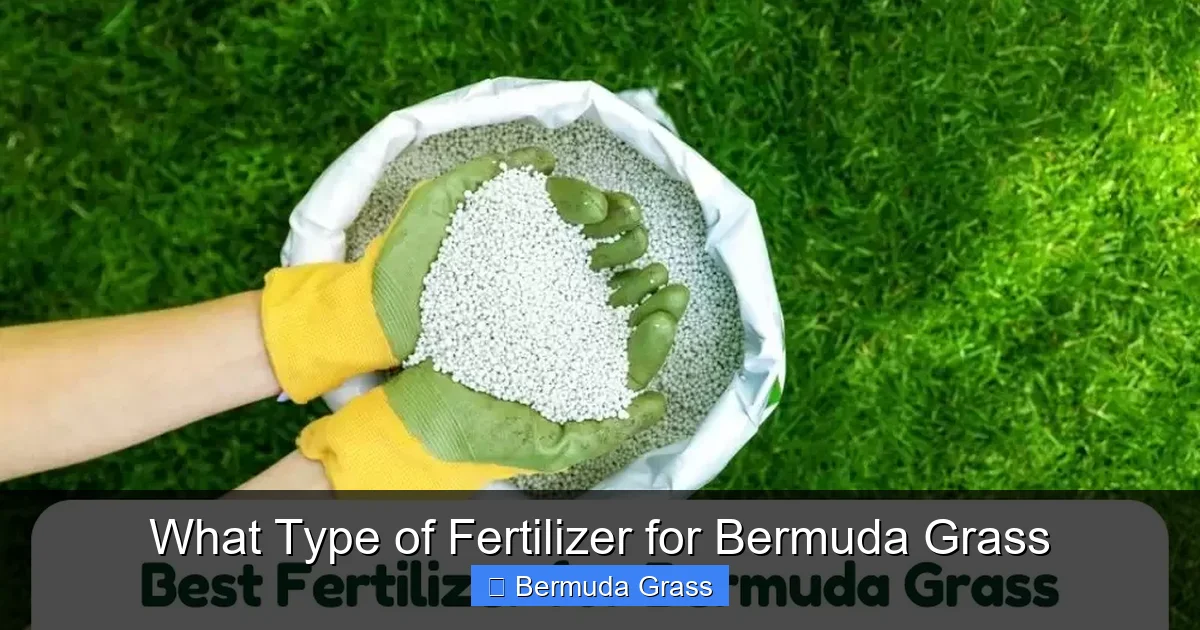
Visual guide about What Type of Fertilizer for Bermuda Grass
Image source: grasscure.com
The specific N-P-K ratio you choose should depend on several factors: the season, your soil test results, and the current health of your lawn.
Spring Green-up
As bermuda grass begins to emerge from dormancy in late spring, it needs a boost to kickstart growth. A balanced fertilizer with a slightly higher nitrogen content is good here, perhaps a 4-1-2 ratio like a 16-4-8 or 20-5-10. This encourages initial greening and establishes a strong foundation.
Summer Growth
This is when bermuda grass is at its most active and hungry. During the peak summer months, your lawn will benefit from a higher nitrogen fertilizer. Ratios like 4-1-2 or 3-1-2 (e.g., 21-7-14, 27-3-6, or even 30-0-0) are excellent for promoting dense, vigorous growth and that deep green color. Many lawn care experts recommend applying about 1 pound of actual nitrogen per 1,000 square feet every 4-6 weeks during the summer.
Fall Preparation
As temperatures begin to cool in late summer/early fall, you’ll want to shift your approach. Focus on strengthening the root system and improving winter hardiness. A “winterizer” fertilizer for bermuda grass with lower nitrogen and higher potassium (e.g., 5-10-20 or 10-0-20) can be beneficial. However, avoid fertilizing too late into fall, as this can stimulate new top growth that is vulnerable to frost.
The Importance of a Soil Test
Seriously, don’t skip this! A soil test is the single most important step in determining what type of fertilizer for bermuda grass your lawn truly needs. It tells you your soil’s current N-P-K levels, pH, and the presence of micronutrients. Your local university extension office can provide soil test kits and analysis. This scientific approach prevents over-fertilization, saves you money, and ensures your bermuda grass receives optimal nutrition. Without a soil test, you’re essentially guessing, which can lead to nutrient imbalances or wasted product.
Granular vs. Liquid Fertilizers
Fertilizers for bermuda grass come in two main forms, each with its advantages.
Granular Pros & Cons
Granular fertilizers are solid pellets that you spread over your lawn.
- Pros:
- Slow-release options: Many granular products are slow-release, providing nutrients over an extended period (4-8 weeks or more).
- Ease of application: Spreaders make application relatively easy and consistent.
- Less risk of burning: Slower release generally means less risk of nitrogen burn if applied correctly.
- Cons:
- Slower results: Nutrients take longer to break down and become available to the grass.
- Requires watering in: Needs to be watered into the soil to activate.
- Can be uneven: Poor spreader calibration can lead to striping or uneven growth.
Liquid Pros & Cons
Liquid fertilizers are concentrated solutions mixed with water and sprayed onto the lawn.
- Pros:
- Fast acting: Nutrients are immediately available to the grass through leaf and root uptake, leading to quick green-up.
- Even coverage: Can provide very uniform coverage when applied correctly with a sprayer.
- Can combine treatments: Often combined with herbicides or insecticides.
- Cons:
- Frequent application: Nutrients are used up quickly, requiring more frequent application.
- Higher burn risk: Easier to over-apply and burn the lawn if not careful.
- More effort: Requires mixing and careful sprayer use.
For general maintenance, a slow-release granular fertilizer is often the preferred choice for bermuda grass. Liquid fertilizers can be great for quick fixes or targeted applications.
Slow-Release vs. Quick-Release
This refers to how quickly the nitrogen in the fertilizer becomes available to the grass.
Benefits of Slow-Release
Slow-release nitrogen (often labeled as “SRN,” “SCU” for sulfur-coated urea, or “ureaform”) breaks down gradually over weeks or even months.
- Consistent Feeding: Provides a steady supply of nutrients, promoting uniform growth.
- Reduced Leaching: Less nitrogen is lost to runoff or leaching into groundwater.
- Lower Burn Risk: Less chance of burning your lawn due to a sudden flush of nitrogen.
- Fewer Applications: You don’t need to fertilize as often.
For most routine applications of fertilizer for bermuda grass, especially during the active growing season, slow-release options are highly recommended.
When to Use Quick-Release
Quick-release nitrogen (often plain “urea”) is immediately available to the grass.
- Rapid Green-up: Ideal when you need a very fast color response, like before an event.
- Correcting Deficiencies: Can quickly address a severe nitrogen deficiency.
Use quick-release products sparingly and always follow application rates precisely, as they have a higher risk of burning your bermuda grass.
Specialized Fertilizers
Sometimes, your bermuda grass might need a little something extra.
Weed and Feed
These products combine fertilizer with a broadleaf herbicide.
- Convenience: Kills weeds while feeding your lawn in one application.
- Caveats: They are a “one-size-fits-all” solution that might not provide the optimal N-P-K ratio for your bermuda grass at that exact moment, nor the right herbicide for all your specific weeds. Apply only when weeds are actively growing and temperatures are appropriate for the herbicide. Avoid using if you have no weeds or if you’ve recently seeded. Always check the label for grass type compatibility.
Iron Supplements
If your bermuda grass is looking a bit pale or yellowish, but you know it’s getting enough nitrogen, it might be an iron deficiency. Iron supplements (often chelated iron) don’t provide nutrients for growth, but they dramatically improve the green color. They come in granular or liquid forms and can be a great addition, especially in alkaline soils.
Starter Fertilizers
If you’re establishing new bermuda grass from seed or sod, a starter fertilizer is what you need. These fertilizers have a higher phosphorus content (e.g., 5-10-5 or 10-20-10) to promote strong root development and help young grass plants get established. Do not use starter fertilizers on established lawns unless a soil test specifically indicates a phosphorus deficiency.
Reading the Fertilizer Label
Understanding the label is critical for proper application.
N-P-K Numbers
As discussed, these are the percentages of Nitrogen, Phosphorus, and Potassium.
Application Rates
The label will tell you how much product to apply per 1,000 square feet (or another unit). Pay close attention to this. Over-applying is a common mistake and can severely damage your bermuda grass.
Coverage Area
This tells you how many square feet a bag or bottle will cover when applied at the recommended rate.
Warnings and Instructions
Look for information on watering, safety precautions, environmental considerations, and specific instructions for different spreader types. Always read and follow these instructions carefully.
How to Apply Fertilizer
Applying fertilizer correctly is as important as choosing the right type.
Preparation
Mow your bermuda grass a day or two before fertilizing. Ensure the grass is dry if using granular fertilizer, or slightly damp if applying a liquid that needs leaf absorption. Check the weather forecast; avoid applying before heavy rain (which can wash away nutrients) or during extreme heat.
Spreader Calibration
If using granular fertilizer, calibrate your spreader according to the manufacturer’s instructions for the specific product you’re using. This ensures you apply the correct amount. A common method is to apply half the recommended amount in one direction and the other half perpendicular to the first pass, helping ensure even coverage.
Application Technique
- Granular: Use a broadcast spreader for larger areas or a drop spreader for more precise edges and smaller lawns. Walk at a consistent pace to ensure even distribution. Overlap slightly on each pass.
- Liquid: Use a hose-end sprayer or a pump sprayer. Ensure even coverage without oversaturating any one area.
Watering In
After applying granular fertilizer, water your lawn immediately and thoroughly. This helps move the nutrients into the soil where the roots can access them and minimizes the risk of burning the grass. Liquid fertilizers usually don’t need immediate watering unless specified, as they are already in solution.
Timing is Everything: When to Fertilize Bermuda Grass
Knowing what type of fertilizer for bermuda grass to use is great, but knowing *when* to use it is equally crucial. Bermuda grass is a warm-season grass, meaning it’s only actively growing when soil temperatures are consistently above 65°F (18°C).
Spring (Late April – May)
Wait until your bermuda grass has fully emerged from dormancy and has been mowed a couple of times. Soil temperatures should be consistently above 65°F. Your first fertilization should be around this time, usually late April to May, with a balanced fertilizer or one slightly higher in nitrogen (e.g., 4-1-2 ratio like 16-4-8).
Summer (June – August)
This is the prime growing season for bermuda. Apply a high-nitrogen fertilizer every 4-6 weeks during these months. This is where your bermuda grass will really respond and thicken up. Aim for 1 pound of actual nitrogen per 1,000 square feet per application, adjusted based on your soil test.
Late Summer/Early Fall (September – Early October)
As temperatures start to cool, switch to a fertilizer lower in nitrogen and higher in potassium (e.g., a “winterizer” type like 10-0-20 or 5-10-20). This helps strengthen roots and prepare the grass for winter dormancy. Do not fertilize after mid-October in most regions, as new growth stimulated by nitrogen will be susceptible to frost damage.
Winter (Dormancy)
Do not fertilize dormant bermuda grass. It will not absorb the nutrients, and you risk runoff and environmental pollution.
Troubleshooting: Common Fertilizing Mistakes
Even with the best intentions, mistakes can happen. Here are some common issues and how to avoid them.
Over-fertilizing
Symptoms include yellowing or browning grass (especially in patches), burnt streaks, or even grass death. This is often due to too much nitrogen, especially quick-release, or overlapping too much product.
- Solution: Water the affected areas heavily to try and flush out excess nutrients. In the future, always calibrate your spreader and stick to recommended application rates.
Under-fertilizing
Your bermuda grass might look pale, thin, or grow very slowly, despite adequate watering.
- Solution: A soil test will confirm if specific nutrients are lacking. Adjust your fertilization schedule and product choice based on the results.
Improper Spreader Use
Uneven application leads to “striping” (alternating dark green and pale green stripes) or patchy growth.
- Solution: Take the time to properly calibrate your spreader. Walk at a consistent speed and ensure slight overlap on each pass to eliminate gaps.
Wrong Timing
Fertilizing too early in spring (before active growth) or too late in fall (close to dormancy) is ineffective and can be harmful. Fertilizing during extreme heat can also stress the lawn.
- Solution: Always fertilize during the active growing season of bermuda grass when temperatures are moderate.
Conclusion
A beautiful, thriving bermuda grass lawn is within your reach. By understanding what type of fertilizer for bermuda grass to use, when to apply it, and how to interpret your soil’s needs, you can provide the tailored nutrition that your lawn craves. Remember, a soil test is your best friend, and consistency in your fertilizing regimen will yield the most impressive results. With a little knowledge and effort, you’ll soon enjoy that lush, green bermuda carpet you’ve always wanted. Happy fertilizing!