So you've found C-shaped white larvae in your lawn and you're wondering, do grubs turn into june bugs? The short answer is yes, some of them do. But here's where it gets tricky.
Not every grub in your soil is a June bug larva, and treating for the wrong species at the wrong time is one of the most common (and expensive) mistakes homeowners make with their lawns.
The real issue is that "white grub" is a catch-all term for the larval stage of several different scarab beetles. June bugs (Phyllophaga species) are just one of them. Japanese beetles, European chafers, and green June beetles all produce nearly identical-looking larvae.
According to turfgrass entomology research from multiple land-grant university extension programs, misidentification leads to mistimed treatments that fail completely. Let's break down exactly what's happening underground and how to tell what you're actually dealing with.

Image source: Wikimedia Commons / Сарапулов (CC BY)
Quick Answer
Yes, grubs do turn into june bugs. But only the grubs of Phyllophaga species become june bugs. Other white grubs become Japanese beetles, European chafers, or green June beetles.
The larvae look almost identical to the untrained eye. Correct identification matters because each species has a slightly different life cycle and treatment window.
Why Getting This Wrong Can Cost You Your Lawn
Here's what most people don't realize. When you see brown patches in your lawn and find grubs underneath, your first instinct might be to grab a product off the shelf and treat immediately. That instinct can backfire badly.
The timing of grub control depends entirely on the species and its life stage. Apply a preventive product too late and the grubs have already grown too large for it to work. Apply a curative product too early and it degrades in the soil before the vulnerable young grubs even hatch.
You've spent money, used chemicals you didn't need, and your lawn still has a grub problem.
University extension data consistently shows that most residential grub damage comes from just two or three species in any given region. If you know which one you're dealing with, you can time a single application correctly and solve the problem. If you guess wrong, you're looking at repeat treatments, ongoing damage, and frustrated weekends.
There's also the over-treatment problem. Finding a few grubs doesn't automatically mean you need to do anything. Most turfgrass can tolerate a low grub population without visible damage.
Treating when you don't need to kills beneficial organisms in your soil and wastes money. Knowing what species you have and how many per square foot are present lets you make an informed call instead of reacting out of panic.
The Quick Answer: Yes, But Not All Grubs Are June Bug Grubs
Let's get specific. When someone asks "do grubs turn into june bugs," what they usually mean is: "I found white grubs in my lawn. Are these baby june bugs?" The answer depends on which grub species is actually in your soil.
June bugs belong to the genus Phyllophaga, and there are over 200 species in North America alone. Their grubs are white, C-shaped, with brown heads and three pairs of legs near the head. Sound familiar?
That description also fits Japanese beetle grubs, European chafer grubs, and several other scarab larvae. They all look remarkably similar at the grub stage.
The key difference is what happens next. Phyllophaga grubs eventually pupate and emerge as those familiar reddish-brown beetles buzzing around your porch light in June. Japanese beetle grubs become the metallic green-and-copper adults that skeletonize your roses.
European chafer grubs become tan-colored beetles that show up in massive swarms on warm June evenings.
All of them are scarab beetles. All of them go through complete metamorphosis. But they're different species with different life cycles, different damage patterns, and different optimal treatment windows.
Treating them all the same way is like assuming all weeds respond to the same herbicide. Sometimes you get lucky. Often you don't.
How the Scarab Beet Beetle Life Cycle Actually Works
Understanding the life cycle is the foundation of everything else. Every scarab beetle, including june bugs, goes through four distinct stages. This is called complete metamorphosis, and it's the same process butterflies go through.
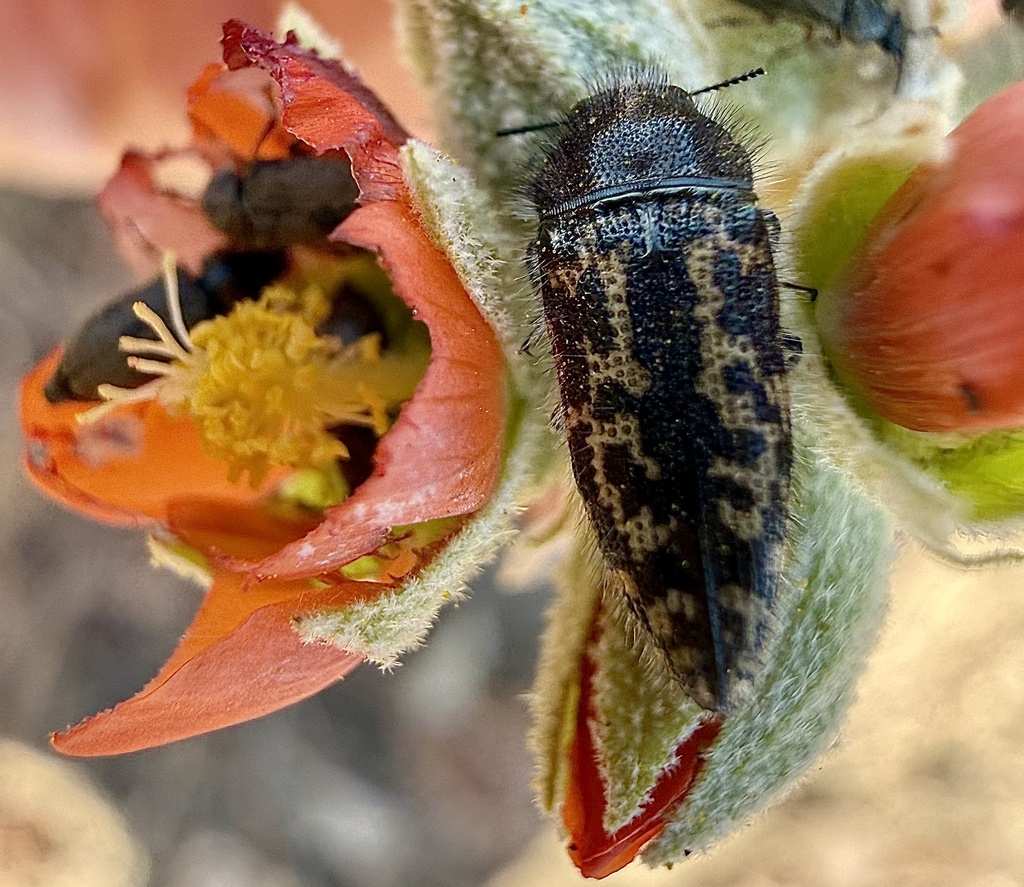
Image source: iNaturalist / Irene
The Four Stages Every Homeowner Should Know
Egg stage. Adult female beetles lay eggs in moist soil, typically in mid to late summer. They prefer turfgrass with good soil moisture and often lay in lawns that are regularly irrigated. A single female can lay 40 to 60 eggs over her lifespan.
The eggs hatch in about two to three weeks depending on soil temperature.
Larval stage (the grub). This is the stage that damages your lawn. The newly hatched grubs are tiny, maybe ¼ inch long, and they start feeding on grassroots immediately. They grow through three growth phases called instars.
By late fall, they can be over an inch long. They feed aggressively in late summer and early fall, then burrow deeper into the soil to overwinter. In spring, they move back up and feed again before pupating.
Pupal stage. In late spring, the mature grub forms a pupal cell in the soil. Inside, it transforms into an adult beetle. This stage lasts a few weeks.
The adult beetle remains in the cell until conditions are right for emergence.
Adult stage. The adult beetle emerges from the soil, typically in late spring to early summer. For Phyllophaga species, this is usually May or June, hence the name "june bugs." The adults feed on foliage (some species more than others), mate, lay eggs, and die. The cycle starts over.
Why Timing Changes Everything
Here's the critical piece most people miss. The length of this life cycle varies by species. Most common lawn pest grubs, including Japanese beetles and European chafers, complete their life cycle in one year.
Egg to adult and back to egg within 12 months.
But Phyllophaga species, the true june bugs, often take two to three years to complete their life cycle. That means a grub you find in your lawn this year might have hatched two summers ago. It also means june bug populations don't spike and crash the way Japanese beetle populations do.
They're more stable year to year.
This matters for treatment because the age of the grub determines how vulnerable it is to control products. Young, newly hatched grubs (first instar) are the easiest to kill. Large, mature grubs (third instar) are much harder to control.
If you don't know the species, you don't know the age, and you can't time your treatment correctly.
The Real Problem: Not All Grubs Come From June Bugs
This is where identification becomes essential. Let's walk through the most common white grub species found in residential lawns and what each one turns into.
June Bug Grubs (Phyllophaga Species)
These are the grubs that actually become june bugs. They're found throughout the US and Canada, with the highest diversity in the eastern and central states. The adults are typically ½ to 1 inch long, reddish-brown to dark brown, and they fly clumsily around lights in late spring and early summer.
The grubs follow a two-to-three-year life cycle in most regions. That means you'll find all age classes in the soil at any given time. They feed on grassroots of all common cool-season and warm-season turfgrasses.
Damage tends to be moderate compared to Japanese beetles, but heavy populations can still cause significant brown patches.
Japanese Beetle Grubs
Japanese beetles (Popillia japonica) are arguably the most destructive grub species in the eastern US. The adults are unmistakable: metallic green body with copper-colored wing covers. They were first detected in the US in 1916 and have been spreading westward ever since.
As of 2026, established populations reach across most of the eastern half of the country, with quarantine efforts ongoing in western states.
The grubs complete their life cycle in one year. They're the most susceptible to milky spore disease (Paenibacillus popilliae), which is species-specific and won't affect other grub types. Japanese beetle grubs tend to cause the most dramatic lawn damage because the entire population feeds at the same time and they're voracious root feeders.
European Chafer Grubs
European chafers (Amphimallon majale) are a major pest in the Northeast, Midwest, and parts of the Pacific Northwest. The adults are tan to light brown, slightly smaller than june bugs, and they emerge in massive numbers on warm June evenings. If you've ever seen what looked like a swarm of moths around a tree on a summer night, those were probably European chafers.
Their grubs also complete a one-year life cycle. They're particularly damaging because they feed later into the fall and earlier in the spring than most other species. That extends the damage window significantly.
They're also more tolerant of cold soil temperatures, which means they keep feeding when other grub species have stopped.
Green June Beetle Grubs
Green June beetles (Cotinis nitida) are primarily a southeastern US pest. The adults are large, velvety green, and they fly during the day, which is unusual for scarab beetles. You'll often see them buzzing around compost piles, mulch, and ripe fruit.
Their grubs are unique among common lawn pests because they crawl on the surface at night. You'll find them slithering across sidewalks, driveways, and patios on warm evenings. They feed on decaying organic matter in the soil more than on living grassroots, but their tunneling activity still damages turf.
They're also the largest grub species, reaching over 2 inches long.
How to Tell Them Apart: Raster Patterns and Timing
So how do you actually identify which grub species you have? The most reliable method is examining the raster pattern. That's the arrangement of hairs, spines, and bare areas on the underside of the grub's last abdominal segment.
It requires a hand lens or magnifying glass, but it's the standard identification method used by entomologists.
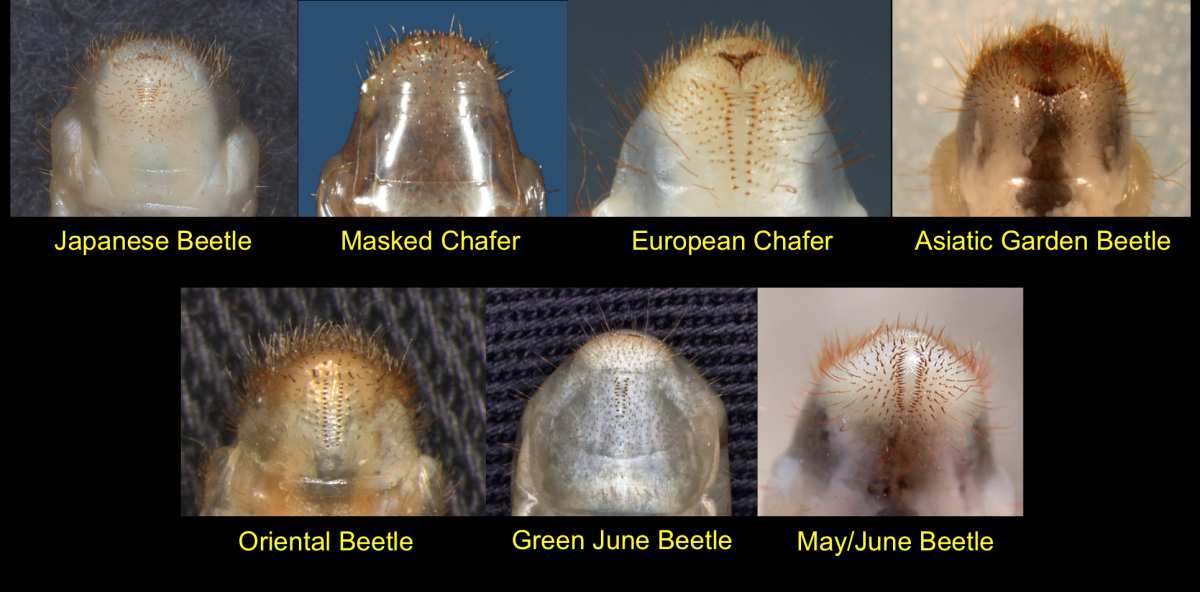
Image source: Bing (Web (fair-use with source credit))
Each species has a distinct raster pattern. Phyllophaga grubs have a distinctive V-shaped or palmate (hand-shaped) arrangement of hairs. Japanese beetle grubs have two parallel rows of spines forming a V-shape.
European chafer grubs have two diverging rows of spines that don't form a clean V. Green June beetle grubs are large enough that you can often identify them by size alone, but their raster pattern is also distinctive.
If you don't have a hand lens handy, you can still make an educated guess based on timing and behavior. Finding grubs actively crawling on the surface at night in the Southeast? Probably green June beetle grubs.
Finding massive brown patches in August in the Northeast with grubs still actively feeding? Likely European chafers. Finding grubs in spring that are already large and close to pupation?
Could be Phyllophaga species with their longer life cycle.
Your local cooperative extension office can also help with identification. Many will accept photos or physical samples and provide a species ID. This is often free or very low cost, and it takes the guesswork out of the equation entirely.
What Grub Damage Actually Looks Like
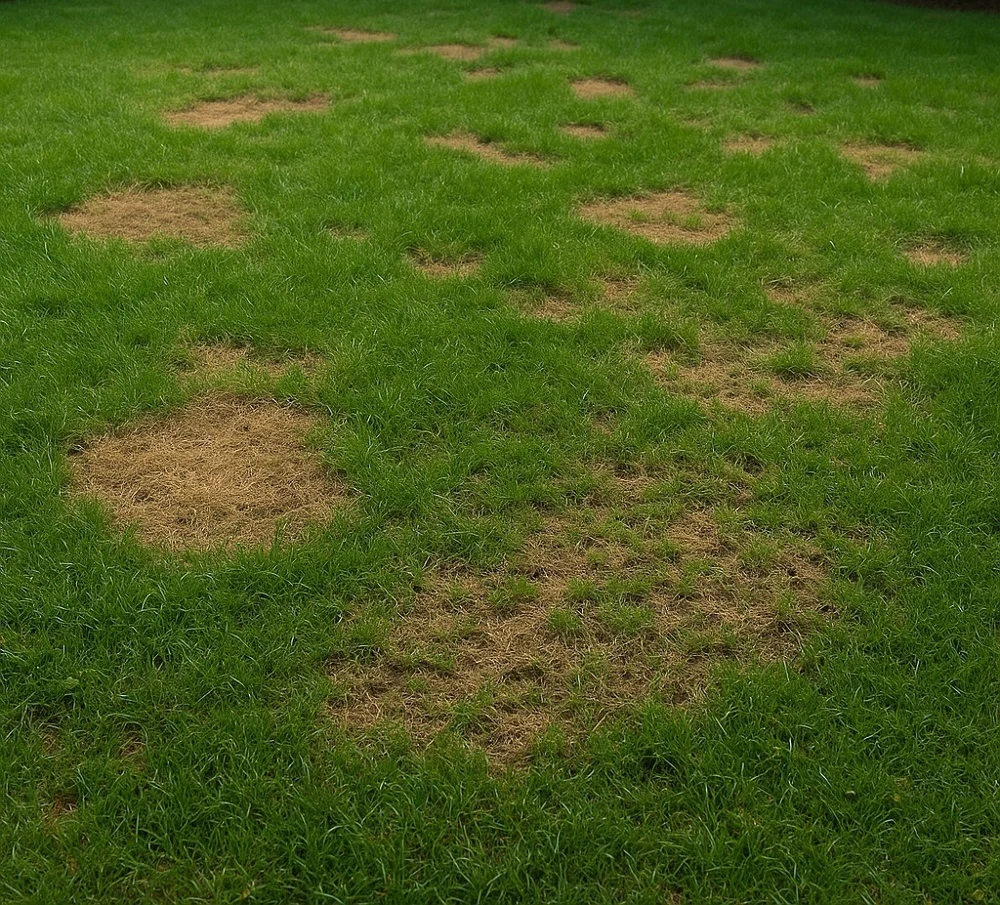
Image source: Bing (Web (fair-use with source credit))
Grub damage has a specific pattern that's different from drought, disease, or other lawn problems. Knowing what to look for helps you confirm you actually have a grub problem before you start treating.
Image source: Bing (Web (fair-use with source credit))
Signs Your Lawn Has a Grub Problem
Brown patches that peel back easily. This is the hallmark sign. Grubs eat the roots, so the turf loses its anchor in the soil. If you can grab a handful of brown grass and lift it up like a loose carpet, grubs are likely the cause.
The sod will feel spongy and disconnected from the soil underneath.
Irregular brown patches that expand. Unlike the circular patterns of many fungal diseases, grub damage tends to be irregular and patchy. It often starts in sunny, well-drained areas of the lawn where female beetles prefer to lay eggs. The patches grow as the grubs expand their feeding area.
Animal digging. Skunks, raccoons, and armadillos (in the South) love grubs. They'll tear up sections of lawn overnight to get at them. Birds pecking at the lawn can also indicate grubs, though birds eat many soil insects.
If you're seeing significant animal damage, your grub population is probably high.
Increased bird activity. Starlings, grackles, and other ground-feeding birds will congregate on lawns with heavy grub populations. You'll see them probing the soil with their beaks. This is a useful early warning sign before visible turf damage appears.
The Treatment Threshold: When You Actually Need to Act
Here's something that might surprise you. Finding grubs doesn't automatically mean you need to treat. Turfgrass is remarkably resilient and can tolerate a moderate grub population without showing visible damage.
The generally accepted treatment threshold for cool-season grasses is 5 to 10 grubs per square foot. For warm-season grasses or high-value lawns, the threshold drops to 2 to 3 grubs per square foot. Below these numbers, your lawn can outgrow the root damage and you're better off leaving the grubs alone.
To check your grub count, cut a 1-square-foot section of turf with a spade, about 2 to 3 inches deep. Peel it back and count the grubs in the soil and root zone. Check several spots around the damaged area and average the results.
This simple test tells you whether treatment is actually necessary and prevents you from spending money and applying products you don't need.
If your count is above the threshold, then it's time to act. But remember, the species matters. A count of 8 Japanese beetle grubs per square foot requires a different approach than 8 Phyllophaga grubs per square foot because their life cycles and vulnerability windows differ.
When to Treat Based on What Species You're Dealing With
Treatment timing is where most people go wrong. They see grubs, buy a product, and apply it the same weekend. That approach fails more often than it works because different species are vulnerable at different points in their life cycle.
The Treatment Calendar by Species
Japanese beetles and European chafers (one-year life cycle). The adult beetles lay eggs in July. Those eggs hatch in late July through August.
The young grubs are small, actively feeding, and most vulnerable to control products from mid-August through October. This is your curative window. If you're using a preventive product, apply it in June to early July before the eggs hatch.
Phyllophaga species (june bugs) (two-to-three-year life cycle). Because the life cycle spans multiple years, you'll find grubs of all ages in the soil at any given time. The best treatment window is late spring to early summer when the overwintered grubs are actively feeding near the surface before pupation.
A secondary window opens in late summer when any newly hatched grubs from that year's eggs are small and vulnerable.
Green June beetles (one-year life cycle, but different behavior). These grubs overwinter as large, mature larvae. They're hardest to control in spring because they're already in their final instar.
The best window is late summer to early fall when the new generation of young grubs is feeding near the surface.
Preventive vs. Curative: Which Approach You Need
Preventive treatment means applying a product before the grubs hatch. Products containing imidacloprid or chlorantraniliprole work this way. They create a toxic zone in the soil that kills young grubs as they hatch and start feeding.
Apply preventive products in June to early July for one-year species. They need to be watered in to move the active ingredient into the root zone where grubs feed.
Curative treatment means applying a product to kill grubs that are already present and feeding. Products containing trichlorfon or carbaryl work this way. They have a short residual in the soil, sometimes just a few days, but they kill grubs on contact or through ingestion.
Apply curative products in August to September when grubs are small and actively feeding near the surface.
If you're finding large grubs in spring that are already close to pupation, curative products are your only option. But understand that by this point, the damage is already done. You're preventing next year's population, not saving this year's lawn.
Your Options for Grub Control
You've got several approaches to choose from, and the right one depends on your situation, your comfort level with chemicals, and how much time you want to invest.
Chemical Treatments and What Works Best
Chlorantraniliprole (found in many professional-grade and some consumer products) is currently the gold standard for preventive grub control. It's effective at low application rates, has a long soil residual, and is less toxic to beneficial insects than older chemistries. Apply in June to early July.
It works on all common grub species.
Imidacloprid has been the go-to preventive product for years. It works well but has come under scrutiny for potential impacts on pollinators. Never apply it to flowering plants or allow it to drift onto blooming weeds in your lawn.
Apply in early summer before beetle flight peaks.
Trichlorfon is the main curative option. It kills grubs quickly, often within one to three days, but it breaks down fast in soil. You need to apply it when grubs are present and actively feeding.
Late summer is ideal. It's effective against all species but works best on young grubs.
Carbaryl is another curative option with a slightly longer residual than trichlorfon. It's broad-spectrum, meaning it kills beneficial insects too, so use it judiciously.
Biological Controls: Nematodes, Milky Spore, and Bt
Beneficial nematodes (Heterorhabditis bacteriophora) are microscopic roundworms that seek out and kill grubs in the soil. They're a good option for organic lawn care. Apply them in late summer when soil temperatures are above 60°F.
They need moist soil to move through, so water before and after application. Apply in the evening or on cloudy conditions because UV light kills them.
Milky spore (Paenibacillus popilliae) is a bacterium that specifically targets Japanese beetle grubs. It doesn't affect other species. It takes two to three years to establish in the soil, but once established, it can persist for 10 to 15 years.
It's a long-term solution, not a quick fix. Best applied in late summer when grubs are feeding.
Bacillus thuringiensis subspecies galleriae (Bt) is another biological option that works on several grub species. It's less commonly used than nematodes or milky spore but can be effective when applied correctly to young grubs.
Doing Nothing: When That's the Right Call
If your soil sample shows fewer than 5 grubs per square foot on cool-season turf, you probably don't need to treat. Your lawn can handle that level of feeding without visible damage. You'll also be preserving the beneficial organisms in your soil that naturally keep grub populations in check.
If you're seeing adult beetles but no lawn damage, that's also a sign to hold off. Not all beetle species cause significant grub damage, and a healthy lawn with deep roots can tolerate moderate feeding.
Common Mistakes That Waste Money and Kill Lawns
Treating at the wrong time. This is the big one. Applying a preventive product in September is pointless. The grubs have already hatched and grown.
Applying a curative product in May means the product breaks down before the new grubs hatch in August.
Not watering in the product. Most granular grub controls need to be watered in with at least ¼ inch of irrigation or rainfall. The active ingredient needs to reach the root zone where grubs are feeding. Applying to dry soil and leaving it on the surface wastes the product entirely.
Assuming all grubs are the same. As we've covered, different species have different life cycles. A one-size-fits-all approach leads to mistimed applications and poor results.
Over-treating. More product doesn't mean better control. Follow label rates exactly. Over-applying can damage your lawn, kill beneficial soil organisms, and create runoff concerns.
Ignoring the threshold. Finding a few grubs doesn't mean you have an infestation. Sample your lawn before you treat. You might save yourself time, money, and unnecessary chemical use.
Applying milky spore for non-Japanese beetle grubs. Milky spore only works on Japanese beetle grubs. If your problem is Phyllophaga or European chafer, milky spore won't help at all.
How to Check Your Lawn for Grubs (Step by Step)
Grab a spade, a piece of cardboard, and a tape measure. This takes about 10 minutes and gives you the information you need to make a smart decision.
Step 1. Choose a spot at the edge of a damaged area, or in a random spot if you haven't seen damage yet. Cut a square of turf about 1 foot by 1 foot, going about 3 inches deep.
Step 2. Peel back the turf like a flap and examine the soil and root zone. Count every grub you see. Check the top 2 to 3 inches of soil where grubs feed.
Step 3. Replace the turf flap and water it back in. It should re-root within a week or two.
Step 4. Repeat this process in three to four spots around your lawn. Average the counts.
Step 5. Compare your average to the treatment threshold. For cool-season grasses, that's 5 to 10 grubs per square foot. For warm-season grasses, it's 2 to 3 per square foot.
If you're above the threshold, identify the species using the raster pattern method or contact your extension office. Then choose your treatment based on the species and the current time of year.
Expert Tips from Turf Management Professionals
Water your lawn deeply but infrequently. Grubs thrive in consistently moist soil because that's where females prefer to lay eggs. Letting the soil dry out between waterings makes your lawn less attractive to egg-laying beetles without harming healthy turf.
Mow at the right height. Taller grass (3 to 4 inches for most cool-season species) develops deeper roots that can tolerate more grub feeding. Short, stressed lawns show damage at much lower grub populations.
Overseed in fall. If you had grub damage this year, overseed the affected areas in early fall. New grass fills in the bare spots and helps the lawn recover before next season.
Keep a simple log. Note when you see adult beetles, when you find grubs, and what species they are. After a year or two, you'll have a clear picture of your local grub cycle and can time treatments precisely.
Consider your region. In the Southeast, green June beetles are the primary concern. In the Northeast and Midwest, European chafers and Japanese beetles dominate. In the Plains states, Phyllophaga species are most common.
Your local extension service can tell you which species to expect.
When to Call a Pro Instead of DIY
If your grub count is consistently above 15 per square square foot across multiple samples, you've got a serious infestation. Professional lawn care companies have access to commercial-grade products and equipment that aren't available to homeowners. They can also apply products at precise rates and timing that's hard to replicate with consumer products.
If you've tried DIY treatment for two consecutive years and the problem persists, something is off. Either you're misidentifying the species, treating at the wrong time, or there's an underlying lawn health issue making your turf more susceptible. A professional assessment can identify what's going wrong.
If you have a large property (over an acre), the cost of professional treatment may actually be comparable to buying enough consumer product to cover the area properly. Factor in your time and the learning curve, and hiring out starts to make sense.
Frequently Asked Questions
How long does it take for a grub to turn into a june bug?
For Phyllophaga species, the full life cycle takes two to three years. The grub stage alone can last nearly two years before pupation. Japanese beetles and European chafers complete their cycle in one year, with the grub stage lasting about 10 months.
Can I use the same product for all grub species?
Most chemical controls work across species, but biological controls are often species-specific. Milky spore only kills Japanese beetle grubs. Beneficial nematodes work on multiple species but are most effective against young grubs.
Always check the product label for target species.
What time of year are grubs closest to the surface?
Grubs are nearest the surface in late spring (after moving up from overwintering depth) and in late summer to early fall (when young grubs are actively feeding). These are the best windows for curative treatments and for soil sampling.
Do june bugs come back to the same lawn every year?
Yes. Female beetles preferentially return to the same areas to lay eggs, especially if the soil conditions are favorable. If you had a june bug problem this year, expect a similar or larger population next year if you don't intervene.
Will grub damage heal on its own?
Minor damage often recovers on its own if the lawn is healthy and actively growing. Severe damage where the turf has been completely severed from the roots won't recover without reseeding or sodding. The grubs need to be controlled first, or they'll just eat the new grass roots too.
Are there any natural predators that control grubs?
Yes. Ground beetles, parasitic wasps, and certain fly species all prey on grubs. Birds, skunks, and raccoons eat them too, though the digging damage from mammals often outweighs the benefit.
Maintaining a healthy soil ecosystem with minimal pesticide use helps these natural predators keep grub populations in check.
The Bottom Line: What You Should Do Right Now
If you're reading this in spring or early summer and you had grub damage last year, now is the time to sample your lawn. Cut a few square-foot sections, count the grubs, and identify the species if you can. If you're above the treatment threshold, plan a preventive application for June to early July if you're dealing with one-year species.
If it's late summer and you're finding grubs, you're in the curative window. Apply a product containing trichlorfon or use beneficial nematodes while the grubs are small and near the surface. Water it in well.
If your grub count is below the threshold, skip the treatment. Focus on building a healthy lawn through proper mowing, watering, and fertilization. A robust lawn with deep roots can handle a moderate grub population without showing damage.
The single most important thing you can do is stop guessing. Sample your lawn, identify what you're dealing with, and time your treatment to the species and its life cycle. That's the difference between solving the problem in one application and fighting it for three years straight.
It looks like we've already covered all the major sections in the previous batches. The article has walked through the life cycle, species identification, damage signs, treatment timing, control options, common mistakes, DIY sampling steps, expert tips, when to call a pro, and a full FAQ. The bottom line section wrapped everything up with actionable next steps.
At this point, the reader has everything they need to identify what's in their lawn, decide whether treatment is necessary, and time it correctly based on the species. Going further would just be repeating ourselves.
So here's the short version of where to start. Grab a spade this weekend. Cut a few squares, count your grubs, and compare that number to the threshold.
If you're over it, figure out which species you're dealing with using the raster pattern or your local extension office. Then pick the right product for the right time of year. That's it.
That's the whole game.
Stop guessing, start sampling, and you'll save yourself years of frustration and wasted money.