You've got C-shaped white larvae curled up in your soil, and you're wondering what happens next. Do grubs turn into beetles, or is something else going on down there? The answer isn't as simple as a yes or no, and getting it wrong could mean treating your lawn at the wrong time or missing the window entirely.
Here's the thing. Not every grub in your yard is destined to become the same kind of beetle, and some aren't beetle larvae at all. Species like the Japanese beetle and European chafer follow predictable cycles, but their timing, appearance, and damage patterns differ enough to trip people up.
Understanding what you're actually looking at makes the difference between a quick fix and a recurring problem season after season.

Image source: Bing (Web (fair-use with source credit))
Quick Answer
Yes, grubs turn into beetles. Grubs are the larval stage of scarab beetles. The species determines exactly which beetle emerges.
This transformation follows complete metamorphosis: egg, larva, pupa, then adult. Timing varies by species, but most grubs you find in lawns complete this cycle within one to three years.
The Short Answer: Yes, But It Depends on What Kind of Grub You're Looking At
Grubs are beetle larvae. That part is straightforward. The complication is that "grub" isn't a scientific term.
It's a catch-all label for any C-shaped, soft-bodied larva you find in soil. Some belong to scarab beetles. Others are larvae of weevils, moths, or even bees.
If you've got true beetle grubs, specifically scarab beetle larvae, then yes, they absolutely turn into beetles. Species like the Japanese beetle (Popillia japonica), European chafer (Amphimallon majale), June beetles (Phyllophaga species), and masked chafers all spend their larval stage as what most people call grubs.
But if you're looking at something that resembles a grub but doesn't quite match the profile, you might be dealing with billbug weevil larvae or caterpillars. Those don't become beetles. They become weevils or moths.
That distinction matters for control timing and method.
So before you plan any treatment, you need to confirm you're working with scarab beetle grubs. The identification keys below will help you sort that out.
How the Grub-to-Beetle Transformation Works (Complete Metamorphosis)
All scarab beetles go through complete metamorphosis. Scientists call this holometabolous development. It means the insect passes through four completely distinct life stages, each with a different body structure and behavior.
The grub you find in your lawn looks nothing like the beetle that eventually emerges.
The process works like this: an adult female beetle lays eggs in moist soil during summer. Those eggs hatch within one to two weeks into first instar larvae (the earliest grub stage). The larvae feed on roots and organic matter through multiple growth stages, shedding their exoskeleton as they enlarge.
After the final larval stage, the grub stops feeding, forms a pupal chamber in the soil, and transforms into a pupa. Inside that earthen cell, the body reorganizes entirely. Legs, wings, antennae, and the hardened adult exoskeleton develop.
Within a few weeks, the adult beetle emerges, mates, and the cycle restarts.
This is why grub control timing is so specific. Treatments target the larval stage when grubs are small and actively feeding near the surface. Once they pupate, most products become far less effective.

Image source: iNaturalist / Irene
The Four Life Stages: Egg, Larva, Pupa, Adult
Each stage has a distinct timeline and role in the insect's development.
Egg Stage
Female beetles lay eggs in moist soil, typically from mid-June through July depending on the species. Eggs are small, white, and oval. They hatch within 10 to 14 days under warm, moist conditions.
This is the hardest stage to spot without magnification.
Larval Stage (The Grub)
This is the feeding and growth stage that causes lawn damage. Scarab beetle grubs go through three instars. First instars are tiny and feed shallowly.
Second and third instars grow larger and consume more root mass. Most species overwinter as third instar larvae deep in the soil, below the frost line. They return to the root zone in spring for one final feeding push before pupating.
Pupa Stage
The pupal stage is a non-feeding transformation phase. The grub builds a small earthen cell, usually 4 to 6 inches below the surface. Inside, it molts into a pupa.
Wing pads, legs, and the adult body plan become visible through the translucent pupal skin. This stage typically lasts two to four weeks in late spring or early summer.
Adult Stage
The fully formed beetle chews its way out of the pupal cell and up to the surface. Adults feed on foliage, flowers, or fruit depending on the species. Their main job is reproduction.
The Japanese beetle adult lives about 30 to 45 days. During that time, a single female can lay 40 to 60 eggs.
Which Grubs Become Which Beetles? A Species Breakdown
Different scarab species produce different adult beetles, and their life cycles don't all line up on the same calendar. Here's a quick reference for the most common lawn grub species in North America.
| Grub Species | Adult Beetle | Adult Appearance | Grub Size (Mature) | Life Cycle Length | Peak Egg Laying |
|---|---|---|---|---|---|
| Japanese beetle | Popillia japonica | Metallic green and copper, 3/8 inch | 1 inch | 1 year | June to July |
| European chafer | Amphimallon majale | light tan/brown, 1/2 inch | 3/4 to 1 inch | 1 year | June to early July |
| June beetle (May beetle) | Phyllophaga species | Dark brown to black, 3/4 to 1 inch | 1 to 2 inches | 2 to 3 years | May to June |
| Masked chafer | Cyclocephala species | Dull tan/brown, 1/2 inch | 3/4 inch | 1 year | June to July |
| Black turfgrass ataenius | Ataenius spretulus | Shiny black, 3/8 inch | 1/2 inch | 1 to 2 years | June to July |
| Green June beetle | Cotinis nitiva | Velvety green, 3/4 to 1 inch | 2 inches | 1 year | July to August |
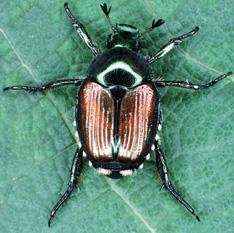
Image source: Wikimedia Commons / USDA
This breakdown matters because treatment windows shift based on egg-laying timing. European chafers and Japanese beetles lay eggs in June and July, so preventive treatments need to go down before or during that window. June beetles with multi-year cycles mean you could be dealing with overlapping generations in the same lawn.
How to Tell Beetle Grubs Apart From Other Lawn Larvae
Not every white larva in your soil is a beetle grub. Billbug weevil larvae look almost identical to the untrained eye. Cutworms and armyworms get found in soil too.
Here's how to sort them out.
True Scarab Beetle Grubs
- C-shaped body when at rest
- Creamy white body with a distinct brown or tan head capsule
- Three pairs of legs near the head
- Raster pattern (a distinctive arrangement of hairs and spines) on the underside of the abdomen tip, near the rear end
- Found curled just below the soil surface in the root zone
Billbug Weevil Larvae
- Similar C-shape and color
- No legs (this is the key difference)
- Found inside grass stems or thatch, not just in soil
- Often accompanied by small round holes in stems where adults fed
Cutworms and Armyworms
- Not C-shaped; they stretch out straight or slightly curved
- Variable color (gray, brown, green, striped)
- More legs than beetle grubs
- Usually found on the soil surface or just below it, often near damaged plant stems
The raster pattern is the most reliable field identification tool for scarab grubs. If you have a hand lens or magnifying glass, flip the grub over and look at the last abdominal segment. The arrangement of hairs there is species-specific and well-documented in extension service guides.
If you don't see that pattern, or if the larva has no legs at all, you're probably not dealing with a beetle grub.
When Do Grubs Turn Into Beetles? Timing by Species
The transformation from grub to adult beetle doesn't happen on a single universal schedule. Each species follows its own calendar, and knowing that calendar is the key to effective control.
Japanese beetle grubs typically pupate in late May to early June. Adults emerge from mid-June through July, depending on soil temperature and latitude. European chafers follow a nearly identical timeline, with adult emergence peaking in late June.
If you've seen those metallic green beetles showing up in your garden around the Fourth of July, you're almost certainly looking at Japanese beetles.
June beetles take a longer route. Their life cycle spans two to three years, which means you'll find multiple size classes of grubs in the same lawn at the same time. Adults emerge in May to June, earlier than Japanese beetles.
Masked chafers also run on a one-year cycle with adult emergence in late June to early July.
Green June beetles are the late-season species. Adults don't emerge until July and August, and they're noticeably larger and more active during daytime than other scarab beetles. Their grubs are also the largest you'll commonly encounter, reaching up to 2 inches long.
Here's why this matters for treatment. Preventive insecticides need to be in the soil before eggs hatch. For most species, that means applying product in June to early July.
Curative treatments work best on young, small grubs in August to September. Miss those windows and you're either wasting product or dealing with damage that's already done.
How to Confirm You Have Grubs (Not Something Else)
Before you spend money on treatment, make sure grubs are actually the problem. Lawn browning has plenty of causes, and grubs are just one of them.
The simplest test is the tug test. Grab a handful of brown turf and pull. If the grass lifts up like a loose carpet with little resistance, grubs have likely severed the roots underneath.
Healthy turf, even when drought-stressed, holds firm.
For a more definitive answer, do a square-foot sample. Cut a 1-foot by 1-foot square of turf with a spade, about 2 to 3 inches deep. Peel it back and examine the root zone.
Count the grubs you find. Repeat this in several spots, especially along the edges of damaged areas where grub feeding is usually heaviest.
The commonly cited threshold is 5 to 10 grubs per square foot for cool-season turfgrasses. Warm-season grasses like bermudagrass and zoysiagrass can tolerate slightly higher numbers. Below that threshold, most lawns outgrow the damage with proper watering and fertilization.
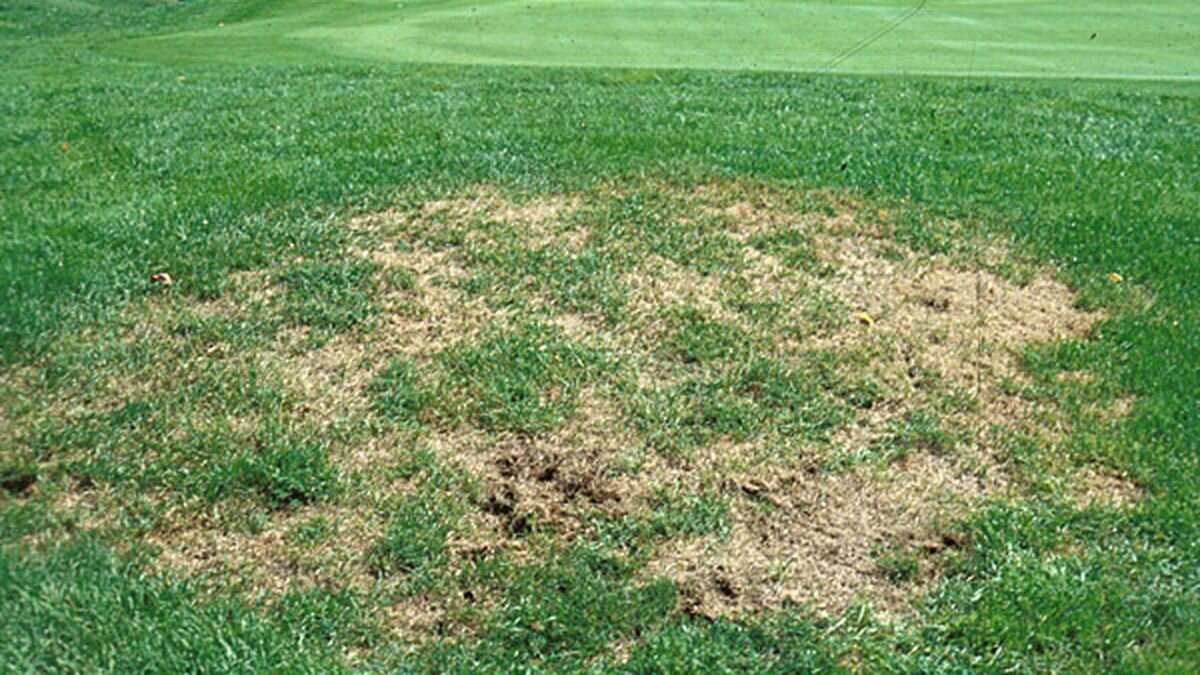
Image source: Bing (Web (fair-use with source credit)
Don't forget to check for secondary damage signs. Moles, skunks, and birds tearing up your lawn are often responding to a grub population below the surface. If you're seeing digging activity, there's a good reason to investigate further.
What to Do Once You Know What You're Dealing With
Your approach depends on what you found during sampling and what species you're dealing with.
Low Grub Count (Under 5 per Square Foot)
Do nothing. Your lawn can handle light grub feeding, especially if you're watering and fertilizing appropriately. Birds and other natural predators often keep small populations in check on their own.
Moderate Grub Count (5 to 10 per Square Foot)
This is the decision zone. If you're seeing visible damage or secondary pest activity, treatment makes sense. Biological options like Heterorhabditis bacteriophora nematodes work well at this level when applied correctly.
These microscopic roundworms enter grubs and release bacteria that kill them within 24 to 48 hours. They need moist soil and soil temperatures above 60°F to be effective.
High Grub Count (Over 10 per Square Foot)
Curative treatment is warranted. Products containing trichlorfon are designed for this situation. They work fast but have a short window of effectiveness, usually just a few days.
Timing matters more with curative products than with preventive ones.
If you're dealing with a multi-year species like June beetles, consider a preventive approach the following year. Products with imidacloprid or chlorantraniliprole applied in June to July target newly hatched grubs before they grow large enough to cause serious damage.
The Best Time to Treat Grubs Based on Their Life Cycle
Timing is everything with grub control. Apply at the wrong time and you're pouring product into the soil for nothing.
Preventive Treatment Window: June to July
This targets eggs and newly hatched first instar grubs. Products like chlorantraniliprole stay active in the soil long enough to catch grubs as they hatch and begin feeding. This is the most effective approach for Japanese beetles, European chafers, and masked chafers.
Curative Treatment Window: August to October
This targets second and third instar grubs that are actively feeding but haven't yet moved deep for winter. Trichlorfon is the go-to active ingredient for curative applications. It breaks down quickly, so it needs to hit grubs while they're still near the surface.
Spring Treatment: Generally Not Recommended
By spring, most grubs have grown large and moved deeper in the soil. They're also preparing to pupate, which means they've stopped feeding. Most insecticides target feeding larvae, so spring applications rarely deliver good results.
The exception is if you had severe damage the previous fall and want to hit any remaining grubs before they pupate. Even then, nematodes are a better spring option than chemical insecticides.
Biological Control Timing
Milky spore disease (Paenibacillus popilliae) is a bacterium that specifically targets Japanese beetle grubs. It works best when soil temperatures are between 70°F and 80°F, typically late summer. It takes one to three years to build up in the soil, so it's a long-term strategy rather than a quick fix.
Common Mistakes People Make With Grub Identification and Treatment
A few recurring errors show up in our research on grub management. Avoiding them saves time, money, and unnecessary pesticide use.
Treating Without Confirming
Applying grub product because your lawn is brown doesn't make sense unless you've actually found grubs. Fungal disease, drought stress, dog urine, and compacted soil all cause similar symptoms. Always sample first.
Applying Preventive Products Too Late
Putting down a preventive insecticide in September is too late. The eggs have already hatched and the grubs are growing. You've missed the window entirely.
Overwatering After Application
Watering in a granular product is necessary to move the active ingredient into the root zone. But flooding the area washes product away and reduces effectiveness. A light watering, about 1/4 inch, is enough.
Ignoring Species Identification
Different species have different vulnerabilities. Milky spore only works on Japanese beetle grubs. It won't touch European chafers or June beetles.
Know what you're dealing with before choosing a product.
Expecting Instant Results from Biological Controls
Nematodes and milky spore take time. Nematodes kill grubs within a day or two of contact, but you won't see the full effect for a week or more. Milky spore takes even longer to establish.
If you need fast results, biological options aren't the right choice.
Treating the Whole Lawn When Damage Is Patchy
Grub damage is rarely uniform. Spot-treat the affected areas and a buffer zone around them instead of blanketing your entire property. This reduces cost and limits pesticide exposure for beneficial insects.
When to Call in a Professional
Most grub problems are manageable on your own. But there are situations where bringing in a licensed pest control operator makes sense.
If you've sampled multiple areas and consistently find more than 15 grubs per square foot, the population is high enough that DIY spot treatments may not keep up. A professional can apply commercial-grade products with better soil penetration.
Multi-species infestations are another reason to call for help. If you're finding both Japanese beetle grubs and June beetle grubs in the same lawn, you're dealing with overlapping life cycles and different treatment windows. Sorting that out takes experience.
Finally, if you've tried treatment and damage continues the following year, something went wrong with timing, product choice, or application. A professional can assess what happened and adjust the approach.
Quick Decision Guide: What Type of Grub Do You Have?
Use this flowchart logic to narrow down your situation.
Found grubs in fall or spring, lawn peels up easily, damage appeared in late summer.
You likely have Japanese beetle or European chafer grubs. Sample to confirm count. If over 10 per square foot, plan a preventive application in June.
Found large grubs (over 1.5 inches), damage has been building over multiple years.
You're probably dealing with June beetles. Their multi-year cycle means you'll need a longer-term strategy. Preventive treatment in late spring to early summer is your best bet.
Found grubs but no lawn damage, count is under 5 per square foot.
Leave them alone. Natural predators will likely keep the population in check. Focus on proper watering and fertilization to help your turf outcompete minor root feeding.
Found C-shaped larvae with no legs.
These are billbug weevil larvae, not beetle grubs. Standard grub products won't work. Look for billbug-specific management advice from your local extension service.
Frequently Asked Questions
Do all grubs turn into beetles?
No. True scarab beetle grubs do become beetles. But other soil-dwelling larvae that people call grubs, like billbug weevil larvae, develop into weevils instead.
Proper identification matters before you choose a treatment.
How long does it take for a grub to become a beetle?
It depends on the species. Japanese beetles and European chafers complete their life cycle in one year. June beetles take two to three years.
The grub stage itself lasts several months to over a year depending on the species and climate.
Can I just let the grubs be?
If your count is under 5 grubs per square foot and your lawn looks healthy, yes. Most turfgrasses can tolerate light grub feeding. Problems start when populations exceed the threshold and root damage outpaces the grass's ability to recover.
Will grub damage fix itself?
Sometimes. If the grub population is moderate and you water and fertilize properly, turf can regrow roots and recover. Severe damage where turf peels away completely usually requires reseeding or sodding in addition to grub control.
What eats grubs naturally?
Ground beetles, parasitic wasps, birds (especially starlings and robins), skunks, and moles all feed on grubs. Encouraging this natural predation through reduced pesticide use can help keep populations manageable over time.