Yes, but only the right kind of grub. When people ask "do grubs turn into Japanese beetles," the answer is yes, Japanese beetle grubs absolutely do become adult Japanese beetles. But here's the catch that trips most homeowners up: not every white grub in your lawn is a Japanese beetle larva.
Several scarab beetle species produce nearly identical-looking grubs, and treating the wrong ones wastes money and chemicals.
The Japanese beetle (Popillia japonica) follows a predictable one-year life cycle that's well-documented in entomological research. Understanding that cycle is the single most important thing you can do to protect your lawn and garden. Get the timing right, and you can break the cycle entirely.
Get it wrong, and you're just feeding your soil expensive product for nothing.
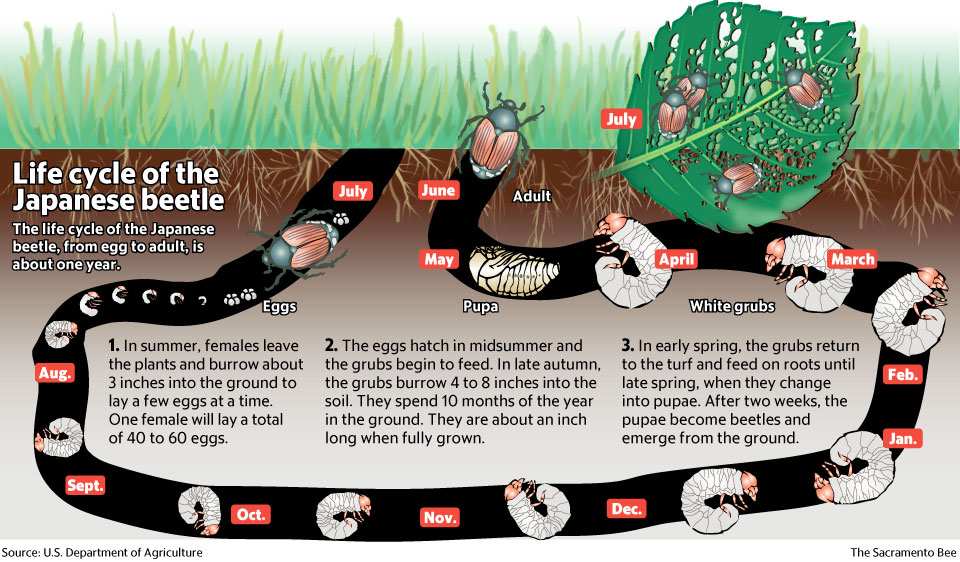
Image source: Bing (Web (fair-use with source credit))
Quick Answer
Yes, Japanese beetle grubs turn into adult Japanese beetles. The grub is the larval stage of the beetle's life cycle. The full cycle takes about one year from egg to adult.
Adult Japanese beetles emerge in late June through July in most regions. Treating grubs at the right time breaks this cycle and prevents future beetle populations.
The Japanese Beetle Life Cycle: From Egg to Adult
The Japanese beetle life cycle has four distinct stages, and each one matters if you're trying to control them. Here's how it plays out across a typical year in the eastern and midwestern United States.
Stage 1: Adult emergence and egg-laying (late June through August)
Adult Japanese beetles start emerging from the soil in late June, sometimes early July depending on your region and that year's soil temperatures. They live for about 30 to 45 days, and during that window they feed aggressively on over 300 species of plants. Roses, lindens, grapes, sassafras, and birch trees are among their favorites.
The females fly to nearby turfgrass to lay eggs, depositing them 2 to 4 inches below the soil surface. Each female lays 40 to 60 eggs over her short adult lifespan. This is the stage most people notice first, because the feeding damage on ornamental plants is dramatic and fast.
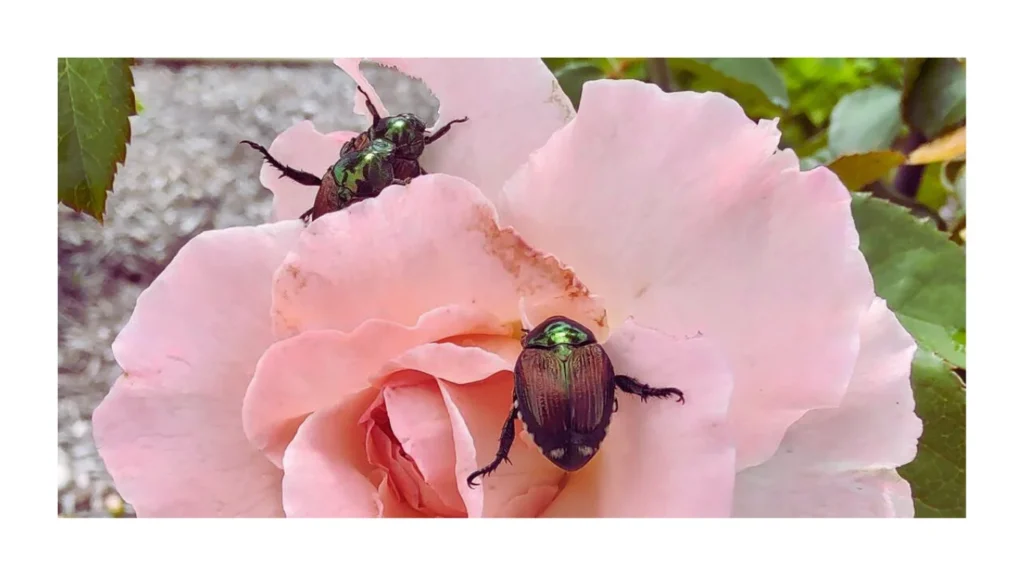
Image source: Bing (Web (fair-use with source credit))
Stage 2: Eggs hatch into grubs (mid-July through August)
Those eggs hatch within about two weeks. The tiny larvae, what we call white grubs, immediately start feeding on grass roots in the top few inches of soil. At this stage they're small and the damage is minimal.
But they grow fast.
Stage 3: Grub feeding and growth (August through October)
This is when the real lawn damage happens. The grubs are actively feeding on turfgrass roots throughout late summer and early fall. By October, they can reach about 1 inch in length.
The lawn starts showing brown patches that peel back easily because the roots have been severed. Skunks, raccoons, and birds may tear up the lawn looking for the grubs, adding insult to injury.
Stage 4: Overwintering and pupation (November through the following June)
When soil temperatures drop, the grubs burrow deeper, sometimes 4 to 10 inches down, to overwinter. They're dormant but alive. The following spring, they move back up toward the soil surface, feed briefly, then pupate.
The pupal stage lasts a few weeks before the new adults emerge and the cycle starts all over again.
The entire cycle takes roughly one year in most of the United States. In the deep South, it can compress slightly. In northern regions, it may stretch a bit longer.
How to Tell If Your Grubs Are Actually Japanese Beetles
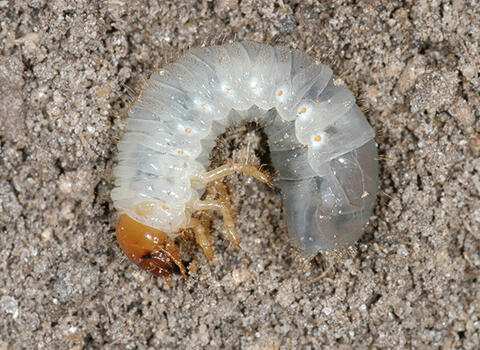
Image source: Bing (Web (fair-use with source credit))
This is where most people go wrong. You see white grubs in your lawn and assume they're Japanese beetles. But several scarab beetle species produce grubs that look almost identical to the untrained eye.
European chafers, May/June beetles, Oriental beetles, and masked chafers all leave behind C-shaped white grubs in turfgrass.
Here's what a Japanese beetle grub looks like:
- Creamy white body with a brown head capsule
- C-shaped posture when disturbed
- About 1 inch long at maturity
- Six legs near the head
- A distinctive V-shaped raster pattern (the arrangement of hairs and spines on the underside near the rear end)
That raster pattern is the reliable identifier. It requires a hand lens or magnifying glass to see clearly, and honestly, most homeowners aren't going to bother with that level of detail. That's fine.
You can still make a solid educated guess based on timing and damage patterns.
| Feature | Japanese Beetle Grub | European Chafer Grub | May/June Beetle Grub |
|---|---|---|---|
| Adult emergence | Late June-July | May-June | May-June |
| Grub size at maturity | ~1 inch | ~1 inch | Up to 1.5 inches |
| Raster pattern | V-shaped | Y-shaped, two rows of spines | Two parallel rows of spines |
| Damage peak | August-October | September-November | August-October |
| Geographic range | Eastern, midwestern US | Northeast, Great Lakes | Widespread across US |
If you're finding grubs in late summer and you've seen metallic green-and-copper beetles on your roses earlier that same year, there's a strong chance you're dealing with Japanese beetles. But if you never saw the adults, you can't be certain without closer inspection.
The practical takeaway: if you have a grub problem in your lawn during August or September, treat it. The specific species matters less than the timing and the damage threshold. Most state university extension services recommend treatment when you find 6 to 10 grubs per square foot of turf.
What Happens If You Ignore Japanese Beetle Grubs
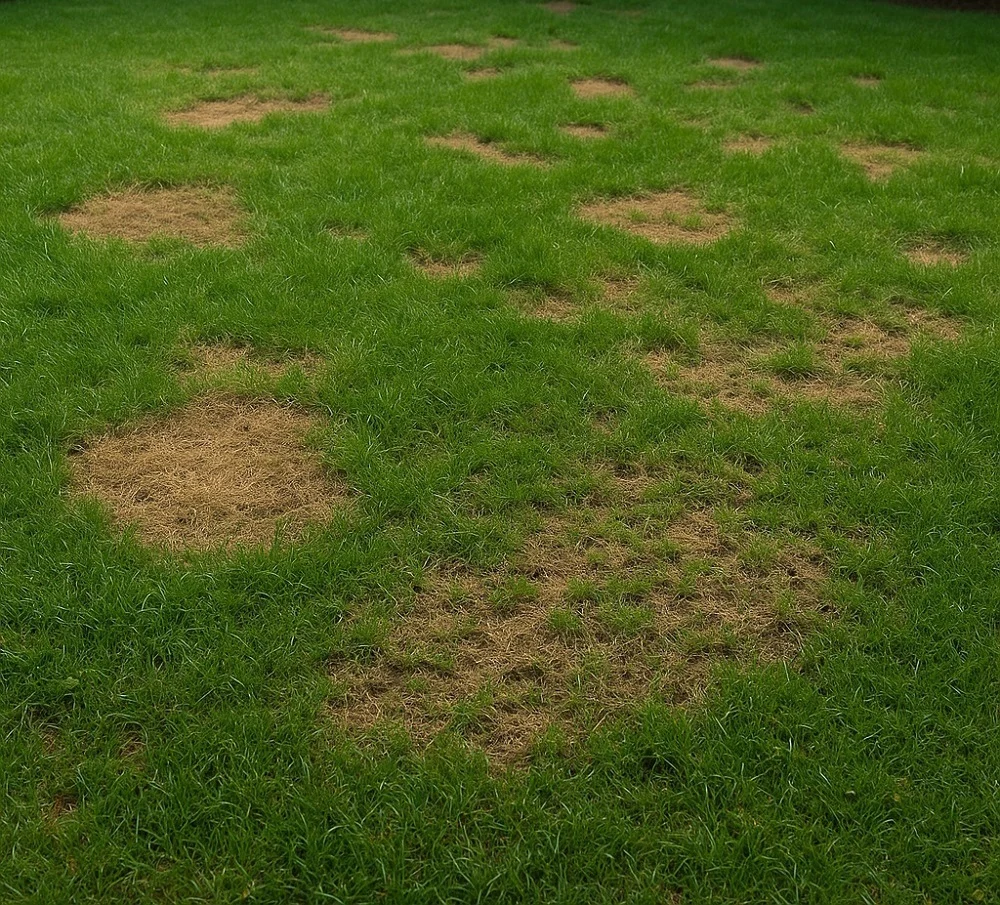
Image source: Bing (Web (fair-use with source credit))
Letting a Japanese beetle grub population go untreated is a gamble that usually doesn't pay off. Here's what you're looking at if you do nothing.
Lawn damage that gets worse each year
A small grub population one year becomes a bigger problem the next. Those adult beetles that emerge will lay eggs right back in your lawn. Without intervention, the population compounds.
What started as a few brown patches can turn into widespread turf loss by the second or third year.
Secondary pest problems
Grubs attract animals that dig. Skunks are the worst offenders. They'll roll back sections of sod overnight looking for a meal.
Raccoons and armadillos (in southern regions) do the same. The damage from digging often exceeds the damage from the grubs themselves. You end up with a lawn that looks like it's been rototilled.
Adult beetle feeding damage
Even if you can tolerate the lawn damage, the adult beetles that emerge will go after your ornamental plants. Japanese beetles skeletonize leaves, eating the tissue between the veins. They target roses, fruit trees, grapevines, and many shade trees.
A heavy infestation can defoliate a rose bush in days. The adults also aggregate, meaning once a few find a food source, dozens more show up.
Expensive lawn repair
Replacing dead turf costs significantly more than preventing grub damage. Sod, seed, soil amendments, and labor add up fast. A preventive grub treatment costs a fraction of lawn renovation.
Image source: Bing (Web (fair-use with source credit))
The brown patches from grub damage have a telltale characteristic: the turf lifts up easily like a loose carpet because the roots have been chewed through. If you can grab a handful of brown grass and it peels back without resistance, grubs are almost certainly the cause.
When to Treat Japanese Beetle Grubs (Timing Is Everything)
This is the single most important section of this entire article. Timing your treatment correctly is the difference between success and wasted effort. Get this wrong and nothing else matters.
There are two fundamentally different approaches to grub control, and each has its own window.
Preventive treatment: mid-June through late July
Preventive products contain active ingredients like chlorantraniliprole (the active ingredient in GrubEx) that target young grubs shortly after they hatch. You apply these products before you see damage, ideally when adult beetles are actively laying eggs. The product needs to be in the soil and watered in before those eggs hatch.
The window is mid-June through late July in most regions. Apply too early and the product degrades before the grubs appear. Apply too late and the grubs are already too large for preventive ingredients to work effectively.
Curative treatment: August through early September
Curative products, like those containing trichlorfon (Dylox), target larger, actively feeding grubs. This is your option if you missed the preventive window or if you discovered damage late in the season. The grubs need to be feeding near the soil surface for the product to make contact.
The curative window closes once soil temperatures drop and grubs move deeper for winter. In most regions, that means early October at the latest.
| Treatment Type | Best Application Window | Target Grub Stage | Active Ingredient Examples |
|---|---|---|---|
| Preventive | Mid-June to late July | Eggs and newly hatched grubs | Chlorantraniliprole |
| Curative | August to early September | Actively feeding larger grubs | Trichlorfon, carbaryl |
How to check your timing
If you're unsure where you are in the cycle, do a simple soil survey. Cut a 1-square-foot section of turf about 2 inches deep and peel it back. Count the grubs you find.
If they're small (under half an inch) and it's August, you're in the curative window. If you're finding adults on your plants in July, you're approaching the preventive window for next year.
One more thing worth noting: spring treatments for grubs are almost always a waste of money. By spring, Japanese beetle grubs are large, feeding briefly, and preparing to pupate. Most products won't affect them at this stage, and they're about to leave the soil anyway.
Save your money and plan for the following summer.
Preventive vs. Curative Grub Control: Which One You Need
Choosing between preventive and curative grub control depends entirely on when you're reading this and what your lawn looks like right now. These two approaches use different active ingredients, target different grub stages, and have completely different application windows.
Preventive control stops the next generation
Preventive products are designed to kill grubs shortly after they hatch, before they grow large enough to cause serious damage. Chlorantraniliprole-based products are the most widely recommended preventive option as of 2026. They have a favorable environmental profile compared to older chemistries and provide reliable season-long control when applied correctly.
The catch: you need to apply preventive products in mid-June through late July, before you see any damage. If you're reading this in September with brown patches in your lawn, preventive products won't help you this year. You've missed that window.
Curative control handles an active infestation
Curative products work fast. Trichlorfon-based products can kill existing grubs within a few days of application. This is your go-to if you're finding grubs right now and seeing damage.
The window for curative treatment runs from August through early September in most regions, while grubs are still feeding near the soil surface.
Carbaryl is another curative option, though it's broader-spectrum and more harmful to beneficial insects. It works, but the trade-off in non-target impact is worth considering.
Which approach fits your situation?
- If it's spring or early summer and you had grubs last year: go preventive.
- If it's August or September and you're finding grubs right now: go curative.
- If you've never had a grub problem and your lawn looks healthy: you probably don't need either. Monitor first.
Chemical and Organic Treatment Options That Actually Work
Not all grub treatments are created equal. Here's a breakdown of what's available, how each option works, and where each one fits.
Synthetic chemical options
- Chlorantraniliprole (GrubEx and similar products): Preventive only. Low toxicity to mammals and birds. Needs to be watered in after application. One application lasts the full season.
- Trichlorfon (Dylox): Curative. Fast-acting, kills grubs within 1 to 3 days. Higher toxicity profile, so follow label directions carefully. Keep pets off treated areas until the product has been watered in and the lawn has dried.
- Carbaryl (Sevin): Curative. Broad-spectrum insecticide that kills grubs and many other insects, including beneficial ones. Use only when necessary and avoid application near flowering plants.
Organic and biological options
- Beneficial nematodes (Heterorhabditis bacteriophora): These microscopic roundworms seek out grubs in the soil and release bacteria that kill them. They're a true biological control, meaning they actively hunt their prey. Nematodes need moist soil to survive, so water before and after application. Apply in the evening or on overcast days, since UV light kills them. They work best when soil temperatures are between 60°F and 85°F.
- Milky spore (Paenibacillus popilliae): A naturally occurring bacterium that causes disease specifically in Japanese beetle grubs. It's highly targeted and safe for other organisms. The downside: milky spore takes 2 to 4 years to establish fully in the soil. It's a long-term play, not a quick fix. Once established, it can persist for 10 years or more.
| Treatment | Type | Speed of Action | Environmental Impact | Best For |
|---|---|---|---|---|
| Chlorantraniliprole | Preventive chemical | Slow (weeks) | Low | Season-long prevention |
| Trichlorfon | Curative chemical | Fast (1-3 days) | Moderate | Active infestations |
| Carbaryl | Curative chemical | Fast (1-3 days) | High (broad-spectrum) | Severe infestations |
| Beneficial nematodes | Biological | Moderate (days to weeks) | Very low | Organic programs |
| Milky spore | Biological | Very slow (years) | Very low | Long-term Japanese beetle suppression |
Common Mistakes That Make Grub Problems Worse
Even when homeowners take action, several common errors undermine their efforts. Here's what to watch out for.
Applying preventive products too late
This is the number one mistake. If you apply a preventive product in September, the grubs are already too large for it to work. You've spent money and time for nothing.
Mark your calendar for late June and treat then.
Watering at the wrong time
Granular grub products need to be watered into the soil to reach the root zone where grubs feed. If you apply granules and leave them sitting on the surface, they're ineffective. Water within 24 to 48 hours of application.
But don't overwater, heavy rain right after application can wash the product away.
Using Japanese beetle traps as a control method
Those yellow bag traps attract Japanese beetles using pheromones and floral lures. Research from multiple university extension programs shows they attract far more beetles to your property than they catch. The beetles that don't enter the trap land on nearby plants and feed.
You end up with more damage, not less. If you use traps at all, place them far from the plants you're trying to protect, at least 30 feet away.
Treating when grub counts are below threshold
Not every grub in your lawn warrants a chemical application. If you're finding fewer than 5 grubs per square foot, your turf can usually tolerate them without visible damage. Over-treating kills beneficial soil organisms and wastes money.
Confusing grub damage with other problems
Brown patches in a lawn can result from fungal disease, drought stress, dog urine, or poor soil conditions. If the turf doesn't peel back easily, grubs probably aren't the cause. Always confirm grub presence before treating.
How to Confirm You Have Japanese Beetles (Not Another Grub Species)
If you want to know for certain whether your grubs are Japanese beetles, you need to look at the adults or examine the grubs closely.
Identifying adult Japanese beetles
Adult Japanese beetles are about half an inch long with a distinctive metallic green body and copper-brown wing covers. They have small white tufts of hair along each side of their abdomen. They feed during the day, often in groups, and are most active in direct sunlight.
If you're seeing these beetles on your plants in July, the grubs in your lawn are very likely Japanese beetle larvae.
Examining grubs for species confirmation
As mentioned earlier, the raster pattern on the underside of the grub near the rear end is the definitive identifier. Japanese beetle grubs have a V-shaped arrangement of spines. European chafer grubs have a Y-shaped pattern.
May/June beetle grubs have two roughly parallel rows.
This requires a 10x hand lens and some patience. For most homeowners, the practical approach is simpler: if you had Japanese beetle adults on your plants and you're finding grubs in your lawn the following late summer, treat for Japanese beetles. The correlation is strong enough to act on.
Sending samples to your extension office
If you want a definitive answer, your state university cooperative extension service can identify grub species from samples. Contact your local office for submission guidelines. This is free or low-cost and removes all guesswork.
When to Call a Professional vs. Handle It Yourself
Most homeowners can handle grub control on their own with basic equipment and careful timing. But there are situations where a professional makes sense.
DIY works when:
- Your lawn is under 10,000 square feet
- You can identify the problem as grubs with reasonable confidence
- You have a spreader for granular products and a hose for watering in
- You're comfortable reading and following pesticide label directions
Call a professional when:
- Your lawn is large and you need commercial-grade equipment
- You've tried DIY treatments for two consecutive years and the problem persists
- You're dealing with a mixed pest problem (grubs plus fungal disease, for example)
- You're uncomfortable applying pesticides near vegetable gardens, water features, or play areas
- You need a comprehensive integrated pest management plan
Licensed lawn care professionals have access to products and application equipment that aren't available to homeowners. They can also monitor grub populations across seasons and adjust treatment plans accordingly. Expect to pay more per application than DIY, but the expertise and equipment can be worth it for persistent or widespread problems.
Long-Term Strategies to Break the Japanese Beetle Cycle
One year of treatment won't solve a Japanese beetle problem permanently. These pests are persistent, and breaking their cycle requires a multi-year approach.
Combine preventive and biological controls
The most effective long-term strategy pairs annual preventive applications with biological controls like milky spore or beneficial nematodes. The preventive product handles the immediate threat while biological agents build up in the soil over time. After 2 to 3 years, you may be able to reduce or eliminate chemical applications if the biological controls have established well.
Maintain healthy turf
Thick, well-maintained turfgrass tolerates low grub populations without showing damage. Mow at the proper height for your grass type, fertilize appropriately, and water deeply but infrequently. A healthy root system can withstand some grub feeding without the brown patches that signal a crisis.
Monitor every year
Grub populations fluctuate. Some years will be worse than others depending on weather, natural predators, and other factors. Do a simple soil check each August to see what you're dealing with.
If grub counts are below threshold, skip treatment that year and save your money.
Frequently Asked Questions
Do all white grubs turn into Japanese beetles?
No. Many scarab beetle species produce white grubs that look nearly identical. European chafers, May/June beetles, Oriental beetles, and masked chafers all leave behind C-shaped grubs in turfgrass.
Japanese beetles are just one of several possibilities.
What month should I treat for Japanese beetle grubs?
For preventive products, apply in mid-June through late July. For curative products, apply in August through early September while grubs are still feeding near the soil surface.
Can I treat for grubs in the spring?
Spring treatment is generally not effective. By spring, Japanese beetle grubs are large, feeding briefly, and preparing to pupate. Most products won't affect them at this stage.
Plan your treatment for the following summer instead.
How many grubs per square foot is too many?
Most extension services recommend treatment when you find 6 to 10 grubs per square foot of turfgrass. Below that threshold, healthy turf can usually tolerate the feeding without visible damage.
Do Japanese beetle traps actually work?
Research shows Japanese beetle traps attract far more beetles to your property than they catch. They can increase feeding damage on nearby plants. If you use them, place them at least 30 feet away from plants you want to protect.
How long does milky spore take to work?
Milky spore takes 2 to 4 years to establish fully in the soil. It's a long-term solution, not a quick fix. Once established, it can suppress Japanese beetle grub populations for 10 years or more.