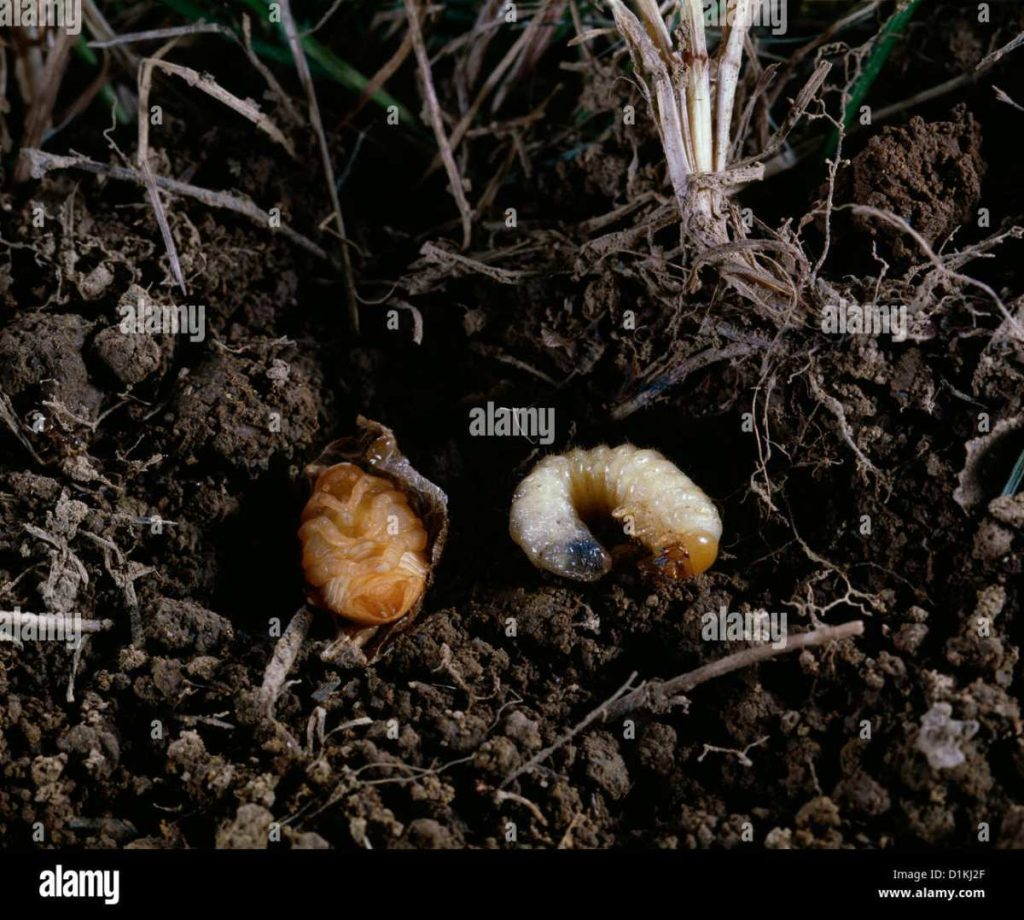

Image source: Wikimedia Commons / Сарапулов (CC BY)
You've noticed a tree looking rough. Leaves thinning out, branches dying back, maybe the whole canopy just seems off. Now someone mentioned grubs, and you're wondering if those squirmly little larvae in the soil are the real problem.
It's a fair question.
Do grubs kill trees? The honest answer is yes, but it's not simple. Whether grubs are the actual cause or just a background nuisance depends on the species, the tree's health, and what's happening underground where you can't see.
Let's break it all down so you can figure out what's really going on with your tree.
The Short Answer
Yes, grubs can kill trees. But most of the time, they're not the primary cause. Grubs eat roots.
Young trees and already-stressed trees are most at risk. A mature, healthy tree can tolerate far more grub activity than you might think. The real question is whether grubs are driving the decline or just along for the ride.
Why Grubs Killing Trees Gets Misdiagnosed So Often
Here's the frustrating part. Most grub damage symptoms show up above ground in ways that look exactly like other problems. We're talking wilting, yellowing leaves, branch dieback, and gradual decline.
If you're not digging around the roots, you're guessing.
Drought stress looks like grub damage. Root rot looks like grub damage. Nutrient deficiency, compaction, old age, it can all present similarly from the crown down.
And honestly, most homeowners and even some lawn care guys see grubs in the soil, connect the dots, and call it a day. But correlation isn't causation.
That said, there are patterns and context clues that help you sort it out. The species matters. The grub population density matters.
And the tree's baseline health before the grubs showed up matters more than anything. We'll walk through each of those in the article below.
The Grubs That Actually Threaten Trees vs. the Ones That Don't
This is where most of the confusion starts. The word "grub" gets thrown around for almost any C-shaped white larva found in the soil. But not all of these larvae are the same, and their damage potential varies wildly.
Image source: Wikimedia Commons / Сарапулов (CC BY)
Here's the general breakdown: grubs follow a life cycle of egg, larva, pupa, and adult beetle. The larval stage is when most root feeding occurs, typically from late summer through fall and again in spring before pupation. Tree species and age also heavily influence how much damage a grub population can do.
Let's look at the specifics.
European Chafer
The European chafer (Amphimallon majale) is one of the most destructive grub species across much of the northern United States. These are established throughout the Northeast and Midwest, and they're voracious root feeders. Heavy infestations will devastate fine root systems, especially on newly planted trees and shallow-rooted species.
European chafers have a one-year life cycle, which means populations can explode quickly if conditions are favorable. The adult beetles (tan-colored, smaller than Japanese beetles) emerge in June and July, and the larvae begin feeding on roots by late July. That timing is important when we get to treatment.
However, even with European chafers, context is everything. A well-established maple or oak with a deep root system can handle a moderate population. But a two-year-old dogwood just planted last spring?
That same population could set it back significantly or kill it outright.
Grub Species Comparison
| Species | Size (mature larva) | Color | Regional Peak Presence | Primary Host Risk |
|---|---|---|---|---|
| Japanese beetle (Popillia japonica) | Up to 1 inch | White, brown head | Mid-Atlantic, Midwest, Northeast | Turf first; trees vulnerable if population extreme |
| European chafer (Amphimallon majale) | 3/4 to 1 inch | White, brown head | Northeast, Midwest, Great Lakes region | Turf and young tree roots |
| June bug / June beetle (Phyllophaga spp.) | 1 to 1.5 inches | White, brown head | Nationwide (varies by species) | Turf primarily; occasional tree root feeding |
| Masked chafer (Cyclocephala spp.) | 1/2 to 3/4 inch | White, brown head | Southeast, South-Central U.S. | Turf primarily; warm-climate landscapes |
| Asiatic garden beetle (Maladera castanea) | 1/2 to 5/8 inch | White, brown head | Northeastern and Mid-Atlantic U.S. | Flowers, vegetables, turf; occasional root feeding |
As you can see, the species overlap in some regions but have different risk profiles for trees versus lawns. The key takeaway: if you have European chafers or a massive Japanese beetle grub population, young and newly transplanted trees are genuinely at risk.
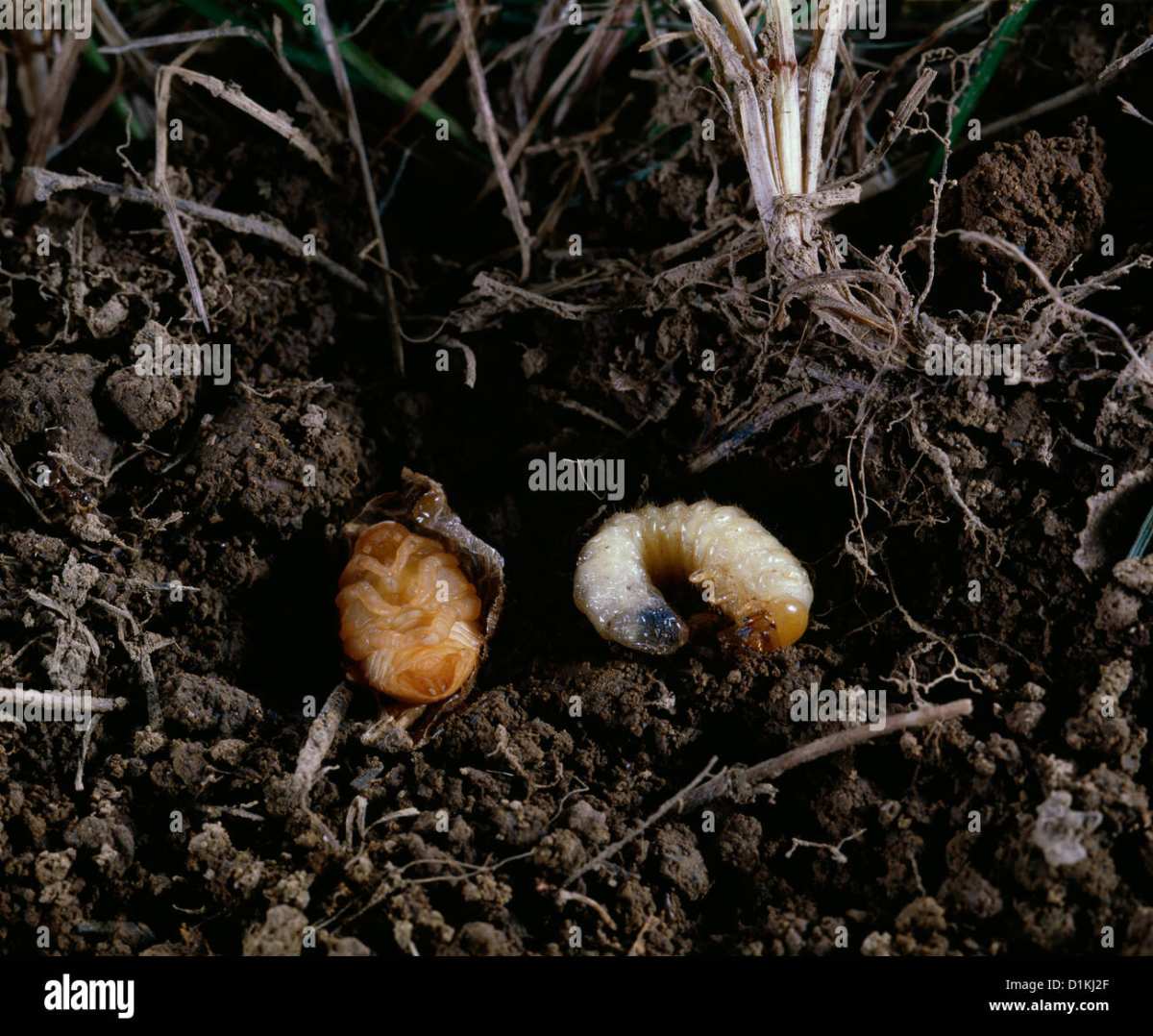
Image source: Bing (Web (fair-use with source credit))
How to Tell If Grubs Are the Problem or Something Else
Let's get practical. You need to look at the tree and then look at the ground. The problem is that by the time you see visible decline above ground, root damage has often been happening for weeks or even months.
So don't wait for the tree to look half-dead before investigating.
The underground damage you can't see
Starts with the fine roots. These are the hair-like feeder roots that do most of the water and nutrient uptake for the tree. Grubs eat those first because they're easy to consume and packed with nutrients.
If the fine root system gets heavily pruned, the tree starts droughting out even when there's plenty of moisture in the soil.
As grub populations grow or as the larvae get larger and hungrier, they go after progressively bigger roots. That's when you start seeing real structural impacts. A tree with a compromised root system is more vulnerable to windthrow (getting blown over in storms), less able to handle heat waves, and more susceptible to secondary pests and diseases.
The tricky part is that this entire process is invisible until the crown (the leafy top part) starts showing stress. And by then, you're playing catch-up.
Above-ground symptoms that mimic other issues
So what do you actually see if grubs are damaging a tree's roots?
Here's the list:
- Gradual thinning of the canopy. Not a sudden wilt, but a slow fade where the tree just has fewer leaves each year.
- Premature leaf drop. Leaves turn yellow or brown and fall off well before autumn.
- Branch dieback. Individual limbs or sections of the crown start dying, usually from the tips inward.
- Epicormic growth. The tree throws out a bunch of small, spindly shoots along the trunk or major branches. That's a stress response.
- Smaller-than-normal leaves. The tree just doesn't have the energy it used to.
Now here's the problem, and it's a big one. Every single one of those symptoms can also be root compaction, fungal root rot, bacterial wilt, nutrient deficiency, herbicide drift, or just plain old drought. You cannot diagnose grub damage by looking at the leaves alone.
You need to dig. Get a shovel and pull back some soil in the root zone, which is roughly the area under the canopy out to the drip line. Sift through that soil and count what you find.
The soil sampling test that gives you a real answer
Here's the reliable method. You'll want to dig with a shovel in several spots within the tree's root zone. Remove the soil, break it apart, and count the grubs you find.
Repeat at different spots under the canopy.
For a rough census, count the grubs you find in each square-foot sample and average the numbers. The benchmarks below, commonly used in turf and landscape pest management, give you a workable frame of reference for evaluating grub pressure around trees.
| Average Grubs per Square Foot | Risk Level for Established Trees | Risk Level for Young or Newly Planted Trees |
|---|---|---|
| 0-3 | Low. Generally not a concern. | Low, but monitor if tree is struggling. |
| 4-7 | Low to moderate. Watch if tree shows stress. | Moderate. Investigate other stress factors and consider treatment. |
| 8-15 | Moderate. Worth treating if tree is declining for unknown reasons. | High. Treatment recommended, especially for economically valuable trees. |
| 16+ | High. Likely contributing to decline. | Very high. Treatment strongly recommended. |
Keep in mind these are guidelines, not absolute thresholds. A vigorous, mature tree can tolerate populations that would kill a sapling. Context is everything, and that's exactly what the next section covers.
When Grubs Kill Trees and When They Don't
This is the core of the whole question, and the answer shifts depending on a handful of factors. The grunt counts above give you one piece of the puzzle. Now we need to look at the tree itself.
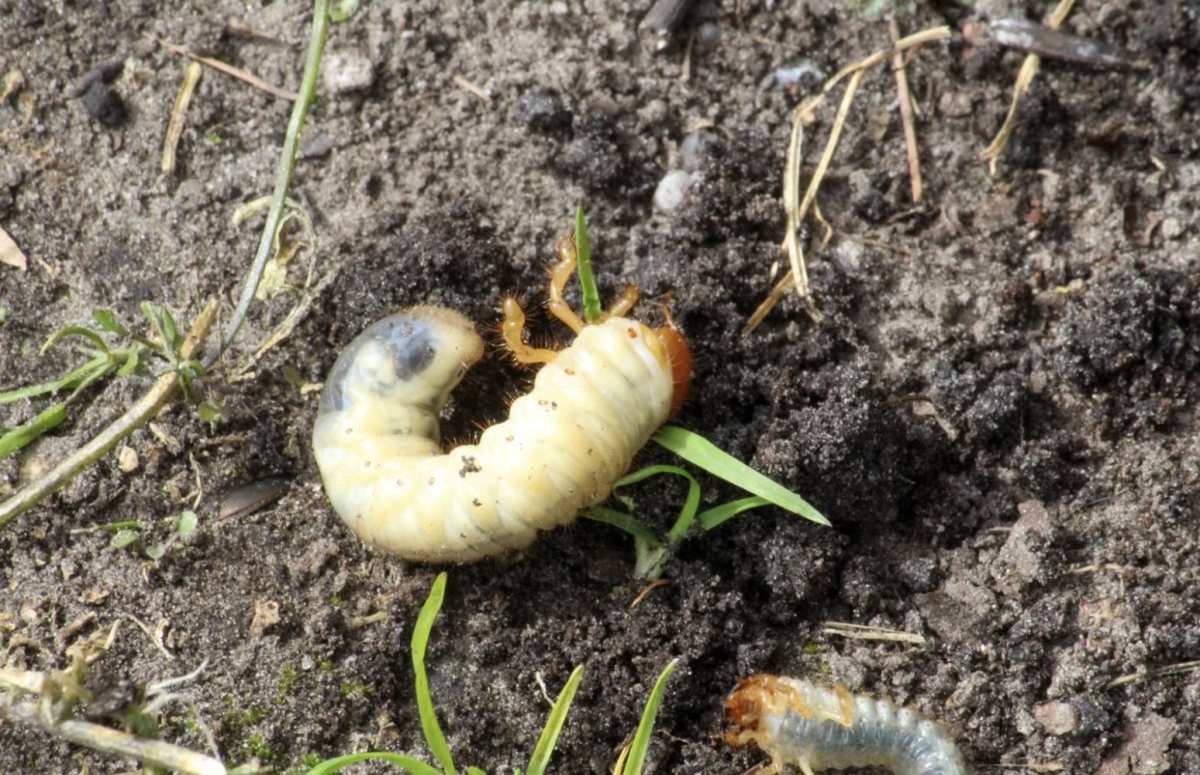
Image source: Bing (Web (fair-use with source credit))
Tree age and size matter more than grub count
This is probably the single most important variable in the whole equation. A healthy, mature tree with an established root system can lose a meaningful percentage of fine roots to grub feeding and still function just fine. The root mass is simply too large to be critically damaged by a typical grub population.
A young tree, say one to three years after planting, doesn't have that reserve. Its root system is still developing and relatively shallow. Even a moderate grub population can remove enough fine roots to push a young transplant past the tipping point, especially during a dry summer.
Newly planted trees are in the highest-risk category for a few reasons. First, they're already under transplant shock and working hard to establish new roots. Second, they're often planted in disturbed soil (construction sites, new landscapes) that may already be compromised.
Third, they have less carbohydrate reserve in their root systems to regenerate lost root tissue.
The pattern we see repeatedly is this: grubs are more likely to deal the finishing blow to young or already-stressed trees than to be the sole killer of a mature specimen. But heavy infestations, especially with European chafers or in drought conditions, can absolutely kill even established trees.
Healthy trees vs. stressed trees
A tree that's been well-watered, properly mulched, and is growing in decent soil has enormous capacity to tolerate grub feeding. Trees are resilient organisms. They can lose root tissue and regrow it, especially if the stress is addressed before it becomes chronic.
But that same tree, if it's hit with construction damage, soil compaction, prolonged drought, improper planting depth, or a soilborne disease at the same time grubs are feeding? That's when you get compounding decline. The tree can't keep up with the multiple demands on its resources, and the grubs become the straw that breaks the camel's back.
This is why arborists and extension services always recommend looking at the full picture. Grubs alone are rarely the only stress factor on a declining tree. They're usually a contributor, not the sole cause, but their impact can still be significant enough to tip a struggling tree over the edge.
Species differences in vulnerability
Some tree species have shallow, fibrous root systems that are more vulnerable to surface-feeding grubs. Others have deep taproots or extensive lateral root networks that are more tolerant. Here's a rough guide:
More vulnerable (shallow or fibrous roots):
- Dogwood (Cornus florida)
- Japanese maple (Acer palmatum)
- Crabapple (Malus spp.)
- Hemlock (Tsuga canadensis)
- Spruce (Picea spp.)
- Birch (Betula spp.)
More tolerant (deep or extensive roots):
- White oak (Quercus alba)
- Bur oak (Quercus macrocarpa)
- Pecan (Carya illinoinensis)
- Black walnut (Juglans nigra)
- Honeylocust (Gleditsia triacanthos)
- Some mature maples (varies by species and age)
That doesn't mean vulnerable species will always die from grub damage, or that tolerant species are immune. It's a risk gradient. And again, site conditions, weather events, tree age, and maintenance history all shift where a tree falls on that spectrum.
Grub Damage vs. Other Common Tree Killers
You've found grubs. Your tree looks terrible. Before you blame the larvae, rule out a handful of suspects that produce very similar symptoms.
This matters because the treatment for grubs won't fix a root rot problem, and watering won't help if bark beetles are already inside the trunk.
Fungal root rot
This is the big one. Root rot, caused by Phytophthora, Armillaria, or water molds, destroys root tissue from the inside. Trees can't take up water or nutrients properly and decline progressively over a single season or over several years, depending on the pathogen.
Here's a quick field check. Gently scrape a small section of bark on fine roots with a knife or thumbnail. Healthy root tissue is white or pale underneath.
Brown, mushy, or darkened tissue points toward rot. Grubs leave roots shortened or missing but the remaining tissue is healthy-colored. Root rot leaves roots discolored, brittle, or soft, often with a foul smell.
If you see fungal mushrooms (conks) flare at the base of the trunk or surface roots, Armillaria root rot is likely present. No amount of grub control will save a tree with advanced Armillaya infection. The standard management recommendation is to remove severely infected trees and choose resistant species for replanting, since the pathogen persists in soil and dead root material for years.
Drought stress
Wilting, canopy thinning, branch tips dying back. That's also drought stress. The difference is usually speed of onset and weather patterns.
Grub damage shows up gradually as root loss accumulates. Drought damage appears after extended dry periods, especially during summer heat.
Also, drought-stressed trees often show uniform decline across the whole canopy. Grub damage sometimes hits one side of a tree harder where grubs cluster. Not always, but it's a clue.
Check the soil moisture a few inches down. If it's been dry for weeks and the tree is wilting, water deficiency is more likely the culprit. Soggy, poorly drained soil points to root rot, not drought stress.
Borers
Borers are beetle or moth larvae that tunnel into the trunk and major branches, not the roots. Common ones include the emerald ash borer, bronze birch borer, and various longhorned beetles. Their damage looks like canopy decline, but you'll also see exit holes in the bark, galleries under loose bark, or sawdust-like frass at the base.
Grubs eat roots underground. Borers eat wood in the trunk and branches. Totally different insects, totally different treatment approaches.
If you see entry/exit holes or galleries, borers are likely involved, not grubs. Get a positive identification before treating, because borer-specific systemic insecticides work differently than grub-control products applied to the soil.
How to Check Your Trees for Grub Damage
Time to get your hands dirty. The only way to know if grubs are truly the problem is to get into the soil and actually look.
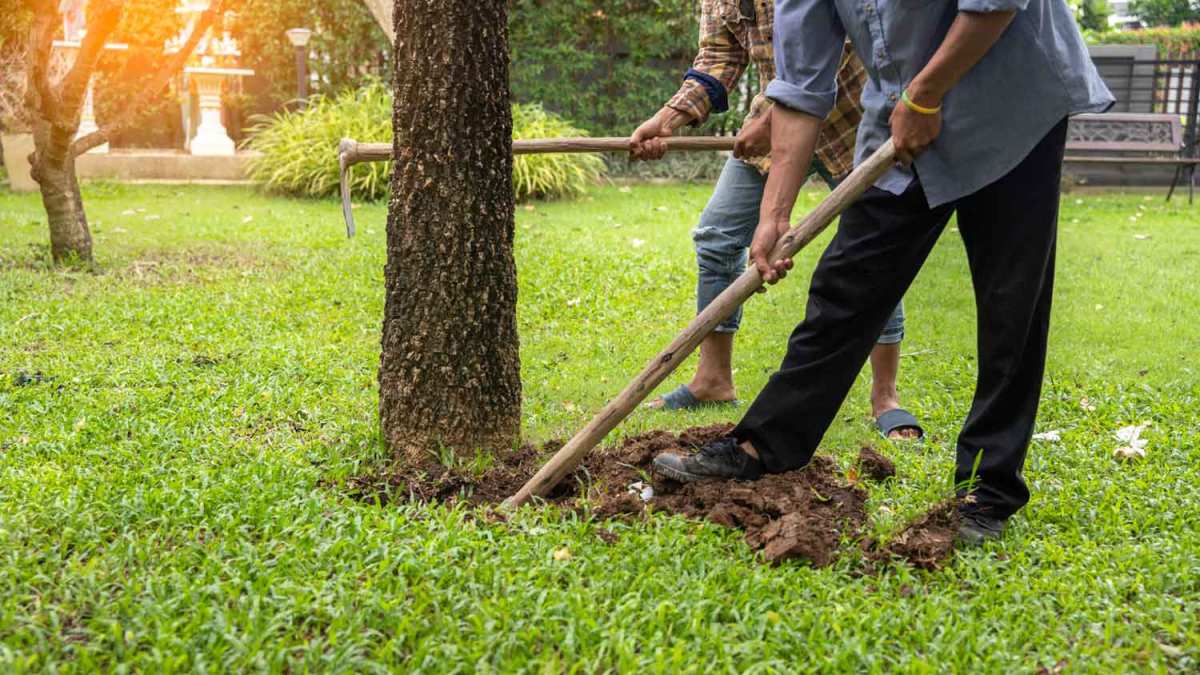
Image source: Bing (Web (fair-use with source credit))
When to investigate
Late August through October is the sweet spot. That's when grubs are actively feeding and large enough to spot easily. You can also check in early spring, but some species have already pupated by then, so you might underestimate the population.
Avoid checking in midsummer during extreme heat. Grubs tend to move deeper into the soil as the surface dries out, and you'll get a false negative.
Where to dig
Focus on the critical root zone, which extends outward from the trunk to at least the drip line (the outer edge of the canopy). For young trees, that might be only 3 to 5 feet from the trunk. For a mature oak, it could be 20 feet or more.
Start digging in spots where you see the worst symptoms. If one side of the canopy is thinning more, check that side's roots first. Remove the top 2 to 4 inches of soil and break it apart carefully.
Grubs are usually in that shallow layer.
What qualifies as a dangerous threshold
The general landscape threshold is around 8 to 10 grubs per square foot for concern. But remember, context matters. A healthy 30-year-old oak with 12 grubs per square foot is probably fine.
A 2-year-old Japanese maple with the same count is in trouble.
Some extension guidelines use a simpler rule: if you find more than 5 grubs in a single square-foot sample from a young or stressed tree, it's worth treating. For mature, vigorous trees, treat only if you see a genuine decline trend and rule out other causes or if populations are very high (above 20 per square foot).
Also look at the roots themselves. If you see obvious chewing damage, missing fine roots, or pruning of small lateral roots, the grubs are actively causing harm, not just hanging out in the soil.
What to Do If Grubs Are Killing Your Tree
First things first. Assess whether the tree can realistically be saved. If the tree is already more than 50 percent dead, has structural trunk damage, or is a safety hazard, removal might be the better use of your money and effort.
If the tree is worth saving, focus on three priorities: protect the remaining roots, reduce the grub population, and support the tree's recovery.
Can the tree be saved?
Here's a rough guide based on canopy health:
- Canopy 0-25 percent declining: Very good chance of recovery with proper treatment and cultural care.
- Canopy 25-50 percent declining: Guarded prognosis. The tree can possibly recover, but recovery will take multiple seasons.
- Canopy 50-75 percent declining: Poor prognosis without intensive intervention. You may be prolonging the inevitable, depending on species and age.
- Canopy 75-100 percent dead: Consider removal. At that point, the root system is likely too compromised for meaningful recovery.
Treatment options that actually work
Milky spore, a naturally occurring bacterium, targets Japanese beetle grubs and works best in warmer climates. It can take one to three years to establish effectively as a long-term biological control. In the interim, beneficial nematodes can give more immediate suppression.
Specifically, species like Heterorhabditis bacteriophora seek out grubs in the soil and kill them within 24 to 48 hours.
Other biological controls include fungal products like Beauveria bassiana, which infect insects but tends to have variable results in field conditions. For organic and low-toxicity programs, these options make sense. But the real-world results can be inconsistent, so view them as part of a broader plan rather than a guaranteed silver bullet.
Neem oil and azadirachtin products work as anti-feedants and growth disruptions for a variety of pests, including young grub larvae. They're best applied before grub populations build to damaging levels. As a standalone curative control for heavy infestations, they're generally less effective than synthetic options.
When populations are high and trees are genuinely at risk, synthetic insecticides like chlorantraniliprole (GrubEx) or trichlorfon (Dylox, sold under various trade names) function as curative controls. Chlorantraniliprole works well on smaller, early-instar larvae, while trichlorfon is more effective against larger grubs later in the season. Always follow the label, consider potential impact on pollinators and aquatic life, and confirm registration status in your state.
Timing matters enormously. For most grub species, the best treatment window is late July through September when grubs are small, actively feeding near the surface, and most vulnerable. Fall applications of preventive products work best 1 to 2 months before peak grub activity in your region.
When removal is the right call
If the tree is dead or mostly dead, especially if it's near your house, power lines, or anything you value, removal is the responsible choice. Dead trees become brittle and hazardous quickly. And that dead tree is now prime habitat for bark beetles, borers, and other pests that can spread to your other trees.
Once removed, treat the soil before replanting if heavy grub pressure remains. Otherwise, your new tree is facing the same enemies its predecessor lost to.
Preventing Grub Damage Around Trees Long-Term
You don't need to sterilize the soil. That's not realistic, and it would harm the beneficial organisms that keep ecosystems healthy. The goal is managing populations so they don't reach damaging levels around your most valuable trees.
Cultural practices that build tree resilience
Healthy trees tolerate pest pressure. That's the single most effective long-term strategy. Proper watering during dry spells, mulching with 2 to 4 inches of organic mulch out to the drip line, avoiding soil compaction near root zones, and proper fertilization based on soil tests all add up to a tree that can handle some root feeding without showing stress.
Overwatering can be just as damaging as drought. Soggy soil stresses roots and promotes fungal disease, which attracts some pests. Water deeply but infrequently rather than keeping the surface constantly wet.
Long-term biological controls
Milky spore applied to lawns and landscape beds will gradually build a population of Paenibacillus popilliae bacteria that infect and kill Japanese beetle grubs. It works best in USDA zones 5 through 9 where soil temperatures are warm enough for spore germination. Once established, milky spore can remain active for several years.
Beneficial nematodes applied annually in late summer provide supplemental control. They're living organisms, so they need to be applied when soil temperatures are above 55°F and kept moist after application. They won't eliminate every grub, but they'll suppress populations naturally, reducing the need for chemical controls over time.
Milky spore takes patience. It's a long game, not a quick fix. If you need immediate relief for a tree that's already suffering, pair biological controls with a targeted treatment.
Mistakes People Made With Grubs and Trees
There are a few common missteps that can make things worse or waste money.
- Treating every tree the same way. A healthy mature shade tree and a stressed young ornamental have completely different risk levels. One-size-fits-all treatment ignores tree species, age, and health.
- Ignoring root collar problems. If the root flare is buried too deep, the tree is already compromised regardless of grub pressure. Fix first, assess second.
- Applying insecticide in the wrong season. Treatment windows matter. Applying preventive products in winter or late spring means the active ingredient has degraded by the time grubs are actively feeding.
- Overwatering after treatment. Some products release more freely in saturated soil, reducing their effectiveness. Follow label watering guidance.
- Expecting an overnight recovery. Root regeneration is slow. Trees treated after significant root loss may need two to three growing seasons to fully bounce back, even after the grub problem is controlled.
- Confusing grub species. Not all grubs are Japanese beetles. The species matters for treatment timing, so have grubs identified through your local extension service or a qualified arborist before spending money on a specific product.
When to Call an Arborist
You don't need a professional for every grub situation. If you have a moderate grub count around a mature tree that's otherwise healthy, you can probably handle monitoring and maintenance yourself.
Call a certified arborist when:
- Multiple trees on your property are declining simultaneously.
- The tree is large, near structures, or would be expensive if it failed.
- You've tried treatment and the tree continues to decline.
- You suspect root rot, borers, or other issues beyond grubs.
- The tree is a high-value specimen worth a professional assessment.
An ISA-certified arborist can perform a formal risk assessment, take soil and root samples for lab analysis, and recommend a treatment plan tailored to your specific situation. The consultation typically costs between $100 and $300, which is cheap insurance compared to removing a mature tree later.
Frequently Asked Questions
Can a tree recover from grub damage?
Yes, if the damage isn't too severe and you address the grub problem. Trees can regenerate lost fine roots over one to three growing seasons. The key is catching it early and supporting the tree with proper water and nutrition while it recovers.
How many grubs is too many around a tree?
For young or stressed trees, more than 5 grubs per square foot warrants treatment. For mature, healthy trees, populations under 15 per square foot are usually tolerable. The species of grub and the tree's overall health matter more than any single number.
What's the difference between grubs and borers?
Grubs feed on roots underground. Borers tunnel into the trunk and branches above ground. They're completely different insects requiring different treatments.
If you see holes in the bark or sawdust at the base, you're likely dealing with borers, not grubs.
When is the best time to treat for grubs?
Late July through September for most species in the northern U.S. That's when grubs are small, actively feeding near the soil surface, and most vulnerable to treatment. Southern regions may have extended or shifted windows depending on species.
Do grub treatments harm beneficial insects?
Some synthetic insecticides can affect non-target organisms, including beneficial soil insects. Biological controls like milky spore and beneficial nematodes are more targeted. Always read the label and follow application guidelines to minimize off-target effects.
Should I remove a tree that's dying from grub damage?
If the tree is more than 50 percent dead, structurally compromised, or near anything it could damage when it fails, removal is the responsible choice. A certified arborist can help you make that call.
Quick Decision Guide: Should You Treat, Monitor, or Remove?
Here's a simple framework for deciding what to do next based on what you find.
Treat now if you find:
- More than 8 to 10 grubs per square foot around young or stressed trees.
- Active feeding damage on roots combined with canopy decline.
- A tree that's valuable to your landscape and showing reversible symptoms (less than 50 percent canopy loss).
Monitor and improve cultural practices if you find:
- Fewer than 8 grubs per square foot around an otherwise healthy, mature tree.
- A tree that looks fine but has some grubs present at low levels.
- No visible root feeding damage despite some grubs in the soil.
Consider removal if the tree:
- Is more than 50 to 75 percent dead with no signs of recovery.
- Shows structural damage, trunk cavities, or signs of advanced root rot.
- Poses a safety risk to people, buildings, or utilities.
In every case, the most important step is correct identification. Spend the time (or the money on an arborist) to confirm what you're dealing with before spending money on treatments that might not address the actual problem. A $150 arborist consult is a lot cheaper than removing a $2,000 tree that didn't actually need to come down.
Frequently Asked Questions
Can a tree recover from grub damage?
Yes, if the damage isn't too severe and you address the grub problem. Trees can regenerate lost fine roots over one to three growing seasons. The key is catching it early and supporting the tree with proper water and nutrition while it recovers.
How many grubs is too many around a tree?
For young or stressed trees, more than 5 grubs per square foot warrants treatment. For mature, healthy trees, populations under 15 per square foot are usually tolerable. The species of grub and the tree's overall health matter more than any single number.
What's the difference between grubs and borers?
Grubs feed on roots underground. Borers tunnel into the trunk and branches above ground. They're completely different insects requiring different treatments.
If you see holes in the bark or sawdust at the base, you're likely dealing with borers, not grubs.
When is the best time to treat for grubs?
Late July through September for most species in the northern U.S. That's when grubs are small, actively feeding near the soil surface, and most vulnerable to treatment. Southern regions may have extended or shifted windows depending on species.
Do grub treatments harm beneficial insects?
Some synthetic insecticides can affect non-target organisms, including beneficial soil insects. Biological controls like milky spore and beneficial nematodes are more targeted. Always read the label and follow application guidelines to minimize off-target effects.
Should I remove a tree that's dying from grub damage?
If the tree is more than 50 percent dead, structurally compromised, or near anything it could damage when it fails, removal is the responsible choice. A certified arborist can help you make that call based on a professional risk assessment.