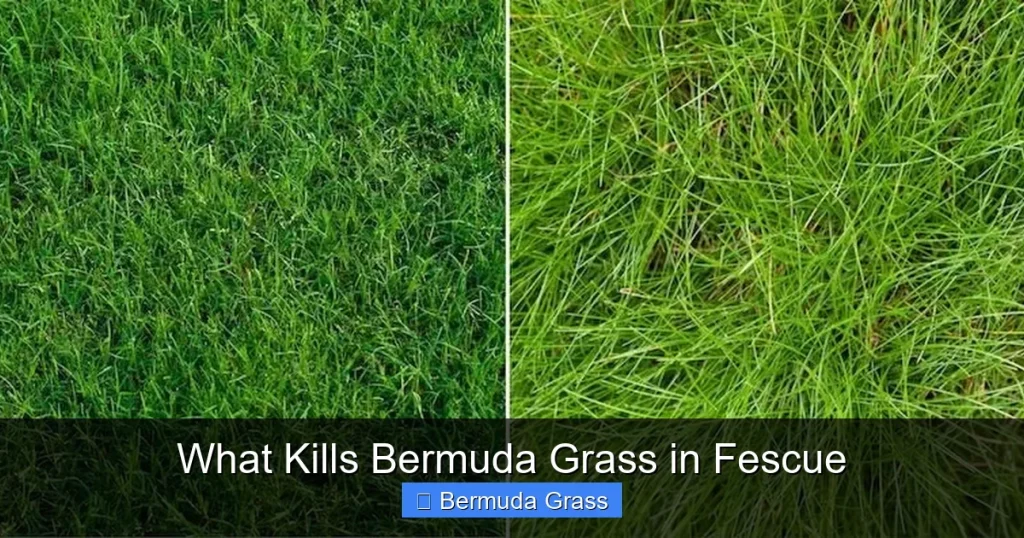
Dealing with invasive Bermuda grass in your fescue lawn can be frustrating, but it’s a conquerable challenge. This guide provides comprehensive strategies, focusing on selective herbicides like fluazifop or fenoxaprop, which target Bermuda without harming fescue. Learn the best application times, crucial safety measures, and follow-up care to effectively eliminate warm-season Bermuda and restore your beautiful, uniform cool-season turf.
What Kills Bermuda Grass in Fescue
Picture this: a lush, emerald green fescue lawn, soft underfoot, the envy of the neighborhood. Now imagine that perfect carpet being slowly, but surely, invaded by a wiry, lighter green, aggressively spreading intruder. That intruder, my friend, is Bermuda grass, and it’s a common nightmare for fescue lawn owners. If you’re wondering what kills Bermuda grass in fescue without destroying your entire lawn, you’ve come to the right place.
Bermuda grass (Cynodon dactylon) is a warm-season grass, revered for its toughness in hot climates. Fescue (e.g., Tall Fescue, Fine Fescue), on the other hand, is a cool-season grass, thriving in milder temperatures. They have different growth habits, color, and texture, making a mixed lawn look patchy and undesirable. The real challenge is Bermuda’s incredibly aggressive growth habit, featuring both rhizomes (underground stems) and stolons (above-ground runners), allowing it to spread rapidly and choke out desirable fescue.
In this comprehensive guide, we’ll walk you through the most effective strategies for how to kill Bermuda grass in fescue, focusing on methods that target the invader while preserving your cherished cool-season turf. We’ll cover everything from understanding your enemy to choosing the right tools, applying treatments safely, and preventing future invasions. Get ready to reclaim your beautiful fescue lawn!
Key Takeaways
- Selective Herbicides are Key: The most effective way to eliminate Bermuda grass from fescue is using selective herbicides containing active ingredients like fluazifop, fenoxaprop, or sethoxydim, which target Bermuda without harming fescue.
- Timing is Crucial: Apply herbicides when Bermuda grass is actively growing and healthy (typically during warm summer months) for maximum absorption and effectiveness, but avoid extreme heat.
- Multiple Applications are Necessary: Bermuda grass is incredibly persistent due to its extensive root system. Expect to apply herbicides 2-3 times, spaced 2-4 weeks apart, to achieve thorough eradication.
- Read Labels Carefully: Always prioritize safety and efficacy by strictly following the product instructions for mixing ratios, application rates, safety gear, and environmental precautions.
- Patience and Persistence Pay Off: Eliminating Bermuda grass from a fescue lawn is a gradual process that demands consistent effort and adherence to the treatment schedule. Don’t expect instant results.
- Maintain Fescue Health: A dense, vigorously growing fescue lawn is your best defense against future Bermuda encroachment. Practice proper mowing, watering, and fertilization to help your fescue thrive.
- Consider Professional Help for Severe Cases: If you’re dealing with a widespread, deeply entrenched Bermuda invasion or are unsure about chemical applications, consulting a local lawn care professional can save you time and frustration.
Understanding the Enemy: Why Bermuda Grass is So Tough
Before we discuss what kills Bermuda grass in fescue, it helps to understand why this plant is such a formidable opponent. Bermuda grass is a warm-season turfgrass, meaning it absolutely loves the heat of summer. It grows vigorously when temperatures are consistently above 80°F (27°C). Unlike fescue, which tends to slow down or go dormant in summer heat, Bermuda kicks into high gear, aggressively spreading and outcompeting the fescue.
Its secret weapon? Its elaborate root system. Bermuda grass doesn’t just spread by seeds; it uses two powerful methods of vegetative reproduction:
- Rhizomes: These are underground stems that can grow horizontally, sending up new shoots and roots along their path. This network makes it incredibly resilient, as cutting or pulling the top growth often leaves the underground rhizomes intact, ready to sprout again.
- Stolons: These are above-ground runners that creep along the soil surface, rooting at their nodes to form new plants. This is why Bermuda can quickly spread across large areas, seemingly overnight.
This dual-action spreading ability, coupled with its heat tolerance and ability to recover from stress, makes Bermuda grass a tenacious weed in a fescue lawn. You can’t just pick it out; you need a strategic approach to truly eliminate it.
The Golden Rule: Timing is Everything!
When you’re trying to figure out what kills Bermuda grass in fescue, the timing of your treatment is almost as important as the product you choose. Applying herbicides at the wrong time can be ineffective or, worse, harm your fescue.
Visual guide about What Kills Bermuda Grass in Fescue
Image source: backyardgardencare.com
The best time to attack Bermuda grass with herbicides is when it is actively growing and healthy. This means:
- Summer Months: Typically late spring through late summer (June, July, August in many regions). The grass needs to be green and vigorously growing so it can absorb the herbicide effectively and transport it throughout its extensive root and rhizome system.
- Warm Temperatures: Day temperatures should consistently be above 70°F (21°C), ideally between 80-90°F (27-32°C). This ensures the Bermuda is metabolically active.
- Avoid Stress Periods: Do not apply herbicides when the Bermuda grass (or your fescue) is stressed from drought, extreme heat, or cold temperatures. Stressed plants won’t absorb the herbicide well, making the treatment less effective.
- Before Dormancy: Avoid applying in early fall when Bermuda is preparing to go dormant, as it won’t absorb the chemical efficiently.
Treating during these peak growth periods maximizes the herbicide’s effectiveness, making sure that what kills Bermuda grass in fescue actually works.
Method 1: The Non-Chemical Approach (Limited Effectiveness)
While often less practical for established infestations, it’s good to understand non-chemical options, especially for very small, new patches.
Manual Removal (Pulling)
For small, isolated clumps of Bermuda grass that have just started to invade, manual removal can be attempted. However, this is incredibly labor-intensive and rarely 100% effective for Bermuda due to its rhizomes and stolons.
- How to do it: Use a garden fork or trowel to carefully dig around the Bermuda clump. Try to get as much of the root system and any runners as possible. Don’t just pull from the top, as this will leave rhizomes behind.
- Limitations: This method is extremely difficult for anything more than a tiny patch. If even a small piece of rhizome is left behind, the Bermuda grass will likely regrow. It’s almost impossible to get all of it without significantly disturbing your fescue lawn.
Solarization or Smothering (Not Practical for Mixed Lawns)
These methods involve covering the Bermuda grass with clear plastic (solarization) or opaque material like cardboard or tarp (smothering) to kill it. They work by either superheating the soil or depriving the plants of light.
- Limitations for fescue lawns: While effective for clearing an entire area before reseeding, these methods are generally not practical or desirable if you want to save your existing fescue. They will kill everything underneath the covering, including your fescue, leaving a bare spot. Therefore, if your goal is to selectively remove Bermuda from fescue, these are not the answer.
Method 2: The Most Effective Approach – Selective Herbicides
When you need to know what kills Bermuda grass in fescue without harming the fescue, selective herbicides are your best bet. These products are specifically designed to target and kill certain types of plants while leaving others unharmed.
What are Selective Herbicides?
Selective herbicides are chemical solutions that can differentiate between various plant species. In our case, they’re formulated to kill warm-season grasses like Bermuda while leaving cool-season grasses like fescue largely untouched. This “selectivity” is based on how different plants absorb, metabolize, or react to the specific chemical compounds.
These are often referred to as “grass killers” within a lawn, meaning they kill grassy weeds but are safe for turfgrass (though in our scenario, Bermuda is the grassy weed, and fescue is the desirable turf).
Key Active Ingredients to Look For
To effectively kill Bermuda grass in fescue, look for herbicides containing one of these active ingredients. These are known as graminicides, meaning they specifically target grasses.
- Fluazifop-P-butyl: This is one of the most widely recommended active ingredients for killing Bermuda grass in fescue and other desirable broadleaf or cool-season turf areas. Products like Ortho Grass B Gon Garden Grass Killer or Fusilade II often contain this. It works by interfering with lipid synthesis in susceptible grasses.
- Fenoxaprop-P-ethyl: Another effective graminicide, fenoxaprop is excellent for controlling unwanted grasses, including Bermuda, within fescue. Acclaim Extra is a popular professional product containing this.
- Sethoxydim: Often found in products marketed as “grass killers” for use around desirable plants, sethoxydim can also be used to suppress or kill Bermuda grass in fescue.
Important Note: Always double-check the product label to ensure it explicitly states that it is safe for use on fescue and effective against Bermuda grass. Some products might be excellent for Bermuda but harmful to fescue, or vice-versa.
Choosing the Right Product
When selecting your herbicide:
- Read the Label: This cannot be stressed enough. The label is your ultimate guide for what kills Bermuda grass in fescue, how to use it safely, and what to expect.
- Concentrates vs. Ready-to-Use: Concentrates are often more economical for larger areas but require careful mixing. Ready-to-use sprays are convenient for small, targeted patches.
- Check Reviews: Look for reviews from other homeowners who have successfully used the product to kill Bermuda grass in fescue in similar climates.
- Consider a Surfactant: Some herbicides work better with a non-ionic surfactant. This is a wetting agent that helps the herbicide stick to the grass blades and be absorbed more effectively. Check your herbicide label to see if a surfactant is recommended or already included.
Step-by-Step Guide to Applying Herbicides to Kill Bermuda Grass in Fescue
Once you’ve chosen your selective herbicide, careful application is key to success. Follow these steps precisely to ensure you effectively kill Bermuda grass in fescue while protecting your desirable turf.
Step 1: Prepare Your Lawn
Proper preparation enhances herbicide effectiveness:
- Mow Your Fescue: Mow your lawn 2-3 days before application. This ensures the Bermuda grass blades are at an optimal height to absorb the herbicide.
- Avoid Watering: Ensure the lawn is dry when you apply the herbicide. Don’t water for at least 24 hours before application.
- Ensure Bermuda is Healthy: The Bermuda grass you’re targeting should be green and actively growing, not stressed or dormant.
- Check the Forecast: Apply on a calm day with no wind to prevent drift onto desirable plants. Ensure no rain is expected for at least 24-48 hours after application.
Step 2: Gather Your Tools and Safety Gear
Safety first! Herbicides are chemicals and must be handled with care.
- Sprayer: A pump sprayer (either handheld or backpack style) is ideal for even application over patches. For very small spots, a trigger sprayer will work.
- Measuring Tools: Use dedicated measuring cups or spoons if working with concentrates.
- Personal Protective Equipment (PPE): Always wear chemical-resistant gloves, safety glasses or goggles, long sleeves, long pants, and closed-toe shoes. Follow specific PPE recommendations on your product label.
Step 3: Mix the Herbicide Accurately
This is where reading the label is non-negotiable.
- Read the Label Again: Pay close attention to the mixing ratios. Too weak, and it won’t work; too strong, and you risk damaging your fescue.
- Add Water First: For concentrates, always add the required amount of water to your sprayer first, then carefully add the herbicide concentrate. This helps prevent excessive foaming and ensures proper mixing.
- Add Surfactant (if needed): If your label recommends or you’re using a separate non-ionic surfactant, add it according to its instructions.
- Mix Thoroughly: Gently shake or swirl the sprayer to ensure the solution is uniformly mixed.
Step 4: Apply the Herbicide Evenly
Precise application ensures that what kills Bermuda grass in fescue does so effectively without collateral damage.
- Target the Bermuda: Walk at a slow, consistent pace, ensuring even coverage over the Bermuda grass patches. Avoid oversaturating the area. You want the leaves to be wet, but not dripping excessively.
- Avoid Drift: Be extremely careful to prevent the spray from drifting onto non-target plants, ornamental shrubs, or garden beds. Apply on calm days.
- Mark Your Path: For larger areas, it can be helpful to mark off sections or add a temporary turf marking dye to your solution to see where you’ve sprayed.
Step 5: Post-Application Care
After you’ve sprayed, a little patience is needed.
- No Water for 24-48 Hours: Do not water your lawn or expect rain for at least 24, and preferably 48, hours after application. This allows the herbicide to be fully absorbed.
- Avoid Mowing: Wait at least 2-3 days (or as specified on the label) after application before mowing. Mowing too soon can remove the herbicide from the leaf blades.
- Observe Results: It will take several days to a week or more to see noticeable results. The Bermuda grass will typically start to yellow, then brown, and eventually die back.
The Long Game: Multiple Applications and Follow-Up
Bermuda grass is persistent. Don’t expect a single application to completely eradicate it. This is a marathon, not a sprint.
Repeat Applications are Crucial
To truly kill Bermuda grass in fescue, repeat applications are almost always necessary. The initial spray will kill the surface growth and some of the shallow rhizomes, but deeper rhizomes can remain viable and sprout new growth.
- Schedule: Plan to reapply the herbicide 2-4 weeks after the initial application, depending on the product label and the severity of the infestation. You’ll likely need 2-3 applications throughout the summer growing season.
- Observe and Treat: Apply only when you see new Bermuda growth. If it’s completely dead and not regrowing, you might not need another application in that specific spot.
Overseeding Your Fescue
Once you’ve gained control over the Bermuda grass, it’s essential to help your fescue recover and fill in any bare spots left by the dying Bermuda.
- Timing: The best time to overseed fescue is in the fall (late August to October, depending on your climate). This gives the fescue seedlings time to establish before the stress of summer.
- Prepare the Area: Rake out dead Bermuda grass debris. Lightly aerate or dethatch if needed to create good seed-to-soil contact.
- Choose Quality Seed: Use a high-quality fescue seed blend that is appropriate for your region.
- Water Consistently: Keep the newly seeded areas consistently moist until the seedlings are established.
Prevention is the Best Medicine
After all that hard work figuring out what kills Bermuda grass in fescue and implementing your strategy, you’ll want to prevent future invasions.
Maintain a Healthy Fescue Lawn
A thick, dense fescue lawn is its own best defense against weeds, including Bermuda grass. Healthy fescue leaves less room and resources for invaders.
- Proper Mowing Height: Mow fescue at 3-4 inches. Taller grass shades the soil, keeping it cooler and suppressing weed seed germination, including Bermuda.
- Adequate Watering: Water deeply and infrequently to encourage deep fescue roots. Bermuda loves frequent, shallow watering.
- Fertilization: Follow a proper fertilization schedule for fescue, typically in fall and early spring, to promote strong growth.
- Address Bare Spots: Promptly overseed any bare or thin areas in your fescue lawn to prevent weeds from taking hold.
Edging and Barriers
If your neighbors have Bermuda grass, it can easily spread into your yard via stolons. Install physical barriers like deep plastic or metal edging along property lines to help deter its spread.
Promptly Address New Invasions
Stay vigilant! Regularly inspect your lawn for any new signs of Bermuda grass. Catching small patches early makes them much easier to control with spot treatments, preventing a full-blown infestation.
Troubleshooting: When Things Don’t Go as Planned
Sometimes, even with the best intentions, you might encounter issues when trying to kill Bermuda grass in fescue.
Herbicide Doesn’t Seem to Work
- Wrong Product or Active Ingredient: Double-check that the product you’re using is specifically designed to kill Bermuda grass in fescue. Not all “weed killers” are created equal.
- Incorrect Timing: Were you treating when the Bermuda was actively growing? If it was stressed, dormant, or too cold, the herbicide won’t be absorbed effectively.
- Improper Mixing or Application: Did you measure accurately? Was the spray applied evenly? Too dilute, or missed spots, will lead to poor results.
- Old or Expired Product: Herbicides can lose their potency over time. Check the expiration date.
- Environmental Factors: Rain too soon after application, or watering too early, can wash away the herbicide before it’s absorbed.
Fescue is Damaged
- Over-Application: Applying too much herbicide can stress or kill your fescue, even if it’s generally safe. Always stick to label rates.
- Off-Label Use: Using a product for a purpose or on a grass type not specified on the label can lead to damage.
- Wrong Product (Non-Selective): Accidentally using a non-selective herbicide (like glyphosate, which kills everything) will definitely damage your fescue.
- High Temperatures: Applying herbicides during extreme heat can increase stress on both grasses, potentially leading to fescue damage.
If you’re unsure or experiencing persistent problems, don’t hesitate to contact your local extension office or a certified lawn care professional. They can provide tailored advice for your specific situation.
Conclusion
Tackling Bermuda grass in a fescue lawn can feel like a daunting task, but with the right knowledge and persistence, it’s absolutely achievable. The key to success lies in understanding what kills Bermuda grass in fescue: primarily, selective herbicides containing fluazifop, fenoxaprop, or sethoxydim, applied correctly and at the right time.
Remember to be patient, as Bermuda grass is notoriously resilient and will require multiple applications to fully eradicate. By meticulously following product labels, ensuring proper application techniques, and nurturing your fescue lawn to be as dense and healthy as possible, you can effectively reclaim your turf. Say goodbye to the invasive Bermuda and welcome back the uniform, beautiful fescue lawn you’ve always wanted!