
Image source: Wikimedia Commons / Сарапулов (CC BY)
You've probably noticed it. Brown patches spreading across your lawn that don't respond to watering. Grass that feels loose underfoot, almost like it's not anchored down.
That's the classic signature of what grubs do to grass, and it catches most homeowners off guard because the real damage is happening underground where you can't see it.
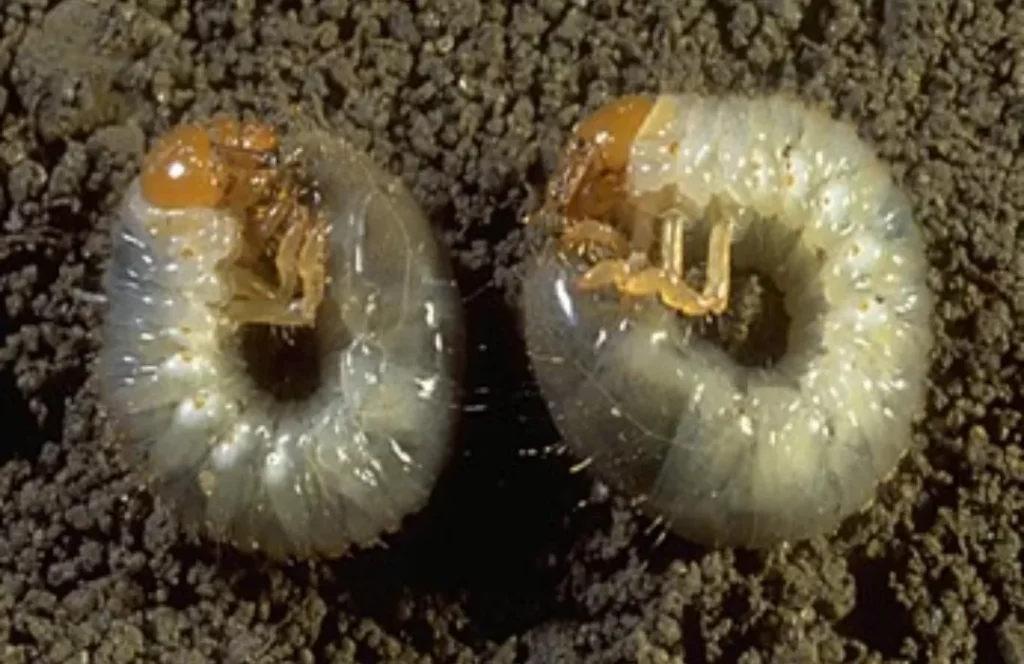
White grubs are the larval stage of scarab beetles, and they feed on grass roots just below the surface. A single grub won't destroy your lawn, but when populations build up, the root loss becomes severe enough that grass can't take up water or nutrients. Research from university extension programs consistently shows that cool-season grasses start showing visible damage when grub counts exceed about 5 to 10 per square foot, though warm-season grasses can be affected at even lower numbers.
The Quick Answer: What's Happening Under Your Feet
Grubs eat grass roots. They live in the top few inches of soil and chew through the root system. This cuts the grass off from water and nutrients.
The turf turns yellow, then brown, and eventually dies in patches. Damaged grass pulls up easily because the roots are gone. Animals like skunks and raccoons often dig up the lawn looking for the grubs, making the destruction even worse.
How Grub Damage Works: The Underground Feeding Process
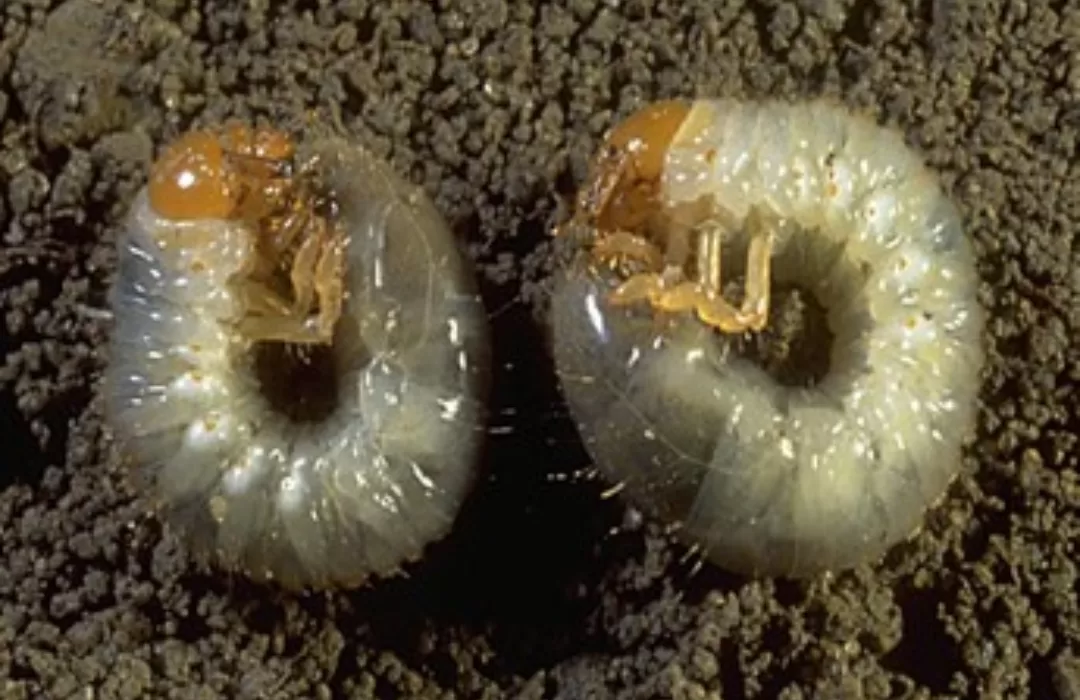
Image source: Bing (Web (fair-use with source credit))
To understand what you're dealing with, it helps to know the life cycle. Adult beetles lay eggs in the soil during mid to late summer. Those eggs hatch into small larvae within a couple of weeks, and those larvae start feeding on roots almost immediately.
The grubs are C-shaped, cream-white to grayish, with a brown head capsule and three pairs of legs near the head. They range from about a quarter inch when newly hatched to over an inch long by late summer. The largest, oldest grubs do the most damage because they're eating the most material at that stage.
Image source: Bing (Web (fair-use with source credit))
Here's the sequence that plays out underground:
- Eggs hatch in late July through August, depending on your region and the beetle species.
- Young grubs begin feeding on fine root hairs and organic matter in the top 1 to 3 inches of soil.
- Feeding intensifies through September and into October as the grubs grow larger and need more food.
- The grubs move deeper into the soil as temperatures drop to overwinter below the frost line.
- They return to the root zone in spring for a shorter feeding period before pupating into adult beetles.
The spring feeding is usually less destructive because the grubs are smaller and the grass is actively growing. The real damage window is late summer through fall, which is also when most homeowners first notice the problem. By the time you see brown patches above ground, the root damage has been building for weeks.
Different species cause slightly different patterns. Japanese beetle grubs tend to be the most destructive in the Northeast and Midwest. European chafers are common in the Great Lakes region and can tolerate cooler soils.
Northern masked chafers are widespread across the northern United States and southern Canada. The black turfgrass ataenius is smaller but can still cause significant damage on golf courses and high-maintenance lawns.
What Grub Damage Looks Like vs. Other Lawn Problems
This is where most people get tripped up. Grub damage looks a lot like several other common lawn issues, and treating the wrong problem wastes time and money. Here's how to tell the difference.
Grub damage signs:
- Irregular brown patches that start small and expand, often merging into larger dead areas.
- Grass that feels spongey or loose underfoot because the root system is compromised.
- Turf that lifts easily from the soil like a loose carpet, with little to no root resistance.
- Damage that appears or worsens during hot, dry weather because the weakened roots can't access enough water.
- Increased animal activity: skunks, raccoons, armadillos, or birds digging in the lawn, usually at night or early morning.
- Dead grass that doesn't respond to watering, since the roots are gone and can't take up moisture.
How it differs from other problems:
| Problem | Key Differences from Grub Damage |
|---|---|
| Drought stress | Grass goes dormant uniformly, not in patches. It greens up after deep watering. Roots are intact. |
| Fungal disease (brown patch, dollar spot) | Often shows distinct patterns like rings or lesions on individual blades. Roots are usually healthy. |
| Chinch bugs | Damage appears first in sunny, dry areas. Bugs are visible at the soil surface in the thatch layer. |
| Dog urine | Small, circular dead spots with a darker green ring around the edge. Usually isolated, not spreading. |
| Take-all root rot | Primarily affects warm-season grasses like St. Augustine. Roots turn black and brittle, not chewed. |
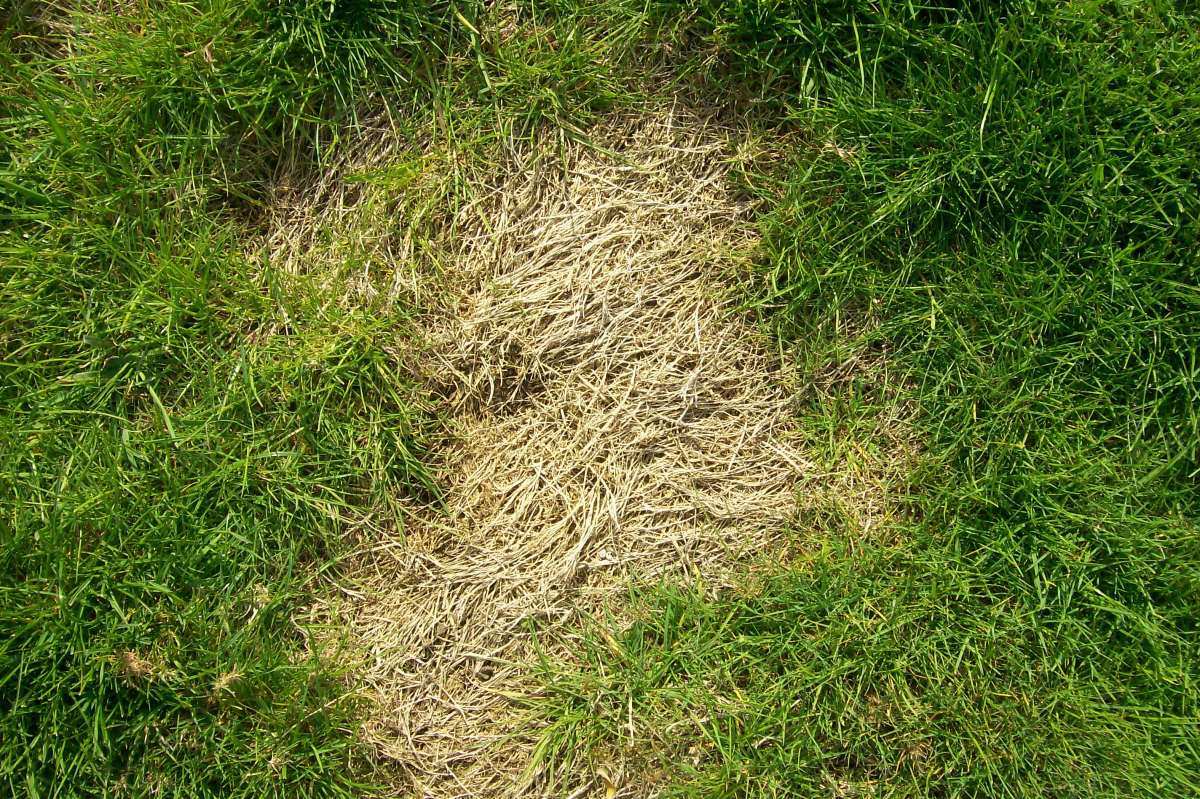
Image source: Bing (Web (fair-use with source credit))
The single most reliable way to confirm grubs is the flap test. Cut a one-square-foot section of turf on three sides with a spade, peel it back like a flap, and count the grubs in the exposed soil. Then replace the flap and water it back down.
This gives you a direct population count you can compare against treatment thresholds.
How to Confirm You Have Grubs (The Flap Test)
Don't guess. Guessing leads to unnecessary treatments or missed problems. The flap test takes about five minutes and gives you a definitive answer.
Here's how to do it properly:
- Pick a spot at the edge of a damaged area, not the deadest center. Grubs are more likely to be active where the grass is still partially alive.
- Cut a square about 1 foot by 1 foot and about 2 to 3 inches deep on three sides with a spade or knife.
- Peel the turf back gently to expose the soil underneath.
- Count every grub you see in that square foot of soil. Dig down a couple of inches because they may not be right at the surface.
- Replace the flap firmly and water it in so the roots reestablish contact with the soil.
Repeat this in two or three spots around the damaged area. Grubs aren't evenly distributed, so a single sample might not represent the whole lawn.
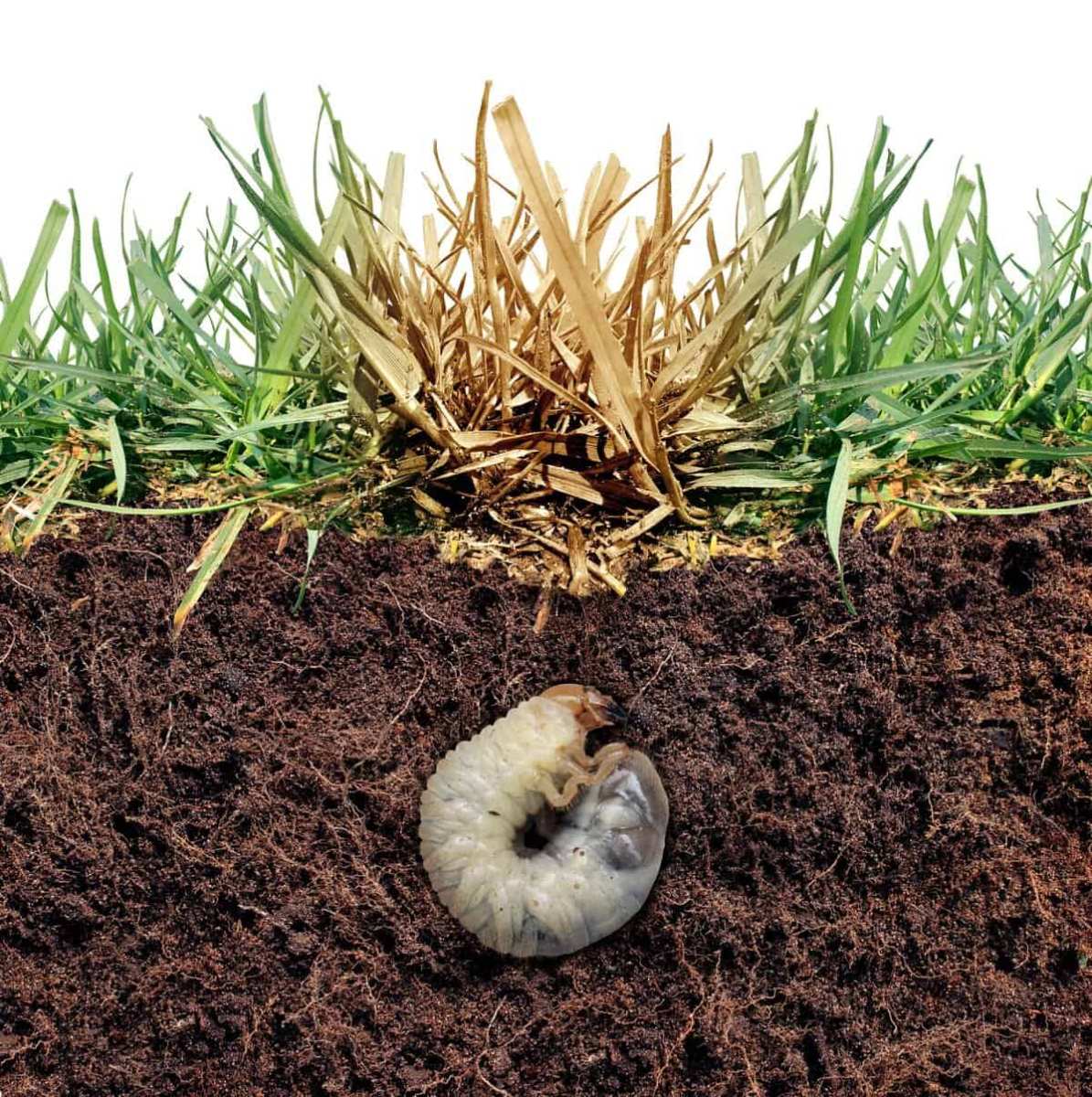
Image source: Bing (Web (Web (fair-use with source credit))
What the numbers mean:
- 0 to 4 grubs per square foot on cool-season grass: Usually not enough to cause visible damage. Monitor but don't treat.
- 5 to 10 grubs per square foot on cool-season grass: Threshold range. Consider treatment, especially if the lawn is stressed by heat, drought, or heavy use.
- 10 or more grubs per square foot: Treat. Damage is likely already occurring and will get worse.
- 3 to 5 grubs per square foot on warm-season grass: Warm-season grasses like Bermuda and zoysia are more sensitive. Lower thresholds apply.
If you find grubs but the count is below threshold, keep an eye on the lawn. Populations can build over successive years, and a light infestation this year might become a problem next year if adult beetles return to lay eggs.
When Grubs Are Bad Enough to Treat: Action Thresholds
Not every grub in your lawn is a crisis. Healthy, well-maintained turf can tolerate a small grub population without showing symptoms. The grass grows roots faster than the grubs can eat them.
Treatment thresholds exist because applying insecticides when they're unnecessary wastes money, harms beneficial soil organisms, and can contribute to pesticide resistance.
Treat when:
- Grub counts exceed the threshold for your grass type.
- You see visible damage that matches the grub damage profile.
- Animal digging is tearing up the lawn in addition to the root damage.
- The lawn is already stressed from drought, heat, or disease and can't afford additional root loss.
Hold off on treatment when:
- Grub counts are below threshold and the lawn looks healthy.
- It's late fall and the grubs have already moved deep into the soil for winter.
- The damage is clearly from another cause like fungus or drought.
- You're dealing with a small, isolated area that can be managed by improving lawn health.
One important note on timing. If you're reading this in late October or November and you're just now noticing damage, the grubs have likely already done their worst and moved below the frost line. A curative treatment at that point won't help the grass that's already dead.
Your best move is to note the problem, plan for next year, and focus on repairing the dead areas in spring.
Your Decision Tree: What to Do Based on What You Found
Once you've confirmed grubs and counted them, the path forward depends on three things: how many you found, what time of year it is, and what kind of lawn you're managing.
If you found fewer than 5 grubs per square foot (cool-season) or fewer than 3 (warm-season):
- No treatment needed right now.
- Water the lawn deeply and infrequently to encourage deep root growth.
- Overseed thin areas in early fall or spring.
- Monitor again next summer before adult beetles lay eggs.
If you found 5 to 10 grubs per square foot and it's July or early August:
- This is the ideal window for a preventive insecticide application.
- Products containing chlorantraniliprole (sold as GrubGone or GrubEx) or imidacloprid (Merit) work well when applied now.
- Water the product in thoroughly after application so it reaches the root zone.
- Reassess in late August with another flap test if damage appears.
If you found 10 or more grubs per square foot and it's August through October:
- You need a curative treatment, not a preventive one.
- Trichlorfon (Dylox) is the standard curative option and can kill grubs within one to three days.
- Apply when grubs are small and actively feeding near the surface for best results.
- Water in immediately after application.
- Expect some existing damage to remain. The treatment stops further feeding but doesn't repair dead grass.
If you found heavy grub damage and it's late fall or winter:
- The grubs are deep in the soil and no insecticide will reach them effectively.
- Focus on lawn repair in spring: rake out dead grass, loosen the soil, and reseed or resod.
- Plan a preventive treatment for the following summer to break the cycle.
If you prefer an organic approach:
- Beneficial nematodes (Heterorhabditis bacteriophora) can be applied in late summer when soil temperatures are above 60°F.
- They need to be applied in the evening, watered in well, and kept moist for at least a week after application.
- Milky spore (Paenibacillus popilliae) targets Japanese beetle grubs specifically and can persist in the soil for 10 years or more, but it takes one to three years to become fully established.
- Neither option works as fast as synthetic insecticides, so they're best used as part of a long-term prevention strategy rather than an emergency fix.
Treatment Options Compared: Preventive vs. Curative vs. Organic
Understanding the difference between these three approaches is the key to getting results without wasting money or product.
Preventive insecticides are applied before grubs cause significant damage, typically in June through late July. They work by creating a treated zone in the soil that kills young grubs shortly after they hatch and begin feeding. Chlorantraniliprole and imidacloprid are the most common active ingredients in this category.
They're most effective against small, early-stage grubs and need to be in the soil before the eggs hatch.
Curative insecticides are applied when you've already confirmed an active infestation. Trichlorfon (Dylox) is the primary option here. It works fast, killing grubs within days, and is effective against larger, late-stage grubs that preventive products may not control.
The tradeoff is shorter residual activity, so it won't protect against future generations.
Biological controls include beneficial nematodes and milky spore. Nematodes are microscopic worms that enter grubs and release bacteria that kill them. They're safe for people, pets, and pollinators, but they're also finicky.
They die in direct sunlight, need consistent moisture, and must be stored and handled carefully. Milky spore is a bacterial disease that specifically infects Japanese beetle grubs. It's long-lasting but slow to establish and only effective against that one species.
| Treatment Type | Best Timing | Speed of Kill | Residual Protection | Best For |
|---|---|---|---|---|
| Preventive (chlorantraniliprole) | June to late July | 1 to 2 weeks | Several weeks | Stopping damage before it starts |
| Preventive (imidacloprid) | June to late July | 1 to 2 weeks | Several weeks | Long-term prevention programs |
| Curative (trichlorfon/Dylox) | August to October | 1 to 3 days | Short, days to weeks | Active infestations with visible damage |
| Beneficial nematodes | Late August to September | 1 to 2 weeks | None, single application | Organic programs, light infestations |
| Milky spore | Spring or fall | Slow, weeks to months | 10+ years once established | Japanese beetle-specific long-term control |
Timing Is Everything: When to Treat for Maximum Effect
The single biggest mistake people make with grub control is applying product at the wrong time. Even the best insecticide won't work if the grubs aren't in the right life stage or the right depth in the soil.
For preventive products:
Apply in June through late July, before adult beetles finish laying eggs. The product needs to be in the soil and active when the eggs hatch. In southern states, this window may open in late May.
In northern states, it may extend into early August. Check with your local extension service for region-specific timing.
For curative products:
Apply in August through early October when grubs are small, actively feeding, and still near the soil surface. Once soil temperatures drop below about 50°F, grubs move deeper and most insecticides won't reach them. Trichlorfon is the exception that can work slightly later into fall because it acts fast and doesn't need to persist in the soil.
For beneficial nematodes:
Apply in late summer when soil temperatures are consistently above 60°F. Water the lawn before and after application. Apply in the evening or on an overcast day to avoid UV exposure.
Keep the soil moist for at least 7 to 10 days after application. Nematodes are living organisms, so buy them fresh, store them refrigerated, and use them as soon as possible after purchase.
For milky spore:
Apply in spring or fall when soil temperatures are between 60°F and 70°F. It takes time to establish, so don't expect immediate results. Once established, it can persist in the soil for a decade or more, making it a good long-term investment in areas with consistent Japanese beetle pressure.
Common Mistakes That Make Grub Damage Worse
Even when homeowners identify the problem correctly, a few common errors can turn a manageable situation into a full lawn renovation.
Applying preventive insecticide too late. If you apply a preventive product in September, the grubs have already been feeding for weeks. Preventive products are designed to kill young grubs early, not rescue a lawn that's already damaged.
Applying curative insecticide too early. If you apply Dylox in June before the eggs have even hatched, the product will degrade before the grubs are present. You'll have spent money and applied chemicals for nothing.
Not watering in the product. Most granular grub controls need to be watered into the soil to reach the root zone where grubs are feeding. Applying to dry soil and leaving it on the surface is ineffective.
Treating the whole lawn based on one sample. Grub populations are patchy. Test multiple spots before deciding whether to treat broadly or just hit the affected areas.
Ignoring the damage because the lawn "looks okay" in spring. Spring feeding is lighter, but the real destruction happened the previous fall. If you saw damage last August or September, plan your response for the coming summer, not after the fact.
Using milky spore for non-Japanese beetle grubs. Milky spore only works on Japanese beetle larvae. If your grubs are European chafers, June beetles, or masked chafers, milky spore won't help. Identify the species before investing in this option.
Storing nematodes improperly. Beneficial nematodes are living organisms. Leaving them in a hot garage or a frozen shed kills them before they ever reach the soil. Buy from a reputable source, keep them refrigerated, and apply within the window specified on the package.
Repairing the Dead Spots After Grubs Are Gone
Once you've stopped the grubs from feeding, the next step is fixing the damage they left behind. Dead grass won't come back on its own, and bare soil invites weeds.
For small patches:
- Rake out the dead grass and loosen the top inch of soil.
- Apply a starter fertilizer to support new growth.
- Spread seed matched to your existing grass type.
- Cover lightly with straw or compost to retain moisture.
- Water daily until germination, then taper to deeper, less frequent watering.
For large areas:
- Rent a sod cutter or power rake to remove dead turf.
- Amend the soil with compost if it's compacted.
- Resod with matching turfgrass, staggering the seams like bricks.
- Water heavily for the first two weeks until roots establish.
- Avoid heavy foot traffic for at least three weeks after sodding.
Timing for repair:
- Early fall is ideal for cool-season grasses. The warm soil and cooler air give new seed the best chance.
- Late spring through early summer works best for warm-season grasses like Bermuda and zoysia.
- Avoid seeding in midsummer heat or late fall cold. Both extremes reduce germination rates.
How to Prevent Grubs From Coming Back Next Year
Breaking the grub cycle takes a multi-year approach. Adult beetles are strong fliers and can return to your lawn from neighboring properties, so complete elimination isn't always realistic. But you can keep populations below damaging levels.
Cultural practices that help:
- Mow at the recommended height for your grass type. Taller grass develops deeper roots that can tolerate some grub feeding.
- Water deeply and infrequently rather than light, daily sprinkling. Deep roots are more resilient.
- Aerate compacted soil annually to improve root growth and drainage.
- Overseed thin areas to maintain dense turf that recovers faster from stress.
Preventive treatment strategy:
- If you've had grub damage in the past two years, apply a preventive insecticide in June or July.
- Rotate active ingredients every few years to reduce the risk of resistance.
- Spot-treat only the areas where you've previously found grubs rather than treating the entire lawn.
Biological prevention:
- Apply milky spore in areas with confirmed Japanese beetle populations.
- Introduce beneficial nematodes annually in late summer as part of an organic lawn care program.
- Encourage bird habitat. Birds eat adult beetles and can help reduce the local breeding population.
When to Call a Lawn Professional Instead of DIY
Most homeowners can handle grub identification and treatment on their own. But there are situations where professional help makes sense.
Call a pro when:
- The damage covers more than half your lawn and you're looking at a major renovation.
- You've tried DIY treatments for two consecutive years and the grubs keep coming back.
- You're dealing with a mixed-species grub infestation and need help identifying which species are present.
- You want a preventive program but aren't comfortable handling and applying insecticides yourself.
- The lawn is on a slope or near a waterway where runoff is a concern.
Professional lawn care companies typically offer seasonal grub prevention programs that include timed applications of preventive insecticides. They also have access to commercial-grade products and equipment that may not be available to homeowners. Expect to pay more per application than DIY, but the convenience and expertise can be worth it for larger or more complicated properties.
Frequently Asked Questions
How do I know if my lawn has grubs or just needs water?
Grub damage doesn't improve with watering because the roots are gone. If your lawn stays brown after a deep soaking, do the flap test. Count the grubs in a square foot of soil.
More than 5 to 10 on cool-season grass means grubs are the problem.
Can my lawn recover from grub damage on its own?
Small infestations often don't cause permanent damage. Healthy grass can regrow roots if the grub population stays low. But once you exceed about 10 grubs per square foot, the root loss is usually too severe for recovery without treatment and reseeding.
What time of year do grubs cause the most damage?
Late summer through early fall, typically August through October. That's when the grubs are largest and eating the most. Spring feeding happens but is usually less destructive.
Are grub treatments safe for pets and kids?
Most labeled grub controls are safe once they've been watered in and the lawn has dried. Follow the product label for specific re-entry intervals. Beneficial nematodes and milky spore are safe immediately because they're biological, not chemical.
How long does it take for grub damage to show after grubs start feeding?
Usually two to four weeks of active feeding before you see yellowing or browning above ground. The damage accelerates in hot, dry weather because the compromised roots can't keep up with the grass's water needs.
Do I need to treat my lawn every year for grubs?
Not necessarily. If you've had a problem, a preventive application for two to three years can break the cycle. After that, monitor with the flap test each summer and treat only when counts exceed the threshold.
Your Grub Action Plan: A Simple Decision Guide
Here's a straightforward plan you can follow based on what you're seeing right now.
If it's spring and you're seeing brown patches:
Do the flap test. If you find grubs above threshold, note the problem but wait until summer to apply a preventive treatment. Focus on repairing dead areas with seed or sod now.
If it's June or July and you had grubs last year:
Apply a preventive insecticide containing chlorantraniliprole or imidacloprid. Water it in well. This stops the next generation before they can cause damage.
If it's August or September and you're seeing damage:
Do the flap test immediately. If counts are high, apply a curative insecticide like trichlorfon. Act fast because the grubs are feeding heavily right now.
If it's October or later and the damage is done:
Skip insecticide. The grubs are too deep to reach. Plan your repair for spring and your preventive treatment for next summer.
If you prefer organic methods:
Apply beneficial nematodes in late summer when soil is warm and moist. Consider milky spore for long-term Japanese beetle control. Accept that results will be slower and may require annual applications.
The key takeaway is this: grubs are manageable when you catch them early and respond at the right time. Identify the problem accurately, count what you're dealing with, and match your treatment to the season and the severity. That approach will save you money, protect your lawn, and keep the damage from coming back year after year.
The article is already complete. All 14 H2 sections from the approved TOC have been written, including the FAQ section and the final decision guide. No additional sections remain.
The article is already complete. All sections from the approved TOC have been fully written, including the FAQ and the final decision guide. There are no remaining H2 sections to continue with.