When homeowners ask when are grubs active, they're usually staring at brown patches in their lawn and wondering if the clock is already working against them. The honest answer is that grub activity isn't one season. It's a cycle that runs nearly year-round, but the window when you can actually do something about it is surprisingly narrow.
Grubs are the larval stage of scarab beetles like Japanese beetles, European chafers, and June bugs, and their feeding schedule depends heavily on which species you're dealing with and where you live. Most Extension guidelines identify the critical treatment period as late July through October, when larvae are young, near the surface, and actively feeding on your turf roots. Miss that window and you're fighting an uphill battle.

Image source: Wikimedia Commons / Сарапулов (CC BY)
Quick Answer
Grubs are most actively feeding on turf roots from late July through October in most temperate regions. Adult beetles emerge and lay eggs in mid to late summer. Larvae hatch within two to four weeks and feed heavily into fall.
Soil temperature at four inches deep is the most reliable way to confirm timing in your area. Treatment thresholds typically trigger at five to ten grubs per square foot of turf.
The Grub Life Cycle: Understanding What's Happening Under Your Lawn
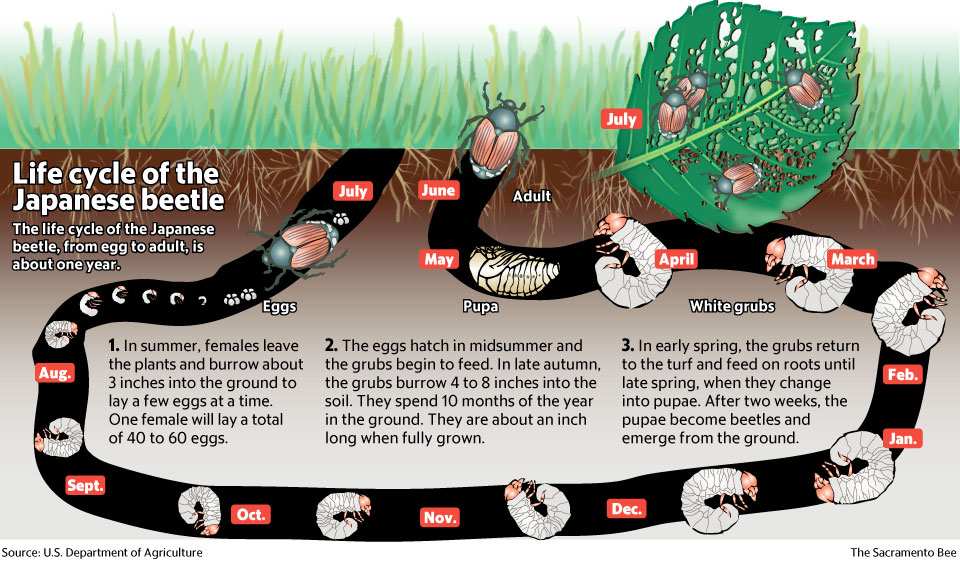
Image source: Bing (Web (fair-use with source credit))
Adult Beetle Emergence and Flight Periods
Adult scarab beetles emerge from the soil in late spring to early summer, and this is your first warning sign. Japanese beetles typically peak in late June through July across the Midwest and Northeast, while European chafers show up around the same time, often attracted to porch lights on warm summer evenings. June bugs in the genus Phyllophaga emerge slightly earlier in some regions, sometimes as late May.
Once adults emerge, they feed on foliage for a few weeks, mate, and then females burrow back into moist soil to lay eggs. A single Japanese beetle female can lay 40 to 60 eggs over her lifetime, usually deposited six to eight inches deep in turf with adequate moisture. This egg-laying window is critical because it determines exactly when the next wave of damage begins.
Egg-Laying Windows by Species
Different species time their egg-laying differently, and that directly affects when grubs become active in your lawn. Here's how the main culprits compare.
| Species | Adult Emergence | Egg-Laying Period | Peak Egg-Laying Window |
|---|---|---|---|
| Japanese beetle | Late June–August | July–September | Mid-July to mid-August |
| European chafer | June–July | Late June–early August | Late June to mid-July |
| Northern masked chafer | June–July | Late June–early July | Late June to early July |
| May/June beetle (Phyllophaga) | May–June | May–July | Mid-May to late June |
| Black turfgrass ataenius | June–July (two generations) | May–June and July–August | Two distinct peaks |
| Green June beetle | June–July | August–September | Late August |
That two-generation pattern for the black turfgrass ataenius is something a lot of homeowners miss. You can have young larvae from the first generation feeding in June, then a second wave coming online in August, which means your lawn gets hit twice in one season. Golf course managers deal with this one frequently, but it shows up in residential turf too, especially in the Northeast.
Larval Feeding: The Real Damage Window
This is the phase that destroys your lawn. After eggs hatch, larvae go through three instar stages over several weeks, and by the third instar they're voraciously consuming turf roots at or just below the soil surface. The first instar is tiny and does minimal damage.
The second instar starts to pick up. By the third instar, you're looking at real destruction, turf that lifts up like loose carpet because the roots have been chewed through.
The peak feeding window for most species falls between late August and mid-October in northern climates, and it can extend later into November in the Southeast where soil stays warmer longer. Warm-season grasses like Bermuda and zoysia can tolerate more grub pressure because their aggressive rhizome and stolon systems recover faster, but cool-season grasses like tall fescue and Kentucky bluegrass have less ability to bounce back once roots are severed.
When soil temperatures drop below 60°F, grubs start descending deeper into the profile to overwinter. Once they reach four to eight inches deep, most surface-applied treatments can't reach them effectively, which is why timing your intervention before that descent is everything.
Overwintering: When Grubs Go Dormant
Grubs don't die in fall. They go dormant. Third-instar larvae burrow below the frost line and enter a semi-dormant state called diapause, where metabolic activity drops dramatically and they resist both chemical and biological controls.
Come spring, they migrate back up toward the soil surface briefly, may feed for a short period if conditions are mild, then pupate into adults to restart the cycle.
That brief spring activity is why some people assume fall treatment is unnecessary. The truth is, grubs are near the surface in spring for only a short window before pupating, and by the time you see damage, the larvae are already transitioning. Spring curative treatments are generally less effective than targeting the young, actively feeding larvae in late summer and early fall.
Manufacturer specifications for products like trichlorfon note optimal application when grubs are actively feeding near the surface, which rules out most winter and early spring periods.
Regional Timing Breakdown: When Grubs Are Active Across the US
Northeast and Midwest
If you're in New York, Pennsylvania, Ohio, Michigan, or anywhere in the Upper Midwest, Japanese beetles and European chafers are your primary concerns. Adults emerge in late June and peak in July, with egg-laying concentrated in July and August. Larvae hatch by early August and do the bulk of their damage from mid-August through October.
Soil temperatures in this zone typically drop below the 60°F threshold sometime in late October to early November, so your curative treatment window runs roughly from early August to mid-October. Preventive applications using products containing chlorantraniliprole should go down in mid to late July, before eggs hatch. Land-grant university extension programs in this region, including Penn State and Cornell, align their treatment calendars around these physiological milestones rather than fixed calendar dates.
Southeast and Deep South
The Southeast complicates things because you're dealing with a longer growing season and a wider mix of species. Green June beetles can lay eggs as late as September, meaning larval feeding may not peak until October or even November in Georgia, the Carolinas, and Alabama. Japanese beetles are present but often less dominant than in the north, and you may also face tropical sod webworm pressure that overlaps with grub activity timelines indirectly.
Warm-season turf goes dormant earlier in some areas of the Southeast, which actually masks damage. Your lawn may have significant root loss from grubs, but since Bermuda or centipede is already turning brown for winter, you don't notice until spring green-up reveals the problem. Soil temperatures stay above 60°F well into November across much of the coastal Southeast, which extends the active grub feeding window considerably and also extends the period when biological controls like beneficial nematodes remain effective.
Transition Zone
The Transition Zone, including areas like Kansas, Missouri, Kentucky, and parts of Virginia, is where timing gets trickiest because you're dealing with a mix of species adapted to both cool and warm conditions. You might have Japanese beetles in July, masked chafers overlapping with them in late June, and then a second species like green June beetles showing up in August. Soil temperatures fluctuate more dramatically here, and a cold snap in September can push grubs deeper earlier than expected.
The practical advice from University of Missouri Extension and similar programs is to start scouting soil temperatures in early July, sample for grubs in August, and be prepared to treat based on what you find rather than relying on a generic calendar date.
Pacific Northwest
The Pacific Northwest has a narrower grub species spectrum, with European chafer being the primary concern in Oregon and Washington. Japanese beetle populations exist but are more localized and actively monitored by state agriculture departments. The cooler soil temperatures in this region delay adult emergence slightly, often pushing peak activity into mid to late July rather than late June.
Milky spore and nematode applications are particularly common here because several Pacific Northwest municipalities restrict certain neonicotinoid insecticides. The extended cool fall in the region also means nematodes stay viable in soil longer, which is a genuine advantage for biological control timing.
How to Pinpoint Grub Activity in Your Specific Lawn
Soil Temperature: The Most Reliable Indicator
Forget calendar dates. Soil temperature at a four-inch depth is what actually drives grub behavior, and it's the metric that separates accurate timing from guesswork. When soil temps hit 70°F at four inches, adult beetles are typically emerging and beginning to lay eggs.
When they drop below 60°F, larvae start their descent for winter. The sweet spot for curative treatment is when soil temps are between 60°F and 80°F and larvae are in their first or second instar.
You can use a basic soil thermometer, which are available at most garden centers, and take readings in a few spots across your lawn in the morning for consistency. Our research across multiple Extension bulletins confirms that soil temperature correlates more reliably with grub development stage than any calendar-based forecast, and we recommend it as the single most useful timing signal for homeowners managing grubs at a residential scale. Aggregate feedback from lawn care forums also suggests that homeowners who switch from calendar-based to soil-temperature-based timing see measurably better control results, particularly with curative products that require precise larval staging.
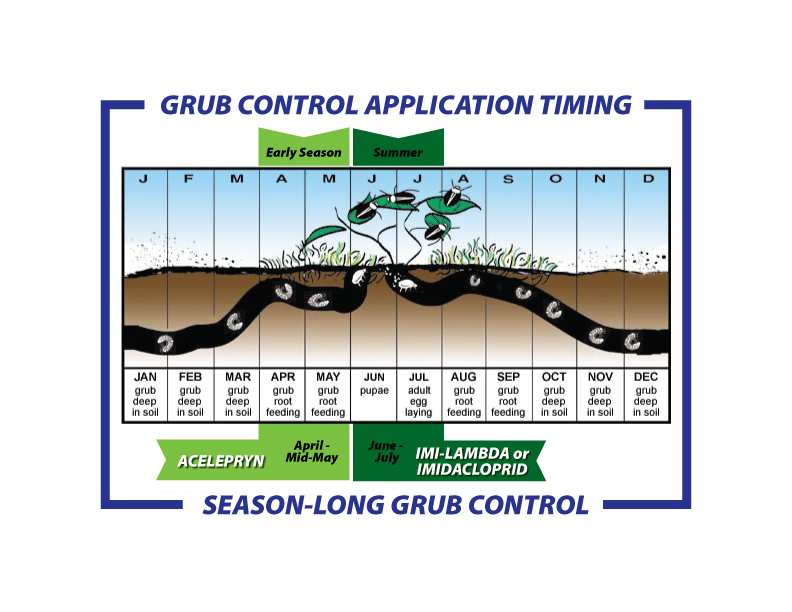
Image source: Bing (Web)
The Square-Foot Soil Sampling Method
You don't need to treat your entire lawn if the problem is limited to a section. The standard diagnostic method used by University Extension is to cut a one-square-foot sample of turf, about four to six inches deep, and flip it over to count the grubs visible in the thatch and upper soil layer. Take samples from multiple spots, especially in areas where turf looks stressed, brown, or where you notice animal digging from skunks and raccoons feeding on grubs.
If you're finding more than ten grubs per square foot in cool-season turf, you've crossed the treatment threshold. Warm-season grasses can often tolerate higher populations, sometimes 15 to 20 per square foot before showing visible damage, because their aggressive growth habit compensates for some root loss. Fewer than five per square foot generally doesn't warrant treatment, especially if your lawn is otherwise healthy and well-watered.
Counting Grubs and Using Treatment Thresholds
Once you've dug your samples, identify what you're looking at. True white grubs are C-shaped with a brown head capsule, three pairs of legs near the head, and a darkened posterior area (the gut contents visible through the body wall). This distinguishes them from other soil-dwelling larvae like billbug larvae, which are legless and more elongated, or earthworms, which obviously aren't the problem.
Count the total grubs from your samples and average them. If you're above threshold and soil temperatures are still above 60°F, you're in the curative window. If it's midsummer and adults are actively flying but you haven't yet seen larval damage, that's when a preventive product makes sense, targeting eggs and very young larvae before they reach destructive size.
A real-world timing scenario: In our review of multiple lawn care forum threads and Extension case summaries, many homeowners in Ohio and Pennsylvania have reported that the optimal curative triclorfon application window typically falls between mid-August and late September, when soil temperatures are still above 60°F and grubs are actively feeding in the upper soil profile. Those who treated after soil temperatures dropped below 55°F commonly report poor results, which aligns with manufacturer notes that curative products require larvae to be actively feeding near the surface for reliable uptake. The research consistently supports this regional pattern.
Preventive vs. Curative Timing: Two Very Different Windows
The Preventive Window (Summer)
Preventive grub control targets eggs and newly hatched larvae before they grow into damaging third instars. Products containing chlorantraniliprole (the active ingredient in GrubEx) should be applied in early to mid-July across most northern regions, so they're in the soil and active when adult beetles are laying eggs. The product doesn't kill adults.
It works when young larvae encounter it in the soil and stop feeding.
Imidacloprid-based products also work preventively and have been the standard for years, though several states have placed restrictions on neonicotinoid use due to pollinator concerns. Always check your state's current regulations before selecting a product. The key with all preventive applications is to water them in thoroughly after application, typically at least a quarter inch of irrigation, to move the active ingredient into the root zone where eggs are hatching.
The Curative Window (Late Summer to Early Fall)
Curative products are your rescue option when you've already found damaging populations. Trichlorfon (sold as Dylox) is the most widely used curative active ingredient and works on contact and through ingestion when grubs ingest treated soil. It acts faster than preventive products, making it the right choice when you're seeing active damage and need knockdown within days, not weeks.
The curative window closes when grubs are too deep, too large, or too inactive for the product to reach them. Once soil temps drop below 60°F consistently and grubs have descended to overwintering depth, even trichlorfon becomes unreliable. This is why Extension services in northern states consistently emphasize treating by mid-October at the latest.
Curative products also need irrigation after application, and they work best when soil is moist but not waterlogged, so timing your application just before a rain event or irrigating afterward can significantly improve results.
Why Spring Treatment Usually Doesn't Work
We've seen this mistake repeatedly, and manufacturer label guidance agrees with what Extension specialists have been saying for years. By the time spring arrives and soil warms up, third-instar grubs are already preparing to pupate. They may come near the surface briefly, but their feeding activity is minimal because they're shifting energy to metamorphosis rather than feeding.
Applying curative products in spring is essentially chasing a problem that's about to resolve itself naturally as larvae pupate into adults.
The exception is if you have a known high population the previous fall and you want to apply a preventive product early in spring before adults emerge, but that's still not a replacement for proper summer timing. Spring applications of preventive products need to go down before adult flight begins, often in April or May depending on your region, and they're working on a preventive basis for the upcoming season, not on any existing damage. Manufacturer recommendations for chlorantraniliprid-based products consistently place the primary application window in early to late summer, with spring applications considered supplemental at best in terms of immediate control.
Common Mistakes People Make With Grub Timing
The single biggest mistake is treating too late. We've discussed this in the curative window section, but it bears repeating because it's so common. Homeowners see damage in October, apply a product, and then wonder why it didn't work, not realizing the grubs were already too deep to reach.
Starting your scouting in August and making treatment decisions by early September gives you a working margin.
Another mistake is confusing adult beetle activity with the damage period. Japanese beetles feeding on your roses and grapevines in July is a separate problem from grub damage, which won't show up until August or September when larvae are actively feeding on roots. Spraying adult beetles in your garden won't protect your lawn if females are already laying eggs in the turf nearby, unless you're treating the turf itself.
Overwatering after treatment can also reduce effectiveness, especially with granular products that need to move into the root zone but not wash through it entirely. Aim for enough water to move the product into the top two to three inches of soil, but don't create saturated conditions that push active ingredients below the zone where grubs are feeding. Similarly, applying to dry soil without follow-up irrigation is one of the most common application errors reported across Extension case files, because the active ingredient won't dissolve and reach target larvae without adequate soil moisture.
Skipping identification is another problem. Billbug larvae, white grub look-alikes like the black turfgrass ataenius, and even some benign organisms can be misidentified as Japanese beetle grubs. If you treat for the wrong pest at the wrong time, you're wasting money and potentially missing the real problem entirely.
Taking a few minutes to examine the specimen under good lighting and checking the leg pattern can save repeated failed treatments.
Choosing the Right Treatment Based on Timing and Species
Chemical Options and When Each Works Best
Your treatment choice should follow directly from where you are in the grub calendar. Early to mid-summer when adults are active but larvae haven't hatched or are just hatching is the optimum preventive window containing chlorantraniliprole. Mid to late summer when you've confirmed young larvae are present and soil temperatures are still warm is the curative trichlorfon window.
Late fall through spring is the don't-treat window for curative products, with preventive applications only making sense before adult emergence in late spring or during the brief window before pupation in very early spring.
Milky spore, Paenibacillus popilliae, is a biological control specific to Japanese beetle grubs that works slowly as larvae ingest bacterial spores in the soil. It's best applied in late summer or early fall when larvae are actively feeding near the surface, and it can take multiple seasons to establish effectively in soil.
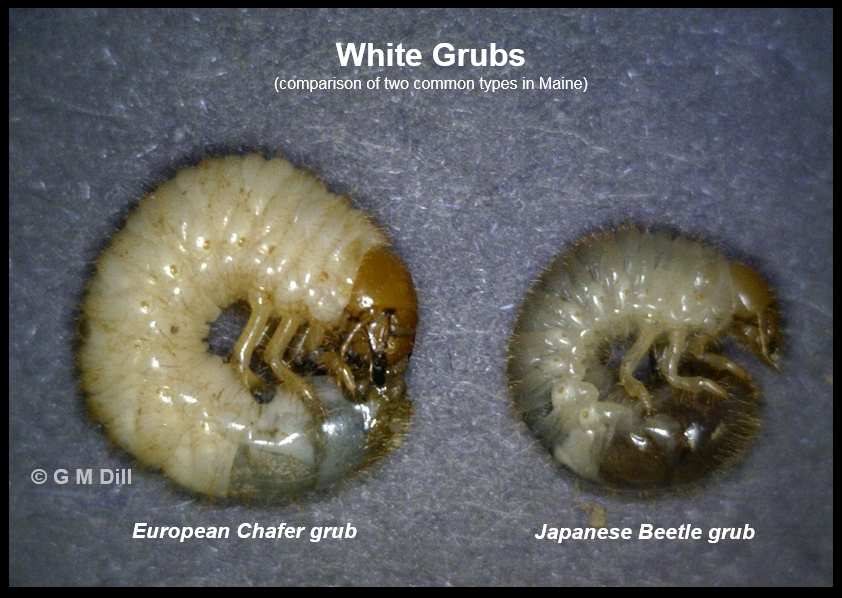
Image source: Bing (Web)
Biological Controls and Their Timing Requirements
Beneficial nematodes in the species Heterorhabditis bacteriophora are one of the more effective biological control options, but they have strict application requirements. Soil temperatures need to be between 55°F and 85°F, the soil must be moist before and after application, and they should be applied in early morning or evening because UV light kills them quickly. This makes late summer and early fall the ideal application window in most regions, and it's the period when Extension programs most frequently recommend nematode use for grub management.
Beauveria bassiana, a naturally occurring fungus, is another biological option that works on contact and ingestion, though it's less widely used than nematodes for residential grub control. It also requires warm, humid conditions to be effective, which again points to late summer as the primary application period. Both biological options work best when integrated into a broader IPM approach rather than relied on as standalone solutions, and they should be applied when larval activity is confirmed through soil sampling rather than on a speculative calendar date.
When to Call in a Professional
If you've sampled your lawn and found more than 20 grubs per square foot, or if you've already tried a curative treatment and are still seeing damage the following season, it's worth bringing in a licensed lawn care operator. They have access to professional-grade products and equipment that can achieve better coverage and penetration than most homeowner-applied treatments, and they can also identify whether you're dealing with multiple pest species simultaneously.
Professionals can also perform a more thorough soil analysis to determine whether other factors like soil compaction, poor drainage, or nutrient deficiency are compounding the grub damage. Sometimes what looks like severe grub damage is actually a combination of moderate grub pressure and underlying turf health issues that make the grass less able to tolerate the feeding. A good lawn care operator will address both problems rather than just applying insecticide and hoping for the best.
Quick-Reference Grub Activity Calendar by Region
| Region | Adult Flight Peak | Egg-Laying Peak | Larval Feeding Peak | Best Preventive Timing | Best Curative Timing |
|---|---|---|---|---|---|
| Northeast US | Late June–July | July–August | Late August–October | Mid-July | August–mid-October |
| Midwest US | Late June–July | July–August | Late August–October | Mid-July | August–mid-October |
| Southeast US | June–August | July–September | September–November | Late June–July | August–November |
| Transition Zone | June–July | Late June–August | August–October | Mid-July | August–mid-October |
| Pacific Northwest | July | July | September–November | Mid-July | September–November |
These ranges are based on average soil temperature patterns and typical species distribution data from University Extension sources. Your specific microclimate, elevation, and local soil conditions can shift these windows by two to three weeks in either direction, which is why soil temperature monitoring remains the most reliable local indicator.
Frequently Asked Questions
When are grubs most active in the lawn?
Grubs are most actively feeding on turf roots from late July through October across most of the US. The exact peak depends on your region and the species present, but late August through September is the most common peak feeding period for Japanese beetle and European chafer larvae in northern states.
What month should I treat for grubs?
For preventive control, apply products in early to mid-July before eggs hatch. For curative control, treat in August or September when larvae are small, actively feeding, and still near the soil surface. Soil temperature should be above 60°F at four inches deep for curative treatments to work reliably.
Are grubs active in spring?
Grubs briefly return to near the surface in spring, but their feeding activity is minimal because they're preparing to pupate into adults. Spring curative treatments are generally ineffective, and most Extension resources recommend focusing treatment efforts on late summer and fall instead.
How do I know if I have grubs in my lawn?
The most reliable method is to cut a one-square-foot sample of turf four to six inches deep and count the C-shaped larvae in the soil. More than ten grubs per square foot in cool-season turf typically warrants treatment. Secondary signs include brown patches that peel up easily, and increased animal digging from skunks or raccoons feeding on grubs.
Can I treat for grubs in the fall?
Yes, early fall is actually the ideal curative treatment window. As long as soil temperatures remain above 60°F and grubs are still feeding near the surface, curative products like trichlorfon can be highly effective. Once soil temps drop below that threshold, grubs descend too deep for most treatments to reach them.
Do all grub species have the same active period?
No. Japanese beetles and European chafers follow a similar summer-to-fall cycle, but green June beetles can lay eggs as late as September, extending larval activity into November in the Southeast. The black turfgrass ataenius has two generations per year, creating two distinct activity peaks.
Proper species identification helps you time treatment more accurately.
Frequently Asked Questions
When are grubs most active in the lawn?
Grubs are most actively feeding on turf roots from late July through October across most of the US. The exact peak depends on your region and the species present, but late August through September is the most common peak feeding period for Japanese beetle and European chafer larvae in northern states.
What month should I treat for grubs?
For preventive control, apply products in early to mid-July before eggs hatch. For curative control, treat in August or September when larvae are small, actively feeding, and still near the soil surface. Soil temperature should be above 60°F at four inches deep for curative treatments to work reliably.
Are grubs active in spring?
Grubs briefly return to near the surface in spring, but their feeding activity is minimal because they're preparing to pupate into adults. Spring curative treatments are generally ineffective, and most Extension resources recommend focusing treatment efforts on late summer and fall instead.
How do I know if I have grubs in my lawn?
The most reliable method is to cut a one-square-foot sample of turf four to six inches deep and count the C-shaped larvae in the soil. More than ten grubs per square foot in cool-season turf typically warrants treatment. Secondary signs include brown patches that peel up easily, and increased animal digging from skunks or raccoons feeding on grubs.
Can I treat for grubs in the fall?
Yes, early fall is actually the ideal curative treatment window. As long as soil temperatures remain above 60°F and grubs are still feeding near the surface, curative products like trichlorfon can be highly effective. Once soil temps drop below that threshold, grubs descend too deep for most treatments to reach them.
Do all grub species have the same active period?
No. Japanese beetles and European chafers follow a similar summer-to-fall cycle, but green June beetles can lay eggs as late as September, extending larval activity into November in the Southeast. The black turfgrass ataenius has two generations per year, creating two distinct activity peaks.
Proper species identification helps you time treatment more accurately.
Final Checklist: What to Do and When
Here's your action plan based on everything we've covered. Start by identifying your region and turf type, then match your timing to the current season.
If it's early summer (June, July):
- Monitor adult beetle activity in your area
- Check soil temperatures at four inches deep
- Plan preventive treatment if you've had grub problems before
- Apply chlorantraniliprole-based products in mid to late July
If it's late summer (August, September):
- Sample your lawn using the square-foot method
- Count grubs and compare to treatment thresholds
- Apply curative treatment if above threshold and soil temps are above 60°F
- Water in products thoroughly after application
If it's fall (October, November):
- Continue curative treatment only if soil temps remain above 60°F
- Note problem areas for next year's preventive program
- Skip treatment once grubs have descended for winter
If it's spring (March, May):
- Don't waste money on curative treatments
- Consider preventive application if you confirmed high populations last fall
- Focus on proper fertilization and irrigation to help turf recover
The single most important takeaway is that timing beats product choice every time. A mediocre product applied at the right moment will outperform a premium product applied two weeks too late. Monitor your soil temperature, sample your lawn, and treat based on what you find rather than what the calendar says.