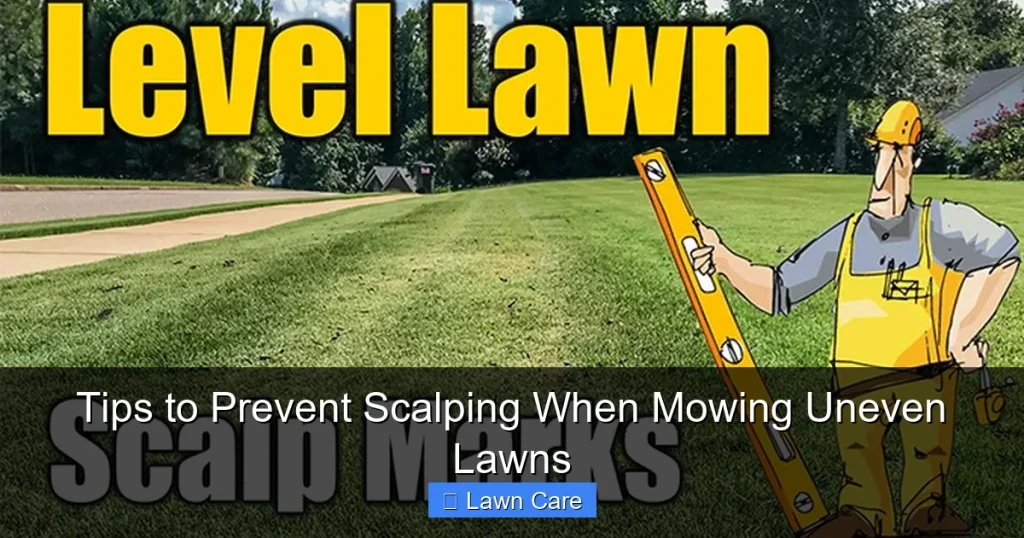
Scalping happens when your mower cuts grass too short on uneven terrain, damaging your lawn. This article shares practical tips to prevent scalping when mowing uneven lawns, including adjusting mower height, using proper mowing patterns, and maintaining your equipment. You’ll learn how to protect your grass, maintain an even cut, and keep your yard looking lush all season long.
Mowing an uneven lawn doesn’t have to mean sacrificing a healthy, green yard. In fact, with the right approach, you can maintain a beautiful, even-looking lawn—even on sloped or bumpy terrain. But one of the most common problems homeowners face is grass scalping: when the mower blade cuts too deeply, especially in low spots or on hills, leaving bare patches and weak grass. These patches not only look bad but also invite weeds and disease.
The good news? Preventing scalping when mowing uneven lawns is totally doable with a few smart strategies. Whether you’re dealing with a gently rolling backyard or a steep, rocky incline, this guide will walk you through practical, easy-to-follow tips. We’ll cover everything from adjusting your mower settings to choosing the right equipment and mowing techniques. By the end, you’ll know exactly how to protect your lawn from scalping and keep it thriving all season.
Key Takeaways
- Adjust mower height regularly: Always set your mower blade to the highest recommended setting to avoid cutting grass too short, especially on slopes or depressions.
- Use a staggered mowing pattern: Change your mowing direction each time to prevent scalping in low spots and promote even grass growth.
- Inspect and maintain your mower: Dull blades tear grass and increase scalping risk—keep your mower sharp and the deck clean.
- Water and aerate before mowing: Well-hydrated, aerated soil reduces compaction and helps grass recover faster from uneven cuts.
- Identify and level problem areas: Use tools like a leveling rake or hire a professional to fix deep ruts or high spots that cause scalping.
- Choose the right mower for your terrain: Self-propelled or rear-engine mowers offer better control on hilly or uneven lawns compared to push mowers.
- Time your mowing for best results: Mow when grass is dry and not under stress from heat or drought to minimize damage.
Quick Answers to Common Questions
What causes mower scalping on uneven lawns?
Scalping happens when the mower blade cuts too deeply, especially in low spots or on slopes. It’s often caused by a low mower setting, uneven terrain, or a dull blade.
How high should I set my mower on hilly lawns?
Set your mower to the highest recommended height—usually 2.5 to 3.5 inches. This reduces the risk of scalping on slopes and gives grass room to recover.
Can a self-propelled mower help prevent scalping?
Yes! Self-propelled mowers offer better control on uneven terrain, helping the deck stay level and reducing scalping risk.
How often should I sharpen my mower blade?
Sharpen your blade every 20 to 30 hours of use, or when you notice torn grass or a rough cut.
What’s the best mowing pattern for uneven lawns?
Use a staggered pattern—alternate mowing directions each time. This prevents repeated cutting in the same low spots and reduces scalping.
📑 Table of Contents
What Is Grass Scalping and Why Does It Happen?
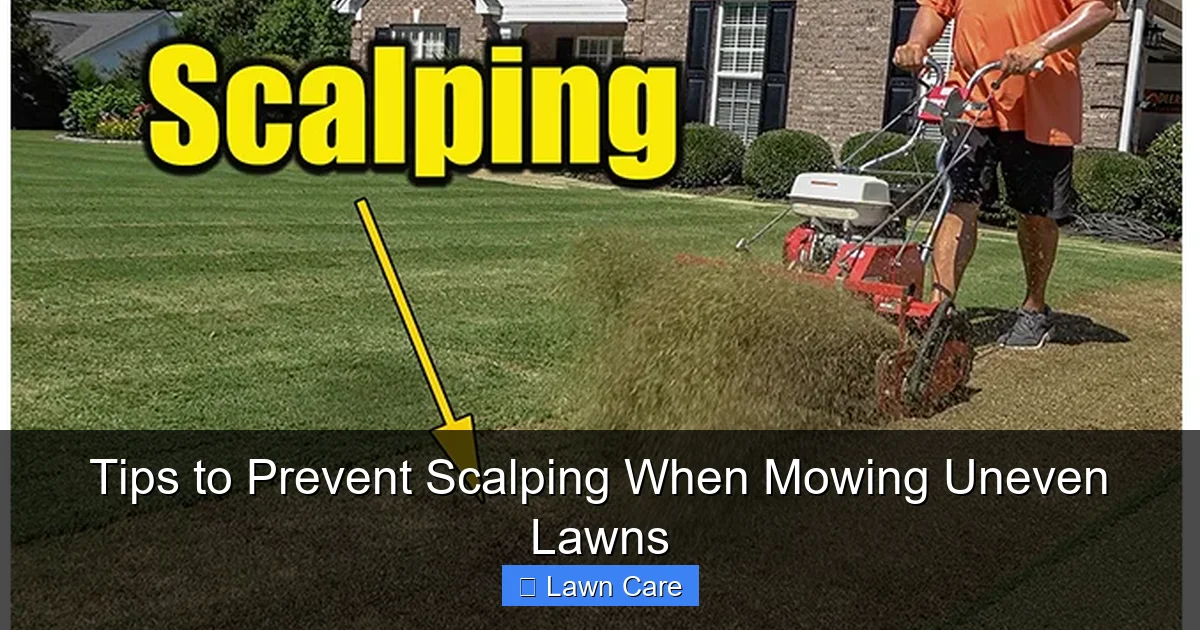
Scalping occurs when the mower blade cuts grass too short—below the recommended height. On uneven lawns, this is especially common because the mower’s cutting deck may dip into depressions or climb too high on slopes. When the blade hovers over bare soil or cuts deep into grass that’s already stressed, it removes not just the blades but the root system too. This weakens the grass, making it vulnerable to disease, pests, and further damage.
Scalping often happens for a few reasons. First, many homeowners set their mower too low to get a “neat” look. Second, uneven terrain causes the deck to tilt, leading to inconsistent cutting. Third, a dull blade or clogged deck can drag grass, tearing it instead of cutting cleanly. Over time, repeated scalping leads to thin, patchy lawns that are hard to fix.
Adjust Your Mower Height for Uneven Lawns
Visual guide about Tips to Prevent Scalping When Mowing Uneven Lawns
Image source: howtowithdoc.com
One of the simplest ways to prevent scalping when mowing uneven lawns is to raise your mower blade. Most grasses grow best when cut at 2.5 to 3.5 inches tall. If you’re used to mowing at 1.5 inches, you’re asking for trouble on uneven ground.
Start by setting your mower to the highest recommended height. If your lawn is already scalped in places, give it a few weeks to recover before lowering the blade again. On hills or slopes, the mower’s front may lift slightly, so check the blade height at multiple points. Some mowers have a height-adjustment lever that lets you fine-tune each side independently—use it!
For example, if you have a depression near your patio, the mower might dip down and cut too low. By raising the deck, you reduce the risk of scalping in those spots. And remember: a slightly longer lawn looks better than one full of bare patches.
Use the 1/3 Rule
Never remove more than one-third of the grass blade in a single mowing. This keeps the grass healthy and prevents stress that leads to scalping. On uneven lawns, this rule is even more important because stressed grass is more likely to be damaged.
Choose the Right Mower for Your Terrain
Visual guide about Tips to Prevent Scalping When Mowing Uneven Lawns
Image source: info.supersod.com
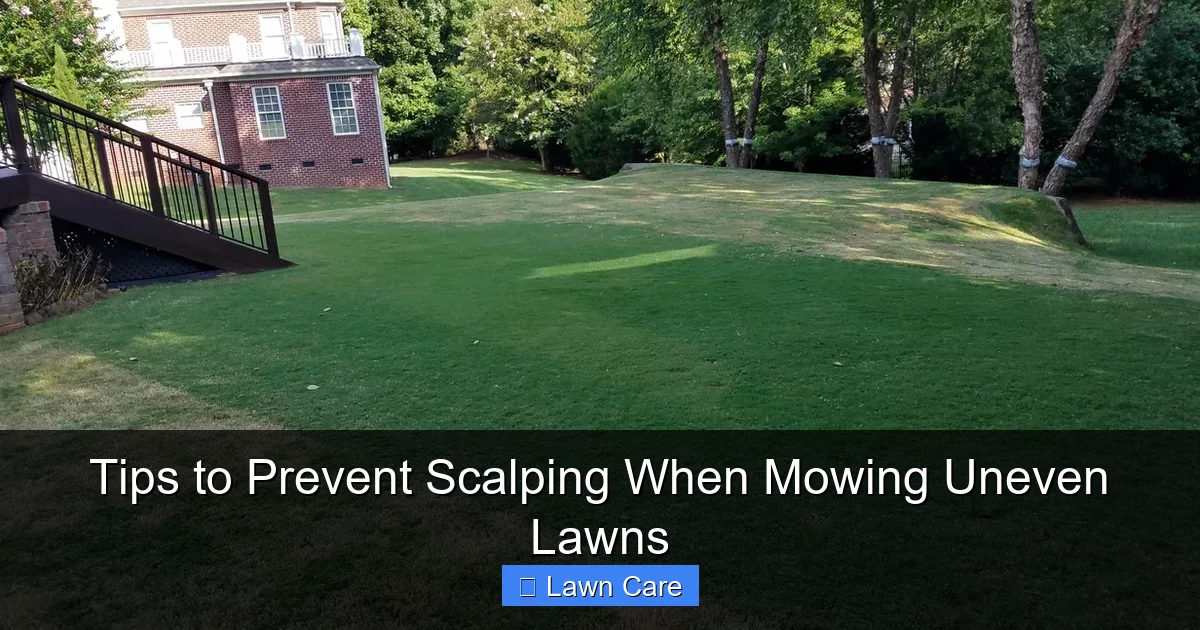
Not all mowers handle uneven lawns well. A lightweight push mower might struggle on slopes, causing the deck to tilt and cut unevenly. Instead, consider a self-propelled mower or a rear-engine riding mower. These models offer better traction and control, especially on hills.
If you have a large, hilly property, a zero-turn mower can give you precise maneuverability. For smaller yards with moderate slopes, a self-propelled gas or electric mower works great. Electric models are quieter and easier to maintain, but make sure they have enough power for your terrain.
When shopping, look for mowers with adjustable decks, multiple height settings, and good ground clearance. Some models even have anti-scalp wheels that float over bumps, keeping the deck level. These features make a big difference when you’re trying to prevent scalping on uneven lawns.
Self-Propelled vs. Push Mowers
Self-propelled mowers are heavier and harder to push, but they’re easier to control on slopes. Push mowers are lighter and cheaper but require more effort—especially uphill. If you have steep inclines, a self-propelled model is worth the investment.
Mow in a Staggered Pattern
Visual guide about Tips to Prevent Scalping When Mowing Uneven Lawns
Image source: info.supersod.com
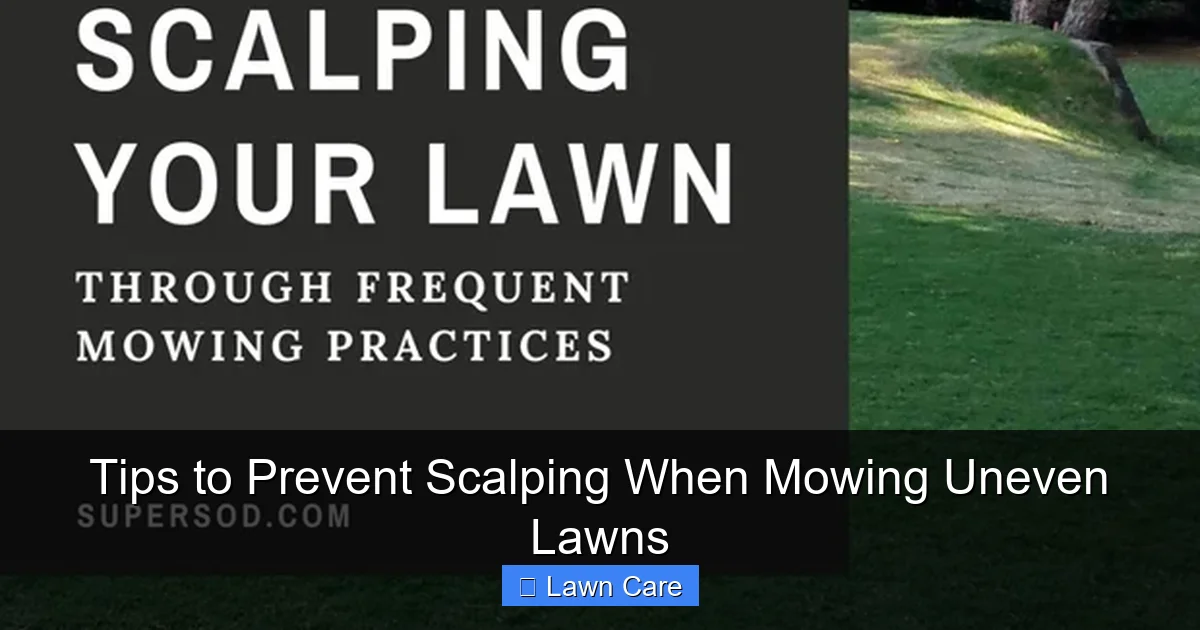
Mowing in straight lines across the lawn is fine—but on uneven terrain, it can lead to scalping. Why? Because the mower’s path may repeatedly pass over the same low spots, cutting them too short each time.
Instead, try a staggered mowing pattern. Alternate your direction each time you mow. For example, mow north to south one time, then east to west the next. This helps distribute wear evenly and prevents the mower from repeatedly cutting the same depressions.
On hilly lawns, mow up and down the slope instead of across it. Cutting up and down helps the mower maintain better contact with the ground and reduces the risk of scalping. It also prevents soil from washing away on slopes.
Example of a Staggered Pattern
- Mow Week 1: North to South
- Mow Week 2: East to West
- Mow Week 3: North to South, but start 6 inches over from last time
This method ensures no single area is over-mowed and helps prevent scalping when mowing uneven lawns.
Maintain Your Mower Properly
A well-maintained mower is a safe mower. Dull blades tear grass, which weakens it and makes it more prone to scalping. A clogged deck can cause the mower to drag, leading to uneven cuts and scalping in low spots.
Check your mower blade every few mowings. If it’s bent or damaged, replace it. Dull blades should be sharpened by a professional or at a local service center. Clean the underside of the deck regularly to remove grass clippings and debris.
Also, make sure your mower wheels are adjusted correctly. If the wheels are uneven, the deck won’t sit level, increasing scalping risk. Use a level to check the deck before each mowing session.
When to Sharpen Blades
Sharpen your blades every 20 to 30 hours of use. If you notice torn grass or a rough cut, it’s time to sharpen or replace the blade.
Level Problem Areas Before Mowing
Sometimes, scalping happens not because of mower settings, but because of poor soil conditions. Deep ruts, high mounds, or compacted soil can cause the mower to dip or climb too much.
Before mowing, walk your lawn and identify problem spots. Use a rake or leveling tool to loosen compacted soil. For deep ruts, fill them with topsoil or compost. You can also aerate the lawn to improve drainage and reduce compaction.
For severely uneven lawns, consider hiring a professional to level the terrain. A landscape contractor can use tools like a sod roller or a lawn scarifier to even out the ground. This not only prevents scalping but also improves water absorption and grass growth.
DIY Leveling Tips
- Use a garden rake to loosen soil in high spots.
- Fill low areas with topsoil mixed with compost.
- Roll the lawn with a water-filled roller to settle the soil.
Even small leveling efforts can make a big difference in preventing scalping when mowing uneven lawns.
Time Your Mowing for Best Results
Mowing at the wrong time can increase the risk of scalping. Grass that’s wet, stressed from heat, or recovering from drought is more fragile. Cutting it too short can cause lasting damage.
Best time to mow: Early morning or late afternoon when the grass is dry and cool.
Avoid mowing during drought or extreme heat. If your lawn is stressed, give it a break or mow at a higher setting. Also, don’t mow when the grass is wet—it can clog the mower and lead to uneven cuts.
Seasonal Mowing Tips
- Spring: Mow at 3 inches to encourage deep root growth.
- Summer: Raise the blade to 3.5 inches to reduce stress.
- Fall: Mow at 2.5 inches to prepare for winter.
Adjusting your mowing schedule based on season helps prevent scalping and keeps your lawn healthy.
Repair Scalped Areas Promptly
Even with the best prevention, some scalping may still occur. The key is to fix it quickly. Bare patches left untreated can turn into weeds or bare soil.
For small scalped areas, overseed with a grass seed that matches your lawn. Water regularly and keep foot traffic off the area. Within a few weeks, new grass should fill in.
For larger patches, consider reseeding or laying sod. Use a starter fertilizer to help new grass establish quickly. If the soil is poor, amend it with compost before seeding.
Overseeding Tips
- Choose a seed mix that matches your existing grass.
- Lightly rake the soil before seeding to improve contact.
- Water daily for the first two weeks.
Prompt repair stops scalping from spreading and keeps your lawn looking full.
Conclusion
Preventing scalping when mowing uneven lawns doesn’t require fancy equipment or hours of work. With simple adjustments—like raising the mower height, using a staggered pattern, and maintaining your mower—you can protect your grass and keep your yard looking lush. Remember, a healthy lawn is a resilient one. By mowing smart and addressing problem areas early, you’ll avoid scalping and enjoy a greener, more beautiful lawn all year.
Whether you’re dealing with gentle slopes or rocky terrain, these tips will help you mow with confidence. And if you’re looking for more lawn care advice, check out our article on How To Level Uneven Spots On Hilly Lawns For Better Mowing. It covers soil preparation, leveling tools, and long-term solutions for tricky terrain.
For more on avoiding scalping in specific conditions, see How To Avoid Mower Scalping On Uneven Ground. And if you’re wondering when to stop mowing before winter, don’t miss When To Stop Mowing Your Lawn Before Winter.
With the right care, even the trickiest lawns can thrive. Happy mowing!
Frequently Asked Questions
How do I fix a scalped lawn?
Repair scalped areas by overseeding with matching grass seed and watering regularly. For large patches, reseed or lay sod. Use a starter fertilizer to speed up recovery.
Can grass grow back after scalping?
Yes, grass can recover from scalping if the roots remain intact. Water deeply and avoid mowing again for a few weeks to let it heal.
Is it better to mow wet or dry grass?
Always mow dry grass. Wet grass clogs the mower and leads to uneven cuts, increasing scalping risk.
How can I prevent scalping on slopes?
Mow up and down slopes, use a self-propelled mower, and keep the cutting height high. Avoid mowing across steep inclines.
What type of mower is best for hilly lawns?
A self-propelled or rear-engine mower offers the best control on hills. Zero-turn mowers are great for large, hilly properties.
Should I mow every week?
Only mow when needed—usually once every 7 to 10 days in growing season. Over-mowing increases scalping risk, especially on uneven lawns.