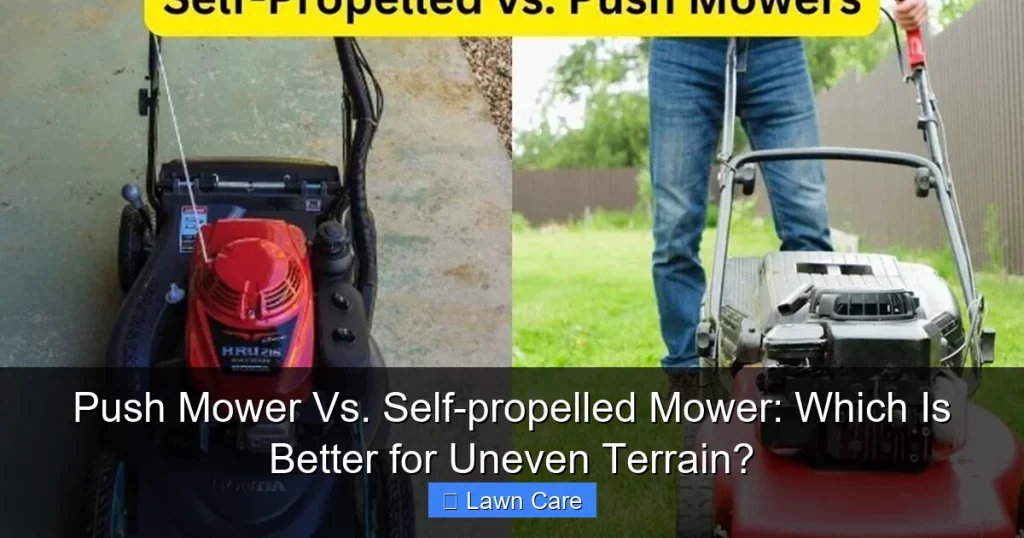
Choosing between a push mower and a self-propelled mower for uneven terrain depends on your physical ability, yard size, and the level of challenge your lawn presents. Push mowers offer simplicity and lower cost, while self-propelled models handle slopes and rough ground with less effort. For hilly or rocky yards, a self-propelled mower often saves time and reduces strain.
Key Takeaways
- Push mowers are manual and require physical effort, making them less ideal for steep or rough terrain without strong leg strength.
- Self-propelled mowers move themselves forward, reducing push resistance and making mowing on hills or uneven ground much easier.
- Weight and balance matter on slopes—lighter mowers can tip backward on steep inclines, while heavier ones may be harder to maneuver.
- Self-propelled mowers often include adjustable speed settings, allowing you to control forward motion on different terrains.
- Maintenance differs between models; self-propelled mowers have more moving parts and may require more upkeep.
- Cost is a key factor; self-propelled mowers are typically more expensive upfront but save time and energy over time.
- For small, flat lawns, a push mower may suffice, but for yards with hills, rocks, or thick grass, self-propelled is usually better.
Quick Answers to Common Questions
Can a push mower handle hills?
Yes, but only on gentle slopes under 10–15 degrees. Steep hills can cause a push mower to tip backward or fail to move forward without significant effort.
Are self-propelled mowers better for rocky terrain?
Yes. Self-propelled mowers with sturdy wheels and suspension absorb shocks better and reduce the risk of damage from rocks compared to lightweight push mowers.
Do self-propelled mowers require more maintenance?
Yes. They have gears, belts, and motors that need regular checks. Push mowers are simpler and require less upkeep.
What type of mower is best for thick grass on uneven ground?
A self-propelled mower with a strong engine—either gas or high-torque electric—is best for thick grass and uneven terrain.
Is it worth buying a self-propelled mower for a small yard?
Only if your yard has hills or rough terrain. For small, flat lawns, a push mower may be more cost-effective and easier to store.
📑 Table of Contents
- Push Mower vs. Self-Propelled Mower: Which Is Better for Uneven Terrain?
- Understanding Push Mowers
- Understanding Self-Propelled Mowers
- Terrain Challenges: How Each Mower Handles the Tough Stuff
- Weight and Balance: Why It Matters on Uneven Ground
- Maintenance and Longevity: Which One Lasts Longer?
- Cost Comparison: Upfront vs. Long-Term Value
- Which Should You Choose for Uneven Terrain?
- Final Thoughts: Make the Right Choice for Your Lawn
Push Mower vs. Self-Propelled Mower: Which Is Better for Uneven Terrain?
Mowing a lawn that isn’t flat can feel like trying to push a shopping cart uphill on rocky ground. You’re not just cutting grass—you’re battling gravity, uneven surfaces, and thick patches that resist every push. Whether you’re dealing with a gentle slope or a yard full of bumps and dips, choosing the right lawn mower makes all the difference. But when it comes to push mower vs. self-propelled mower for uneven terrain, which one actually gets the job done without turning your back into a workout?
Let’s break it down. We’ll compare how each type handles slopes, rough ground, and everything in between—so you can pick the mower that matches your yard’s challenges and your personal energy levels.
Understanding Push Mowers
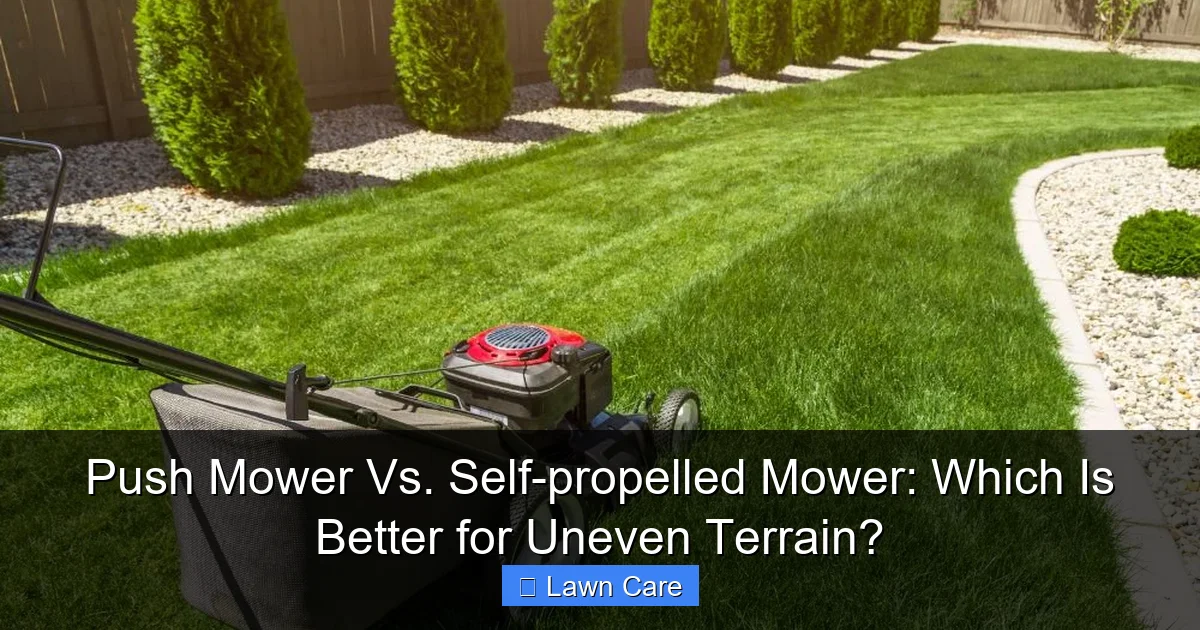
Visual guide about Push Mower Vs. Self-propelled Mower: Which Is Better for Uneven Terrain?
Image source: easygardentips.com
A push mower, also called a reel mower or manual mower, is powered entirely by you. You walk behind it and push it forward, turning the blades with each pass. These mowers are quiet, lightweight, and easy to maintain—but they rely heavily on your strength and stamina.
Pros of Push Mowers on Uneven Ground
- Lightweight design makes them easier to maneuver on small, moderately sloped areas.
- No gas or electricity needed, so they’re eco-friendly and low-cost to operate.
- Lower upfront cost—often under $200, depending on the model.
Cons of Push Mowers on Uneven Ground
- Requires physical effort, especially on hills or thick grass. You’ll feel it in your legs and back.
- Can struggle on steep slopes—if the incline is too sharp, the mower might not move forward at all.
- Less consistent cutting on uneven ground, leading to patchy results.
For small yards with only a few gentle slopes, a push mower might work fine. But if your lawn has hills, rocks, or dense vegetation, you’ll quickly realize that pushing a mower uphill isn’t just tiring—it’s inefficient.
Understanding Self-Propelled Mowers
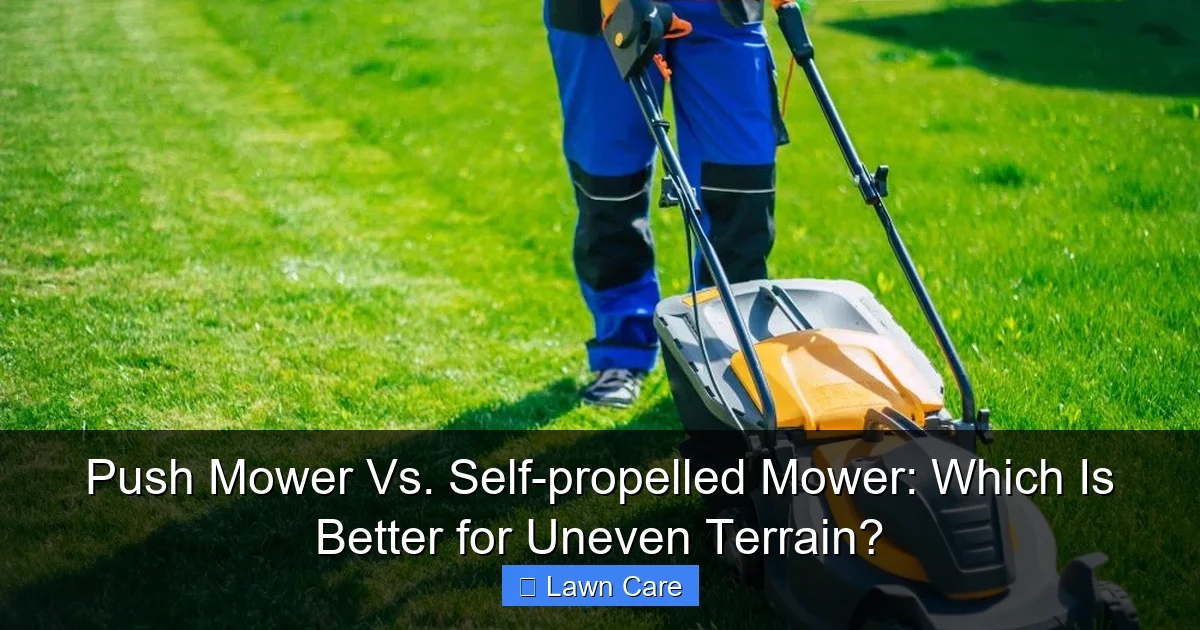
Visual guide about Push Mower Vs. Self-propelled Mower: Which Is Better for Uneven Terrain?
Image source: easygardentips.com
A self-propelled mower has its own motor that drives the wheels forward, so you don’t have to push it. You guide it, but the mower does the hard work of moving across your yard. These are powered by gas or electricity and come with adjustable speed settings, making them ideal for challenging terrain.
How Self-Propelled Mowers Work on Uneven Ground
When you engage the drive system, the mower moves forward automatically. On flat ground, it’s smooth and effortless. On slopes, the mower maintains momentum, reducing the strain on your arms and legs. Many models also feature differential gears that help the wheels turn at different speeds when going around corners or navigating rough patches.
Pros of Self-Propelled Mowers on Uneven Ground
- Effortless movement—ideal for hilly or bumpy lawns.
- Adjustable speed control lets you slow down on steep sections or speed up on flat areas.
- More consistent cutting height, even on uneven terrain.
- Better for larger yards where fatigue could become an issue.
Cons of Self-Propelled Mowers on Uneven Ground
- Higher cost—electric self-propelled models start around $300, gas models often $400+.
- Heavier and bulkier, which can make tight turns or narrow paths tricky.
- More maintenance—gears, belts, and motors require occasional checks and repairs.
If your lawn has multiple hills, loose gravel, or thick patches of grass, a self-propelled mower is usually the smarter investment. It saves you time, reduces physical strain, and delivers a cleaner cut.
Terrain Challenges: How Each Mower Handles the Tough Stuff
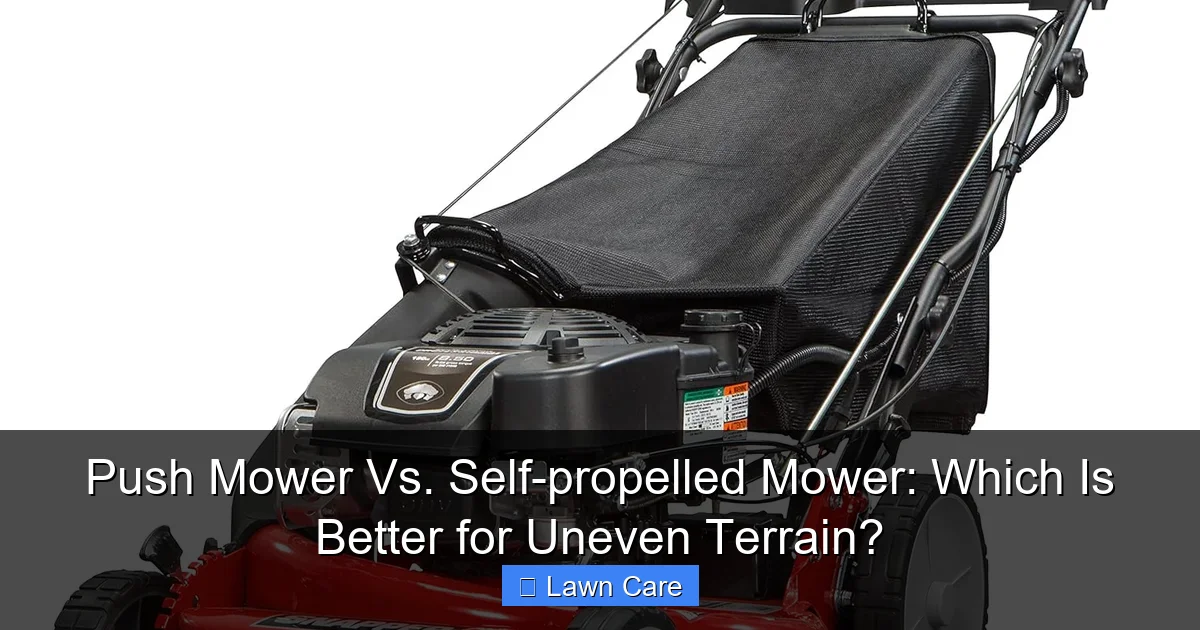
Visual guide about Push Mower Vs. Self-propelled Mower: Which Is Better for Uneven Terrain?
Image source: images-na.ssl-images-amazon.com
Let’s say your yard isn’t just flat—it’s got hills, rocks, and patches of mud. How do push and self-propelled mowers stack up?
Steep Slopes and Hills
Push mowers struggle on slopes over 10–15 degrees. The mower may not move forward, or it could tip backward if it’s too light. You’ll be leaning hard just to keep it from rolling away.
Self-propelled mowers, especially those with rear-wheel drive, handle hills like a champ. The motor provides consistent forward motion, and many models are rated for slopes up to 20 degrees or more.
Rough or Rocky Ground
On rocky terrain, a push mower can snag on stones or get damaged if a rock hits the blades. You also risk tripping or losing control.
Self-propelled mowers with sturdy wheels and suspension systems absorb shocks better. Look for models with pneumatic tires (air-filled) for better grip and cushioning over bumps.
Thick or Overgrown Grass
Thick grass demands more power. A push mower may clog or stall if the grass is too tall or wet.
Self-propelled mowers, especially gas models with stronger engines, cut through tall grass without slowing down. Electric models with high torque can also handle this—just make sure the battery is fresh.
Weight and Balance: Why It Matters on Uneven Ground
The weight of your mower plays a surprising role in how well it performs on uneven terrain.
Light Mowers (Under 60 lbs)
These are great for small, flat lawns. But on slopes, they can feel unstable. If the front wheels lose contact with the ground, the mower might flip backward—especially with a push mower.
Heavy Mowers (Over 80 lbs)
Heavier mowers stay grounded better on inclines and resist tipping. However, they’re harder to push manually and may be difficult to maneuver in tight spaces.
Self-propelled mowers often fall in the 70–90 lb range, offering a good balance. The added weight helps with stability, while the motor handles the pushing.
Maintenance and Longevity: Which One Lasts Longer?
Maintenance isn’t just about cleaning—it’s about keeping your mower ready for tough conditions.
Push Mowers: Simple but Limited
With no engine or drive system, push mowers require minimal upkeep. Sharpen the blades, clean the deck, and store it properly. They last for years if cared for.
Self-Propelled Mowers: More Complex
These have belts, gears, and motors that can wear out. For example, a worn belt might cause the mower to slip or not move forward at all. Regular maintenance—like checking the belt tension and lubricating moving parts—is essential.
But here’s the thing: a well-maintained self-propelled mower can outlast a push mower, especially if you’re using it on challenging terrain. The extra effort pays off in reliability and performance.
Cost Comparison: Upfront vs. Long-Term Value
Let’s talk money. A basic push mower might cost $100–$200. A self-propelled mower starts around $300 and can go up to $800 or more for high-end models.
Is the Higher Price Worth It?
For small, flat lawns, maybe not. But if your yard has hills, rocks, or thick grass, the time and effort saved make self-propelled mowers a better long-term value. You’ll spend less time mowing and more time enjoying your yard.
Also consider fuel and electricity costs. Electric self-propelled mowers are cheaper to run, but gas models offer more power for large or tough jobs.
Which Should You Choose for Uneven Terrain?
So, which is better for uneven terrain—push mower or self-propelled mower?
Choose a Push Mower If:
- Your lawn is mostly flat with only minor slopes.
- You have strong legs and enjoy a workout.
- You’re on a tight budget and don’t want to spend much upfront.
- You want an eco-friendly, low-maintenance option.
Choose a Self-Propelled Mower If:
- Your yard has hills, rocks, or thick grass.
- You want to reduce physical strain and save time.
- You’re willing to invest more for long-term convenience.
- You have a larger lawn where fatigue could be an issue.
Remember, there’s no one-size-fits-all answer. But for most yards with uneven terrain, the self-propelled mower offers a clear advantage in performance and ease of use.
Final Thoughts: Make the Right Choice for Your Lawn
Mowing an uneven lawn doesn’t have to be a daily battle. By understanding the differences between push mowers and self-propelled mowers, you can choose the tool that fits your yard’s challenges—and your lifestyle.
If you’re tired of fighting gravity every time you mow, it might be time to upgrade to a self-propelled model. Not only will it make your life easier, but it’ll also help you maintain a healthier, more consistent lawn.
And if you’re still unsure, check out our guide on What Is Self Propelled Mower 2 or compare your options in Should I Get A Push Mower Or Self Propelled. These resources can help you make a confident decision based on your specific needs.
Frequently Asked Questions
What is the best mower for hills?
Self-propelled mowers are generally best for hills because they provide consistent forward motion and reduce the physical effort needed to push the mower uphill.
Can I use a push mower on a slope?
Yes, but only on gentle slopes. Steep hills can make a push mower difficult to control and may cause it to tip backward.
How do I choose a mower for uneven terrain?
Consider the slope angle, presence of rocks or thick grass, and your physical ability. A self-propelled mower is usually better for challenging terrain.
Are electric self-propelled mowers good for hills?
Yes, especially models with high torque and good battery life. Just ensure the mower is rated for the steepness of your slopes.
What’s the difference between front-wheel and rear-wheel drive in self-propelled mowers?
Rear-wheel drive offers better traction and control on hills, while front-wheel drive may struggle on steep inclines. Choose rear-wheel for uneven or sloped yards.
How often should I maintain my self-propelled mower?
Check the belt, wheels, and engine every 25–50 hours of use. Clean after each mowing and service annually for optimal performance.