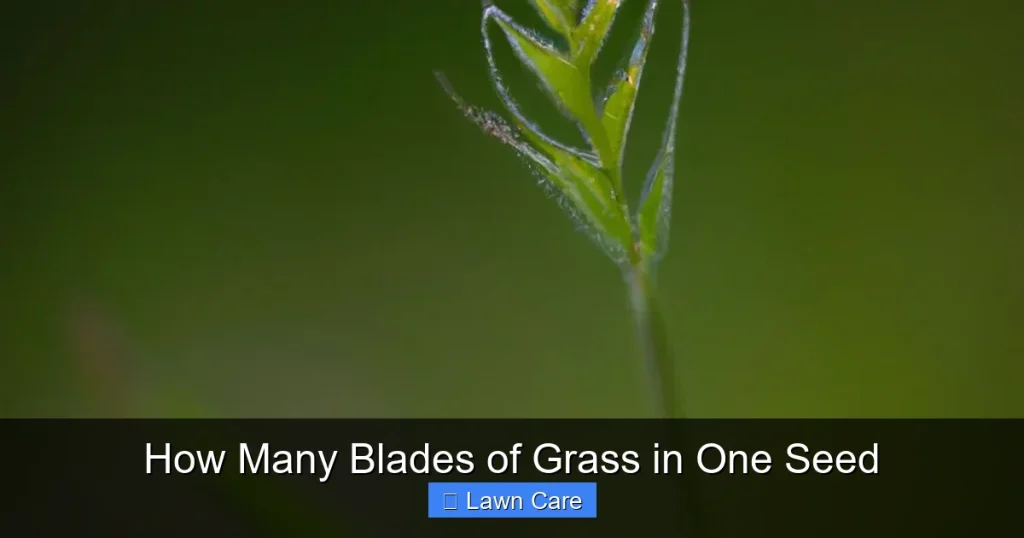
Ever wondered how many blades of grass emerge from one tiny seed? This guide dives into the fascinating science behind grass germination and growth. You’ll learn that while one seed typically produces one primary shoot, this shoot can develop into multiple blades through tillering. Understanding this process is key to successful lawn establishment and maintenance.
# How Many Blades of Grass in One Seed?
It’s a question many homeowners ponder, especially when looking at a vast green expanse of lawn. You might picture each tiny seed sending up a single, solitary blade of grass. But the reality is a bit more intricate and, frankly, more amazing! Understanding how many blades of grass sprout from a single seed is fundamental to comprehending lawn establishment and how your grass grows.
This guide will demystify the journey from a dormant seed to a lush blade of grass, and then to a full, vibrant lawn. We’ll explore the science behind germination, the critical role of tillering, and what factors influence the final number of blades you see. Prepare to gain a deeper appreciation for the tiny powerhouses that create your beautiful backyard.
## The Seed’s Awakening: Germination
Before we talk about blades, we need to understand the seed’s journey. A grass seed is a remarkable little package containing an embryo, a food source (endosperm), and a protective outer coat. For it to begin its life, it needs the right conditions. This is where germination comes in.
### What is Germination?
Germination is the process by which a seed sprouts and begins to grow. It’s triggered by specific environmental cues, primarily moisture, temperature, and oxygen. When these are just right, the seed absorbs water, causing it to swell. This hydration activates enzymes within the seed, which begin to break down the stored food.
### The First Growth: The Radicle and Coleoptile
The very first part of the seedling to emerge from the seed is the **radicle**. This is the embryonic root. Its job is to anchor the young plant and start absorbing water and nutrients from the soil. Shortly after the radicle appears, the **coleoptile** emerges. This is a protective sheath that encloses the embryonic shoot. It pushes upwards through the soil.
### Breaking Through the Surface
The coleoptile’s mission is to protect the tender young leaves as they make their way to the surface. Once the coleoptile breaks through the soil, it typically withers and falls away, revealing the first blade of grass. So, at this initial stage, it’s true: one seed has sent up one shoot, which we see as one blade of grass. But this is just the beginning of the story.
## The Miracle of Tillering: More Blades from One Plant
This is where the one-seed-one-blade idea gets complicated. The single shoot that emerges from the seed is the **primary shoot**. However, most grass species have a remarkable ability to produce additional shoots, called **tillers**, from the base of this primary shoot. This process is called tillering.
### What is Tillering?
Tillering is a natural growth habit for many grasses. New shoots develop from buds located at the crown of the plant, which is the area at or just below the soil surface where the roots and shoots meet. These new shoots grow upwards, and each tiller develops its own set of leaves, which we perceive as additional blades of grass.
### How Tillering Works
Imagine the primary shoot as the “parent” plant. From its base, new “offspring” shoots emerge. Each of these tillers grows its own stem and leaves, effectively creating a cluster of grass blades that all originate from the same seed. This is how a single grass plant can look much fuller than just one blade.
* **Node Development:** Tillers typically arise from nodes on the stem, which are points where leaves or buds are attached.
* **Crown Formation:** As a grass plant matures and tillers, it forms a crown. This is a vital part of the plant, as it contains meristematic tissue responsible for new growth, including tillers and roots.
* **Crowding Effect:** The more tillers a plant produces, the denser and fuller the grass appears. This is the natural mechanism that allows a few scattered seeds to eventually form a lush lawn.
### Species Matter
The tendency and extent of tillering can vary significantly between different types of grass. Some grasses, like fescues and ryegrasses, are known to tiller prolifically, quickly creating a dense turf. Others, like certain varieties of centipede grass, may tiller less aggressively. Understanding the specific grass species you are planting is important for managing expectations about lawn density. For instance, if you are learning how to plant Bermuda grass seed in Texas, you’ll want to know its tillering characteristics.
## Factors Influencing the Number of Blades
So, we’ve established that one seed can lead to multiple blades through tillering. But how many blades are we realistically talking about? The answer isn’t a single number, as it’s influenced by a complex interplay of factors.
### 1. Grass Seed Quality and Viability
Not all seeds are created equal. High-quality grass seed, with a high germination rate and purity percentage, is crucial.
* **Viability:** A seed must be viable, meaning it’s alive and capable of germinating. Old seeds or seeds stored improperly may have a low viability rate, meaning fewer will sprout successfully.
* **Purity:** Pure seed means it’s free from weed seeds and inert matter. While this doesn’t directly affect the number of blades from a *single* seed, it impacts the overall success and health of your lawn, which in turn influences tillering.
### 2. Environmental Conditions
The environment plays a massive role in how a grass plant develops and tillers.
* **Sunlight:** Most grasses require adequate sunlight to photosynthesize efficiently. Insufficient sunlight can lead to weaker growth and less tillering. For example, understanding how many hours of sun does Bermuda grass need is vital for its development.
* **Water:** Consistent moisture is essential for germination and ongoing growth. Both too little and too much water can stress the plant and hinder tillering.
* **Temperature:** Grass species have optimal temperature ranges for growth. Extreme heat or cold can slow down or stop growth, impacting tiller production.
* **Nutrients:** A well-balanced supply of nutrients, particularly nitrogen, is critical for leaf growth and tillering. Deficiencies can stunt development.
### 3. Soil Health
The foundation of a healthy lawn is healthy soil.
* **Soil Structure:** Good soil aeration and drainage allow roots to grow strong and access oxygen and water. Compacted soil restricts root development, which can limit the plant’s ability to produce tillers.
* **Soil pH:** Grass species have preferred soil pH ranges. If the pH is too high or too low, nutrient uptake can be hindered, affecting growth.
### 4. Mowing Practices
How you mow your lawn significantly impacts its density and the number of blades.
* **Mowing Height:** Mowing too short can stress the grass, removing too much of the photosynthetic surface and potentially damaging the crown, which inhibits tillering. Leaving the grass at an appropriate height encourages healthier growth and more tillers.
* **Mowing Frequency:** Regular mowing encourages the plant to tiller as it recovers from the cut. However, over-mowing can be detrimental.
### 5. Seeding Density
While we’re talking about one seed, in practice, you’re rarely planting just one. The number of seeds you sow per square foot directly influences how dense your lawn becomes. A lawn with a higher seeding density will appear to have many more blades of grass simply because there are more individual grass plants, each with its potential for tillering. When considering how much seed to use, researching how many pounds of grass seed per square foot is a helpful guide.
## Putting It All Together: The Practical Answer
So, to directly answer the question: **How many blades of grass in one seed?**
The most accurate answer is: **It starts with one shoot, which develops into one primary blade, but through the process of tillering, that single plant can produce many blades of grass.**
The exact number of blades a single seed’s plant will produce is variable and depends heavily on the factors mentioned above. A happy, healthy grass plant in ideal conditions, of a species known for tillering, could potentially produce dozens of blades of grass over its lifetime. This is how a few seeds can create a dense, carpet-like lawn.
## Troubleshooting: Why Aren’t My Seeds Producing Enough Blades?
If you’ve planted grass seed and aren’t seeing the lushness you expected, here are a few common reasons and solutions:
### 1. Poor Germination
* **Problem:** Seeds didn’t sprout.
* **Causes:** Old seed, incorrect planting depth, lack of moisture, extreme temperatures, poor seed-to-soil contact.
* **Solutions:** Ensure you’re using fresh, viable seed. Follow recommended planting depths. Keep the seedbed consistently moist until germination. Make sure the seed is in firm contact with the soil.
### 2. Weak Seedling Growth
* **Problem:** Seedlings emerged but are thin and spindly.
* **Causes:** Nutrient deficiency, insufficient sunlight, poor soil conditions, over-mowing.
* **Solutions:** Fertilize with a starter fertilizer. Ensure adequate sunlight (for some species, understanding how many hours of sun does Bermuda grass need is crucial). Improve soil structure through aeration. Adjust mowing height.
### 3. Lack of Tillering
* **Problem:** Plants are growing, but not getting dense.
* **Causes:** Stress from drought, heat, or pests; lack of nitrogen; mowing too short; inappropriate grass type for the climate.
* **Solutions:** Ensure consistent watering. Use a balanced fertilizer, especially one with sufficient nitrogen during the growing season. Maintain the correct mowing height for your grass type. Consider overseeding with a more aggressive tillering variety if appropriate.
### Getting Rid of Unwanted Grass
Sometimes, the issue isn’t about generating more blades but about managing existing growth. If you’re dealing with invasive grasses in areas where you don’t want them, like flower beds or vegetable gardens, you might be looking into how to get rid of grass in flower beds or how to get rid of grass in garden without killing plants. Understanding how grass spreads is key to successful eradication.
## Conclusion
The journey from a single grass seed to a lush lawn is a testament to nature’s ingenuity. While a seed begins with a single shoot and blade, the magical process of tillering allows that one plant to multiply its blades, creating the dense turf we love. Understanding this biological process, coupled with providing the right environmental conditions, is the secret to establishing and maintaining a healthy, vibrant lawn.
So, the next time you admire your green carpet, remember the incredible transformation that started with countless individual seeds, each capable of becoming a miniature grass factory, producing an abundance of blades. It’s a fascinating aspect of lawn care that brings a whole new appreciation for every blade you see. Knowing the potential of each seed can also inform your choices when seeding, like deciding how late can you plant grass seed in the fall for optimal germination and tillering.
- One Seed, Multiple Blades: While a single grass seed typically germinates with one main shoot, this shoot can develop into multiple blades of grass through a process called tillering.
- The Tillering Process: Tillering is the natural growth habit where new shoots (and thus new blades) emerge from the base of the main stem, creating a fuller lawn over time.
- Factors Influencing Growth: The number of blades ultimately produced depends on various factors including grass species, seed quality, soil conditions, and environmental factors like sunlight and water.
- Seeding Density Matters: The perceived number of blades in a lawn is also a result of how densely seeds were planted; a thicker lawn means more individual plants, each contributing blades.
- Not Always One-to-One: It’s a common misconception that one seed equals one blade of grass. The reality is more complex, involving plant development and environmental influences.
- Healthy Grass, More Blades: A healthy, well-maintained grass plant, encouraged by proper care and ideal conditions, will tiller more vigorously, producing a greater number of blades.