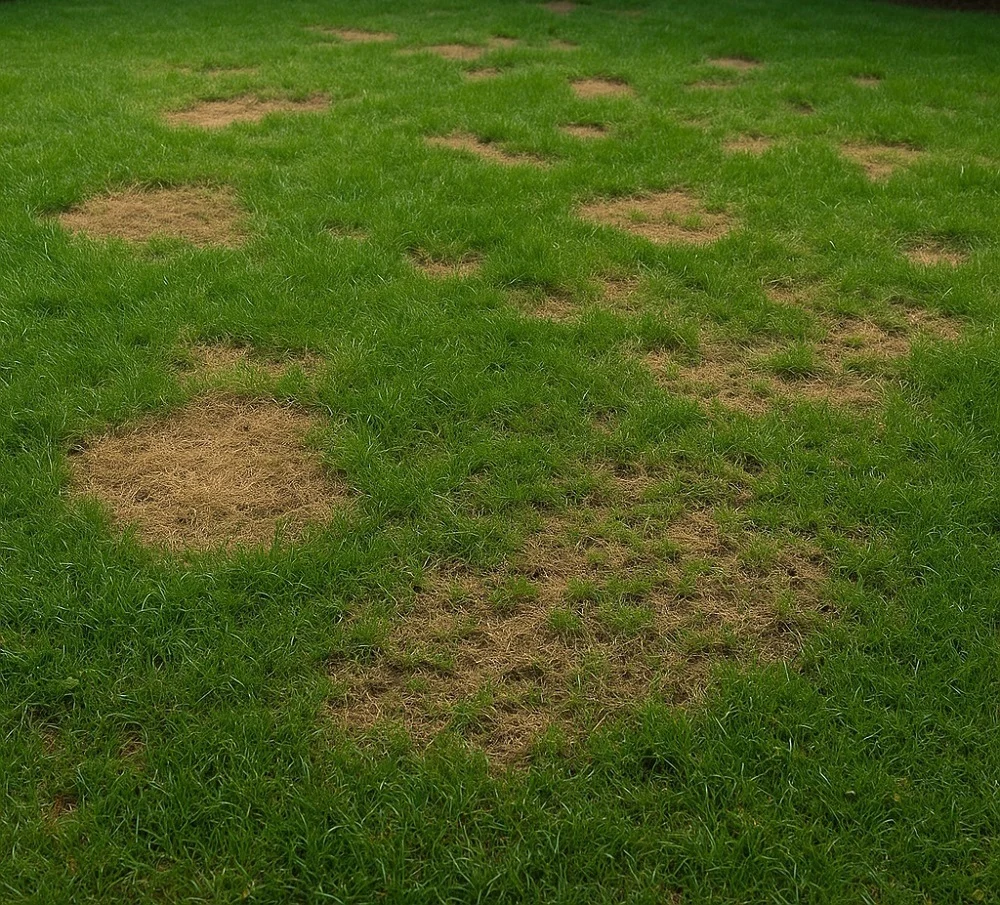
Learning how to kill lawn grubs starts with confirming you actually have them. Many homeowners see brown patches and assume grubs are the culprit. Sometimes they're right.
Sometimes it's something else entirely.
Grubs are the larval stage of scarab beetles, including Japanese beetles and European chafers. They feed on grass roots just below the soil surface. Damage typically appears in late summer and early fall.
As of 2026, most cooperative extension services recommend treating only when you find more than 5 to 10 grubs per square foot. Let's walk through this step by step.
Quick Answer
Kill lawn grubs by first confirming their presence. Perform a soap flush or soil sample. Count the grubs per square foot.
If you have more than 5 to 10 per square foot, apply a curative insecticide like trichlorfon. For future prevention, use imidacloprid or chlorantraniliprole in late spring. Water everything in well.
First, Confirm You Actually Have a Grub Problem
How do you know it's grubs and not something else? That's the first question to answer before spending money on treatments.
Grub damage shows up as irregular brown patches. The turf feels spongy underfoot. You can pull it up easily because the roots have been chewed away.
But drought stress and fungal diseases look similar. So do dog urine spots.
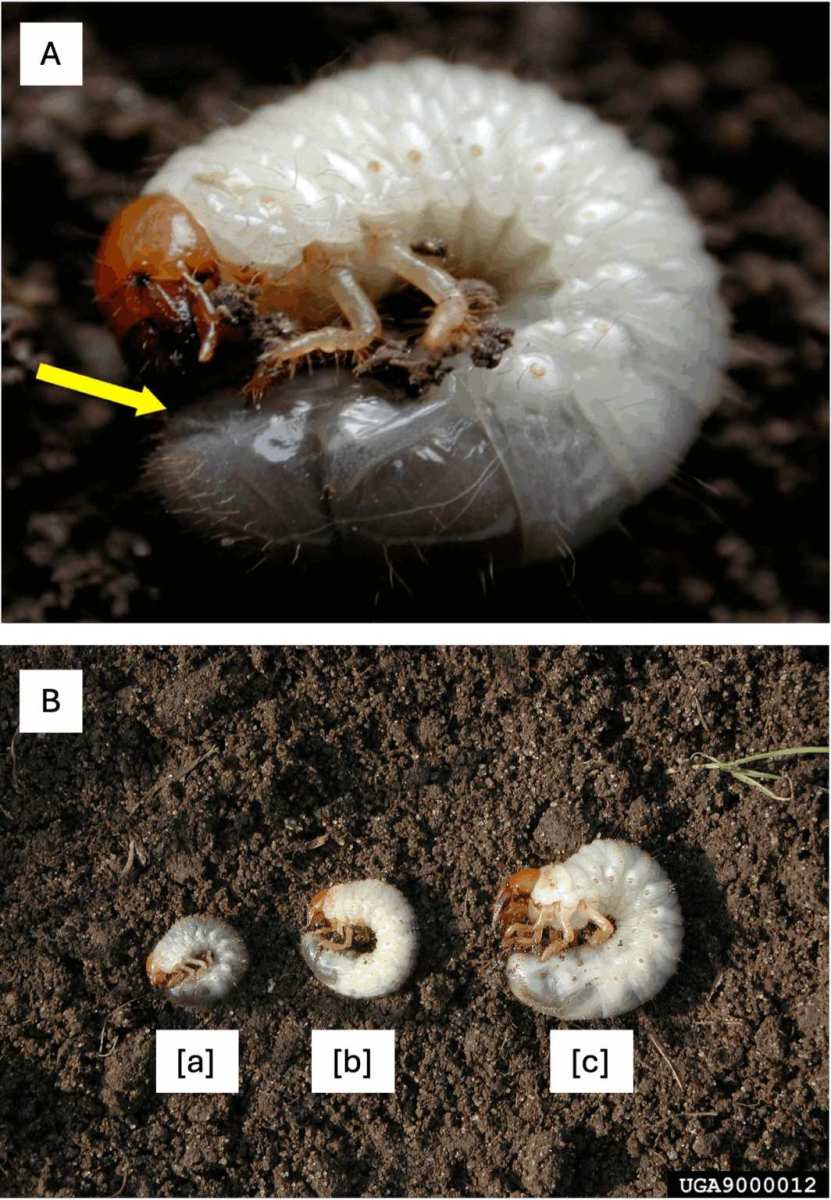
Here's what grubs actually are. White grubs are C-shaped larvae from scarab beetles. They live underground and feed on grass roots.
Species include Japanese beetles, European chafers, June bugs, and billbugs. Each one has a slightly different life cycle. Getting the ID right helps you time treatment properly.
The Soap Flush Test: Your 5-Minute Diagnosis
This is the fastest way to check for grubs without digging. Mix one to two tablespoons of dish soap with a gallon of water. Pour the solution over one square foot of damaged lawn.
Wait 10 minutes.
Grubs will come to the surface. If you see more than 5 to 10 in that single square foot, treatment is warranted. Fewer than that, and your lawn can usually handle the population without intervention.
Do this test in late summer or early fall. That's when grubs are actively feeding and large enough to count easily. Spring testing often fails because grubs are still small or have already pupated.
When It's Not Grubs: Look-Alikes That Waste Your Time
Several lawn problems mimic grub damage. Treating for grubs when you don't have them wastes money and adds unnecessary chemicals to your yard.
Common look-alikes include:
- Drought stress: Brown patches that don't respond to watering
- Fungal diseases: Brown patch, dollar spot, or chinch bug damage
- Dog urine: Concentrated nitrogen burns with green edges
- Sod webworms: Small holes and chewed grass blades at the surface
The soap flush eliminates guesswork. If nothing comes up, investigate other causes first. Your county extension office can help with identification if you're unsure.
How Bad Is It? The Grub Count Threshold
Not every grub in your lawn requires action. A small population won't cause visible damage. Healthy turf can tolerate some root feeding.
The treatment threshold varies by grass type. Cool-season grasses like fescue and bluegrass tolerate 5 to 10 grubs per square foot. Warm-season grasses like bermudagrass and zoysia have a lower threshold of 3 to 5 per square foot.
Above those numbers, you're looking at real damage. The grass can't recover fast enough to outpace root loss. That's when brown patches start spreading.
The 1-Square-Foot Soil Sample Method
Grab a flat shovel. Cut a square foot of turf about three inches deep. Flip it over and count every grub you see in the soil and thatch layer.
Sample several spots across the damaged area. Grubs cluster, so one spot might have 20 while another has 2. Averaging multiple samples gives you the most accurate picture.
This method works best from late July through September. Grubs are actively feeding and easy to spot during this window. Early spring sampling is less reliable.
When to Treat vs. When to Wait
Here's the decision logic:
- 5 or fewer grubs per square foot: Skip treatment. Monitor next year.
- 5 to 10 grubs per square foot: Consider treatment if damage is visible or lawn health is declining.
- 10 or more grubs per square foot: Treat now. Damage will likely spread without intervention.
If you're seeing animal digging, that's another signal. Skunks and raccoons tear up lawns to eat grubs. When wildlife shows up, the population is usually high enough to warrant action.
Choosing Your Treatment: The Decision Branch
Now you know you have grubs and they're above threshold. Time to pick your approach. The right choice depends on timing, your comfort with chemicals, and whether you're preventing or reacting.
There are two main paths. Curative treatments kill existing grubs right now. Preventive treatments stop next year's population before damage starts.
Mixing these up is the most common mistake people make.
Curative vs. Preventive: Why Timing Changes Everything
Curative insecticides work on grubs that are already present and feeding. You apply them in late summer or early fall when damage is visible. They act fast, usually within 24 to 72 hours.
Preventive insecticides target eggs and newly hatched larvae. You apply them in late spring to early summer before the next generation starts feeding. They have long residual activity in the soil.
Using a preventive product in September won't work well. The grubs are too large and the product is designed for early life stages. Using a curative product in May misses the active feeding window entirely.
Chemical Insecticides: What Works and When
Several active ingredients have proven effective against lawn grubs. Each has strengths and limitations.
| Active Ingredient | Type | Speed | Best Application Window | Notes |
|---|---|---|---|---|
| Trichlorfon (Dylox) | Curative | Fast (24-48 hrs) | Late summer to early fall | Works on larger grubs |
| Carbaryl (Sevin) | Curative | Moderate | Late summer to early fall | Broad-spectrum, affects beneficials |
| Imidacloprid (Merit) | Preventive | Slow | Late spring to early summer | Systemic, long residual |
| Chlorantraniliprole (Acelepryn) | Preventive | Moderate | Late spring to early summer | Lower environmental impact |
| Halofenozide (Mach 2) | Preventive | Slow | Late spring | Insect growth regulator |
Trichlorfon is the go-to for active infestations. It works fast and handles larger larvae. Imidacloprid and chlorantraniliprole are better for preventing next year's problems.
Read the label before buying. Some products are restricted in certain states. Application rates vary by product and lawn size.
Biological Controls: Nematodes and Milky Spore
Not everyone wants to use synthetic chemicals. Biological controls offer an alternative. They're slower but safer for beneficial insects and the environment.
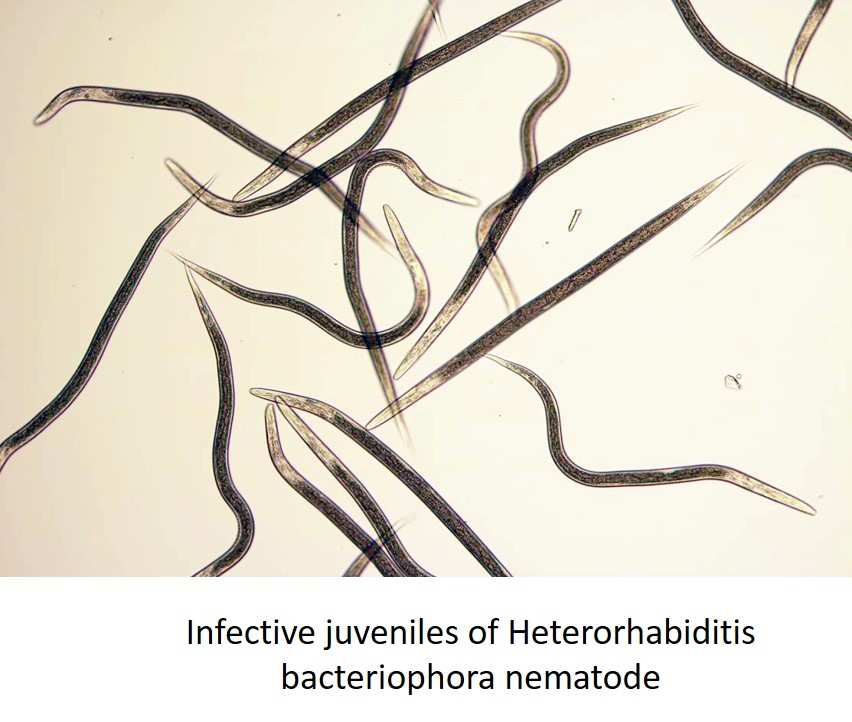
Beneficial nematodes are microscopic worms that parasitize grubs. The species Heterorhabditis bacteriophora is most commonly used for lawn grubs. You apply them to moist soil in the evening.
They seek out grubs and release bacteria that kill the host within 24 to 48 hours.
Nematodes need specific conditions to work. Soil must be moist before, during, and after application. Apply at dusk to avoid UV exposure.
Water the lawn immediately after application and keep it moist for two weeks.
Milky spore is a bacterium (Paenibacillus popilliae) that specifically targets Japanese beetle grubs. It takes one to three years to establish fully in the soil. Once established, it can remain effective for 10 to 15 years.
Milky spore won't help with European chafers or other grub species. It's a long-term strategy, not a quick fix.
Organic-Approved Options That Actually Work
For organic lawn care, a few products carry OMRI listing. Spinosad-based products have some efficacy against young grubs. Neem oil has limited effectiveness as a deterrent but won't kill established populations.
Beauveria bassiana is a fungus that infects grubs. It's available in some commercial products. Results are inconsistent compared to synthetic options, but it's compatible with organic programs.
The reality is that organic options require more precise timing and often multiple applications. They work best as part of an integrated approach rather than a standalone solution.
The Treatment Timeline: When to Apply What
Timing is everything with grub control. Apply the right product at the wrong time and you've wasted your money. Here's how the calendar breaks down.
Preventive Application Window (May–Mid-July)
Preventive products need to be in the soil before grubs hatch. In most regions, this means applying between May and mid-July. The exact timing depends on your location and the target species.
Japanese beetles typically lay eggs in July and August. European chafers lay eggs in June and July. Apply preventive insecticides just before peak egg-laying for best results.
Your local cooperative extension service publishes degree-day models and pest alerts. These tell you exactly when adults are active in your area. Use them to fine-tune your application date.
Curative Application Window (Late July–September)
Curative treatments work best when grubs are small. That's the first and second instar stages, typically late July through August in most regions. Small grubs are more vulnerable to insecticides.
By September, many grubs are larger and harder to kill. They're also preparing to burrow deeper for winter. Late applications may require higher rates or more than one treatment.
If you're seeing damage in October, you're often better off waiting until spring. Grubs are heading deep into the soil and products won't reach them effectively.
Why Fall Applications Often Fail
Many people apply grub control in September or October when damage is most visible. That's often too late for curative products to work well.
Large, mature grubs are more tolerant of insecticides. They're also moving deeper in the soil to overwinter. Surface applications may not reach them at effective concentrations.
The exception is trichlorfon, which has some effectiveness on larger grubs. But even that works better when applied earlier in the season.
If you missed the curative window, focus on preventive treatment the following spring. Let the current population run its course and stop the next generation before it starts.
Step-by-Step: How to Apply Grub Control Products
You've confirmed grubs, counted them, and chosen your treatment. Now let's get the application right. Poor technique kills effectiveness faster than the wrong product.
Preparing Your Lawn Before Treatment
Mow your lawn one to two days before application. You want grass short enough for granules to reach the soil. But not scalped stressed.
Set your mower at the normal height for your grass type.
Don't water the day before unless the soil is bone dry. Soggy soil prevents granules from distributing evenly. Dry soil helps them fall through to the root zone where grubs feed.
Remove leaves, sticks, and debris from the treatment area. Anything blocking the product from reaching soil reduces your results. A quick rake or leaf blower pass does the job.
Mark any areas near water features, vegetable gardens, or drainage inlets. Most grub control products have restrictions near water. Check the label for specific setback distances.
Applying Granular Products Correctly
Granular products are the most common homeowner choice. They're easy to spread and water in. But even distribution matters more than most people realize.
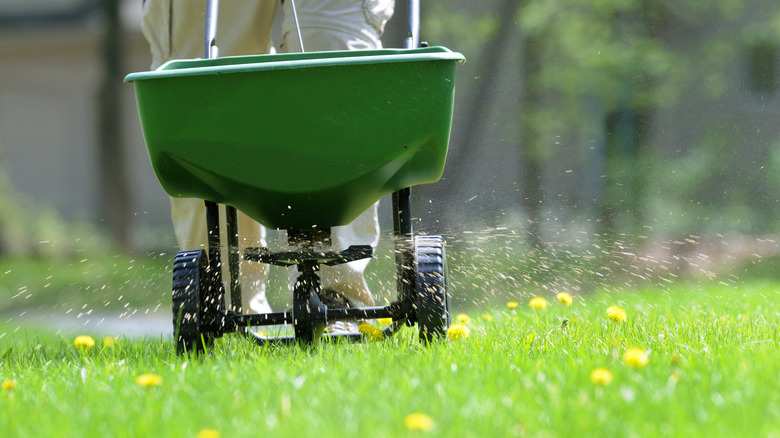
Use a rotary or drop spreader calibrated to the rate on the product label. Never guess at the setting. Run the spreader in overlapping passes to avoid streaks.
Go one direction across the lawn. Then go perpendicular on the second pass.
Start with perimeter edges. Then fill in the middle. Shut off the spreader at turns to avoid piling product in one spot.
Over-application burns grass. Under-application leaves gaps where grubs survive.
Sweep any granules off hard surfaces immediately. Granules on driveways and sidewalks wash into storm drains. This is a real environmental concern and sometimes a local violation.
Applying Liquid Products and Nematodes
Liquid insecticides require a hose-end sprayer or pump sprayer. Dilute according to the label. Spray evenly across the treated area, moving at a steady pace.
Beneficial nematodes come in a sponge or powder that you mix with water. Follow the package instructions for dilution. Use a watering can, hose-end sprayer, or specialized nematode applicator.
The critical rule: apply nematodes at night. UV light kills them fast. Dusk or dark is when you want them on the lawn.
Water immediately after application so they soak into the soil.
Keep the treated area moist for at least two weeks after application. Nematodes need moisture to move through the soil and find hosts. Letting the surface dry out kills them before they can work.
Store unused nematodes in the refrigerator until application. They're living organisms. Heat and freezing reduce viability.
Most suppliers ship them with cold packs for this reason.
Post-Application: Watering In and What to Expect
Water granular products within 24 hours of application. Most labels specify a quarter to half inch of water. This washes granules off grass blades and into the soil.
Too much water causes runoff. Too little leaves product sitting on the surface where it degrades or washes away unevenly. A rain gauge or tuna can helps you measure output.
Curative products like trichlorfon should show results within 24 to 48 hours. Grubs stop feeding and die near the surface. You won't necessarily see them, but damage progression should halt.
Preventive products don't produce visible results. The grubs die underground during egg hatch. You judge success by the absence of new damage the following fall.
Mark your calendar to reevaluate in two to three weeks. If damage is still spreading, a second application may be needed. Some heavy infestations require retreatment, especially with slower-acting products.
Common Mistakes That Waste Money and Time
Even with the right product and timing, mistakes happen. These are the ones that show up most often in extension service reports and turf management feedback.
Treating at the Wrong Time in the Grub Life Cycle
This is the biggest mistake. Preventive products applied in September don't work. Curative products applied in May miss the target.
The grub life cycle dictates when each product type actually functions.
Adult beetles lay eggs in early to mid summer. Eggs hatch within a few weeks. Small larvae are most vulnerable.
That's your window for curative treatment.
Preventive products need soil presence before eggs hatch. Apply them in late spring. They create a barrier of protection during the egg and early larval stages.
Set calendar reminders based on your local pest activity. Many extension services send email alerts for beetle emergence. Sign up for those early warnings.
Using the Wrong Product for Your Situation
Imidacloprid is one of the most commonly misapplied products. People buy it in August when they see damage. But it's a preventive with limited curative action on larger grubs.
If you're seeing damage right now, reach for trichlorfon or carbardy. Those are your fast-acting curatives. Save the preventive products for next spring.
Read the product classification on the label. It will say "preventive" or "curative." Don't assume. Don't trust the marketing name on the front panel.
Skipping the Watering-In Step
Without proper watering, granular products sit on the soil surface. Sunlight breaks down the active ingredient. Wind and foot traffic move granules away from target areas.
Some people wait for rain. That works if rain comes within a day. If it doesn't, you need to irrigate.
Don't gamble on weather when your lawn's at stake.
Nematode applications fail most often from inadequate moisture. The organisms die before they can establish. If you can't commit to keeping the lawn wet for two weeks, consider a chemical alternative instead.
Over-Treating "Just in Case"
More product doesn't mean better control. Over-application damages your lawn and the environment. It also wastes money on product you don't need.
Follow label rates precisely. The EPA registers products based on specific application rates. Exceeding them doesn't improve efficacy.
It increases risk to groundwater and non-target organisms.
If your grub count is below threshold, sometimes doing nothing is the right call. A healthy lawn with proper watering and fertilization can outgrow minor grub feeding. Nature handles the balance when you let it.
Repairing Grub Damage: Getting Your Lawn Back
Once you've controlled the grub population, you're left with dead or damaged patches. Repair timing and technique determine how quickly your lawn recovers.
Assessing Whether to Reseed or Sod
Small scattered patches respond well to reseeding. Just loosen the soil, seed, and keep it moist. The grass fills in within a few weeks during active growing season.
Large areas of complete kill may need sod. Sod gives immediate coverage and prevents weed invasion. But it costs significantly more than seed by the square foot.
The compromise is spot-sodding the worst areas and seeding the rest. That gives you both quick coverage and cost savings on the margins.
Timing Repairs for Best Results
Cool-season grasses repair best in early fall. September is ideal in most northern regions. Warm spring weather promotes weed competition.
Fall gives grass the best establishment window.
Warm-season grasses repair in late spring through early summer. That's when soil temperatures support active growth for bermuda, zoysia, and their relatives.
Don't repair too soon after insecticide application. Some products have residual activity that can affect seed germination. Check the label for seeding restrictions.
Costs, Products, and What to Expect
Everyone wants to know the bottom line. Here's what treatment actually costs and what results look like.
DIY vs. Professional Service: Real Numbers
DIY granular products cost $20 to $50 per application. That covers roughly 5,000 to 10,000 square feet. Most lawns fall within that range.
Professional lawn care services charge $75 to $150 per grub control visit. They use commercial-grade products and calibrated equipment. Some offer guarantees on results.
The trade-off is expertise versus cost. Professionals know local pest timing and species. They find problems early.
But for straightforward grub control, DIY works fine when you follow the process.
Product Comparison: Active Ingredients and Performance
| Product Type | Example Active Ingredient | Cost Range (DIY) | Speed | Best For |
|---|---|---|---|---|
| Fast curative | Trichlorfon | $15-$30 | 24-48 hours | Active infestations |
| Broad-spectrum curative | Carbaryl | $15-$25 | 1-3 days | Multiple pest types |
| Preventive systemic | Imidacloprid | $25-$50 | Slow (weeks) | Year-long protection |
| Selective preventive | Chlorantraniliprole | $35-$60 | Moderate | Lower environmental risk |
| Biological | Beneficial nematodes | $30-$80 | 1-2 weeks | Organic programs |
| Long-term biological | Milky spore | $25-$50 | 1-3 years | Japanese beetle focus |
Prices vary by region and retailer. Online availability has improved pricing transparency. Compare cost per square foot, not just package price.
Effectiveness depends entirely on matching product to situation. No single product wins every scenario. The best product is the right one for your current problem and timing.
When to Call a Professional
Sometimes DIY isn't enough. Repeated treatment failures, massive infestations, or unknown pest species may warrant a pro.
Licensed applicators have access to restricted-use products. They carry insurance for property damage. They also understand local pest cycles better than any package label can explain.
Get two or three quotes. Ask specifically what product they're applying and why. Any company that won't tell you the active ingredient isn't worth hiring.
Large commercial properties often need professional-grade equipment. Push spreaders don't cover two acres efficiently. Truck-mounted sprayers do that in minutes.
Scale matters in these decisions.
Quick Reference: Your Grub Control Decision Chart
Identify the problem first. See brown patches or spongy turf? Do a soap flush test.
Dig up a sample if needed.
Count the grubs per square foot. Below 5 to 10? Skip treatment and monitor.
Above threshold? Proceed based on season.
Check the calendar. Applying in late summer or early fall? Use a curative product like trichlorfon.
Applying in late spring or early summer? Use a preventive like imidacloprid or chlorantraniliprole.
Choose your method. Chemical insecticides offer reliable control. Biological options like nematodes work with proper conditions.
Water in after application and wait two to three weeks to evaluate results.
Frequently Asked Questions
When is the best time to treat for grubs?
The best time depends on your goal. Apply preventive products from May through mid-July before eggs hatch. Apply curative treatments from late July through September when grubs are small and actively feeding.
Timing is more important than product choice.
How long does it take for grub control products to work?
Trichlorfon kills grubs within 24 to 48 hours. Other chemical products may take a few days to a week. Biological controls like nematodes need one to two weeks under ideal conditions.
You judge success by the absence of new damage.
Can I apply grub control and fertilizer at the same time?
Yes, many combination products exist. Check that both ingredients are compatible with your grass type and season. Some formulations pair preventive insecticides with fertilizer for spring application.
Will grub damage come back next year?
It can. Preventive treatment each year reduces risk significantly. Beetles return annually to lay eggs in favorable turf.
Without preventive measures, reinfestation is common. Consistent monitoring breaks the cycle.
Is it too late to treat grubs in October?
Often yes. By October, many grubs are large and preparing to overwinter deep in the soil. Curative products become less effective.
Focus on preventive treatment the following spring instead.