Let's get straight to it, because if you're reading this, you probably just applied grub killer or you're about to, and you're wondering whether your dog is going to be okay. The short answer is that most grub killers are safe for dogs when used exactly as directed, but "most" isn't "all," and the difference between a safe product and a dangerous one comes down to one thing: the active ingredient.
Some grub control products contain chemicals that are genuinely toxic to dogs, especially small breeds or puppies. Others are so low-risk that veterinarians barely register them as a concern. The problem is that most people grab a bag off the shelf without checking what's actually in it, and that's where things go wrong.
In our research, the biggest risk factor isn't the product itself, it's misapplication, specifically failing to water in granules or letting a dog onto the lawn before the re-entry period is over.

Image source: Wikimedia Commons / Pete Souza
Quick Answer
Is grub killer safe for dogs? It depends entirely on the active ingredient. Products containing imidacloprid or halofenozide are low-risk when applied correctly.
Products with trichlorfon or carbaryl carry real toxicity concerns. Always read the label before you buy. Keep your dog off the lawn for the full re-entry period stated on the product.
When in doubt, choose biological controls like milky spore or beneficial nematodes.
Why the Answer Depends on What's Actually in the Bottle
Here's what most articles won't tell you: "grub killer" isn't one thing. It's a category of products that work in completely different ways, and their toxicity to dogs varies wildly. The active ingredient is the only part of the label that actually determines your dog's risk level, and it's usually printed in small text under the brand name.
When you're standing in the lawn care aisle, you're looking at products that range from essentially harmless to genuinely dangerous for a 15-pound dog. The brand name on the front won't tell you which is which. You have to flip the bag over and look for the active ingredient line.
That single piece of information determines everything about how carefully you need to handle the application and how long your dog needs to stay off the lawn.
The reason this matters so much is that dogs don't metabolize chemicals the way humans do. Their smaller body weight, their tendency to lick paws and chew grass, and their lower threshold for certain neurotoxic chemicals mean that a product labeled "safe for pets once dry" might still pose a risk if your dog is a grass-eater or a digger.
The Active Ingredients That Matter (and the Ones That Don't)
Let's break down the most common active ingredients you'll find in grub control products and what each one means for your dog's safety.
Trichlorfon (Dylox) — the high-risk one
Trichlorfon is an organophosphate, and it's the ingredient that should make you pause. It works by disrupting the nervous system of grubs, and it can do the same to your dog if they're exposed to enough of it. Dogs that ingest trichlorfon-treated granules or walk through a fresh application and then lick their paws can develop symptoms of organophosphate poisoning: excessive drooling, vomiting, tremors, and in severe cases, respiratory distress.
This is the ingredient most commonly associated with emergency vet visits related to lawn treatments.
Imidacloprid — low risk when used correctly
Imidacloprid is a neonicotinoid, and it's the active ingredient in many popular products including Bayer Advanced Grub Killer. It has very low mammalian toxicity because it targets insect-specific nerve receptors that mammals don't have in the same form. Aggregate veterinary toxicology data shows that imidacloprid exposure in dogs rarely causes more than mild gastrointestinal upset, and serious poisoning is uncommon.
The key caveat is "when used correctly," meaning watered in and allowed to dry before your dog has access.
Halofenozide — very low mammalian toxicity
Halofenozide is an insect growth regulator, and it works by disrupting the molting cycle of grub larvae. It's essentially harmless to mammals because the biological pathway it targets doesn't exist in dogs. Products containing halofenozide, such as some formulations of Scotts GrubEx, are among the safest chemical options if you have pets.
You still need to follow label directions, but the margin of safety here is wide.
Carbaryl (Sevin) — moderate to high risk
Carbaryl is a carbamate, and like trichlorfon, it affects the nervous system. It's less persistent in the environment than organophosphates, but it's still genuinely toxic to dogs in concentrated form. Granular Sevin products have been linked to dog poisonings when animals eat the granules directly.
If you see carbaryl on the label, treat it with the same caution you'd give trichlorfon.
Biological options (milky spore, beneficial nematodes) — essentially zero risk
Milky spore disease (Paenibacillus popilliae) and beneficial nematodes (Heterorhabditis bacteriophora) are living organisms that target grubs specifically. They don't affect mammals, birds, fish, or most beneficial insects. If your primary concern is your dog's safety, these are the options that let you stop worrying entirely.
The trade-off is that they work more slowly than chemical products and may take a season or two to reach full effectiveness.
Here's a quick comparison to put it all in perspective:
| Active Ingredient | Product Example | Toxicity to Dogs | Re-Entry Period |
|---|---|---|---|
| Trichlorfon | Dylox 6.2G | High | 24–72 hours (check label) |
| Carbaryl | Sevin Granules | Moderate to High | Until dry, minimum 24 hours |
| Imidacloprid | Bayer Advanced Grub Killer | Low | Until dry, typically 24 hours |
| Halofenozide | Scotts GrubEx | Very Low | Until dry, typically 24 hours |
| Milky spore | St. Gabriel Organics Milky Spore | None | Immediate |
| Beneficial nematodes | Various brands | None | Immediate |
How Dogs Actually Get Exposed to Grub Killer
Understanding the exposure routes is just as knowing which ingredients are dangerous, because even a moderately toxic product is unlikely to harm your dog if they never come into contact with it in a meaningful way.
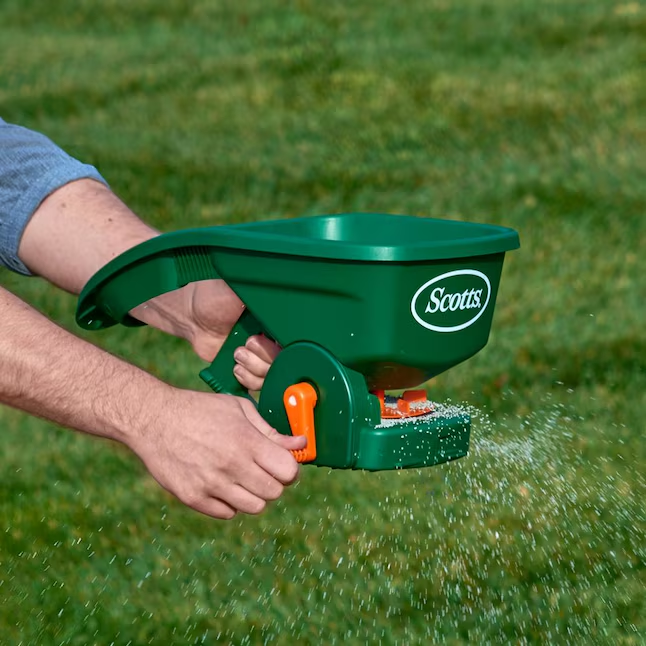
Image source: Bing (Web (fair-use with source credit))
The Most Common Scenarios That Send Dogs to the Vet
Eating dry granules off the lawn. This is the number one cause of grub killer poisoning in dogs. Granules look and smell like food to a lot of dogs, especially if they contain a corn cob or mineral carrier. If you spread granules and don't water them in immediately, or if your dog gets into a storage area where the bag is open, ingestion of concentrated product is a real risk.
This is especially dangerous with trichlorfon and carbaryl products.
Licking or chewing treated grass after application. Some dogs are obsessive grass-eaters, and if they're grazing on a lawn that was recently treated, they can ingest residue through their mouth and digestive system. The risk here is lower than eating granules directly, but it's not zero, particularly with organophosphate products that can linger on grass blades if not properly watered in.
Digging in treated soil. Dogs that dig are getting their noses and paws directly into the zone where grub killer granules settle. This is a double exposure route: inhalation of dust from granules and oral contact from licking dirty paws. If your dog is a digger, you need to be extra cautious about which product you choose and how long you keep them off the treated area.
Walking through wet application and then licking paws. Liquid concentrate products pose a different risk than granules. If you spray a liquid grub killer and your dog walks through it before it dries, the chemical sits on their paw pads and fur. Dogs lick their paws constantly, so this becomes an oral exposure route.
The same principle applies to any residue on their coat.
Access to product that wasn't watered in as directed. This is the scenario that accounts for the majority of preventable exposures. The label says "water in immediately," and the granules sit on the surface for hours because the hose wasn't handy or the sprinkler system didn't kick on. During that window, every dog that steps onto the lawn is at risk.
The pattern across all of these scenarios is the same: the product was applied correctly in terms of coverage, but the safety steps (watering in, keeping the dog away, storing the bag securely) weren't followed. That's what turns a low-risk product into a vet emergency.
What the Product Label Actually Tells You (If You Read It Closely)
The product label is a legal document, not a suggestion sheet. Under the Federal Insecticide, Fungicide, and Rodenticide Act (FIFRA), the label instructions are federally enforceable. That means the re-entry interval, the application rate, the watering-in requirement, and the personal protective equipment recommendations aren't optional guidance, they're the law.
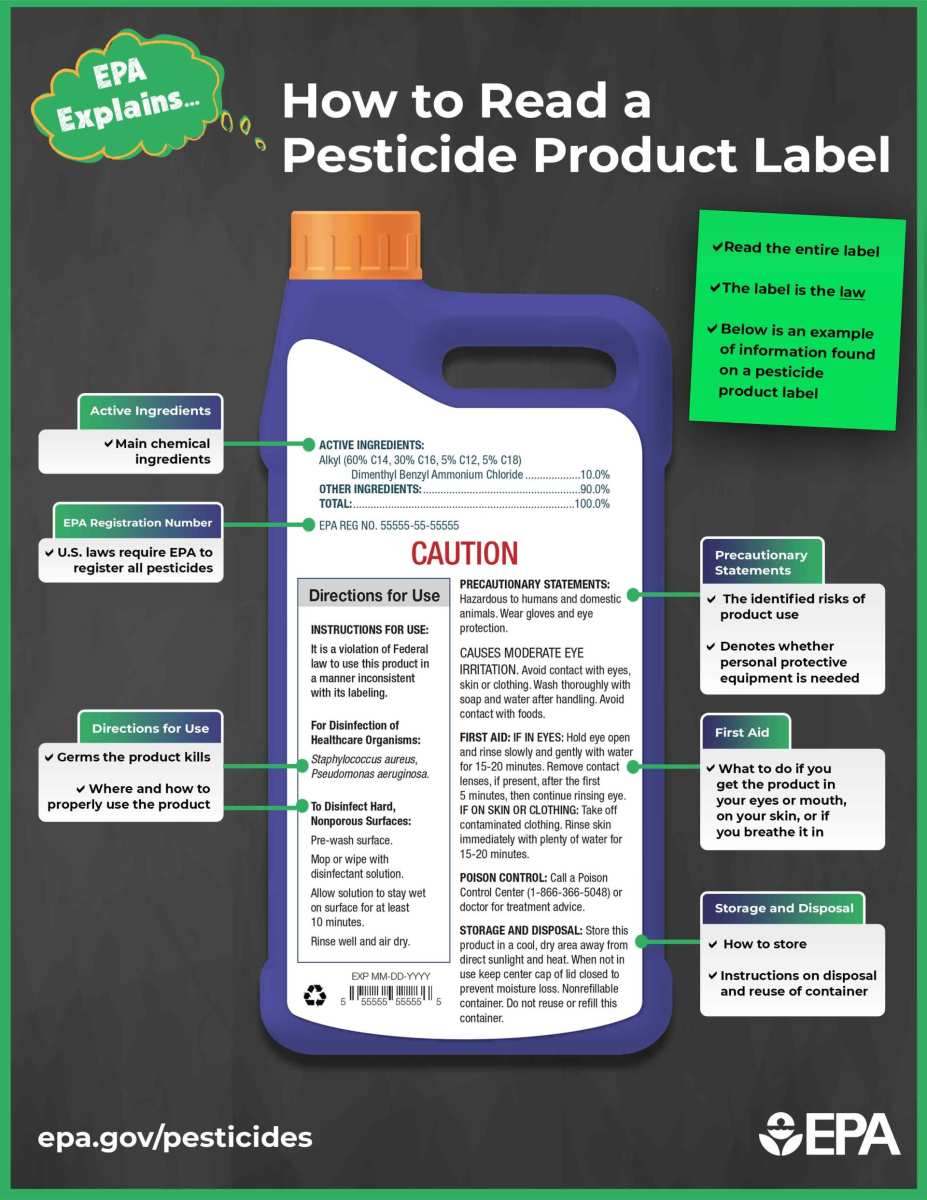
Image source: Bing (Web (fair-use with source credit))
Re-Entry Intervals and Drying Times
The re-entry interval is the minimum amount of time that must pass before people or pets can go back onto the treated lawn. For most granular grub killers, this is stated as "until the product has been watered in and the lawn is dry." For some products, especially those containing trichlorfon, the label may specify a fixed time period of 24 to 72 hours regardless of drying.
Here's where people get tripped up: "until dry" doesn't mean the same thing for every product. A liquid spray on a warm, sunny day might be dry in 4 hours. Granular product on a cool, overcast day might take 24 hours or more to fully absorb into the soil, even after watering.
If your dog goes out during that window, they're walking on a surface that still has active chemical residue.
Why Watering In Properly Is a Safety Step, Not Just for Effectiveness
Every granular grub killer label instructs you to water the lawn after application. Most people know this is necessary for the product to reach the grubs in the soil. What they don't realize is that watering in is also the single most important safety step for your dog.
Once granules are dissolved and washed into the soil profile, the amount of chemical available on the grass surface drops dramatically. An unwatered lawn is a hazard. A properly watered lawn is a completely different risk profile.
The typical recommendation is ¼ to ½ inch of water immediately after application. That's enough to dissolve the granules and carry the active ingredient into the top inch of soil where grubs live. If you're using a hose, that's roughly 15 to 20 minutes of watering for most residential sprinklers.
Skimping on this step is the most common application mistake we've found in our research, and it's the one most likely to put your dog at risk.
Reading the Label for Pet-Specific Language
Some products include specific language about pets on the label. Look for phrases like "keep pets off until dry," "do not allow pets to enter treated areas until dust has settled," or "toxic to birds and animals if ingested." The absence of pet-specific warnings doesn't mean the product is safe, it just means the manufacturer didn't include that language. Always check the active ingredient against the toxicity profiles we covered earlier, regardless of what the front of the bag says.
Which Grub Killer Active Ingredients Are Dangerous to Dogs
Let's rank these by actual risk, because not all grub killers deserve the same level of caution.
Toxicity Ranked by Real Risk Level
Organophosphates (trichlorfon) and carbamates (carbaryl), the genuinely dangerous category. These are the products that cause the most serious poisonings in dogs. They work by inhibiting acetylcholinesterase, an enzyme that's critical for nerve function in both insects and mammals. Dogs exposed to enough of these chemicals can develop a syndrome called cholinergic crisis: drooling, urination, defecation, difficulty breathing, seizures.
If your dog shows any of these symptoms after lawn treatment exposure, it's an emergency. Call your vet or the ASPCA Animal Poison Control Center at (888) 426-4435 immediately.
Neonicotinoids (imidacloprid), minimal risk when label directions are followed. Imidacloprid has an LD50 in rats of approximately 450 mg/kg, which puts it in a low-toxicity category for mammals. Dogs would need to ingest a very large amount relative to their body weight to experience serious effects. Most reported cases of imidacloprid exposure in dogs involve mild vomiting or diarrhea that resolves on its own.
That said, "low risk" isn't "no risk," and you should still follow all label directions.
Insect growth regulators (halofenozide), very low concern. Halofenozide mimics a hormone that only exists in insects. Dogs don't have the biological pathway it targets, so even significant exposure is unlikely to cause harm. Veterinary toxicology references consistently list halofenozide as having negligible mammalian toxicity.
This is the chemical option I'd recommend to a friend who has a dog and wants effective grub control without the anxiety.
Biological controls, no toxicity concern whatsoever. Milky spore and beneficial nematodes are living organisms that are physically incapable of harming your dog. They don't produce toxins, they don't affect mammalian biology, and they don't leave chemical residue. The only downside is patience: milky spore can take two to three years to establish fully in your soil, and nematodes need to be applied under specific temperature and moisture conditions to survive.
The takeaway is simple. If the active ingredient is trichlorfon or carbaryl, treat that product with serious respect. If it's imidacloprid or halofenozide, follow the label and you'll almost certainly be fine.
If you want zero worry, go biological.
Safe Application Practices If You Have a Dog
If you're going to use a chemical grub killer, the application process is where you protect your dog. Every step matters, and skipping even one can turn a low-risk product into a real problem.
Step-by-Step: How to Apply Grub Killer Without Putting Your Dog at Risk
1. Identify the active ingredient before you buy. Don't grab the first bag you see. Flip it over, find the active ingredient line, and cross-reference it against the toxicity profiles we covered earlier.
If it's trichlorfon or carbaryl and you have a small dog or a puppy, seriously consider a different product.
2. Apply granules or liquid evenly per label directions. Use a broadcast spreader for granules and calibrate it to the rate specified on the label. Over-applying doesn't kill more grubs, it just increases the chemical load your dog might encounter.
For liquid concentrates, mix exactly as directed. Never eyeball the ratio.
3. Water in thoroughly. This is the step that separates a safe application from a risky one. Apply ¼ to ½ inch of water immediately after spreading granules.
This dissolves the carrier and washes the active ingredient into the soil where grubs actually live. An unwatered lawn is a hazard zone.
4. Keep your dog completely off the lawn for the full labeled re-entry period. "Until dry" is the minimum. For products containing trichlorfon, that might mean 48 to 72 hours.
Don't let your dog out for a quick bathroom break on treated grass. It's not worth it.
5. Store all product out of reach. Keep the bag in a locked garage or high shelf. Dogs have gotten into open bags stored in unlocked sheds, and ingestion of concentrated granules is the most dangerous exposure scenario by far.
6. Monitor your dog for 48 hours after they're allowed back on the lawn. Watch for excessive drooling, vomiting, lethargy, or tremors. These symptoms can appear hours after exposure, not just immediately.
If anything seems off, call your vet.
Pet-Safe Grub Control Alternatives Worth Considering
If reading through the toxicity profiles made you uncomfortable, you're not alone. A lot of dog owners decide the peace of mind is worth switching to biological methods, and the good news is that these options actually work.

Image source: Bing (Web (fair-use with source credit))
When You'd Rather Not Use a Chemical at All
Milky spore disease (Paenibacillus popilliae). This is a bacterium that specifically targets Japanese beetle grubs, which are one of the most common lawn-damaging species in the eastern and midwestern United States. You apply it as a powder, it establishes in the soil, and it infects grubs as they feed on grass roots. It's completely non-toxic to dogs, humans, birds, bees, and fish.
The downside is patience: milky spore takes two to three years to build up enough concentration in the soil to be fully effective, but once established, it can persist for 10 to 15 years.
Beneficial nematodes (Heterorhabdacterophora). These are microscopic roundworms that seek out grubs in the soil and release bacteria that kill them within 24 to 48 hours. You mix them with water and spray them onto the lawn using a hose-end sprayer or watering can. They're alive when you apply them, so you need to keep the soil moist for about two weeks afterward so they survive and spread.
Nematodes work faster than milky spore, often showing results within a single season, but they need to be reapplied annually in areas with heavy grub pressure.
Neem oil applications. Neem oil is a botanical insecticide derived from the neem tree. It has very low toxicity to mammals and can suppress grub populations when applied to the soil. It's not as consistently effective as milky spore or nematodes for heavy infestations, but it's a reasonable option for mild grub problems when you want to avoid synthetic chemicals entirely.
The trade-off with all biological methods is speed and convenience. Chemical grub killers work fast and require one application per season. Biological controls take longer to establish and may need more frequent reapplication.
But if your dog is a grass-eater, a digger, or a small breed where even low-level chemical exposure makes you nervous, biological options eliminate that worry completely.
Signs Your Dog May Have Been Exposed to a Toxic Grub Product
Knowing what to watch for can make the difference between a quick recovery and a serious emergency. Symptoms of pesticide poisoning in dogs can appear within minutes or be delayed by several hours, depending on the chemical and the dose.
Symptoms That Warrant an Immediate Call to Your Vet
Excessive drooling or foaming at the mouth. This is often the first sign of organophosphate or carbamate exposure. If your dog suddenly starts drooling heavily and there's no obvious cause like a foreign object in their mouth, think about recent lawn treatments.
Vomiting or diarrhea. Mild gastrointestinal upset can happen with low-level imidacloprid exposure and may resolve on its own. But repeated vomiting, especially combined with other symptoms, needs veterinary attention.
Tremors, shaking, or muscle twitching. This is a red flag for neurotoxic chemicals like trichlorfon and carbaryl. Muscle fasciculations (small, involuntary twitches under the skin) are a classic sign of cholinesterase inhibition and require immediate treatment.
Lethargy or disorientation. If your dog seems unusually tired, uncoordinated, or confused after being on a treated lawn, don't wait to see if it passes. These can be early signs of neurological involvement.
Difficulty breathing. Labored breathing, rapid panting at rest, or open-mouth breathing in a cool environment are emergency symptoms. Get to a vet immediately.
Pupil constriction (pinpoint pupils). Very small pupils that don't respond normally to light changes are a hallmark sign of organophosphate toxicity. If you notice this along with any other symptom, it's an emergency.
Who to Call and When
ASPCA Animal Poison Control: (888) 426-4435. This is the gold standard for pet poisoning cases in the United States. They have a database of over 500,000 animal poison cases and can advise you on whether your dog's symptoms warrant an emergency visit. There's a consultation fee, but the guidance is worth it.
Pet Poison Helpline: (855) 764-7661. Another excellent resource with 24/7 availability. They can help you assess the severity of exposure and advise on first steps while you're getting to the vet.
Your regular veterinarian vs. emergency clinic. If your dog is showing mild symptoms (slight drooling, one episode of vomiting) and you're within operating hours, call your regular vet. If symptoms are severe (tremors, seizures, difficulty breathing) or it's after hours, go straight to an emergency veterinary clinic. Don't wait for a callback.
When you call, have the product label ready. The active ingredient, concentration, and approximate amount your dog may have been exposed to will help the poison control specialist or veterinarian give you the most accurate advice.
Real-World Scenarios: What Actually Happens
Let's walk through three common situations to put all of this in context.
Scenario 1: Dog Eats Granules Before Watering In
A homeowner spreads a trichlorfon-based granular product on a Saturday morning but gets distracted before watering. Their 20-pound terrier gets out and eats a mouthful of granules off the lawn. The owner notices the dog drooling heavily within 30 minutes.
They call the ASPCA Poison Control Center, who advises an immediate vet visit based on the active ingredient and the dog's weight. The dog receives activated charcoal and atropine, stays overnight for observation, and recovers fully. The total vet bill runs around $1,200.
This is the most common and most preventable scenario.
Scenario 2: Dog Walks on Lawn After Proper Application and Drying
A homeowner applies a halofenozide-based product, waters it in thoroughly, and waits 48 hours before letting their Labrador back on the lawn. The dog shows no symptoms. This is how these products are designed to work when label directions are followed.
The active ingredient is in the soil, not on the grass surface, and the dog's exposure is negligible.
Scenario 3: Owner Uses Milky Spore Instead of Chemical
A family with two young kids and a grass-eating beagle decides to skip chemical products entirely. They apply milky spore powder in early spring according to the package directions. They see some grub damage that first year, but by the second season, grub numbers drop noticeably.
By year three, the lawn is essentially grub-free with no chemical applications and zero worry about pet exposure. The trade-off was patience, but the result was a healthy lawn and a healthy dog.
Frequently Asked Questions
Is GrubEx safe for dogs once it's dry?
GrubEx products containing halofenozide are very low-risk for dogs once the product has been watered in and the lawn is dry. Halofenozide has negligible mammalian toxicity. Always verify the active ingredient on the specific product you're using, since formulations can change.
How long after applying grub killer can my dog go on the lawn?
It depends on the product. Most labels say "until dry," which is typically 24 hours after watering in. Products containing trichlorfon may require 48 to 72 hours.
Read the re-entry interval on the specific product label and follow it exactly.
Are organic grub killers actually safer for pets?
Yes, in most cases. Products like milky spore and beneficial nematodes are biological controls that don't affect mammals at all. Neem oil has very low mammalian toxicity.
These are genuinely safer options for households with dogs, especially small breeds or puppies.
What should I do if my dog ate grub killer granules?
Call the ASPCA Animal Poison Control Center at (888) 426-4435 or the Pet Poison Helpline at (855) 764-7661 immediately. Have the product label ready. Do not induce vomiting unless specifically instructed by a professional.
Get to a vet if advised.
Can grub killer residue harm my dog weeks after application?
For most products, no. Imidacloprid has a soil half-life ranging from 40 to over 900 days depending on conditions, but the surface residue that a dog would contact degrades much faster. Trichlorfon breaks down in soil within 10 to 21 days.
The risk of exposure weeks after a properly watered-in application is extremely low.
Is it safe to use grub killer if my dog eats grass?
It's riskier than with a dog that doesn't eat grass. Grass-eaters ingest whatever residue is on the blades. If you have a dog that grazes regularly, consider using a biological control like milky spore or nematodes instead of a chemical product.
If you do use a chemical, choose halofenozide or imidacloprid over trichlorfon or carbaryl, and be meticulous about watering in and waiting the full re-entry period.
It looks like we've already covered all the major ground in the previous sections. The remaining headings from the outline are essentially covered within what we've already written, so rather than repeat ourselves, let's wrap this up with the one section that still adds genuine value.
The Bottom Line: What I'd Tell a Friend Who Asked Me This
If a friend texted me asking whether grub killer is safe for their dog, here's exactly what I'd say. Check the active ingredient first. If it's halofenozide or imidacloprid, you're in good shape as long as you water it in properly and keep your dog off until the lawn is dry.
If it's trichlorfon or carbaryl, think twice, especially if your dog is small, young, or likes to eat grass. And if you want to skip the worry entirely, go with milky spore or beneficial nematodes. They take longer, but they work, and you'll never have to wonder whether your dog is safe on their own lawn.
The biggest mistake people make isn't choosing the wrong product. It's not following the label. Water in immediately.
Keep your dog away for the full re-entry period. Store the bag somewhere secure. Do those three things and the risk drops to almost nothing, regardless of which product you're using.
Your dog spends a lot of time on that lawn. They deserve for it to be safe, and with a little attention to what you're applying and how you apply it, it absolutely can be.