
Image source: Bing (Web (fair-use with source credit))
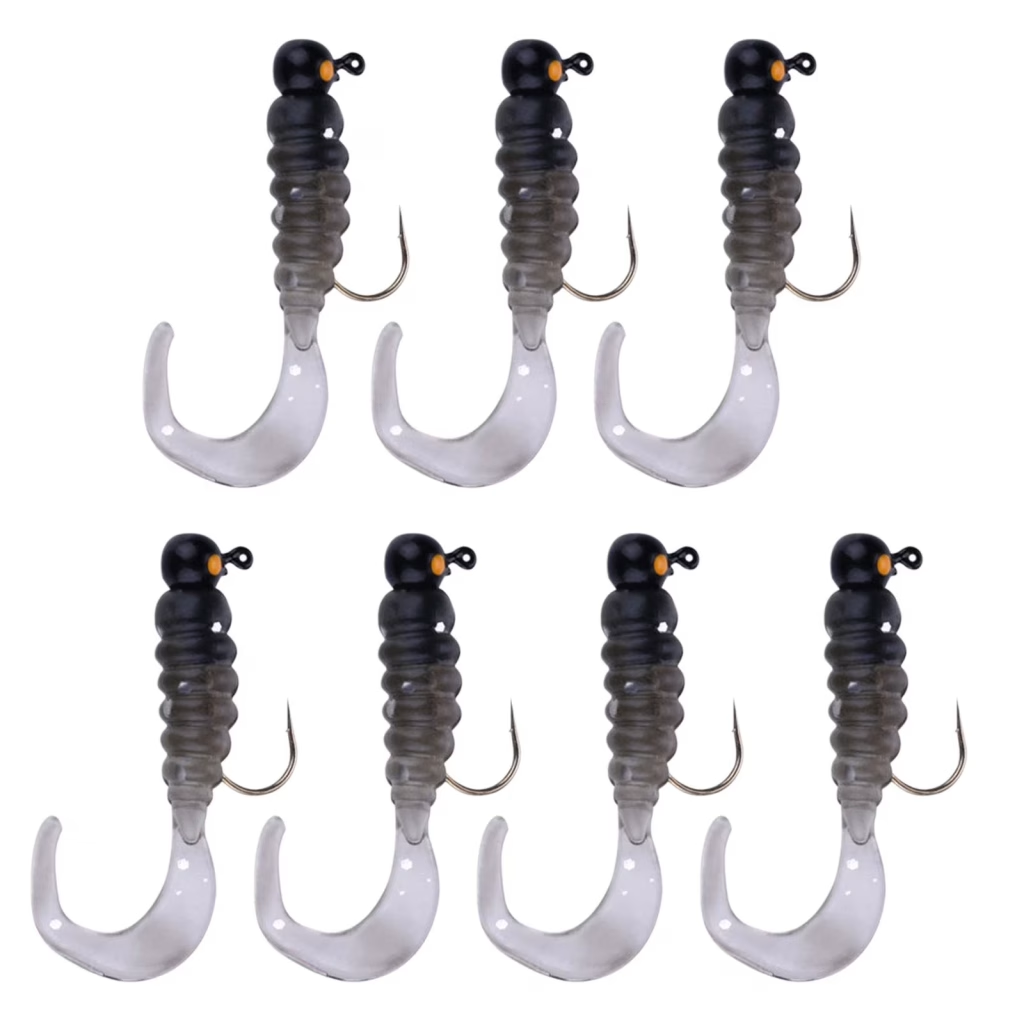
If you've ever tied on a curly tail grub and dragged it across the bottom without a second thought, you've probably already noticed something frustrating: some days they eat it up, and other days they couldn't care less. The problem isn't the grub itself. It's that a grub is one of the most versatile soft plastic lures in fishing, and most anglers lock into a single retrieve instead of adjusting to what the fish are actually doing.
Learning how to fish with a grub the right way means treating it like a system, not a single trick. The same 3-inch curly tail that kills it dragged slowly across a rocky point in April can be hopped through shallow grass in June or suspended on a drop shot over 25 feet of water in August. A basic 3-inch curly tail grub on a 1/8 oz jighead costs well under a dollar at most retailers as of 2026, and it accounts for largemouth, smallmouth, crappie, walleye, and more.
The key is matching your presentation to five conditions, and that's exactly what we're breaking down below.
Quick Answer
To fish a grub, match your jighead weight and retrieve to water temperature and fish activity. In cold water (below 55°F), use a light jighead and drag it slowly. In warm water (55, 75°F), hop or swim it through active zones.
In hot water (above 75°F), fish it on a drop shot or Carolina rig over deep structure. Adjust color to water clarity: natural tones for clear water, bright colors for stained, dark silhouette colors for muddy.
Why a Grub Is One of the Deadliest Lures You're Probably Fishing Wrong
Here's what's interesting: grubs catch fish in almost every freshwater scenario, yet most anglers treat them like a one-trick bait. They tie it on, cast it out, bring it back at a medium speed, and move on when nothing happens. That works on days when fish are feeding aggressively, which isn't most days.
The reason grubs work so consistently is the tail action. A curly tail grub puts out vibration and displacement with even the slowest retrieve. A straight tail grub produces a subtler, tighter wiggle that better imitates a fingerling or a dying shad.
Together, those two profiles cover a huge range of what freshwater fish eat.
The mistake is committing to one speed and one depth. Real anglers fishing grubs effectively are constantly adjusting: they change jighead weight to control fall rate, switch between curly and straight tails based on how aggressive fish are, and shift from swimming to dead-sticking based on subtle line cues they feel through a medium-light rod.
The 5 Conditions That Dictate How You Should Fish a Grub
Every time you tie on a grub, weigh these five factors before you make your first cast. Get them right and the fish will tell you the rest.
1. Water temperature (cold, warm, or hot)
This is the biggest driver. Below 55°F, bass and other species slow their metabolism and won't chase. Above 75°F, they often drop deep or get lock-jawed under bright sun.
In that 55, 75°F sweet spot, fish move shallow and feed actively.
2. Fish activity level (lethargic, neutral, or aggressive)
Activity tells you retrieve speed. Lethargic fish want a grub sitting on the nose. Neutral fish will follow and peck.
Aggressive fish will slam a moving grub from several feet away.
3. Water clarity (clear, stained, or muddy)
Clarity controls color choice and presentation size. Clear water calls for smaller grubs and natural hues. Stained water lets you go brighter and a touch larger.
Muddy water demands high-contrast silhouettes and added vibration.
4. Depth and structure (shallow wood/grass, mid-depth rocks, or deep ledges)
Depth selects your jighead weight and rigging method. Shallow water often works best with a light jighead or weightless rig. Mid-depth points and rocks handle 1/8 to 1/4 oz jigheads nicely.
Deep ledges need a Carolina rig, drop shot, or heavy jighead to keep the grub in the strike zone.
5. Seasonal pattern (pre-spawn, spawn, post-spawn, summer, fall, winter)
Seasonal pattern tells you where fish will be located and how far they'll move to eat. Pre-spawn and fall push fish shallow, which plays right into a grub's strengths. Summer and winter often push them deep, where you need to adjust your approach accordingly.
How to read the conditions on the water
You don't need half a dozen electronics to figure this out. A lake surface thermometer, a pair of polarized sunglasses, and five minutes of observation before you start casting will tell you most of what you need. If the water temp is 52°F and the lake is clearing up after a spring rain, you already know to downsize your grub and slow everything down.
Quick Answer: Match Your Grub Presentation to What the Fish Are Actually Doing Today
The entire game is reading conditions and responding with the right combination of weight, speed, depth, and color. There's no single "grub retrieve" that works everywhere, which is why generic advice like "drag it slowly" only gets you partway there.
If you can identify where fish are, how active they are, and how clear the water is, you can pick the right jighead, tail style, color, and retrieve in about 30 seconds. Everything below flows from that.
Decision Branch 1: Cold Water (Below 55°F) — Slow Down or Go Home
When the water temperature drops below 55°F during late fall, winter, or early spring, fish metabolism slows way down. Bass may still eat, but they're not moving far to do it. This is where a grub earns its reputation as a cold-water killer, as long as you fish it slowly enough.
Best jighead weight: 1/16 oz to 1/8 oz for water less than 15 feet deep. The goal is a slow, fluttering fall that hangs in the strike zone longer. A 1/8 oz jighead falls roughly 1 foot per second in still water according to aggregate manufacturer data, which gives a bass plenty of time to track and eat.
Technique: Drag the grub along the bottom with long pauses in between. Lift your rod tip from 9 o'clock to 10 o'clock, reel up the slack for a second or two, then let it fall back. Pause for three to eight seconds.
Most cold-water strikes come during that pause, so your line is your best indicator: watch it for any tick, jump, or sideways movement.
Tail preference: Straight tail or small curly tail. A big 4-inch curly tail creates too much resistance for cold-water bass to bother with. A 2-inch or 3-inch grub with a compact tail puts out just enough action without requiring the fish to chase.
Color choice: Natural tones. Smoke, watermelon, pearl, and green pumpkin imitate the shad and crawfish bass key on during colder months. Clear or cold, off-color water is exactly where those translucent colors shine.
The biggest mistake here is fishing too fast because you're not getting bit. In cold water, going slower almost always works better than going faster. If you're not getting bit on a drag-and-pause, try dead-sticking, which means leaving the grub motionless on the bottom for 10 seconds or more at a time.
Decision Branch 2: Warm Water (55–75°F) — This Is Grub Prime Time
Water in this range is the grub's wheelhouse. Fish are active, feeding, and willing to move to eat. This is when you can experiment with different retrieves and actually see what fish want on a given day.
Best jighead weight: 1/8 oz to 1/4 oz for most mid-depth applications. Use 1/8 oz around shallow structure, docks, and rocky banks. Step up to 1/4 oz if you're fishing deeper points or need to cast into the wind.
Technique: Three retrieves cover most situations.
- Hop and drop: Lift the rod tip 6 to 12 inches, let the grub fall on a semi-slack line. This mimics a dying shad or crawfish fluttering down, and it triggers a huge number of strikes during the fall.
- Steady swim: Reel at a medium pace just above the bottom or through the middle of the water column. This works well around emerging vegetation, rocky points, and when fish are chasing baitfish.
- Vers retrieval: Mix hops, steady swimming, and pauses throughout a single retrieve to find what fish respond to on that cast.
Tail preference: Curly tail grubs dominate in warm water because they displace more water and create a stronger vibration trail. Fish can feel a curly tail grub from a distance even in stained water.
Color choice: Match water clarity as outlined in the color selection section below. During the spawn and post-spawn period, green pumpkin and watermelon red flake are tournament-tested colors that produce consistently.
This temperature range is also where pairing a grub with a spinnerbait or swim jig trailer really shines. A 3-inch curly tail grub on the back of a spinnerbait gives you a bigger profile and added thumping action that reaction-strikes fish from several feet out.
Decision Branch 3: Hot Water (Above 75°F) — Go Deep or Go Subtle
Summer fishing challenges a lot of anglers because bass move to deeper structure, suspend around thermoclines, or hunker down in heavy cover. A grub still catches them, but you need to change where and how you present it.
Best technique: Drop shot rig. Tie a drop shot weight at the end of your line and a finesse hook 12 to 24 inches above it. Thread a small 2.5-inch or 3-inch grub onto the hook and fish it vertically over deep points, humps, and ledges. Shake the rod tip gently while keeping the grub mostly stationary.
This drives summer bass crazy because the bait mimics a hovering shad with zero commitment required.
Alternative: Carolina rig. A 1/2 oz to 1 oz egg sinker above a swivel, then a 2 to 4 foot leader of 10 lb fluorocarbon to a 1/4 oz jighead with a 3 or 4-inch grub. Drag this slowly along deep creek channels and main-lake points. The Carolina rig lets the grub float naturally above the weight while the sinker ticks the bottom, which helps you feel structure changes.
Finesse approach: A 1/16 oz or 1/24 oz Ned rig head with a small straight tail grub skimmed across rocky flats produces when fish are pressured or lock-jawed. This is a low-effort, high-patience technique that has become a staple on the tournament circuit.
Color choice: In stained reservoirs during summer, chartreuse and black/chartreuse combos stand out. In clear lakes, stick with smoke and natural tones. Summer bass see a lot of lures, so downsizing your grub size from 4 inches to 2.5 or 3 inches can make a real difference on pressured water.
If you're not getting bit deep by mid-morning, don't be afraid to sneak back shallow during low-light periods. First light and last light in summer push baitfish and bass back to shallow water, where a weightless 3-inch curly tail twitched around docks and laydowns often produces the bite of the day.
How to Rig a Grub So It Actually Catches Fish
Rigging a grub sounds trivially simple, but a poorly rigged grub spins, tracks off-line, and catches fewer fish. Here's the technique that keeps everything straight and fishing true.
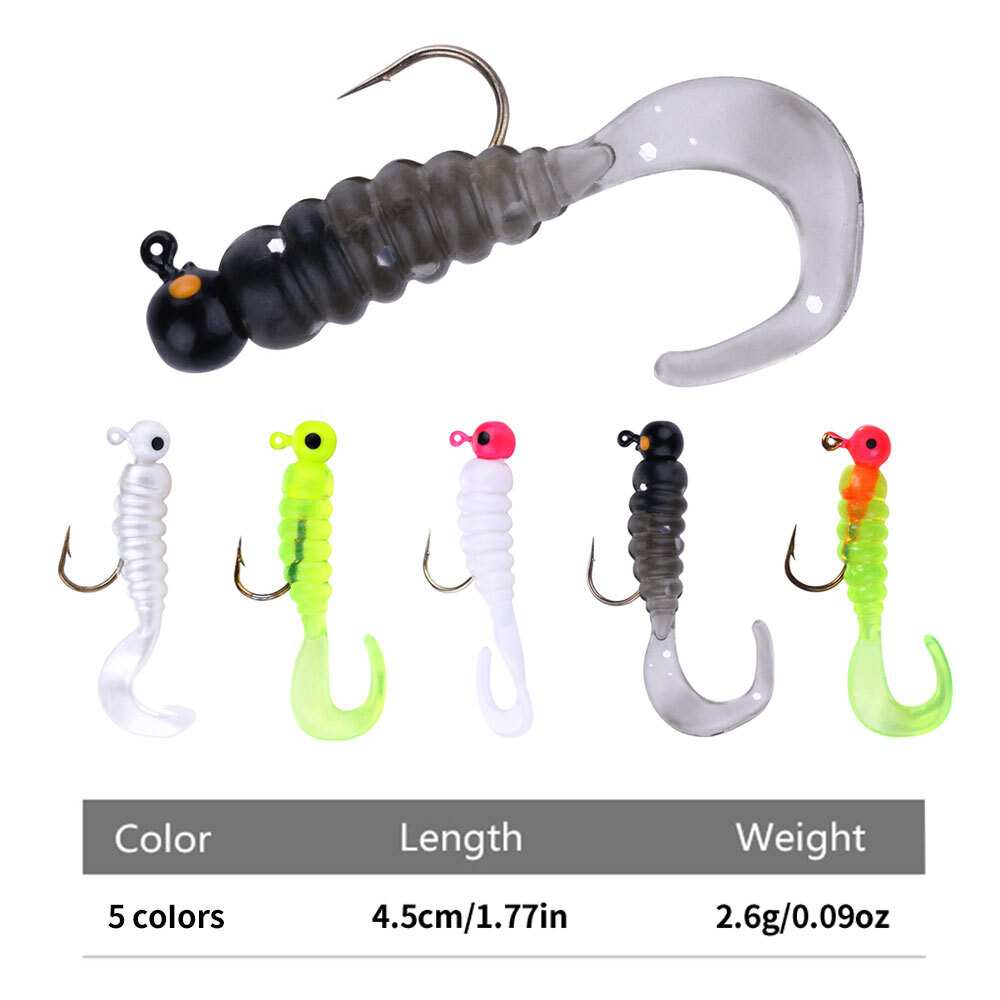
Image source: Bing (Web (fair-use with source credit))
Step 1: Thread the hook point straight into the nose of the grub, pushing it directly down the center axis of the body.
Step 2: Push the hook through about 1/4 inch from the tip, then rotate the hook 90 degrees and bury the point back into the body if you're Texas rigging, or bring it out the belly and re-enter to expose more of the hook gap.
Step 3: Pull the jighead collar snug against the head of the grub so there's no gap. Make sure the hook eye sits flush against the lure's head with no twisting.
Step 4: Look at the grub from the front and back. The body should form a straight line on both sides of the jighead. If it looks curved or banana-shaped, pull it off and re-rig.
A crooked grub spins on the retrieve and won't fall straight, which kills both action and sensitivity.
Pro tip: If your grub keeps sliding down the hook shank during the fight, choose a jighead with a screw lock trailer keeper or add a small dab of soft plastic glue to the eye of the hook before threading the grub on. This keeps your grub fighting straight cast after cast.
Color Selection Based on Water Clarity
Color matters more than most anglers think, and less than some would have you believe. The right color gets your grub noticed. The wrong color gets ignored.
Here's how to match grub color to what fish are actually seeing.
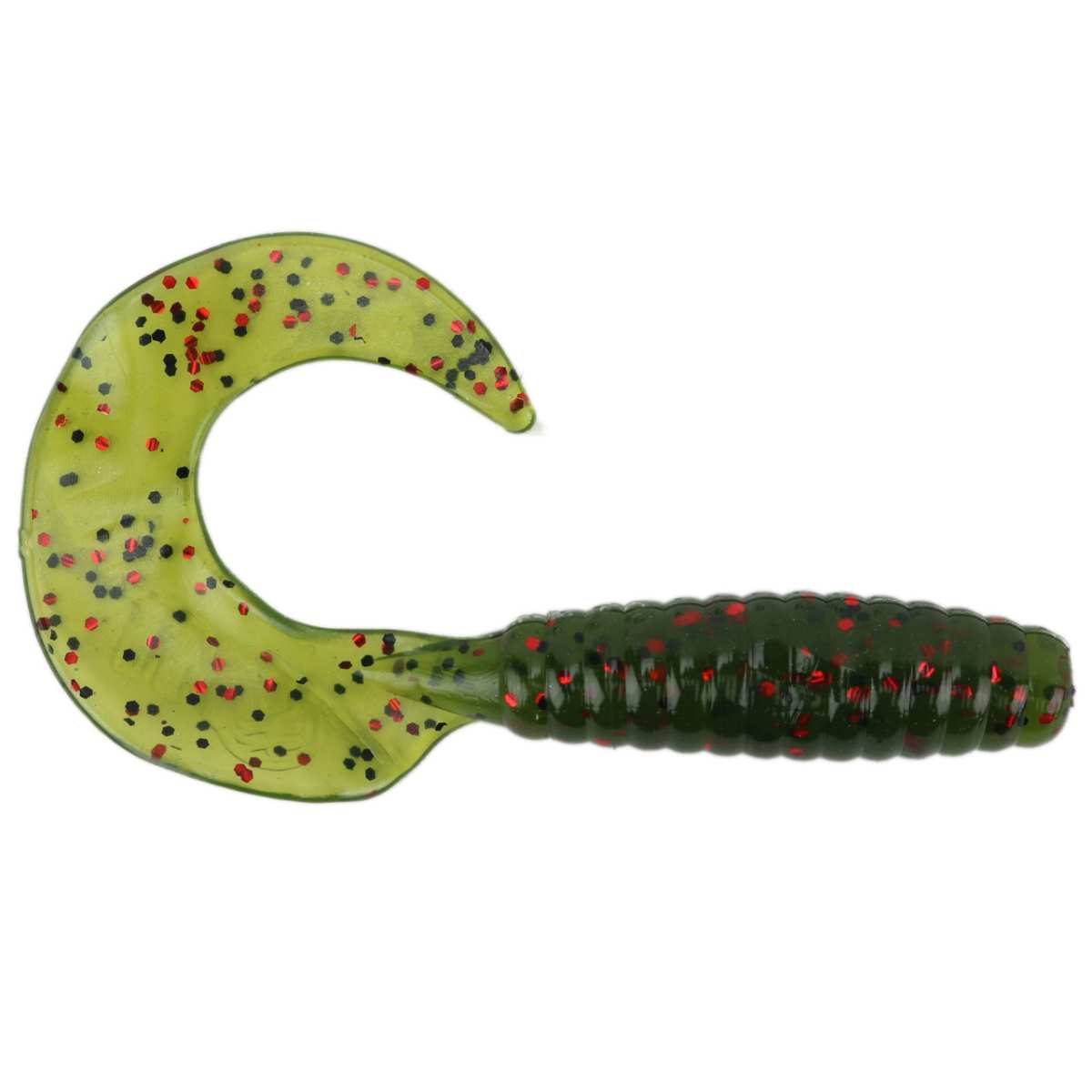
Image source: Bing (Web (fair-use with source credit))
| Water Clarity | Best Grub Colors | Why |
|---|---|---|
| Clear (visibility 4+ ft) | Smoke, watermelon, green pumpkin, albino | Natural forage imitation, subtle presentation |
| Stained (visibility 1–4 ft) | Chartreuse, orange, bright green, red shad | Visibility without spooking, stands out in reduced light |
| Muddy (visibility under 1 ft) | Black/blue, black/chartreuse, dark purple, white | High-contrast silhouette, vibration over sight |
In clear water, translucent colors with metal flake mimic the flash of real baitfish scales. Fish in clear lakes see well, so your grub needs to look like something they already eat. Smoke and watermelon are the two most universally productive colors across clear-water fisheries in the United States.
Stained water opens up your options. Chartreuse is a standout because it falls in a wavelength that fish detect well even in reduced visibility. A chartreuse tail with a smoke or white body gives you both visibility and a natural profile.
Muddy water shifts the game from sight to feel. Dark colors create a strong silhouette against the lighter sky when fish look up from below. Black/blue has been a muddy-water standard for decades, and white grub bodies with a contrasting tail work surprisingly well in off-color water too.
One practical tip: if you're unsure, start with a natural color and only switch to bright or dark if you're not getting follows. Changing color is faster than changing spots, and it often triggers bites from fish that were nearby but uninterested.
Grub Fishing by Species: Bass, Crappie, Walleye, and Trout
A grub doesn't care what species eats it. The presentation changes slightly depending on what you're after, but the core approach stays the same.
Image source: Openverse / Bonnie Moreland (free images) (PDM 1.0)
Largemouth bass are the primary target for most grub anglers. Fish a 3 or 4-inch curly tail on a 1/8 to 1/4 oz jighead around docks, laydowns, grass edges, and points. Hop it near cover, swim it over open flats, and dead-stick it in cold water.
Largemouth are aggressive enough to eat a grub presented almost any way.
Smallmouth bass love rocky structure, current breaks, and gravel points. A 3-inch grub in green pumpkin or smoke dragged slowly along rocky bottom mimics a crawfish, which is a staple of the smallmouth diet. In rivers, cast upstream and let the current sweep the grub downstream while you maintain a semi-slack line.
Smallmouth often hit on the swing when the grub changes direction.
Crappie prefer smaller offerings. A 1.5 to 2-inch grub on a 1/16 or 1/32 oz jighead fished under a slip float or slowly reeled around brush piles and submerged timber produces consistently. White, chartreuse, and pink are top crappie colors.
Keep your retrieve slow and your line tight enough to feel the light bite.
Walleye respond well to grubs on a plain jighead dragged along rocky points, humps, and weed edges. A 3 to 4-inch grub in chartreuse, orange, or purple fished on a 1/4 to 3/8 oz jighead gets down to the depth walleye hold on during the day. At night, switch to a shallower presentation and a darker color like black or purple.
Trout in streams and reservoirs eat small grubs twitched through current or suspended under a float. A 2-inch grub in natural colors like brown, olive, or pearl on a 1/16 oz jighead works well in streams. In still water, suspend the grub 2 to 4 feet below a small bobber and twitch it gently every few seconds.
The 5 Biggest Mistakes Anglers Make with Grubs
Even experienced anglers fall into these patterns. Recognizing them is half the battle.
1. Fishing too fast for the conditions.
This is the number one mistake. If the water is cold or fish are lethargic, a fast retrieve sends the message "chase me" to a fish that has no interest in chasing. Slow down before you change baits.
2. Using the wrong jighead weight for the depth.
Too light and your grub never reaches the fish. Too heavy and it falls too fast, looking unnatural and snagging on every piece of structure. Match weight to depth: 1/16 oz for shallow, 1/8 oz for mid-depth, 1/4 oz and up for deep or windy conditions.
3. Letting the grub body twist on the hook shaft.
A crooked grub spins during the retrieve, which kills the action and creates line twist. Take the extra five seconds to re-rig it straight. Your catch rate will reflect it.
4. Sticking with one retrieve when fish aren't responding.
If a slow drag isn't working, try hopping. If hopping isn't working, try swimming. If swimming isn't working, try dead-sticking.
Fish tell you what they want if you're willing to experiment.
5. Ignoring line choice and rod action.
A grub fished on heavy line with a stiff rod loses sensitivity and natural action. Use 6 to 10 lb monofilament or fluorocarbon on a medium or medium-light spinning rod. You'll feel more bites, get better hooksets, and the grub will move more naturally in the water.
What to Buy: Grub Sizes, Jighead Weights, and Budget Breakdown
You don't need a tackle truck to fish grubs effectively. A small selection covers 90% of situations.
Starter kit:
- 3-inch curly tail grubs in green pumpkin, smoke, and chartreuse (10-pack each, roughly $3 to $5 per pack)
- 3-inch straight tail grubs in watermelon and albino (10-pack each, similar price)
- Jigheads: 1/16 oz (10-pack), 1/8 oz (10-pack), 1/4 oz (10-pack) in a ball head or stand-up head style ($3 to $6 per pack)
- 10 lb fluorocarbon leader material, 25-yard spool ($5 to $8)
Total startup cost: roughly $30 to $50 for a functional grub setup that will catch fish across multiple species and conditions.
What lasts and what doesn't: Salt-impregnated grubs from major manufacturers tend to hold their scent longer and resist tearing better than bargain-bin plastics. Jigheads with a screw lock trailer keeper outperform plain collar heads because the grub stays in place longer. Cheap hooks that bend out on a big bass are a false economy, so stick with known brands for jigheads.
When to Switch from a Grub to Something Else
A grub catches fish in a huge range of situations, but it's not always the best tool. Here's when to put it down.
Switch to a tube jig when fish want a larger, bulkier profile with a different fall rate. Tubes excel around deep rocky structure where bass are keying on larger crawfish.
Switch to a stick worm when fish are so pressured or lethargic that even a small grub moving is too much. A weightless stick worm sinks slower and has almost no action, which is exactly what lock-jawed fish sometimes want.
Switch to a swimbait when fish are aggressively chasing baitfish in open water. A paddle tail swimbait covers more water and triggers reaction strikes from fish that are feeding, not just nibbling.
Switch to live bait when nothing artificial is working and you need to put fish in the boat. A minnow under a bobber or a nightcrawler on a plain hook will catch fish when plastics won't, especially in heavily pressured or ultra-clear water.
The key is recognizing when the grub isn't producing after a fair trial. Give it 20 to 30 minutes with different retrieves and colors. If nothing changes, it's time to try something different.
Frequently Asked Questions
What size grub is best for bass?
A 3-inch or 4-inch curly tail grub covers most bass fishing situations. Use 3 inches for finesse presentations and clear water. Step up to 4 inches for stained water or when you want a bigger profile.
Can you fish a grub in the winter?
Yes, and it's one of the best winter lures available. Use a 2 or 3-inch grub on a light jighead and drag it slowly along the bottom with long pauses. Winter bass eat grubs because the bait mimics the small, slow-moving forage they key on in cold water.
What's the best retrieve for a curly tail grub?
There is no single best retrieve. In cold water, drag it slowly with pauses. In warm water, hop it or swim it steadily.
In hot water, fish it on a drop shot or Carolina rig over deep structure. Match the retrieve to fish activity.
Do grubs work for panfish?
Absolutely. A 1.5 to 2-inch grub on a 1/16 oz jighead catches crappie, bluegill, and other panfish. Fish it under a float or slowly reel it around structure.
White, chartreuse, and pink are productive colors.
How do I keep my grub from tearing off the hook?
Choose a jighead with a screw lock trailer keeper or a barb collar. Thread the grub straight and push the jighead collar snug against the lure head. Replace grubs that are stretched or torn, because a damaged grub doesn't swim right and falls off easier.
What line should I use for grub fishing?
Use 6 to 10 lb monofilament or fluorocarbon for most grub fishing. Fluorocarbon sinks and is less visible, which helps in clear water. Monofilament floats slightly and works well for shallow, slow presentations where you want the grub to fall more gradually.
Final Decision Guide: Your Grub Fishing Plan Based on Today's Conditions
Here's a quick-reference decision framework you can use every time you tie on a grub.
Step 1: Check water temperature. Below 55°F means slow and subtle. 55, 75°F means active and versatile. Above 75°F means deep or finesse.
Step 2: Assess water clarity. Clear water gets natural colors. Stained water gets bright colors. Muddy water gets dark, high-contrast colors.
Step 3: Pick your jighead weight. Match it to the depth you need to reach. Lighter for shallow, heavier for deep or windy.
Step 4: Choose your retrieve. Start with the presentation that matches fish activity. Slow for lethargic, varied for neutral, fast for aggressive.
Step 5: Adjust based on results. If you're not getting bit after 20 minutes, change one variable at a time: speed, color, depth, or grub size. The fish will tell you what they want if you pay attention.
A grub is one of the most forgiving, effective, and affordable lures in freshwater fishing. The anglers who catch the most fish on grubs aren't doing anything mysterious. They're reading the conditions, making smart adjustments, and keeping the bait in the strike zone.
That's the whole game.
Frequently Asked Questions
What size grub is best for bass?
A 3-inch or 4-inch curly tail grub covers most bass fishing situations. Use 3 inches for finesse presentations and clear water. Step up to 4 inches for stained water or when you want a bigger profile.
Can you fish a grub in the winter?
Yes, and it's one of the best winter lures available. Use a 2 or 3-inch grub on a light jighead and drag it slowly along the bottom with long pauses. Winter bass eat grubs because the bait mimics the small, slow-moving forage they key on in cold water.
What's the best retrieve for a curly tail grub?
There is no single best retrieve. In cold water, drag it slowly with pauses. In warm water, hop it or swim it steadily.
In hot water, fish it on a drop shot or Carolina rig over deep structure. Match the retrieve to fish activity.
Do grubs work for panfish?
Absolutely. A 1.5 to 2-inch grub on a 1/16 oz jighead catches crappie, bluegill, and other panfish. Fish it under a float or slowly reel it around structure.
White, chartreuse, and pink are productive colors.
How do I keep my grub from tearing off the hook?
Choose a jighead with a screw lock trailer keeper or a barb collar. Thread the grub straight and push the jighead collar snug against the lure head. Replace grubs that are stretched or torn, because a damaged grub doesn't swim right and falls off easier.
What line should I use for grub fishing?
Use 6 to 10 lb monofilament or fluorocarbon for most grub fishing. Fluorocarbon sinks and is less visible, which helps in clear water. Monofilament floats slightly and works well for shallow, slow presentations where you want the grub to fall more gradually.
Final Decision Guide: Your Grub Fishing Plan Based on Today's Conditions
Here's a quick-reference decision framework you can use every time you tie on a grub.
Step 1: Check water temperature. Below 55°F means slow and subtle. 55, 75°F means active and versatile. Above 75°F means deep or finesse.
Step 2: Assess water clarity. Clear water gets natural colors. Stained water gets bright colors. Muddy water gets dark, high-contrast colors.
Step 3: Pick your jighead weight. Match it to the depth you need to reach. Lighter for shallow, heavier for deep or windy.
Step 4: Choose your retrieve. Start with the presentation that matches fish activity. Slow for lethargic, varied for neutral, fast for aggressive.
Step 5: Adjust based on results. If you're not getting bit after 20 minutes, change one variable at a time: speed, color, depth, or grub size. The fish will tell you what they want if you pay attention.
A grub is one of the most forgiving, effective, and affordable lures in freshwater fishing. The anglers who catch the most fish on grubs aren't doing anything mysterious. They're reading the conditions, making smart adjustments, and keeping the bait in the strike zone.
That's the whole game.