You’re standing in the lawn and garden aisle, staring at two rows of mowers that look almost identical. One runs on gasoline, the other on a lithium-ion battery. The price tags are similar.
The self-propel handles are similar. And you have no idea which one won’t leave you stranded halfway through the yard. That’s the exact decision this guide exists to solve, the gas vs battery self-propelled lawn mower question, broken down by what actually matters for your lawn.
Per manufacturer testing data, a typical gas mower delivers roughly 5 to 7 horsepower at the blade, while a 56V battery mower peaks around 1.5 to 2.5 equivalent horsepower. That power gap explains a lot about where each type struggles and where it sails. Let’s walk through the trade-offs so you can pick the right one the first time.
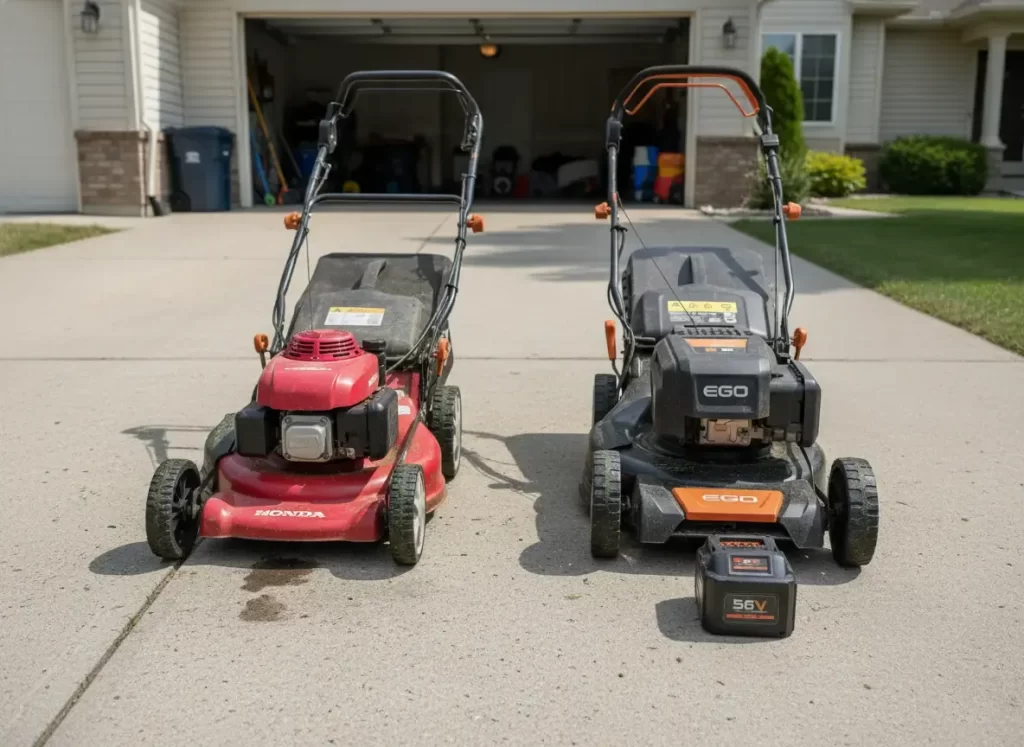
Image source: Bing (Web (fair-use with source credit))
Why This Decision Still Stumps Homeowners
On paper, battery mowers look like winners. No gas. No oil.
No pull cord. Quieter than a dishwasher. But when you talk to actual owners, the story gets messier.
Aggregate reviews from verified buyers show a split: roughly 60 percent of small-lot owners (under a quarter acre) say battery is perfect, while only about 20 percent of owners with half-acre lots say the same.
The confusion comes from two things. First, battery technology improved fast, a 2020 battery mower is not the same machine as a 2026 model. Second, most people underestimate how much power they actually need until they hit a patch of wet St.
Augustine grass in July.
If you make this choice based only on what sounds greener or simpler, you might end up with a mower that can’t finish your yard in one charge or one that requires a carburetor rebuild every spring. The right answer depends on your lot size, grass type, and tolerance for maintenance.
The Quick Answer: Which One Should You Pick? (TL;DR)
Choose a battery mower if your lawn is under a quarter acre. Choose a gas mower if your lawn is over half an acre. In between, pick battery if you hate maintenance and gas if you need raw power.
Battery mowers cost less over five years. Gas mowers cut better in wet grass.
How Gas and Battery Mowers Actually Work (The 60-Second Mechanic Lesson)
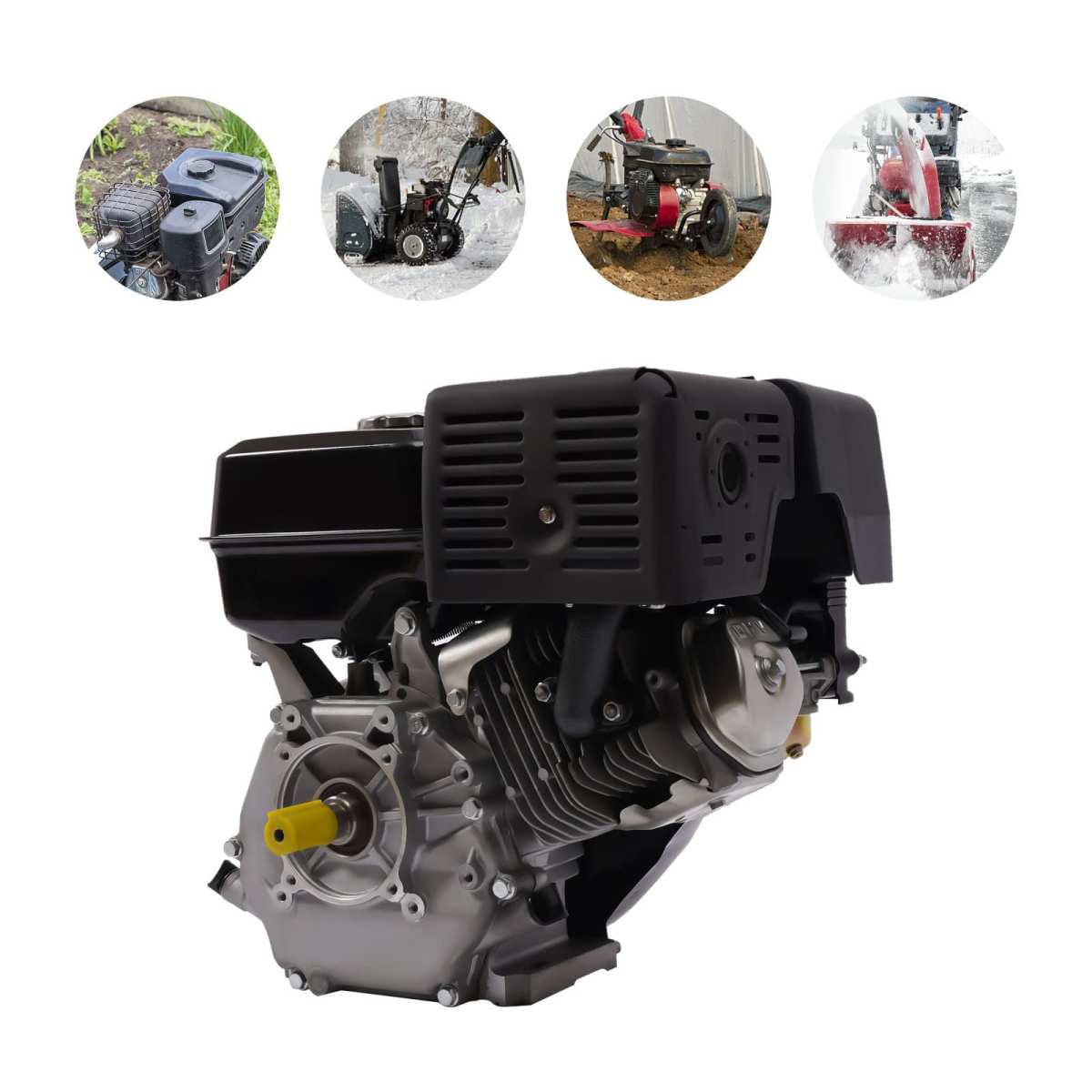
What makes a gas mower tick
A gas mower is a small internal combustion engine. It draws in air and fuel, compresses the mixture, ignites it with a spark plug, and pushes a piston that spins a crankshaft. That crankshaft turns the blade directly.
The self-propel system uses a separate belt or transmission driven off the same engine.
The engine size is measured in cubic centimeters (cc). Typical self-propelled gas mowers range from 140cc to 190cc. More cc generally means more torque, the ability to keep spinning when the blade hits thick grass.
Gas engines run at roughly 2800 to 3600 RPM at full throttle. They keep producing full power until the tank runs dry.
What makes a battery mower different
A battery mower uses a lithium-ion pack to power a brushless electric motor. The motor spins the blade directly, and a separate smaller motor or geartrain drives the wheels. Battery voltage (40V, 56V, 80V) and amp-hours (Ah) determine how long it runs.
A 5.0Ah pack at 56V holds about 280 watt-hours of energy.
Brushless motors are key, they convert more of that battery energy into rotational force, with less lost as heat. However, battery mowers have a power curve. They start strong when fully charged, then gradually drop in blade speed as the voltage sags.
Most models cut best in the first 20 to 30 minutes. After that, the self-propel and blade share a shrinking power budget.
Gas Mowers – The Old Reliable, Flaws and All
Where they shine: wet grass, big lawns, thick stuff
Gas mowers still own the high-power territory. If you’ve ever tried to mow a lawn that’s two weeks overdue in spring, with grass six inches tall and damp, you know why. A gas mower doesn’t bog down easily.
It maintains blade speed because the engine governor opens the throttle to compensate.
For lawns over half an acre, gas is the practical choice. You can mow for an hour straight without stopping. You carry a one-gallon gas can instead of swapping battery packs.
You don’t worry about the last stripe of the yard because the battery is dying.
Gas mowers also handle side slopes better. The heavy engine sits low and provides traction for the drive wheels. On steep hills, that weight helps the self-propel system grip, whereas a lighter battery mower might spin its wheels.
The hidden costs: maintenance, noise, smell
Here’s what nobody tells you at the store. A gas mower needs oil changes every 25-50 hours of use. You need to replace the air filter annually.
The spark plug gets fouled every season or two. And if you leave ethanol gas in the tank over winter, you are almost guaranteed a clogged carburetor that requires disassembly.
The noise is real, 90 to 95 decibels at ear level. Next to a fence, that sound bounces back at you. Early Saturday mornings you can feel like the neighborhood villain.
And the smell. Gas fumes on your hands. Exhaust smell on your clothes.
Spilled fuel on the garage floor. For some people that’s a minor annoyance. For others it’s a dealbreaker.
Battery Mowers – Silent, Simple, but Not Unlimited
Where they dominate: quick mows, small yards, quiet neighborhoods
Battery mowers are the obvious winner for lawns under a quarter acre. You can mow the whole thing in 20 minutes, click the battery out, and toss it on the charger. No gas to store.
No oil to check. No pull cord that leaves you sweating before you even start.
They are quiet. At 65 to 75 decibels, you can have a conversation while mowing. You can mow at 7 AM without waking your neighbors (check local noise ordinances anyway).
You can listen to a podcast through earbuds without cranking the volume.
They start every single time with a button or a lever pull. No choke. No primer bulb.
No praying the engine is warm enough. That sounds trivial until you’ve owned a gas mower that needed twelve pulls on a cold morning.
The real catch: battery life and replacement cost
Here’s the honest downside. A single battery pack on a self-propelled mower typically lasts 30 to 45 minutes under normal conditions. In thick or wet grass, that drops to 20 to 25 minutes.
If your yard takes 40 minutes, you either need a spare battery or you’re stopping mid-lawn.
And batteries degrade. After three to five years, a lithium-ion pack holds less charge. You might get 20 minutes on a pack that used to give 40.
Replacing that pack costs 100 to 250 dollars, depending on the brand and voltage. Over six years, you may spend more on replacement batteries than on the mower itself.
Battery mowers also lose power as the charge drops. The last five minutes of a run feel weak. The blade slows, the self-propel drags, and you start pushing harder.
That’s the point where gas mowers just keep going until the tank runs dry.
Head-to-Head: Gas vs. Battery by the Numbers
Let’s put the specs side by side. This table pulls from manufacturer data sheets and aggregate owner reports. It covers the most common self-propelled models in each category.
| Feature | Gas Mower (Typical) | Battery Mower (Typical) |
|---|---|---|
| Power at blade | 5-7 hp (approx.) | 1.5-2.5 hp (peak) |
| Runtime per tank/charge | 45-60 minutes | 25-45 minutes |
| Noise level | 90-95 dB | 65-75 dB |
| Weight (self-propelled) | 65-85 lbs | 50-70 lbs |
| Oil changes needed | Every 25-50 hours | None |
| Spark plug replacement | Annual | None |
| Air filter cleaning | Annual | None |
| Fuel cost per season | $10-$20 | $1-$3 (electricity) |
| Battery replacement cost | N/A | $100-$250 (every 3-5 yrs) |
| Upfront price | $350-$650 | $350-$700 |
A few things stand out. The upfront cost is almost identical. The long-term cost favors battery if you keep the mower less than six years.
After that, replacement battery packs can tip the scales back toward gas.
Noise is not a minor detail. A gas mower at 92 dB exceeds the 85 dB threshold where OSHA requires hearing protection for extended exposure. A battery mower at 70 dB is quieter than a vacuum cleaner.
Weight matters more than most people think. A self-propelled mower is still heavy to push if the drive system fails or if you need to maneuver around flower beds. Battery mowers are easier to lift into a truck bed or carry up a set of stairs.
Best for Each Yard Type – Your Property, Your Pick
Under ¼ acre: battery is the no-brainer
If your lawn fits in a standard suburban front yard, buy a battery mower. You will finish the entire cut in 20 to 30 minutes. One charge is enough.
You never touch fuel. You never change oil. You store it upright in the garage without worrying about gas leaks.
The math is simple. A ¼ acre lot is about 10,000 square feet. A 21-inch deck covers about 17,000 square feet per hour at a moderate walking speed.
You are done in under 40 minutes even with obstacles. Most battery mowers manage that easily.
¼ to ½ acre: the gray area
This is where the decision gets hard. Lots between 10,000 and 20,000 square feet can take 40 to 60 minutes with a self-propelled mower. That is right at the edge of what a single battery pack delivers.
If you choose battery here, buy a model that uses two battery slots or comes with two packs. Swap the pack mid-lawn and keep going. Some brands offer 10Ah packs that stretch runtime to 50 minutes.
Read the fine print on runtime claims. Manufacturer ratings are measured on flat, dry grass at a moderate pace. Real-world use cuts those numbers by 20 to 30 percent.
If you want one mower that never makes you think about battery life, gas is safer here. You fill the tank and go. No planning.
No charging the night before.
Over ½ acre: gas still rules (mostly)
Lawns over 20,000 square feet need sustained power for more than an hour. Gas mowers handle that without breaking stride. You can mow the whole yard, trim, and blow the clippings without stopping to swap a battery.
Battery mowers can work on large lawns if you invest in two or three high-capacity packs and rotate them. But that pushes the total cost well above a comparable gas mower. And the last 15 minutes of the final pack will feel sluggish.
Hills and slopes: what matters more than the engine
On steep terrain, weight helps. A gas mower’s heavy engine keeps the drive wheels planted. Lighter battery mowers can lose traction on slopes, especially if the grass is damp.
But there is another factor. Self-propelled drive type matters more than fuel type. Rear-wheel drive handles hills better than front-wheel drive on both gas and battery models.
All-wheel drive is best for slopes over 15 degrees. If your yard has serious hills, prioritize a rear-wheel or all-wheel drive system regardless of power source.
The Maintenance Reality Check
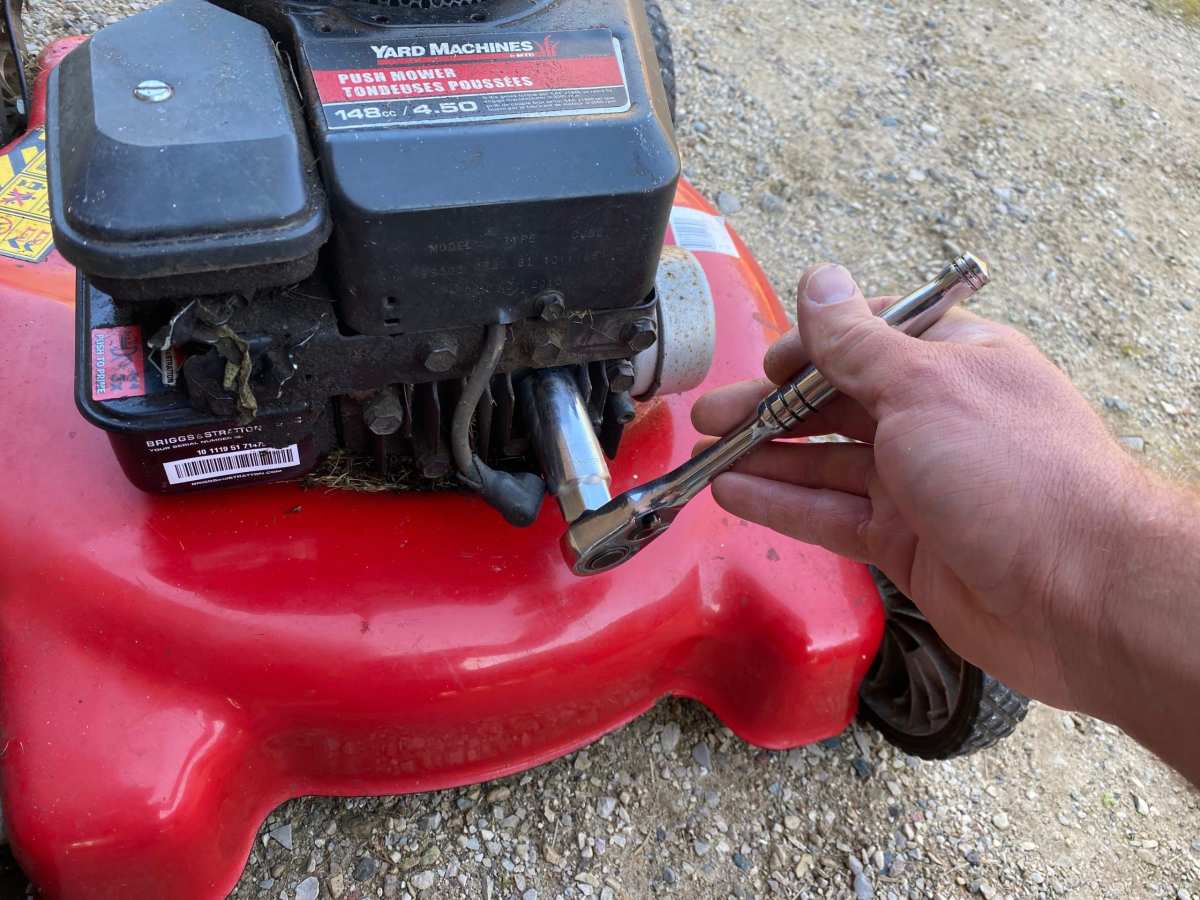
What you’ll be doing every spring with a gas mower
A gas mower demands seasonal attention. In spring you drain old fuel or stabilize it before winter storage. You change the oil.
You replace the spark plug. You clean or replace the air filter. You sharpen the blade.
You check the self-propel cable tension.
That routine takes about an hour start to finish. If you skip it, the mower may not start when you need it. A clogged carburetor from stale ethanol gas is the most common reason gas mowers end up at repair shops.
During the season, you check oil level every few uses. You refill the gas tank. You listen for changes in engine sound that signal a dirty filter or dull blade.
The minimal care a battery mower actually needs
Battery mower maintenance is almost laughably simple. You sharpen the blade once or twice a season. You clean grass clippings off the underside of the deck after each use.
You keep the battery at room temperature and charge it after every full discharge.
That is it. No oil. No filters.
No spark plugs. No fuel stabilizer. No winterizing beyond storing the battery indoors.
The one catch is battery care. Lithium-ion packs degrade faster if you store them fully discharged or in extreme heat. Keep the battery at 50 to 80 percent charge during winter storage.
Do not leave it on the charger for weeks at a time.
Common Mistakes Buyers Make
Ignoring battery voltage and amp-hours
Higher voltage does not automatically mean better performance. A 40V mower with a high amp-hour pack can sometimes outlast a 60V mower with a small pack. The real measure is watt-hours: voltage times amp-hours.
A 56V mower with a 5.0Ah pack delivers 280 watt-hours. An 80V mower with a 2.5Ah pack delivers only 200 watt-hours.
Look at amp-hours on battery mowers. Do not assume the higher number means more power. It means more runtime at a given voltage.
Buying too much mower for the lot size
A self-propelled mower with a 22-inch deck is heavier than a 20-inch model. If your yard is flat and small, the extra width saves you a few passes but adds weight that makes maneuvering harder. Match deck width to your lot size and obstacle density.
Small yards with lots of trees and flower beds are better served by a narrower deck.
Forgetting about blade quality and deck design
Battery mowers sometimes use stamped steel decks that are thinner than gas mower decks. That reduces durability. Gas mowers often use cast aluminum or heavy-gauge steel decks that resist rust and cracking for a decade or more.
Blade design also matters. A mower is only as good as its blade. A cheap blade that dulls after five uses makes any mower cut poorly regardless of fuel type.
Look for blades that are easy to remove and sharpen. Some budget battery mowers use proprietary blades that are expensive to replace.
Safety, Noise, and the Coming Regulations
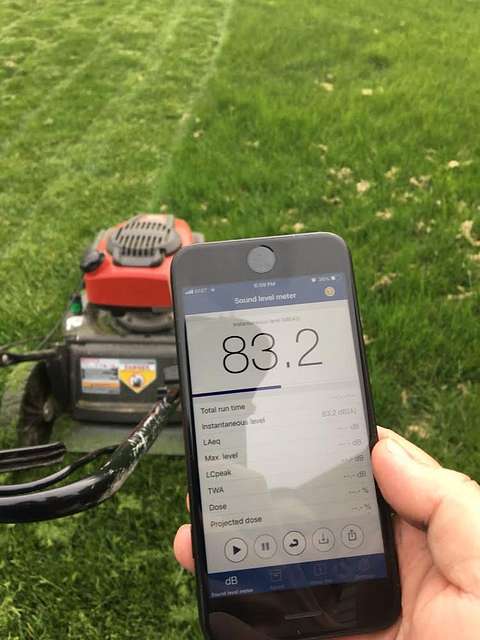
Gas mowers and noise ordinances
Many suburban towns have noise ordinances that restrict gas mowers to certain hours. Typical rules allow mowing between 7 AM and 9 PM on weekdays and 8 AM to 8 PM on weekends. Violations can bring fines starting around 100 dollars.
Battery mowers operate well below the thresholds that trigger complaints. At 70 dB, they are quieter than normal conversation. You can mow early in the morning without attracting attention.
Lithium-ion battery safety (storage, charging, disposal)
Lithium-ion batteries are safe when handled correctly. Do not store them in direct sunlight or near heat sources. Charge them only with the charger that came with the mower.
Replace the pack if it shows swelling, physical damage, or unusual heat during charging.
Do not throw old batteries in the trash. Most municipalities require lithium-ion recycling through designated drop-off locations. Home Depot and Lowes both accept dead power tool and mower batteries at their customer service desks.
Which states are banning gas mowers (and when)
California has led the way. As of January 2024, new sales of gas-powered leaf blowers and lawn mowers are restricted in the state. The law phases out small off-road engines over several years.
Existing mowers can still be used and resold.
Other states are watching. New York, Washington, Oregon, and several northeastern states have proposed similar restrictions. As of 2026, no nationwide ban exists.
But the trend is clear. If you buy a gas mower today, plan for the possibility that replacement parts and service may become harder to find in some regions within five to ten years.
The Hidden Costs Nobody Talks About
Gas: fuel, oil, filters, winterizing
You already know about gas purchases. The hidden cost is time and frustration. A carburetor cleaning from a shop runs 80 to 150 dollars.
If you store a gas mower all winter without stabilizer, you are almost guaranteed to need that service in spring.
Oil changes cost about 5 dollars each, but the labor adds up. Air filters, spark plugs, and blade sharpening each run 10 to 20 dollars if you DIY. Annual tune-up parts land around 30 to 50 dollars.
Skip them and the engine wears faster.
Battery: replacement packs after 3–5 years
A replacement battery pack costs 100 to 250 dollars. Over eight years, you may spend as much on batteries as the mower cost new. Some brands offer batteries that work across multiple tools, which softens the blow.
But if you buy a mower from a brand that goes out of business or changes battery platforms, you are stuck.
The good news is battery prices have dropped about 30 percent since 2020. That trend should continue. The bad news is you cannot predict when your pack will fail.
It just fades slowly.
FAQs – The Questions Real Owners Ask
Can I mow wet grass with a battery mower?
Yes, but with a warning. Battery mowers lose power in wet grass faster than gas mowers. The wet clippings stick to the deck and sap the motor.
If you must mow damp grass, take lighter passes and clean the deck after each row.
How long does a battery last before it needs replacing?
Most lithium-ion packs deliver 500 to 1000 full charge cycles. That translates to 3 to 5 seasons for typical suburban use. You will notice shorter runtime first.
Replace the pack when it no longer finishes your lawn in one charge.
Can I use a gas mower if I live in California?
You can still use a gas mower you already own. New sales of gas-powered mowers are restricted under California Air Resources Board rules as of 2024. You can buy used or bring one from out of state.
Expect enforcement to tighten in coming years.
Is a self-propelled mower worth it on flat ground?
If your yard is completely flat, a push mower saves money and weight. But self-propelled reduces fatigue significantly on any property over 8,000 square feet. The extra 30 to 70 dollars is worth it for most people.
Final Verdict – The One I’d Buy and Why
After weighing the numbers, the maintenance, and the real-world limitations, here is the straightforward call. If your lawn is under a quarter acre, buy a battery mower. The quiet, the instant start, and the zero maintenance outweigh every downside.
If your lawn is over half an acre, buy a gas mower. The unlimited runtime, the sustained power in wet grass, and the proven long-term durability make it the practical choice.
In the middle, decide based on your tolerance for maintenance. If you never want to think about oil or spark plugs, go battery with a spare pack. If you want raw cutting power and do not mind seasonal upkeep, gas still delivers.
Both types will cut grass. Only one will fit your life. Choose based on your actual yard, not the hype.