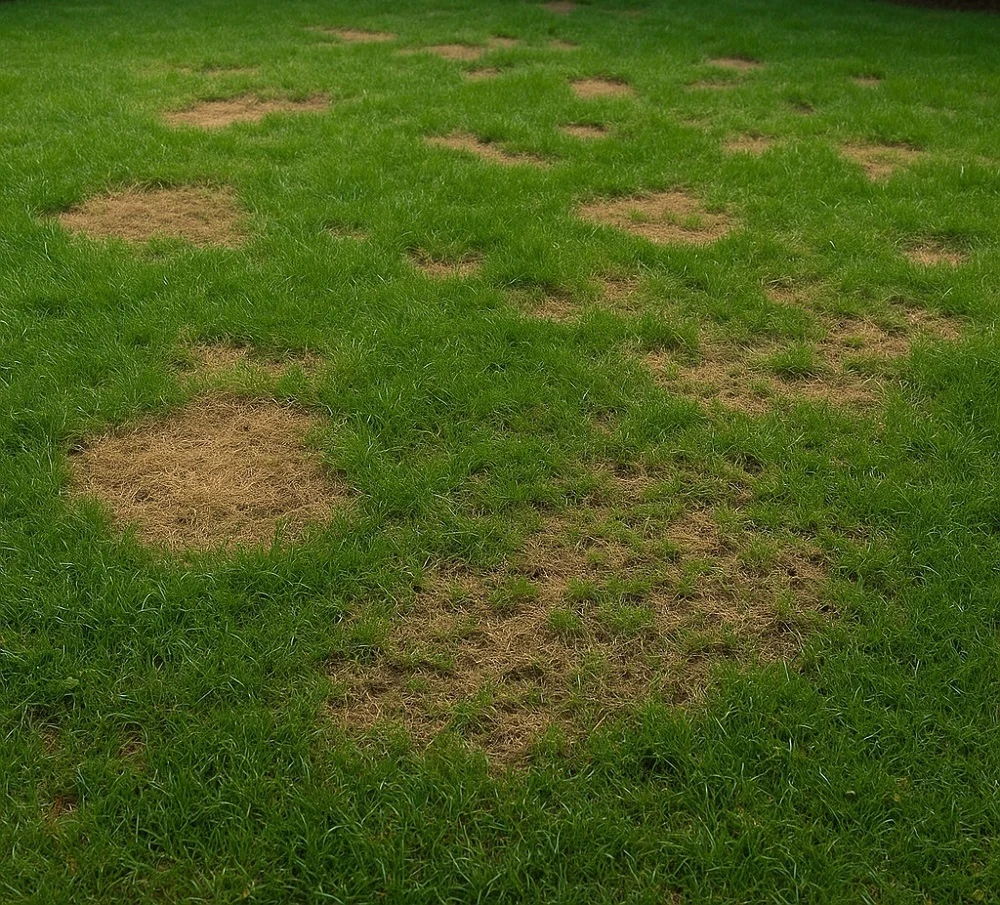
Image source: Bing (Web (fair-use with source credit))
Does Sevin kill grubs? Yes, but only if you time it right and the grubs are at the right stage of their life cycle. Sevin (the GardenTech brand insecticide built around the active ingredient carbaryl) is a contact and stomach poison that works on actively feeding white grubs in your lawn. But it's not a magic spray that handles every grub problem you'll run into.
Here's the thing most product labels don't emphasize: Sevin doesn't move through your grass roots or soil. It only kills grubs that come into direct contact with it during application. That means timing, grub size, and how you apply it matter a lot more than most people realize.
Once you understand that, the rest of the decision gets a whole lot easier.
Quick Answer
Sevin kills grubs. It uses carbaryl as the active ingredient. The product works best on young, small grubs that are actively feeding near the soil surface.
It does not work well on large or mature grubs. Correct timing and thorough watering-in are essential for effectiveness.
The Short Answer: Yes, But Only Under the Right Conditions
So, does sevin kill grubs? Yes, Sevin does kill grubs. It has for decades.
The active ingredient carbaryl is a carbamate-class insecticide that targets the nervous system of feeding insects. Grubs that contact treated soil or ingest treated turf tissue die within hours to a couple of days.
But here's where people get frustrated. Sevin is a curative product, not a preventive one. It kills the grubs that are there right now, at the moment of application.
It doesn't hang around in your soil waiting for next year's eggs to hatch. That's a fundamentally different approach than products like GrubEx, which use chlorantraniliprole to protect your lawn over a full season.
If you've already got damage and you can see grubs in the top inch or two of soil, Sevin can absolutely knock down that population. If you're trying to prevent grubs you don't even know are there yet, there are better tools for that job.
What Sevin Actually Targets
Sevin products are registered for several turf pests beyond just grubs.
- White grubs (Japanese beetle, June bug, European chafer larvae)
- Chinch bugs
- Sod webworms
- Armyworms
- Cutworms
- Billbugs
The grub-specific application is just one use case in a much broader product line. That broad-spectrum action is both a benefit and a drawback. You'll kill your target grubs, but you'll also kill beneficial insects like ground beetles and earthworms in the treated area.
Why Timing and Grub Stage Change Everything
This is the single biggest factor that determines whether Sevin works for you or fails completely.
White grubs have a one-year life cycle in most of the United States. Adult beetles lay eggs in your lawn in mid to late July. Those eggs hatch within about two weeks.
The tiny newly hatched grubs (called first instar) start feeding on grass roots right away. This is the stage you want to target.
Here's why. First and second instar grubs are small. They're feeding near the soil surface.
They're soft-bodied and vulnerable. Sevin reaches them easily at this stage.
By September and October, those same grubs are third instar. They're much larger. They burrow deeper into the soil, sometimes four to six inches down as winter approaches.
At that depth, a surface spray of Sevin simply won't reach them. You'd need to drench the product deep into the soil profile, and even then, coverage gets spotty.
The Timing Window That Actually Works
| Region | Target Grub Stage | Best Application Window |
|---|---|---|
| Southern US (zones 8-10) | First instar | Late July through mid-August |
| Mid-Atlantic / Midwest (zones 5-7) | First instar | Early August through early September |
| Northern US (zones 3-4) | First instar | Mid-August through mid-September |
Those windows shift by two to three weeks depending on summer temperatures in any given year. The key is to watch for adult beetle activity in your lawn. When you see Japanese beetles flying around in July, eggs are being laid within days.
If you're already seeing brown patches in August, you might still be in time. But if those patches show up in October or November, the grugs are large and Sevin becomes a much weaker option. You'd be better served by a product like trichlorfon (Dylox), which works faster on late-stage grubs.
How Sevin (Carbaryl) Actually Works on Grubs
Understanding the mode of action helps you set realistic expectations.
Carbaryl is a cholinesterase inhibitor. It disrupts nerve signal transmission in insects. Grubs that contact the product through their cuticle or ingest treated plant tissue experience paralysis and death.
Mortality typically occurs within 24 to 72 hours depending on temperature, grub size, and dosage.
What carbaryl does not do is absorb into your grass plant and move through its tissues. Products like imidacloprid (Merit) are systemic. They get taken up by roots and distributed throughout the plant tissue.
A grub feeding on any root in the treated zone gets a lethal dose. Sevin doesn't work that way. It sits in the soil and on the surface.
A grub has to physically encounter it.
That's why the watering-in step matters so much. If you apply Sevin concentrate and don't water it in, the product stays on top of the turf canopy and thatch layer. Active grubs are feeding at the soil-thatch interface, one to three inches down.
Your product needs to get there.
Systemic vs. Contact: Why It Matters for Grubs
| Feature | Sevin (Carbaryl) | GrubEx (Chlorantraniliprole) | Dylox (Trichlorfon) |
|---|---|---|---|
| Mode of action | Contact and stomach poison | Systemic (root uptake) | Contact and stomach poison |
| Best grub stage | Early instar | Prevention (any stage, applied before hatch) | Early to late instar |
| Soil movement | Minimal | Moves into root zone with watering | Moderate penetration |
| Residual protection | Days to 1-2 weeks | Full season (up to 4 months) | 1-2 weeks |
| Application timing | When grubs are visible and feeding | Spring to early summer (before eggs hatch) | When grubs are active, any instar |
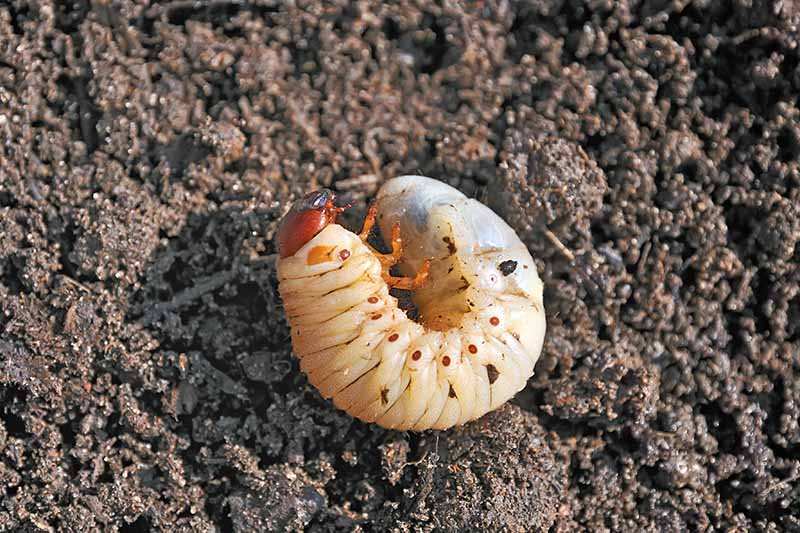
Image source: Bing (Web (fair-use with source credit))
How to Tell If You Actually Have a Grub Problem Worth Treating
Before you buy anything, confirm you're dealing with grubs and not something else. Brown lawn patches can come from drought stress, fungal disease, dog urine damage, or buried irrigation issues. Spraying insecticide for a non-insect problem is wasted money and unnecessary chemical load on your property.
The Tug Test
This is the simplest diagnostic method. Grab a handful of brown grass and pull. If it lifts easily like a carpet, with no root resistance underneath, grubs have likely eaten through the roots.
Healthy turf holds firm even when you tug on it.
The Square-Foot Sample
Cut a one-foot by one-foot square of turf, about two inches deep, in the damaged area. Flip it over and examine the soil.
- 0-4 grubs per square foot: Normal. Probably doesn't warrant treatment.
- 5-9 grubs per square foot: Borderline. Monitor for worsening damage.
- 10+ grubs per square foot: Treatment recommended at this threshold.
Take samples from multiple spots. Grub damage is often concentrated in specific areas, usually sunnier, south-facing slopes where adult beetles prefer to lay eggs.
Don't Confuse These With Grubs
Not every white larva in your lawn soil is a white grub. Sevin will kill them regardless, but you might waste product on pests that wouldn't have caused damage.
- Ground beetle larvae: Predatory, beneficial. They eat pest insects.
- Soldier fly larvae: Usually near moisture, mostly harmless to turf.
- Cutworms: Lepidoptera larvae, not scarab beetles. Sevin still controls them, but they're a different life stage of a different insect order.
True white grubs are C-shaped, have six legs near the head, and a tan to brown head capsule. The body is whitish or grayish near the posterior end, often darker from visible gut contents.
Step-by-Step: How to Apply Sevin for Grub Control
If you've confirmed grubs and you're within the right timing window, here's how to get the best results.
What You'll Need
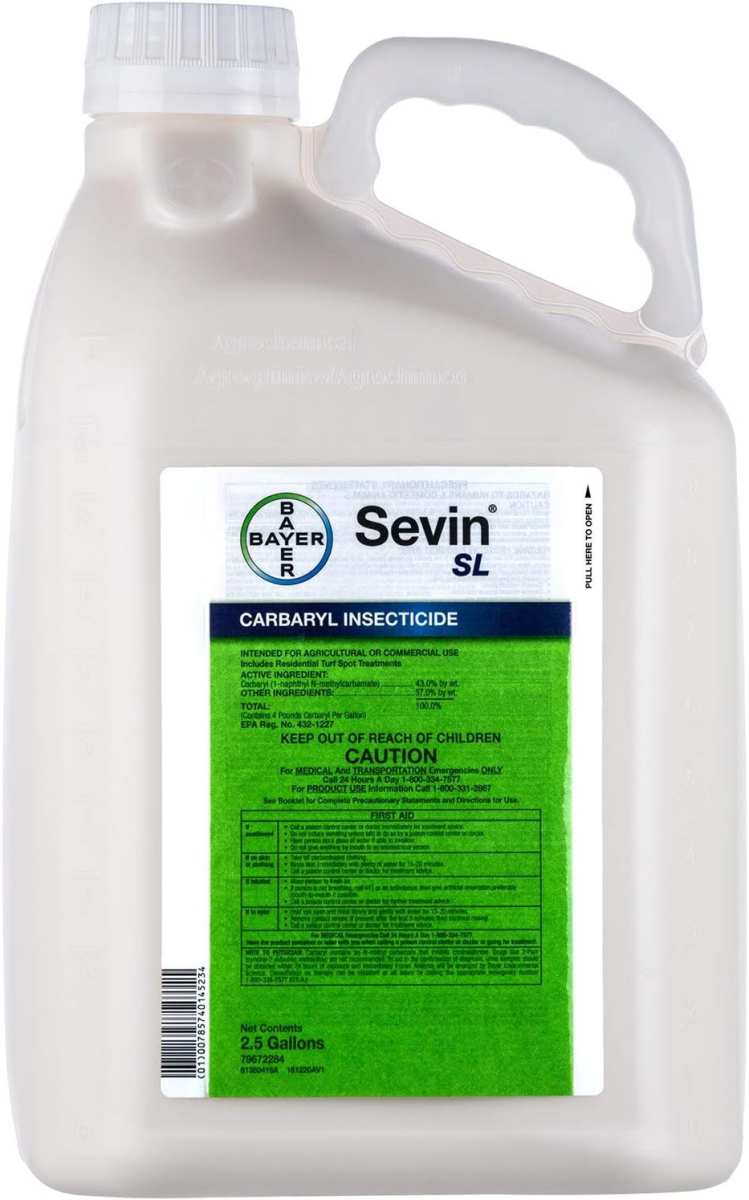
Image source: Bing (Web (fair-use with source credit))
- Sevin Concentrate (liquid) or Sevin Ready-To-Use Granules
- Pump sprayer or hose-end sprayer (for liquid formulation)
- Measuring cup or graduated cylinder
- Garden hose with water source
- Gloves, long sleeves, eye protection
- Lawn spreader (if using granules)
For Liquid Concentrate
Step 1: Measure your lawn. Calculate the square footage of the area you need to treat. Multiply length by width. Don't guess.
Over-application wastes product and increases environmental impact.
Step 2: Mix according to the label. For grub control, the standard rate is roughly 2 to 3 fluid ounces of Sevin Concentrate per gallon of water per 1,000 square feet. But read the specific label on your product. Formulation concentrations can vary.
Step 3: Spray evenly across the treated area. Walk at a steady pace. Overlap your passes slightly to avoid streaks. Target the soil surface, not just the grass blades.
The product needs to reach downward.
Step 4: Water in thoroughly. This is the step most people skip or do poorly. Apply 1/4 to 1/2 inch of water after spraying. This moves the carbaryl down into the root zone where grubs are actively feeding.
Without watering in, a significant portion of your product stays on the surface and degrades in sunlight.
Step 5: Keep people and pets off the treated area until it's completely dry. This typically takes 12 to 24 hours depending on weather conditions.
For Granular Formulation
Step 1: Calibrate your spreader. Set the spreader to the rate indicated on the product label. Test on a small patch to confirm even distribution.
Step 2: Spread granules uniformly. Work in a grid pattern. Overlap wheel tracks slightly.
Step 3: Water in. Apply at least 1/4 inch of water. The granules need moisture to dissolve and move into the soil profile. If you don't water within 48 hours, effectiveness drops noticeably.
Timing Your Reapplication
If you applied in early August and grub damage is still progressing by late August, one reapplication may be warranted. Sevin breaks down in soil within one to two weeks under normal conditions. But if you're seeing continued damage three weeks after treatment, you may be dealing with a fresh hatch of eggs that weren't present during your first application.
Don't exceed the maximum number of annual applications listed on the label. Overuse increases resistance pressure in pest populations and can harm soil biology over time.
Sevin vs. Other Grub Products: Which One Actually Fits Your Situation?
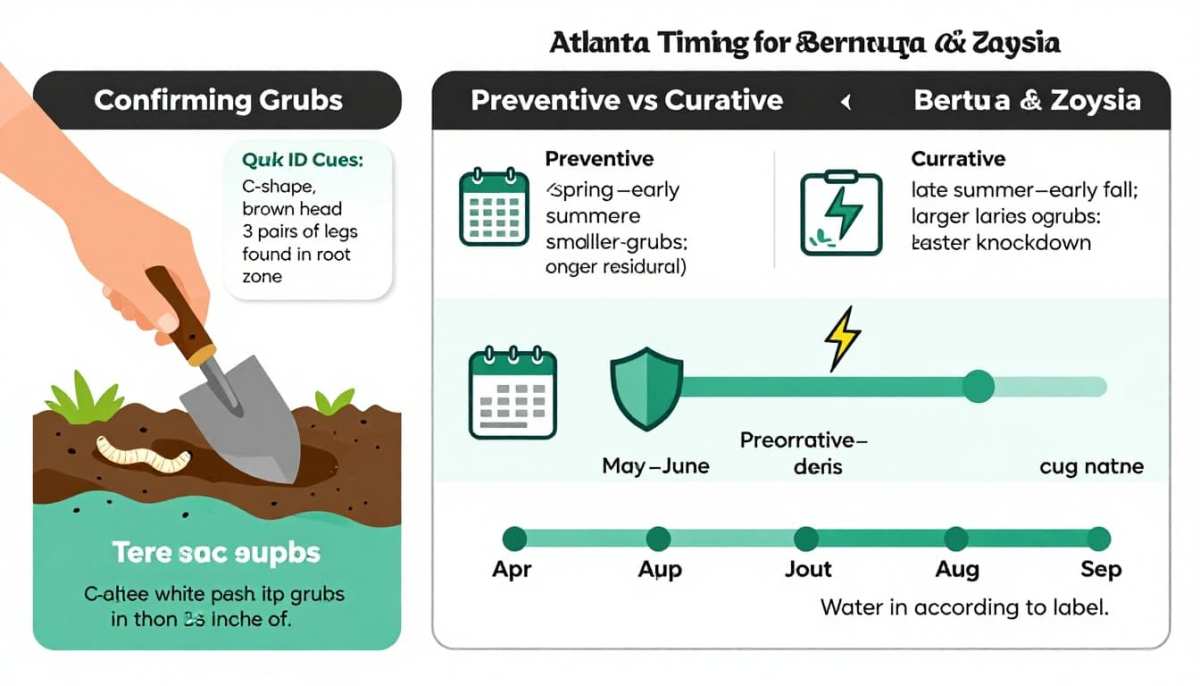
Image source: Bing (Web (fair-use with source credit))
No single grub product is best for every situation. The right choice depends on your timing, whether you're preventing or treating, and what you're comfortable applying.
Choose Sevin (Carbaryl) If:
- You have visible, active grub damage right now
- You've confirmed small, young grubs in the top two inches of soil
- You want a curative (not preventive) solution
- You need results within 24 to 72 hours
- You're treating a localized area, not the entire property
Choose GrubEx (Chlorantraniliprole) If:
- You want to prevent grubs before they hatch
- You prefer a single application in late spring or early summer
- You want season-long protection
- You're comfortable applying before damage is visible
Choose Dylox (Trichlorfon) If:
- You're treating mid to late-stage grubs in September or October
- You need something that works on larger grubs that Sevin can't reliably kill
- You saw damage too late in the season for preventive products
Choose Biological Options If:
- You want to minimize chemical inputs
- You're willing to accept slower results
- Beneficial nematodes (Heterorhabditis bacteriophora) work well when soil temperatures are between 60 and 85 degrees Fahrenheit and you can keep the soil moist for a week after application
- Milky spore targets Japanese beetle grubs specifically, but takes several years to build up in soil
Cost Comparison
| Product | Approximate Cost (per 1,000 sq ft) | Application Frequency |
|---|---|---|
| Sevin Concentrate | $0.50-$1.50 per application | As needed, up to label max |
| GrubEx | $3.00-$5.00 per application | Once per season |
| Dylox | $2.00-$4.00 per application | As needed, short window |
| Beneficial nematodes | $5.00-$10.00 per application | Once per season, timing critical |
| Milky spore | $1.00-$2.00 per application (once) | Every 5-10 years once established |
Those prices vary by region, retailer, and product size. But the pattern holds. Sevin is cheap per application but may require multiple treatments and offers no residual prevention.
GrubEx costs more upfront but one application covers you for months.
Common Mistakes That Make Sevin Seem Ineffective
Most "Sevin doesn't work" complaints trace back to one of these errors.
Mistake 1: Applying Too Late
If grubs are already large and deep in the soil, Sevin won't reach them. This is the single most common reason for perceived failure. By October in most regions, grubs are at peak size and beginning to burrow deep for winter.
A late-fall application of Sevin will show minimal results.
Mistake 2: Not Watering In
Carbaryl on the grass surface degrades quickly under UV exposure. Without watering in, the product never reaches the root zone where grubs live. Your application is basically sitting on the wrong plane entirely.
Mistake 3: Treating Without Confirming Grubs
Brown patches from fungal disease, drought, or compacted soil won't improve with insecticide. If you can't find grubs in your soil samples, you may be treating the wrong problem.
Mistake 4: Expecting Season-Long Prevention
Sevin is a curative product with short residual activity. It kills what's there now. It doesn't create a protective barrier in your soil for the next four months.
If beetles continue laying eggs through August, new grubs can appear two weeks after your application.
Mistake 5: Spraying in Windy or Rainy Conditions
Wind drift reduces coverage accuracy. Rain within a few hours of application can wash product away or dilute it below effective concentrations, especially before watering in. Aim for a calm day when no heavy rain is expected for at least six hours.
Mistake 6: Skipping Reapplication Assessment
One application doesn't always solve the problem. Check your treated area one to two weeks after watering in. If you're still finding live grubs and damage is spreading, a second treatment may be necessary.
Or it may be time to switch to a product with better contact action on larger grubs.
Safety, Pets, and What the Label Actually Requires
Carbaryl is moderately toxic to mammals, highly toxic to aquatic organisms, and extremely toxic to bees. These aren't theoretical concerns. They're documented through EPA registration data and peer-reviewed toxicology literature.
For Pets
Keep dogs and cats off the treated lawn until the spray has completely dried. For granular applications, wait until granules have been watered in and the surface is dry. Cats are particularly sensitive to carbamate insecticides due to differences in liver metabolism.
For Pollinators
Be active in lawns primarily when flowers are present (clover, dandelions). Sevin is highly toxic to bees on contact and through residual exposure. If you have flowering weeds in your lawn, mow them before application or consider a product with lower pollinator toxicity like chlorantraniliprole.
For Water Sources
Don't apply Sevin near ponds, streams, drainage ditches, or wells. Carbaryl is highly toxic to fish and aquatic invertebrates. Buffer zones of 10 to 25 feet from water bodies are standard best practice even if the label doesn't specify exact distances.
Legal Note
Always read and follow the product label. In the United States, the label is a legal document. Using Sevin in a manner inconsistent with its labeling is a violation of federal law under FIFRA (Federal Insecticide, Fungicide, and Rodenticide Act).
If the label doesn't list grubs or lawn application for your specific product variant, don't use it for that purpose.
Frequently Asked Questions
How fast does Sevin kill grubs?
Sevin kills grubs within 24 to 72 hours after contact. Young grubs die faster than older ones. You may see some grubs crawl to the surface after treatment, which is a sign the product is working.
Can I use Sevin on my vegetable garden?
Some Sevin formulations are approved for edible crops, but only check the specific product label. Pre-harvest intervals vary by crop. If the label doesn't list your specific vegetable and a safe waiting period, don't apply it there.
Will Sevin kill earthworms?
Yes. Carbaryl is toxic to earthworms. If maintaining healthy soil biology is a priority, Sevin is not the best choice for grub control.
Consider beneficial nematodes instead.
Does rain wash away Sevin?
Rain shortly after application can reduce effectiveness. Light rain after the product has dried for several hours is less of a concern. Aim to apply when dry weather is expected for at least 12 hours.
How often can I apply Sevin to my lawn?
Follow the specific product label. Most Sevin lawn products allow 2 to 4 applications per year depending on the pest. Exceeding label rates or frequency is both illegal and counterproductive for long-term lawn health.
Is Sevin safe for kids once it's dry?
Once the sprayed surface is completely dry, the risk to children drops significantly. But residues can persist on grass blades for days. The safest approach is to keep kids off treated areas for 24 to 48 hours, longer if you applied granules.
Does Sevin kill grubs effectively? It does when the conditions align. Active, young grubs near the soil surface during mid to late summer.
That's the sweet spot. Outside of that window, Sevin becomes unreliable fast. The product has been around since the 1960s for good reason: it works on contact, it's affordable, and it's widely available.
But knowing when to reach for it versus when to use a systemic preventive or a faster-acting curative like Dylox, that's what separates a fixed lawn from a recurring headache.