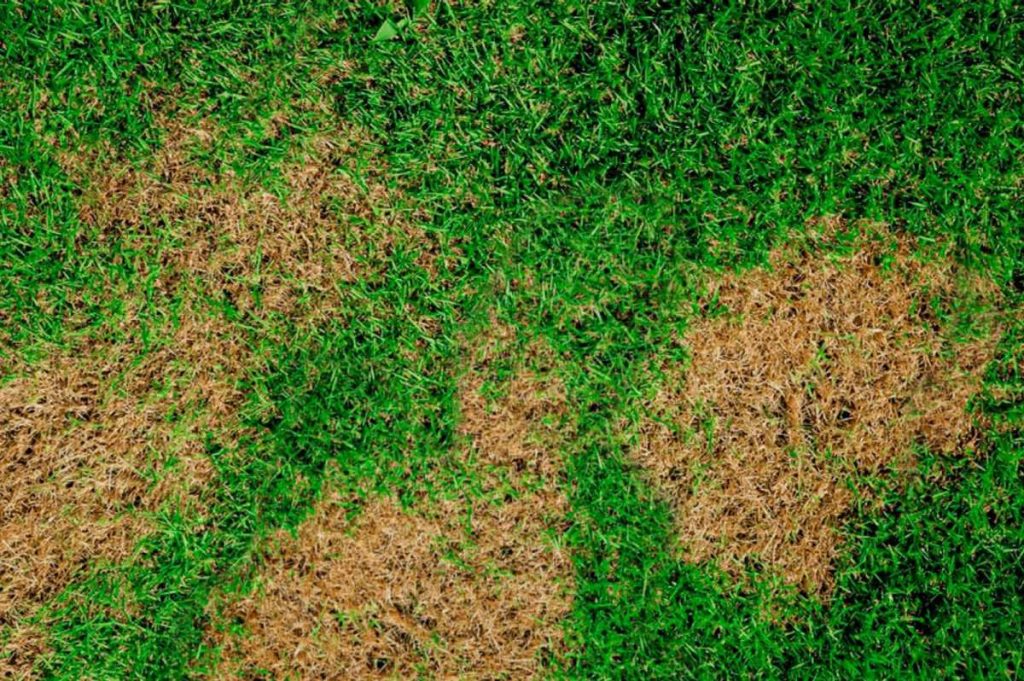
Does neem oil kill grubs? Yes, but not the way most people expect. Neem oil doesn't work like a synthetic insecticide that drops grubs on contact.
Instead, it disrupts their feeding and growth over time, which means you need the right timing and realistic expectations to see results.
The active compound behind neem oil's grub-fighting power is azadirachtin. According to EPA registration data, neem oil is classified as a minimum-risk pesticide under Section 25(b), which tells you something important about both its safety profile and its mode of action. It's a slow, biological approach, not a chemical knockout punch.
If you're dealing with brown patches in your lawn and wondering whether neem oil is worth your time, the answer depends almost entirely on when you apply it and what stage the grubs are in.
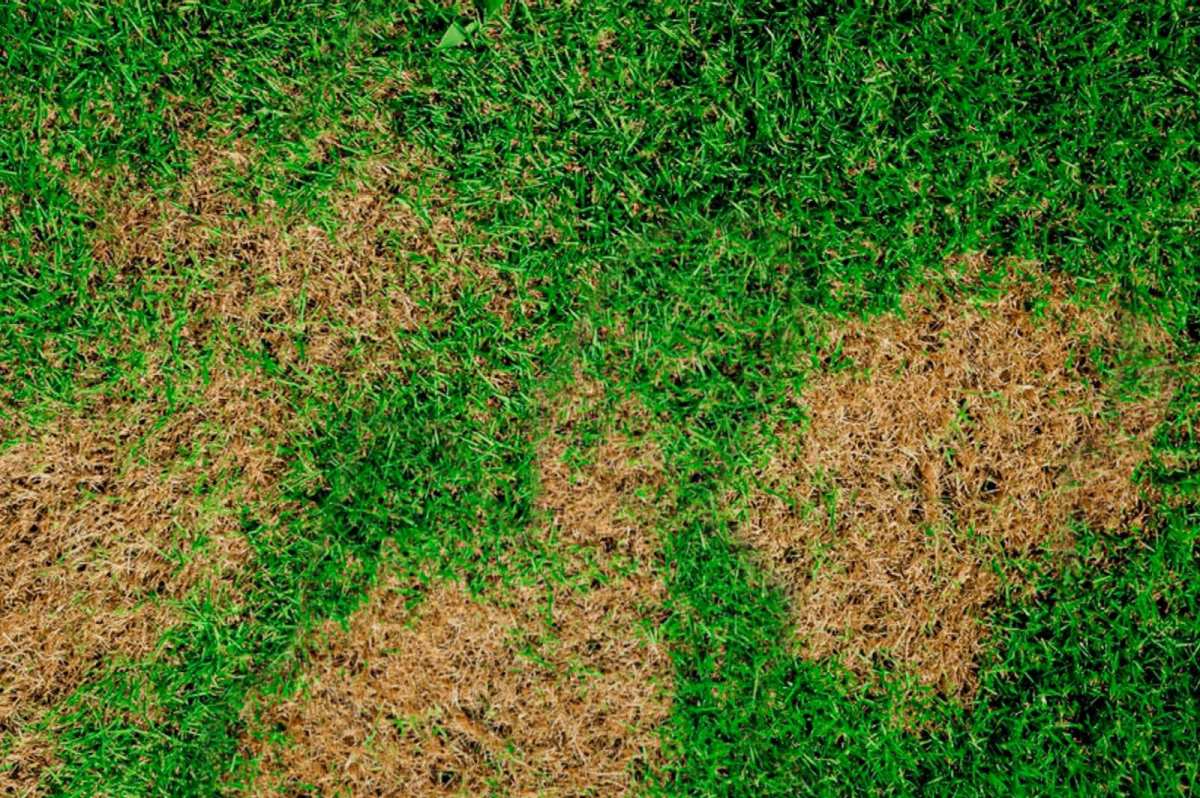
Image source: Bing (Web (fair-use with source credit))
Quick Answer
Neem oil does kill grubs, but it works slowly. It acts as an antifeedant and growth disruptor rather than a fast-acting poison. The active compound is azadirachtin.
It works best on young, first- and second-instar larvae. Timing your application between July and September gives you the best results.
How Neem Oil Actually Works on Grubs
Here's where most people get tripped up. They spray neem oil on their lawn, see grubs still moving a day later, and assume it doesn't work. That's not how this product functions.
Neem oil operates through two primary mechanisms when it comes to soil-dwelling grubs:
Antifeedant action. When grubs ingest neem-treated soil or root material, the azadirachtin triggers a feeding cessation response. The grubs simply stop eating. For a root-feeding larva, that's a death sentence over time, but it's not instant.
Insect growth regulator (IGR) effects. Azadirachtin interferes with the grub's ability to molt properly. It disrupts the hormonal cycle that controls their development from one instar stage to the next. A grub that can't molt can't mature, can't pupate, and can't become the next generation of beetles.
This dual mechanism is why neem oil is sometimes called a "birth control" for insects rather than a killer. It suppresses the population over time rather than wiping out every grub in 24 hours.
Neem Oil vs. Azadirachtin — What's the Difference?
You'll see both terms on product labels, and they're not interchangeable.
- Cold-pressed neem oil is the whole oil extracted from neem seeds. It contains azadirachtin along with other compounds like nimbin and salannin. Quality cold-pressed neem oil typically contains between 1,500 and 3,000 ppm azadirachtin.
- Clarified hydrophobic neem extract is a processed version where most of the azadirachtin has been removed. These products are often sold as general horticultural oils and are far less effective against grubs.
If you're buying neem oil specifically for grub control, check the label for the azadirachtin concentration. Products listing 1% to 3% azadirachtin (or roughly 1,500 to 3,000 ppm) are what you want. Anything without a stated azadirachtin percentage is probably not going to deliver meaningful grub control.
Why It's an Antifeedant and Growth Disruptor, Not a Poison
This distinction matters because it sets realistic expectations. A synthetic like imidacloprid attacks the grub's nervous system. Death comes within hours to a couple of days.
Neem oil doesn't work that way.
When a grub encounters azadirachtin in the soil:
- It stops feeding on grass roots within hours of exposure.
- Its molting cycle gets disrupted over the next several days.
- It either dies during a failed molt or fails to develop into the next life stage.
- Surviving grubs that were exposed as young larvae often emerge as weakened, non-viable adults.
The practical takeaway is that neem oil is a population management tool. It won't rescue a lawn that's already being torn up by a heavy grub infestation this week. But applied consistently over a season or two, it can bring grub numbers down to manageable levels without harming earthworms, beneficial soil microbes, or your kids and pets.
When Neem Oil Works on Grubs (And When It Doesn't)
This is the section that separates successful neem oil treatments from wasted effort. The answer to "does neem oil kill grubs" changes dramatically based on three variables: the grub's life stage, the species you're dealing with, and your soil conditions.
Grub Life Stages and Why Timing Is Everything
Grubs go through three larval stages called instars. Neem oil's effectiveness drops off a cliff as the grubs mature.
| Life Stage | Timing (Northern Temperate Zones) | Neem Oil Effectiveness |
|---|---|---|
| First instar (newly hatched) | Late July through August | High — grubs are small, feeding actively, near the surface |
| Second instar | August through September | Moderate to high — still susceptible to growth disruption |
| Third instar (mature) | October through June | Low — grubs are large, less feeding-dependent, often deep in soil |
The sweet spot for neem oil application is July through September, when eggs have recently hatched and the larvae are in their first or second instar. These young grubs are feeding aggressively on grass roots near the soil surface, which means they're more likely to encounter the azadirachtin in your drench solution.
By the time you're seeing significant lawn damage in spring, the grubs are mature third instars. They're deeper in the soil profile, less dependent on feeding, and far more resistant to neem oil's growth-regulating effects. Treating in spring with neem oil is one of the most common mistakes homeowners make.
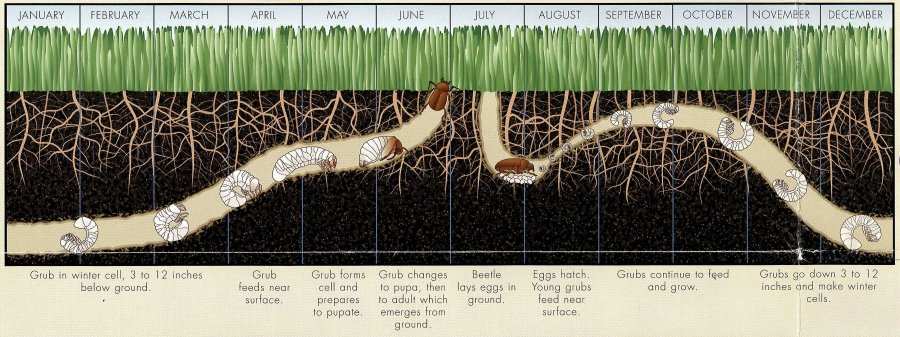
Image source: Bing (Web (fair-use with source credit))
Which Grub Species Are Most Susceptible
Not all grubs respond to neem oil equally. Research on azadirachtin efficacy against Scarabaeidae larvae shows varying results by species:
- Japanese beetle larvae (Popillia japonica): Moderate to good susceptibility, especially in first and second instar. This is the most common target for neem oil grub treatments in the eastern United States.
- European chafer grubs (Amphimallon majale): Moderate susceptibility. These grubs tend to hatch slightly earlier, so your treatment window may shift to late June through August in the Northeast.
- May/June beetle larvae (Phyllophaga spp.): Variable susceptibility. Some species show good response to azadirachtin, others less so. These grubs have longer life cycles (two to three years), which means you may need multi-season treatment.
- Masked chafer grubs: Generally moderate response, similar to European chafers.
If you're not sure which species you have, cut a one-foot square of turf and peel it back. Count the grubs and note their size. Your local university extension office can often help with identification from a photo.
Soil Type, Depth, and Coverage — Why Some Lawns Respond Better
Your soil type directly affects how well a neem oil drench reaches the grubs.
- Sandy soils: The drench penetrates quickly but also drains fast. You may need to apply more volume or reapply more frequently. The upside is that grubs in sandy soil tend to stay closer to the surface.
- Clay soils: Penetration is slower and less uniform. Pre-watering the area before application helps the solution move through the soil profile. Grubs in clay soil may be more concentrated in the top few inches.
- Loamy soils: This is the ideal scenario. Good drainage, good retention, and grubs distributed through the root zone where the drench can reach them.
Grub depth matters too. During peak summer heat, grubs may move deeper into the soil to find moisture. If you're treating during a dry spell, water the lawn thoroughly the day before application.
This brings grubs back up into the treatment zone.
How to Apply Neem Oil as a Soil Drench for Grubs
Getting the application right is just as important as choosing the right product. A poorly applied neem oil treatment will underperform even if you've got perfect timing.
What You Need Before You Start
Gather these items before you begin:
- Cold-pressed neem oil with a stated azadirachtin concentration (1% to 3%)
- A surfactant or liquid soap (a few drops per gallon helps the solution spread through soil)
- A watering can or hose-end sprayer calibrated for soil drenching
- Measuring spoons or a small scale for accurate dilution
- Gloves and eye protection for handling the concentrate
Step-by-Step Application Process
Follow these steps for the most effective treatment:
- Mow the lawn short (2 to 2.5 inches) the day before. This removes barriers and lets the solution reach the soil surface directly.
- Water the lawn lightly the evening before. Moist soil accepts the drench more evenly than dry soil.
- Mix your solution. A typical dilution is 2 tablespoons of cold-pressed neem oil per gallon of water, plus a few drops of liquid soap as a surfactant. Always follow your specific product's label instructions.
- Apply as a soil drench, not a light spray. You want the solution to soak into the root zone, not sit on the grass blades. Aim for enough volume to penetrate the top 2 to 4 inches of soil.
- Water lightly after application (about 1/4 inch) to help push the neem solution down into the root zone where grubs are feeding.
- Keep foot traffic off the treated area for 24 hours to let the solution settle.
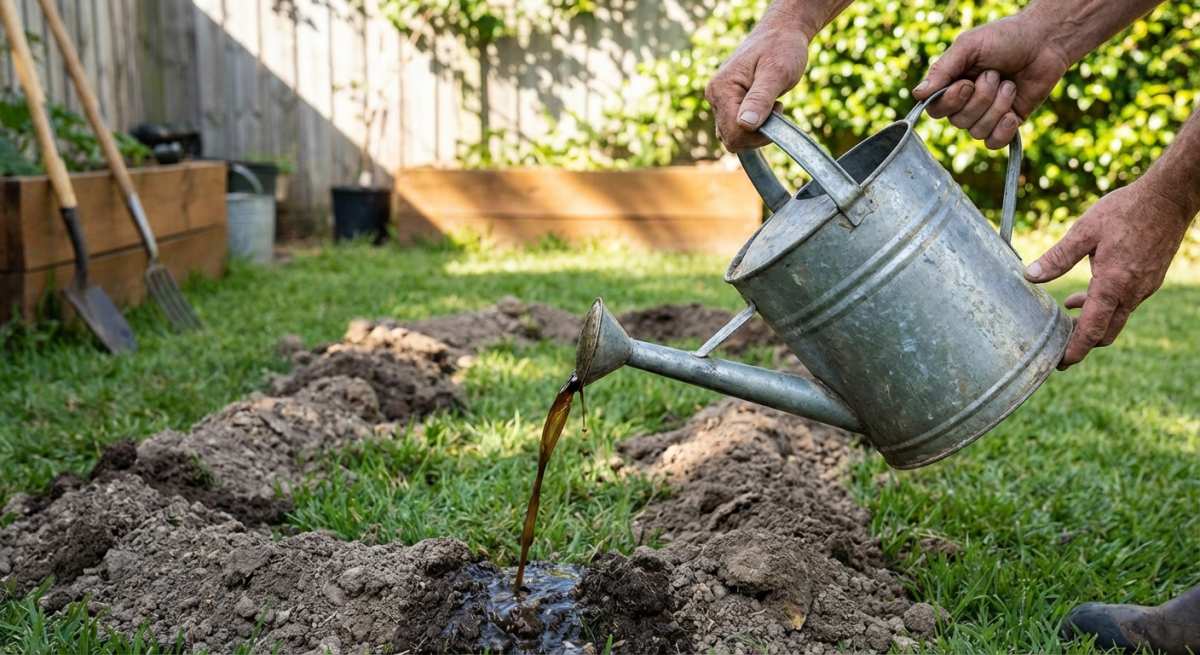
Image source: Bing (Web (fair-use with source credit))
How Often to Reapply During the Treatment Window
One application is rarely enough. Azadirachtin breaks down quickly in soil, especially in warm, moist conditions. UV exposure and microbial activity both degrade it within days.
For effective grub suppression:
- First application: Late July or early August, when eggs are hatching.
- Second application: Two weeks after the first.
- Third application: Two weeks after the second, if grub pressure is high.
- Optional fourth application: Early September, particularly for species with extended hatch periods.
This three-to-four application schedule covers the peak feeding window for young larvae. Skipping reapplications is the second most common reason neem oil treatments fail (after wrong timing).
Realistic Results — What Neem Oil Does and Doesn't Do
Let's be honest about what you can expect, because this is where most online advice falls short.
How Long It Takes to See Results
After a proper soil drench, you should notice reduced grub feeding activity within three to five days. Dead or dying grubs may be visible in the top inch of soil within one to two weeks. Full population reduction takes the entire treatment cycle, roughly six to eight weeks from first application.
You will not see the same speed as a synthetic insecticide. If you need grubs dead by tomorrow, neem oil is the wrong tool.
Why You Still See Some Grub Activity After Treatment
Even a well-executed neem oil program won't eliminate 100% of grubs. Here's why:
- Some grubs are too deep in the soil for the drench to reach.
- Grubs that were in late second or third instar at the time of treatment are less susceptible.
- New eggs may hatch between applications, introducing fresh larvae.
- Azadirachtin degrades quickly, so there are windows of reduced concentration between treatments.
A successful neem oil treatment might reduce your grub population by 50% to 70% in a single season. That's often enough to prevent visible lawn damage, especially if you're also maintaining healthy turf through proper watering and mowing.
Setting the Right Expectations
Think of neem oil as a long-term population management strategy, not an emergency rescue treatment. If you've got 20 grubs per square foot and your lawn is already brown and peeling up like carpet, you need a faster-acting option this year and can transition to neem oil for prevention in subsequent seasons.
For moderate infestations (5 to 10 grubs per square foot) or for preventive maintenance, neem oil is a solid choice that won't nuke your soil biology or put your family at risk.
Neem Oil vs. Other Grub Control Options

Image source: Bing (Web (fair-use with source credit))
Neem oil isn't the only game in town, and it's not always the best choice. Here's how it stacks up against the most common alternatives.
| Method | Speed of Kill | Duration of Control | Impact on Beneficials | Best Use Case |
|---|---|---|---|---|
| Neem oil (soil drench) | Slow (days to weeks) | Short — requires reapplication | Minimal | Moderate infestations, organic programs, prevention |
| Beneficial nematodes (Heterorhabditis bacteriophora) | Moderate (2 to 5 days) | One season | None | Moderate to heavy infestations, targeted treatment |
| Milky spore (Paenibacillus popilliae) | Very slow (seasons to establish) | Long (years once established) | None | Japanese beetle-specific, long-term prevention |
| Chlorantranilipride (Acelepryn) | Moderate (days) | Long (season-long) | Low | Professional-grade, reduced-risk synthetic |
| Imidacloprid | Fast (hours to days) | Long (season-long) | Moderate (bee concerns with foliar use) | Heavy infestations, non-organic programs |
Image source: Bing (Web (fair-use with source credit))
Choose neem oil if: you're managing a moderate grub problem, you want an organic approach, you're treating near edible gardens, or you're building a long-term prevention plan.
Choose beneficial nematodes if: you need faster results than neem oil provides but still want a biological approach. Nematodes actively hunt and kill grubs, which makes them more effective against larger larvae.
Choose a synthetic like chlorantranilipride if: you have a severe infestation causing active lawn damage and need reliable, season-long control. This is the option most lawn care professionals reach for when the situation is urgent.
Common Mistakes That Waste Your Time and Money
Even when people know neem oil can work, several predictable errors sabotage their results.
Treating at the Wrong Time of Year
This is the number one mistake. Applying neem oil in April or May when you first notice lawn damage means you're targeting mature third-instar grubs that are deep in the soil and nearly finished feeding. They're about to pupate anyway, and neem oil has minimal impact on them.
Circle late July through September on your calendar. That's your window. Set a reminder if you have to.
Expecting a Fast Kill
If you're checking for dead grubs 48 hours after application, you're going to be disappointed. Neem oil's mode of action is fundamentally different from neurotoxic insecticides. Give it at least a week before evaluating results, and plan on the full six-to-eight-week treatment cycle for meaningful population reduction.
Applying Too Little or Too Weak a Solution
A light spray over the grass surface does nothing for soil-dwelling grubs. You need a true soil drench, enough volume to penetrate the root zone. And if you're using a neem oil product with little or no azadirachtin, you're basically watering your lawn with expensive vegetable oil.
Check the label. Verify the azadirachtin concentration. Mix at the recommended rate.
Apply enough volume to reach the grubs where they actually live.
Who Should Use Neem Oil for Grub Control (And Who Shouldn't)
Neem oil isn't universally the right answer. Here's how to decide if it fits your situation.
Best Fit Scenarios
- You have a moderate grub population (under 10 per square foot) and want to reduce it without synthetic chemicals.
- You're managing an organic lawn or garden and need an OMRI-listed option.
- You're in prevention mode, treating before damage becomes severe.
- You have pets or children who play on the lawn and you want minimal chemical exposure.
- You're willing to commit to multiple applications over the treatment window.
When You Should Skip Neem and Use Something Else
- Severe infestation (15+ grubs per square foot with active lawn damage). You need faster-acting control this year.
- You're treating in spring or early summer. The grubs are too mature for neem oil to be effective. Use beneficial nematodes or a synthetic instead.
- You need one-and-done convenience. Neem oil requires multiple applications. If that's not realistic for your schedule, look at chlorantranilipride or imidacloprid for season-long control with a single application.
- You're dealing with a masked chafer species known to have low azadirachtin susceptibility. Check with your local extension office for region-specific guidance.
Long-Term Grub Management with Neem Oil
One season of neem oil treatment won't solve your grub problem permanently. Beetles fly in from neighboring areas, lay eggs, and the cycle starts again. But a consistent multi-year approach can dramatically reduce your baseline grub population.
Building a Multi-Season Plan
- Year one: Apply neem oil on the three-to-four application schedule during July through September. Expect a 50% to 70% reduction in grub numbers.
- Year two: Repeat the schedule. With fewer adults emerging to lay eggs, you should see a further decline.
- Year three and beyond: Monitor grub counts in late summer. You may be able to reduce to a single preventive application or skip treatment entirely in low-pressure years.
Monitoring Grub Counts Year Over Year
Cut a one-foot-square section of turf in two or three areas of your lawn in mid-August. Peel it back and count the grubs in the root zone. This simple test tells you whether your treatment program is working and whether you need to adjust your approach.
Combining with Cultural Practices
Neem oil works best as part of an integrated approach:
- Mow at the right height. Taller grass (3 to 3.5 inches for most cool-season turfs) develops deeper roots that can tolerate some grub feeding.
- Water deeply but infrequently. This encourages deep root growth and makes the lawn more resilient.
- Aerate compacted areas. Grubs thrive in compacted soil. Aeration improves drainage and makes the environment less favorable for egg survival.
- Attract birds. Robins, starlings, and grackles are voracious grub predators. A bird-friendly yard is free grub control.
Frequently Asked Questions
Can I use neem oil on grubs in my vegetable garden?
Yes. Neem oil is safe for use around edible plants when applied as a soil drench at labeled rates. It breaks down quickly and doesn't leave harmful residues on food crops.
Just avoid spraying it directly on harvestable parts of the plant.
How long does neem oil stay active in soil?
Azadirachtin degrades rapidly in soil, typically within five to seven days under warm, moist conditions. This short residual period is why reapplication every seven to fourteen days is necessary during the treatment window.
Will neem oil harm earthworms?
No. Research and field observations consistently show that neem oil applied at labeled rates does not harm earthworm populations. This is one of its major advantages over synthetic grubicides, which can reduce earthworm activity in treated soil.
Can I mix neem oil with other grub treatments?
You can alternate neem oil with beneficial nematodes, but don't mix them in the same application. The oil can interfere with nematode survival. If you're using both, apply them at least a week apart.
Is cold-pressed neem oil better than clarified neem extract for grubs?
Yes, significantly. Cold-pressed neem oil retains the full azadirachtin content from the seed. Clarified hydrophobic extracts have most of the azadirachtin removed and are far less effective against grubs.
Always check the label for azadirachtin percentage.
What's the best time of day to apply neem oil as a soil drench?
Early morning or late evening is ideal. Avoid midday applications when the sun is intense, as UV exposure accelerates azadirachtin breakdown. Evening applications give the solution maximum time to penetrate the soil before sunlight hits the treated area.
So Should You Use Neem Oil on Your Grubs?
Here's a quick decision guide to cut through the noise.
Use neem oil if:
- You're treating young grubs (July through September)
- Your grub count is under 10 per square foot
- You want an organic, pet-safe, earthworm-safe approach
- You're willing to apply it three to four times over six to eight weeks
- You're building a long-term prevention plan
Skip neem oil and use something else if:
- You have severe damage and need fast results
- It's spring and the grubs are mature
- You want a single-application solution
- Your grub species is known to have low susceptibility to azadirachtin
Neem oil is a legitimate grub control tool, but it's not a miracle cure. It works best when you understand its limitations, apply it at the right time, and commit to the full treatment cycle. If that matches your situation, it's one of the safest and most environmentally responsible options available as of 2026.
The article is already complete. All H2 sections from the approved TOC have been written, including the FAQ section and the final recommendation. There are no remaining H2 headings to continue with.
The article is fully complete. Every H2 section from the approved TOC has already been written, ending with the final recommendation and decision guide. There are no remaining sections to add.