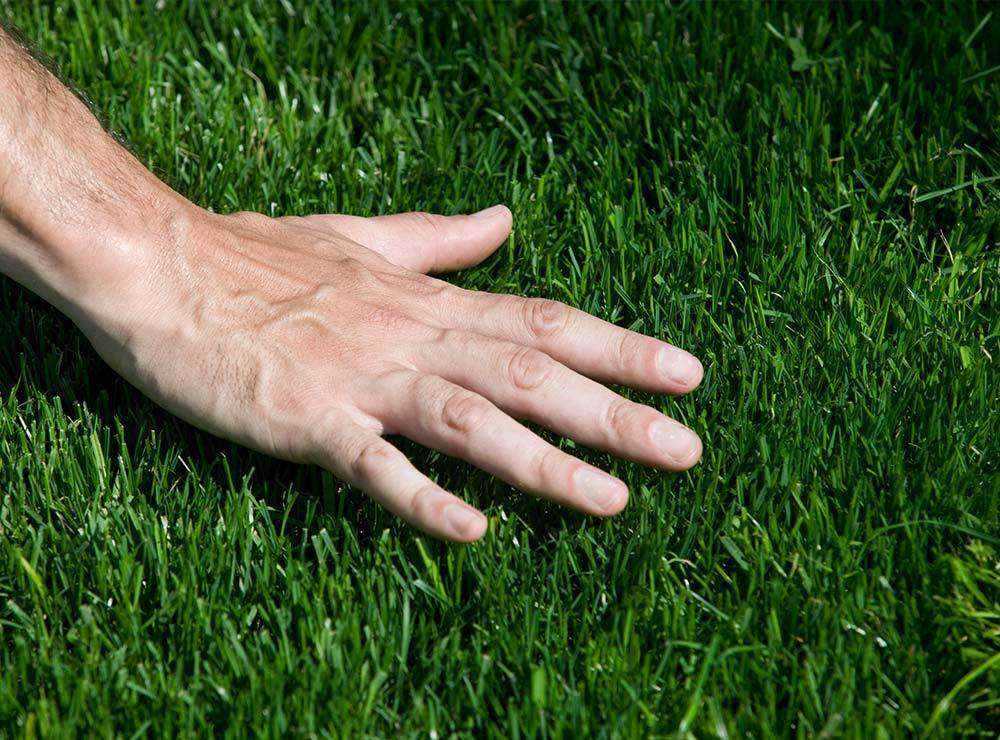
The best seed for Bermuda grass is a certified, seeded variety with a high pure-live-seed (PLS) rating — Princess 77 or Arden 15 for a fine, dark, golf-course look; Yukon, Riviera, or Mohawk if you garden near the transition zone and winterkill is a real risk; and Sahara or a quality common Bermuda blend when you need to cover a large area affordably.
There is one thing you need to know before you spend a dollar: the most famous Bermuda grasses on earth cannot be bought as seed. TifTuf, Tifway 419, Celebration, Latitude 36, Tahoma 31, and Santa Ana are sterile hybrids. They produce no viable seed and are sold only as sod, sprigs, or plugs. Any listing that offers "TifTuf seed" is either mislabeled or selling you common Bermuda in a fancy bag.
That single fact eliminates half the bad advice floating around this topic — and it's where this guide starts.
Quick Answer: Best Bermuda Grass Seed by Situation
| Your situation | Best seed choice | Why it works |
|---|---|---|
| You want the finest texture and darkest color from seed | Princess 77 or Arden 15 | Fine leaf blade, high shoot density, closest seeded match to hybrid sod |
| You're in the transition zone (northern OK, TN, KY, VA, MO, KS) | Yukon, Riviera, Wrangler, or Mohawk | Bred specifically for cold hardiness and spring green-up after hard winters |
| Large acreage, budget matters most | Sahara or certified common Bermuda | Lowest cost per 1,000 sq ft, strong seedling vigor, very forgiving |
| Full sun sports/play area with heavy traffic | Blackjack or a premium blend (e.g., La Prima–style multi-variety mixes) | Fast lateral spread and quick recovery from divots and wear |
| Overseeding thin spots in an existing Bermuda lawn | Same variety already present, or common Bermuda | Prevents visible color and texture patchiness |
| Deep shade (more than ~4 hours of shade daily) | None — choose zoysia or St. Augustine instead | No Bermuda cultivar, seeded or hybrid, performs in real shade |
That last row matters more than people expect. In practice, the number one reason a new Bermuda lawn fails is not bad seed — it's a shaded yard. Bermuda needs a minimum of six to eight hours of direct sun. If your yard doesn't have that, no seed on this list will save it.
Seeded Bermuda vs. Hybrid Sod: The Distinction That Changes Everything
Bermuda grass (Cynodon dactylon) splits into two commercial categories, and they are not interchangeable.
Seeded Bermuda is genetically variable, grows from a bag, and costs roughly $2–$8 per 1,000 square feet in seed. Modern seeded cultivars are dramatically better than the coarse "common" Bermuda your grandfather planted — plant breeders have spent decades pushing them toward finer blades, darker color, and better cold tolerance.
Hybrid Bermuda is an F1 cross (usually Cynodon dactylon × Cynodon transvaalensis) that is sterile. It must be vegetatively propagated. TifTuf, for example, came out of the turfgrass breeding program at the University of Georgia's extension and research network, and it reaches your yard as sod or sprigs — never as seed.
The honest trade-off: hybrid sod gives you a finer, denser, more uniform lawn on day one, at roughly 10–20× the material cost. Seeded Bermuda costs a fraction of that but takes a full growing season to look like a lawn and will never be quite as uniform. For most homeowners covering more than 2,000 square feet, seed is the rational choice. For a small showcase front yard, sod usually wins.
What Actually Separates Good Bermuda Seed From Bad
Pure Live Seed (PLS), not bag weight
This is the single most useful number on the tag, and most buyers never look at it. PLS = purity × germination. A bag showing 98% purity and 85% germination gives you 83% PLS — so a 5 lb bag delivers about 4.15 lb of seed that can actually grow.
Compare products on cost per pound of PLS, not cost per bag. A cheap bag with 70% germination is often the more expensive option once you do the math.
Coated vs. uncoated seed
Many retail Bermuda seeds are coated with a lime, clay, or moisture-retaining polymer. Coating helps seed-to-soil contact and reduces wash-out on slopes, but it is inert filler that can make up 30–50% of the bag weight.
If the label says "50% coating," you must buy roughly double the weight to hit your target seeding rate. A common mistake is applying coated seed at the uncoated rate and wondering why the stand came in thin.
Hulled vs. unhulled
- Hulled seed has the outer husk removed. It absorbs water faster and typically germinates in 7–14 days. Use this for spring and summer plantings.
- Unhulled seed germinates more slowly and erratically, which is actually the point for dormant seeding in late winter — the husk delays sprouting until soil temperatures are genuinely safe.
Most quality bags are a blend, and that's fine.
Cold tolerance and your hardiness zone
Bermuda is reliably perennial in roughly USDA zones 7–10, with the best-adapted cold-hardy cultivars pushing into zone 6b. Before ordering, check your zone against the USDA's official plant hardiness resources. If you sit in the transition zone, cold tolerance should outrank leaf texture in your decision — a beautiful fine-bladed cultivar that winterkills every third February is not a bargain.
Certified seed (blue tag)
Certified seed carries a state crop improvement agency tag verifying varietal identity and weed-seed limits. Uncertified "variety not stated" (VNS) Bermuda is cheaper and sometimes perfectly usable on pasture or rough areas, but it can carry noxious weed seed. For a home lawn, pay the small premium.
Top Bermuda Grass Seed Varieties, Reviewed
Princess 77 — the fine-textured benchmark
The variety that proved seeded Bermuda could rival hybrid sod. Princess 77 delivers a genuinely fine leaf blade, dark green color, and high density. It handles low mowing (down to about 0.5 inch with a reel mower) better than almost any other seeded type.
Trade-offs: seed cost is high relative to common Bermuda, and its cold tolerance is only moderate. Best from zone 7b southward.
Arden 15 — modern all-rounder
A newer-generation cultivar combining fine texture with notably better cold tolerance and spring green-up than Princess 77. High shoot density, good disease resistance, strong turf quality ratings in independent trials.
Best for: homeowners in zones 7–8 who want hybrid-sod aesthetics without hybrid-sod cost.
Yukon — the cold-hardiness champion
Developed for the northern edge of Bermuda's range. Yukon consistently survives winters that kill less hardy cultivars and greens up early in spring. Texture is medium rather than fine.
Best for: Oklahoma, Kansas, Missouri, Tennessee, Kentucky, and the Virginia/Maryland line.
Riviera — cold tolerance plus quality
Riviera pairs strong winter survival with better turf quality and density than Yukon. It establishes quickly and has good traffic tolerance, which is why it shows up on transition-zone athletic fields.
Best for: the transition zone when you want cold hardiness and a lawn that looks good.
Sahara — the value workhorse
Fast germinating, aggressive, and inexpensive. Sahara has strong drought tolerance and excellent seedling vigor, meaning it outcompetes weeds during establishment better than most.
Trade-offs: medium-coarse texture and lighter green than the premium cultivars. Perfectly good for a large family yard; not a putting-green look.
Blackjack — dark color, fast cover
Notably darker green than common Bermuda with rapid lateral spread. A solid mid-price pick for play areas and yards that take abuse.
Common Bermuda (certified, hulled) — when acreage rules
Coarse, light green, and utterly indestructible in full sun. At the lowest cost per square foot of any turf option in the South, it is still the right answer for large lots, pastures adjacent to lawn, erosion control, and anywhere the standard is "green and mowable."
Multi-variety blends
Blends combine three or more cultivars so the stand hedges against disease, drought, and cold in a way a single genotype can't. If you're not sure which single variety fits your microclimate, a reputable blend is the low-regret choice.
Timing: When to Plant Bermuda Seed
Bermuda germinates on soil temperature, not calendar date. The rule:
Sustained soil temperature of 65–70°F at a 2-inch depth, measured for five consecutive mornings.
That usually falls in late April through June across most of the Bermuda belt, and you want to be seeded at least 90 days before your average first frost so the stand can build root reserves.
Practical guidance by region:
| Region | Target seeding window |
|---|---|
| Gulf Coast, central/south Florida, south Texas | Mid-April – early July |
| Deep South (GA, AL, MS, SC, LA) | May – early July |
| Carolinas, Arkansas, north Texas, Oklahoma | Mid-May – late June |
| Transition zone (TN, KY, MO, KS, VA) | Late May – mid-June only |
Buy a $10 soil thermometer and check at 8 a.m. Air temperature lies; soil temperature does not. Seeding into cold, wet soil is the fastest way to lose a bag of expensive seed to rot.
Late-season warning: seeding in August or September in the transition zone produces immature plants with no rhizome reserves. They look fine in October and are dead in March.
Preparing the Soil (Where Most Lawns Are Won or Lost)
1. Test the soil first
Pull samples from 6–8 spots at a 4-inch depth, mix them, and send the composite to your state land-grant university extension lab. Cost is typically $10–$25, and it replaces guesswork with numbers.
Bermuda performs best at pH 6.0–7.0 and tolerates 5.8–7.5. Below 5.5, phosphorus and micronutrients lock up and the lawn stays yellow no matter how much nitrogen you throw at it. Lime and sulfur both take 3–6 months to move pH meaningfully, so amend before seeding, not after.
2. Kill everything, then wait
Existing weeds and cool-season grass will outcompete Bermuda seedlings. Use a non-selective herbicide, wait 10–14 days, and treat any survivors a second time before you disturb the soil.
Critical: do not apply pre-emergent herbicide anywhere near your seeding window. Pre-emergents don't distinguish crabgrass seed from Bermuda seed. Most products require 8–16 weeks before seeding — check your specific label.
3. Till, amend, and grade
Loosen the top 3–4 inches. Work in 1–2 inches of compost on heavy clay or pure sand; skip it on decent loam.
Then grade carefully — this is the step people rush. Low spots hold water and drown seedlings; high spots scalp under the mower forever. A wide, rigid grading tool makes this dramatically easier than a garden rake, and if you're starting from a rough surface, a heavy-duty leveling head will pull a flat plane far faster than trying to eyeball it.
4. Firm the seedbed
Roll the prepared soil with a water-filled roller until a footprint sinks no more than about half an inch. Bermuda seed is tiny and must sit no deeper than 1/8 to 1/4 inch. A fluffy seedbed swallows it.
How to Seed Bermuda Grass, Step by Step
Seeding rate: 1–2 lb of PLS per 1,000 sq ft for uncoated hulled seed. Adjust upward for coated products per the label. More is not better — over-seeding produces crowded, spindly seedlings that thin out under their first drought.
- Calibrate your spreader on a driveway with a measured amount of seed before touching the lawn. Bermuda seed is so fine that a setting one notch too open will empty the hopper in a third of the yard.
- Split the batch in half. Apply the first half walking north–south, the second half east–west. This cancels out the striping that single-pass spreading always leaves.
- Use a broadcast (rotary) spreader, not a drop spreader. Drop spreaders leave hard lines with seed this small. A push spreader sized for fine seed gives a much more even fan, and for larger yards a wider-hopper walk-behind unit cuts the number of passes considerably.
- Lightly drag or rake with the back of a leaf rake to settle seed into the top 1/8 inch. Do not bury it.
- Roll again lightly for seed-to-soil contact.
- Optional topdressing: a scant 1/8-inch layer of screened compost holds moisture during germination. Applying that thin and evenly by shovel is nearly impossible — this is exactly what a compost and peat topdressing hopper is built for.
- Starter fertilizer: apply a phosphorus-containing starter (something in the range of 18-24-12) at label rate, unless your soil test says phosphorus is already high.
Watering: The Schedule That Actually Works
Germination failure is almost always a watering failure. The seed must stay continuously moist — one hot afternoon of dry surface soil after the radicle emerges kills that seedling permanently.
| Stage | Frequency | Duration | Goal |
|---|---|---|---|
| Days 1–14 (germination) | 3–4× daily | 5–10 min each | Top 1/2 inch never dries out |
| Days 15–28 (seedling) | 2× daily | 10–15 min | Moisture down to 1 inch |
| Weeks 5–8 (tillering) | Every other day | 20–30 min | Moisture to 2–3 inches |
| Week 9+ (established) | 2× weekly | 30–45 min | ~1 inch total per week, deep |
Expect green fuzz in 7–14 days with hulled seed at proper soil temperature, and up to 21 days with unhulled or in cooler conditions. Full coverage takes the rest of the season — Bermuda spreads by stolons and rhizomes, so bare patches close from the edges inward. Don't panic at week four.
The transition from frequent shallow watering to infrequent deep watering is what builds the deep root system Bermuda is famous for. Homeowners who keep watering daily into month three grow shallow-rooted, disease-prone turf. If you want to compress the early timeline, the same principles behind getting seed up fast apply here — consistent surface moisture and warm soil do almost all the work.
First-Year Mowing and Feeding
Mowing
Make the first cut when the grass reaches about 2 inches, and never remove more than one-third of the leaf blade in a single pass.
| Bermuda type | Mowing height | Mower type |
|---|---|---|
| Common / Sahara | 1.5–2.5 in | Rotary |
| Improved seeded (Princess 77, Arden 15) | 1–1.5 in | Rotary or reel |
| Show-lawn / low-cut | 0.5–1 in | Reel only |
Bermuda genuinely rewards frequent, low mowing — cut it short and often and it thickens laterally. Cut it high and infrequently and it goes stemmy and thin. Mowing twice a week in peak summer is normal, which is worth factoring in when choosing a walk-behind machine for a Bermuda lawn. On any yard with real grade changes, a self-propelled drive is close to mandatory; the considerations for handling a sloped yard are different enough from flat-lot mowing to be worth sorting out before you buy.
Sharpen the blade at least twice per season. Bermuda's stiff blades dull steel fast, and a torn cut tip turns a lawn grey-white within a day.
Feeding
Wait 4–6 weeks after germination before the first real nitrogen application — young seedlings burn easily.
From there, Bermuda is a heavy feeder: roughly 0.5–1 lb of actual nitrogen per 1,000 sq ft per growing month, totaling about 3–5 lb across the season. Slow-release sources reduce surge growth and burn risk.
Stop all nitrogen 6–8 weeks before your average first frost. Late-season nitrogen pushes tender growth into cold weather and is a leading cause of winterkill and spring dead spot.
If color is your priority once the lawn is established, the levers are iron, potassium, mowing height, and consistent watering — the full playbook for deepening lawn color applies directly to seeded Bermuda, which tends to run lighter green than hybrid sod by nature.
Common Problems and How to Fix Them
Patchy, thin germination. Almost always uneven watering or uneven spreading. Wait until week four before judging, then spot-seed the bare areas and keep them wet.
Seed washed into ridges. Slope plus heavy irrigation. Reseed with coated seed and use a light straw or erosion blanket next time.
Weeds outrunning the grass. Expected — you can't use pre-emergent on new seed. Mow regularly (which decapitates annual broadleaf weeds), hand-pull what you can, and wait until the Bermuda has been mowed three to four times before applying any post-emergent herbicide.
Yellow seedlings. Usually low nitrogen, low iron, or pH out of range. Check the soil test before adding more fertilizer.
Chinch bugs and fall armyworms. Armyworms can strip a young Bermuda stand in 48 hours in late summer — scout weekly in August and September, look for birds feeding heavily on the lawn, and treat immediately if you find them. No seeded Bermuda cultivar is immune; scouting beats genetics here.
Spring dead spot. Circular dead patches appearing at spring green-up, worst in older, heavily fertilized, poorly drained Bermuda. Manage with core aeration, balanced potassium, and stopping late-fall nitrogen.
Bermuda invading beds. This is the honest downside of the species. Bermuda spreads aggressively by rhizome and will move into flower beds and neighboring St. Augustine. Install deep edging (6 inches minimum) at the time you seed, not two years later.
Cost and Coverage Planning
For a 5,000 sq ft lawn at 1.5 lb PLS per 1,000 sq ft, you need roughly 7.5 lb of uncoated seed — or about 12–15 lb of a 50%-coated product.
| Item | Typical cost, 5,000 sq ft |
|---|---|
| Common / Sahara seed | $40–$90 |
| Premium seeded cultivar | $150–$300 |
| Starter fertilizer | $25–$40 |
| Compost topdressing | $60–$150 |
| Soil test | $10–$25 |
| Hybrid Bermuda sod (for comparison) | $1,500–$3,500 |
Prices move, but the ratio holds: seeding a Bermuda lawn costs a small fraction of sodding one, and the trade you make is a season of patience.
Year-One Bermuda Maintenance Calendar
| Timing | Action |
|---|---|
| Late winter | Soil test; apply lime or sulfur if needed; sharpen mower blade |
| Early spring | Kill existing vegetation; grade and prep seedbed |
| Soil at 65–70°F | Seed + starter fertilizer; begin frequent light watering |
| Weeks 2–4 | Reduce watering frequency, increase duration; first mow at 2 in |
| Weeks 5–8 | First nitrogen application; mow weekly at target height |
| Midsummer | Monthly nitrogen; deep watering 2× weekly; scout for armyworms |
| Late summer | Final nitrogen 6–8 weeks pre-frost; spot-seed thin areas |
| Fall | Raise mowing height slightly; apply potassium for winter hardiness |
| Dormancy | Bermuda goes tan/brown — this is normal, not death. Stop fertilizing. |
Frequently Asked Questions
Can I actually buy TifTuf, Celebration, or Tifway 419 as seed?
No. All three are sterile hybrids that produce no viable seed and are available only as sod, sprigs, or plugs. If a retailer advertises seed under those names, the product is not what the label claims — it is almost certainly common Bermuda. This is the most common and most expensive mistake buyers make on this topic.
How long does Bermuda grass seed take to germinate?
Hulled seed sprouts in 7–14 days when soil temperatures hold at 65–70°F and the seedbed stays continuously moist. Unhulled seed, cooler soil, or inconsistent watering can stretch that to 21–30 days. Full coverage of a bare lawn takes 8–12 weeks of active growth, because Bermuda fills in by spreading stolons rather than by each seed making a large plant.
What's the correct seeding rate for Bermuda grass?
1–2 lb of pure live seed per 1,000 square feet. Use the lower end for premium fine-textured cultivars with high seed counts, the higher end for common Bermuda and for repairing thin areas. If your seed is coated, multiply by the coating percentage — a 50%-coated bag needs roughly double the weight to deliver the same PLS. Exceeding the rate does not produce a thicker lawn; it produces overcrowded seedlings that thin out under summer stress.
Which Bermuda seed handles cold winters best?
Yukon, Riviera, Wrangler, and Mohawk were selected specifically for cold hardiness and are the reliable choices for the transition zone. Arden 15 also shows good winter survival with better texture. In zone 6b and colder, expect some winterkill in severe years regardless of cultivar — plan on periodic spring overseeding, or choose a cool-season grass or zoysia instead.
Do I need to overseed Bermuda every year?
An established, well-fed Bermuda lawn in full sun should not need annual overseeding — it self-repairs by rhizome and stolon. You'll want to overseed after winterkill, in transition-zone lawns, or in areas taking heavy traffic. Separately, some homeowners overseed with perennial ryegrass in fall for winter color; be aware this competes with the Bermuda at spring green-up and can weaken it over successive years.
What pH does Bermuda grass need?
6.0–7.0 is optimal, with tolerance from about 5.8 to 7.5. Below 5.5, phosphorus and several micronutrients become unavailable and the lawn will look chlorotic no matter how much fertilizer you apply. Because lime and sulfur take three to six months to shift pH, test and amend before seeding rather than after.
Can Bermuda grass grow in shade?
Not meaningfully. Bermuda is the least shade-tolerant of the common warm-season turfgrasses and needs a minimum of six to eight hours of direct sun. Even the cultivars marketed for "improved shade tolerance" are only tolerating light filtered shade. In genuinely shaded yards, zoysia or St. Augustine are the correct choices, and no seed selection will change that outcome.
Should I use hulled or unhulled seed?
Use hulled for spring and summer seeding — the husk is removed so water reaches the embryo quickly and germination is faster and more uniform. Use unhulled for dormant seeding in late winter, where the intact husk deliberately delays germination until soil warms enough to be safe. Blends of both are common and work fine for standard spring planting.
Final Thoughts
Choosing Bermuda seed comes down to three honest questions: How cold does it get where you live? How fine do you need the turf to look? And how much square footage are you covering?
Answer those and the choice makes itself — Yukon or Riviera if winter is the threat, Princess 77 or Arden 15 if appearance is the priority, Sahara or certified common if you're covering ground economically. Buy certified seed, compare on pure live seed rather than bag price, and ignore any product claiming to sell seed of a sterile hybrid.
Then remember that the seed is maybe 20% of the outcome. Soil temperature at planting, a firm and level seedbed, seed placed no deeper than a quarter inch, and unwavering moisture for the first two weeks account for the rest. A $30 bag of common Bermuda seeded correctly will beat a $250 premium cultivar seeded into cold, cloddy ground every single time.
Your next step: buy a soil thermometer and a soil test kit this week, before you buy a single pound of seed. Those two items cost less than $35 combined, and they tell you exactly when to plant and exactly what your soil is missing — the two variables that decide whether you get a lush Bermuda lawn this season or a bare patch to redo next spring.