You've got a lawn that's starting to look rough. Maybe you've noticed spongy patches that lift up like carpet when you tug on them. Or maybe the neighborhood skunks have started treating your yard like an all-you-can-eat buffet, digging holes everywhere in search of a meal.
You're wondering when to treat lawns for grubs, and honestly, you're smart to ask before reaching for a bag of chemicals. Timing isn't just important when it comes to grub control. It's everything.
Apply too early and the product breaks down before the grubs even hatch. Apply too late and those grubs are too big for most treatments to touch them. Get the window right, though, and you can stop the damage cold before it ever starts.
A 2022 turfgrass study from the University of Kentucky Extension found that correctly timed preventive applications reduced grub populations by over 90 percent, while applications just four weeks off either side of the target window dropped to less than 50 percent effectiveness. That's a massive swing for one simple mistake. Let's walk through exactly what that window looks like and how to hit it.
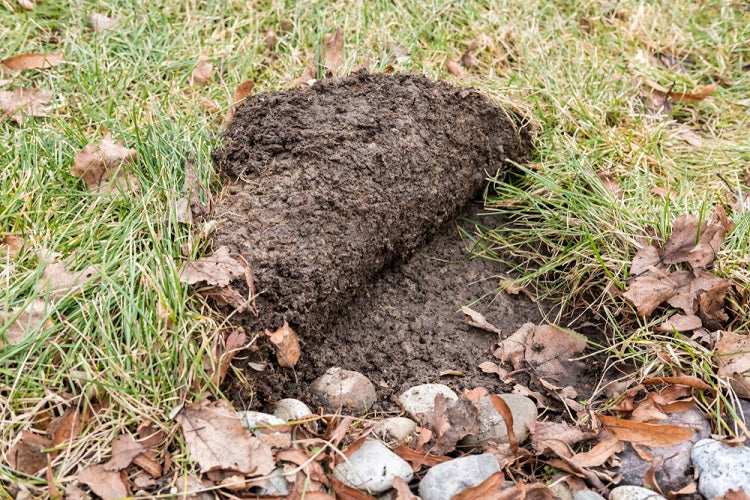
Image source: Bing (Web (fair-use with source credit))
Quick Answer
Treat lawns for grubs in late summer. Target late July through early September in most northern regions. That timing catches young grubs right after they hatch.
Preventive products go down in July. Curative products work best in August. Southern lawns shift later by several weeks.
Always check your soil temperature first. Grub eggs hatch when soil hits 65 to 70 degrees Fahrenheit at four inches deep.
How Grub Lifecycles Dictate Your Treatment Window
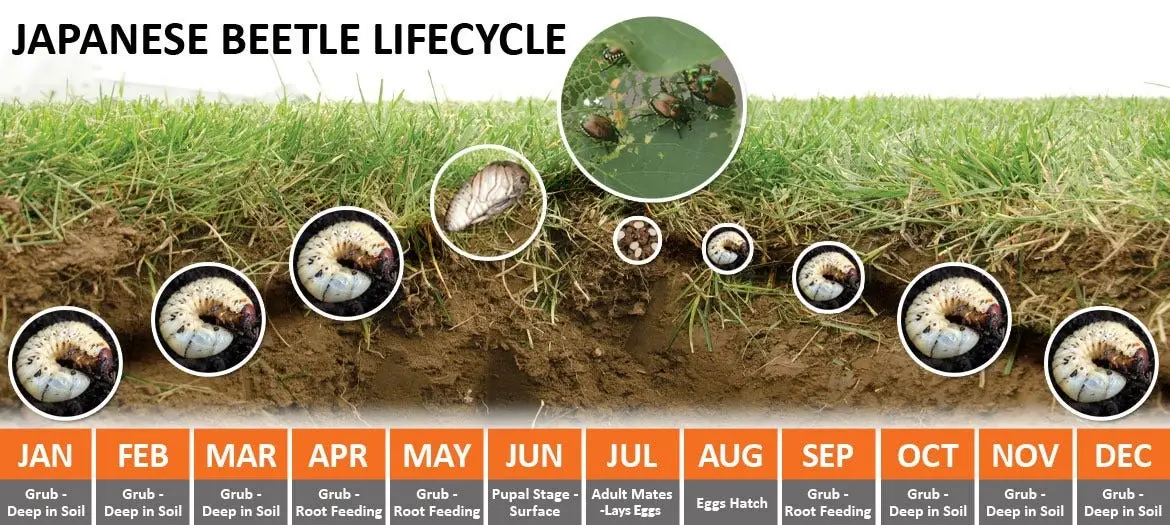
Image source: Bing (Web (fair-use with source credit))
You cannot treat grubs effectively without understanding what they're doing underground. And to understand that, you need to look at the Japanese beetle lifecycle. It's the blueprint for nearly every grub management program in North America.
[white grub lifecycle]
Adult Japanese beetles emerge from the soil in early summer, usually June through July depending on where you live. They feed on leaves, mate, and lay eggs. The female beetles burrow into moist turf, about two to four inches deep, and deposit their eggs.
Each female can lay 40 to 60 eggs over several weeks. That's a lot of potential damage from one beetle.
Those eggs hatch into tiny grubs about 10 to 14 days later. And here's the crucial part. When those grubs first emerge, they're smaller than a grain of rice.
They feed on organic matter and fine root hairs near the soil surface. This is the stage where grubs are most vulnerable to treatment. Their mouthparts are small.
Their bodies are soft. A properly timed insecticide application at this point kills them before they can do any real damage.
As grubs grow, they molt through three instars, or developmental stages. By late summer, they reach the third instar. That's the stage where they're large enough to cause visible damage by severing grass roots.
A grub that's three quarters of an inch long has the appetite to match. It can destroy several inches of root system in a single feeding session. The lawn responds by wilting, turning brown, and eventually lifting away from the soil because there's nothing anchoring it.
By fall, as soil temperatures drop below 60 degrees, those mature grubs burrow deeper into the soil, sometimes six to twelve inches down, to overwinter. They stop feeding. They become nearly impossible to reach with surface-applied treatments.
Come spring, they move back up, feed briefly, then pupate into adult beetles. The cycle repeats.
Why Northern and Southern Lawns Run on Different Clocks
The lifecycle stays the same. The calendar shifts. Northern cool-season lawns, think Kentucky bluegrass and tall fescue, follow the classic July to September treatment window.
Soil temperatures in the Northeast and Midwest typically reach the 65 to 70 degree egg-hatch range in mid to late July.
Southern warm-season lawns like Bermuda, zoysia, and St. Augustine run a few weeks behind. Soil temperatures in the transition zone and Deep South hit that hatch temperature later, often in August or even early September.
If you're growing southern grass, treat accordingly. Following northern timing in a southern climate means you're applying product weeks before the eggs even hatch. You'll waste money and achieve nothing.
The transition zone, which stretches roughly from Virginia through Kentucky and down to northern Texas, is the trickiest region to call. Your best bet is checking local soil temperature data from an extension service or even a basic soil thermometer. More on that later.
The First Decision: Preventive or Curative?
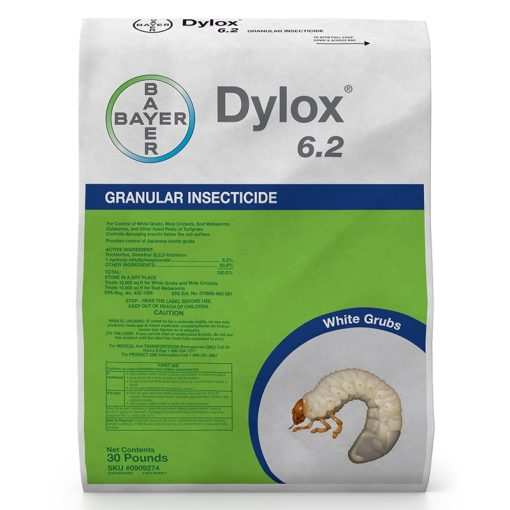
Image source: Bing (Web (fair-use with source credit))
This is the fork in the road. Every grub treatment falls into one of two categories: preventive or curative. They work on completely different timelines using completely different ingredients.
Pick the wrong one and you're fighting with one hand tied behind your back.
[curative grub insecticide product]
What Preventive Products Actually Do (And Don't Do)
Preventive products contain long-residual active ingredients like imidacloprid, chlorantraniliprole, or thiamethoxam. These chemicals sit in the soil for weeks or months after application. When grubs hatch and start feeding, they ingest the treated soil and die.
Preventive products are designed for one specific use case: you apply them before the eggs hatch.
The timing window for preventive products is mid June through mid July in most northern regions. Apply too early in spring and the product degrades before the grubs arrive. Apply too late, after hatching begins, and you've missed the entire point.
The grubs are already feeding and damaging roots while the chemical is still building up in the soil.
Preventive products have a major advantage: they work. Studies from multiple land-grant university turfgrass programs consistently show preventive applications achieve 85 to 95 percent control when applied within the correct window. That's a phenomenal rate.
You do one application per season and you're done.
The trade-off? You're putting insecticide into the soil whether grubs show up or not. If the beetle population is low that year, you've applied chemicals unnecessarily.
That's a real concern for anyone trying to keep their lawn truly green without overdoing the chemical inputs. The best approach is monitoring local beetle activity and applying only in years when populations are high.
When Curative Products Work (And When They're Useless)
Curative products are your rescue option. They contain fast-acting, short-residual active ingredients like trichlorfon (brand name Dylox) or carbaryl (Sevin). These chemicals kill grubs on contact within 24 to 72 hours.
They do not sit in the soil waiting. They work now.
The curative window is narrow. You need to apply when grubs are still small, ideally before they reach the third instar. That's roughly late July through early September in most regions.
Once grubs exceed half an inch in length, curative products become significantly less effective. Their larger bodies are harder to kill, and they've already done most of the root damage they're going to do.
Curative products are for one specific situation. You see damage, you confirm grubs are present, and you need them gone quickly. They are not a substitute for preventive treatment.
They are a bandage for a wound that's already bleeding.
One more thing about curative products: they require immediate watering in. Most labels call for at least half an inch of irrigation within 24 hours of application. The granules need to wash off the grass blades and reach the soil where the grubs are feeding.
Skip the watering step and you just scattered expensive dust on your lawn.
The Four Scenarios That Decide Your Timing
There isn't a single calendar date that works for everyone. Your timing depends entirely on your specific situation. Here's how to figure out which scenario you're in.
Scenario 1: You've Never Had Grubs (Or You're Not Sure)
Do nothing. Seriously. Grub treatment is not a mandatory annual chore.
If your lawn has no history of grub damage and you're not seeing signs of trouble, skip the application. You can monitor by checking for adult beetle activity in June and July. Lots of Japanese beetles feeding on your roses and fruit trees means egg-laying is happening nearby.
That's your cue to consider a preventive application next year.
Even then, a single year of heavy beetle activity doesn't guarantee grub damage. Factors like soil moisture, predation by birds and beneficial insects, and local conditions all influence survival rates. Conservative use of insecticides is better for your lawn, your wallet, and the environment.
Scenario 2: You Had Damage Last Year (Preventive Route)
Apply a preventive product in mid June to mid July, targeting the window just before eggs hatch. This is the most effective approach. You stop the problem before it starts.
You get the 85 to 95 percent control rate. You don't have to watch your lawn turn brown and die.
Set a calendar reminder for early June. Buy your product in advance so you're not scrambling. Make sure you have a spreader that's working correctly.
A reliable spreader makes the job faster and ensures even coverage. Apply when rain is in the forecast or plan to water in yourself. That's it.
One application, done, you're covered for the season.
Scenario 3: You're Seeing Damage Right Now (Curative Route)
You're in rescue mode. The lawn has patches that feel spongy. You pull up a section and find white C-shaped grubs curled in the soil.
This is not a preventive situation. You need a curative product, and you need it now, while the grubs are still small enough to kill.
Apply Dylox or another trichlorfon product immediately. Water it in thoroughly. Expect to see results within three to seven days.
The dead grubs may attract more skunks and raccoons for a short period while they decompose. That's normal and temporary.
Even after a curative treatment, the damaged patches won't bounce back on their own. Those roots are gone. You'll need to rake out the dead thatch, topdress with compost, and reseed.
Late summer is actually a good time for this kind of repair in cool-season lawns. The soil is warm, the air is cooler, and grass seed germinates quickly. You can tackle reseeding alongside getting a truly vibrant lawn during the ideal fall growing window.
Scenario 4: You Want to Go Biological (Nematodes or Milky Spore)
Beneficial nematodes are microscopic roundworms that prey on grubs. They're a biological alternative to chemical insecticides. They work, but the timing and handling requirements are strict.
Apply nematodes when soil temperatures are between 50 and 70 degrees Fahrenheit and the soil is moist. That's typically late August through September for most regions. Nematodes are living organisms.
They die if exposed to sunlight, heat, or drying. Apply in the evening. Water before and after application.
Use them within 24 hours of purchase. The kill rate is good, around 70 to 80 percent with the right species, but it's not as reliable as chemical prevention.
Milky spore is another biological option, but it's a long game. It takes one to three years to establish in the soil. It only controls Japanese beetle grubs, not other white grub species like the masked chafer.
For most homeowners, milky spore is better suited to multi-year neighborhood-wide programs than a single-yard quick fix.
How to Check if You Even Have a Grub Problem
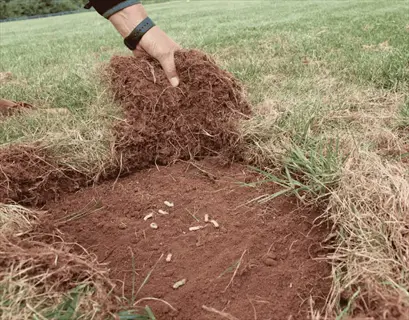
Image source: Bing (Web (fair-use with source credit))
Before you buy anything, confirm grubs are actually present. Lawn damage has several lookalikes. Drought stress, fungal diseases, and dog urine spots can all mimic grub damage.
Treating for grubs when the real culprit is something else wastes money and applies unnecessary chemicals to your lawn.
[grub count lawn inspection]
The Sod Lift Test
Cut a square foot of turf on three sides with a spade or sharp trowel. Fold back the sod like opening a flap. Count the white grubs you see in the top two inches of soil and root zone.
Do this in several spots around the affected area.
University extension guidelines typically say 10 or more grubs per square foot warrants treatment in a home lawn. Golf courses and athletic fields have lower thresholds because their root systems need to stay intact. But for a typical yard, fewer than five grubs per square foot is not worth treating.
The grass can handle that level of root feeding without visible damage. You're better off leaving them for the birds.
Check in late July through early September for the most accurate count. Earlier in the season, grubs are too small to see easily. Later in the fall, they've burrowed deeper and you'll underestimate the population.
Common Mistakes That Wreck Your Timing
The "April Cure" Trap
Spring is the most common time homeowners reach for grub treatment. It makes sense intuitively. You see damage in spring, you assume treatment is needed.
But spring grubs are the previous year's survivors. They're large, mature, and actively pupating into adult beetles. They cause very little root damage at this stage because they're transforming, not feeding aggressively.
And they're about to fly away anyway.
Treating in April or May for grubs you can see now is the single most common timing error. It achieves nothing. The grubs die, but they were two weeks from emerging as beetles regardless.
And the preventive window for the current year's hatching grubs is still months away. You've wasted your product and exposed your lawn to chemicals for zero benefit.
The "One and Done" Fallacy
Some homeowners convince themselves that a single fall curative application covers them for the entire following year. It doesn't. Curative products have short residual activity, measured in days or weeks.
They kill the grubs that are present at application time. They do not protect against next year's hatch.
If you use a curative product in September, you'll need a preventive application the following summer. The two approaches are separate tools for separate windows. Do not confuse them.
The "I'll Just Water It In Later" Problem
Almost every grub product requires water to activate. The granules need moisture to break down and move into the soil. But "later" is not good enough.
The product sits on the grass surface, exposed to sunlight and heat. It degrades. It gets blown away by the wind.
It gets tracked inside by your kids and pets.
Apply when rain is expected within 24 hours, or water in immediately with a sprinkler. Half an inch of irrigation is the standard. If you're using a spreader to apply granules, set it to the correct calibration for the product.
Over-applying wastes money. Under-applying leaves gaps in coverage.
Real-World Timing by Region: A Quick Reference
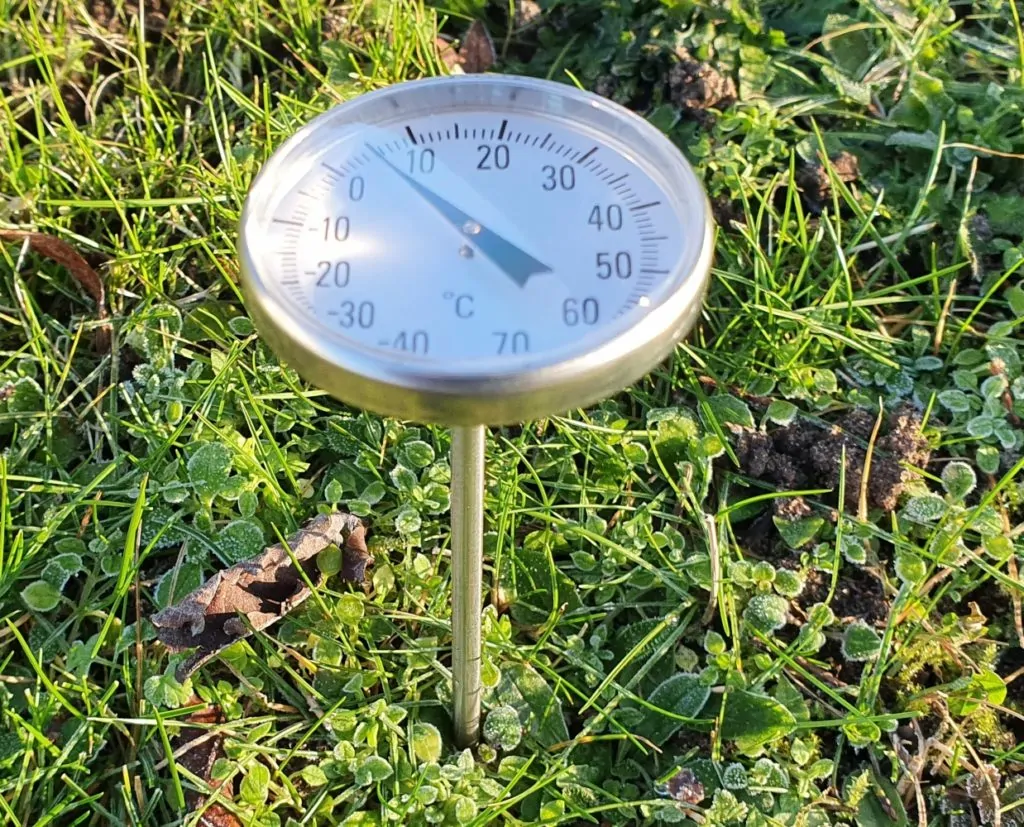
Image source: Bing (Web (fair-use with source credit))
[soil thermometer lawn]
The best tool for precise timing is a soil thermometer. Push it four inches into the lawn. Read the temperature between 8 and 10 AM for consistency.
Target the preventive application window for when soil temperatures are consistently between 55 and 60 degrees Fahrenheit. That's roughly two to three weeks before the eggs hatch.
| Region | Preventive Window | Curative Window | Soil Temp Trigger |
|---|---|---|---|
| Northeast | Mid June to Mid July | Late July to August | 55-60°F at 4 inches |
| Midwest | Mid June to Mid July | Late July to August | 55-60°F at 4 inches |
| Pacific Northwest | Late June to Mid July | August to Early Sept | 55-60°F at 4 inches |
| Transition Zone | Late June to Late July | August to Early Sept | 55-60°F at 4 inches |
| Deep South | July to Early August | Late August to Sept | 60-65°F at 4 inches |
These are starting points. The actual dates shift by a week or two depending on the specific year's weather. A cool, wet spring pushes everything later.
An early hot spell accelerates the lifecycle. Check soil temperature annually rather than relying on the calendar alone.
Product Selection Based on Your Time Window
Your timing determines your product. It's that simple.
| Time of Year | Product Type | Active Ingredient Example | Application Notes |
|---|---|---|---|
| Mid June to Mid July | Preventive | Imidacloprid, Chlorantraniliprole | Apply before eggs hatch. Water in within 24 hours. |
| Late July to August | Curative | Trichlorfon (Dylox) | Apply when grubs are small. Water in immediately. |
| Late August to September | Curative or Nematodes | Trichlorfon or beneficial nematodes | Nematodes require evening application and moist soil. |
| Spring (April to May) | Do not treat | None | Spring grubs will emerge as beetles soon. No benefit. |
Do not mix product types. Do not apply a curative product in June expecting it to last all summer. Do not apply a preventive product in September expecting it to kill grubs that are already large.
Match the chemistry to the lifecycle stage.
What to Do If You Missed the Window Entirely
You missed the preventive window. And now you're past the curative window. Grubs are large.
Soil is cooling. What do you do?
Accept the damage. The grubs will continue feeding until soil temperatures drop below 60 degrees, then they'll burrow deep and overwinter. The lawn will look rough.
The patches may continue to pull up. But applying insecticide at this point is a waste of money.
Focus on recovery instead. Rake out loose dead thatch. Topdress with a thin layer of compost or screened topsoil.
Overseed with a compatible grass species. Water the new seed daily until established. Then plan your preventive application for next June.
If you hate the idea of skipping treatment entirely, late fall applications of certain preventive products have shown some effectiveness in reducing next spring's overwintering population. Research from turfgrass programs at Rutgers and Penn State suggests that very late applications, think November, of chlorantraniliprole can provide some spring control. But this is a niche strategy with mixed results.
Most homeowners are better off waiting for the proper window and doing it right.
Frequently Asked Questions
Can I treat for grubs in the spring?
Spring treatment targets grubs that are about to transform into adult beetles. They cause little root damage at that stage and will soon emerge from the soil anyway. Killing them in spring does not prevent the current year's hatch.
Save your money and apply in summer instead.
How late in the fall can I treat for grubs?
You can treat into early September with curative products. Beyond that, grubs grow too large and burrow too deep for surface applications to reach them. Late fall preventive applications exist but are an experimental strategy, not a standard recommendation.
Will grubs go away on their own without treatment?
Not reliably. Grub populations fluctuate year to year based on weather, predators, and beetle activity. Some years the population crashes naturally.
Other years it explodes. If you've had damage before, do not gamble on nature handling the problem. Plan a preventive application.
How do I know if I have grubs or a lawn disease?
Pull up a section of damaged turf. Grubs are visible curled in the soil just below the root zone. Disease damage shows no insects present.
The grass blades themselves have lesions, spots, or mold. The sod lift test is the only sure way to tell.
Do I need to treat my whole lawn or just the damaged spots?
Treat the whole lawn for preventive applications. Grubs are distributed unevenly. A spot treatment misses areas where eggs were laid but damage hasn't appeared yet.
For curative applications, spot treating damaged areas plus a five foot buffer zone is usually sufficient if you've verified nearby sections are clear.
Can I use the same spreader for grub treatment that I use for fertilizer?
Yes, but you need to clean it thoroughly between uses. Grub insecticides are fine powders or small granules that stick to spreader hoppers. Residual chemicals can react with fertilizer and cause caking or uneven application.
Flush the spreader with water and dry it completely before switching products. Proper spreader maintenance extends the life of your equipment.
Will grub treatment kill earthworms?
Some products do. Neonicotinoids like imidacloprid have shown negative effects on earthworm populations in research studies. Chlorantraniliprole is considered safer for earthworms, with studies showing minimal impact at labeled rates.
If maintaining soil biology is a priority, choose a product with lower earthworm toxicity and apply only when grub populations genuinely exceed threshold levels. Healthy soil with plenty of organic matter can support earthworms and grass roots together.
How long does grub treatment take to work?
Preventive products take weeks to work. They build up in the soil and kill grubs as they hatch and begin feeding. Curative products like Dylox work within 24 to 72 hours of application and proper watering.
Nematodes take three to seven days to infect and kill grubs. None of them produce instant results. Do not reapply after two days because you don't see dead grubs yet.
Give the product the full labeled window before evaluating effectiveness.
Should I water the lawn before or after applying grub treatment?
Both, ideally. Water the lawn lightly before application to help move the spray or granules through the grass canopy. Apply the product.
Then water in with half an inch of irrigation within 24 hours for preventive products or immediately for curative products. The pre-application moisture helps soft granules and prevents them from bouncing off dry soil. The post-application water moves the active ingredient down to the root zone where grubs feed.
Do I need to keep kids and pets off the lawn after treatment?
Check the product label for the specific reentry interval. Most modern products allow reentry once the spray or granules have dried, typically one to two hours. For granular products, keep kids and pets off until the granules are watered in and no longer visible on the grass surface.
Curative products like Dylox typically have shorter reentry intervals than some older preventive chemistries. When in doubt, wait 24 hours before letting anyone back on the lawn.
What happens if I apply grub treatment and it rains right after?
Light rain within a few hours of application is actually beneficial. It helps wash the product off the grass blades and into the soil. Heavy downpours, the kind that produce runoff, can wash the product away entirely before it soaks in.
If you get a heavy rain within 30 minutes of applying, check the label for instructions. Some products recommend reapplication if visible granules are washed into the street or drainage areas.
Can I overseed and apply grub treatment at the same time?
No. Grub insecticides, even preventive types, can inhibit grass seed germination and seedling establishment. Apply grub treatment at the correct timing for the lifecycle.
Then wait at least two to four weeks before overseeding, depending on the product label. For fall overseeding in cool-season lawns, apply a preventive product in June or July, then seed in September. The two jobs do not need to conflict if you stagger them properly.
Resume from that exact point.
How do I know if the grub treatment actually worked?
Wait two weeks after application before evaluating. For preventive products, you won't see dead grubs at all, and that's a good sign. The goal is that no grubs appear in the first place.
For curative products, do a follow-up sod lift test in the same area. Pull back the turf in a spot you treated. Count the number of live grubs.
If you find fewer than five per square foot, the treatment worked. If you still find ten or more, consider a second application according to the product label instructions. Factor in the time of year though.
If you treated in September and grubs are still present, they may be too large for a second curative application to work.
Is grub treatment necessary every single year?
No. Base your decision on actual evidence rather than a calendar. If you did a preventive application and had zero damage all season, skip the treatment the following year and simply monitor.
If beetles were heavy and you saw damage despite preventive treatment, continue the program. The goal is to use the minimal effective intervention. This approach reduces chemical exposure, saves money, and maintains a healthier soil ecosystem.
Final Decision Guide: A Simple Flow You Can Follow
If this all feels like a lot to juggle, here's a quick decision flow to simplify the process. Run through these questions in order.
- Do you have visible damage right now? Spongy patches, peeling sod, skunks digging? , Yes: Move to question 2.
, No: Move to question 3.
- Is it July through early September? , Yes: Apply a curative product (Dylox or similar) immediately. Water in. Plan to reseed damaged areas in fall.
, No: It's spring? Leave the grubs alone. It's late fall?
Accept the damage and plan preventive treatment next June.
- Did you have grub damage last year? , Yes: Apply a preventive product in mid June to mid July.
, No: Skip treatment. Monitor beetle activity in July. Only treat if you see heavy egg-laying.
- Do you prefer biological options over chemical insecticides? , Yes: Apply beneficial nematodes in late August or September when soil is moist and temperatures are between 50 and 70 degrees. Reapply annually for best results.
, No: Stick with chemical preventive products during the June to July window.
That's the entire process simplified. The most important takeaway is this: timing matters far more than product choice or application technique. You can buy the most expensive grub killer on the market, but apply it in April and you've wasted every dollar.
You can use a budget-friendly product, but apply it at the right moment in late July and you'll see excellent results.
For homeowners managing a whole yard, combining good timing with routine lawn care practices makes the biggest difference. Regular mowing at the correct height, proper watering that encourages deep roots, and annual soil testing all help the grass withstand low to moderate grub feeding without visible damage. A healthy lawn can tolerate a few grubs.
A stressed lawn collapses under the same pressure.
Think of grub treatment as one tool in your overall lawn care toolbox, not the entire solution. Used correctly at the right time it works beautifully. Used incorrectly it's an expensive mistake that accomplishes nothing.
Now you know the difference.
What About Repeating Treatment for a Second Wave?
Some seasons bring a second flush of grubs. This happens when adult beetles emerge over a long period, laying eggs for weeks rather than a single concentrated burst. You applied a curative product in August.
You saw dead grubs. Then three weeks later, fresh damage appears.
That is a second wave. And yes, it happens.
Preventive products handle this scenario better than curative ones. A single preventive application of chlorantraniliprole provides 12 to 16 weeks of residual control. It covers the entire hatching window.
Curative products like Dylox only kill what is present at application time. They have no residual activity beyond a few days.
If you used a curative product and get a second wave, you need to treat again. Follow the same process. Confirm grubs are present with the sod lift test.
Apply the product. Water it in. Expect 24 to 72 hours for results.
The better approach long term is switching to a preventive program next year. One application in late June covers the entire season. You do not chase waves.
You stop them before they start.
Local Regulations and Environmental Considerations
Grub control products fall under pesticide regulations that vary by state and municipality. Some areas restrict neonicotinoids like imidacloprid due to concerns about pollinator health. Others require licenses for certain product types.
The product label is the law. Read it before opening the bag.
Beyond compliance, there are real environmental tradeoffs. Broad-spectrum insecticides do not only kill grubs. They affect beneficial insects, soil organisms, and anything else that contacts the treated area.
Using them only when threshold levels are exceeded reduces unnecessary harm.
Some regions now require buffer zones near waterways. Do not apply grub treatment within 15 feet of lakes, streams, or drainage ditches. Runoff carries the chemicals directly into aquatic habitats where they persist and accumulate.
For homeowners who want to minimize chemical use, biological controls and cultural practices offer effective alternatives. Maintaining a healthy lawn through proper mowing height, deep infrequent watering, and appropriate fertilization reduces grub damage even when grubs are present. A dense root system withstands feeding pressure that would destroy a weak lawn.
Repairing Damage After Successful Treatment
Killing the grubs is only half the job. The damaged turf does not magically recover on its own. Those roots are severed.
The grass is dead or dying.
Wait until the curative product has fully dried and the treated area is safe for activity. Then rake out the loose dead thatch. You want bare soil exposed in the damaged spots.
Topdress with a quarter inch of compost or screened topsoil. This gives the new seed a nutrient-rich bed.
Overseed with a grass species that matches your existing lawn. For cool-season lawns, late August through September is ideal. The soil is still warm enough for quick germination.
The air temperatures are cooler, reducing water stress. The new grass has six to eight weeks to establish before winter dormancy.
Water the seeded areas daily, keeping the top inch of soil consistently moist. Do not let it dry out. Germination takes 7 to 14 days depending on species and temperature.
Once the new grass reaches three inches tall, you can reduce watering frequency and mow at the highest setting on your mower.
Avoid applying any crabgrass preventer or pre-emergent herbicide in the same area for at least six weeks after seeding. Those products prevent all seed germination, including your new grass seed.
How Weather Patterns Shift Treatment Timing
Warm springs push the beetle lifecycle earlier. Cool, wet springs delay everything. The calendar dates in this article are starting points, not absolute rules.
If your region experiences an unusually warm May and June, expect adult beetles to emerge earlier. Move your preventive application window up by one to two weeks. If spring stays cold and wet through June, shift everything later by a similar margin.
The most reliable indicator is not the calendar. It is soil temperature. Monitor it weekly starting in late May.
When the soil at four inches deep reaches 55 to 60 degrees consistently, you are two to three weeks from the optimal preventive application window. That gives you time to buy product and calibrate your spreader.
For curative treatments, monitor the calendar and inspect for small grubs starting in late July. If summer heat arrived early, start checking in mid July. If the season stayed cool, you can wait until early August.
Integrating Grub Treatment with the Rest of Your Lawn Care Routine
Grub treatment does not exist in isolation. It interacts with everything else you do to your lawn.
Fertilize on your normal schedule. Grub products and fertilizers are chemically compatible when applied separately. Do not mix them in the same spreader load unless the product label explicitly allows it.
Apply one, water it in, wait for the surface to dry, then apply the other.
Mowing continues normally. Do not bag clippings immediately after a granular grub treatment. Let the granules fall through the grass canopy to the soil.
Mow the next day as usual.
Aeration and overseeding wait until the grub treatment window has passed. For cool-season lawns, the ideal sequence is preventive grub control in June and July, then aeration and overseeding in late August through September. The two treatments complement each other perfectly when spaced correctly.
If you are dealing with a curative grub infestation in August, you can still overseed in September. Just give the curative product the full two weeks to work before you disturb the soil with aeration equipment.
Choosing Between Liquid and Granular Formulations
Granular products dominate the home lawn market. They are easier to apply with a standard broadcast spreader. They require less measuring and mixing.
You pour the bag into the spreader and walk.
Liquid formulations are more common in professional applications. They require a sprayer and careful calibration. They offer more precise coverage and better penetration through thick turf canopies.
You can also tank mix them with other products when the label allows.
For most homeowners, granular is the better choice. The margin for error is smaller. The equipment is simpler.
Matching your spreader to a quality push spreader designed for fine granules reduces waste and ensures even distribution.
Liquid products make sense for large lawns where a spray rig saves time. They also work better when heavy thatch prevents granules from reaching the soil. If you have more than half an inch of thatch buildup, consider a liquid formulation or dethatch first.
When to Call a Professional
Some situations call for a licensed applicator. Heavy infestations across large areas. Properties near sensitive waterways where runoff regulations apply.
Lawns that have failed to respond to two consecutive treatment attempts.
Professional applicators have access to products not available to homeowners. They also carry liability insurance and know the local regulations. If you value convenience over cost, a professional service handles the entire process from scouting to application to follow-up.
The trade-off is cost. Professional grub treatment runs between 50 and 100 dollars per application for an average suburban lawn. Compare that to 15 to 30 dollars for a bag of granular product that covers the same area for multiple seasons.
The professional route adds value through expertise and convenience, not through better chemistry.
Environmental Impact and Responsible Use
Grub insecticides affect more than grubs. Neonicotinoids persist in soil and water. They accumulate in pollen and nectar.
They harm bees, beneficial beetles, and aquatic insects.
Use them responsibly. Apply only when threshold levels are exceeded. Never treat as a blanket preventive measure without evidence of risk.
Choose chlorantraniliprole over imidacloprid when possible. Research from multiple university turfgrass programs indicates chlorantraniliprole has lower toxicity to earthworms and beneficial insects while maintaining excellent grub control.
Water runoff is the primary path for environmental contamination. Do not apply before heavy rain. Do not treat slopes that drain into waterways.
Leave a buffer strip of untreated grass along ponds, streams, and drainage ditches.
What About Organic Lawns and Grub Management
Organic lawn care handles grubs differently. You cannot use synthetic insecticides. That rules out both preventive and curative chemical options.
Beneficial nematodes become your primary tool. Apply them in late summer when soil is moist and temperatures are between 55 and 70 degrees. They are living organisms, not chemicals.
They require careful handling and proper storage. But they work.
Milky spore offers long-term suppression for Japanese beetle grubs specifically. It takes one to three years to build up in the soil. It does not work on other white grub species.
It is worth considering only if Japanese beetles are your confirmed species.
Cultural practices matter more for organic lawns. Maintain deep, infrequent watering to encourage deep root growth. Mow at three to four inches.
The taller grass shades the soil and reduces moisture evaporation. Grubs prefer dry soil for egg laying. A healthy, well-watered lawn is less attractive to egg-laying females.
Final Summary: One Paragraph You Can Bookmark
Treat preventively in late June to mid July if you had damage last year or see heavy beetle activity. Treat curatively in August if you confirm grubs now. Skip spring treatments entirely.
Use the sod lift test to confirm grubs are present before applying anything. Water in every application within 24 hours. Repair damaged areas with compost and seed after treatment.
And remember that a healthy lawn tolerates light grub pressure without any chemical help at all.