
Planting Bermuda grass seed successfully hinges on optimal timing, primarily dictated by soil temperature. The best window is late spring to early summer, when soil consistently stays above 65°F (18°C), ensuring quick germination and strong root development before cooler weather. Proper soil preparation and consistent watering are also crucial for establishing a vibrant, resilient Bermuda lawn.
When Can I Plant Bermuda Grass Seed?
Welcome to the world of lush, green lawns! If you’re dreaming of a vibrant, resilient Bermuda grass lawn, you’ve come to the right place. Bermuda grass is a fantastic choice for many homeowners, especially in warmer climates, thanks to its durability, heat tolerance, and beautiful appearance. But getting it established from seed can feel a bit like a mystery if you don’t know the secrets.
The biggest secret? Timing. When you plant Bermuda grass seed is often more critical than how you plant it. Get the timing right, and you’re well on your way to success. Get it wrong, and you might end up with patchy growth, wasted effort, and disappointment.
In this comprehensive guide, we’ll walk you through everything you need to know about when to plant Bermuda grass seed. We’ll cover the golden rule of soil temperature, the ideal seasons, and how regional climates play a role. Beyond “when,” we’ll also dive into the essential steps of preparing your soil, planting the seeds, and nurturing your new lawn to ensure the best possible start. Let’s dig in!
Key Takeaways
- Optimal Soil Temperature is Key: Bermuda grass seed germinates best when soil temperatures consistently range from 65-75°F (18-24°C). This usually means late spring or early summer after the last frost.
- Timing by Season: The prime planting season for Bermuda grass seed is late spring through early summer. Avoid planting too early when frost is still a risk, or too late when temperatures will soon drop.
- Regional Differences Matter: Consider your specific USDA hardiness zone and local climate. Warmer southern regions might have a longer planting window compared to transition zones.
- Thorough Soil Preparation is Crucial: Before seeding, conduct a soil test, clear debris, and amend the soil as needed to provide the best environment for seed establishment.
- Consistent Watering is Essential Post-Planting: After spreading the seed, keep the top inch of soil continuously moist for 2-3 weeks until germination and initial growth are well underway.
- Patience and Persistence Pay Off: Bermuda grass can take 7-30 days to germinate. Don’t get discouraged if you don’t see immediate results; consistent care is vital.
The Golden Rule: Soil Temperature Is Everything
When it comes to successfully planting Bermuda grass seed, there’s one factor that trumps all others: soil temperature. Bermuda grass is a warm-season grass, and its seeds need specific conditions to wake up and sprout.
Think of it this way: just like you wouldn’t plant a tropical flower in the middle of winter, you shouldn’t plant Bermuda grass seed in cold soil. Cold soil tells the seeds to stay dormant, or worse, it can cause them to rot before they even get a chance to germinate.
The sweet spot for Bermuda grass seed germination is when soil temperatures consistently range from 65°F to 75°F (18°C to 24°C). While some germination can occur at temperatures as low as 60°F, it will be much slower and less robust. Below 60°F, germination is unlikely, and you’re risking your seeds.
How to Measure Soil Temperature
You might be wondering, “How do I know what my soil temperature is?” It’s simpler than you think!
- Use a Soil Thermometer: This is the most accurate method. You can purchase a soil thermometer at most garden centers or online. Insert the thermometer about 2-3 inches deep into the soil.
- Check Daily: Take readings in the morning, midday, and evening for a few days to get an average. You’re looking for consistent temperatures within that 65-75°F range, not just a momentary peak.
- Consider Air Temperature: As a general rule of thumb, when daytime air temperatures consistently reach 75-80°F (24-27°C) for several days, your soil temperature is likely getting close to the ideal range. However, this is just an estimate, and a soil thermometer is always best.
When to Plant Bermuda Grass Seed: The Seasonal Sweet Spot
Understanding soil temperature helps us pinpoint the best time of year. For most regions, the ideal window for planting Bermuda grass seed is late spring to early summer.
Late Spring to Early Summer: The Prime Window
This period usually falls between April and July, depending on your specific climate zone. Here’s why this timeframe is perfect:
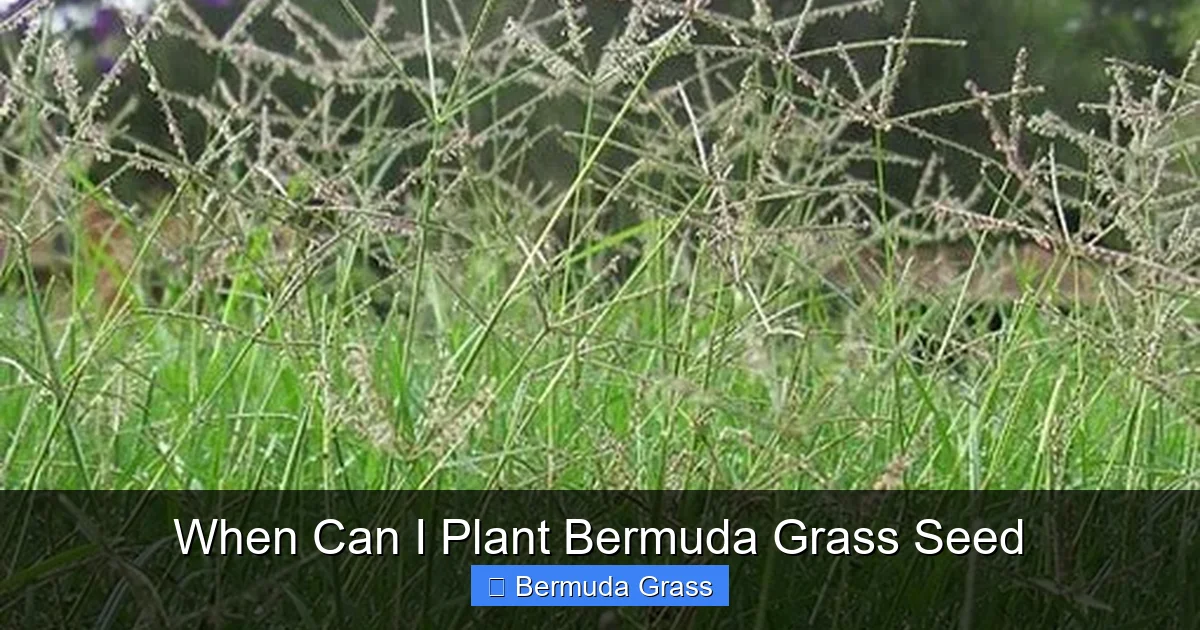
Visual guide about When Can I Plant Bermuda Grass Seed
Image source: backgarden.org
- Post-Frost Protection: By late spring, the danger of the last frost has typically passed. Young Bermuda grass seedlings are very tender and can be easily damaged or killed by frost.
- Consistent Warmth: The ground has had ample time to warm up from winter and is consistently within that optimal 65-75°F range, promoting rapid and strong germination.
- Long Growing Season Ahead: Planting in late spring/early summer gives your Bermuda grass seed a long, full growing season to establish a deep, robust root system before the cooler temperatures of fall and winter arrive. This is crucial for its survival during dormancy.
Why Avoid Planting Too Early or Too Late?
- Planting Too Early (Early Spring): If you plant when soil temperatures are still cool, your Bermuda grass seed will either fail to germinate, or germinate very slowly and weakly. These struggling seedlings will be more susceptible to disease, pests, and competition from weeds, which often thrive in cooler conditions than Bermuda.
- Planting Too Late (Late Summer/Fall): While the soil might still be warm enough in late summer, planting Bermuda grass seed at this time doesn’t give it enough time to fully establish before the first frost. The young grass won’t have the energy reserves or root depth to survive the winter dormancy, leading to widespread die-off.
Regional Considerations: Adjusting Your Schedule
The “late spring to early summer” window isn’t a rigid date on the calendar for everyone. Your specific location plays a significant role:
- Deep South (USDA Zones 8-10): In very warm regions, your planting window might open as early as late March or April and extend well into July. You’ll have a longer period of ideal soil temperatures.
- Transition Zone (USDA Zones 6-7): This is where it gets trickier. The transition zone experiences both hot summers and cold winters. Here, timing is even more critical. You’ll typically aim for late May to mid-July. Planting too early risks frost, and too late risks insufficient establishment before winter. You’ll need to monitor soil temperatures carefully.
Always check your local agricultural extension office or a trusted garden center for specific recommendations tailored to your immediate area. They can often provide historical frost dates and general planting windows.
Preparing Your Canvas: Essential Pre-Planting Steps
Once you’ve determined the ideal time to plant your Bermuda grass seed, the next crucial step is preparing your soil. Proper preparation creates the perfect environment for your seeds to thrive. Don’t skip these steps; they significantly impact your success!
Step 1: Soil Testing and Amendments
A soil test is your lawn’s health check-up. It’s inexpensive and provides invaluable information.
- Why Test? A soil test tells you your soil’s pH level and nutrient content (nitrogen, phosphorus, potassium, and micronutrients). Bermuda grass prefers a soil pH between 6.0 and 7.0.
- How to Test: You can buy a home test kit, but for more accurate results, send a sample to your local university extension office. They’ll give you a detailed report and recommendations.
- Amend as Needed: Based on the test results, amend your soil. If the pH is too low (acidic), add lime. If too high (alkaline), add sulfur. Incorporate organic matter like compost to improve soil structure and drainage. Do this several weeks before planting to allow amendments to work into the soil.
Step 2: Clearing the Area
Your new Bermuda grass needs a clean slate to grow without competition.
- Remove Weeds: Get rid of all existing weeds, grass, and debris. For a completely new lawn, you might consider using a non-selective herbicide (like glyphosate) according to package directions, waiting the recommended time before planting. Alternatively, you can physically remove old turf using a sod cutter or by tilling.
- Clear Debris: Rake up any rocks, sticks, leaves, or other junk. These can hinder seed-to-soil contact and proper germination.
Step 3: Grading and Leveling
A smooth, even surface promotes uniform growth and proper drainage.
- Fill Low Spots: Use topsoil to fill in any depressions where water might collect. Water pooling can lead to disease or uneven germination.
- Smooth High Spots: Break up any clods of soil and rake the area to create a smooth, level surface. A landscape rake works wonders for this.
- Gentle Slope: Ensure a slight slope away from your house or structures to direct rainwater drainage.
Step 4: Initial Watering
Before you even sprinkle the first seed, give the prepared area a good watering.
- Moist Soil, Not Saturated: The goal is to moisten the top 4-6 inches of soil. This helps create a welcoming environment for the seeds and prevents them from drying out immediately after planting.
- Allow to Drain: Let the water soak in and the surface dry slightly before you start seeding. You don’t want to plant into muddy soil.
The Big Day: Planting Your Bermuda Grass Seed
With your soil prepped and the timing just right (remember that 65-75°F soil temperature!), it’s time for the exciting part: planting your Bermuda grass seed.
Step 1: Choose Quality Seed
Not all Bermuda grass seed is created equal. Invest in quality!
- Improved Varieties: Look for improved or “hulled” Bermuda grass seed varieties. These often have better germination rates, faster establishment, and superior turf quality compared to common Bermuda grass.
- Coated vs. Uncoated: Coated seeds are often treated with fungicides and can help with moisture retention, potentially boosting germination. They also tend to be heavier, making them easier to spread evenly.
- Check Purity and Germination Rates: Read the label! Look for high purity (meaning less weed seed) and high germination rates (e.g., 85% or higher).
Step 2: Spreading the Seed Evenly
Even distribution is key for a uniform lawn.
- Use a Spreader: A broadcast or rotary spreader is ideal for distributing Bermuda grass seed evenly. Calibrate your spreader according to the manufacturer’s instructions for your specific seed type and desired seeding rate.
- Recommended Seeding Rate: Typically, you’ll use about 1-2 pounds of Bermuda grass seed per 1,000 square feet for a new lawn. Check your seed package for exact recommendations.
- Cross-Hatch Pattern: To avoid skips, apply half the seed in one direction (e.g., north to south) and the other half perpendicular to the first direction (e.g., east to west).
Step 3: Lightly Raking or Rolling
Once the seed is down, it needs to be in good contact with the soil.
- Light Raking: Gently rake the seeded area to barely cover the seeds with about 1/8 to 1/4 inch of soil. You don’t want to bury them too deep; Bermuda grass seed needs light to germinate.
- Light Rolling: If you have a lawn roller, a very light pass can help ensure good seed-to-soil contact without compacting the soil too much. Avoid heavy rolling.
Step 4: Initial Watering
The first watering after seeding is critical.
- Gentle and Thorough: Water immediately after planting using a fine spray nozzle or a sprinkler that produces a gentle mist. You want to thoroughly moisten the top 1/2 inch of soil without washing away the seeds.
- Consistency is Key: This first watering sets the stage for continuous moisture, which is vital for Bermuda grass seed germination.
Nurturing Your New Lawn: Post-Planting Care
You’ve planted your Bermuda grass seed, now what? The weeks following planting are just as important as the planting itself. Consistent care will ensure your seeds sprout and grow into a healthy, established lawn.
Consistent Watering is Paramount
This is probably the most critical step after planting.
- Keep It Moist: For the first 2-3 weeks, or until the Bermuda grass seedlings are well established, you must keep the top 1/2 to 1 inch of soil consistently moist. This usually means watering lightly 2-3 times a day, especially during warm, sunny weather. Avoid letting the soil surface dry out completely.
- As Grass Grows: Once the grass starts to grow and reach about 1 inch tall, you can gradually reduce watering frequency but increase the duration, encouraging deeper root growth. Aim for one deep watering every 1-2 days, depending on weather.
First Fertilization
Give your new Bermuda grass seedlings a boost.
- Starter Fertilizer: Apply a “starter fertilizer” at the time of planting or shortly after. These fertilizers are typically high in phosphorus, which promotes strong root development in young grass.
- Follow Instructions: Always follow the product label for application rates.
Weed Control
Weeds are the arch-nemesis of new lawns.
- Pre-Emergents: Avoid using pre-emergent herbicides when planting Bermuda grass seed, as they prevent all seeds (including your grass seed) from germinating. You’ll need to wait until your lawn is well established (at least 2-3 months) before applying pre-emergents.
- Manual Removal: For the first few weeks, the best way to deal with weeds is to pull them by hand. Be gentle around the delicate new grass.
- Post-Emergents: Once your Bermuda grass has been mowed a few times and is more established, you can consider using selective post-emergent herbicides designed for Bermuda grass to control broadleaf weeds. Always read labels carefully.
First Mowing
Don’t be too eager to mow!
- Wait for Growth: Allow your new Bermuda grass to reach about 2 inches in height before its first mow. This shows it has developed enough strength.
- Sharp Blade, High Setting: Use a mower with a very sharp blade to avoid tearing the young grass. Set your mower to its highest setting for the first few cuts.
- Mow When Dry: Always mow when the grass is dry to prevent clumping and disease.
Troubleshooting Common Bermuda Grass Seed Challenges
Even with the best preparation, sometimes things don’t go exactly as planned. Here are a couple of common issues you might encounter and how to address them.
Poor Germination
If your Bermuda grass seed isn’t sprouting as expected, consider these factors:
- Soil Temperature: This is the most common culprit. If soil temperatures dipped below 65°F (18°C) after planting, germination will be slow or non-existent. There’s not much you can do but wait for warmer weather, or consider reseeding if it stays cold for too long.
- Lack of Moisture: Did the top layer of soil dry out? Even a few hours of dryness during the critical germination phase can kill delicate embryos. Increase your watering frequency.
- Seed Depth: Were the seeds buried too deep? Bermuda grass seed needs light. If covered by more than 1/4 inch of soil, they might struggle to emerge. You might need to lightly scratch the surface or reseed.
- Old Seed: Check the “packed for” date on your seed. Old seed can have significantly reduced germination rates.
Weed Invasion
Weeds are persistent, especially when starting a lawn from seed.
- Prevention: Thorough soil preparation to remove existing weeds is your best defense. Also, avoid using topsoil or compost that might be contaminated with weed seeds.
- Identification: Learn to identify common weeds in your area. This helps you choose the right control method.
- Manual Removal: For new lawns, hand-pulling is often the safest method. Get them when they’re small before they can establish deep roots or go to seed.
- Herbicides: As mentioned, wait until your Bermuda grass is well-established (after several mowings, typically 2-3 months) before using any selective herbicides. Always ensure the product is safe for Bermuda grass.
Conclusion
Planting Bermuda grass seed successfully is a rewarding project that transforms your outdoor space. The key takeaway from this guide is clear: timing, driven by optimal soil temperature, is paramount. By waiting until soil temperatures are consistently between 65-75°F (18-24°C) – typically late spring to early summer – you give your Bermuda grass seed the best possible chance to germinate quickly and grow into a strong, healthy lawn.
Remember, success also relies on meticulous soil preparation, choosing quality seeds, and diligent post-planting care, especially consistent watering. While it requires patience and attention, the payoff is a beautiful, resilient Bermuda grass lawn that will provide years of enjoyment. Now that you know when and how, go forth and grow that dream lawn!