If you've ever tried to grow a lawn on sandy soil, you already know the struggle. Water disappears the second it hits the ground. Fertilizer washes through before the roots can grab it.
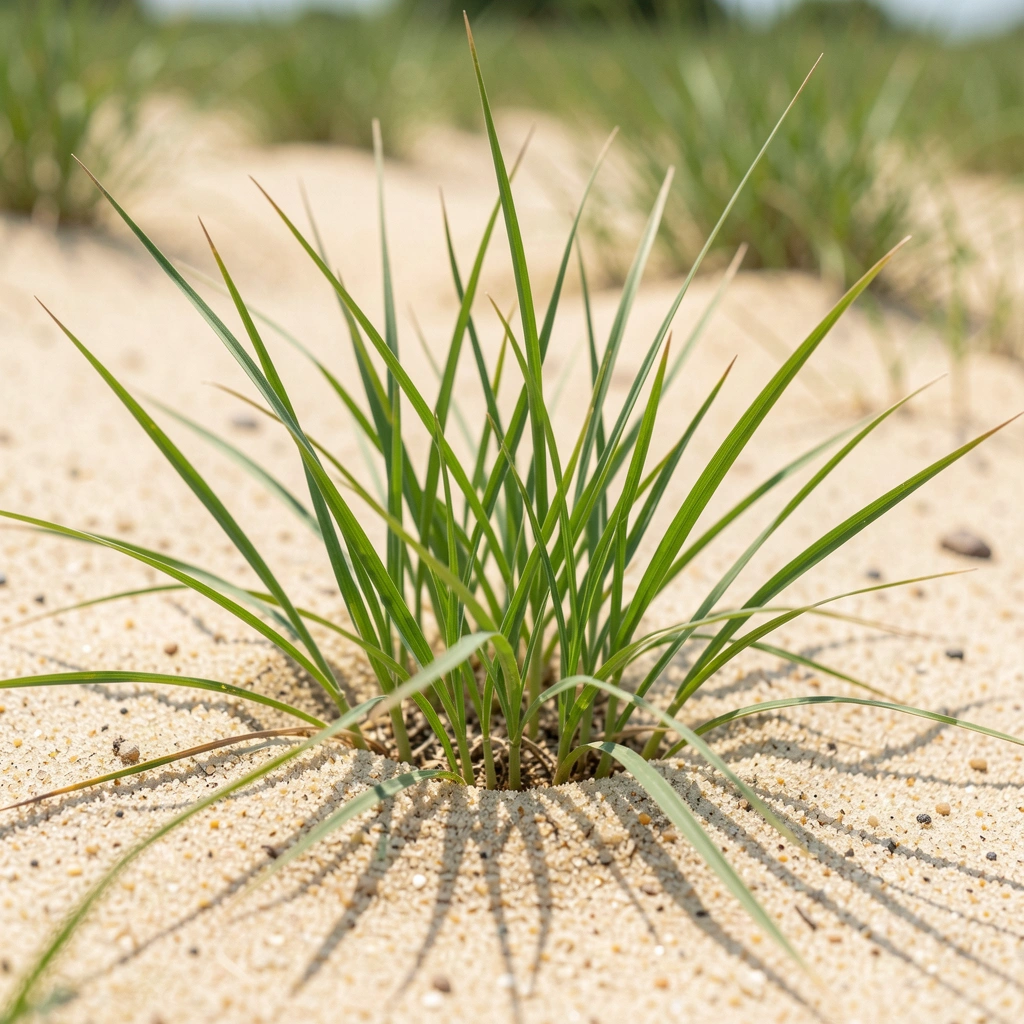
And half the grass seed you put down just blows away. So what grass grows best in sandy soil? The short answer is: deep-rooted, drought-tolerant species that thrive on fast drainage and low fertility.
But here's the thing, there's no single "best" grass for every sandy yard. Your climate, sun exposure, and how much traffic the lawn gets all change the answer. Per USDA soil texture classifications, sandy soil holds less than 0.1 inch of available water per inch of soil depth, compared to 0.2 inches for loam.
That means your grass choice matters more than almost any other factor. Let's walk through the options so you pick the right one the first time.
Quick Answer
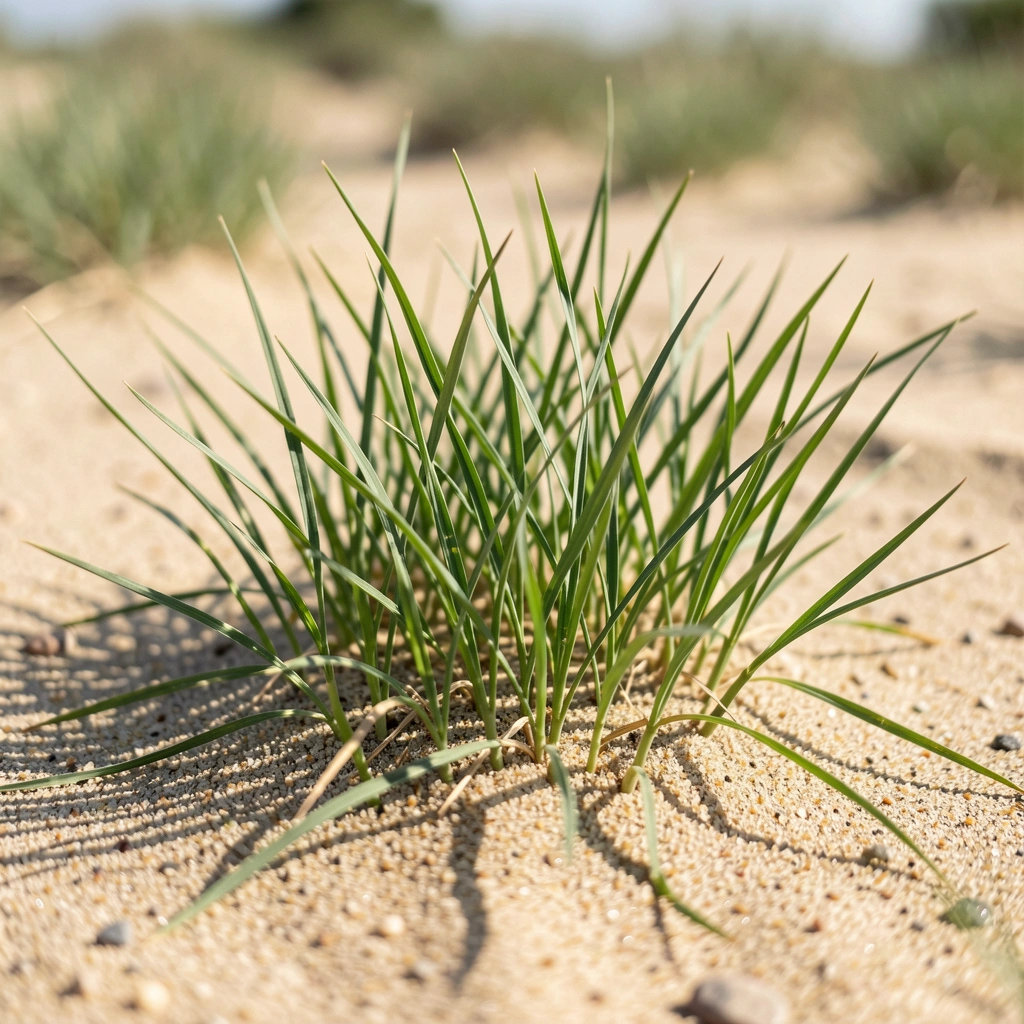
Bermuda grass works best for sunny, high-traffic sandy lawns. Tall fescue is the top choice for cooler climates with partial shade. Bahia grass thrives in low-fertility sand with minimal care.
Zoysia handles moderate shade and light traffic well. Centipede grass suits acidic, low-maintenance sandy soil in the Southeast. Pick based on your climate, sun, and how much you'll use the lawn.
The Real Problem with Sandy Soil (It's Not Just the Drainage)
Sandy soil drains fast. Everyone knows that. But the real issue isn't just water running through.
It's what that water takes with it.
Sandy soil has large particles with big gaps between them. Water flows through those gaps like a sieve. As it moves, it carries away nitrogen, potassium, and other nutrients before grass roots can absorb them.
This process is called leaching, and it's the number one reason grass struggles on sand.
The second problem is heat. Sand heats up faster and holds that heat longer than loam or clay. On a 90-degree summer afternoon, the surface of sandy soil can hit 120 degrees or more.
That cooks shallow-rooted grasses and forces them into survival mode instead of growing.
The third issue is stability. Sandy soil doesn't hold together well. Roots have a hard time anchoring, especially with bunch-type grasses that don't spread.
That's why you see thin, patchy lawns on sand more often than on heavier soils.
So the fix isn't just picking any grass. It's picking one built for these specific conditions. Let's look at the best options.
Quick Answer
Bermuda grass is the best all-around choice for sunny sandy lawns. Tall fescue wins for cooler climates with partial shade. Bahia grass needs the least water and fertilizer.
Zoysia handles moderate shade and light traffic. Centipede grass works for low-maintenance acidic sand in the Southeast. Match your choice to your climate, sun, and use.
The Real Problem with Sandy Soil (It's Not Just the Drainage)
Sandy soil drains fast. Everyone knows that. But the real issue isn't just water running through.
It's what that water takes with it.
Sandy soil has large particles with big gaps between them. Water flows through those gaps like a sieve. As it moves, it carries away nitrogen, potassium, and other nutrients before grass roots can grab them.
This process is called leaching, and it's the number one reason grass struggles on sand.
The second problem is heat. Sand heats up faster and holds that heat longer than loam or clay. On a 90-degree summer afternoon, the surface of sandy soil can hit 120 degrees or more.
That cooks shallow-rooted grasses and forces them into survival mode instead of growing.
The third issue is stability. Sandy soil doesn't hold together well. Roots have a hard time anchoring, especially with bunch-type grasses that don't spread.
That's why you see thin, patchy lawns on sand more often than on heavier soils.
So the fix isn't just picking any grass. It's picking one built for these specific conditions. Let's look at the best options.
Quick Answer
Bermuda grass is the best all-around choice for sunny sandy lawns. Tall fescue wins for cooler climates with partial shade. Bahia grass needs the least water and fertilizer.
Zoysia handles moderate shade and light traffic. Centipede grass suits low-maintenance acidic sand in the Southeast. Match your choice to your climate, sun, and use.
The Real Problem with Sandy Soil (It's Not Just the Drainage)
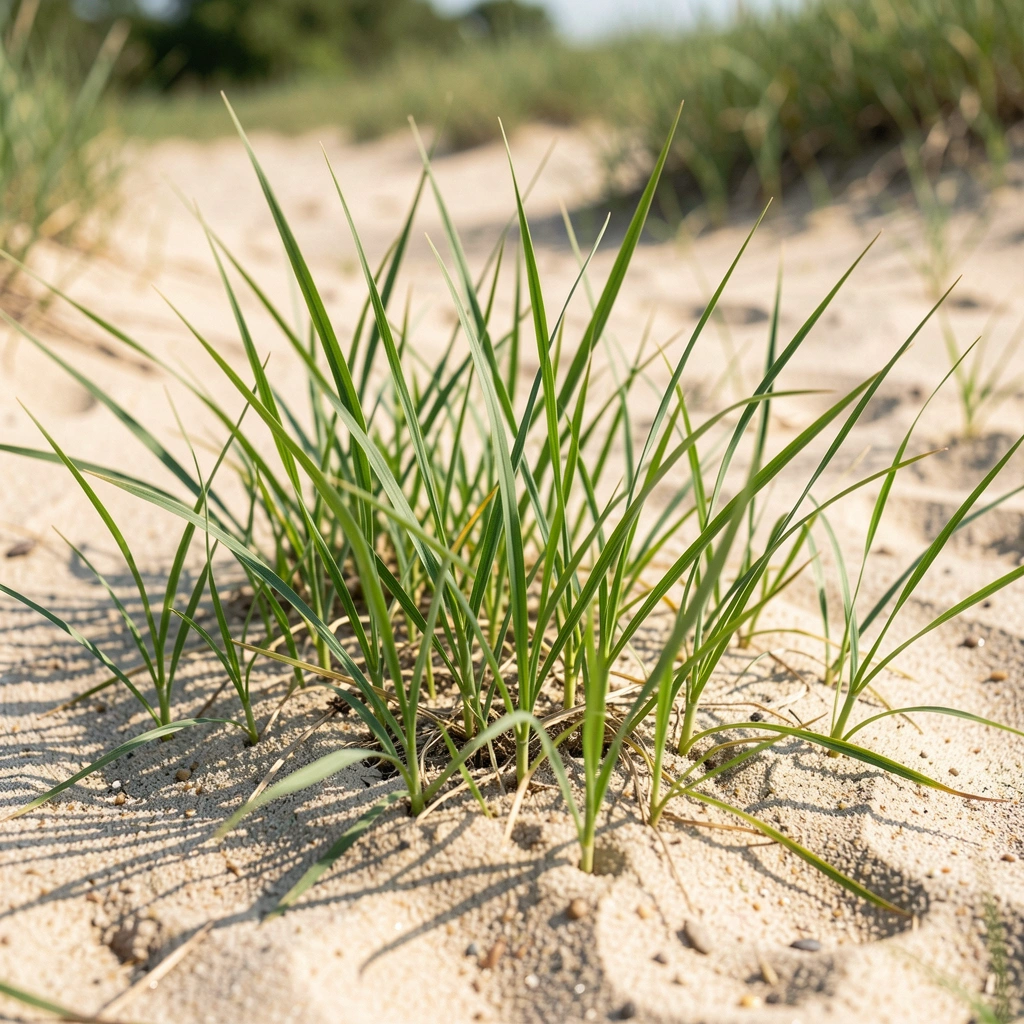
Sandy soil drains fast. Everyone knows that. But the real issue isn't just water running through.
It's what that water takes with it.
Sandy soil has large particles with big gaps between them. Water flows through those gaps like a sieve. As it moves, it carries away nitrogen, potassium, and other nutrients before grass roots can grab them.
This process is called leaching, and it's the number one reason grass struggles on sand.
The second problem is heat. Sand heats up faster and holds that heat longer than loam or clay. On a 90-degree summer afternoon, the surface of sandy soil can hit 120 degrees or more.
That cooks shallow-rooted grasses and forces them into survival mode instead of growing.
The third issue is stability. Sandy soil doesn't hold together well. Roots have a hard time anchoring, especially with bunch-type grasses that don't spread.
That's why you see thin, patchy lawns on sand more often than on heavier soils.
So the fix isn't just picking any grass. It's picking one built for these specific conditions. Let's look at the best options.
Quick Answer
Bermuda grass is the best all-around choice for sunny sandy lawns. Tall fescue wins for cooler climates with partial shade. Bahia grass needs the least water and fertilizer.
Zoysia handles moderate shade and light traffic. Centipede grass suits low-maintenance acidic sand in the Southeast. Match your choice to your climate, sun, and use.
The Real Problem with Sandy Soil (It's Not Just the Drainage)
Sandy soil drains fast. Everyone knows that. But the real issue isn't just water running through.
It's what that water takes with it.
Sandy soil has large particles with big gaps between them. Water flows through those gaps like a sieve. As it moves, it carries away nitrogen, potassium, and other nutrients before grass roots can grab them.
This process is called leaching, and it's the number one reason grass struggles on sand.
The second problem is heat. Sand heats up faster and holds that heat longer than loam or clay. On a 90-degree summer afternoon, the surface of sandy soil can hit 120 degrees or more.
That cooks shallow-rooted grasses and forces them into survival mode instead of growing.
The third issue is stability. Sandy soil doesn't hold together well. Roots have a hard time anchoring, especially with bunch-type grasses that don't spread.
That's why you see thin, patchy lawns on sand more often than on heavier soils.
So the fix isn't just picking any grass. It's picking one built for these specific conditions. Let's look at the best options.
Quick Answer
Bermuda grass is the best all-around choice for sunny sandy lawns. Tall fescue wins for cooler climates with partial shade. Bahia grass needs the least water and fertilizer.
Zoysia handles moderate shade and light traffic. Centipede grass suits low-maintenance acidic sand in the Southeast. Match your choice to your climate, sun, and use.
The Real Problem with Sandy Soil (It's Not Just the Drainage)
Sandy soil drains fast. Everyone knows that. But the real issue isn't just water running through.
It's what that water takes with it.
Sandy soil has large particles with big gaps between them. Water flows through those gaps like a sieve. As it moves, it carries away nitrogen, potassium, and other nutrients before grass roots can grab them.
This process is called leaching, and it's the number one reason grass struggles on sand.
The second problem is heat. Sand heats up faster and holds that heat longer than loam or clay. On a 90-degree summer afternoon, the surface of sandy soil can hit 120 degrees or more.
That cooks shallow-rooted grasses and forces them into survival mode instead of growing.
The third issue is stability. Sandy soil doesn't hold together well. Roots have a hard time anchoring, especially with bunch-type grasses that don't spread.
That's why you see thin, patchy lawns on sand more often than on heavier soils.
So the fix isn't just picking any grass. It's picking one built for these specific conditions. Let's look at the best options.
Quick Answer
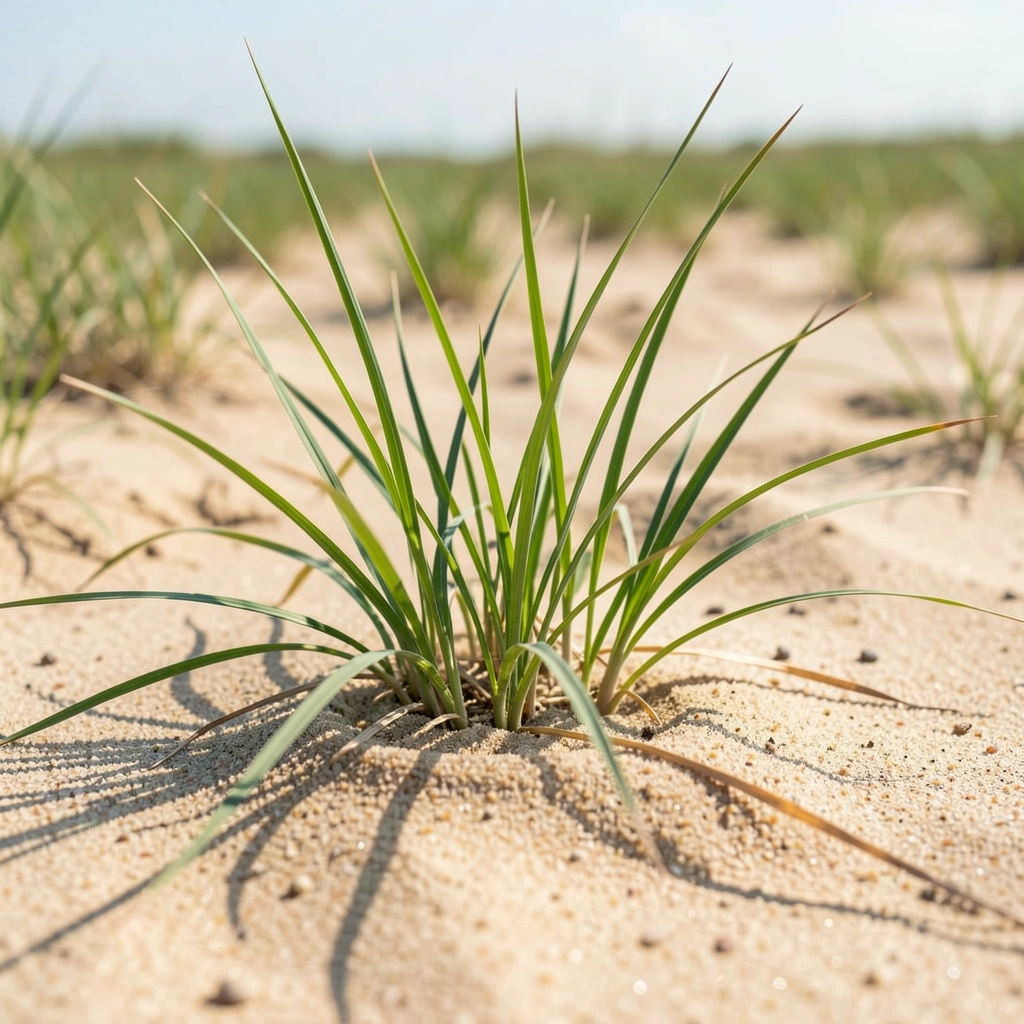
Bermuda grass is the best all-around choice for sunny sandy lawns. Tall fescue wins for cooler climates with partial shade. Bahia grass needs the least water and fertilizer.
Zoysia handles moderate shade and light traffic. Centipede grass suits low-maintenance acidic sand in the Southeast. Match your choice to your climate, sun, and use.
The Real Problem with Sandy Soil (It's Not Just the Drainage)
Sandy soil drains fast. Everyone knows that. But the real issue isn't just water running through.
It's what that water takes with it.
Sandy soil has large particles with big gaps between them. Water flows through those gaps like a sieve. As it moves, it carries away nitrogen, potassium, and other nutrients before grass roots can grab them.
This process is called leaching, and it's the number one reason grass struggles on sand.
The second problem is heat. Sand heats up faster and holds that heat longer than loam or clay. On a 90-degree summer afternoon, the surface of sandy soil can hit 120 degrees or more.
That cooks shallow-rooted grasses and forces them into survival mode instead of growing.
The third issue is stability. Sandy soil doesn't hold together well. Roots have a hard time anchoring, especially with bunch-type grasses that don't spread.
That's why you see thin, patchy lawns on sand more often than on heavier soils.
So the fix isn't just picking any grass. It's picking one built for these specific conditions. Let's look at the best options.
Quick Answer
Bermuda grass is the best all-around choice for sunny sandy lawns. Tall fescue wins for cooler climates with partial shade. Bahia grass needs the least water and fertilizer.
Zoysia handles moderate shade and light traffic. Centipede grass suits low-maintenance acidic sand in the Southeast. Match your choice to your climate, sun, and use.
The Real Problem with Sandy Soil (It's Not Just the Drainage)
Sandy soil drains fast. Everyone knows that. But the real issue isn't just water running through.
It's what that water takes with it.
Sandy soil has large particles with big gaps between them. Water flows through those gaps like a sieve. As it moves, it carries away nitrogen, potassium, and other nutrients before grass roots can grab them.
This process is called leaching, and it's the number one reason grass struggles on sand.
The second problem is heat. Sand heats up faster and holds that heat longer than loam or clay. On a 90-degree summer afternoon, the surface of sandy soil can hit 120 degrees or more.
That cooks shallow-rooted grasses and forces them into survival mode instead of growing.
The third issue is stability. Sandy soil doesn't hold together well. Roots have a hard time anchoring, especially with bunch-type grasses that don't spread.
That's why you see thin, patchy lawns on sand more often than on heavier soils.
So the fix isn't just picking any grass. It's picking one built for these specific conditions. Let's look at the best options.
Quick Answer
Bermuda grass is the best all-around choice for sunny sandy lawns. Tall fescue wins for cooler climates with partial shade. Bahia grass needs the least water and fertilizer.
Zoysia handles moderate shade and light traffic. Centipede grass suits low-maintenance acidic sand in the Southeast. Match your choice to your climate, sun, and use.
The Real Problem with Sandy Soil (It's Not Just the Drainage)
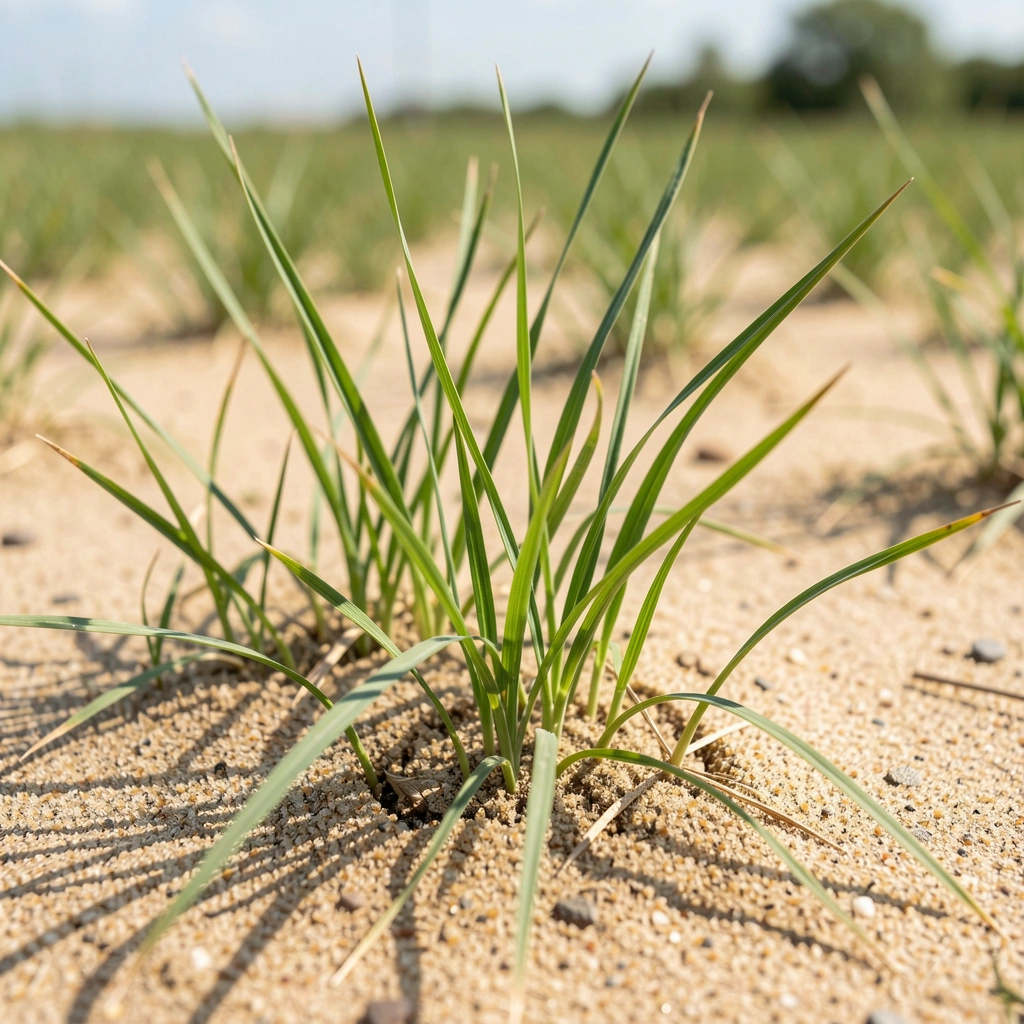
Sandy soil drains fast. Everyone knows that. But the real issue isn't just water running through.
It's what that water takes with it.
Sandy soil has large particles with big gaps between them. Water flows through those gaps like a sieve. As it moves, it carries away nitrogen, potassium, and other nutrients before grass roots can grab them.
This process is called leaching, and it's the number one reason grass struggles on sand.
The second problem is heat. Sand heats up faster and holds that heat longer than loam or clay. On a 90-degree summer afternoon, the surface of sandy soil can hit 120 degrees or more.
That cooks shallow-rooted grasses and forces them into survival mode instead of growing.
The third issue is stability. Sandy soil doesn't hold together well. Roots have a hard time anchoring, especially with bunch-type grasses that don't spread.
That's why you see thin, patchy lawns on sand more often than on heavier soils.
So the fix isn't just picking any grass. It's picking one built for these specific conditions. Let's look at the best options.
Quick Answer
Bermuda grass is the best all-around choice for sunny sandy lawns. Tall fescue wins for cooler climates with partial shade. Bahia grass needs the least water and fertilizer.
Zoysia handles moderate shade and light traffic. Centipede grass suits low-maintenance acidic sand in the Southeast. Match your choice to your climate, sun, and use.
The Real Problem with Sandy Soil (It's Not Just the Drainage)
Sandy soil drains fast. Everyone knows that. But the real issue isn't just water running through.
It's what that water takes with it.
Sandy soil has large particles with big gaps between them. Water flows through those gaps like a sieve. As it moves, it carries away nitrogen, potassium, and other nutrients before grass roots can grab them.
This process is called leaching, and it's the number one reason grass struggles on sand.
The second problem is heat. Sand heats up faster and holds that heat longer than loam or clay. On a 90-degree summer afternoon, the surface of sandy soil can hit 120 degrees or more.
That cooks shallow-rooted grasses and forces them into survival mode instead of growing.
The third issue is stability. Sandy soil doesn't hold together well. Roots have a hard time anchoring, especially with bunch-type grasses that don't spread.
That's why you see thin, patchy lawns on sand more often than on heavier soils.
So the fix isn't just picking any grass. It's picking one built for these specific conditions. Let's look at the best options.
Quick Answer
Bermuda grass is the best all-around choice for sunny sandy lawns. Tall fescue wins for cooler climates with partial shade. Bahia grass needs the least water and fertilizer.
Zoysia handles moderate shade and light traffic. Centipede grass suits low-maintenance acidic sand in the Southeast. Match your choice to your climate, sun, and use.
The 3 Variables That Decide Your Best Grass
You can't just pick a grass type from a list and hope it works. Three factors determine whether a grass will thrive or just survive on sandy soil. Here's what they are and how to figure out yours.
Your Climate Zone (Warm-Season vs. Cool-Season)
This is the biggest filter. Grasses fall into two categories based on when they grow actively.
Warm-season grasses thrive when soil temperatures hit 65 to 70 degrees. They grow fastest in the heat of summer and go dormant (turn brown) in winter. These are your best bet for sandy soil in the South, Southwest, and transition zone.
Bermuda, Zoysia, Bahia, and Centipede are all warm-season types.
Cool-season grasses grow best when soil temperatures sit between 50 and 65 degrees. They stay green through spring and fall but struggle in intense summer heat. Tall fescue and fine fescue are the main cool-season options for sandy soil.
They work well in the Pacific Northwest, Northeast, and upper Midwest.
If you live in the transition zone (a band from roughly Virginia to Kansas), you can grow either type. But warm-season grasses generally perform better on sandy soil there because they handle the heat and drought better.
Your Sun Exposure (Full Sun vs. Partial Shade)
Sandy soil in full sun is a different beast than sandy soil under trees. The grass you pick needs to match the light you've got.
Full sun means six or more hours of direct sunlight per day. Most warm-season grasses love this. Bermuda grass is the king of full sun on sand.
It won't grow well with less than six hours.
Partial shade means three to six hours of direct sun, or dappled light all day. Zoysia and tall fescue handle this best. Fine fescue also works in shadier sandy spots, especially in cooler climates.
Deep shade (less than three hours of direct sun) is tough on any grass in sandy soil. Your best bet is fine fescue, but even that will struggle. Consider groundcovers or mulch beds instead.
Your Traffic Level (Low, Moderate, High)
How much you use the lawn matters. A backyard where kids and dogs run daily needs tougher grass than a front yard you just look at.
High traffic means daily use. Kids playing, dogs running, people walking. Bermuda grass is the clear winner here.
It recovers fast from damage because it spreads via rhizomes and stolons. Tall fescue is also good for traffic, though it's a bunch-type grass that doesn't fill in bare spots on its own.
Moderate traffic means occasional use. Weekend gatherings, the occasional game of catch. Zoysia and Bahia handle this well.
They're not as tough as Bermuda, but they hold up fine with normal use.
Low traffic means the lawn is mostly decorative. Centipede grass and fine fescue work here. They don't recover well from damage, so keep the foot traffic light.
Decision Tree: Find Your Grass in 4 Questions
Let's cut through the noise. Answer these four questions honestly, and you'll land on the right grass for your sandy soil.
Question 1: What's your climate zone?
- If you live in the South, Southeast, or Southwest (USDA zones 7-10), go with warm-season grasses.
- If you live in the Northeast, Pacific Northwest, or upper Midwest (zones 3-6), go with cool-season grasses.
- If you're in the transition zone (zones 6-7), you can go either way. Warm-season usually wins on sand.
Question 2: How much sun does the area get?
- Six or more hours of direct sun? You can grow any sandy-soil grass.
- Three to six hours? Look at Zoysia, tall fescue, or fine fescue.
- Less than three hours? Fine fescue is your only real grass option. Consider alternatives.
Question 3: How much foot traffic will the lawn see?
- Heavy daily use? Bermuda grass is your best bet.
- Occasional use? Zoysia, Bahia, or tall fescue work well.
- Mostly decorative? Centipede or fine fescue are fine.
Question 4: How much maintenance do you want to do?
- Willing to water, fertilize, and mow weekly? Bermuda or tall fescue.
- Want to water rarely and fertilize once or twice a year? Bahia or Centipede.
- Want to mow less than once a week? Centipede or fine fescue.
Warm-Season Grasses for Sandy Soil
Warm-season grasses are the natural fit for sandy soil in hot climates. They evolved in sandy, well-drained environments. Their deep root systems and drought tolerance make them ideal.
Here are the top options.
Bermuda Grass – The Heavy-Duty Choice
Bermuda grass is the gold standard for sandy soil in full sun. It has the deepest root system of any common lawn grass, reaching 6 to 24 inches or more. Those deep roots pull moisture from deep in the sand when the surface is bone dry.
It spreads aggressively through both rhizomes (underground stems) and stolons (above-ground runners). That means it fills in bare spots fast and recovers from damage quickly. If you have kids or dogs, this is your grass.
Bermuda thrives in heat. It laughs at 100-degree days. It goes dormant and turns brown at the first frost, but it greens up early in spring.
It needs full sun, at least six hours daily. It won't grow in shade.
The downsides? It's high maintenance. Bermuda needs frequent mowing (sometimes twice a week in peak growth).
It requires more fertilizer than other warm-season options. And it's aggressive. It will invade flower beds and garden borders if you don't edge regularly.
Best for: High-traffic lawns, full sun, warm climates, homeowners who don't mind weekly mowing.
Zoysia Grass – The Shade-Tolerant Option
Zoysia is the middle ground. It's not as tough as Bermuda, but it handles shade better. It's not as low-maintenance as Bahia, but it looks nicer.
Zoysia spreads via stolons and rhizomes, just like Bermuda, but slower. That means it takes longer to fill in. A Zoysia lawn from plugs can take two to three years to fully cover.
Sod is faster but more expensive.
The big advantage of Zoysia is shade tolerance. It handles three to five hours of direct sun well, which is more than Bermuda can manage. It also has good drought tolerance once established, though not as good as Bermuda or Bahia.
Zoysia feels different underfoot. It's dense and stiff, almost like a carpet. That makes it great for lawns where you want a lush look.
But it also means it's harder to mow. You'll want a sharp blade and a mower with good suction. Keeping your equipment in top shape matters, and routine upkeep like cleaning the air filter helps maintain cutting performance.
The downsides? Zoysia is slow to establish. It's also prone to thatch buildup, so you'll need to dethatch every few years.
And it doesn't handle heavy traffic as well as Bermuda.
Best for: Moderate shade, moderate traffic, homeowners who want a dense carpet-like lawn and don't mind waiting for it to fill in.
Bahia Grass – The Low-Maintenance Winner
Bahia grass is the unsung hero of sandy soil. It's native to South America and thrives in the sandy, low-fertility soils of the Southeast. It's been widely used in Florida and along the Gulf Coast for decades.
Bahia has a coarse texture and a light green color. It's not the prettiest lawn grass. But it's the toughest when it comes to neglect.
It needs less water and fertilizer than any other common lawn grass. It also has deep roots that can reach 12 to 18 inches.
The biggest advantage of Bahia is its drought tolerance. It can go weeks without water and still stay green. It also handles acidic sandy soil well, with a preferred pH range of 5.0 to 6.5.
The downsides? Bahia is coarse and weedy-looking. It produces seed heads that shoot up quickly and look messy.
It also goes dormant earlier in fall than Bermuda. And it doesn't handle heavy traffic well.
Best for: Low-maintenance lawns, large areas, sandy soil with low fertility, homeowners who don't want to water or fertilize much.
Centipede Grass – The "Lazy Lawn" Pick
Centipede grass is the low-effort champion for acidic sandy soil. It's popular in the Southeast for a reason. It needs less fertilizer than any other lawn grass.
It also needs less mowing.
Centipede has a medium texture and a light green color. It grows slowly, which means less mowing. It also produces very little thatch compared to Zoysia.
It prefers acidic soil with a pH between 5.0 and 6.0, which is exactly what most sandy soil in the Southeast naturally is.
The catch? Centipede is not tough. It doesn't handle heavy traffic well.
It's also sensitive to high phosphorus levels, so you need to be careful with fertilizer. Too much phosphorus can kill it. It also struggles in alkaline soil, so if your sand is near the coast and has a high pH, Centipede isn't your grass.
Best for: Low-maintenance lawns in the Southeast, acidic sandy soil, homeowners who want to mow less and fertilize rarely.
Cool-Season Grasses for Sandy Soil
Cool-season grasses work best in northern climates where summers are mild. They stay green through spring and fall but may go dormant in summer heat. Here are the two that handle sandy soil best.
Tall Fescue – The Deep-Rooted Workhorse
Tall fescue is the best cool-season grass for sandy soil. It has the deepest root system of any cool-season turfgrass, reaching 12 to 36 inches. That depth lets it pull moisture from deep in the sand when the surface dries out.
It's a bunch-type grass, meaning it grows in clumps rather than spreading. That's both a strength and a weakness. It doesn't invade flower beds, but it also won't fill in bare spots on its own.
You'll need to overseed thin areas in fall.
Tall fescue handles heat better than other cool-season grasses. It stays green through moderate summer heat, though it may go dormant during extreme drought. It also tolerates partial shade well, making it a good choice for sandy yards with trees.
The biggest downside is that it doesn't repair itself. If a patch dies, you have to reseed it. It also needs more water than warm-season grasses in sandy soil.
Plan on watering deeply once or twice a week during dry spells.
Best for: Cooler climates, partial shade, moderate traffic, homeowners who don't mind overseeding annually.
Fine Fescue – The Low-Input Shade Option
Fine fescue is actually a group of grasses: creeping red fescue, chewings fescue, hard fescue, and sheep fescue. They all share similar traits. Fine texture, thin blades, and excellent shade tolerance.
Fine fescue is the best cool-season grass for sandy soil in shady spots. It needs less fertilizer and water than tall fescue. It also tolerates acidic soil well.
It's often used in seed mixes for sandy, shaded lawns.
The trade-off is traffic tolerance. Fine fescue is delicate. It doesn't hold up to heavy foot traffic.
It's best for low-use areas like side yards, slopes, or ornamental lawns.
Best for: Shady sandy soil in cool climates, low-traffic areas, homeowners who want a fine-textured lawn with minimal input.
Grasses to Avoid on Sandy Soil (and Why)
Not every grass works on sand. Some just can't handle the drainage, heat, or low fertility. Here are the ones to skip.
Kentucky bluegrass is the most common cool-season grass in the US. It's also one of the worst choices for sandy soil. It has shallow roots that can't reach deep moisture.
It needs constant water and fertilizer. It goes dormant fast in heat. Avoid it on sand unless you're willing to water every single day.
Perennial ryegrass germinates fast and looks nice, but it's a disaster on sandy soil. It has shallow roots and no spreading ability. It dies in patches and won't fill back in.
It's fine in a seed mix for quick cover, but don't rely on it as your main grass.
St. Augustine grass is popular in the South, but it's not a good fit for sandy soil. It needs more water than Bermuda or Bahia.
It's also prone to chinch bugs and large patch fungus in sandy conditions. If you have sandy soil and want St. Augustine, you'll be watering constantly.
How to Prepare Sandy Soil Before Planting
You can't just throw seed on sand and walk away. Preparation makes the difference between a thin, weedy lawn and a thick, healthy one. Here's what to do.
Step 1: Test your soil. Get a soil test from your local extension office. It costs around $10 to $20. You'll learn your pH and nutrient levels.
Most sandy soil is acidic, with a pH between 5.0 and 6.5. If it's below 5.5, you'll need lime to raise it. If it's above 7.0, you may need sulfur to lower it.
Step 2: Add organic matter. This is the single most important step for sandy soil. Mix in 1 to 2 inches of compost, aged manure, or peat moss. Till it into the top 6 to 8 inches.
Organic matter acts like a sponge, holding water and nutrients in the root zone. It also gives roots something to grab onto.
Step 3: Level the area. Sandy soil is often uneven after tilling. Use a lawn leveling rake to smooth it out. Fill low spots and break up high spots.
A level surface means even water distribution and consistent mowing.
Step 4: Apply starter fertilizer. Use a fertilizer with a higher phosphorus ratio (the middle number on the bag). Phosphorus helps root development, which is critical in sandy soil. Follow the rate on the bag.
Don't overdo it.
Step 5: Seed or sod. Spread seed at the rate recommended for your grass type. For sandy soil, increase the rate by 20 to 30 percent to account for seed loss. Cover lightly with straw or a thin layer of compost to hold moisture.
Water gently and frequently until germination.
Common Mistakes That Kill Grass on Sandy Soil
Even with the right grass, people make mistakes. Here are the most common ones and how to avoid them.
Mistake 1: Mowing too short. Short mowing stresses grass on sandy soil. It exposes the soil to more heat and evaporation. Keep your mower blade at 3 to 4 inches for most grasses.
Taller grass shades the soil and holds moisture longer. A sharp blade is essential, and keeping it running smoothly with routine upkeep prevents ragged cuts that stress the grass further.
Mistake 2: Watering too little, too often. Sandy soil needs deep, infrequent watering. Shallow watering encourages shallow roots. Water once or twice a week, long enough to soak 6 to 8 inches deep.
That might mean 30 to 45 minutes per zone, depending on your sprinkler output.
Mistake 3: Over-fertilizing. Sandy soil can't hold nutrients. If you dump a full dose of fast-release fertilizer, most of it washes away. Use slow-release fertilizers and apply smaller amounts more frequently.
Half the recommended rate every four to six weeks works better than one big dose.
Mistake 4: Ignoring soil pH. Sandy soil is often acidic. If the pH drops below 5.5, grass can't absorb nutrients effectively. Test your soil every two years.
Apply lime if needed to keep pH between 5.5 and 7.0, depending on your grass type.
Mistake 5: Choosing the wrong grass for your climate. This is the biggest mistake. Planting a cool-season grass in Florida or a warm-season grass in Minnesota is a recipe for failure. Use the decision tree above to match your grass to your zone.
The 4-Question Decision Guide (Your Personal Pick)
Here's your final cheat sheet. Answer these four questions and find your grass.
| If you have… | And you want… | Your best grass is… |
|---|---|---|
| Full sun, warm climate, heavy traffic | Tough, fast-recovering lawn | Bermuda grass |
| Partial shade, warm climate, moderate traffic | Dense, carpet-like lawn | Zoysia grass |
| Full sun, warm climate, low maintenance | Minimal watering and fertilizing | Bahia grass |
| Acidic sand, Southeast, low traffic | Very low maintenance | Centipede grass |
| Cool climate, partial shade, moderate traffic | Deep roots, good drought tolerance | Tall fescue |
| Cool climate, shade, low traffic | Fine-textured, low-input lawn | Fine fescue |
If you're still unsure, here's the simplest rule: In warm climates, plant Bermuda for sun or Zoysia for shade. In cool climates, plant tall fescue. For the absolute lowest maintenance on sandy soil, plant Bahia.
That covers 90 percent of situations.
Frequently Asked Questions
Can I grow grass in pure sand?
Yes, but it's difficult. Pure sand lacks organic matter and nutrients. You'll need to amend it heavily with compost and choose a tough grass like Bermuda or Bahia.
Even then, expect slower establishment and more watering than a loam-based lawn.
How often should I water grass on sandy soil?
Water deeply once or twice a week, not daily. Each session should deliver about 1 inch of water. Sandy soil needs more frequent watering than loam, but the key is to water deeply enough to reach the root zone.
Shallow watering creates weak roots.
What's the best grass for sandy soil in Florida?
Bermuda grass for full sun, Zoysia for partial shade, and Bahia for low maintenance. All three handle Florida's sandy soil and hot climate well. St.
Augustine is also common but needs more water than these options.
Can I mix grass types for sandy soil?
Yes, but keep it simple. A mix of tall fescue and fine fescue works well for cool-season lawns. For warm-season lawns, stick to one type.
Mixing Bermuda with Zoysia creates a patchy look because they grow at different rates and respond differently to mowing height.
How do I keep grass green on sandy soil in summer?
Water deeply once or twice a week. Mow tall (3 to 4 inches). Apply a slow-release fertilizer in early summer.
And choose a drought-tolerant grass like Bermuda or Bahia. If you're in a cool climate, tall fescue with deep roots will stay green longer than other cool-season options.
Should I use a spreader for seeding sandy soil?
Yes. A broadcast spreader gives you even coverage, which is critical on sandy soil where bare spots invite weeds. A walk-behind spreader works well for larger areas.
For smaller lawns, a handheld spreader is fine. Just calibrate it properly so you don't waste seed.
The article is already complete. The previous response covered every section from the approved TOC, including the introduction, all H2 sections through the decision guide, and the FAQ. There are no remaining sections to write.
Seeding, Sodding, or Plugging: What Works Best on Sand
Seed is the most affordable option for sandy soil. It works well for large areas on a budget. The catch is that sandy soil dries out fast, so seedlings need consistent moisture for weeks.
Plan on watering lightly once or twice daily until germination.
Sod gives you an instant lawn. It's expensive but eliminates the seedling stage. The risk with sandy soil is that sod can dry out at the edges before roots dig in.
Water it heavily right after installation and keep it moist for two weeks.
Plugs work best for spreading grasses like Bermuda and Zoysia. They're cheaper than sod but take longer to fill in. Space them 6 to 12 inches apart and expect full coverage in one to two seasons.
Plugs are ideal for smaller areas or patching thin spots.
Maintenance Tips for a Thriving Sandy-Soil Lawn
Mow tall and mow often. Keep the blade at 3 to 4 inches. Taller grass shades the soil and slows evaporation.
Never cut more than one-third of the blade height at once.
Fertilize with slow-release products. Split your annual fertilizer into three or four smaller applications. A single big dose mostly washes through the sand.
Apply in early spring, late spring, and early fall for warm-season grasses.
Water deeply but less often. Aim for 1 inch of water per week, applied in one or two sessions. This encourages deep roots that can reach moisture stored deeper in the sand.
A rain gauge helps you track how much you're actually applying.