
Brown spots in Bermuda grass can be caused by various factors, including pests, diseases, and environmental stress. Understanding these causes helps you diagnose and treat your lawn effectively. This guide walks you through easy steps to identify and fix the issues, ensuring a healthy, vibrant Bermuda grass lawn.
What Causes Brown Spots in Bermuda Grass
If you’ve noticed unsightly brown patches appearing in your Bermuda grass lawn, don’t worry—you’re not alone. Brown spots can be frustrating, but understanding what causes them is the first step toward fixing the problem. In this comprehensive guide, we’ll explore the common reasons behind these brown patches and provide practical solutions to restore your lawn’s lush green color.
Key Takeaways
- Overwatering or underwatering: Both can stress Bermuda grass, leading to brown patches.
- Pest infestations: Insects like grubs and armyworms damage roots and blades, causing discoloration.
- Disease issues: Fungal infections such as brown patch or dollar spot create brown spots.
- Soil compaction: Poor soil aeration restricts root growth and water absorption, resulting in brown areas.
- Sunburn: Excessive sun exposure and lack of shade can scorch Bermuda grass, causing brown patches.
- Nutrient deficiencies: Lack of essential nutrients like nitrogen weakens the grass and causes discoloration.
- Proper diagnosis is key: Identifying the exact cause helps you choose the right treatment for a healthy lawn.
Introduction
Bermuda grass is a popular choice for lawns in warm climates because of its durability and lush appearance. However, it’s susceptible to various issues that can cause brown spots. These spots not only ruin the aesthetic appeal but can also indicate underlying problems that, if left unaddressed, may worsen. From environmental factors to pests and diseases, many causes are at play. By learning to identify these causes, you can take targeted action to revive your Bermuda grass and enjoy a healthy, vibrant lawn.
Step 1: Assess the Extent and Pattern of the Brown Spots
Why it’s important
Understanding how widespread and the pattern of the brown patches can help you narrow down potential causes. For example, irregular patches may suggest pests, while uniform patches might point to environmental stress.
How to do it
- Walk around your lawn and observe the size, shape, and distribution of the brown spots.
- Note if the spots are random or follow a pattern, such as along the edges or in shaded areas.
- Check if the patches are moist or dry, as this can indicate watering issues.
Step 2: Check Watering Practices
Overwatering
Too much water can drown roots, promote fungal growth, and lead to brown patches. Bermuda grass prefers deep, infrequent watering.
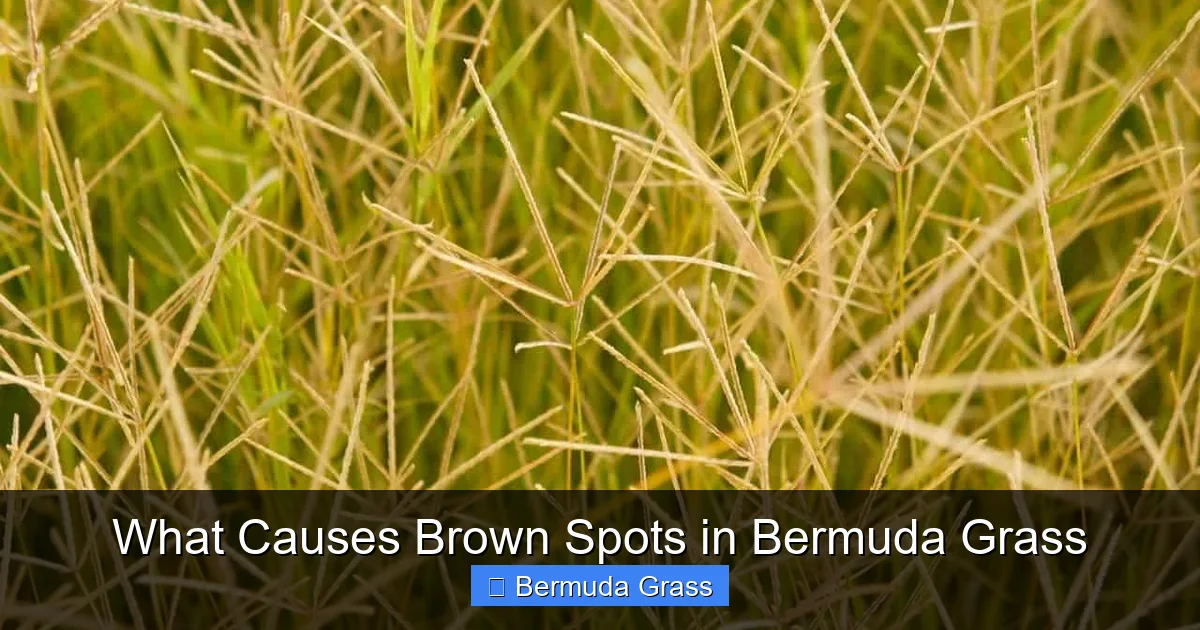
Visual guide about What Causes Brown Spots in Bermuda Grass
Image source: plantophiles.com
Underwatering
Conversely, drought stress from lack of water causes grass blades to dry out and turn brown.
Practical tip
- Water deeply once or twice a week, ensuring the soil is moist but not waterlogged.
- Use a soil moisture meter or check soil with a trowel to gauge moisture levels.
- Adjust watering based on weather conditions—more during hot, dry spells, less during cooler periods.
Step 3: Inspect for Pest Infestations
Common pests causing brown spots
- Grubs: Larvae of beetles that feed on roots, causing patches to die back.
- Armyworms and cutworms: Caterpillars that chew on blades, leaving brown, ragged patches.
- Chinch bugs: Suck plant sap and weaken the grass, especially in sunny areas.
How to identify pests
- Lift a section of grass to see if the roots are chewed or damaged.
- Look for insects on the blades or soil surface.
- Check for signs like skeletonized grass or tunneling in the soil.
Solutions
- Apply appropriate insecticides following label instructions.
- Introduce beneficial nematodes for natural pest control.
- Maintain healthy turf to resist pest damage.
Step 4: Diagnose Disease Issues
Common Bermuda grass diseases
- Brown patch: Fungal disease causing circular brown areas, often in humid conditions.
- Dollar spot: Small, sunken brown spots with a straw-colored halo.
- Gray leaf spot: Large, irregular brown patches with grayish fungal growth.
How to recognize disease symptoms
- Look for irregular patches with fuzzy or moldy growth on blades.
- Check for leaf spots or a ring of dead grass.
- Notice if the patches expand during humid weather.
Control measures
- Improve lawn aeration to reduce soil compaction.
- Apply fungicides specifically formulated for Bermuda grass diseases.
- Manage watering to avoid excess moisture—water early in the day.
- Remove thatch buildup and dethatch if necessary.
Step 5: Evaluate Soil Conditions and Nutrient Levels
Soil testing
Test your soil for pH and nutrient content. Bermuda grass thrives in slightly acidic to neutral soil (pH 6.0-7.0).
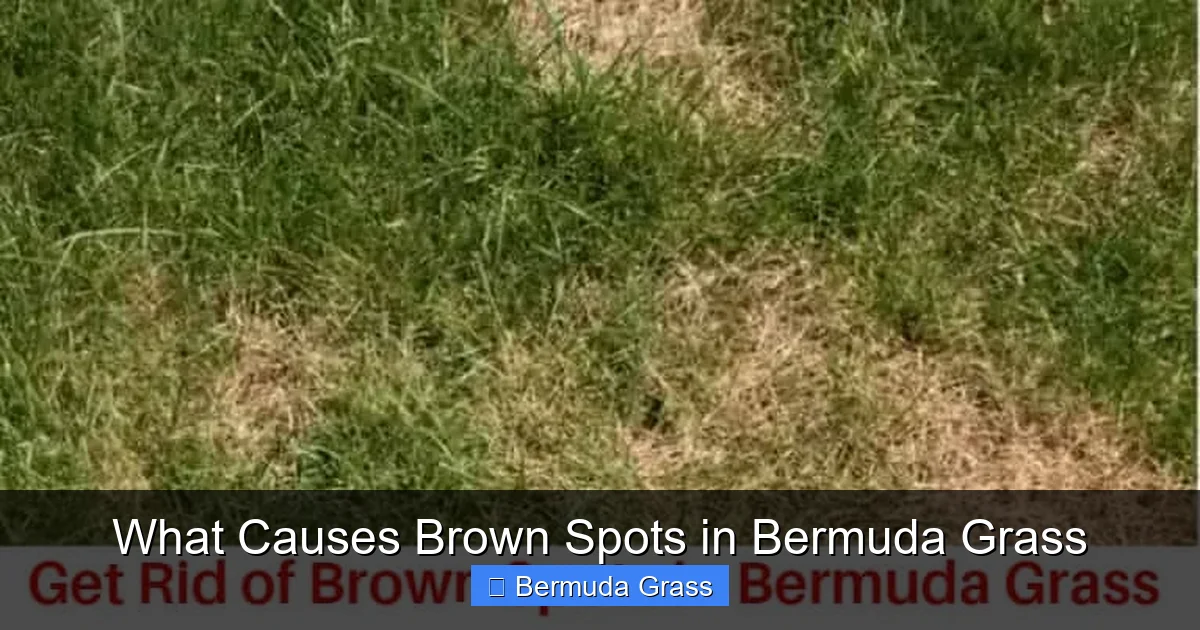
Visual guide about What Causes Brown Spots in Bermuda Grass
Image source: crabgrasslawn.com
Nutrient deficiencies
- Lack of nitrogen causes pale, yellowish-brown patches.
- Potassium deficiencies can weaken grass and lead to brown spots.
- Iron deficiency results in chlorosis, a yellowing with brown spots on blades.
Solutions
- Apply balanced fertilizers with the right ratio of nitrogen, phosphorus, and potassium.
- Use soil amendments to correct pH imbalances.
- Follow recommended application rates to avoid over-fertilization.
Step 6: Address Environmental and Cultural Factors
Sunburn and heat stress
Excessive sun exposure can scorch Bermuda grass, especially during heatwaves. Keep grass healthy with proper watering and, if possible, some shade during the hottest part of the day.
Soil compaction
Compacted soil restricts root growth and water absorption. Aerate your lawn regularly using a core aerator to loosen soil and improve airflow.
Managing thatch
Thatch is a layer of dead grass and roots that can block water and nutrients. Dethatch your lawn annually to promote healthy growth.
Troubleshooting Common Scenarios
- Brown patches appearing after heavy rain: Likely fungal disease. Improve drainage and treat with fungicide.
- Brown spots in shaded areas: Possibly lack of sunlight or pest damage. Trim back shade trees and inspect for pests.
- Irregular patches with insect presence: Use targeted insecticides and aeration.
Conclusion
Brown spots in Bermuda grass can be caused by many factors, from watering issues to pests and diseases. The key is to carefully assess your lawn, diagnose the root cause, and apply the appropriate treatment. Consistent lawn care—proper watering, fertilizing, aeration, and pest control—will keep your Bermuda grass healthy and vibrant. With patience and proper maintenance, you can restore your lawn’s lush green appearance and enjoy a beautiful yard year-round.
Final Tips
- Regularly inspect your lawn for early signs of trouble.
- Maintain proper watering and mowing habits.
- Address issues promptly to prevent brown spots from spreading.