
Scalping Bermuda grass in the spring can boost lawn health if done correctly, but it also carries risks. This guide explains when and how to safely scalp your Bermuda grass to promote growth and maintain a vibrant lawn.
Key Takeaways
- Timing matters: Spring is generally not the ideal time to scalp Bermuda grass. Wait until the grass has fully entered active growth.
- Benefits of scalping: Removing dead or thatch buildup, encouraging new growth, and improving lawn appearance.
- Risks involved: Scalping too early or too aggressively can stress the grass, leading to disease or patchiness.
- Proper technique: Use sharp blades, set mower height correctly, and avoid scalping more than 50% of the grass height.
- Post-scalping care: Water appropriately, fertilize lightly, and monitor for stress or pests.
- Alternative practices: Consider dethatching or aerating instead of scalping in early spring unless lawn conditions merit it.
Introduction
If you’re a Bermuda grass homeowner, you might wonder whether spring is the right time to scalp your lawn. Scalping involves mowing the grass very short to remove thatch, dead grass, and promote healthy growth. But is spring the best time for this? The answer depends on your lawn’s condition, local climate, and your goals.
In this guide, we’ll explore whether you should scalp Bermuda grass in the spring, how to do it safely, and what steps to take afterward. By understanding the risks and benefits, you can make informed decisions to keep your lawn healthy and vibrant year-round.
Understanding Bermuda Grass Growth Cycles
When does Bermuda grass grow actively?
Bermuda grass is a warm-season grass that thrives in summer. It begins actively growing when soil temperatures reach around 65-70°F (18-21°C), typically in late spring or early summer. During this time, the grass recovers from winter dormancy and produces new shoots and roots.

Visual guide about Should You Scalp Bermuda Grass in the Spring
Image source: sunnybermuda.com
What happens in early spring?
Early spring is often a transitional period. Bermudagrass may still be dormant or just starting to green up, especially in cooler climates. If you scalp too early, you risk damaging the grass before it has fully awakened.
Should You Scalp Bermuda Grass in the Spring?
Factors to consider
- Grass health: If your lawn is recovering from winter with uneven growth or excessive thatch, scalping might help.
- Climate: In warmer regions, early spring may be suitable; in cooler areas, wait until late spring or early summer.
- Lawn condition: If the grass is patchy, has dead patches, or is overly thatchy, scalping can stimulate growth.
When is the best time?
The best time to scalp Bermuda grass is when the grass has fully greened up, is actively growing, and soil temperatures are consistently above 65°F. Usually, this is late spring or early summer, not early spring.
Visual guide about Should You Scalp Bermuda Grass in the Spring
Image source: sunnybermuda.com
How to Safely Scalping Bermuda Grass in Spring
Step 1: Assess Your Lawn
Before scalping, inspect your lawn for signs of stress, pests, or disease. Ensure the grass is starting to grow actively, with a healthy green color.

Visual guide about Should You Scalp Bermuda Grass in the Spring
Image source: sunnybermuda.com
Step 2: Prepare Your Equipment
- Use a sharp mower blade for a clean cut.
- Set your mower height to remove no more than 50% of the grass height.
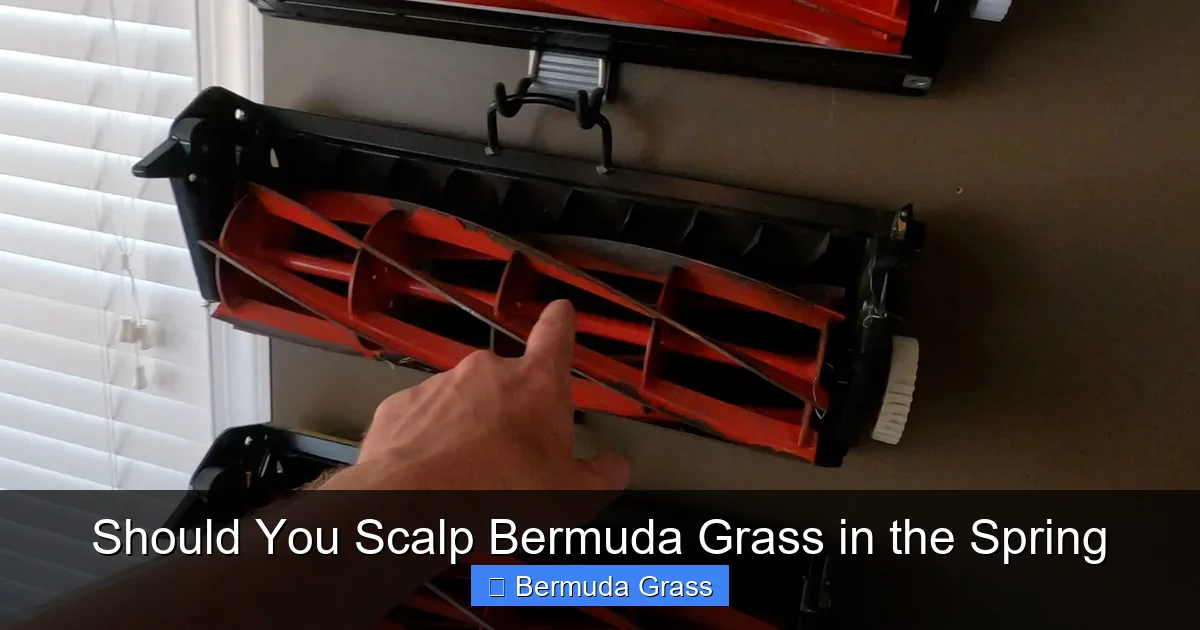
- If using a reel mower, ensure it is sharp and well-maintained.
Step 3: Mowing Technique
- Gradually lower the mower height over a couple of passes if your lawn is tall.
- In a single pass, aim to cut down to about 1-1.5 inches, depending on your lawn’s typical height.
- Avoid scalping more than half of the grass blades to prevent stressing the plant.
Step 4: Post-Scalping Care
- Water deeply to help the grass recover and flush out any stress.
- Apply a light, balanced fertilizer to encourage new growth.
- Keep foot traffic to a minimum until the lawn recovers.
Practical Tips for Spring Scalping
- Don’t scalp if the grass is still brown or dormant; wait until green growth resumes.
- Limit scalping to once per growing season to prevent excessive stress.
- Combine scalping with dethatching or aeration if thatch buildup is significant.
- Keep a close eye on the weather; avoid scalping before a cold snap or heavy rain.
Common Mistakes to Avoid
- Scalping too early: Doing so can weaken the grass and invite pests or diseases.
- Removing too much grass: Cutting more than 50% can cause stress and slow recovery.
- Ignoring lawn conditions: Scalping on a stressed or dormant lawn can do more harm than good.
Alternative Spring Lawn Practices
If you’re hesitant about scalping in early spring, consider these options:
- Dethatching: Remove thatch buildup without cutting the grass too short.
- Aeration: Improve soil compaction and promote root growth.
- Proper fertilization: Feed the lawn to support healthy growth as temperatures rise.
Conclusion
In most cases, spring is not the ideal time to scalp Bermuda grass. Waiting until the grass is actively growing and soil temperatures are warm ensures a safer, more effective process. When done correctly, scalping can promote healthy lawn development, but rushing it prematurely can cause damage. Always assess your lawn’s condition, use proper tools, and follow best practices for optimal results.
Remember, patience is key. With proper timing and care, your Bermuda grass lawn can flourish throughout the season.
FAQs
1. Can I scalp Bermuda grass in early spring?
It’s generally not recommended to scalp Bermuda grass early in spring, especially if the grass is still dormant or not fully green. Wait until the grass has fully greened up and is actively growing to avoid damage.
2. How short should I mow Bermuda grass when scalping?
Set your mower to remove no more than 50% of the grass height, typically around 1 to 1.5 inches. This ensures you don’t stress the grass too much during recovery.
3. Will scalping help improve my Bermuda lawn’s appearance?
Yes, scalping can remove dead grass and thatch, giving your lawn a cleaner look and encouraging new, healthy growth when done properly and at the right time.
4. What should I do after scalping Bermuda grass?
Water deeply, fertilize lightly, and avoid heavy foot traffic. Monitoring the lawn for pests or disease is also important to ensure a healthy recovery.
5. How often should I scalp Bermuda grass?
Scalping is typically done once per growing season. Over-scaling can stress the lawn and hinder recovery, so plan accordingly based on your lawn’s needs.
6. Is scalping necessary for a healthy Bermuda lawn?
Not always. Scalping is beneficial if your lawn has excessive thatch or dead grass buildup, but it’s not a routine requirement. Proper mowing, fertilizing, and watering are often enough for healthy lawns.