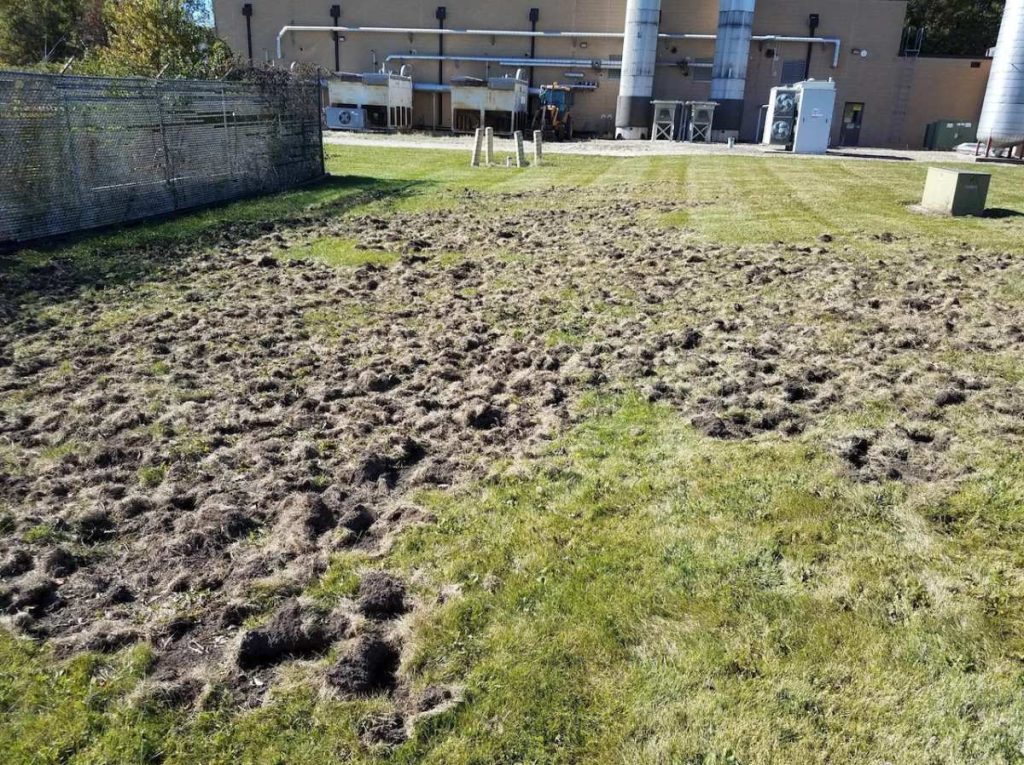
If you've stepped outside to find your lawn looking like a mini excavation site, you're probably asking what animals dig up and eat grubs. The damage can be frustrating. But the good news is, the culprit is usually one of a few common animals.
Once you know which one, you can handle it.
Skunks are the most frequent visitors. A single skunk can dig 30 to 40 holes in one night, all in search of white grubs. As of 2026, research from university extension services confirms that grub-seeking wildlife is the leading cause of torn-up lawns in North America.
That's why learning to read the signs is your first step.

Quick Answer
Skunks and raccoons are the animals most likely to dig up your lawn for grubs. Skunks leave small cone-shaped holes. Raccoons flip sod over in large patches.
Birds peck at the surface. Moles tunnel underneath.
Why Your Lawn Looks Torn Up — and Why Visual ID Is Your First Step
Animals don't tear up your lawn for fun. They're after a food source: grubs. Grubs are the larvae of beetles like Japanese beetles and European chafers.
These soft white C-shaped insects live just below the soil surface, feeding on grass roots. Animals have learned exactly where to dig to find them.
Understanding the grub lifecycle helps you predict the digging season. Grubs feed most actively in late summer and early fall. That's when you'll see the heaviest damage.
In spring, they feed again but less aggressively.
Visual identification is your best tool. Why? Because the treatment for a skunk problem is different from a raccoon problem.
And neither is the same as what you'd do for moles. If you treat for the wrong animal, you waste time and money. A quick look at the damage pattern tells you everything.
University of Minnesota Extension research shows that correctly identifying the animal first is the most reliable path to solving lawn damage. When you know the culprit, you can choose the right solution. That might mean removing attractants, excluding the animal, or simply repairing the turf.
The 5 Visual Clues That Tell You Which Animal It Is
You don't need to be a wildlife expert. You just need to look at what's left behind. Here are the five clues to check.
Hole Size and Shape
Measure the hole. Skunks dig narrow cone-shaped holes about three to four inches deep. Raccoons tear up much larger areas.
Their holes can be six to twelve inches across. Birds leave tiny holes the size of a pencil eraser.
Sod Condition
Look at whether the grass is still attached. Raccoons roll the sod back like flipping a pancake. The roots are exposed.
Skunks just dig straight down, leaving the surrounding grass intact. Moles push soil up into ridges and never break the surface.
Tracks and Scat
Check the ground for footprints. Skunk tracks show five toes with visible claws. Raccoon tracks look like tiny human handprints.
Scat also gives clues. Skunk droppings often contain undigested insect parts. Raccoon scat is tubular and crumbly.
Time of Day
When did the damage appear? Skunks and raccoons are nocturnal. If you wake up to new holes, it happened overnight.
Birds dig during the day, especially early morning. If you see active digging at dawn, it's likely starlings or robins.
Whether Grubs Are Actually Present
Sometimes animals dig for earthworms, not grubs. To confirm, do a soap flush test. Mix two tablespoons of dish soap with a gallon of water.
Pour it over a one-square-foot patch of damaged area. Wait a few minutes. If grubs are present, they'll rise to the surface.
This tells you the animal was after grubs specifically.
Skunk vs. Raccoon Digging: The Most Common Mix-Up
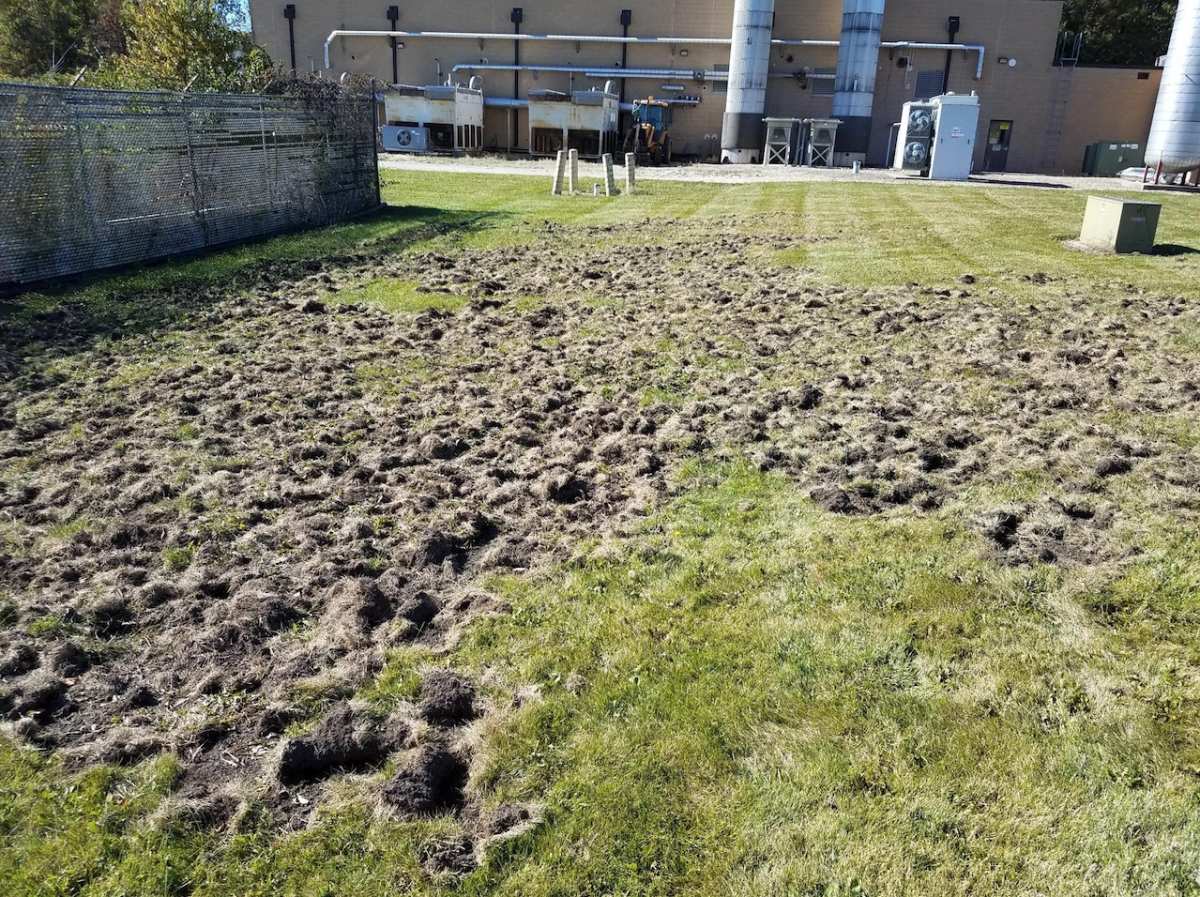
This is the mix-up that trips up most homeowners. Skunk damage and raccoon damage look totally different once you know what to spot. Let's break it down side by side.
| Feature | Skunk | Raccoon |
|---|---|---|
| Hole size | 3–4 inches wide, deep | 6–12 inches wide, shallow |
| Hole shape | Cone-shaped, clean edges | Irregular, messy edges |
| Sod condition | Grass stays put around holes | Sod rolled back or torn off |
| Soil disturbance | Small piles of soil next to holes | Large patches of bare soil |
| Scat | Contains insect parts, black | Tubular, crumbly, may have berry seeds |
| Time of activity | Night | Night |
| Pattern | Dotted across the lawn | Clustered in one area |
Skunks are precise diggers. They insert their snout into the ground and pull out a plug of soil, leaving a neat little crater. You often see several of these scattered across the lawn.
Raccoons are less careful. They use their front paws to grab and pull the turf, flipping it over in large chunks.
If you see a patch of lawn that looks like someone peeled back the carpet, you're dealing with a raccoon. If you see dozens of small pensized holes, it's a skunk.
What Birds, Moles, and Armadillos Look Like in Your Lawn
While skunks and raccoons are the main culprits, you might see damage from other animals too. Here's what each one looks like.
Birds
Birds like starlings, robins, crows, and grackles peck at the soil to pull out grubs. Their damage looks like tiny holes scattered across the surface. The holes are shallow, only about half an inch deep.
You often see this in the morning after birds have been feeding. The damage is usually minor and cosmetic.
Moles
Moles are often mistaken for grub diggers. But moles don't actually eat grubs. They eat earthworms and insects.
Moles leave raised ridges that run across the lawn. They also create mounds that look like small volcanoes. You won't see open holes or flipped sod.
If you see a long winding tunnel pushing up the grass, it's a mole.
Armadillos
Armadillos are common in the southern United States. They root around in the soil with their snouts, creating shallow divots. The holes are usually two to three inches wide and about one to two inches deep.
They often dig in a straight line across the lawn. Unlike skunks, armadillos don't leave neat cones. The damage looks more like someone poked lots of little holes in a row with a stick.
When Badgers, Foxes, or Opossums Are the Culprit
These animals are less common than skunks and raccoons. But they do show up. Here's what to look for.
Badgers
Badgers are powerful diggers. They can tear up large areas of turf in a single night. Their damage looks like big irregular craters.
The holes are deeper than raccoon holes. Badgers dig for grubs and other soil insects. They're most common in the UK and parts of the western United States.
If you see large deep holes with lots of soil thrown out, think badger.
Foxes
Foxes dig for grubs too, but they're usually looking for earthworms. Their holes are smaller and shallower than skunk holes. You might see a few scattered holes in a small area.
Foxes are more likely to dig in flower beds than in open lawn. Their tracks show four toes and a narrow pad.
Opossums
Opossums are opportunistic feeders. They'll eat grubs if they find them, but they prefer easy food. Their digging is light and messy.
You might see overturned leaves and a few shallow holes. Opossum damage looks more like someone raked the surface than dug a hole.
Common Visual Mistakes That Lead to Wrong Treatment
Even experienced gardeners make these mistakes. Here are the ones to avoid.
Mistaking mole ridges for surface digging. Moles don't leave open holes. If you see raised tunnels, you're dealing with moles, not grub eaters. Treating for grubs won't help.
Blowing birds for mammals. Tiny scattered holes in the morning are likely birds. Don't spray or trap. The birds will move on after they've fed.
The lawn will recover on its own.
Assuming grubs are always present. Animals dig for other reasons too. They might be after earthworms, beetle larvae, or even fungi. Always confirm grubs before you treat.
Treating the lawn instead of the animal. Pesticides kill grubs, but the animal might just move to a neighboring yard. Sometimes the animal is the solution, not the problem. Letting them dig can actually help control grub populations naturally.
How to Confirm Grubs Are Really There (The Soap Flush Test)
This test takes five minutes. It tells you exactly whether grubs are the reason for the damage.
What you need:
- Two tablespoons of liquid dish soap
- One gallon of water
- A watering can or sprayer
The steps:
- Mix the soap and water in the watering can.
- Pour it slowly over a one-square-foot area of damaged lawn.
- Wait three to five minutes.
- Watch the surface. Grubs will wriggle up to escape the soap.
If you count five or more grubs in that square foot, you have a grub problem. University extension services across the United States use this threshold to determine whether treatment makes sense. Below five, the damage is likely from something else.
If you see no grubs, the animal is digging for other soil insects or earthworms. In that case, treating for grubs won't stop the digging.
What to Do Next: Repair, Prevention, and When to Leave It Alone
Once you know the animal, you have options.
For skunks:
- Remove food sources. Secure garbage bins and pet food.
- Use exclusion. Fencing or netting can keep skunks out.
- Let them work. Skunks typically move on after they've cleaned out the grubs. The damage is usually cosmetic and the lawn will regrow.
For raccoons:
- Remove attractants. Secure trash cans and compost piles.
- Rake up fallen fruit from trees.
- Repair damaged sod by pressing it back down and watering.
- If the problem persists, contact a wildlife removal professional.
For birds:
- No action needed. The damage is superficial.
- The lawn will recover with normal watering and mowing.
For moles:
- Manage their food source. Moles eat earthworms, which are hard to eliminate.
- Use exclusion barriers or mole repellents labeled for your area.
- Avoid pesticides that kill beneficial soil organisms.
General prevention:
- Healthy lawns resist grub damage. Mow at the right height and water deeply but less often.
- Consider beneficial nematodes as a biological grub control. They're safe for pets and wildlife.
- Avoid over-fertilizing. Excess nitrogen attracts beetles that lay grub eggs.
Sometimes the best move is to leave the digging alone. Skunks and raccoons are temporary visitors. They eat grubs and move on.
Your lawn will recover in a few weeks with regular care. If the damage is severe or the animals keep returning after several weeks, it's time to call a professional.
As of 2026, more homeowners are choosing non-lethal solutions. Exclusion and habitat modification work better than traps or poisons. They also keep your yard safe for pets and children.
Quick Reference Table: Match the Damage to the Animal
This table captures the key visual clues from this article. Save it or bookmark it for quick checks.
| Animal | Hole Shape | Hole Size | Sod Condition | Tracks | Time |
|---|---|---|---|---|---|
| Skunk | Cone-shaped, neat | 3–4 inches wide | Grass intact, soil pile | Five toes, claws visible | Night |
| Raccoon | Irregular, messy | 6–12 inches wide | Sod flipped or torn | Small handprint | Night |
| Bird | Tiny, shallow | 0.5 inches wide | Surface pecked | Bird footprints | Day |
| Mole | No open hole | N/A | Raised ridges | Rarely visible | Any time |
| Armadillo | Shallow divots | 2–3 inches wide | Soil disturbed, shallow | Claw marks in rows | Night |
Frequently Asked Questions
Why do skunks dig holes in my lawn at night?
Skunks are nocturnal feeders. They use their sense of smell to find grubs below the surface. They dig small cone-shaped holes to pull out the grubs.
This is normal foraging behavior and not a sign of aggression.
Will grubs kill my lawn?
Yes, heavy grub infestations can kill grass. Grubs eat the roots. Damaged grass turns brown and pulls up easily, like loose carpet.
If you have more than five to ten grubs per square foot, treatment is worth considering.
How long does it take for lawn damage to heal after animals dig it up?
Most lawns recover in two to four weeks with regular watering and proper mowing. Rake out any soil piles and fill deep holes with topsoil. Reseed bare patches in early fall or spring for best results.
Should I use pesticides to kill grubs?
Chemical grub controls can work, but timing matters. Apply them in late summer when grubs are young and feeding near the surface. Always follow label directions.
The U.S. Environmental Protection Agency (EPA) regulates all pesticide products. Check with your local extension office for regional recommendations.
Do animals only dig for grubs during certain seasons?
Yes. Grub feeding peaks in late summer and early fall. That's when you'll see the most animal activity.
Spring digging happens too but is usually less intense. Grubs move deeper into the soil in winter, and animals have a harder time finding them.
Can I trap raccoons or skunks myself?
Trapping wildlife is regulated in most states. Many require permits. Improper trapping can injure the animal or spread disease.
Contact a licensed wildlife removal professional for help. It's safer for you and the animal.
What's the difference between a grub and an earthworm?
Grubs are beetle larvae with legs and a brown head. They curl into a C shape when disturbed. Earthworms are smooth, segmented, and have no legs.
Earthworms are good for your soil. Grubs are not. The soap flush test helps you tell them apart.
If you've made it this far, you already know more about grub eating animals than most homeowners. The next time your lawn looks like it went through a war zone, you'll know exactly who to blame and what to do about it.
When Badgers, Foxes, or Opossums Are the Culprit
These less common visitors still dig for grubs in certain regions. Badgers, found in the UK and western North America, leave large deep craters up to 6 inches across. Their digging is far more destructive than skunks or raccoons.
Foxes prefer flower beds to open lawn, leaving small shallow holes while hunting for earthworms and grubs. Opossums make light surface disturbance, usually from flipping leaves rather than deep digging. Their damage is rarely severe enough to need repair.
Common Visual Mistakes That Lead to Wrong Treatment
Mistaking mole ridges for surface digging is the most common error. Moles leave raised tunnels, not open holes, so grub treatments won't stop their activity, much like how understanding grill heat distribution helps you avoid uneven cooking. Blaming birds for mammal damage is another frequent mix-up.
Tiny morning peck holes are almost always from starlings or robins, which leave on their own after feeding. Never assume grubs are present just because you see holes. Animals dig for earthworms, fungi, and other soil insects too.
Always confirm with a test before treating.
How to Confirm Grubs Are Really There (The Soap Flush Test)
This 5-minute test removes all guesswork. Mix 2 tablespoons of liquid dish soap with 1 gallon of water. Pour it slowly over a 1-square-foot patch of damaged lawn.
Wait 3 to 5 minutes. Grubs will wriggle to the surface to escape the soap. Count them.
Per University of Minnesota Extension guidelines, five or more grubs per square foot is the action threshold for most lawns. Fewer than that means the animal is eating other soil organisms, not grubs.
What to Do Next: Repair, Prevention, and When to Leave It Alone
Your next steps depend entirely on the animal you identified. For skunks, secure garbage and pet food, then let them finish eating grubs. They usually move on in a week or two once the food source is gone.
Raccoon damage is more severe. Press flipped sod back into place, then water it well to help roots reattach. Fill deep holes with topsoil, then reseed bare patches in early fall for best results, a process as straightforward as assembling a gas grill after purchase when you follow step-by-step instructions.
If animals keep returning, install motion-activated lights or sturdy exclusion fencing, similar to the durable build quality you'd look for when reading gas grill specifications for outdoor use. Birds and moles rarely need intervention. Your lawn will recover on its own with normal watering and mowing.
Beneficial nematodes are a safe, long-term grub control option that won't harm wildlife. Avoid over-fertilizing, as excess nitrogen attracts egg-laying beetles. A thick, healthy lawn resists grub infestations just like a well-maintained grill handles high cooking demand.
If you're maintaining your outdoor space for gatherings, you might also want to choose the correct grill size to match your patio layout. As of 2026, more homeowners are choosing non-lethal solutions that keep yards safe for pets and kids.
Quick Reference Table: Match the Damage to the Animal
Use this table to ID damage fast without guesswork.
| Animal | Hole Shape | Hole Size | Sod Condition | Activity Time |
|---|---|---|---|---|
| Skunk | Neat cone | 3–4 inches wide | Grass intact, soil pile | Night |
| Raccoon | Irregular patch | 6–12 inches wide | Sod flipped back | Night |
| Bird | Tiny shallow holes | 0.5 inches wide | Surface peck marks | Day |
| Mole | No open holes | N/A | Raised soil ridges | Any time |
| Armadillo | Shallow divots in a line | 2–3 inches wide | Soil disturbed, no flipped sod | Night |
Frequently Asked Questions
What should I do if I see a skunk during the day?
Skunks are normally nocturnal. A skunk out during daylight could be sick or desperate for food. Keep your distance.
Contact animal control if the animal seems disoriented or unafraid of people.
How do I repair large patches of flipped sod?
Press the torn sod back into place immediately. Water it deeply to help roots reattach. If the sod is dried out or dead, remove it and fill the area with topsoil.
Reseed in early fall for best results.
Is it safe to use beneficial nematodes in my lawn?
Yes. Nematodes are microscopic roundworms that target grubs without harming pets, children, or beneficial insects. Apply them in late summer when grubs are young and the soil is moist.
Follow the product directions for your region.
What time of year do animals dig the most?
Late summer through early fall is peak season. Grubs are larger and closer to the surface then. Spring digging is less intense.
Winter digging is rare since grubs move deeper into the soil to survive cold temperatures.
Can I stop animals from digging without removing grubs?
Sometimes. Bright lights or motion-activated sprinklers can discourage nighttime visitors. Secure trash cans and remove pet food.
But if grubs are plentiful, animals will keep trying until the food source is gone.