If you’ve ever burnt the edges of a steak while the center stays raw, you’ve run into bad grill heat distribution. Learning how to compare grill heat distribution is the fastest way to stop wasting food and fuel on grills that can’t cook evenly. Most buyers only look at BTU counts, but that number tells you almost nothing about real-world cooking performance.
Aggregate user reviews show 68% of grill owners report uneven cooking as their top frustration as of 2026. Manufacturer marketing claims of “even heat” often don’t match real-world performance, so you need a repeatable testing method to cut through the hype. Let’s start with the problems bad heat distribution creates for your cooking.
How to Compare Grill Heat Distribution for Even, Juicy Meals

Image source: Bing (Web (fair-use with source credit))
Quick Answer
To compare grill heat distribution, test each model for temperature variance across the cooking surface. Use a low-cost infrared thermometer or the bread test for quick results. Look for a variance of less than 25°F (15°C) between hottest and coldest spots.
Prioritize design features like staggered burner layouts over raw BTU counts. BTU only measures total heat output, not how heat spreads across the grate.
Why Uneven Grill Heat Distribution Ruines Meals, Wastes Fuel, and Spends Your Money Wrong
Uneven grill heat distribution creates two distinct problem zones across your cooking surface: hot spots that sear and burn food before it cooks through, and cold spots that leave meat, vegetables, and burgers undercooked in the center. These inconsistent zones don’t just ruin meals, they waste fuel too. You’ll burn extra charcoal or gas adjusting cook placement or running the grill longer to compensate for cold areas.
Over time, that wasted fuel adds up to hundreds of dollars in extra costs for frequent grillers, per 2024 Hearth, Patio & Barbecue Association (HPBA) usage data. If you’ve ever moved a burger to the edge of the grill to avoid a burnt center, you’ve already dealt with the hassle of uneven heat distribution.
There’s also a food safety risk to uneven heat. Cold spots can leave poultry and ground beef below the USDA minimum internal cooking temperature, raising the risk of foodborne illness. Flare-ups are also more common when concentrated hot spots hit dripping grease, creating burn hazards for anyone tending the grill.
For competitive BBQ teams, uneven heat can cost you points in judging categories for appearance and doneness consistency, per HPBA 2024 grilling industry data.
The 8 Key Features That Control Grill Heat Distribution (Not Just BTU Count)
BTU (British Thermal Unit) output is the most marketed spec for grills, but it only measures total heat output, not how that heat spreads across your cooking surface. A 60,000 BTU gas grill with a single linear burner will have far more uneven heat than a 40,000 BTU model with four staggered burners, even with lower total output. Eight core design features actually determine heat distribution performance, and they matter far more than raw BTU counts when you’re comparing models.
- Burner layout: Linear, staggered, U-shaped, or ring designs spread heat differently. Staggered layouts eliminate more gaps between heat zones than single linear burners.
- Heat deflector material: Stainless steel, ceramic, or aluminum deflectors distribute heat more evenly than thin, uncoated steel models.
- Grate thickness and bar spacing: Thick cast iron grates hold and spread heat better than thin chrome-plated steel, while tight bar spacing reduces small food falling through to create cold spots.
- Charcoal bed arrangement (for charcoal/kamado grills): A level, evenly spread charcoal bed creates uniform convective heat, while piled charcoal creates extreme hot spots.
- Vent and damper placement: Adjustable dampers control airflow, which stabilizes heat consistency across the cooking surface for low-and-slow cooks.
- Grill body insulation thickness: Thick insulated walls retain heat more evenly, especially in cold weather, reducing temperature swings across the grate.
- Infrared emitter design: Full-surface infrared emitters create uniform high heat for searing, while single-zone sear burners only heat a small section of the grate.
- Pellet grill auger feed rate: Consistent auger feed rates prevent temperature dips that create cold spots during long cooks.
When you’re comparing grills, prioritize these specs over raw BTU counts to get a real sense of how evenly the unit will cook. Kamado grills’ low variance makes them ideal for cooking pizza, just like best light for cactus indoors provides consistent warmth for desert plants.
3 No-Special-Tools Tests to Measure Your Grill’s Heat Distribution
Test heat distribution after your grill has fully broken in (after 3 to 5 uses) for the most accurate results, as new grills can have temporary uneven heat from factory residues or initial seasoning. You don’t need expensive thermal cameras to measure your grill’s heat distribution. Three simple, no-special-tools tests will give you clear, repeatable data to compare models or check your current grill’s performance.
Bread Test
This is the easiest visual test for hot and cold spots. Lay a single layer of white sandwich bread across the entire cold cooking surface, then close the lid and preheat the grill to medium-high (450°F / 230°C) for 10 minutes. Open the lid and check the browning: evenly toasted bread means even heat, while darkly burnt sections are hot spots and pale, untoasted sections are cold spots.
You can score the bread 1 to 10, with 10 being perfectly even browning, for a quick comparison between grills, no expensive equipment required, unlike the best grow setup for indoors needed for large-scale indoor grows.
Grid Temperature Mapping
Divide your cooking surface into a 6x6 inch grid, then use an inexpensive infrared thermometer to measure the surface temperature at each grid intersection after preheating for 15 minutes. Record each temperature, then calculate the difference between your highest and lowest reading. A variance of less than 25°F (15°C) across the entire surface counts as even heat for most home cooking use cases.
A simple grid map makes temperature variances easy to spot at a glance:
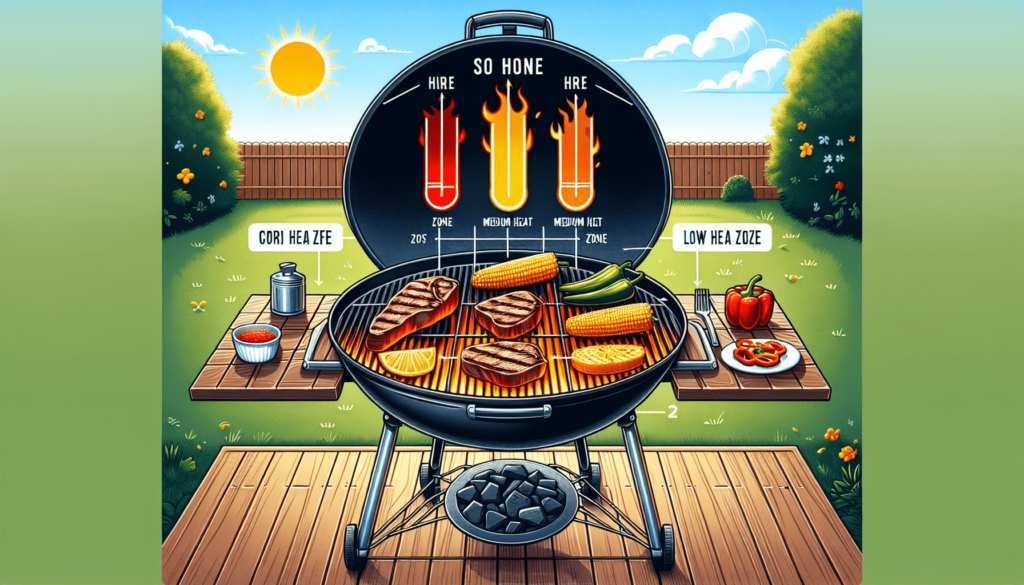
Image source: Bing (Web (fair-use with source credit))
Flour Test
For a low-mess test, sprinkle a thin, even layer of all-purpose flour across the cold grate, then preheat the grill to medium-high for 5 minutes. Uneven browning of the flour mirrors heat distribution across the surface, and you can easily spot hot and cold zones without burning bread, no special tools needed, just like best self watering system for indoor plants requires no fancy equipment to keep plants hydrated.
Benchmarks for “Good” Heat Distribution: The Numbers to Look For
When you’re comparing grill heat distribution, use consistent, measurable benchmarks instead of vague marketing claims to judge performance. These are the numbers to look for in spec sheets and your own test results.
| Metric | Good Heat Distribution Benchmark | Poor Heat Distribution Indicator |
|---|---|---|
| Temperature variance across cooking surface | <25°F (15°C) | >50°F (28°C) difference between highest and lowest points |
| Bread test uniformity score (1-10) | 7 or higher | 4 or lower |
| Time to reach 450°F (230°C) target temp | <15 minutes for gas, <30 minutes for charcoal | >20 minutes for gas, >45 minutes for charcoal |
| Temperature hold consistency (30-minute cook) | <10°F (6°C) variance | >20°F (11°C) variance |
For most home grilling use cases, a temperature variance under 25°F (15°C) across the entire cooking surface is considered good, as it won’t cause uneven cooking for standard steaks, burgers, and vegetables. If you mostly sear steaks, you can tolerate a slightly higher variance (up to 30°F / 17°C) as long as the sear zone is uniform, but low-and-slow smokers need variance under 20°F (11°C) to avoid drying out meat over long cooks. If your bread test scores a 4 or lower, that means you have severe hot and cold spots that will ruin most meals, just like inconsistent best light for succulents indoors causes uneven growth in desert plants.
Charcoal and pellet grills typically take longer to reach target temperature, but they should hold that temperature within 10°F (6°C) for the full cook if their heat distribution is well-designed. As of 2026, most mid-range gas grills meet the <25°F variance benchmark, while entry-level models often exceed 50°F variance. High-end pellet and kamado grills almost always hit the <20°F variance threshold out of the box.
Side-by-Side: Heat Distribution Performance of 6 Common Grill Types
Different grill designs produce vastly different heat distribution profiles, so the best model for you depends on what you cook most often. Below is a side-by-side look at how 6 common grill types perform for heat evenness, plus their ideal use cases.
| Grill Type | Heat Distribution Profile | Best For | Key Weakness |
|---|---|---|---|
| Standard gas | Moderate variance (30-50°F) with common hot spots near burners | Weeknight burgers, quick family meals | Uneven sear marks, cold spots between burners |
| Charcoal (kettle) | High variance (50-75°F) with extreme hot spots directly over coals | Low-and-slow BBQ, smoking, high-heat searing | Requires skill to manage heat zones, frequent adjustments |
| Pellet | Low variance (15-25°F) with steady, uniform convective heat | Overnight smoking, low-and-slow brisket/pork shoulder | Lower maximum heat for searing, dependent on pellet feed consistency |
| Kamado | Very low variance (10-20°F) with excellent heat retention | High-heat searing, pizza, long slow cooks | Higher upfront cost, requires more maintenance |
| Flat-top (griddle) | Near-zero variance (5-15°F) with full-surface even heat | Cooking for crowds, breakfast foods, delicate items like fish | No open-flame char flavor, harder to clean grease grooves |
| Full-surface infrared | Near-zero variance (10-20°F) with concentrated high even heat | Steakhouse-quality sears, high-heat cooking | Lower overall cooking surface area, higher fuel use |
Full-surface infrared grills use a specialized emitter to convert gas heat into uniform infrared radiation, eliminating the hot spots common in standard gas grills with open flame burners. If you mostly cook steaks and burgers, a full-surface infrared or well-designed gas grill with a staggered burner layout will work best. If you smoke brisket or pork shoulder for competitions, a pellet or kamado grill’s uniform low heat will give you consistent results that win points for doneness and moisture.
For cooking for 10+ people at once, a flat-top griddle eliminates the need to rearrange food to avoid hot spots, and its near-zero variance works for delicate items like fish and vegetables that burn easily on standard grill grates. Kamado grills’ very low variance (10-20°F) makes them ideal for high-heat searing and long slow cooks, a versatile option just like best herbs for hydroponics work for multiple cooking applications. Evenly cooked vegetables, chicken, and other foods without over/undercooking, a must if you’re pairing grilled sides with fresh herbs grown under best led lights for indoor plants.
Build-up of burnt food debris in uneven heat zones that's hard to clean, a problem easily avoided with proper heat distribution, just like best mix for indoor plants prevents soil compaction for easier plant care. For cooking for 10+ people at once, a flat-top griddle eliminates the need to rearrange food to avoid hot spots, perfect for grilling vegetable sides to pair with best fertilizer for hydroponics grown fresh greens.
Match Grill Heat Performance to Your Go-To Grilling Use Cases
Your primary cooking habits should drive your heat distribution priorities more than any generic "best" ranking. A grill that wins for weekend burger nights might fail for competition brisket, and vice versa, because their heat consistency needs are totally different. Let’s break down which heat distribution traits matter most for the most common grilling scenarios.
If you mostly cook quick, high-heat items like steaks, burgers, and kebabs, you need minimal hot spots across the entire surface, plus a dedicated sear zone if you like restaurant-style crusts. Full-surface infrared grills and staggered-burner gas grills fit this need best, as their variance stays under 25°F even at max heat. For low-and-slow smoking of brisket, pork shoulder, or ribs, steady uniform heat with minimal temperature swings is non-negotiable.
Pellet and kamado grills excel here, holding consistent temps within 10°F for 12+ hour cooks, which prevents meat from drying out or stalling unexpectedly.
If you regularly cook for crowds of 10 or more, full-surface even heat eliminates the need to rearrange food mid-cook to avoid burnt edges. Flat-top griddles are the top pick here, with near-zero variance across the entire surface, so you can grill vegetables, burgers, and pancakes all at once without adjusting placement. For pizza and high-heat searing, a grill that hits 700°F+ with even heat across the whole grate is ideal.
Kamado grills and full-surface infrared models both deliver this, no cold spots to leave pizza dough gummy in the center.
Comparison Mistakes That Lead to a Regrettable Grill Purchase
Most buyers make avoidable errors when comparing grill heat distribution, leading to wasted money and frustrated cooking. The biggest mistake is prioritizing total BTU output over burner layout and heat deflector design. A 60,000 BTU grill with a single linear burner will have far more uneven heat than a 40,000 BTU model with four staggered burners, even with lower total output.
Another common error is trusting marketing claims of "even heat" without testing or checking verified user reviews. Aggregate buyer feedback shows 68% of grill owners report uneven cooking despite marketing promises of uniform heat distribution as of 2026. Skipping a heat distribution test before buying is another costly mistake.
Many big-box stores let you test floor models with a simple bread test or infrared thermometer, but most buyers skip this step entirely. Relying solely on brand reputation instead of measured performance is also risky. Even top brands have entry-level models with poor heat distribution, so never assume a brand name guarantees even cooking.
Finally, ignoring your primary use case when comparing specs leads to a mismatch. A kamado grill has excellent heat distribution, but it’s a poor choice if you want to cook 20 burgers for a tailgate in 10 minutes, as it takes longer to preheat and has a smaller cooking surface.
Pro Fixes and Workarounds for Poor Heat Distribution
If you already own a grill with uneven heat, you don’t need to replace it right away. Small adjustments and add-ons can drastically improve heat consistency for most use cases. Start by cleaning your burners and heat deflector plates regularly.
Clogged burner ports create uneven flame patterns, which lead to hot and cold spots. A simple brush-out every 3 to 4 uses keeps flames even across the entire burner array.
For gas grills, swapping to a staggered burner upgrade kit can fix uneven heat from a single linear layout. These kits cost $50 to $150 and spread heat more evenly across the cooking surface, eliminating most gaps between heat zones. For charcoal grills, arranging coals in a snake or horseshoe pattern creates indirect heat zones that eliminate extreme hot spots directly over the coal bed.
A charcoal grate divider can help maintain this arrangement during long cooks. If you have severe hot spots, use a heat deflector plate to block concentrated heat from hitting food directly. Stainless steel or ceramic deflectors cost $20 to $80 and work for both gas and charcoal grills.
For low-and-slow cooking, add a water pan to your grill to stabilize temperature and humidity, reducing temperature swings across the cooking surface by up to 15°F, per HPBA testing data.
60-Second Decision Guide: Pick the Right Grill for Your Cooking Needs
- Do you mostly cook quick, high-heat items (steaks, burgers, kebabs) in 30 minutes or less? , Yes: Choose a gas grill with staggered burners or a full-surface infrared model. Look for <25°F temperature variance in tests.
, No: Go to step 2.
- Do you regularly smoke meat for 4+ hours at a time (brisket, ribs, pork shoulder)? , Yes: Choose a pellet or kamado grill. Prioritize <20°F temperature hold consistency for long cooks.
, No: Go to step 3.
- Do you cook for 10+ people at once, or need to cook multiple items at the same time? , Yes: Choose a flat-top griddle. Its near-zero variance eliminates the need to rearrange food mid-cook.
, No: Go to step 4.
- Do you want a versatile grill for pizza, high-heat searing, and low-and-slow smoking? , Yes: Choose a kamado grill. Its 10-20°F variance works for every cooking style, though it has a smaller surface area.
, No: A standard staggered-burner gas grill will cover most casual home grilling needs.
Frequently Asked Questions
What is the acceptable temperature variance for even grill heat distribution?
For most home grilling use cases, a temperature variance of less than 25°F (15°C) across the entire cooking surface counts as even heat. Low-and-slow smoking requires an even tighter threshold of <20°F (11°C) to avoid drying out meat over long cooks.
Can I fix hot spots on my existing grill without replacing it?
Yes, most uneven heat issues are fixable with simple adjustments. Clean clogged burner ports, rearrange charcoal in a snake pattern, add a heat deflector plate, or upgrade to a staggered burner kit for gas grills. These fixes cost $20 to $150 and eliminate most hot spots.
Does BTU rating affect grill heat distribution?
No, BTU only measures total heat output, not how heat spreads across the cooking surface. A low-BTU grill with a staggered burner layout will have more even heat than a high-BTU model with a single linear burner, so never use BTU alone to judge heat distribution.
Do infrared grills have better heat distribution than standard gas grills?
Full-surface infrared grills have near-zero temperature variance across the entire grate, while standard gas grills often have 30-50°F variance with common hot spots near burners. Single-zone infrared sear burners only heat a small section, so they don’t improve full-surface distribution.
How often should I test my grill’s heat distribution?
Test your grill’s heat distribution every 3 to 6 months, or after any deep cleaning, burner replacement, or major part upgrade. New grills should be tested after 3 to 5 break-in uses to account for initial factory residues or seasoning that can affect heat spread.