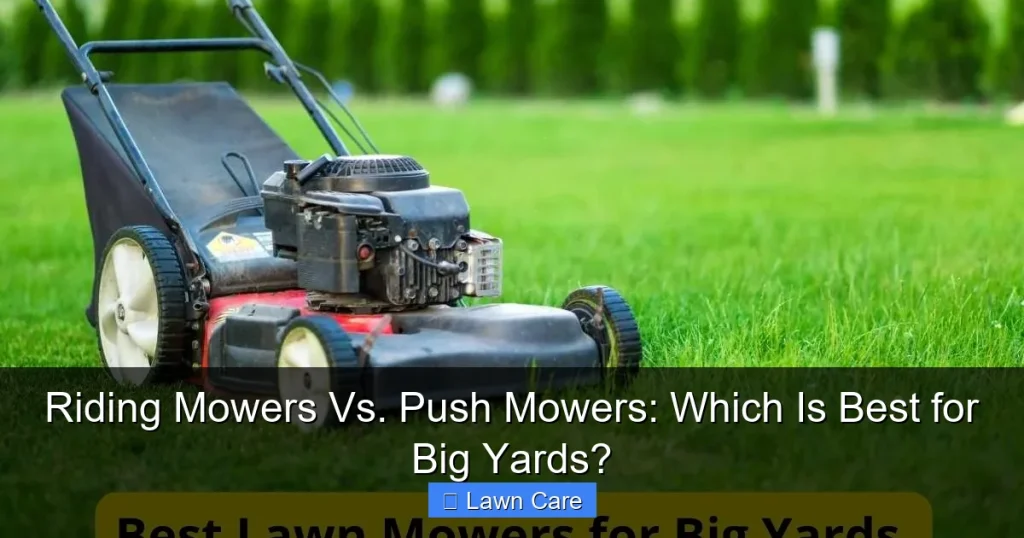
When it comes to maintaining a big yard, the choice between a riding mower and a push mower can make a huge difference in time, effort, and results. Push mowers are ideal for smaller or uneven terrain, while riding mowers shine on large, flat lawns. This guide helps you weigh the pros and cons so you pick the best mower for your needs.
Key Takeaways
- Push mowers are best for small to medium yards under 1 acre. They’re lightweight, affordable, and great for flat or gently sloped areas.
- Riding mowers excel on large lawns over 1 acre. They save significant time and effort, especially with wide cutting decks and powerful engines.
- Terrain matters. If your yard has hills, rocks, or obstacles, a push mower may be more maneuverable, but riding mowers with slope handling features can still work.
- Cost and storage differ. Push mowers are cheaper and easier to store; riding mowers require more space and investment.
- Fuel type affects maintenance. Electric push mowers need charging; gas models need oil changes. Riding mowers often use gas and require more upkeep.
- Environmental impact varies. Electric push mowers are quieter and emit less, while gas mowers—both push and riding—produce emissions.
- Time investment is key. For big yards, riding mowers reduce mowing time by up to 70%, freeing you for other tasks.
Quick Answers to Common Questions
Can I use a push mower on a 1-acre yard?
Yes, but it will take 2–3 hours and require significant physical effort. For larger yards, a riding mower is far more efficient.
Are riding mowers worth the cost?
For big yards over 1 acre, yes. The time and labor savings often justify the higher upfront cost.
What’s the best mower for hilly yards?
Riding mowers with slope sensors and low center of gravity designs are best. For steep slopes, check our guide: Are Push Mowers Or Riding Mowers Better For Slopes.
Do electric push mowers work on large lawns?
Only if the battery lasts long enough. For big yards, gas or riding mowers are more practical due to runtime.
Can I use a riding mower for small areas?
Yes, but it’s overkill. Use a push mower for tight spaces and edges to save time and fuel.
📑 Table of Contents
- Riding Mowers vs. Push Mowers: Which Is Best for Big Yards?
- Understanding Push Mowers
- Exploring Riding Mowers
- Comparing Performance on Big Yards
- Cost and Maintenance: What to Expect
- Environmental and Ergonomic Considerations
- Which Mower Should You Choose for Your Big Yard?
- Tips for Maintaining Your Mower
- Conclusion
Riding Mowers vs. Push Mowers: Which Is Best for Big Yards?
Imagine this: It’s a sunny Saturday morning, and you’re ready to tackle your sprawling backyard. You step out into the yard, grab your push mower, and begin the long, tiring process of mowing row by row. After two hours, your arms ache, your back is stiff, and you’ve only covered half the lawn. Sound familiar?
Now picture this: You hop into a comfortable riding mower, press a button, and within 30 minutes, you’re done—leaving you with time to relax, garden, or even take a nap. That’s the power of choosing the right mower for your space. Whether you’re dealing with a half-acre or a five-acre estate, the difference between a push mower and a riding mower can transform your lawn care routine.
In this article, we’ll break down the key differences between riding mowers and push mowers, helping you decide which one is truly best for big yards. We’ll cover performance, cost, terrain challenges, environmental impact, and even how to maintain your mower for long-lasting results. By the end, you’ll know exactly which mower fits your yard, your budget, and your lifestyle.
Understanding Push Mowers
How Push Mowers Work
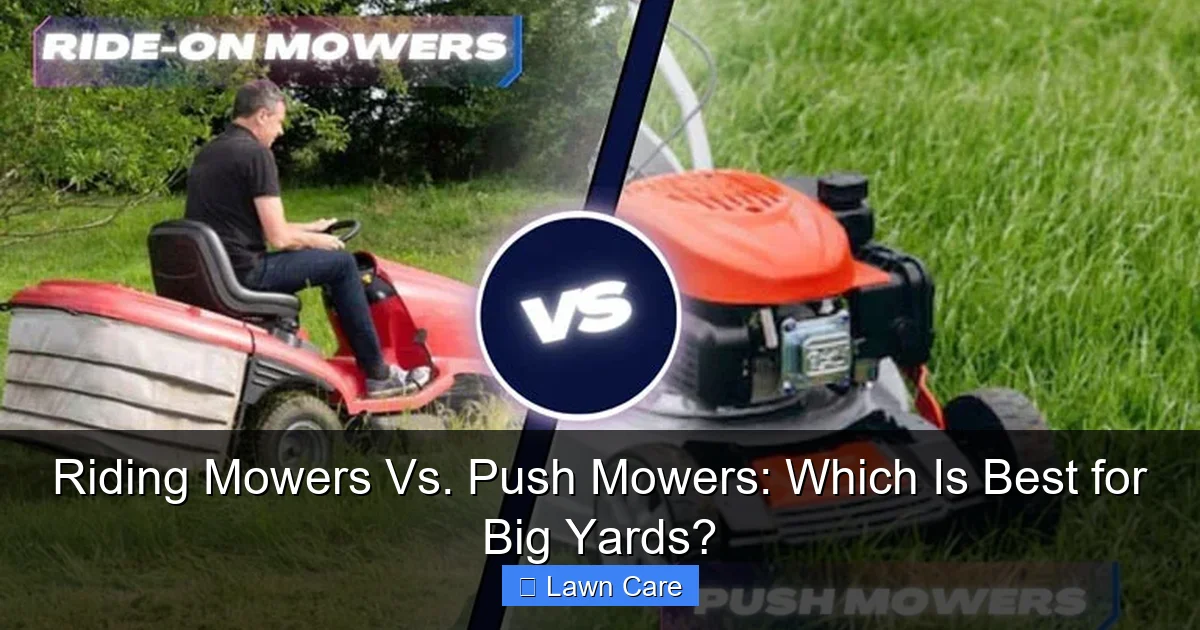
Push mowers are the classic, manual-style lawn mowers that have been around for generations. They come in two main types: manual (reel) mowers and self-propelled gas or electric mowers. Most people today use self-propelled models, which have engines and wheels that move the mower forward automatically, reducing the physical effort needed.
Visual guide about Riding Mowers Vs. Push Mowers: Which Is Best for Big Yards?
Image source: lighttheminds.com
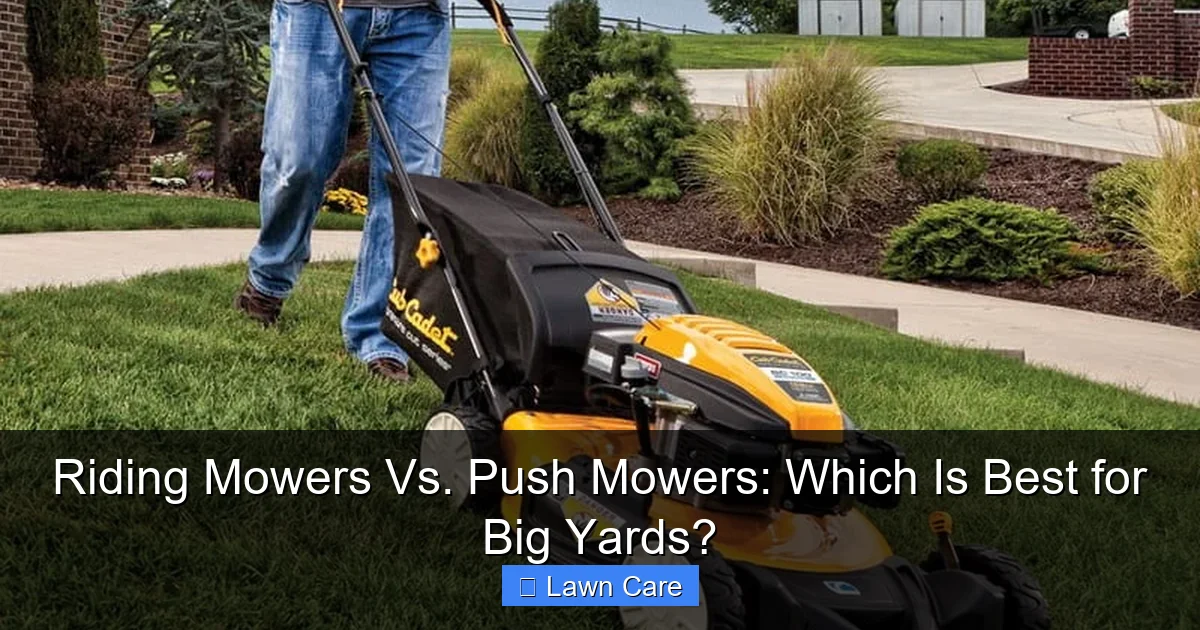
These mowers are typically lightweight, easy to maneuver, and ideal for smaller lawns. They’re also much cheaper upfront—ranging from $150 to $500 depending on features. However, when your yard stretches beyond a quarter-acre, the time and energy required to push them across every inch quickly add up.
Best Use Cases for Push Mowers
- Yards under 1/4 acre: Perfect for suburban homes with small to medium lawns.
- Flat or gently sloped terrain: Works well on level ground but struggles on steep hills.
- Budget-friendly options: Great for homeowners who want to save money on equipment.
- Quiet, low-emission operation: Electric models are ideal for eco-conscious users.
Limitations of Push Mowers on Big Yards
While push mowers are excellent for small lawns, they become inefficient on large properties. Mowing a full acre with a push mower can take 2–4 hours, depending on grass height and terrain. Plus, the physical strain increases over time, making it less practical for older adults or those with mobility issues.
For example, if your yard is 1.5 acres with rolling hills and thick Bermuda grass, you’ll spend most of your weekend pushing a mower back and forth. That’s why many homeowners with big yards eventually upgrade to a riding mower for long-term efficiency.
Exploring Riding Mowers
How Riding Mowers Operate
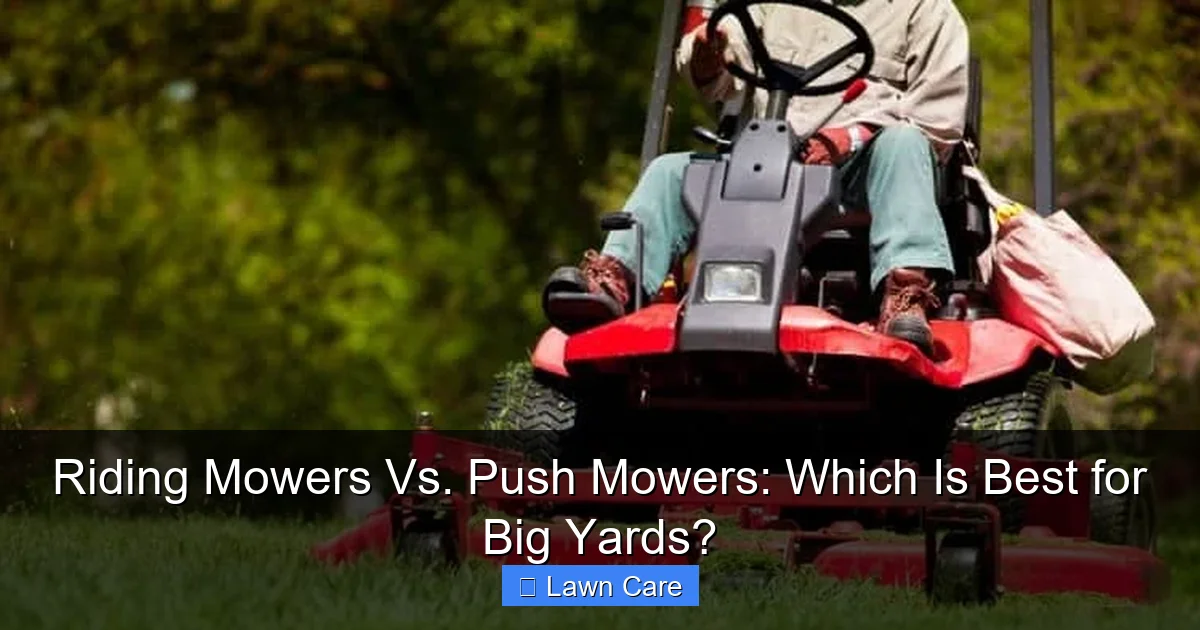
Riding mowers, also known as lawn tractors or zero-turn mowers, are designed for large-scale lawn care. They feature powerful engines (usually 18–30 horsepower), large cutting decks (42–60 inches), and comfortable seating. Some models even include features like hydrostatic transmissions for smooth speed control and zero-turn radius capabilities for tight maneuvering.
Visual guide about Riding Mowers Vs. Push Mowers: Which Is Best for Big Yards?
Image source: f7e5m2b4.delivery.rocketcdn.me
With a riding mower, you sit down and drive—no pushing required. This makes them ideal for covering ground quickly and comfortably, even on expansive lawns.
Advantages of Riding Mowers for Big Yards
- Time savings: Mow 1 acre in under 30 minutes instead of 2–3 hours.
- Comfort: Ergonomic seats, cup holders, and easy controls make mowing less tiring.
- Wide cutting decks: Larger mowing paths reduce the number of passes needed.
- Attachments available: Many riding mowers support mulching, bagging, tilling, and even snow plowing.
Types of Riding Mowers
- Lawn Tractors: Mid-range models with rear-wheel drive, ideal for flat yards.
- Zero-Turn Mowers: Best for large, open lawns; allow 360-degree turns without repositioning.
- Commercial Riding Mowers: Built for heavy-duty use and larger properties (3+ acres).
Comparing Performance on Big Yards
Speed and Efficiency
When it comes to speed, riding mowers dominate. A typical zero-turn mower can cover 1 acre in 20–30 minutes, while a self-propelled push mower might take 2–3 hours. That’s a 70–85% time reduction with a riding mower.
Visual guide about Riding Mowers Vs. Push Mowers: Which Is Best for Big Yards?
Image source: f7e5m2b4.delivery.rocketcdn.me
For example, if you have a 2-acre lawn, a riding mower can mow the entire area in about 1 hour, leaving you free for other chores. With a push mower, you’d spend the whole weekend—and still might not finish.
Terrain and Obstacle Handling
Big yards often come with challenges like slopes, trees, and garden beds. Push mowers can struggle on steep inclines and require constant repositioning around obstacles. Riding mowers, especially zero-turn models, handle slopes better when equipped with slope sensors and low center of gravity designs.
However, if your yard has narrow paths or tight corners, a push mower may still be more maneuverable. That’s why some homeowners use both: a riding mower for the main lawn and a push mower for edging and small areas.
Grass Type and Cutting Quality
Both mower types can handle thick grass, but riding mowers with mulching decks and powerful engines are better at cutting dense growth without clogging. For example, if you have tall fescue or Bermuda grass in Florida, a riding mower with a 54-inch deck will mulch and recycle nutrients more efficiently than a push mower.
Push mowers, especially electric models, may struggle with overgrown grass unless you adjust the cutting height and mow frequently.
Cost and Maintenance: What to Expect
Upfront Costs
Push mowers are far more affordable. A quality self-propelled electric or gas push mower starts around $200–$400. In contrast, riding mowers begin at $1,200 and can go up to $5,000 for commercial models.
While the initial investment in a riding mower is higher, many homeowners find it pays off over time due to reduced labor and faster mowing.
Ongoing Maintenance
- Push Mowers: Require less maintenance—oil changes every 50 hours, blade sharpening, and air filter checks.
- Riding Mowers: Need regular oil changes, battery checks, deck maintenance, and transmission servicing. Zero-turn models may need more frequent belt inspections.
Electric push mowers have fewer moving parts and require minimal upkeep, making them low-maintenance. Gas models, whether push or riding, need more attention due to engine complexity.
Storage and Space
Push mowers are compact and can be stored in a garage, shed, or even a small storage closet. Riding mowers need more space—often requiring a dedicated garage or outdoor rack. Some models also need cover protection from the elements.
Environmental and Ergonomic Considerations
Environmental Impact
Electric push mowers produce zero direct emissions and are much quieter than gas models. They’re ideal for eco-friendly homeowners. However, if your yard is too large for frequent recharging, gas mowers—both push and riding—may be more practical.
Gas mowers, especially older models, can emit harmful fumes. Look for EPA-certified engines and consider hybrid or battery-powered options if reducing emissions is a priority.
Physical Strain
Mowing with a push mower can lead to back pain, arm fatigue, and shoulder strain—especially on large yards. Riding mowers eliminate most physical effort, making them a better choice for seniors, people with disabilities, or those with physical limitations.
Which Mower Should You Choose for Your Big Yard?
So, which mower is best for big yards? The answer depends on your lawn size, terrain, budget, and personal preferences.
If your yard is under 1 acre and mostly flat, a high-quality self-propelled push mower might suffice. But if you’re dealing with 1 acre or more, especially with hills or thick grass, a riding mower will save you hours of work each season.
For example, if you have a 2-acre estate with Bermuda grass and a few slopes, a zero-turn riding mower with a 54-inch deck and slope sensors would be ideal. It cuts fast, handles terrain well, and lets you enjoy your weekends instead of spending them mowing.
On the other hand, if your big yard has narrow garden paths, flower beds, and tight corners, you might consider a hybrid approach: use a riding mower for the main lawn and a push mower for detail work and edging.
Tips for Maintaining Your Mower
- Sharpen blades regularly: Dull blades tear grass, leading to brown tips and disease.
- Clean after each use: Remove grass clippings and debris from the deck to prevent rust.
- Check oil and filters: Especially important for gas models.
- Store properly: Keep mowers covered and in a dry place.
- Use the right fuel: Follow manufacturer guidelines for gas or battery charging.
For more tips on fuel efficiency and maintenance, check out our guide: What Fuel Is Best For Lawn Mowers.
Conclusion
Choosing between a riding mower and a push mower for big yards isn’t just about preference—it’s about efficiency, comfort, and long-term lawn health. While push mowers are great for small, manageable lawns, riding mowers are the clear winner for large properties where time and effort matter.
Investing in a quality riding mower means less strain, faster mowing, and more time to enjoy your outdoor space. Whether you go with a lawn tractor or a zero-turn model, the right choice will make lawn care a breeze—even on the biggest yards.
Ready to find the perfect mower for your lawn? Explore our top picks: 5 Best Lawn Mowers for Big Yards.
Frequently Asked Questions
What size yard requires a riding mower?
Generally, any yard over 1 acre benefits from a riding mower. Smaller yards may still use push mowers if terrain and budget allow.
Are zero-turn mowers better than lawn tractors?
Zero-turn mowers are faster and more maneuverable, making them ideal for open, large lawns. Lawn tractors are better for heavier-duty tasks and steeper terrain.
Can I use a riding mower on slopes?
Yes, if it has slope sensors and a low center of gravity. Avoid mowing steep slopes on zero-turn models to prevent tipping.
How often should I mow a big yard?
Twice a week during growing season is ideal. A riding mower makes this schedule much easier to maintain.
What fuel type is best for riding mowers?Gas engines are most common and powerful. Electric models are quieter but may lack range for very large yards.
Do I need a special license to operate a riding mower?
No, but some commercial mowers may require training. For residential use, no license is needed.