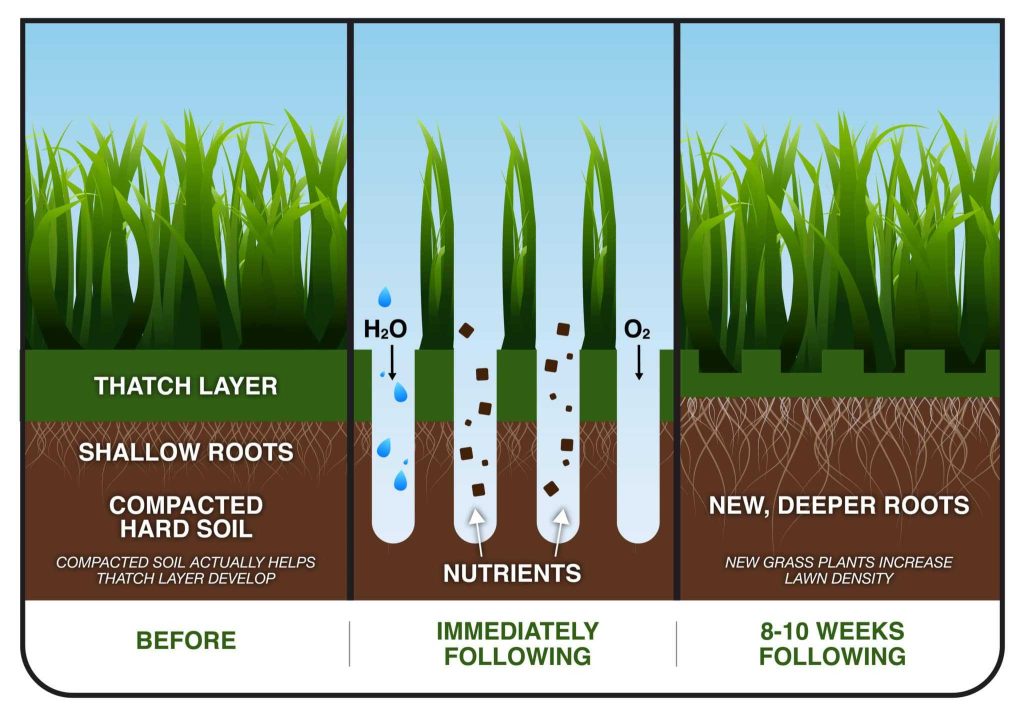
Aerating your lawn can transform its health and appearance dramatically. The quick fix? Lawn aeration alleviates soil compaction, boosts nutrient and water absorption, and encourages healthy root growth, leading to a lush, green yard. Regular aeration is a smart investment for anyone looking to improve their lawn’s vitality and beauty without constant chemical or water interventions.
Lawn aeration offers numerous benefits, from improving soil structure to increasing the effectiveness of fertilizers and water. It helps your grass grow stronger and thicker, creating a more resilient and attractive yard that can withstand drought and pests better.
A healthy lawn begins beneath the surface. When soil becomes compacted from foot traffic, weather, or regular mowing, air and nutrients struggle to reach the roots. Aeration involves creating small holes in the soil, allowing air, water, and nutrients to penetrate deeper. This process revitalizes your lawn’s roots, promotes better drainage, and reduces thatch buildup. The result is a more vigorous, greener, and more resilient lawn that stays healthy throughout the seasons.

What Are the Benefits of Lawn Aeration
Understanding Lawn Aeration
Lawn aeration is a process that involves creating small holes or spaces in the soil. This helps the roots of your grass get more air, water, and nutrients. Aeration is especially helpful for lawns that see a lot of foot traffic or have compacted soil. It is a simple step that can make a big difference in how healthy your grass looks.
How Aeration Improves Soil Health
Over time, soil can become compacted, which makes it hard for roots to grow. Aeration loosens the soil, allowing air to reach deep down. This encourages beneficial microbes that break down organic material, making nutrients more available for your grass. Well-aerated soil also helps water drain better and reduces runoff issues.
Boosts Grass Growth and Density
Aeration provides grass roots with easier access to air, water, and nutrients. When roots receive what they need, they grow stronger and thicker. This results in a lush, green, and dense lawn that can stand up to weeds, pests, and drought. Thick grass also helps prevent bare spots and patches.
Enhances Water Absorption and Retention
A lawn that is properly aerated absorbs water more efficiently. Instead of runoff, water seeps deep into the soil where roots can use it. This is especially important during dry seasons or droughts. Better water retention means your lawn stays healthy even with less frequent watering.
Reduces Thatch Buildup
Thatch is a layer of dead grass, roots, and organic matter that can form on the soil surface. Too much thatch can prevent water and nutrients from reaching the roots. Aeration helps break down thatch naturally and prevents it from becoming a problem. This leads to a healthier, more vibrant lawn.
Promotes Stronger Root Systems
Aeration allows roots to expand more easily and grow deeper into the soil. Stronger roots create a more resilient lawn that can withstand heat, drought, and disease. Deep roots also help grass recover faster after stress or damage.
Prevents Soil Compaction
Soil compaction happens over time from activities like walking, playing, or heavy equipment. It makes the soil dense and less breathable. Aeration alleviates compaction, creating more space for roots to grow and access nutrients. This results in a healthier, more durable lawn.
Encourages Better Nutrient Uptake
When soil is compacted, nutrients stay trapped near the surface and can’t reach roots efficiently. Aeration opens up the soil, allowing fertilizers and organic matter to penetrate deeper. This improves nutrient availability and helps grass grow more vigorously.
Improves Lawn Resilience and Recovery
A well-aerated lawn can recover faster from stresses like drought, heat, or pests. The improved soil structure supports rapid regrowth and reduces the chances of brown patches. Aeration also helps the lawn resist disease by promoting healthier root and soil systems.
Prepares the Lawn for Overseeding and Fertilization
Aeration creates ideal conditions for overseeding by opening up the soil and making it easier for new grass seeds to take root. It also boosts the effectiveness of fertilizers, ensuring nutrients reach deeper layers of soil. This combination results in a thicker, more even lawn.
Reduces Watering and Maintenance Needs
A lawn that is properly aerated uses water more efficiently. Reduced runoff and better absorption mean you won’t need to water as often. Additionally, aeration lessens the need for frequent fertilization or pest control, saving time and money.
Environmentally Friendly Lawn Care
Aerating your lawn is a natural way to improve its health without relying heavily on chemicals. It encourages natural processes that keep your lawn strong and healthy. An environment-friendly lawn needs fewer inputs and is safer for your family and pets.
Choosing the Right Timing for Aeration
The best time to aerate depends on your grass type. For cool-season grasses, early fall and spring are ideal. For warm-season grasses, late spring through early summer works best. Proper timing ensures your lawn benefits fully from aeration.
Tools and Techniques for Aeration
Aeration can be done with spike or plug aerators. Spike aerators poke holes into the soil, while plug aerators remove small plugs of soil. Both methods improve soil health, but plug aerators generally offer more benefits for compacted lawns. Renting or hiring professionals can make the process easier.
Frequency of Aeration
Most lawns benefit from aeration once or twice a year. Lawns with heavy traffic or poor soil might need more frequent aeration. Regular aeration helps maintain soil health and keeps your grass looking its best year-round.
Incorporating Lawn Care Practices
Combine aeration with other practices like fertilization, overseeding, and proper watering. This integrated approach ensures your lawn remains lush, healthy, and resistant to problems. Consistent care creates a beautiful outdoor space you can enjoy.
The Impact of Aeration on Overall Lawn Quality
Aeration has a lasting effect on your lawn’s appearance and durability. It supports healthy grass growth, improves soil conditions, and minimizes problems like weeds and pests. Making aeration part of your routine maintenance can lead to a thriving, green lawn for years to come.
Summary of Key Benefits
- Improved soil health and structure
- Stronger, deeper grass roots
- Better water absorption and retention
- Reduced soil compaction and thatch buildup
- Enhanced nutrient uptake and growth
- Healthier, more resilient lawn
- Preparation for overseeding and fertilization
- Less frequent watering and maintenance
Proper lawn aeration offers numerous advantages that can greatly enhance the beauty and health of your yard. Regularly incorporating aeration into your lawn care routine ensures your grass stays strong, lush, and resistant to common problems. Whether you are dealing with a small patch or a large yard, aeration is a simple step that helps your lawn reach its full potential.
Why Should You Aerate Your Lawn?
Frequently Asked Questions
How does lawn aeration improve soil health?
Lawn aeration enhances soil health by creating small holes that allow air, water, and nutrients to reach the grassroots more effectively. This process reduces soil compaction, promotes beneficial microbial activity, and encourages the development of a stronger root system, leading to a healthier and more resilient lawn.
What role does lawn aeration play in reducing weed growth?
Aerating the lawn helps loosen the soil, making it easier for desirable grass roots to grow deeply and compete with weeds. This results in a denser, more vigorous turf that naturally suppresses weed invasion and minimizes the need for chemical weed control.
In what ways does aeration support better water management on my lawn?
By perforating the soil, aeration improves water absorption and drainage. This lessens water runoff, prevents waterlogging, and ensures that moisture reaches the roots efficiently. Consequently, your lawn stays adequately hydrated without excess water pooling or drying out quickly.
Can lawn aeration help with nutrient absorption?
Yes, aeration creates pathways that allow fertilizers and nutrients to penetrate deeper into the soil. This enhances nutrient uptake by the grass roots, leading to stronger growth, greener appearance, and overall improved lawn vitality.
How often should I aerate my lawn to see benefits?
Typically, aerating once or twice a year suffices for most lawns. The optimal frequency depends on soil conditions and lawn usage. Regular aeration helps maintain soil aeration, ensuring ongoing healthy growth and minimizing compaction issues.
Final Thoughts
Les avantages de l’aération de la pelouse incluent une meilleure circulation de l’air, ce qui favorise la croissance des racines. Elle aide également à réduire la compaction du sol, permettant à l’eau et aux nutriments de pénétrer plus efficacement. De plus, l’aération stimule la croissance saine du gazon, rendant votre pelouse plus verte et plus dense. En résumé, what are the benefits of lawn aeration, cela améliore la santé globale de votre pelouse et facilite son entretien.